Friday, September 04, 2026

Red Letter Poem #314

  The Red Letters


In ancient Rome, feast days were indicated on the calendar by red letters.

To my mind, all poetry and art serves as a reminder that every day we wake together beneath the sun is a red-letter day.


––Steven Ratiner


Red Letter Poem #314


As I Lay Dematerializing


In this theater, in this reading of myself,

the pathologist says, “See? His body’s own

enzymes are breaking down his cells.”

One of the onlookers at the anatomy


lesson waxes, “Breaking out of his prison?”

The trained rooster the farmer’s daughter sent in

as a last resort at long last stops crowing

and splays down on top of me, a strange egg.


I was losing interest in my bank account.

Rage, rage against the dying—Yeah, yeah.

How to put this? The bases were loaded.

The organ was groaning. The bullpen was scratching.


I bloated, losing my soul of wit.

I took on rigor. They asked, What’s that mean?

I got over myself. I hovered

over the rags I lay in, this patchwork, my quilt.


                               ––Michael T. Steffen


I heard a Fly buzz – when I died – 
The Stillness in the Room
Was like the Stillness in the Air – 
Between the Heaves of Storm. . .


                         ––Emily Dickinson


Where are we?  It’s an appropriate question––within today’s poem, specifically, but within the whole of our turbulent lives.  And how can we hope to navigate if we can’t take our bearings?  But, of course, how may we orient ourselves if we’ve no fixed point of reference, a guiding star?  It’s not only Emily’s predicament––and that of today’s featured poet, Michael T. Steffen––it’s our own daily struggle.  It seems more than fitting that in Michael’s marvelously disorienting “As I Lay Dematerializing,” we must experience our true lostness if we’re to have any hope of being found.  So what does a poet use to help navigate?  Two things quickly come to mind: the history of what’s come before, and a reliance upon the music of the mind.


Michael’s poem is teeming with literary history.  I’m guessing the phrasing of the title put you in mind of Faulkner’s masterpiece, As I Lay Dying––and that, in turn, created echoes of a self-aware corpse-to-be on its journey toward some final place of rest.  (The English majors among us may even recall that the novel’s title is an echo from Homer’s Odyssey––a phrase spoken by Agamemnon in the underworld, riven by disappointment.)  This poet is situating himself amid the brother/sisterhood of scribes, hoping to use the past to chart a course through the bewildering present.  Like Faulkner, Michael employs a kind of stream-of-consciousness as a way of making the mind porous to the world and the culture in which it’s rooted.  All those flickering impressions and bits of memory may seem a jumble––but the thinking brain is the body’s engine, and everything becomes fuel for the fire.  Right from Michael’s opening line, the reader must shift into a higher gear: is this an operating “theater” where a patient’s life is at stake?  Or a post-mortem table where fatal flaws will be revealed?  Or perhaps some Theater of the Absurd performance where, from our balcony seats, we can gawk at the farce of one human desperately trying to make meaning of the chaos?  


Before we can get comfortable, in comes that “trained rooster” to hunker down upon the protagonist’s chest as if guarding some sort of cosmic egg.  Startling, the strange gyrations of which the mind is capable: bad puns (“losing interest”), bits and pieces remembered from freshman lit (as the patient in question brushes aside Dylan Thomas’ classic villanelle, and slips into a kind of Fenway Park of the Mind––the tone more Abbott and Costello than John Updike).  “I bloated, losing my soul of wit,” says the poet, throwing a little Hamlet into the mix.  Indeed, how can brevity survive when the mind is flooded with so much tumult?  And yet, if nothing else, a poem is an intentional act of focus––and so the speaker attempts to take these rags of consciousness and make a quilt from them––“a momentary stay against confusion” (if I can welcome another New Englander’s voice), and a purposeful counter to the Welshman’s “the dying of the light.”  It may not be much––this determined straining for clarity––but perhaps it’s all we can do.


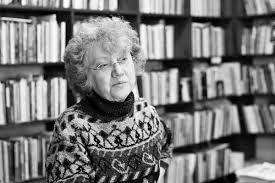
Michael has recently published his third poetry collection––I Saw My Life (Lily Poetry Review Press), centered around the long title piece, an impressive narrative exploration in 41 sections.  He’s also been the recipient of a Massachusetts Cultural Council Fellowship and an Ibbetson Street Press Poetry Award.  Michael’s work has appeared in numerous fine journals, and I’m pleased he’s become a frequent Red Letter contributor.  He is also an organizer of poetry events, honoring the work of contemporary poets as well as past masters.  And that, after all, is one of culture’s primary purposes: it affirms that others have traveled this path before us; that their experiences and insights might accompany us on the journey, especially at moments when our very survival seems at stake.  That’s where the music comes in: we can feel the rhythmical charge within us, elevating language into song.  That instinctive sense is so primal, visceral, we trust it to steer us safely through the evolving poem.  Dickinson’s Musca domestica brings her to this: “With Blue – uncertain stumbling Buzz –/ Between the light – and me –/ And then the Windows failed – and then/ I could not see to see.”  The musicality is so unusual but self-assured, our hearts become willing passengers.  And Michael performs a similar feat with: “They asked, What’s that mean?”––just as we readers might be asking ourselves the same.  But then the poet calms the choppy seas with a playful double entendre and a little cascade of V-sounds: “I got over myself. I hovered/ over the rags I lay in, this patchwork, my quilt.”  This blanketing consciousness of ours may indeed be rife with holes, but it comforts us, keeps us warm through the day’s uncertain weather. 


The Red Letters


* If you would like to receive these poems every Friday in your own in-box – or would like to write in with comments or submissions – send correspondence to:

steven.arlingtonlaureate@gmail.com


* To learn more about the origins of the Red Letter Project, check out an essay I wrote for Arrowsmith Magazine:

https://www.arrowsmithpress.com/community-of-voices


* The weekly installment is also available at

the Boston Area Small Press and Poetry Scene

http://dougholder.blogspot.com


* For updates and announcements about Red Letter projects and poetry readings, please follow me on BlueSky

@stevenratiner.bsky.social

and on Twitter          

@StevenRatiner


And visit the Red Letter archives at: https://StevenRatiner.com/category/red-letters/

Wednesday, September 02, 2026

Review of Hope by BRM Evett


Review of Hope by BRM Evett

 review by Lo Galluccio

For those of you who loved the Netflix series “The Last of Us” which took place in the middle of the 22nd century after a fungal pandemic has destroyed the government and devastated the country with tribal divisions and a band of rabid infected, called “Clickers” striking the healthy survivors, you will want to read BRM’s novel, Hope, a sequel to his first novel, Joy. Evett gives us an America that has fallen apart due to a Civil War, that right now, doesn’t seem that far-fetched. Ultimately, it is a novel about love and empathy winning out over evil and greed with two opposing strategies to defeat the virus called, Mindworm, which attacks the central nervous system and the brain. Our heroine, Lucinda, is a brilliant flaming red-head from a privileged enclave she has been exiled from. She has a special power, called a Cor, which attaches to her brain and which can show her anything, like a personal video machine. But is this enough to ensure her survival?

She is rescued after being exposed to Mindworm, by an evil doctor, part robot, who falls in love with her and uses her to try and retain his power over the afflicted, who he keeps alive but subservient to him. There is also a female doctor on the other side, who is using his machinery to discover a vaccine for the virus. And with her is a group of children, some deaf, who have been scrounging to survive. Creek is the youngest and most interesting character, a scarred waif who has had to perform petty crimes to subsist in this broken dystopia. When he and Lucinda ultimately join together for the cause it is a powerful and poignant moment.

This is a gripping story, part sci-fi and part adventure, with some romantic elements. Evett handles the technological advances upon which the story rests, with amazing brilliance and ease. His writing is lyrical and entrancing. I loved Joy and this sequel was an expansive and wonderful evolution. The poet Li-Young Lee once said, “I can’t think of a time in the future when someone won’t be killing someone else.” Evett seems to concur with this but offers a hopeful ultimatum after a thrilling battle between divergent forces. I can’t wait to read the third book in the trilogy, Love. There are touches of William Gibson and Alice Hoffman in this book, but it is very much an original masterpiece of Evett’s imagination and craft. This is a must-read book for 2025.

Hope is available at Barnes and Noble and Amazon.com.


**** Lo Galluccio is an American poet, memoirist, and vocal artist who served as the Poet Populist of Cambridge, Massachusetts, from 2013 to 2015. A graduate of Harvard University with an MFA from Stonecoast, her work uniquely bridges the worlds of literature and experimental music.

Poetry at the Manse Sept 27, 2026 New England Poetry Club


Tuesday, September 01, 2026

For poet Joyce Wilson: " The Morning After Burns Night"


Recently I had the pleasure to interview New England Poetry Club advisory board member Joyce Wilson about her new book of poetry " The Morning After Burns Night."

 Joyce Wilson is editor of The Poetry Porch (www.poetryporch.com), a literary magazine on the Internet since 1997. She has taught English at Boston University and Suffolk University, about ten years each. Her poems have appeared in many literary journals, among them Alabama Literary Review, Classical Outlook, and The Hudson Review. She has published four books of poetry: The Etymology of Spruce, The Springhouse 3, The Need for a Bridge, and Take and Receive. Her most recent poetry collection is The Morning after Burns Night, appearing in summer 2026.


The title of this book THE MORNING AFTER BURNS NIGHT, is intriguing. It seems when we experience the 3AM dark night of the soul—the morning sun burns through our malaise...with a new perspective. Do you feel your poetry collection is hopeful?

About the creation of The Morning after Burns Night: The first poem sets the scene of a party for Robert Burns, whose birthday falls on January 25, and is a traditional winter date for dinners and celebrations. My husband and I hosted such a gathering a few years ago with a pot-luck buffet, readings of poetry, and performances of songs. It was a memorable evening and left me with a feeling of fondness for all my friends and a sense of connection to our place in a sometimes crazy world.

So when I had enough poems to fill a book, I thought I might lead with a poem about our winter celebration. I grouped the incidental poems, in a variety of forms (sonnets, blank verse, limericks, prose poems) and on a variety of topics (winter, the behavior of animals, states of mind) that the partygoers might have shared in verse to entertain themselves that night. Like the speakers, some poems address singles, some pairs, the morning after, and the night before. That introductory poem ends this way:

We introduced our poems and our verses

about our friends, the ones both here and gone,

and pairs of things, like lovers’ vows and curses,

without regret, from now, and from now on.

Not reflective and soul searching, but communal and commemorative, and hopeful, yes, that we will remember these times and the people close to us for "auld lange syne," or for old time's sake.

There are two other sections in the book. One, a sonnet crown sequence "The Remnant of His Life," is about a woman who bathes her husband's body after death as a way of saying good-bye. This idea is based on the D. H. Lawrence story "Odor of Chrysanthemums," which is about the death of miner in a village in the midlands of Great Britain, and how the wife and mother prepare his body for burial.

And there is the final section about travelling through the Middle Eastern country of Lebanon where we explored my husband's roots, and where our daughter ended up living, working, marrying, and starting a family. I got obsessed with the cedars of Lebanon and the phrase "The Cedars know the history of the earth better than history itself."


In your new collection, your connection to nature is very profound. You live on a farm—so you have a certain intimacy with it that many folks don't have. You interact with it, glean meaning, can interpret its silence. Do you feel you are one with nature?

Live on a farm? Ha! We occupy one acre. Our daughter always called it a mini-farm, as if we were pretending to be farmers and only succeeded in a small way. That is somewhat accurate. Our home is in the suburban coastal town of Scituate, on the South Shore of Boston, where the property came with a chicken coop and a lot attached with space for a big vegetable garden (the size of a tennis court). We have maintained those original fixtures. And part of me is devoted to farming activities and living close to nature after I grew up in a similar setting in Pennsylvania, south of Philadelphia. So I prefer living in close proximity to nature, rather than in urban environments. But I am an observer. To be one with nature is impossible: the weather is always changing, the animals passing through are adorable one minute, and then they're killing each other the next. It's hot and then cold, one day a delight to be outside and then the next a real danger when a storm comes up unexpectedly.


Some of your poems have turkeys in them. You paint these awkward birds as having a sense of nobility about them. There is grandeur in this "...top-heavy, self-respecting..." bird. It makes me think of the concept of ugly beauty. Your take?


Yes, ugly beauty is exactly right. I wrote two poems about turkeys, and these are wild turkeys, not domestic, and I was struggling not to rant about their intrusiveness, when one morning we found sixty in our front yard! Still, I kept thinking of the phrase "The poor will always be with us," in which we are repulsed by the vision of indignity and need. Do our feelings come from their lack of beauty or our ignorance of it? In the poem "Wild Turkeys Return," I address their awkwardness as a sign of renewal.

Wild Turkeys Return

High-shouldered and bony, they venture near.

Their awkwardness apparent in their walk,

They stand too big to hide, too shy to talk

Yet chirrup to dissuade us of our fear.

As they survey this wind-swept acre’s lawn,

We ask ourselves what messages they bear

And what our duties are, if we should dare

To shoo them back to woods, their rightful home,

If we should seek the lessons they might teach,

That once exiled they now return in force

To take their place and reclaim what was theirs.

We watch them slowly draggle out of reach.

We want to love them, on whom much depends—

Our gratitude for nature, sunlight’s jewel,

The notion that their coming means renewal—

A second chance for us, their awkward friends.

In another poem, I was fascinated by the male Tom turkey in particular, how, when he fans his tail, he appears "top-heavy, self-respecting," much like Benjamin Franklin, who wanted to make the wild turkey the national bird, rather than the eagle, which he deemed too war-like.

You write of harvesting grapes...the "temporary of this world" You trace the grapes' growth, then harvest them, cook, and consume them. This seems to follow our trajectory of life, death, and infinity. You make the common grape a sacred sage of sorts. Your thoughts?

In that poem "A Recipe for Gratitude," I wanted to describe the process of making jelly from grapes, and tending the vines, and living in a neighborhood, and observing the changing seasons as a way to give thanks to the natural world by playing a part in it. Must we relate to nature by assuming these roles of sowing and harvesting? Emerson found much in nature to be divine. I'm still working out that kind of devotion.


Why should we read this book?

I hope readers will come to this book with a curiosity about the subjects of the poems: Burns Night and yearly celebration, the need to connect with the reality of death and dying, the state of affairs in Lebanon and the Middle East. I hope they will come away with an appreciation of poetic forms, the tradition of poetry and song, and our need to maintain connections with one another. I dedicate the book "for the unrequited" with the notion in mind that we are all seeking responses from the ones we love, some of whom are out of reach, or are otherwise repulsive and unreachable. Some we barely know because of the distances between us. We cannot hope to complete the circle of our bond in its implied perfection in this world but must continue to seek its embrace.

Friday, August 28, 2026

Poet Mary Buchinger: Meshing the Spiritual and the Physical


Interview by Doug Holder


Recently I caught up with the former president of the New England Poetry Club, Mary Buchinger, to talk about her new, deeply spiritual collection of poems "There is only the sacred and the desecrated."

From the Lily poetry website:

"Mary Buchinger is the author of eight collections of poetry; in addition to There is only the sacred and the desecrated (Lily Poetry Review Books, 2026; Paul Nemser Book Prize, Honorable Mention), recent books include The Book of Shores (Lily Poetry Review Books, 2024; Permafrost Book Prize in Poetry finalist; Hillary Gravendyk Prize, semifinalist), Navigating the Reach (Salmon Poetry, Honors, 2024 Massachusetts Book Award), and Virology (Lily Poetry Review Books, 2022), and she is the winner of the 2024 Elyse Wolf/Slate Roof Chapbook Prize. Her poetry has appeared in many journals, including AGNI, Pedestal Magazine, Plume, Salt Hill, Salamander, Seneca Review, and is permanently installed in Cambridge, where she lives and served as Poetry Ambassador. She was a Peace Corps Volunteer in Ecuador and earned a doctorate in linguistics from Boston University; she teaches at the Massachusetts College of Pharmacy and Health Sciences. Website: www.MaryBuchinger.com "


I noticed you quoted Rilke a number of times. Rilke wrote, " I know nothing has ever been real without my beholding it..." Is each day a sort of rebirth for you? Do you create your world, like you create a poem?


Yes, I think we all create the world each day. More and more I’m coming to understand how tenuous everything is. This is especially stark in the narratives that divide us. How we construct the world – our stories – is crucial and consequential. 


The title sequence, “There is Only the Sacred and the Desecrated,” is an exploration of world-making; it includes the true story of a Ukrainian woman whose husband and daughter had died and whose son was in a penal colony because he drank and violently abused her. When she was seventy years old, she picked up a paintbrush for the first time and painted the interior of her house with bright, wondrous scenes of flowers, green vines and branches, and birds. 


Francis of Assis asserted that all is sacred or desecrated, rather than sacred or profane. If all is essentially sacred, then there is the possibility of restitution for what has been desecrated. This is a very particular way of understanding our experience of life on earth, and, this is the lens for the title sequence.


You dedicate this book to the late Fanny Howe. She has been described as a poet who is most at home with bewilderment. Are you as the song goes, " Bewitched, bothered and bewildered' by the world?

Yes definitely I am all three! I relate to Fanny’s bewilderment, and feel that connection to the child self who is continually surprised by the cruelty and the beauty of the world, of others, and of the self. I think this is the locus of poetry – it is a place of wonder and curiosity and question. The place of knowing is prose. 

In your poem " Uttering joyous leaves all its lives" dedicated to Walt Whitman, you seem to bond with a gnarled cheery tree, and then "wave to the other side." Back in the 70s when I experimented with hallucinatory drugs, I actually felt that I was merging with a tree. It was the most wonderful experience, I felt I was finally part of something bigger than the visible word...I felt a certain unity. Was this like your experience—nature as a portal for connection—something outside our failing flesh?


It sounds like you had a powerful experience that has stayed with you, Doug. I guess I like to be reminded that I am nature too. There is a distinct relief I feel when I’m in a beautiful natural setting. I remember hearing an author on NPR talk about being in the wilderness and realizing that, unlike in the human-made world, nothing in the wild is designed to get your attention, nothing is directly addressing you or asking something of you, there is no media message in the wilderness  – and this affords real relief, the possibility of deep spiritual rest. The last poem in my book, “Song” (first published in Ibbetson!) directly speaks of this experience as I walked to school one morning along the Muddy River in the Fenway and observed the casual, unintentional beauty of the sun on the water, and felt “the I grow quiet/(except for the song).”


Your poetry deals with mortality, something I think about a lot as I get older. In your work, you seem to be standing back, observing your aging—a calm acceptance—a knowing nod. Do you fear death—or have you come to terms with it?


This is quite a question, Doug… Have I come to terms with death? I went to a Lutheran parochial school for my first twelve years of education and there was a lot of talk about death. It seemed like such a good idea to me – not to talk about it, but to be dead and in heaven. But at that point, I hadn’t really experienced loss yet, no one close to me had died. I think death is a disaster for the living. As you know, our poetry community has been hit especially hard these past couple of years with the loss of Danielle Legros Georges, Fanny Howe, Jennifer Martelli, Charles Coe, Neil Silberblatt, Karen Friedland, Ellin Sarot, Denise Washington. 


What I know of death is the sadness of being left behind. I think about my mother who’s 95, soon to be 96, and who has outlived and lost her brothers and sisters and so many friends. I have a vivid memory of a particular morning when I was a child, mixing milk for the calves on our farm. We’d measure out the dry milk mix into a pail of warm water, using our fingers to break up the clumps, and then swirl it till it was fully dissolved. I was up to my elbow in milk (metaphor for childhood?) and it was really a lovely feeling, so silky and warm – this is Michigan, in a barn, in winter. So this one morning, as we were mixing the milk, my mother said, This is what your life is. You stir and stir and stir the water, and when you stop, the ripples circle just a little while longer. I looked at the milk whirling in the pail as my arm went round and round, then I pulled out my hand, and watched the milk grow still. I was like, Oh.  


Why should we read your book?


I hope you read my book for the same reasons you read any book of poetry! That is, “to feel physically as if the top of [your] head were taken off” as Emily Dickinson described it, by which I think she means, when we read poetry we can escape the tyranny of the self. Ideally, it’s a kind of out-of-body, out-of-mind encounter. Poetry offers the opportunity to experience an authentic, genuine, wholly human and unique sensibility that is unlike our own. Reading poetry expands and deepens our attention (which is really what love is) and can transform how we understand our own life.