The Red Letters
In ancient Rome, feast days were indicated on the calendar by red letters.
To my mind, all poetry and art serves as a reminder that every day we wake together beneath the sun is a red-letter day.
––Steven Ratiner
Red Letter Poem #280
Wise to the Sybil
Wise to the Sybil and my Nana
who at 90 wept God has forgotten me,
I don’t care to live forever.
That really sounds like hell.
But today, maybe. Gilded maples,
Blue sky, zephyrs teasing hair
on bare arms, the warbler’s sweet sweet
spiraling through a fall meadow––
if time stops, let it stop now.
I’d ask everyone I love to join me
at the event horizon, my old dog too,
snoozing and drooling beside
a water bowl––did you know the dogs
of war were real, trained by Saxons
to gut men in a shield wall? And I almost
wrote, “Blue sky, trees a living fire,”
but what a pestilential image now.
I try to banish war from my day,
but like a spaniel nosing the pillow
about to jump in bed with you––
the Sunday paper full of children who
won’t fuss another hour, their seasons
dust, skies a terror, wells a target––
it’s ready to be comfortable as hell.
––Joyce Peseroff
“The Sibyl, with frenzied mouth uttering things not to be laughed at, unadorned and unperfumed, yet reaches to a thousand years with her voice by aid of the god.” So writes Heraclitus in 500 BCE. And what started out as a single prophetess––the Oracle at Delphi––grows to at least ten by the dawn of the Common Era, scattered throughout Greece, Italy, and Asia Minor. Today’s poem, from the estimable Joyce Peseroff, poses the most challenging sorts of questions and seems to call out for divine intervention. Can life remain worthwhile once you’ve witnessed the abundance of suffering (both personal and societal) that seems ever-present? In many faith traditions––and at the core of humanist belief––life is the ultimate good. As a boy, I remember the quiet joy in my own grandmother’s voice at family gatherings when she’d say, raising a glass: l’chaim, to life. But if life’s vitality is paramount, then suffering becomes a kind of evil, a repudiation of what we value. Can a mind accept the presence of both and still savor the day, affirm purpose? The poet is seeing her grandmother slowly wasting away––like the Cumaean Sybil whose wish for eternal life brought ultimate regret, her body deteriorating until nothing but a voice remained. When existence persists beyond any remnant of delight––is life still too precious to surrender? The very notion of “hell” worms its way into the conversation, highlighting what’s at stake. And could there be a more hellish and heart-wrenching sentiment than the one Joyce’s grandmother utters: “God has forgotten me.”
So today’s poem appears to turn away from any wish for eternal life. . .yet it equivocates: this particular sun-blessed autumn day might provide the counterargument. “Gilded maples,/ Blue sky, zephyrs teasing hair/ on bare arms, the warbler’s sweet sweet/ spiraling through a fall meadow––// if time stops, let it stop now.” Perhaps such simple peace is fulfillment, a kind of paradise––momentary and yet somehow enduring. Might this provide a fitting point of departure from what older poets termed this vail of tears? Still, that final closing of the eyes would mean that all of her life––every face, every memory––would be carried into that “event horizon” with her. So how is she––and we––to feel about all this? But then Joyce shifts gears, seems to break the fourth wall, acknowledging the presence of her readers as she wrestles with this unfolding poem. “And I almost/ wrote, ‘Blue sky, trees a living fire,’/ but what a pestilential image now.” Even her profound joy is interrupted by thoughts of climate degradation, natural and manmade disasters, headlines reminding her of “of children who/ won’t fuss another hour, their seasons/ dust, skies a terror…”. The poet’s little detour-exegesis about ‘the dogs of war’ feels like a demonstration of the mind’s turmoil as she grapples with these concerns, trying to discover the path forward. Perhaps heaven and hell both lie at the tip of her pen.
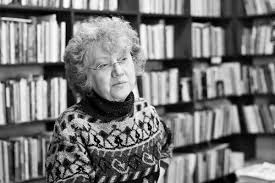
Joyce is a poet, essayist, and educator; her sixth collection, Petition, was designated a “must-read” by the Massachusetts Book Award. She was the editor of Robert Bly: When Sleepers Awake; The Ploughshares Poetry Reader; and Simply Lasting: Writers on Jane Kenyon––working to illuminate the poets and literary traditions she sees as most vital. For that same reason, she directed and taught in UMass Boston’s MFA Program, and currently writes a poetry column for Arrowsmith Press. I consider her voice a vital element in the Red Letter community, and so I happily contend with the emotional crosscurrents enlivening her poems. And now I’m thinking: why not add Nana to that Sibylline sisterhood (Joyce’s grandmother, or mine, or yours, for that matter), because where else do we turn when needing sage advice, a dire warning, or the balm of a knowing smile? Should we not focus our deepest attention––and our inky skills––on those unexpectedly satisfying moments when life shines most brilliantly? Perhaps that’s all we ever have. If, perhaps, another such moment is given to us. . .and yet another. . .raise your glass, your pen in salute: l’chaim!
The Red Letters
* If you would like to receive these poems every Friday in your own in-box – or would like to write in with comments or submissions – send correspondence to:
steven.arlingtonlaureate@gmail.com
* To learn more about the origins of the Red Letter Project, check out an essay I wrote for Arrowsmith Magazine:
https://www.arrowsmithpress.com/community-of-voices
and the Boston Area Small Press and Poetry Scene
http://dougholder.blogspot.com
* For updates and announcements about Red Letter projects and poetry readings, please follow me on BlueSky
@stevenratiner.bsky.social
and on Twitter
@StevenRatiner
All Red Letter installments and videos will be archived at: