Flashback Friday to Red Letter #48
Il Cavallino, Little Horse
How dangerous can it be to sit on a terrace
high on a hill near Doccia, which is silent as ever,
minding one’s business, which is not much,
and thinking about the garden even higher
above the old, old house…
how full it was
of rucula, how later the parmeggian’
thinly shaved over the top of the greens,
and redolent, would be finished by only drops
from a quarter lemon squeezed by your husband’s hand.
That hand was brown, and long-fingered, and graceful.
And the wrist as well—oh how these memories feed us
and starve us at the same time!
No danger then in remembering—surely no danger?—
the now-dry spring that was called Il Cavallino,
at the bottom of a gully reached by our friends’ dark path.
I got water from it, squatting by an old man
who said “Prendi! Bevi!” offering me one of his bottles.
He was old as any of the guardians of the sacred
yet, unlike many of those, he was kind.
Or perhaps he was like all of them in this:
face to face offering/demanding/saying:
“Drink! Take and drink. Do it now!”
—Christopher Jane Corkery
_______________________________________________________________
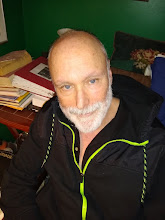
“When you die, God and the angels will hold you accountable for all the pleasures you were allowed in life that you denied yourself.” My wife cut out this anonymous quote from a magazine and posted it on our fridge. At the time, I believed (foolish man!) it was meant as justification for her beloved indulgence: shoe shopping. Endlessly frugal, I’d spent most of my life turning denial into a veritable artform. Later, when it came out in conversation that the quote was intended, not for herself, but for me—my tears were extravagant and, over time, transformative.
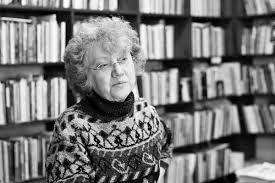
Christopher Jane Corkery’s poem takes us to a tiny Italian hill town near Florence where she savors what seems the simplest of memories: sun, taste, the generosity of the body, those times in life when we’re able to be blissfully unaware of the price time exacts from us all. Three times she mentions “danger” yet, despite some hints of darkness, she plunges ahead, plumbing memory’s irresistible depths—because, back then, that little coltish spring seemed a symbol of ultimate abundance. But what should we make of that old man she meets, squatting on the boundary between the mundane and the mythological? And his offer/command that she—“Bevi!”—drink? Do we ever understand what we’ve been given—or fully appreciate what we’ve lost? Perhaps that’s the poet’s job: to reclaim that lost day—for herself, for her readers—with the gently-inflected music I’ve come to trust in Christopher’s writing. Delving into the poem we are each, then, left on our own to take account of what beauty our flickering days contain.
My dog-eared copy of her first collection, Blessing (Princeton University Press) remains a favorite of mine. Christopher’s new book, Love Took the Words (Slant Books, 2020) from which “Il Cavallino…” was taken, carries us to faraway places—Ireland, Mexico, Greece, Italy (much appreciated during these homebound days)—as well as towns a mere stone’s throw from Arlington. Poet, educator, essayist, proud grandmother, Christopher is widely published, richly honored, and determined to continue following wherever her pen leads.