
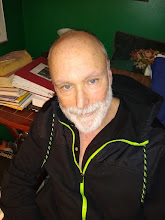
Jon D. Lee is the author of five books, including IN/DESIDERATO and An Epidemic of Rumors: How Stories Shape Our Perceptions of Disease, as well as the chapbook Eden. His poems and essays have appeared in The Atlantic, Narrative, Sugar House Review, Sierra Nevada Review, The Writer's Chronicle, One, The Laurel Review, and The Inflectionist Review. He has an MFA in Poetry and a PhD in Folklore. Lee teaches at Suffolk University, where he also serves as the Director of the annual David Ferry and Ellen LaForge Prize for Poetry and Poetic Translation.
I spoke to Lee about about his latest poetry release, "Eden"
This long poem is a long discussion with John Milton, of " Paradise Lost" fame. Milton wrote of morality and free will. You wrote "We eat our gods" in this collection. Does our free will lead us here?
An interesting question: does human freedom lead us to the point where we consume our own gods? If we accept Yuval Noah Harari’s arguments (especially in Sapiens) that religions are, in essence, a “fiction”—that is, a construct in the same class as money and government and law that would cease to exist alongside the destruction of humanity—then we certainly move toward a reality wherein those religions become consumable products in multiple senses: not only in their use and usefulness, but in their ability to be swallowed and either incorporated into a body or excreted. Consider all of the religions that are effectively extinct—Mithraism, Zoroastrian Polytheism, Manichaeism, etc.—which certainly evince a shifting world in which gods fade or are replaced as society progresses, or as countries are subsumed beneath warring factions. If you will, what we then often have in history is one group’s “freedom” being taken by another: “I am free to worship my god, but you are not free to worship yours.” At the same time, at least in parts of the modern world, we have the freedom to question the existence of religions and gods in ways that were never previously acceptable, and so we have tomes such as Christopher Hitchens’ God Is Not Great: How Religion Poisons Everything, which collectively argue a radical atheism, and so it is perhaps not surprising that a recent Gallup poll found that the percentage of U.S. citizens who said religion was an important part of their daily life dropped from 66% in 2015 to only 49% in 2025. I am not, in Eden, arguing the existence or nonexistence of God, but I do find it curious how our cultural understandings and tolerances of religion have changed over the centuries, and find it especially telling that Milton was contemporaneous to Descartes, whose moving philosophy from blind adherence to individual reason is credited by some as shifting the importance of reality and thought away from the church (despite Descartes’ attempts to philosophically argue the existence of God), and leading to the rise of modern atheism via Nietzsche et al.
Why did you decide to focus on " Paradise Lost"? There are many other works you could have chosen.
Eden is actually only one of several “discussion” poems I’ve been working on for several years. The first of these pieces was my long poem “Las Meninas” (Sugar House Review, vol. 24, 2022), which argued the nature of art and perception with Diego Velásquez (and that poem only part of a manuscript-in-progress which argues the nature of modern poetry with John Ashbery, my “Las Meninas” being a direct response to his long poem “Self-Portrait in a Convex Mirror”). Eden is the second of these, and is actually in itself only a portion of a larger manuscript-in-progress titled The Labyrinth. I am also at work on a third manuscript which converses with John Berryman (using the structure of his Dream Songs poems) about alcoholism, depression, suicide, and the world that rose up both poetically and politically after his death. There is, in other words, a history of these choices, Milton coming in specifically here because a) my father was a Milton scholar and so I grew up absorbing his ideas through a sort of osmosis, b) Milton allowed me to move into a rough beginning science/religion polarity that I found interesting in its tensions, and c) I’ve spent the last ten years of my writing life focusing almost exclusively on the long poem, Paradise Lost being the supreme example of that form.
The book reminds me of Dan Tobin's " The Mansions" in that it is steeped in myth, religion, literature, a very scholarly work. I asked Tobin, and I ask you, do you feel this more of an academic book, and or will it appeal to the casual reader?
I had not read Tobin’s The Mansions, but it arrived over the weekend and I read the first canticle over this morning’s coffee, and the parallels are indeed aptly noticed. We even circle around many of the same questions and time periods and locations, though Eden does not delve as deeply into the realms of quantum physics. Both of our works are what the late Reginald Shepherd would have likely classified as “difficult,” but I think both of them avoid what he warned against as being “obscure” in that Tobin and I attempt to provide enough information for the reader to understand context, direction, tone, etc. Certainly both books are assisted by supplemental reading on the part of the reader, as well as access to a dictionary, but I believe a large amount of pleasure can be derived from this activity.
As to your specific question, I think both books are intended to be studied, and in that sense are certainly “academic” for a given definition of that word—meaning to be parsed slowly and carefully—but enough care has been taken in the structure and editing of the works that they should be approachable by a decently-read poetic audience, if we accept Whitman’s declaration that “To have great poets there must be great audiences too.”
At the beginning of the book you quote from " Paradise Lost," " Oh friends why not come on these victories proud?" I think you capture the existential questions that face you, and all of humanity. Your take?
I’ve certainly attempted to look at as many existential questions as I thought would comfortably and reasonably fit into the poem. In this sense, Eden actually nicely follows the directions from my previous book, IN/DESIDERATO, which I wrote as a letter to my children about the world we’re leaving behind for them to inhabit, which is increasingly tenuous in its environmental stability even as medicine geometrically opens the possibilities of drastically increased lifespans, and the dissonance between those two realities is terrifying in its obvious shortsightedness. But whereas IN/DESIDERATO was much more focused on an environmental ethic, Eden moves into war, politics, capitalism, patriarchal hierarchies, and other modern issues to question our directions and intentions.
Why should we read this collection?
The poet Kevin Prufer tells us that a poem maps the movement of a mind across the page, and in following the movements of my mind throughout this book, you will learn something about how I experience this world as a father, a husband, and a member of our shared society. Anything we can do to better understand ourselves and each other helps move us towards a more open and caring society. That's the society in which I want my children to live.
An interesting question: does human freedom lead us to the point where we consume our own gods? If we accept Yuval Noah Harari’s arguments (especially in Sapiens) that religions are, in essence, a “fiction”—that is, a construct in the same class as money and government and law that would cease to exist alongside the destruction of humanity—then we certainly move toward a reality wherein those religions become consumable products in multiple senses: not only in their use and usefulness, but in their ability to be swallowed and either incorporated into a body or excreted. Consider all of the religions that are effectively extinct—Mithraism, Zoroastrian Polytheism, Manichaeism, etc.—which certainly evince a shifting world in which gods fade or are replaced as society progresses, or as countries are subsumed beneath warring factions. If you will, what we then often have in history is one group’s “freedom” being taken by another: “I am free to worship my god, but you are not free to worship yours.” At the same time, at least in parts of the modern world, we have the freedom to question the existence of religions and gods in ways that were never previously acceptable, and so we have tomes such as Christopher Hitchens’ God Is Not Great: How Religion Poisons Everything, which collectively argue a radical atheism, and so it is perhaps not surprising that a recent Gallup poll found that the percentage of U.S. citizens who said religion was an important part of their daily life dropped from 66% in 2015 to only 49% in 2025. I am not, in Eden, arguing the existence or nonexistence of God, but I do find it curious how our cultural understandings and tolerances of religion have changed over the centuries, and find it especially telling that Milton was contemporaneous to Descartes, whose moving philosophy from blind adherence to individual reason is credited by some as shifting the importance of reality and thought away from the church (despite Descartes’ attempts to philosophically argue the existence of God), and leading to the rise of modern atheism via Nietzsche et al.
Why did you decide to focus on " Paradise Lost"? There are many other works you could have chosen.
Eden is actually only one of several “discussion” poems I’ve been working on for several years. The first of these pieces was my long poem “Las Meninas” (Sugar House Review, vol. 24, 2022), which argued the nature of art and perception with Diego Velásquez (and that poem only part of a manuscript-in-progress which argues the nature of modern poetry with John Ashbery, my “Las Meninas” being a direct response to his long poem “Self-Portrait in a Convex Mirror”). Eden is the second of these, and is actually in itself only a portion of a larger manuscript-in-progress titled The Labyrinth. I am also at work on a third manuscript which converses with John Berryman (using the structure of his Dream Songs poems) about alcoholism, depression, suicide, and the world that rose up both poetically and politically after his death. There is, in other words, a history of these choices, Milton coming in specifically here because a) my father was a Milton scholar and so I grew up absorbing his ideas through a sort of osmosis, b) Milton allowed me to move into a rough beginning science/religion polarity that I found interesting in its tensions, and c) I’ve spent the last ten years of my writing life focusing almost exclusively on the long poem, Paradise Lost being the supreme example of that form.
The book reminds me of Dan Tobin's " The Mansions" in that it is steeped in myth, religion, literature, a very scholarly work. I asked Tobin, and I ask you, do you feel this more of an academic book, and or will it appeal to the casual reader?
I had not read Tobin’s The Mansions, but it arrived over the weekend and I read the first canticle over this morning’s coffee, and the parallels are indeed aptly noticed. We even circle around many of the same questions and time periods and locations, though Eden does not delve as deeply into the realms of quantum physics. Both of our works are what the late Reginald Shepherd would have likely classified as “difficult,” but I think both of them avoid what he warned against as being “obscure” in that Tobin and I attempt to provide enough information for the reader to understand context, direction, tone, etc. Certainly both books are assisted by supplemental reading on the part of the reader, as well as access to a dictionary, but I believe a large amount of pleasure can be derived from this activity.
As to your specific question, I think both books are intended to be studied, and in that sense are certainly “academic” for a given definition of that word—meaning to be parsed slowly and carefully—but enough care has been taken in the structure and editing of the works that they should be approachable by a decently-read poetic audience, if we accept Whitman’s declaration that “To have great poets there must be great audiences too.”
At the beginning of the book you quote from " Paradise Lost," " Oh friends why not come on these victories proud?" I think you capture the existential questions that face you, and all of humanity. Your take?
I’ve certainly attempted to look at as many existential questions as I thought would comfortably and reasonably fit into the poem. In this sense, Eden actually nicely follows the directions from my previous book, IN/DESIDERATO, which I wrote as a letter to my children about the world we’re leaving behind for them to inhabit, which is increasingly tenuous in its environmental stability even as medicine geometrically opens the possibilities of drastically increased lifespans, and the dissonance between those two realities is terrifying in its obvious shortsightedness. But whereas IN/DESIDERATO was much more focused on an environmental ethic, Eden moves into war, politics, capitalism, patriarchal hierarchies, and other modern issues to question our directions and intentions.
Why should we read this collection?
The poet Kevin Prufer tells us that a poem maps the movement of a mind across the page, and in following the movements of my mind throughout this book, you will learn something about how I experience this world as a father, a husband, and a member of our shared society. Anything we can do to better understand ourselves and each other helps move us towards a more open and caring society. That's the society in which I want my children to live.






No comments:
Post a Comment