Tuesday, December 20, 2016

Low Dishonest Decades by George Scialabba


Low Dishonest Decades
Copyright © 2016 by George Scialabba
ISBN 978-1-940396-22-4
Pressed Wafer
375 Parkside Ave.
Brooklyn, NY 11226

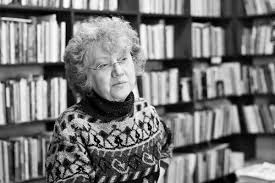
I hope Low Dishonest Decades, with its demonstration that sane political discourse is still possible, will improve your morale as it has mine in these weeks following Trump’s election. Cambridge’s George Scialabba is a writer who has mastered that discourse and, now that he has retired from his position as a building manager for Harvard’s Center for Government and International Studies, he should have more time to help us think of ways out of our predicament.
Low Dishonest Decades is a collection of 20 book reviews and a few essays; they examine our political, international, economic and ethical plight in lucid prose, and appeared over the last three decades in some 11 periodicals from our Boston Phoenix to the Village Voice and the Nation. His ability to make the arguments of his subjects compact and portable meant that by reading Low Dishonest Decades I gained familiarity with a literature I would otherwise miss, given my preference for fiction and poetry.
The collection opens with a short section containing four reviews called "The Long View." The first “Democracy Proof” is a review of How Democratic Is the American Constitution by Robert Dahl, which makes Trump’s election seem an inevitable result of the anti-democratic biases of this document that we have been taught to worship. The concluding review of this section is of three books by Morris Berman (The Twilight of American Culture, Dark Ages America: The Final Phase of Empire and Why America Failed: The Roots of Imperial Decline) ends with this praise:

There is something immensely refreshing, even cathartic, about Berman’s refusal to hold out any hope of avoiding our civilization's demise. And our reaction goes some way toward proving his point: we are so sick of hucksters, of authors trying – like everyone else on all sides at all times in this pervasively hustling culture – to sell us something, that it is a relief to encounter someone who isn't, who has no designs on our money or votes or hopes, who simply has looked into the depths, into our bleak future, and is compelled to describe it, as Cassandra was. No doubt his efforts will meet with as much success as hers.

While this grim ending to Scialabba's opening section does pose the question “Why continue?” we may take comfort from the fact that, for all of its individual terror, death is the engine that drives all evolution. Our democracy may be failing us but that does not mean that democracy has failed. And in the reviews of the middle section, "Politics," Scialabba makes clear we have a responsibility to learn the lessons of those failings to guide the modes of our governance so that democracy will continue to evolve. And that is one, if not the most important, function of Low Dishonest Decades.
The reviews of this second section, which have titles such as "Do Ideas Matter?" "Where Did Our Wealth Go?" and "The Sorry State of the Union," are divided between critiques of domestic and foreign policies. In “What Is American Foreign Policy About?"  he summarizes those critiques:

Business is not a monolith, of course; sometimes businesses have competing interests. But there is a large area of shared interests, of all things businesses favor. They all want week labor unions or none; they all want lower taxes, especially on the rich; they all want weak or no environmental or consumer safety or occupational safety regulations; they all want no restrictions on foreign investment or resource ownership or capital flows; they all want a minimum of social spending, so that the population will be as insecure as possible; and they all want a political system that can be controlled by money, which is to say controlled by them. This is what they want for the United States, and for most of American history, they'd gotten it, except when they bankrupted the country with the Great Depression and there were a few reforms, called the New Deal. But business never accepted the New Deal. They fought back, in the 1980 they won and now they have all the above once again.

And that's what they want for the rest of the world: no organized labor, low taxes, weak regulation, no restrictions on investment or lending, no social safety net, and no popular sovereignty, that is, no real democracy. To make the world as much like this as possible: that’s the purpose of American foreign policy.

And in "What Is to Be Done?" a review of eight books I think he answers the question of that title well:
To put it non-metaphorically: if we want a durably decent society, we have to improve the quality of political discussion. Yes, we will always need to address people's hearts and imaginations. But in the long run, their ability to think, to see through right-wing (and left-wing) bullshit, is even more important. If voters had even a slightly enhanced tolerance for position papers and policy proposals, the influence of Rush Limbaugh, Karl Rove, Jerry Falwell, and other right-wing liars, morons, and demagogues would be vastly diminished. Isn't that a worthwhile goal?

In 2007, when he continued with this question, “How to accomplish [that worthwhile goal]?” Scialabba answered, “I don’t know.” And then he put his tongue in his cheek with this proposal: “Perhaps population exchanges between blue and red states. …Perhaps secular liberals should go to church and distribute copies of the Nation to their fellow church goers.”  Then he took his tongue out to conclude the review: "But what's possible is up to us. The main lesson of the right-wing ascendancy is simply: never give up. As Yeats pointed out: ‘The best lack all conviction, while the worst/are full of passionate intensity.’ The best had better get – and stay – off their asses." If that was true eight years ago how much more so today, and fortunately Low Dishonest Decades provides some of the mental exercise we need to rehabilitate the quads and hamstrings of our convictions so we might get off our asses and back on our feet. And Scialabba almost always manages to provide that exercise without ad hominem comments; “other right-wing liars, morons, and demagogues” is the only time in the volume that I recall him weakening an argument by yielding to that temptation.

By the third section “Intellectuals” I was enjoying some satisfaction of my need of food for thought and one essay "A Rake among Radicals" made me feel I would like to read some Alexander Cockburn for desert, because Scialabba’s essay praising him made Cockburn’s writing and personality seem as attractive as his ideas. This extended quote from the beginning of that essay demonstrates Scialabba’s lucidity and range of thought and his ability to comprehend and summarize the thought of others.

On Christmas Eve 2010, Alexander Cockburn began a short column for his newsletter Counterpunch in this fashion: "The prime constant factor in American politics across the last six decades has been …" Let us pause for a moment to conjecture how commentators of diverse political complexion might have completed that sentence. The exercise might give us some sense of Cockburn's place in the culture of late-twentieth-/early-twenty-first-century journalism.

A Tea Partier might say: "… the ever-increasing tyranny of Federal bureaucracies." A paleoconservative might say: "… the expulsion of God from the public square." A neoconservative might say: "… the weakening of American resolve in the global decline of American power." A neoliberal might say: "… increasing recognition that markets work better than government intervention." A feminist or gay activist might say: "…the gradual extension of equal rights." A civil libertarian might say: "… the gradual erosion of civil liberties." An environmentalist might say: "…a blind emphasis on economic growth at all costs." A social Democrat might say: "…the dwindling of social solidarity from its high point just after World War II."

All these perspectives have at least a grain of truth. But Cockburn's answer cuts deepest: "…a counterattack by the rich against the social reforms of the 1930s." Class warfare is not the only kind of social conflict, or always and everywhere the most important kind. But it is the most intractable and invisible kind, and Cockburn was one of the few American journalists who never lost sight of it or failed to rub it in.

When Scialabba retired from his day job at Harvard, John Summers, the editor of the Baffler, organized a Festschrift where George was celebrated by the likes of Noam Chomsky, Barbara Ehrenreich, Thomas Frank and others because he is also an American writer who has never lost sight of it or failed to rub it in. If you want more details about his reputation you might check out this profile from the New Yorker:
or this one from the Nation: https://www.thenation.com/article/hear-hear-george-scialabba/. And you might also want to check out the other three collections of his work,
that have been published by Pressed Wafer. (What Are Intellectuals Good For? – 2009, The Modern Predicament – 2011, and For the Republic – 2013)

– by Wendell Smith.

Saturday, December 17, 2016

The Sunday Poet: Robert K. Johnson


Robert K. Johnson
Robert K. Johnson is the former Poetry Editor for Ibbeston Street Magazine. His poems have appeared in such publications as Main Street Rag, Webster Review, South Carolina Review, The New York Times, and Chiron Review. His latest collections of poetry are From Mist To Shadow and Choir of Day.


TO A YOUNG WOMAN AT THE SPORTS CLUB


Oblivious to me,

one machine away,

oblivious to all
the other exercisers,

                     oblivious
to the StairMaster's steps
your pumping legs
climb and climb
but never gain an inch on:

your upturned eyes
free you to float
high above the ceiling
--go for it!--
to other worlds
that are waiting for you
to discover them.

                --Robert K. Johnson

Thursday, December 15, 2016

Dead Wind by Chilly Sample


Dead Wind by Chilly Sample


His eyelashes appear in front of his face, the sun sharp, and warm, stinging his eyeball, it is just saying hello. He struggled to lift his head, brain swelling, he was already self diagnosing. A hypochondriac by nature, Jack was quick to jump to conclusions. He muttered over and over again “pain” “pain”. Words typically followed by assistance, there was none of that out here. His first introduction to loneliness; he was feeling claustrophobic. He got to his hands and knees, took a deep breath in, then collapsed. Pupils dilated, head ringing, he’s been here before. Only last time he was looking into the eyes of his high school football trainer, now glaring at the old cedar wood, he hates waking up to strangers. He bent over, waiting for the ringing to stop, he felt the wood on his hands, it was warm to the touch, feeling each and every grain, the ringing started to echo, and eventually die. The only thing keeping him company, gone forever. He got up, and sat at the helm, looking around to see an endless sky of blue, his world grew and shrunk within a matter of seconds. His head collapsed in his chest, as if a bolt came loose in his neck. He closed his eyes, then opened again, he did this 20 more times. It was true. The sail flapped unconsciously in the dead wind, the sound traveled through Jack’s spine showing him death, giving him life. He saw a shape lying on the deck, “Sam!” “Sam!”. He rushed over to his brother, flipped him on his back. Sam’s eyes buried in a pit, Jack quickly fell.

Jack awoke lying over his brother, he jumped up, and fell overboard. He hit the water, a sea of blankets, soaking into him gradually. He closed his eyes, fell deeper and deeper, feeling every breath. The sound of silence filled his head, whispering, telling him to let go. Nothing to lose, Jack’s grip loosened. His body loosened. He felt the end was near, suddenly his lungs collapsed, he was not ready to die yet. His eyelids flashed open, Jack saw life, he swam up, till his arms breached the surface. His mouth grasped the air, it rushed through his body, giving him hope. Jack swam back to the boat, and curled up next to his brother on the deck. He wept, thinking back to the time he caught Sam still in the snow, when he was younger. Snow fell heavy, and dense, trees crackled in the wind. Jack went into the sun room to get his shoes;he saw the purple pom pom of Sam’s hat. Nothing but the socks on his feet, he rushed out, hurling himself on Sam. Sam pushed Jack on the ground, “What the fuck Jack, I was almost there”. “What the fuck are you doing Sam”, “ I wanted to know what it felt like to be buried alive”. Jack left Sam on the deck of the boat. He went down to the cabin of the boat. A monster was inside of him, and it was hungry, voicing its complaint, Jack tore through all the drawers. A hole filled Jack’s chest, as he kept coming up empty. The monster inside, eating at him, taking every last ounce of hope. Jack began to hit his stomach with his fist. “Shut up, shut the fuck up, leave me alone”. Breath left his mouth, he collapsed to the floor. Heaving, trying to grab air, but nothing. Breath finally returned, Jack went to the bed, and looked up at the ceiling. Wishing he would sleep, and not awake.


The ocean roars against the rocks, clashing with one another. Sun shines through his cheap curtains, sea breeze creeps under his nose. The sea grass sways with the wind. The dry sheet scratch against his legs, as he pulls them from his body. He untangles his boxers, and heads down stairs. He walks across the living room as it moans beneath him. Pushing the old wooden door, he slides out into the breeze. Eyes closed he walks across the sand, feeling every grain beneath him. He stops. The water rushing forward to greet his toes, then running away in fear of rejection. He hears a squall, getting louder, and louder, until the sound of the ocean is but a dream. Jack springs upright, hitting his head on the low ceiling of the sailboat. The ringing is back, gripping his hand tightly, then disappears. Jack walks up to the deck, to find a mass of seagulls pecking at Sam. “go away, get out of here!” . The sea gulls fly away in a hurry, not before one takes a nice juicy piece of Sam’s forearm. “Eat him” “eat him Jack” “he would do the same to you”, “no, he wouldn’t!” “do it, or you'll die Jack” “do you want to die Jack?” "Answer me now Jack, or I will leave you”. “Good, great, leave me alone”. “Just kidding Jack, I’m here to stay, the only way to get rid of me is to eat your brother”.  Water is dropping from Jack’s mouth, his eyes opened, his body warmed. He rushed over to Sam, grabbed his arm, and brought it up to his mouth. He took a deep bite of the flesh, a water park formed in his mouth, and explosion in his eyes, shock therapy in his hands, a pin dropped in his ears, he swallowed. He stood there still, took his finger, and shoved it down his throat. His brother departed his body, faster than he went in. He ran to the front of the boat, and took the sail down. He quickly wrapped Sam in the sail. He went below deck, and grabbed an anchor. Tied it around the body, and with no hesitation shoved his brother overboard. Watching him disappear into a mist. 

 
With every last ounce of energy in Jack’s body used to set his brother free, he went downstairs to the bed. He found a bottle of painkillers in one of the drawers, and one by one he took them, until there was nothing left to reach for. He lied on the bed staring at the ceiling. He was walking around Paris, barefoot over the cobblestone streets. He sat down at a cafe, and ordered two Coffees. The waiter placed the coffees at the table. Jack stared blankly into the coffee across him. “Are you expecting anyone?,” a voice said from over his shoulder. Without looking back Jack replied “Yes, my brother he should be here any minute now.” Jack stared down at his coffee, and watched as an eyelash slowly floated into his coffee. 


Chilly Sample is a sophomore from Concord, MA.  He is a Hospitality Major at Endicott College and complements his studies working part time at Privateer Rum, an Ipswich based distillery.  Chilly is a certified Underwater Whale Tour Guide, having worked for 6 months after high school at a Tongan resort renowned for its migratory Humpback whale population. He enjoys numerous and eclectic activities ranging from spearfishing to snow skiing. 

Tuesday, December 13, 2016

Stone Soup Poetry: a savory mix every Monday evening.

A 20 pound rock, from 20 feet down.
Good for making a poem, but not soup.


Somerville resident Kirk Etherton


Many a poet has passed through Stone Soup Poetry founded by the late Jack Powers on Beacon Hill over 4 decades ago. I had the privilege of  being the president of Stone Soup one short year--about 20 years ago. I also conducted a series of interviews with Powers, and the interviews are online, and one is in the video collection at the University of Buffalo. Somerville resident  Kirk Etherton is the  "interim host" of the venue now--so he offered to share a few words..

Stone Soup Poetry: a savory mix every Monday evening.
by Kirk Etherton

It's an honor--and lots of fun--to be the "interim host" of this long-running series. Stone Soup was founded by the legendary Jack Powers; in recent years it's been hosted by the talented and tireless Chad Parenteau. I agreed to take Chad's place for a little while, when he needed to go on hiatus.

We meet Mondays, starting at 7:00 pm and going til 9:00 pm (at the very latest). There are a number of great "regulars," including Carol Weston, Martha Boss, and Lee Varon. Deborah Priestly, a very fine poet and storyteller, is sort of the "co-host." Cambridge Poet Populist Lo Gallucio has stopped by, and read some amazing work. Berklee prof. Lucy Holstedt has recited poetry, and performed original music.

I knew this would be a good experience, but it's far surpassed what I imagined. Stop by if you can. Read a poem that means something to you (original or not); sing a song; tell a story. Now, more than ever, I think, we need to get out and do real things with real people.

Admission is only $5.

Stone Soup Poetry, at Out of the Blue Gallery, 541 Mass. Ave., Central Sq., Cambridge. Come on down!

Monday, December 12, 2016

Live Interview with Simon Perchik

The B Poems by Simon Perchik


Live Interview with Simon Perchik by Susan Tepper on December 10, 2016

with Susan Tepper

Simon Perchik was born in Paterson, New Jersey in 1923. His father was a silk weaver until the mills dried up during the Great Depression, when he turned to the grocery business, installing his family of eight in living quarters behind the small stores where Perchik lived until World War II. Following a stint in the Army Air Corps, where he served as a pilot, Perchik enrolled in New York University under the G.I. Bill. He began writing poetry in fits and starts. After receiving a B.A. in English, he went straight to NYU Law School. From 1950 until 1980 Perchik practiced law while continuing to write poetry. He served as Suffolk County Long Island’s first Environmental Prosecutor from 1975 until 1980.


I Counted Only April, his first book, was published in 1964. Twenty three poetry books have been published to date. Perchik has placed thousands of poems in magazines and journals ranging from The New Yorker, Poetry, Partisan Review and The Nation, to the tiniest of online magazines.

The B Poems, his brand new collection, was published by Poets Wear Prada in November 2016. Perchik divides his time between his home in East Hampton, NY and his daughter’s home in Manhattan.
Library Journal wrote: “…Perchik is the most widely published unknown poet in America…”

Susan Tepper: You have a daily writing routine. How do you start the process moving?

Simon Perchik: Every morning I take a fifteen minute walk to catch the bus to East Hampton Village. I go to the Y where I do a little exercise and have some coffee. I’ll start to work on my poetry there. Then I move down the street to The Golden Pear café where I take a table all the way in the rear. Nobody wants to sit back there because you can’t see and be seen! (laughter)

ST: That’s funny and so typical of the tony Hamptons, the see and be seen.

SP: Yeah! So I sit there with my headphones on listening to classical music. Mahler and Beethoven for instance. I’ll be working with a group of pictures from a well known photographer’s book such as The Family of Man.

ST: So you write from what you see in the photo? But your work is so abstract.

SP: Susan, I wish it were that simple. I begin by describing in prose what I see in the photo (this is a so and so) for maybe six or seven pages. Then keeping the photo in sight, I turn to a book of mythology or science. I’ll think to myself now what does this have to do with what’s in the photograph.

ST: You’re looking for a link?

SP: I’m like a detective. A poetry detective. Though the photo and the book’s text are seemingly contradictory, I continue thinking about it, then suddenly one has everything in the world to do with the other. I have my hook. Similar to what a metaphor does.

ST: That’s when the poem actually begins?

SP: Correct. The photo is simply a catalyst to get the pen flowing. Trying to connect the image with the idea. As the poem progresses, new things come in and often the originating image and idea disappear entirely at the poem’s conclusion.

ST: Wow, that’s some process. I don’t think I’d have the strength. (laughter)

SP: I mark each page as I go along onto the next photograph. The entire collection can take several years to finish.

ST: You work in the café on a laptop?

SP: No, on random sheets of paper. In long hand.

ST: Seriously?

SP: Yes. Listen. The poems don’t get written by themselves. The Family of Man took me eight years to finish.

ST: When you first see the photograph, does the poem start to jell in your mind?

SP: No. I’ll be thinking where am I going with this, what am I doing. Writing with nothing in my head but a sense of doom.

ST: But your poems always come out perfect. At what point in your method does the abstraction come into the poem?

SP: That comes at the end. If I’m going to abstract a mountain, first I have to have the mountain. After I get a sense of what’s going on in the poem. It’s a poem not an essay. I try to approach the reader through their subconscious.

ST: There’s a lot of death in your poems. Are all poets obsessed with death?

SP: No matter how a poem starts out it ends in a cemetery (laughter). Love and death. Loneliness, despair, fear. What else is there to write about?

ST: Of all the abstract painters, who would you compare yourself with?

SP: Rothko. When the abstract artist paints, it is the artist’s subconscious talking to the viewer’s subconscious. Likewise, when I abstract a poem, it is my subconscious talking to the reader’s subconscious. Another painter, Herman Cherry, who was an abstract artist, is my favorite of the abstractionists and I feel an equal to Rothko.

ST: That’s interesting. I’m unfamiliar with Cherry’s work. Do you own any of his pictures?

SP: Yes, but not the one I want. The one I wish I owned is a blue-purplish dark abstraction that’s really death-like.

ST: It sounds amazing. Actually, I see you as the Jackson Pollock of poets. And he lived in East Hampton, too, close to you in Springs. Did you ever meet him?

SP: No. I met de Kooning a few times.

ST: What was he like?

SP: His studio was jammed with paintings. He was not in good health at that time. My wife, Mickie, was a nurse and she’d been sent there to give him an injection. I accompanied her. He was very quiet.

ST: So getting back to your brand new collection of 63 poems titled The B Poems. Which photography book helped to inspire this work?

SP: Bruce Davidson was the photographer and I used all 63 photos from his book titled Bruce Davidson:Photofile published by Thames & Hudson, London, 1990. I might add that I have pretty much exhausted mythology at this point, mostly using Science News Magazine to confront the photographs.

ST: Having read nearly all your twenty three books, I must say I was totally stunned all over again by the brilliance of The B Poems.

SP: Thank you.


The B Poems by Simon Perchik published by Poets Wear Prada http://pwpbooks.blogspot.com/ and all online outlets.

Sunday, December 11, 2016

Review of Faithless by Andrew Joseph Clarke--Boston Playwrights' Theatre

Review by Doug Holder

I always tell my creative writing students at Endicott College that you don't need to have been on a mountaintop, conversing with some monk--to be inspired to write a poem.  You can be in a down-at-the heels java joint in your neighborhood, waiting for the Dudley Bus, or shooting the breeze with the local homeless guy at the park. In the case of the Boston Playwrights' Theater's production of Andrew Joseph Clarke's play " Faithless", the drama takes place in one of the more banal places of our acquaintance--the late night hospital waiting room--where basically the cast of characters wait for their mother, and in the case of Sam-- the teenage girl-- the grandmother, to pass.

At first after reading the description of the play about a fading Irish matriarch, two feuding sisters, the return of a wayward brother, I was afraid that the play would be a rehash of any number of the Eugene O'Neill family tragedies. But Clarke put his own signature on this production with his well-developed complex and conflicted characters, and the still haunting presence of their late father-- a decidedly embittered and hapless man. The actual mother never appears on stage but her heavy presence in the waiting room is never in doubt.

The cast was first rate. Maureen Keiller, who played one of the sisters-- Maureen--was a standout. She had a great Irish face (if there is such a thing), and emotion registered on her careworn canvas with nuance, smirks, the lifted eyebrow, and the studied sarcasm. Her performance impressed me as truly genuine, and in fact I noticed she was still emotionally-involved with her character even after her bow. I may be wrong--but I think she was crying--in any case she was heavily invested in this character that she intimately inhabited.  The teen daughter -- played by Abby Knipp--was expertly portrayed by this actress with the affected-eye-rolling, angst of a teenager in search for her family and her identity. Greg Maraio, as the gay, wayward son Skip-- was a bit stiff--but did have a credible performance. Christine Power played the control freak sister with aplomb.

At times the play had echoes of Arthur Miller and such--and at times seemed a bit formulaic. But I think Clarke--   a student in the  MFA program at Boston University, is a playwright to watch as he explores the underbelly of the American dream--and carves the meat off our daily play acting to the bone and perhaps the marrow.

The Sunday Poet: Simrin Tamhane


Simrin Tamhane is the author of a new book of poetry "hundred and eight prayer flags" ( Ibbetson Street Press/Endicott College Young Poet Series). Tamhane is an international student from the Himalayan state of Sikkim in India.  Currently a junior at Endicott College, she is majoring in International Studies and is interested in human rights and many of her writings focuses on this topic. She also writes about her childhood back in India and she enjoys old music, tragedies and iced lemonade in the winter.


Aleppo Dreams


With all the rubble and the broken bones of my city's weeping soul,
I have managed to build a small secret. A dream.
I place it on a slide and put it up against the sun and watch
as the reflection illuminates the cobblestone streets of my home
and hugs the corpses who were once my parents.

This dream crackles on the palms of my little sister's hands
as she tosses it up into the skies and marvels at it falls down like pixie dust.
From the hilltop, I watch the shimmer flirt with the smoke of destruction
and softly land on the eyelashes of my people,
blinding them.

They stand up slowly, their knees
perfectly orchestrated to tragedy
I see them rise.


Thursday, December 08, 2016

Interview with Poet Joyce Peseroff: Friend to Jane Kenyon, member of the Alice James Collective, author of " Know Thyself", and more...


Doug Holder with Joyce Peseroff


Poet and editor Joyce Peseroff grew up in the Bronx. She earned a BA at Queens College and an MFA at the University of California at Irvine, where she studied with Donald Justice. She began a lifelong friendship with poet Jane Kenyon in 1973, when Peseroff entered the University of Michigan’s Society of Fellows. In 1977, after both poets had returned to the Northeast, Peseroff and Kenyon cofounded the literary magazine Greenhouse.

Peseroff is the author of several collections of poetry, including The Hardness Scale (1977, reissued in 2000), Mortal Education (2000), Eastern Mountain Time (2006), and Know Thyself . She has served as an editor for Ploughshares and edited The Ploughshares Poetry Reader (1987), Robert Bly: When Sleepers Awake (1984), and Simply Lasting: Writers on Jane Kenyon (2005).

Her honors include grants from the National Endowment for the Arts and the Massachusetts Artists Foundation as well as a Pushcart Prize. Peseroff lives in Lexington, Massachusetts, and teaches at the University of Massachusetts Boston.

I talked with her on my Somerville Community Access TV show " Poet to Poet Writer to Writer."


**********************************************************************************


Doug Holder: You are from the Bronx. I know a lot of great writers grew up there...Cynthia Ozick comes to mind. Is there a Bronx sensibility to your writing?


 Joyce Peseroff: In my first book I wrote about growing up in New York City. There is a certain awareness about growing up in New York that you never lose. You are always aware of the people around you. You are always aware of how the landscape is made up of things--made by humans. One of the things I like is tension--between the outer world and the inner world. And you see that in the city streets--it is less likely in the suburbs.


Doug Holder:  You were a part of a great literary collective--   Alice James Books--  that was founded in Cambridge, Mass in the 70s.  Can you tell us about your experience with this group?


Joyce Peseroff: It was a collective with an emphasis of publishing books by women. But Ron Schrieber was one of the male founding members. But the collective was formed to fill a gap for women writers. Women--at that time--were not finding an opening with traditional publishers. Jane Kenyon's first book was published by Alice James. Celia Gilbert had her first--Kathleen Aguero was part of the collective. It was a piece of literary history. We had an office on Mt. Auburn Street in Cambridge. We did it all by ourselves.  We did all the production, publicity, order fulfilling, advertising, etc... All decisions were made by a consensus. About 20 years ago Alice James moved to Maine.


Doug Holder: You were the first director of the MFA program at UMass/Boston.  Tell us about this.


Joyce Peseroff: It was something that the administration asked me to do--because they knew what a wonderful job Martha Collins did with developing the undergraduate creative writing program, along with Lloyd Schwartz.  So we wrote a proposal and I was the first director. I was there for four years. We had strong ideas about the kind of students we wanted to have. We were looking for diversity. We wanted people who were from Boston--have jobs and wanted to finish an MFA without going into a low residency. Most of our classes are held after 4PM. We also looked for older students--people who have been out in the world and had stories to tell. We are a small program--we only have ten students--poetry and fiction. Everybody gets to know one another.


Doug Holder: You are friends with Donald Hall and the late Jane Kenyon. In fact, you got Hall to edit an issue of Ploughshares.


Joyce Peseroff:  Yes--DeWitt Henry and I asked Hall to edit an issue. I first met Hall and Kenyon on a fellowship to the University of Michigan. There were scholars from all around as part of it.  Jane and Donald were there-and I met Jane through Donald. They were married then. They had an informal workshop, with Greg Orr and others. Greg, Don, Jane and I along others would share poems there. After two years I came back to Massachusetts. Jane and Don moved to New Hampshire. He bought his family farm. We kept up our friendship. I would visit there. Jane and I were editing a small press magazine "Green House" at the time. We were looking to place and feature poets with different sensibilities.


Doug Holder: In your poetry collection " Know Thy Self"--you pair lightness with pain and darkness. It seems that you are always looking over your shoulder.


Joyce Peseroff:  Yes. Maybe because I grew up in the Bronx, and I feel the world is a surprising place. I am not world-weary. This is part of the way I developed as a writer.


Doug Holder: From the poems I read--you seem to have an ongoing conversation with your late mother.

Joyce Peseroff:  I've lost both my parents within four years.I think when I write about the deceased-- in someway I am trying to keep them alive and in the conversation.


Doug Holder: Have you ever seen ghosts?


Joyce Peseroff: No. But I have had dreams-- and in waking life--I was heartbroken that the folks I dreamed about were no longer around. I remember thinking, "That was a dream--I am never going to see those people again."


No More Water
       

God so loved the world—
but we don't love him back,
maybe don't even believe

our fleabitten selves deserve affection
from a flea, let alone the Lord
of Hosts. We breed

like feral cats in a landfill
that know life is garbage
in various stages of decay

and delight in the rat's raw morsel,
sheltering beneath a ziggurat
of tires too bald for the cunning

broker of rebuilts and retreads,
our greasy world waiting for rain.


*** From "Know Thy Self "