Review by Carolyn Gregory
Doug Holder’s Wrestling With My Father, Yellow Pepper Press, Pittsburgh, Pennsylvania, 2005
In the Boston small press scene, Doug Holder is a major mover and shaker. Founder of the Ibbetson Street Press located in Somerville, Massachusetts, Doug and a rotating group of editors have published the Ibbetson Street journal twice a year for a number of years. Additionally, Doug has organized a number of local poetry venues in Newton, Somerville and Cambridge. He is on the editorial board of the Wilderness Literary Review, edits the poetry page of the Somerville News, and is the Boston editor of the national poetry journal, Poesy. His efforts have helped expand the Boston poetry scene, both locally and nationally, and he has managed to accomplish all of this at the same time as he has worked for many years full-time at a psychiatric hospital.
Doug Holder’s new collection, Wrestling With My Father, is a series of twenty five poems dedicated to the memory of his father, Lawrence J. Holder. The collection holds together cohesively as a unit through its consistent narrative point of view and emotional location. Holder anchors these poems in the place of his childhood, growing up in New York City and Jewish, poignantly suggesting the close and sometimes difficult bond between his father and himself. All the poems consequently are personal and sustained through a rich brocade of landscape. He writes about weekends spent as a family, driving along a bridge to the Bronx or watching matriarchs kvetching amongst themselves in Yiddish:
“Rows/of ancient Jewish mothers/like ancient crustaceans/packed on lawn chairs/claws out/pinch at the peach fuzz/of my flushed cheeks.” (Wallace Avenue, Bronx, 1965)
Stylistically, these poems use short line breaks and are vivid with physical details, helping the reader quickly enter the poet’s emotional territory. It is easy here to visualize the poet’s family with their blue eyes, strong opinions, and hard work ethic, the enjoyment of pleasures like shared knishes:
“And my brother and I/broke through the brittle yellow casing/of a meat knish/as if we were/prospecting gold diggers.” (At Benson’s Deli With Dad)
There is a range of emotions in this collection, varying from the elegiac and meditative (Morning Gulls at Day Break) to the tongue in cheek and somewhat sarcastic tone of Father Knows Best, Mother Does the Rest. Holder successfully invokes physical objects to sharpen his focus, viewing his father’s fedora, coat of arms, navy blazer, wing-tipped shoes. Some of the best writing in this volume occurs when the poet sees the reflection of his father in himself as a middle aged man:
“Do I find myself/praying over/The New York Times/like a scholar/over a sacred text?”
(A Thought On Father’s Day)
As a writer of the same generation as Doug Holder, I admire his ability to re-create growing up in the 1950’s and in New York City. My father, too, was a native New Yorker born in Brooklyn though of an earlier vintage than Doug’s dad, nonetheless making it easy for me as a critical reader to enter poems tracing his father’s workday in Manhattan and his emotional response to World War II and in connecting with the stolid paternal qualities Holder suggests so well in lines like the following (from the poem, Ladies and Gentlemen, Take My Advice, Pull Down Your Pants and Slide on the Ice):
“And even now/I feel the lines on his face –/I hold his hand/and we begin to trace.”
This is a strong collection written by a seasoned writer, very much deserving attention. It comes from a keenly observed world and contains emotional authenticity. I highly recommend it to all readers.
--Carolyn Gregory
Carolyn Gregory lives in Boston and has been working in hospital research for twenty years. her poems and classical music and photography reviews have appeared in the following: American Poetry Review, Seattle Review, Bellowing Ark, Slant, South Florida Poetry Review, Ibbetson Street. she has published two chapbooks and was featured in an award winning anthology (For Lovers and Other Losses). her second book, Open Letters, will be published in 2005. her hobbies include hiking, swimming, travel and collecting antique pins
Saturday, February 11, 2006


Review of "Baby Beat Generation & The 2nd San Francisco Revolution"
Find Web Home of Charles P. Ries at http://www.literati.net/Ries/
___________________________________________________________
Baby Beat Generation & The 2nd San Francisco Renaissance
Publisher - La Main Courante // France
Editor and Translator - Mathias de Breyne
272 pages / $20
ISBN: 2-913919-24-3
Order via:
Small Press Distribution
1341 Seventh Street
Berkeley, CA 94710-1409
510-524-1668
www.spdbooks.org
E-mail: http://by106fd.bay106.hotmail.msn.com/cgi-bin/compose?mailto=1&msg=83A52BA8-F673-41CB-88DB-2984B4C9F5D7&start=0&len=1193810&src=&type=x&to=orders@spdbooks.org&cc=&bcc=&subject=&body=&curmbox=00000000-0000-0000-0000-000000000001&a=39d3a4f2d2d881f5af86958493adbf8338cc7cdfc59d714d672a259dadf2c7a6
Review By: Charles P. Ries
Word Count: 1,783 (Word count does not include header, bio or addendum)
If you want to taste the Beat Poets and sample the writers who followed them, Baby Beat Generation & The 2nd San Francisco Renaissance is about as good as it will get. The work in this collection is of high quality. I’m not sure why this surprised me. I have read many anthologies and usually come away with a 50% sense of satisfaction, but not this time so I asked Thomas Rain Crowe whose work is featured in the collection and whose preface helped to established historic context. He told me, “Looking back, now I think the poetry that came out of the 2nd San Francisco renaissance is still some of the best, and most interesting, poetry of the last thirty years. These were talented, dedicated, and extremely literate poets, some of whom were 'well educated', but all of whom were very well read and had been writing for quite a long time, even though many of us were only in our mid-late twenties. This was a very diverse group of poets, who wrote in uniquely different styles from one another and from their beat friends and mentors.” The book includes poems by Lawrence Ferlinghetti, Gary Snyder, Jack Micheline, Jack Hirschman, Harold Norse, Diane Di Prima, Nanos Valaoritis, Michael McClure, Bob Kaufman and David Meltzer on the beat side, and poetry by Thomas Rain Crowe, Ken Wainio, Neeli Cherkovski, David Moe, Janice Blue, Paul Wear, Luck Breit, Kaye McDonough, Philip Daughtry, Kristen Wetterhahn, Jerry Estrin, and Roderick Iverson, as well as pictures and an attached CD which includes readings by Lawrence Ferlinghetti, Diane Di Prima, Bob Kaufman, Jack Hirschman, Jack Micheline, Thomas Rain Crowe, Michael Lorraine, Cole Swenson and Ken Wainio.
I sensed Crowe’s significant presence in this publication and asked if he was the driving force behind it and how the hell did a French Press become the publisher for an anthology focused on American poets? He told me, “While it's true that I was the main contact and the supplier of much of the raw material that made its way into the anthology, this isn't a "Thomas Rain Crowe" production. Mathias de Breyne was the catalyst and initiator of the project. This anthology was his idea. He contacted me and asked for material--which he then chose from and translated into French. He was familiar with the publisher of La Main Courante, Pierre Courtaud, and it was Mathias de Breyne who contacted Monsieur Courtaud and proposed the idea of such an anthology. M. Courtaud's press, La Main Courante is primarily a press that publishes contemporary French poets. It's a relatively small literary press, and so this project was the largest project that he had undertaken to date. I did write a preface for the book, since M.de Breyne wanted something that would allow readers to get a glimpse into the whole scene in San Francisco during the 70s. And I did assist with problem areas of the translations. But this book was generated in France by a French poet and a French publisher--which is ironic in one sense and appropriate in another.”
All the content in this collection appears in English and in French. As I counted up the contributors to the anthology I totaled 29 men and 7 women. So where were the women? It was the 70’s and feminism was coming of age, yet an anthology focused on the 70’s features mainly male poets. I asked Kaye McDonough whose work is featured in this collection to comment on the state of women’s poetry in the 70’s, “I think the North Beach lifestyle itself was hard on women. You had to be able to live poor and like it -- handle yourself in a bar, walk alone on the street at any hour, and rely on no one. You had to take care that you weren't an alcohol or drug casualty -- and that you could keep up with all those poets and what they read, and they read plenty. You had to be able to read your poetry to rooms full of mostly men who were not shy about giving you feedback. The womanizing was a definite minus. Where I came from, women did not go about unescorted at night, let alone into a bar, so North Beach wasn’t exactly a place to settle down and start a family-- I'm not sure I knew what in the heck I was after – alcohol certainly played a role. I think I wanted to live like a man – a man who was a poet.” (An extended quote from Kaye McDonough can be found at the conclusion of this review.) This excerpt from her poem, “Talk To Robert Creely About It” is telling, “Breast are your bonbons / You suck a lemon fondant / spit out a chocolate-covered cherry / You try on vaginas like finger rings / The pearl cluster is too loose perhaps / the gold band too tight / You collect hearts like paintings / They are nailed to your walls / Skulls ring your house / They are the ivory necklace / fallen from the throat of your latest lady // Women lie around you like mirrors / You pick up one, then another / comb your hair, adjust your features in their glass / Do you see, you grow thin / from wanting some love on your bones?” (Beatitude #24, 1975)
I wanted to hear a male’s take on this gender imbalance and asked Thomas Rain Crowe if he would comment. “No one was counting in those days. There were a lot of women writing and involved in the 70s scene. Not all of whom got into the anthology, just as not all of the male writers in the bay area got into the book. It always felt like there was an equal balance of men and women (masculine and feminine energy) involved in everything we did. There certainly was a very strong feminine voice in North Beach and in the issues of Beatitude during those years. As I say, who was counting? If you look at the posters for Beatitude events and at the issues of Beatitude during those years, you'll see that there were always a healthy, if not equal, number of women represented. It didn't feel like anyone was fighting for position, etc. those that were on the scene and who wanted to take part publicly were the ones that ended up on the reading posters and in the many bay area publications during those years.” I am sure the answer lies somewhere between McDonough and Crowe’s perception of the time, but it presented an interesting back story and sent my mind rambling to today’s small press scene where I often sense a lack of female poets and editors, yet realizing women write more poetry. So why aren’t they publishing? Why aren’t they fighting for an audience?
I needed to find out about Beatitude. The small press magazine started in the 1950’s and picked up in the 1970’s which became the glue for these new post-beat poets. Again here is Thomas Rain Crowe, “Beatitude was the glue as you put it, for our group, and also for this anthology. Since Beatitude was at the center, the core, of the 70s renaissance, and a catalyst for the renaissance, the editor and publisher of Baby Beat Generation & The 2nd San Francisco Renaissance decided that this anthology would hinge on the Beatitude poets--since we were in closest proximity to the Beats and were working and playing with them constantly during those years, and since Beatitude was the first beat publication during the 1950s. It was us babies that resurrected the magazine. The publisher and editor wanted to cite and establish a viable tradition, with the passing down of the Beat heritage and the Beat "torch" as it were, to the next generation. This book establishes that tradition and documents the history of this "rite of passage." We published usually 500 copies of each issue of Beatitude. It was done in the mimeograph format of the former 50s Beatitude, and was distributed to bookstores all over the bay area, as well as to select bookstores all over the country--including LA, the Northwest Coast, Chicago, New York, Canada, and England. I was in charge of the distribution during those years, and the emphasis was not to make money, but to get the magazine out and as far-reaching as possible. We usually sold enough copies to pay for the next issue. But mainly is was about the poetry and showing others in the states and in other countries what we were doing. The magazine came out as often as was possible. There was no concrete publication schedule, as there is in most literary journals these days. In other words, it wasn't biannual, quarterly, etc. since we used a rotating editorship policy; it came out as quickly as each different editor could accrue text and get it through production.”
“Finally, I asked Crowe to tell me what he viewed as the key style and content distinctives between the Beats and Baby Beats? “While there would be some inevitable similarities, there are also some very distinct differences between us (the baby beats) and the beats. I think that, in general, our writing is much more imaginative and experimental--reflecting the values and cultural politics of the 1960s. I also think that the general oeuvre of the Baby Beats has a much wider arc. Our major influences tend to be more international--since there were more translations of foreign poets available in the 60s and 70s than there had been in the 40s and 50s. Also, we were more politically active, I think, than the beats. Our generation had a history of taking the issues of the time to the streets. We continued that during the 70s in San Francisco, and afterwards. Much of what we did, publicly, was usually for some cultural or political cause outside of the purely literary. I also think that we tended, and still tend, to be more inclusive. Inclusive of women. Inclusive of foreigners, inclusive of different literary styles and persuasions, inclusive of class and race, etc.”
As a reader of poetry, I can often say, I enjoyed that, but not as often say, I enjoyed that and I learned a lot along the way. This is a great collection for many reasons and on many levels. The poetry is outstanding, the bio’s, photos, preface and CD provide wonderful historic context. It also made me reflect on women’s role in poetry in the 1950-1970’s in a wider framework. $20 plus shipping is not too much to pay for this very good, very enlightening read.
Find Web Home of Charles P. Ries at http://www.literati.net/Ries/
___________________________________________________________
Baby Beat Generation & The 2nd San Francisco Renaissance
Publisher - La Main Courante // France
Editor and Translator - Mathias de Breyne
272 pages / $20
ISBN: 2-913919-24-3
Order via:
Small Press Distribution
1341 Seventh Street
Berkeley, CA 94710-1409
510-524-1668
www.spdbooks.org
E-mail: http://by106fd.bay106.hotmail.msn.com/cgi-bin/compose?mailto=1&msg=83A52BA8-F673-41CB-88DB-2984B4C9F5D7&start=0&len=1193810&src=&type=x&to=orders@spdbooks.org&cc=&bcc=&subject=&body=&curmbox=00000000-0000-0000-0000-000000000001&a=39d3a4f2d2d881f5af86958493adbf8338cc7cdfc59d714d672a259dadf2c7a6
Review By: Charles P. Ries
Word Count: 1,783 (Word count does not include header, bio or addendum)
If you want to taste the Beat Poets and sample the writers who followed them, Baby Beat Generation & The 2nd San Francisco Renaissance is about as good as it will get. The work in this collection is of high quality. I’m not sure why this surprised me. I have read many anthologies and usually come away with a 50% sense of satisfaction, but not this time so I asked Thomas Rain Crowe whose work is featured in the collection and whose preface helped to established historic context. He told me, “Looking back, now I think the poetry that came out of the 2nd San Francisco renaissance is still some of the best, and most interesting, poetry of the last thirty years. These were talented, dedicated, and extremely literate poets, some of whom were 'well educated', but all of whom were very well read and had been writing for quite a long time, even though many of us were only in our mid-late twenties. This was a very diverse group of poets, who wrote in uniquely different styles from one another and from their beat friends and mentors.” The book includes poems by Lawrence Ferlinghetti, Gary Snyder, Jack Micheline, Jack Hirschman, Harold Norse, Diane Di Prima, Nanos Valaoritis, Michael McClure, Bob Kaufman and David Meltzer on the beat side, and poetry by Thomas Rain Crowe, Ken Wainio, Neeli Cherkovski, David Moe, Janice Blue, Paul Wear, Luck Breit, Kaye McDonough, Philip Daughtry, Kristen Wetterhahn, Jerry Estrin, and Roderick Iverson, as well as pictures and an attached CD which includes readings by Lawrence Ferlinghetti, Diane Di Prima, Bob Kaufman, Jack Hirschman, Jack Micheline, Thomas Rain Crowe, Michael Lorraine, Cole Swenson and Ken Wainio.
I sensed Crowe’s significant presence in this publication and asked if he was the driving force behind it and how the hell did a French Press become the publisher for an anthology focused on American poets? He told me, “While it's true that I was the main contact and the supplier of much of the raw material that made its way into the anthology, this isn't a "Thomas Rain Crowe" production. Mathias de Breyne was the catalyst and initiator of the project. This anthology was his idea. He contacted me and asked for material--which he then chose from and translated into French. He was familiar with the publisher of La Main Courante, Pierre Courtaud, and it was Mathias de Breyne who contacted Monsieur Courtaud and proposed the idea of such an anthology. M. Courtaud's press, La Main Courante is primarily a press that publishes contemporary French poets. It's a relatively small literary press, and so this project was the largest project that he had undertaken to date. I did write a preface for the book, since M.de Breyne wanted something that would allow readers to get a glimpse into the whole scene in San Francisco during the 70s. And I did assist with problem areas of the translations. But this book was generated in France by a French poet and a French publisher--which is ironic in one sense and appropriate in another.”
All the content in this collection appears in English and in French. As I counted up the contributors to the anthology I totaled 29 men and 7 women. So where were the women? It was the 70’s and feminism was coming of age, yet an anthology focused on the 70’s features mainly male poets. I asked Kaye McDonough whose work is featured in this collection to comment on the state of women’s poetry in the 70’s, “I think the North Beach lifestyle itself was hard on women. You had to be able to live poor and like it -- handle yourself in a bar, walk alone on the street at any hour, and rely on no one. You had to take care that you weren't an alcohol or drug casualty -- and that you could keep up with all those poets and what they read, and they read plenty. You had to be able to read your poetry to rooms full of mostly men who were not shy about giving you feedback. The womanizing was a definite minus. Where I came from, women did not go about unescorted at night, let alone into a bar, so North Beach wasn’t exactly a place to settle down and start a family-- I'm not sure I knew what in the heck I was after – alcohol certainly played a role. I think I wanted to live like a man – a man who was a poet.” (An extended quote from Kaye McDonough can be found at the conclusion of this review.) This excerpt from her poem, “Talk To Robert Creely About It” is telling, “Breast are your bonbons / You suck a lemon fondant / spit out a chocolate-covered cherry / You try on vaginas like finger rings / The pearl cluster is too loose perhaps / the gold band too tight / You collect hearts like paintings / They are nailed to your walls / Skulls ring your house / They are the ivory necklace / fallen from the throat of your latest lady // Women lie around you like mirrors / You pick up one, then another / comb your hair, adjust your features in their glass / Do you see, you grow thin / from wanting some love on your bones?” (Beatitude #24, 1975)
I wanted to hear a male’s take on this gender imbalance and asked Thomas Rain Crowe if he would comment. “No one was counting in those days. There were a lot of women writing and involved in the 70s scene. Not all of whom got into the anthology, just as not all of the male writers in the bay area got into the book. It always felt like there was an equal balance of men and women (masculine and feminine energy) involved in everything we did. There certainly was a very strong feminine voice in North Beach and in the issues of Beatitude during those years. As I say, who was counting? If you look at the posters for Beatitude events and at the issues of Beatitude during those years, you'll see that there were always a healthy, if not equal, number of women represented. It didn't feel like anyone was fighting for position, etc. those that were on the scene and who wanted to take part publicly were the ones that ended up on the reading posters and in the many bay area publications during those years.” I am sure the answer lies somewhere between McDonough and Crowe’s perception of the time, but it presented an interesting back story and sent my mind rambling to today’s small press scene where I often sense a lack of female poets and editors, yet realizing women write more poetry. So why aren’t they publishing? Why aren’t they fighting for an audience?
I needed to find out about Beatitude. The small press magazine started in the 1950’s and picked up in the 1970’s which became the glue for these new post-beat poets. Again here is Thomas Rain Crowe, “Beatitude was the glue as you put it, for our group, and also for this anthology. Since Beatitude was at the center, the core, of the 70s renaissance, and a catalyst for the renaissance, the editor and publisher of Baby Beat Generation & The 2nd San Francisco Renaissance decided that this anthology would hinge on the Beatitude poets--since we were in closest proximity to the Beats and were working and playing with them constantly during those years, and since Beatitude was the first beat publication during the 1950s. It was us babies that resurrected the magazine. The publisher and editor wanted to cite and establish a viable tradition, with the passing down of the Beat heritage and the Beat "torch" as it were, to the next generation. This book establishes that tradition and documents the history of this "rite of passage." We published usually 500 copies of each issue of Beatitude. It was done in the mimeograph format of the former 50s Beatitude, and was distributed to bookstores all over the bay area, as well as to select bookstores all over the country--including LA, the Northwest Coast, Chicago, New York, Canada, and England. I was in charge of the distribution during those years, and the emphasis was not to make money, but to get the magazine out and as far-reaching as possible. We usually sold enough copies to pay for the next issue. But mainly is was about the poetry and showing others in the states and in other countries what we were doing. The magazine came out as often as was possible. There was no concrete publication schedule, as there is in most literary journals these days. In other words, it wasn't biannual, quarterly, etc. since we used a rotating editorship policy; it came out as quickly as each different editor could accrue text and get it through production.”
“Finally, I asked Crowe to tell me what he viewed as the key style and content distinctives between the Beats and Baby Beats? “While there would be some inevitable similarities, there are also some very distinct differences between us (the baby beats) and the beats. I think that, in general, our writing is much more imaginative and experimental--reflecting the values and cultural politics of the 1960s. I also think that the general oeuvre of the Baby Beats has a much wider arc. Our major influences tend to be more international--since there were more translations of foreign poets available in the 60s and 70s than there had been in the 40s and 50s. Also, we were more politically active, I think, than the beats. Our generation had a history of taking the issues of the time to the streets. We continued that during the 70s in San Francisco, and afterwards. Much of what we did, publicly, was usually for some cultural or political cause outside of the purely literary. I also think that we tended, and still tend, to be more inclusive. Inclusive of women. Inclusive of foreigners, inclusive of different literary styles and persuasions, inclusive of class and race, etc.”
As a reader of poetry, I can often say, I enjoyed that, but not as often say, I enjoyed that and I learned a lot along the way. This is a great collection for many reasons and on many levels. The poetry is outstanding, the bio’s, photos, preface and CD provide wonderful historic context. It also made me reflect on women’s role in poetry in the 1950-1970’s in a wider framework. $20 plus shipping is not too much to pay for this very good, very enlightening read.
Monday, February 06, 2006

“ruined machine”. John Sweet (with photograph by Kimberly Tentor) (sunnyoutside press. Somerville, Massachusetts 02144) www.sunnyoutside.com $2
John Sweet’s “ruined machine” is one of the rarely accurate accounts of what can become of a creation forged in a world of conflict.
The train intended to transport people to a desired destination now carrying people to war, carrying people to their death. While this poem echoes with Holocaust overtones, to say that this is all the poem depicts would do a great injustice to the poem.
Sweet writes, “the train wakes the baby / but not the man / sleeping on the tracks / would you give him a name? / a history?”
To give the man a name would be to forget the other people not seen on the tracks. To give the man a history would neglect the present and future as well as the repetition of history. When is comes to death and warfare, history does repeat itself.
This poem would be relevant during any time in history or in the future. This broadside should be hung on the wall to remind us of our history in the hope that we may change the future in some small way.
Sean M. Teaford / Ibbetson Update
Thursday, February 02, 2006

Ralph Hasselmann,Jr. the founder of http://lucidmoonpoetry.com/ passed away. Ralph's "Lucid Moon Magazine," was one of the first magazines I published my poetry in. If you can belive it, he put out a montly magazine at his own expense that was 330 + pages. Later he went online. About 3 years ago Ralph was in a horrible car accident that left him a quadriplegic. Ralph was a classic small press character. He was constantly writing reviews, poetry, and kibbitzing with all the players in our literary subculture. Many a poet was introduced to the likes of Ed Galing,Joyce Metzger, Lyn Lifshin, Hugh Fox and a host of others through his magazine and website. He had a large network of friends in the small press, and published many a poet for the first time. His spirit, his childlike enthusiasm, will be sorely missed...
Here is a letter from his parents:
It is with sadness that Kathy and I inform you that Ralph Jr. passed away today at age 40. preliminary indications are cardiac arrest. His funeral service is Friday 2/3 from 7 to 9 pm at St.Stephens Orthodox Church, 609 Lane Ave, South Plainfield, NJ 07080. An Orthodox church service will be held Saturday, at the same location at 9:30AM. A burial will follow at Hollywood Memorial Cemetery, Stuyvesant Avenue, Union, NJ at about 11:30 AM.
Wednesday, February 01, 2006
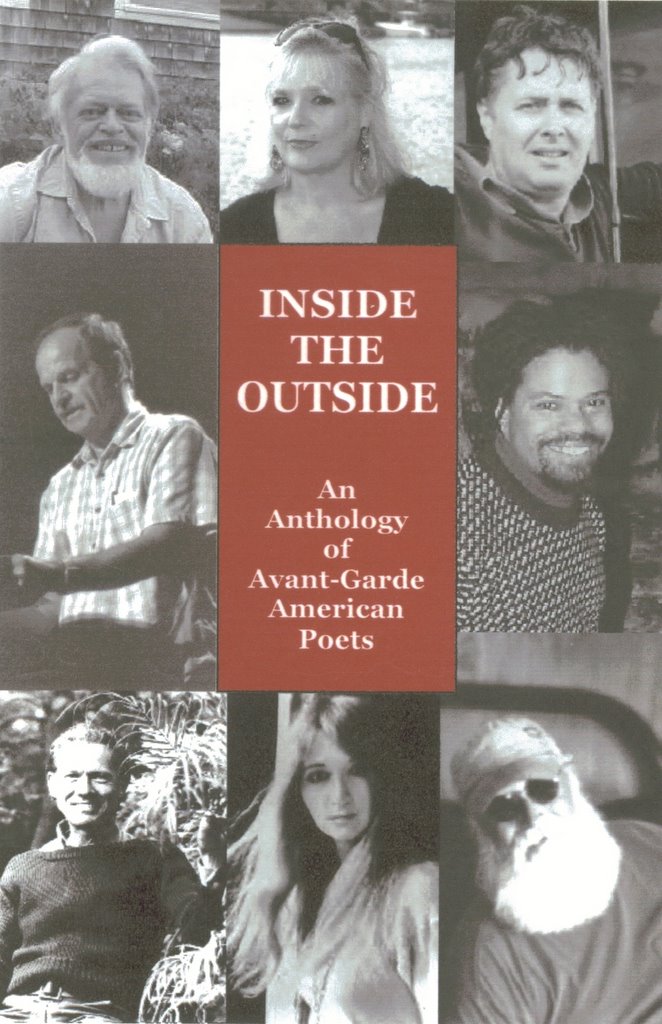
Inside The Outside: An Anthology of Avant-Garde American Poets. ( Presa Press PO BOX 792 Rockford, MI 49341) Editor: Roseanne Ritzema. Contributing Editors: Hugh Fox, Eric Greinke, and Harry Smith. http://presapress.com/ $29.95
I just received my contributor’s copy of “Inside the Outside…” from the folks at the Presa Press. Roseanne Ritzema, the editor of this collection of avant-garde poets writes in her introduction:
“Every years or so, an anthology is produced which marks an epoch. “The New American Poetry,” (ed. Donald Allen) appeared in 1960. The poets gathered in this volume represent the major schools of the American literary avant-garde as it has developed over the past 50 years…
If a poetry reader seeks the avant-garde, he will have difficulty finding it on bookstore shelves, which are filled with the old boys of the upper class New England literary mafia, imitators of their parents’ generation of post-war poets... The establishment turns a cold shoulder toward the children of Whitman, Dickinson, and Poe, but the joke is on them….
This volume brings together 13 major poets of the American small press scene, each representing an important branch of the avant-garde as it has developed over the past 50 years. In most cases, the poems were selected by the poets themselves.”
I am thrilled to be included in this anthology of poets I’ve heard about and read for many years. The book includes many legendary small press poets, many of whom founded their own small presses, and magazines. On these pages you will find the poetry of Richard Morris, Lyn Lifshin, A.D. Winans, Lynne Savitt, Richard Kostelantz, Hugh Fox, and others…
Each poet has a section, and each section has a sort of description of their work. For instance in the Hugh Fox section it reads: “It achieves universality through the representation of personal experiences combined with public/cultural images to present the poet as an everyman…” And in the poem “from Eternity,” this description is very apt:
….the pigeons/sailing off the top of/ the red brick warehouse/ in the oblique almost-winter/ late afternoon sun, white/ ceramic tile, green-painted/ steel copper cornices and/
balustrades, one apartment/ house with the west side/ curved all the way down,/probably living rooms, Margaret 25, Rebecca 3/months, Bernadette 49. Chris/
16, me 66, the nineteenth, twentieth and twenty-first/ centuries closing in/ around me.”
With Harry Smith the description reads: “…He believes that poets have the primary responsibility for the description of history.” And in “Me, the People,” Smith tackles the starving masses yearning to breathe free:
“Me the people had enough. Out of the gorge of city
This glittering Bicentennial I come,
Fat&discontent after my feasty Christmastide,
down to dark, stilled docks trimmed with Yule electric glit
at grayday unseen sundown and watch the steel
dusk deepening across my home harbor
most fabulous and most dreamed—
My lady of liberty
Seen everywhere, beckoning…
And Lynne Savitt: “Uses a stream-of-consciousness approach combined with run-on lines to evoke innerpersonal &interpersonal relationships. And here is a signature Savitt piece, hot and to the point like a red poker:
Writing
my friend Leo says
it’s okay to get
old & fat
to be remembered
as a blonde
dream carrying a rose
a pink velvet
ass bent over
a car fender
a warm mouth
wet as the tropics
all you need
to write, he says,
is the memory
he continues through
the phone wire
as you put yr
fingers under
the elastic of my
mauve lace panties
memory blazes
poems poems poems
Go to http://www.presapress.com/ for this and many other fine books.
Doug Holder/ Ibbetson Update
Monday, January 30, 2006
Re Verse: Essays On Poetry and Poets. David R. Slavitt (Northwestern University Press Evanston, Illinois 60208-4170) $25
I am a sucker for anecdotes. And poet, translator, educator, David Slavitt knows how to tell a story. I met him when he was running for state representative against Tim Toomey. Of course Slavitt was trounced, but I found him a brilliant, charming, and a loquacious character.And since I am an old English major I was glad to get this collection of essays by Slavitt, “Re Verse: Essays on Poetry and Poets.” From looking at the title I was afraid the book would be dry as a spinster on Saturday night, but I was proven wrong. Slavitt offers up a very amusing and colorful memoir of poets he knew during his undergraduate years at Yale (in the 1950’s), and during his long career as a writer. In his essay: “Harold Bloom and the Decline of Civility,” Slavitt recounts the time when as a student at Yale, he met the caustic, young critic Harold Bloom, when Bloom was a mere teaching assistant. Slavitt remembers that Bloom was wearing “a deplorable tie,” and he asked Bloom what he was working on:
“Shelley.” he barked.
Slavitt informs the reader: “I behaved badly, I’m afraid. He was the most un-Shelleyan looking guy I had ever seen in my life. Curly Howard would have been a likelier enthusiast of the “Epipsychidion.” I laughed aloud, I am ashamed to say. Bloom looked hurt—he had the soulful eyes of a basset hound and they still have a baleful look to them.”
Slavitt was also a student of Robert Penn Warren. Even in those days Slavitt had a vast amount of chutzpah. He greatly admired Warren, but he panned his book, “Band of Angels,”
in the Yale student newspaper. He then had the temerity to ask Warren for his inscription in Slavitt’s copy of the book! And by George…he got it!
There are also some delicious accounts of a frosty Robert Frost, especially the time he trashed the poet Stephen Spender who was in the audience during Frost’s reading at Yale.
Slavitt is an engaging writer, and the book will be of interest to scholars and the less- studied of us, like your humble reviewer.
Doug Holder/Ibbetson Update/Jan 2006
Saturday, January 28, 2006
Codes Precepts Biases and Taboos. Poems 1973-1993. Lawrence Joseph. ( 19 Union Square West N.Y. 1003) $16.
I was introduced to the poetry of Lawrence Joseph by my friend and poet Lo Galluccio. Joseph is a professor of Law at St. John’s University and also teaches Creative Writing at Princeton University. Joseph reminds me of a Lebanese Edward Hopper especially with his moody cityscapes of his native Detroit. The poems unfold detailed, moody, melancholy, and unflinching, as Joseph paints compelling portraits of his past. In “I Had No More To Say,” Joseph recalls his tender dance at a tough, tenderloin-type bar with a touchingly perceptive partner:
“I told her about
Dodge Truck.
How I swung differentials,
greased bearings,
lifted hubs to axle casings
in 110 heat.
How the repairman said nothing
as he watched me
almost lose two fingers.
Although she did
not answer, her face
tensed and her eyes
told me, Don’t
be afraid, it
won’t last forever.
In “It Will Rain All Day,” the poet hones in on his old ‘hood, and brands us with his vision that brands him:
“I see a large crane lifting
a railroad car, piles of bald tires,
the two towers of St. Anne’s
where, in a corner, there are crutches,
body braces, and letters written
to acknowledge miracles. I want
all this to come to an end
or a beginning, I want to look
into the black eyes of the lone woman
waiting for a bus and say
something, I want my memory
to hold this air, so I can make
the hills with white hair
and the clouds breaking into blackness
my own, carry them with me
like the letters and icons
immigrants take in suitcases
to strange countries.”
Highly Recommended.
Doug Holder/ Ibbetson Update

My brother Don, the lighting designer, is at it again. He is doing the lighting for a musical "The Times Thet Are A Changin'," and has worked with the legendary poet/songwriter Bob Dylan. Here are some tidbits about the show,etc...that he sent to me.
The Times They Are  Changin' was conceived, directed and choreographed by Twyla Tharp. Dylan has not been directly involved, although he and his managers initially approached Twyla about creating a show around his catalog of songs. He spent a day with us last week, just prior to the start of public performances, and was really pleased with the production.
I got a chance to meet him, and it was a big thrill...
Here's the official description of the piece:
The Times They Are A-Changin' "is set within a low-rent traveling circus run by Capt. Arab, whose wagon hasn't moved from its location in some time, though not by lack of effort from his ragtag band of clowns and performers," a release states. "One such performer is the animal trainer Cleo , a young woman exploited by Capt. Arab and loved by his son, Coyote . Coyote longs for a world outside the confines of the family business, and as the circus show plays out, he must decide whether to flee or stay, and if he does stay, how to inspire change within the troupe."
Like Movin' Out, there is no text, but this production is in all other ways vastly different.
It's a real reflection of the dark, atmospheric world often evoked in Dylan's songs. Twyla has created a piece that through music and movement (a combination of gymnastics, acrobatics and ballet) tells a real compelling story while providing a very dark commentary on our contemporary culture. The show features an awesome live band, and the approx 30 Dylan songs are performed by the 3 principal performers. It's an incredible evening in the theatre, and audiences are loving it.
Should it continue to go well here in San Diego, there's certainly interest to move the show to Broadway
Friday, January 27, 2006

Somerville Artists Lee Kidd and Jessa Piaia Continue to “Squawk”
Lee Kidd and Jessa Piaia are Somerville artists who like many Somerville artists engage in a labor of love. Every Thursday night (9PM) at the Harvard Epworth Church in Harvard Square (1555 Mass. Ave) in Cambridge, Mass. they run the venerable Squawk Coffeehouse. This is an eclectic venue of poetry and music that has been around in one form or the other since 1989. Lee Kidd, founder of Harvard Square’s “International School of Foreign Language,” and actress and Harvard University employee Jessa Praia, as well as cartoonist Mick Cusimano, and “Poet’s Theatre,” host Richard Cambridge, are the cabal that has kept this series running all these years.
Squawk had notable guests over the years such as: Ed Sanders, John Sinclair, Tuli Kupferberg and Herschel Silverman. Many musicians have cut their teeth here like: Mary Lou Lord, Vance Gilbert and Ellis Paul. Squawk is also the name of a magazine that is associated with the venue. “Squawk” continues to be a destination for tourists and locals who need strong doses of no-nonsense music and poetry in the heart of Harvard Square.
Doug Holder: If you had to give the mission statement of”‘Squawk,” what would that be?
Lee Kidd; Well, inside of the “Squawk” magazine cover in every issue we give a little manifesto. It’s actually by “Fact Sheet Five,” and it says: “An open mic in print.” It means we are in print. We are not a hard cover book operation, but we are better than a napkin people write on. And we put in new stuff in our magazine.
Jessa Praia: We always encourage people to work on new stuff. We want them to showcase their talent every week. They should not be afraid to take chances. It is a receptive audience.
DH: How is your venue different from all the others in the area?
LK: Well that’s real direct and real easy. We are a coffeehouse. We serve really good coffee and it comes with the $3 admission. A coffeehouse has an open mic, but it also has music, discussion, etc… A coffeehouse is unpredictable.
DH: Has anything really bizarre happened at “Squawk?”
LK: Quite bizarre…yes. Once we had a gentleman who stripped himself naked and hung himself up on a cross. It was part of his act…he was also talking to his girlfriend.
JL: There was a woman who participated once who had nothing on but a bridal veil that was down to her ankles.
DH: Lee. You told me you had a poem published in “The New Yorker,” but essentially published nothing since. Do you ever plan to?
LK: I have never really sent out anything in my life. The way I got into “The New Yorker,” was when I went to the “Beat Literature Conference,” down in N.Y.C. As we were out there we just met David Amram for the first time (musician cohort of Jack Kerouac etc…), and a woman was handing out pieces of paper that said: “Write a Haiku For “The New Yorker.” I just scribbled out something. I wrote a Haiku. I gave it to the lady. She took my picture, and that was that. Three weeks later when I just got back from Prague, I was in the Café Pamplona in Harvard Square and the waiter said: “You’re in “The New Yorker!”
I don’t send stuff around, but I keep writing. Probably I’ll put my poems in chapbooks.
DH: Jessa. I am told you are an actor. What kind of acting do you do?
JP: I am a character actor. In the early 90’s I developed a series of historical characters. I called them ‘Women in History.’ There are seven characters that span the time from colonial to contemporary times. Each of these women made a contribution to the greater good. They were also connected to the state of Massachusetts. They were born here, or did their significant work here. Amelia Earhart was one. She had strong Boston connections. She is the most contemporary one. Susan B. Anthony, the Suffragist, who was born in Massachusetts, is another.
DH: Tell me about “Squawk” magazine
JP: We put out 58 issues. Our 58th issue came out in Oct 2006. We initially published something that reported what was going on in the coffeehouse. It started small, but came out frequently. It started out twice-a-week. It was small format. We went to large format. It has gone on for years, and got better and better. We collected poems from our friends, and people who came to the open mic. Then we went to NYC for the “Small Press festival.” People bought “Squawks.” It was always well-received. We believe that “Squawk” will live long after we are gone. They are like time capsules of what was going on.
DH: You went to Harvard. When I interviewed the late Robert Creeley at “the Wilderness House Literary retreat” http://www.wildernesshouse.org/ he told me found the Harvard experience a negative one. He said he experienced snobbery, indifferent professors, etc… I have heard this from other poets as well. What was your experience?
LK: I was a graduate student. When I got to Harvard I was in Harvard Divinity School. This was the late 60’s. There were all kinds of actions going on that were positive and disruptive…and good. I never found a dull moment. I’m from West Virginia, and I feared snobbery from the East, but I had a good experience.
DH: Did you know "Brother Blue" at Harvard?
LK:I went to school with the storyteller “Brother Blue.” He was just as he is now. We met in 1967 on the checkout line at the Harvard Coop. My life would be less of one if I didn’t know Brother Blue.
Doug Holder. * Doug Holder will be reading from his poetry collection “Wrestling With My Father,” Feb. 23 at Squawk.
Thursday, January 26, 2006

Bring Me Her Heart ( Higganum Hill Books 2006) Sarah Getty. – A Review by Juliana Bures
Sarah Getty’s upcoming collection of poetry, Bring Me Her Heart, to be published in May 2006 by Higganum Hill Books, is worthwhile investment for those looking to find a diverse voice deserving of an audience.
The collection is divided into four sections that exemplifies Getty’s talent and range of thought, memory, fantasy, and most importantly, dedication. The most striking poems of the collection are those written about her mother, a woman whom Getty presents with both grace and poise, in connection to her own sense of wonderment and discovery at becoming an older woman along side her.
From the poem, “Initiation,” where Getty recounts the reversal of roles, of being her mother’s child in addition to the woman who visits the assisted living facility, are the lines “This month I complete my sixtieth-year./Helped by no goddess’s spell, I am two-in-one, mourning child/disguised as an old woman.” Or from “Last Words,” Getty addresses the confusion of aging, of mother to daughter to granddaughter. “Sometimes she confuses/the two of us, daughter and granddaughter, or blends us into one small, dark-haired, over-educated girl.”
There is simplicity to Getty’s observations and a respect of the dual aging process encountered during her mother’s illness. Her resiliency becomes it’s own entity, in that she doesn’t forget who she is or who her mother was, ever. The poem “Obituary,” provides the small, mundane pieces of her mother that, no doubt, made her a messy human being like all the rest. From the subtitled section, “Worries,” is the statement, “That her daughters would betray her by getting married/before they got pregnant.”
Other strengths of Getty’s writing make their mark in this collection as well. Her ability to observe and make note of the current human condition compared to what it once was, has its own place, “…we new worldings, empirical, informed/up to our eyebrows, with five hundred more years/spent observing our own and one another’s/bodies…Well, we carry on.” Her nod to “what’s all been said before” makes the poem, “The Earth is Saying,” a strong force to be reckoned with. “Gepetto in the Belly of the Dogfish,” “Lewis Carroll’s Last Photograph of Alice Liddell,” and “Trio From an Imaginary Opera,” are all fanatically fantastic poems with their own element of creativity.
Sarah Getty’s poetry is worth getting to know because it makes you want to know yourself, your mind, your imagination, and the world around you better. She seems to echo Mary Oliver’s sentiment, “To pay attention, this is our endless and proper work.” Indeed, Getty pays attention to everything and she wants you to know it.
Ibbetson Update//Juliana Bures//January, 2006
Wednesday, January 25, 2006
Poems of Survival. Marc Widershien. ( Poplar Editions PO BOX 57 Boston, Ma. 02131) $9. http://www.marcreate.com/ marccreate@aol.com
Marc Widershien and I have have had a long association. First introduced by Cynthia Brackett Vincent, the publisher of the "Aurorean" in the late 90's, I had the privilege to publish Widershien's lyrical memoir of Boston, "The Life of All Worlds" in 2001. Since then, Widershien has revived his poetry career and is a well-known, working poet in the Boston-area. His ambitions have not ended there however. Widershien has formed his own small press, "Poplar Editions," that has released his poetry collection: "Poems of Survival." And indeed, if you know Widershien, you know he is a survivor. And he has survived to grace us with his evocative, and sometimes stunning collection of poetry. In all of Widershien's poems there is a strong sense of musicality. So it is no wonder that we learn in the introduction written by the composer Aaron Blumenfeld, that Blumenfeld has set more than a few of Widershien's poems to music. The composer writes of Widershien's work:
" His poetry evokes the incredible futility and powerlessness of individual human beings', dreams and aspirations against the inexorable passage of time and the the immensity and power of the universe.... Marc's poetry reminds me of a question my father once asked me after we listened to a piece of symphonic music together. He asked, "What does it mean?" That is why I greatly appreciate Marc's poetry...because his poetry shares that trait with music."
Widershien's poetry explores the classic ontological themes of the passage of time, etc...through his astute observations of nature, and all the players on its stage. In "Walden III" Widershien is a modern day Jewish Thoreau, observing the organism of nature and it's inevitable cycles at Walden Pond in Concord, Mass:
"The ripples below me are driven
toward the shore's body.
Once again, I find myself in this ecology's
giant organism.
Hieroglyphs sketched by wind
on white birch, mushrooms sucking life
out of dead barks,
honeysuckle
--how the earth sustains its parasites.
The floaters bob in the Pond
dividing child from adult,
the shallow from the deep waters
yellowed with urine.
yet-life's cycling story book
drives endlessly
--on. (6)
In the brilliant poem "Cutting the Air Way," Widershien imagines a bunch of "ancient birds," on the Boston Common, and their deity, an old woman who feeds them religiously:
"those ancient birds those ancestral voices
squabbling for the squatter's rights to a lamppost
tell the tale of the tribe as well as any rhapsode--
fluid continuous diagonals of flocks carving
out boundaries obscure to man....
They wait for the old woman
dragging a garbage bag filled with feed
who comes to the park every day
she is the goddess of Boston Common,
a sister to their metaphysical flights. (8)
Widershien offers us an arresting portrait of what at first sight is a very pedestrian scene.
Widershien is a PhD, but don't hold that against him. There are classical and literary references, but one does not have to be a scholar to appreciate his work. The only requirement is to be a fully-fleshed human being.
Doug Holder/ Ibbetson Update
Monday, January 23, 2006

Playwright Don DiVecchio Finds Whitey Bulger
On a wintry, snowy day at the Sherman Café in Union Square, Somerville, Don DiVecchio confided in me about legendary South Boston mobster Whitey Bulger. DiVecchio, former poetry editor for “Spare Change News,” longtime activist, playwright and painter has penned a play “Finding Whitey Bulger,” that examines this strange contradiction of a man. DiVecchio, who believes Bulger is no longer alive, researched his subject for many months and now hopes to stage this play in the near future.
I was interested to know why DiVecchio, a well-known left-of-center activist, would want to write about someone of this ilk. DiVecchio told me over coffee and Sherman’s delectable oatmeal/cherry scones: “I was fascinated by the duplicity of power. He was somebody that represented the old ways of running a neighborhood similar to the godfathers and other patriarchs.” Bulger, according to DiVecchio, was capable of unspeakable crimes, but on the other hand he was kind to elderly women, helped people with their rents, etc… This contradiction is present in the actions of state and national governments. DiVecchio said there is a shadowy side to us all. In the case of Bulger, a bad guy did some good things. DiVecchio wants the audience to explore the “Bulger” in all of us.
DiVecchio uses the conceit of a “play within a play,” in order to get his point across. He stated, “Nothing is as it seems. Appearances are deceiving. By presenting a play within a play, it challenges the audience. It makes them question…to go deeper. The more one is forced to examine inner contradictions the deeper one gets into a character.
Divecchio is a decidedly political playwright. He adapted a play “Soul Street,” from a novel by the late writer Rufus Goodwin that dealt with the plight of a homeless man. He wrote and produced a radio play, “Voices from the Invisible,” on Tufts radio, and “Sarah’s Journal,” a play about eviction as it relates to an elderly Holocaust survivor that played at the “Cambridge Center for Adult Education.” DiVecchio said he has been influenced by political playwrights like Sartre and Brecht. He added with a smile: “Everything is political.”
Since leaving his position as “Spare Change News,” poetry editor, he has had more time to concentrate on short stories, plays and a novel. Ironically he has written very little poetry.
His creative partner, as well as his personal one, Terry Crystal, has composed a musical. It is a musical that concerns “industrial hemp,” titled: “Caitlin County Hemp Wars.” DiVecchio has just finished writing the dialogue for this work. Both he and Crystal hope to see the production staged sometime next year. The musical is based on a story DiVecchio wrote. The Hemp in question is not “marijuana” as it is often confused for, but industrial hemp used for paper, construction material, clothing,etc…The government, according to DiVecchio, has made use of hemp illegal because they feel this versatile plant would threaten the paper, lumber and other industries. In spite of the positive impact on the environment hemp could have, industrial concerns seem to come first, according to DiVecchio. “It defies all logic,” he said.
The play centers on a farm family, as it contends with huge agribusinesses that try to thwart their plans to harvest hemp. DiVecchio feels the musical will bring light to what he feels is an unaddressed injustice in the world.
Doug Holder/The Somerville News.
Friday, January 20, 2006

Mauled Illusionist. Jean Monahan. ( Orchises Press. PO BOX 20602 Alexandria, VA. ) 22320 $15
I first read Jean Monahan’s poems in “The South End News,” a community newspaper in Boston, Mass. I was impressed with her work, and later a poem of hers appeared in one of the first issues of “Ibbetson Street.” Recently I booked her to read in the “Newton Free Library Poetry Series,” in the Fall of 2006. And later Monahan sent me her new collection of poems: “Mauled Illusionist.” After selectively reading it, I was again reminded of why I chose her to read in the series. Her poetry has a sense of play, it slowly draws the reader in, and goes deep; behind the obscuring scrim of everyday life. In a very clever poem: “ Humpty Dumpty,” the poet taps into the thoughts of the fairytale character as he sits on his tenuous perch, and gets to some larger truths: “ Though I straddle a wall between hope/ and sorrow, I find a kind of peace/ between them. / The fragile/ must be above it all, / self-contained, potential / cracked open by surprise – and life -/ a lake within herself, a sun,/ The shell is delicate, but it will mend./ Nothing in this garden has not been broken./ Even the promises of Kings.” In the poem “Mauled Illusionist Goes Home,” Monahan writes of the plight of the trainer and illusionist Roy Horn, who was mauled by his own tiger. The poet turns the table on the trainer and explores the illusions he creates for the audience, and the illusions we all create for ourselves: “ I was hauled/ from the glittering ring,/ beaten at my own game, tamed./ Offstage /I healed/ myself, away from the crowds/ who passed to close and loud, / heart-in-mouth / for my throat in the maw,/ my whip on the back/ of what we feed and love and pretend / loves us back.
Highly recommended.
Doug Holder/ Ibbetson Update/ Somerville, Mass./ Jan. 2006
Tuesday, January 17, 2006
TINO VILLANUEVA: AN OVERVIEW
The article is written by Hugh Fox; a poet/archaeologist who has taught at Michigan State University since 1968. Author of 66 books, he is a major figure in the U.S. small press world, serving as editor of Ghost Dance: the International Quarterly of Experimental Poetry from 1968-1995. Ibbetson Street published his "Angel of Death," and "Boston: A Long Poem." I consider Hugh a friend and a mentor. He definitely thinks "outside the box." He makes me feel like my fly is perpetually down, a good thing I think!-- Doug Holder
Born on December 11, 1941 in San Marcos, Texas, Tino Villanueva worked as a migrant worker, assembly-line worker, and an army supply clerk. He is the founder of Imagine Publishers, Inc., and editor of Imagine: International Chicano Poetry Journal. Author of the book length poem Scene from the Movie GIANT (Curbstone, 1993) Villanueva has published three other volumes of poetry, Hay Otra Voz Poems, Shaking Off the Dark and Chronicle of My Worst Years/ Crónica de mis años peores. Villanueva won the American Book Award from the Before Columbus Foundation for Scene from the Movie GIANT in 1994. He teaches at Boston University.
TINO VILLANUEVA: AN OVERVIEW
Tino Villanueva is perhaps the biggest fake on the current literary scene. I mean he comes on primarily as Mr. Poor Chicano from San Marcos, Texas, but look again and there he is, Doctor Professor teaching in Boston University (where he got his Ph.D.), a master’s from SUNY-Buffalo, and before that a graduate (in letters) from Southwest Texas State University. And if that’s not enough, he’s also a painter, kind of cubistic, Picasso-ish, very impressive. When he start reading his work, does he sound like some kind of border Chicano slurring through his Spanish? More like Cervantes, or, in more modern terms, Pablo Neruda. His Chronicle of My Worst Years published by Northwestern University/TriQuarterly Books in Evanston, just north of Chicago in 1994, OK, so he talks about his early years suffering as a prejudiced-against Chicano in Texas, but even here, although the message gets across, you’re still in the presence of Doctor Literato. I’ll give the translation here, but put the Spanish in just to show those who know about these things just how literary Dr. Villanueva is:
2. I give more thought now to how prison like that childhood was in the abhorrent world of cotton-field work. Who gave the order in the ‘40s the furrows had to be so long, and the time that dragged in picking them should slaver to devour me?
(“Promised Lands,” p. 67)
(con más razón ahora considero,/cuán presa estuvo aquella infancia/en el dominio aborrecible/de las labores de algodón./Quién mandó que en los 40/fueran tan largos los surcos,/y que el tiempo/que/que tardé en piscarlos/fuera voraz para mi vida?, p.66)
He’s very careful here, isn’t he, to stick in a little “Chicanismo,” using cuán instead of cuánto, in order to capture the real peasant-slang of the workers, but....pure affectation, n’est pas? And when we move to another book of his Primera Causa/ First Cause, (Cross Cultural Communications, Merrick NY 2004), where are we but in the depths of Jungian caverns trying to figure out the whys and wherefores of existence:
In memory is my beginning, and so, here am I, face to face with this page and this predicament., with this vice that is a virtue the whole afternoon. Oh quest for distant memory and this equidistant longing with words. Finally, in the end, I write down what I’ve seen and all that is true. (I. “Memory That Never Ends,” p. 7) 3.(En el recuerdo se encuentra mi comienzo,/por eso heme aquí/ante un papel con este apuro,/con este vicio que es virtud toda la tarde./Oh costumbre del recuero/y el equidistante deseo con palabras./Por ültimo y al cabo” pongo lo que he visto y todo lo veraz, p. 6) Sometimes Doctor Villanueva Scholar pulls you out of the twentieth century altogether and brings you back into 17th century neoclassicism, like in this poem about Mnemosyne, the Goddess of Memory: Now, Mnemosyne, I’ve got you, and what pure pleasure to caress your name, to savor it, letter by letter, between my lips. I say it over and again and get swept into life because I’m me and my word and it’s autumn and with you I can be what I please. (p.27)
And the English translation by Lisa Horowitz is good, but somehow it lacks the antique flavor of the original Spanish: “Ahora aquí te tengo, Mnemosina,/y es hermoso acariciar tu nombre,/deletrearlo letra a letra entre los labios. Lo vuelvo a repetir/ y ya estoy viviendo,/porque soy yo y mi palabra y es otoño/y contigo me hago a mi manera.” The translation is accurate, but the original isn’t twentieth centuryish (much less “Chicanoish”) at all, more like a piece encountered in an ancient notebook in some antique collection in the national library in Madrid. What makes Villanueva even more challenging is that he can also jump totally into the twentieth century and write experimental poetry that is very much like his experimental cubist art.
4. There’s one book of his, Escena de la Película GIGANTE , originally published by Curbstone Press in Connecticut in 1993 and translated into Spanish and published by the Editorial Catriel in Marid in 2005, which is pure, beautiful experimentation, a long “meditation” on the gringo American film Giant, a 1956 film starring Rock Hudson, all about the huge gap in rights betwen Chicanos and gringos in old-time Texas. And again we’re back into racial/national disequality class meditations totally divorced from any Mr. Chicano prejudiced-against in what now seem like ancient, ancient times:
I am cast in time forward,wherethrough runs the present --- on track of light triumphant, the sum of everything that ignites this room with life, vida que no olvida,* calling out my name...(“...en el acto de contar/me lanzo hacia adelante en el tiempo, por donde transcurre/el presente -- una franja de luz triunfante,// la suma de todo lo qe enciende este salón/con vida, vida que no olvida, y que me está/llamando...”) (“The Telling,” pp. 88-89.) I suppose that Villanueva represents a real triumph of the underdog becoming the overseer, but after having lived in a world of affluent Latinos, and Brazilians most of my life, I don’t see him as that much of an exception. But triumphant he is, especially in the classical, profound impact of his art. _____*Life that doesn’t forget.
Hugh Fox /Ibbetson Update/ Jan 2006./ Somerville, Mass.
Monday, January 16, 2006
"the new renaissance" literary magazine
the new renaissance. 26 Heath Rd. #11 Arlington, Ma. 02474 http://www.tnrlitmag.net $14.95 tnrlitmag.aol.com editor: Louise Reynolds
I am on the advisory board of tnr, so I guess I am biased. But let me tell you, Louise Reynolds puts out one hell of a magazine from her cramped apartment in Arlington, Mass. It is a glossy-covered, perfect-bound affair with high quality paper, artwork, prose, poetry, fiction, etc... Reynolds has been putting it out since the 70's. Whenever I talk to her she's scrambling for funds or such to keep this publication alive. In the current issue #37, there is an informative article by H. Gyde Lund and Ashbindu Singh titled: "Reining in on Rainforest Destruction," and some arresting etchings by Zevi Bloom. There is of course a fair sampling of fiction, essays,and poetry to be had as well. Being a poet I of course gravitated to the poetry section and the impressive roster of tnr poets. Daniel Tobin, the head of the Creative Writing Dept. at Emerson College in Boston, has a poem: "The Scream," that is a wonderful study of Munch's famed painting. Jay Baron Nicorvo's "Hot Knives," has a beautiful description of a heroin high that will send chills down your spine, and perhaps peak a perverse interest: " That high was/ walking a road/ through a dense wood, under a full moon, with cobwebs catching/ in our eyelashes/ without the wish to swat/ at the spider or shear/ the silk that wove across our vision." This is a magazine that is true to its mission of presenting ideas and opinions, with an emphasis on literature and the arts.
Doug Holder/ Ibbetson Update/ Jan. 2006/ Somerville, Mass
Sunday, January 15, 2006

Somerville Poet Rebecca Kaiser Gibson: A Shy Woman Who Is Passionate About Poetry.
Rebecca Kaiser Gibson may describe herself as basically a shy person, but there is no paucity of words when she describes her passion for the arts. I first became aware of Gibson through an article in that “other” paper in town. Later while I was scribbling at a local bagel shop in Porter Square, I noticed her scribbling there as well. Our paths crossed again recently, and I invited her to join me on my Somerville Community Access TV show ‘Poet to Poet/Writer to Writer.”
Gibson is a lecturer in poetry at Tufts University, and has an eclectic background in both theatre and poetry. Her work has appeared in such publications as “Northwest Review,” “Field,” “Harvard Review,” and others. She has also been a managing director of the “New Voices Theatre Company,” in Boston, and assistant to Tina Packer, the artistic director of the “Boston Shakespeare Company.” She has an M.A. from the “Boston University Creative Writing Program.”
Doug Holder: I notice as a poetry editor, I get a lot of poetry about coffee shops, or experiences in them. You wrote a poem titled: “Dunkin’ Donuts. Somerville, Mass..” What is it about these places that spawn poets, poems, etc… And what’s your favorite java joint in the “Ville?
Rebecca Kaiser Gibson: With the donut poem, I didn’t actually sit there , in a Dunkin’ Donuts. It was really a poem about class. I had moved from Newton to Somerville. I felt I had a much wider range of what I could see and understand in Somerville, as opposed to the city of Newton, where I moved from.
My favorite coffee shop these days is the “Au Bon Pain,” in Davis square. Coffee shops create an atmosphere of things going on that you don’t have to do anything about. There is a low-grade noise that you aren’t responsible for, yet it seeps into your work. If fills a space that might be too empty if you are all alone. It’s kind of a friendly drone.
I find lately that I can’t work at coffee shops any more. I work at home alone now.
DH: You have four degrees in Creative Writing, Teaching Theatre, English Literature, and Theatre Arts. Did you like the life of a student? Do you still have a student’s sensibility?
RKG: I’m now longer student. But I am still a library person. I like to research. I am much happier doing that than almost anything else.
I hated being a student, until I went to Boston University to study Creative Writing. I was very shy, and I couldn’t talk in class. Being in the poetry program was my best experience.
DH: Now you are a teacher. You have to get up in front of a whole class.
RKG: For some reason that’s really easy. After the Creative Writing degree I could suddenly talk for some reason. I think because I was surrounded by people who understood me, and I understood them. I care a lot about what students are thinking. I feel like we are connected by some strange truth. It’s just fun.
DH: Can you tell us about your experience at the world-renowned Boston University Creative Writing Program where you earned your M.A.?
RKG: The way I got into it was bizarre. I was at the train station waiting to go to Concord when I saw the former Poet Laureate Robert Pinsky, who teaches at B.U. I really didn’t know much about him at the time. I said to him:” You are a poet aren’t you? Can I send you some stuff?” I was fearless and naïve. He( thank heaven) read it, and invited me to sit in on the program. I was a secretary at MIT at the time. I would go to MIT at 7 AM, then go to class, and then back to MIT. He suggested I apply for the program. I was there for a year and a half…a year as an official student. For me it felt like magic. Pinsky’s integrity about poems really having to be about something was an influence on me. I studied with Derek Walcott, the Nobel Prize Winner. It was wonderful.
DH: You have an extensive background in the theatre. How do you incorporate that into your poetry?
RKG: I was essentially a director of theatre. Actors make physical something that is on the page. I think this “physicality” is what appeals to me in both.
DH: As a poet, who is your favorite playwright?
RKG: I was heading towards saying Harold Pinter as my favorite playwright. Samuel Beckett is the other one.
DH: You have read at the “Bay State Correctional Facility” How did you get involved with this and what was the experience like?
RKG: I got involved through B.U. I read “Dunkin’ Donuts…” there. It was a strange experience. I was outside, inside and outside again. I felt disconnected. But they were a very interested audience.
DH: Close observation is an important tool for poetry. How do you focus in a world of distractions?
RKG:. When I write poetry, I’m not exactly focusing, it’s just coming in. I don’t know where it comes from.
DH: You have been a resident in a number of prestigious writers retreats like the “MacDowell Colony,” and “Bread Loaf.” Do these settings foster good work?
RKG: At “MacDowell,” I lived in the cottage where the composer Aaron Copeland stayed. It was a little too quiet for me. I had to get out to meet people. I love being in the mountains but I still neede the company of other people. This environment fostered some good work for me. “MacDowell” is a deeply supportive place for artists.
“”Bread Loaf,” is very social. You have conferences; you talk to people, etc…
Wednesday, January 11, 2006
Thunderbird. Alexander Parsons. (sunnyoutside PO BOX 441429 Somerville, Mass. 02144) $10 http://www.sunnyoutside.com
Sunnyoutside, a small press based in Somerville, Mass. has released a chapbook of short fiction by NEA Literary Fellowship recipient Alexander Parsons: “Thunderbird.” This limited edition release is signed by the author, and features a hand-set, letter-press printed cover, hand-stitch binding and prints of six original woodcuts by Boston artist Adrian Rodriguez. The short story “Thunderbird,” appeared in the “Mid-American Review,” in 2003. The story is about a young man who loses his job, girlfriend, health and sanity in a bad car accident. Because of intolerably painful migraines as a result of the accident, the protagonist lets his life slowly slip away:
“It wasn’t that I stopped thinking about unemployment, eviction, destitution and the rest of respectability’s quick dissolution, but that these thought slowed so much that they stretched into long, unintelligible notes, like those deep, layered chants of Tibetan monks.”
As it happens our hapless hero hooks up with another lost soul “V.P.,” and begins a sojourn across the country by boxcar like a hobo of yore. Through V.P., a delusional and most likely a psychotic self-proclaimed visionary figure, he gains insight about his own condition and the prison of his mind. In this passage V.P. literally takes flight from the boxcar and his traveling partner:
“V.P. watched the passing lights intently. He turned to me and grasped my head between his hands as though he meant to crush my skull. “There’s still time to write another act,” he said, squeezing. He released me and I fell back in fear. I was sure he could have killed me. He turned and sprang from our perch. The headlamps of a passing truck pulled him into sharp focus for an instant, illuminating him with his arms outstretched, as if they were willing himself to fly.”
This is original, provocative writing from a very original small press.
Doug Holder/Ibbetson Update/ Somerville, Mass. Jan. 2006
Sunnyoutside, a small press based in Somerville, Mass. has released a chapbook of short fiction by NEA Literary Fellowship recipient Alexander Parsons: “Thunderbird.” This limited edition release is signed by the author, and features a hand-set, letter-press printed cover, hand-stitch binding and prints of six original woodcuts by Boston artist Adrian Rodriguez. The short story “Thunderbird,” appeared in the “Mid-American Review,” in 2003. The story is about a young man who loses his job, girlfriend, health and sanity in a bad car accident. Because of intolerably painful migraines as a result of the accident, the protagonist lets his life slowly slip away:
“It wasn’t that I stopped thinking about unemployment, eviction, destitution and the rest of respectability’s quick dissolution, but that these thought slowed so much that they stretched into long, unintelligible notes, like those deep, layered chants of Tibetan monks.”
As it happens our hapless hero hooks up with another lost soul “V.P.,” and begins a sojourn across the country by boxcar like a hobo of yore. Through V.P., a delusional and most likely a psychotic self-proclaimed visionary figure, he gains insight about his own condition and the prison of his mind. In this passage V.P. literally takes flight from the boxcar and his traveling partner:
“V.P. watched the passing lights intently. He turned to me and grasped my head between his hands as though he meant to crush my skull. “There’s still time to write another act,” he said, squeezing. He released me and I fell back in fear. I was sure he could have killed me. He turned and sprang from our perch. The headlamps of a passing truck pulled him into sharp focus for an instant, illuminating him with his arms outstretched, as if they were willing himself to fly.”
This is original, provocative writing from a very original small press.
Doug Holder/Ibbetson Update/ Somerville, Mass. Jan. 2006

Ben Franklin Comes to Jimmy Tingle’s Off Broadway Theatre for his 300th Birthday.
Forget your memories of those dry elementary school productions of an airbrushed Ben Franklin, processed as blandly as a chunk of Velveeta cheese. Ben Franklin, as portrayed by Burdette Parks, in "Benjamin Franklin, Printer, Etc." at Jimmy Tingle’s Off-Broadway Theatre, in Davis Square, Somerville, not only talks about his vital roles as a printer, diplomat, scientist, and founding father of these United States, but also informs us of his ideas about “passing gas,” his dalliances with “low-women,” his advocacy of young men paired with old women, his feminism, and other juicy tidbits.
Burdette, although not a dead ringer for old Ben, pulls of this one-man show expertly, affecting a convincing avuncular manner, and the prerequisite twinkle in his eyes.
Being a long-time writer for “The Somerville News,” and a newspaper freak in general, I was interested to hear Franklin’s account of his forays into the printing business and his internship at his brother’s paper: “The New England Courant,” and his founding of the Pennsylvania Gazette” in Philadelphia.
Franklin has long been associated with Philadelphia, but he was actually born in Boston in 1706. When he worked for his brother’s newspaper as a mere boy under the pen name of “Silence Dogood;” he seemed to have ruffled a few uptight Puritan feathers with his bold pronouncements concerning freedom of the press. Franklin left the land of the bean and the cod in the dust and hightailed it to New York City, and finally Philadelphia, which became his home base.
During the production Burdette portrays Franklin in his signature print shop, talking while setting type. At the end of the production Franklin actually presents to the audience a printed piece of work, which he reads from…an interesting conceit.
What stands out about Franklin, as Burdette portrays him, is that although he was very much a creature of his own time, he thought outside the box, and his studied thought and philosophy translates well into our contemporary times.
Franklin was a compelling character and if he was around Somerville today I would surely ask him to join for me a stout at the Burren. And you know what…he might just be the kind of guy who would join me. Check this play out!
Doug Holder/ "The Somerville News"
Info: 617-591-1616
http://www.jtoffbroadway.com/
Sunday, January 08, 2006
The late playwright August Wilson. "He Really Wanted to be a Poet
 |
| August Wilson |
The late playwright August Wilson. "He Really Wanted to be a Poet"
The following is an article by my friend poet Afaa Michael Weaver concerning his experience on a train with the late, great, Afro-American playwright August Wilson. I have seen many of Wilson's plays at the Huntington Theatre in Boston. My brother Donald Holder, is a Broadway lighting designer, and he has worked on many of Wilson's productions, including the seminal "Ma Rainey's Black Bottom," when he was a graduate student at Yale Drama. So I have heard a lot about Wilson, and after badgering Afaa for awhile for this article he came through, despite an extremely demanding schedule. Best--Doug Holder
Fastball on the Outside Corner
in memory of August Wilson
by Afaa Michael Weaver
There are magic moments in theater, glimpses of the stage world that never leave you if you truly love theater. Sitting in the audience watching James Earl Jones and Mary Alice play the leads in August Wilson’s Fences was one such moment for me, Jones filling the stage with his largeness, his voice so much his father, Robert Earl Jones, who played Creon in Lee Breur’s Gospel at Colonnus, an adaptation of Sophocles in the setting of a black church. Father and son, the two Jones resemble twins, and that twinning is something akin to the creation playwrights make of characters that most resemble themselves, and so it was the only time I was ever in the presence of Wilson the man, on an Amtrak headed up the northeast corridor as he was making his way to New Haven to the Yale Repertory Theater, where his working relationship with Lloyd Richards, artistic director for the theater, was itself historic.
The Piano Lesson was in production, and he was working on Two Trains Running, but it was Fences that held me spellbound. The long poetic monologues of Troy Maxon are mythic. Wilson’s plays were driven by language, and he was driven by a need to give a mythic portrait of his culture as he knew it, sometimes observing life while sitting in restaurants writing on a pad, a simple presence.
The Amtrak car was nearly empty. It was the middle of the week, and I boarded at Newark, New Jersey, taking the bus there from where we lived in East Orange. Gian Lombardo had invited me to Watertown to give a reading, only my second time in the Boston area. My teaching schedule was flexible enough to allow two days away from adjunct life in New York and New Jersey, along with every other small and part time job I could assemble in graduate school afterlife. I took a window seat in the middle of the car, watching the metal grid of northern Jersey as it melted into Manhattan. After we got out of New York, I got up to go to the café car for a coke to go with my brown bag lunch, and as I went down the aisle I noticed what I thought was a familiar face. It was Wilson, and he seemed to be enjoying his privacy, so I kept going to the car. But when I got back to my seat I felt I had to say something. In my bag I had copies of Water Song, my first book, and I took out a copy to give to him as pretense for saying "Hello."
"Excuse me, but you are August Wilson?"
"Yes," he said quietly, nodding.
"Well, I just finished teaching your play Fences, and want you to know it is one of my favorites. I would like you to have this copy of my first book of poetry, something called Water Song."
He took it smiling, and I took my leave, going back to my seat to chomp on my tuna fish sandwich. In a few minutes, I noticed someone standing next to me. It was Wilson. He was holding all his bags.
"Mind if I sit with you?"
I was starstruck. Not that I had not had my own fifteen minutes, or a few of them by this time. In Baltimore I was the working class hero poet, a published poet and writer with a byline in the Baltimore Sunpapers. Water Song was submitted for the Pulitzer prize, even with its typesetter errors, and there were other laurels, all of which were leveled once I got to Brown with the children of privilege. It was there that I studied playwriting and theater for two years under the tutelage of Paula H. Vogel and the late George H. Bass, but here was Wilson, who was on my graduate school reading list. Here was the man asking to sit with me. I mumbled, "Sure."
There we were, on the tracks under northern stars. For a little less than two hours I had August Wilson all to myself, and he was generous. He told jokes and made me laugh, much of my laughter the joy also of feeling included in this thing called American theater that I so much wanted to move into as a playwright. He spoke, and I knew he was Troy Maxon, the man who tried to explain his adulterous behavior to his wife in the metaphor of baseball, saying he had stood on first base for eighteen years and just could not resist stealing second, the man who responded to his son’s query about whether he loved him by saying he put that "beating heart" in the boy’s chest and that was all he needed to know, the man who told his best friend of how he sometimes felt haunted by the wrongdoings of his father and that his greatest nightmare was that he might become a man just like his father, that most painful anxiety of influence.
Wilson explained to me that he had always wanted to be a poet and that he once took a workshop with Jerry Barrax. As he explained this, he pointed to Jerry’s name on the back of my book where it appeared in the list of poets who had been published in this series, the Callaloo series. He said he revised his poems using an index card to go through the poem a line at a time. He was meticulous in the way self-made men are meticulous, all bets on the long shot, the artistic representation coming from places that have been deemed incapable of art.
A few years later in a conversation with Jerry Barrax, I asked if he remembered August Wilson as a poetry workshop student, and he said he indeed remembered. Barrax went on to explain how Wilson wore a tweed jacket to class.
"He really wanted to be a poet."
In Fences, Troy Maxon explains how he wrestled with Death.
The middle of July, 1941. It got real cold just like it be winter. It seemed like Death himself reached out and touched me on the shoulder. He touch me just like I touch you. I got cold as ice and Death standing there grinning at me…I wrestled with Death for three days and three nights and I’m standing here to tell you about it.
Art speaks of how it defies death and claims a longer life. I sat watching James Earl Jones perform as Troy Maxon while remembering Jones’ father was in Langston Hughes’ play Don’t You Want to Be Free? , a Depression era piece staged by Hughes’ Harlem Suitcase Theater, so named because all they owned fit into a suitcase, again making art from unexpected places, and that is so much the heritage of this thing called Black American Theater, which Wilson celebrated publicly and was so proud to be a member of, a tradition going back to Anita Bush, founder of the Lafayette Players, a woman who was known in her lifetime as the Little Mother of Negro Theater, a tradition that has its origin in a man we know little of except that he founded the African Grove Theater in what is now the Washington Square neighborhood of New York University, in a building that once stood near the corner of Bleeker and Grove Streets. That man was the mysterious Mr. Brown.
My lunch was not so important to me at this point. Wilson talked more about the city he loved, Pittsburgh, of people he had known, and I could sense when he was extending biographies in the way mythmakers do, constructing lives so that they rise up from the factual patterns of their actual lives, as subjective as facts come to be. His gestures were embellished by his working class argot, and I could see the figure of one of his mentors, another African-American playwright by the name of Robb Penny, whom I got to know in the ten years I worked with him as a member of a Chicago-based think tank on black theater known as PDI, the brainchild of Abena Joan Brown, founder and director of ETA theater, an institution that has become an icon as one of the remnants of black theater. In its thirty years of operation, ETA has been a working base for many of the great achievers in black theater, including Ron Milner, Woodie King, Vantile Whitfield, Eleanor Traylor, Don Evans, Jaye T. Stewart, and many more, several of whom have lost the wrestling match with Death.
We met two or three times a year in Chicago to see plays in production at ETA and to spend the weekend dissecting the script and all aspects of production, all the way to excruciating details and heated discussions of what works and does not work for black theater and black culture. It was this belief in the necessity of a vital theater for a vital culture and the need of black Americans for a special vitality that Wilson embodied, as is evidenced by his oeuvre, his completion of his cycle of plays, full as they are with characters of mythic proportions.
Rob Milner passed several months before Wilson, and Robb Penny passed away three years ago, in springtime, just four days before my own father gave Death a left hook that failed to push the giant specter of endings away. Penny, a man who had been a surrogate father to Wilson, toward the end would walk out at night under the Pittsburgh sky and gaze on the stars, at the end of a lifetime given to serving the tradition of African-American artists, of honoring what he saw as a need for continuity. He and his wife Betty spoke fondly of Wilson. Once when we were discussing a play of Wilson’s that was not a favorite of Betty’s, she spoke out of the linguistic quilt that so much made the language of the Wilson’s plays.
"I can say anything I want about that boy’s plays because I fed him spaghetti in my kitchen."
By the time we got to New Haven I had forgotten about my tuna. It was the only
time we ever met or talked, although he did tell Robb once that he did remember me and that ride. He was a writer of memories and assembling. He was the poet he wanted to be.
Death ain’t nothing to play with. And I know he’s gonna get me. I know I got to join his army…his camp followers. But as long as I keep up my strength and see him coming…as long as I keep up my vigilance…he’s gonna have to fight mto get me. I ain’t going easy.
Every goodbye ain’t gone. Every shut eye ain’t sleep.
___
Afaa Michael Weaver’s Multittudes is one of his recent books of poetry. Rollback is his new play. He teaches at Simmons College.
Friday, January 06, 2006
Below is an article in the Living/Arts Section of the Globe about the Lizard Lounge and Slam Poetry. Also is Susie Davidson's response in a letter to the Globe, and an interesting discussion with Poet Charles Coe concerning their differing views of Slam vs. Conventional venues.
> The scene is slamming Performance poetry is no longer just an underground art form> > By Ethan Gilsdorf, Globe Correspondent January 4, 2006>
CAMBRIDGE -- Under the Lizard Lounge's amber lights, local poet Eric Darby mixes a verbal cocktail, one part politics, one part personal> experience.> ''What would Jesus drive?" Darby recites from memory as his> three-minute explosive rant about SUVs and religion spills over the> standing-room-only house.> Darby is one of two finalists at this night's poetry slam. He's> competing against Erich Hagan, another talented poet, whose wordplay takes> a different tack.> ''Just hoping to feel necessary," Hagan implores in his tender yet> violent love poem. Both poets receive roars from the mixed-race, multi-age> crowd. After the judges' scores are tallied, Darby wins the night. Which> makes sense, considering he happens to be ranked seventh out of some 500> slam poets nationwide.> The Lizard Lounge may be below street level, but battling> head-to-head with words isn't an underground movement anymore. Whether you> call it performance poetry, slam or spoken word, this literary art is> definitely necessary.> After sharpening its cutting edge on a generation of young poets in> the late '80s and early '90s, spoken word is big again. In Boston, slam> just spawned a new record label and a poetry school. Throughout New> England, spoken word has made significant inroads among academia and into> the suburbs. Slam celebrates its 20th anniversary this year, fully matured> and exerting a stronger influence on the area's cultural scene than ever> before.> ''It's not a novelty anymore," says Jeff Robinson, bandleader and> founder of the Lizard Lounge Poetry Jam, a weekly open-mike slam. In> February, Robinson, his co-host Joyce Cunha, and his jazz trio will mark> nine years of Sunday nights backing up poets in the basement of the> Cambridge nightclub. ''It's here to stay."> Robinson, who also hosts the biweekly radio show ''Poetry Jam" on> WMBR-FM (88.1), launched two important ventures this winter that should> help keep Boston at the hub of the poetry map: a spoken-word label, Poetry> Jam Records, and a teaching venture called the Online School of Poetry,> which begins classes tomorrow.> ''By no means is this a 'slam institution.' Quite the contrary,"> says Robinson, who is 40. His school's teachers may have cut their teeth> in seedy bars, not the halls of academia, but courses like ''Music,> Mythography and Words," with the likes of Patricia Smith and Regie Gibson,> will emphasize more than just high-scoring slam technique. ''Both are very> good page poets who happen to perform well, but they will touch on> performance when the time is right."> Until recently, Robinson would have had to convince more doubters> that writing a good ''slam poem" isn't easy. Spoken-word artists have been> less respected than traditional poets. But the second-class status of slam> is changing.> ''It's different now," says Michael Brown, 65, a Mount Ida College> professor of communication widely credited with bringing slam from Chicago> to Boston 15 years ago with Smith (who is a former Globe columnist). He> was ''slammaster" at Cambridge's other well-regarded spoken-word venue,> the Cantab Lounge, from 1992 to 2004. His ''Dr. Brown's Traveling Poetry> Show" now runs Tuesdays at the Zeitgeist Gallery in Inman Square.> ''It used to be hot in here, the atmosphere," Brown says, hanging> out at the Cantab one Wednesday night. ''Now the atmosphere is less hot> but the poetry is better." Unlike a decade ago, he says, younger writers> today have more interesting things to say. Poets are more skilled, their> writing more biting, and their audiences more discerning.> For its part, the Cantab keeps nurturing newcomers. The night Brown> visits his old haunts, a woman named Gina, dressed in tight black clothes> and a sparkling sash, takes the stage.> ''If you can believe it," Gina tells the audience in the malodorous> basement, ''I have worked as a stripper. I can dance around naked. But I'm> terrified to read my poems." The crowd goes easy on her.> The reason a former stripper might risk literary humiliation is> simple: Spoken word is less risque than before. Slams are now found in> elementary schools, teen writing programs, and working-class areas like> Brockton and South Boston. It has infiltrated all walks of life, spreading> from urban centers to places like Providence, Lowell, New Haven,> Burlington, Vt., and even Nantucket.> ''There's been a resurgence lately," says Simone Beaubien, host of> the Cantab's series, which attracts between 50 and 100 spectators each> week. ''I don't know why but I'm not complaining." One explanation is> increased activity: Beaubien organizes a regional slam ''league" among> teams from Boston, Portland, Worcester, and Providence that she's> continuing this winter and expanding to six teams. Adding to the Cantab's> luster is local star Darby, who on Dec. 14 won the right to represent the> Cantab at the Individual World Poetry Slam in Charlotte, N.C., this> February. ''This year is the best we've done since 2000," says Beaubien.> ''It's exciting."> Another ''why" is visibility. Boston slammers reach beyond New> England and have competed in the National Poetry Slam and Individual World> Poetry Slam every year since 1992. Last summer, at the nationals,> Robinson's Lizard Lounge squad came in 16th out of 70 teams. This month,> the Lizard Lounge begins slamming to build its team of poets for 2006> nationals. Anyone can compete. The infrastructure is in place for spoken> word to keep speaking to a new generation.> ''This particular medium seems to be an extremely long-lasting one,"> says Jonathan Wolf, 24, who is the ''slammaster" for Worcester's Poetry> Asylum, a 15-year-old organization. ''With a rich history and grass-roots> involvement, I can't imagine the idea ever being unviable."> That people now expect more than 20-something angst or political> screed from slam has been part of spoken word's maturation as a real art> form. The final hurdle was to convince academia.> Once, a rift existed between two camps -- poet-professors and their> students on one side, and those who ''yell and wave, the wildly> gesticulating types" on the other, as Cantab veteran Adam Stone, 28, of> Somerville puts it. Today there is a two-way bridge, especially in Boston.> Not only have slam poets benefited from more professional training, but> university literature students now read slam-type poems in anthologies.> Meanwhile, their prize-winning poet teachers have jazzed up their> performances with more rhythmic language and lively deliveries.> ''I think the twain are meeting more and more on campus, both> outside the classroom and in the classroom," says Sue Standing, a Wheaton> College English professor and poet. ''The academics have taken on some of> slam's groove and attitude." Standing uses poetry textbooks like ''From> Totems to Hip-Hop" and says students at her suburban campus have organized> their own slams.> Robinson's Online School of Poetry further blurs the academic/slam> divide. For his faculty, Robinson snagged former poet laureate of> California and American Book Award winner Quincy Troupe, a dread-locked> poet known for his powerful, melodic delivery. In September, Troupe> visited Cambridge's Hi-N-Dry Studio, the legendary home base for the band> Morphine, where he spent a highly charged evening recording live with> Robinson's trio and several other spoken word poets -- Askia Toure,> Richard Cambridge, Iyeoka Okoawo, and Patricia Smith. The session will be> the debut release on Robinson's Poetry Jam Records.> During a break between sets, Troupe muses how slam, rap, and hip-hop> have kept the craft vibrant. ''There are some intriguing rhythms that you> can bring into poetry," says Troupe, who is 65 but seems younger. ''You> gotta be a big sponge." All poetry has to be written well, he says, but> working with a live band adds a final, improvisational layer that lets him> weave his ''linguistic gymnastics" around the music.> Then Troupe sits back to hear Okoawo, who is representing the Lizard> Lounge at the Individual World Poetry Slam in February.> ''I want to believe that everything happens for a reason," Okoawo> pleads in a raw poem -- part speech, part song, part sermon. Her body> shimmies as each line rises to the surface. ''What reason comes from Ritas> and Katrinas? All of what we think we know can all end abruptly.">
<susie_d@yahoo.com> > > There is a "slam rift" between local poets, too> > There exists another, longstanding divergence of opinion besides the> one between poet-professors and slam poets ("The scene is slamming," Jan.> 4, F1). In 1992, when Brown and Smith brought the slam to the venerable> Stone Soup Poetry forum at T.T. the Bear's Place in Cambridge, both the> host, Jack Powers, and a large camp of local poets, who included myself,> just did not feel right about the phenomenon. We have continued to shun> competitive poetry ever since. Now, as then, we feel that the competitive> format can both discourage quality work and detrimentally affect the> fragile artistic egos that are part and parcel of writers. The fact that a> randomly-chosen team of "judges" (who are often spectators with no poetry> background) has the power to inflict these possible repercussions adds to> the unreality of the situation. Back then, we referred to ourselves as> "PUNS - Poets United, Not Slammed."> Jack Powers didn't like what he saw in this scene and what it did to> his poets, who were by nature more supportive than competitive, and what> it did to the poetry he saw performed. He asked them to leave the venue,> and they relocated to Booksellers' in Porter Square and ultimately to the> Cantab, where the rodeo-type atmosphere was more conducive to what they> do. Stone Soup remains a noncompetitive venue which meets every Monday> evening at Out of the Blue Gallery in Central Square, Cambridge.> I say, here's to the Word in its purest form - not its contrived,> theatrical, cutthroat variant.> SUSIE DAVIDSON> Brookline> > Susie Davidson> 19 Winchester St. #806> Brookline, MA 02446> 617-566-7557
> Susie,> > I'm glad you sent that letter to the Globe. You make some important> points. > > I wasn't at any of the Stone Soup events the slam poets started attending,> but I think Jack was 100 percent right in asking that they find another> venue. I really do feel that slam and the more conventional approach to> speaking/reading poetry are ultimately incompatible. I attended a few> slams some years back and quickly realized that it wasn't for me. > > However, I took take issue with some of your letter. Specifically, I think> it's unfortunate that you describe slam as "contrived, theatrical, and> cutthroat." There are a lot of decent, well-meaning, generous people who> participate in that culture, and I don't think you're being fair to them.> Too often, people who feel passionately about their art (as you clearly> do) approach it almost like religious fundamentalists who claim to have> the "truth" and decry others as infidels. > > I personally made peace with the slam culture; by that I mean that yes, I> have a visceral, negative reaction to it. But I realize that reaction> reflects my personal esthetic--it doesn't represent some esthetic Law of> the Universe proving that my position's the "right" one. > > Let the slammers go their way, and folks like us go ours. After all, other> art forms a tremendous range of tastes and styles--everything from> Beethoven to Black-Eyed Peas--can peacefully co-exist. Why should poetry> be any different?>
> Respectfully,> Charles Coe>
Charles:You're right, I don't mean to condemn, and of course, I don't go to them. But I've never been much of a passive objector, and I especially feel that it's important in a huge public forum like the Globe to state the other side, lest everyone reading think that slams are accepted by basically all poets. The competitition aspect is important enough to me that I do speak out against it. As Billy Bragg says, wherever you see injustice, you have to speak out. OK, the slam is not racism or bigotry or exploitation (well, maybe a little), but competition isn't cool, and who knows what receiving a "2" might do to an emerging and sensitive would-be poet (I saw more than a few cases of very crushed egos where I had to reassure poet friends that their work was worthy, back then).Thanks again for your reasoned discussion - I think if it continues tho we should take it off-list so as not to bombard these other folks here - unless any of them contribute.Thanks again!SusieSubject: RE: my letter sent to Globe this a.m.Susie,I hear what you're saying. And my experience with/opinion of slams is prettymuch the same as yours.But again I gotta say, "If you don't like slams, DON'T GO TO THEM." I don'tknow what purpose is served by publicly, and categorically, condemning otherartists...Charles> > > Thanks Charles. I hear you, and I'm sure there are plenty of nice, quiet,> nonjudgmental folks who attend and participate in slams. However, my own> experiences have just been too revealingly similar for me to not maintain> my overall anti-slam position. If it isn't the judging of art, then it's> the contrived performing and content, and then it's the roar of the> cheering and heckling, which is just deafening, if not high-school> cheerleaderish. The whole thing just ain't poetry to me, but more of a> Colloseum-type event.> Sorry to rush, but off to Florida for the weekend (SORRY!).>
Susie
> The scene is slamming Performance poetry is no longer just an underground art form> > By Ethan Gilsdorf, Globe Correspondent January 4, 2006>
CAMBRIDGE -- Under the Lizard Lounge's amber lights, local poet Eric Darby mixes a verbal cocktail, one part politics, one part personal> experience.> ''What would Jesus drive?" Darby recites from memory as his> three-minute explosive rant about SUVs and religion spills over the> standing-room-only house.> Darby is one of two finalists at this night's poetry slam. He's> competing against Erich Hagan, another talented poet, whose wordplay takes> a different tack.> ''Just hoping to feel necessary," Hagan implores in his tender yet> violent love poem. Both poets receive roars from the mixed-race, multi-age> crowd. After the judges' scores are tallied, Darby wins the night. Which> makes sense, considering he happens to be ranked seventh out of some 500> slam poets nationwide.> The Lizard Lounge may be below street level, but battling> head-to-head with words isn't an underground movement anymore. Whether you> call it performance poetry, slam or spoken word, this literary art is> definitely necessary.> After sharpening its cutting edge on a generation of young poets in> the late '80s and early '90s, spoken word is big again. In Boston, slam> just spawned a new record label and a poetry school. Throughout New> England, spoken word has made significant inroads among academia and into> the suburbs. Slam celebrates its 20th anniversary this year, fully matured> and exerting a stronger influence on the area's cultural scene than ever> before.> ''It's not a novelty anymore," says Jeff Robinson, bandleader and> founder of the Lizard Lounge Poetry Jam, a weekly open-mike slam. In> February, Robinson, his co-host Joyce Cunha, and his jazz trio will mark> nine years of Sunday nights backing up poets in the basement of the> Cambridge nightclub. ''It's here to stay."> Robinson, who also hosts the biweekly radio show ''Poetry Jam" on> WMBR-FM (88.1), launched two important ventures this winter that should> help keep Boston at the hub of the poetry map: a spoken-word label, Poetry> Jam Records, and a teaching venture called the Online School of Poetry,> which begins classes tomorrow.> ''By no means is this a 'slam institution.' Quite the contrary,"> says Robinson, who is 40. His school's teachers may have cut their teeth> in seedy bars, not the halls of academia, but courses like ''Music,> Mythography and Words," with the likes of Patricia Smith and Regie Gibson,> will emphasize more than just high-scoring slam technique. ''Both are very> good page poets who happen to perform well, but they will touch on> performance when the time is right."> Until recently, Robinson would have had to convince more doubters> that writing a good ''slam poem" isn't easy. Spoken-word artists have been> less respected than traditional poets. But the second-class status of slam> is changing.> ''It's different now," says Michael Brown, 65, a Mount Ida College> professor of communication widely credited with bringing slam from Chicago> to Boston 15 years ago with Smith (who is a former Globe columnist). He> was ''slammaster" at Cambridge's other well-regarded spoken-word venue,> the Cantab Lounge, from 1992 to 2004. His ''Dr. Brown's Traveling Poetry> Show" now runs Tuesdays at the Zeitgeist Gallery in Inman Square.> ''It used to be hot in here, the atmosphere," Brown says, hanging> out at the Cantab one Wednesday night. ''Now the atmosphere is less hot> but the poetry is better." Unlike a decade ago, he says, younger writers> today have more interesting things to say. Poets are more skilled, their> writing more biting, and their audiences more discerning.> For its part, the Cantab keeps nurturing newcomers. The night Brown> visits his old haunts, a woman named Gina, dressed in tight black clothes> and a sparkling sash, takes the stage.> ''If you can believe it," Gina tells the audience in the malodorous> basement, ''I have worked as a stripper. I can dance around naked. But I'm> terrified to read my poems." The crowd goes easy on her.> The reason a former stripper might risk literary humiliation is> simple: Spoken word is less risque than before. Slams are now found in> elementary schools, teen writing programs, and working-class areas like> Brockton and South Boston. It has infiltrated all walks of life, spreading> from urban centers to places like Providence, Lowell, New Haven,> Burlington, Vt., and even Nantucket.> ''There's been a resurgence lately," says Simone Beaubien, host of> the Cantab's series, which attracts between 50 and 100 spectators each> week. ''I don't know why but I'm not complaining." One explanation is> increased activity: Beaubien organizes a regional slam ''league" among> teams from Boston, Portland, Worcester, and Providence that she's> continuing this winter and expanding to six teams. Adding to the Cantab's> luster is local star Darby, who on Dec. 14 won the right to represent the> Cantab at the Individual World Poetry Slam in Charlotte, N.C., this> February. ''This year is the best we've done since 2000," says Beaubien.> ''It's exciting."> Another ''why" is visibility. Boston slammers reach beyond New> England and have competed in the National Poetry Slam and Individual World> Poetry Slam every year since 1992. Last summer, at the nationals,> Robinson's Lizard Lounge squad came in 16th out of 70 teams. This month,> the Lizard Lounge begins slamming to build its team of poets for 2006> nationals. Anyone can compete. The infrastructure is in place for spoken> word to keep speaking to a new generation.> ''This particular medium seems to be an extremely long-lasting one,"> says Jonathan Wolf, 24, who is the ''slammaster" for Worcester's Poetry> Asylum, a 15-year-old organization. ''With a rich history and grass-roots> involvement, I can't imagine the idea ever being unviable."> That people now expect more than 20-something angst or political> screed from slam has been part of spoken word's maturation as a real art> form. The final hurdle was to convince academia.> Once, a rift existed between two camps -- poet-professors and their> students on one side, and those who ''yell and wave, the wildly> gesticulating types" on the other, as Cantab veteran Adam Stone, 28, of> Somerville puts it. Today there is a two-way bridge, especially in Boston.> Not only have slam poets benefited from more professional training, but> university literature students now read slam-type poems in anthologies.> Meanwhile, their prize-winning poet teachers have jazzed up their> performances with more rhythmic language and lively deliveries.> ''I think the twain are meeting more and more on campus, both> outside the classroom and in the classroom," says Sue Standing, a Wheaton> College English professor and poet. ''The academics have taken on some of> slam's groove and attitude." Standing uses poetry textbooks like ''From> Totems to Hip-Hop" and says students at her suburban campus have organized> their own slams.> Robinson's Online School of Poetry further blurs the academic/slam> divide. For his faculty, Robinson snagged former poet laureate of> California and American Book Award winner Quincy Troupe, a dread-locked> poet known for his powerful, melodic delivery. In September, Troupe> visited Cambridge's Hi-N-Dry Studio, the legendary home base for the band> Morphine, where he spent a highly charged evening recording live with> Robinson's trio and several other spoken word poets -- Askia Toure,> Richard Cambridge, Iyeoka Okoawo, and Patricia Smith. The session will be> the debut release on Robinson's Poetry Jam Records.> During a break between sets, Troupe muses how slam, rap, and hip-hop> have kept the craft vibrant. ''There are some intriguing rhythms that you> can bring into poetry," says Troupe, who is 65 but seems younger. ''You> gotta be a big sponge." All poetry has to be written well, he says, but> working with a live band adds a final, improvisational layer that lets him> weave his ''linguistic gymnastics" around the music.> Then Troupe sits back to hear Okoawo, who is representing the Lizard> Lounge at the Individual World Poetry Slam in February.> ''I want to believe that everything happens for a reason," Okoawo> pleads in a raw poem -- part speech, part song, part sermon. Her body> shimmies as each line rises to the surface. ''What reason comes from Ritas> and Katrinas? All of what we think we know can all end abruptly.">
<susie_d@yahoo.com> > > There is a "slam rift" between local poets, too> > There exists another, longstanding divergence of opinion besides the> one between poet-professors and slam poets ("The scene is slamming," Jan.> 4, F1). In 1992, when Brown and Smith brought the slam to the venerable> Stone Soup Poetry forum at T.T. the Bear's Place in Cambridge, both the> host, Jack Powers, and a large camp of local poets, who included myself,> just did not feel right about the phenomenon. We have continued to shun> competitive poetry ever since. Now, as then, we feel that the competitive> format can both discourage quality work and detrimentally affect the> fragile artistic egos that are part and parcel of writers. The fact that a> randomly-chosen team of "judges" (who are often spectators with no poetry> background) has the power to inflict these possible repercussions adds to> the unreality of the situation. Back then, we referred to ourselves as> "PUNS - Poets United, Not Slammed."> Jack Powers didn't like what he saw in this scene and what it did to> his poets, who were by nature more supportive than competitive, and what> it did to the poetry he saw performed. He asked them to leave the venue,> and they relocated to Booksellers' in Porter Square and ultimately to the> Cantab, where the rodeo-type atmosphere was more conducive to what they> do. Stone Soup remains a noncompetitive venue which meets every Monday> evening at Out of the Blue Gallery in Central Square, Cambridge.> I say, here's to the Word in its purest form - not its contrived,> theatrical, cutthroat variant.> SUSIE DAVIDSON> Brookline> > Susie Davidson> 19 Winchester St. #806> Brookline, MA 02446> 617-566-7557
> Susie,> > I'm glad you sent that letter to the Globe. You make some important> points. > > I wasn't at any of the Stone Soup events the slam poets started attending,> but I think Jack was 100 percent right in asking that they find another> venue. I really do feel that slam and the more conventional approach to> speaking/reading poetry are ultimately incompatible. I attended a few> slams some years back and quickly realized that it wasn't for me. > > However, I took take issue with some of your letter. Specifically, I think> it's unfortunate that you describe slam as "contrived, theatrical, and> cutthroat." There are a lot of decent, well-meaning, generous people who> participate in that culture, and I don't think you're being fair to them.> Too often, people who feel passionately about their art (as you clearly> do) approach it almost like religious fundamentalists who claim to have> the "truth" and decry others as infidels. > > I personally made peace with the slam culture; by that I mean that yes, I> have a visceral, negative reaction to it. But I realize that reaction> reflects my personal esthetic--it doesn't represent some esthetic Law of> the Universe proving that my position's the "right" one. > > Let the slammers go their way, and folks like us go ours. After all, other> art forms a tremendous range of tastes and styles--everything from> Beethoven to Black-Eyed Peas--can peacefully co-exist. Why should poetry> be any different?>
> Respectfully,> Charles Coe>
Charles:You're right, I don't mean to condemn, and of course, I don't go to them. But I've never been much of a passive objector, and I especially feel that it's important in a huge public forum like the Globe to state the other side, lest everyone reading think that slams are accepted by basically all poets. The competitition aspect is important enough to me that I do speak out against it. As Billy Bragg says, wherever you see injustice, you have to speak out. OK, the slam is not racism or bigotry or exploitation (well, maybe a little), but competition isn't cool, and who knows what receiving a "2" might do to an emerging and sensitive would-be poet (I saw more than a few cases of very crushed egos where I had to reassure poet friends that their work was worthy, back then).Thanks again for your reasoned discussion - I think if it continues tho we should take it off-list so as not to bombard these other folks here - unless any of them contribute.Thanks again!SusieSubject: RE: my letter sent to Globe this a.m.Susie,I hear what you're saying. And my experience with/opinion of slams is prettymuch the same as yours.But again I gotta say, "If you don't like slams, DON'T GO TO THEM." I don'tknow what purpose is served by publicly, and categorically, condemning otherartists...Charles> > > Thanks Charles. I hear you, and I'm sure there are plenty of nice, quiet,> nonjudgmental folks who attend and participate in slams. However, my own> experiences have just been too revealingly similar for me to not maintain> my overall anti-slam position. If it isn't the judging of art, then it's> the contrived performing and content, and then it's the roar of the> cheering and heckling, which is just deafening, if not high-school> cheerleaderish. The whole thing just ain't poetry to me, but more of a> Colloseum-type event.> Sorry to rush, but off to Florida for the weekend (SORRY!).>
Susie
Wednesday, January 04, 2006
Poetry Workshop With Doug Holder
Doug Holder, the founder of Somerville's "Ibbetson Street Press,"
Arts/Editor for "The Somerville News," and director of the "Newton Free Library Poetry Series," will be conducting individual poetry workshops for novice poets. I will workshop your poems , with attention to language, metaphor, and imagery. I will aslo provide tips for publication, and an introduction to the world of small press literary magazines, publishers and editors. This course is perfect for the poet who wants to get his "feet wet,"
as he or she first ventures into the choppy waters of the poetry world. Many of my former students have gone on to publish for the first time, participated in reading series, started their own magazines, entered graduate school, etc... Rates are reasonable.
I will also will be trying to form a group workshop that would meet every other Sunday at 1PM. Please call 617-628-2313 for further info. or email me at dougholder@post.harvard.edu
Doug Holder's poetry and articles have appeared in "The Boston Globe," "DoubleTake," "America's Favorite Poems,"(Anthology) "Main Street Rag,"
"American Poetry Monthly," "City of Poets: 18 Boston Voices," (Anthology),
"The Harvard Mosaic," "Stuff," "Arts Around Boston," "COMPOST," "The Boston Poet," and many other publications. His taped interviews with contemporary poets are archived at Harvard and Buffalo Universities. He is the co-founder of "The Somerville News Writers Festival," and is on the board of directors of the "Wilderness House Literary Retreat." He is the former president of "Stone Soup Poets," in Boston, Mass., and holds an M.A. in Literature from Harvard University.
Tuesday, January 03, 2006

Marc Widershien--founder of "Poplar Editions," and author of poetry collection "Poems of Survival" http://marccreate@aol.com marccreate@aol.com
Well, guys there is a new press in town "Poplar Editions," founded by Ibbetson author Marc Widershien "The Life of All Worlds" ( Ibbetson 2001) Marc is releasing the first book from this spanking new press, his own, "Poems of Survival." Marc tells me he has plans to publishes several titles, including an anthology by senior citizen poets who attend his state-wide seminars, as well as an anthology of participants from his Emack and Bolio Series in Roslindale. To find out more about Marc go to www.marccreate.com Marc Widershien, founder of "Poplar Editions." marcreate@aol.com
Monday, January 02, 2006
The Glassblowers Tale
By Joanne McFarland
jam.art@juno.com
Review by Matt Rosenthal
rosenthal415@comcast.net
ISBN: 0-9774245-0-2
Copyright 2005 Joanne McFarland
Published by;
Gold Leaf Books
543 Union St. Studio B
Brooklyn, New York 11215
email: books@joannemcfarland.com
www.joannemcfarland.com
In the Glassblower’s Tale, Joanne McFarland paints, in vivid hues, the rainbow of emotional states between hope and despair. Her palette consists of many human body and bodily function images that tie the emotions to the earth. Many voices from 1st person to 3rd are employed to give each experience its appropriate saliency.
The main themes of the book are best illuminated through some of its greatest one-liners…
"in a legendless universe…
danger was more magnificent that art." (burial ground)
"Where hope is meaner than hate" (tides)
"The draw to ruin is strong in us.
We love parts-stories" (burial ground)
"We measure loss by what remains" (hunger)
The spaces between hope and despair in Ms. McFarland’s poems are filled with themes of loss, desire, passion, hunger, survival, abuse, and perseverance. Often several of these themes are woven into one poem, and the body images are most poignantly used to convey them. This is the case in "Somewhere Not Here".
A man hurls grains of rice,
as his wife prays the rains will come.
slowly he moves forward,
a wound in sere landscape,
right arm flinging pieces of the future.
She kneels outside their hut.
Inside, life darts without pattern –
boy, girl, bigger girl.
Last year they were lucky,
the rains came just when they should,
chapters in a lush book.
A sky saturated with clouds hangs prescient,
Cloth languishes between legs hungry
for a breeze. The man snaking
through the field, feeding it
every mouthful spared.
Lines like:
"right arm flinging pieces of the future", "legs hungry for a breeze" and "feeding it every mouthful spared"
convey the themes of perseverance, need, hope and hunger better than any of the poem’s other lines. In essence, Ms. McFarland makes the body the vessel of emotional expression.
In concert with these images she uses contrasting viewpoints to illustrate emotional counter tensions. In "The Guild", three sections, or voices, comprise the poem. They are: The Apprentice, The Journeyman and The Master. Issues are handled, once again, employing bodily function.
The Apprentice proclaims:
"Even the news of poisonings doesn’t frighten me; or word of men, marooned in space without nourishment, watching as the Earth rotates in its toxins. I am still eager to be fed".
Here the Apprentice wants to consume the world. The function of eating conveys ambition.
The Master says:
"Let me smell the last thing you ate, then taste it as my tongue penetrates where your songs begin;"
Here the image of consuming is converted to Pygmalion production, where the Masters tongue (his teaching) turns the Apprentice’s tongue to song.
Finally, the last line of "The Guild"ends on a phoenix like note of hope springing from resignation.
"…my own scent of ashes flavoring this crevice of the world where finally, finally, we have found each other".
And in the end, The Glassblower’s Tale is at its best when hope and despair have found each other.
Matt Rosenthal is a member of the "Bagel Bards" that meets each Saturday at 9 AM at Finagle-A-Bagel in Harvard Square.
By Joanne McFarland
jam.art@juno.com
Review by Matt Rosenthal
rosenthal415@comcast.net
ISBN: 0-9774245-0-2
Copyright 2005 Joanne McFarland
Published by;
Gold Leaf Books
543 Union St. Studio B
Brooklyn, New York 11215
email: books@joannemcfarland.com
www.joannemcfarland.com
In the Glassblower’s Tale, Joanne McFarland paints, in vivid hues, the rainbow of emotional states between hope and despair. Her palette consists of many human body and bodily function images that tie the emotions to the earth. Many voices from 1st person to 3rd are employed to give each experience its appropriate saliency.
The main themes of the book are best illuminated through some of its greatest one-liners…
"in a legendless universe…
danger was more magnificent that art." (burial ground)
"Where hope is meaner than hate" (tides)
"The draw to ruin is strong in us.
We love parts-stories" (burial ground)
"We measure loss by what remains" (hunger)
The spaces between hope and despair in Ms. McFarland’s poems are filled with themes of loss, desire, passion, hunger, survival, abuse, and perseverance. Often several of these themes are woven into one poem, and the body images are most poignantly used to convey them. This is the case in "Somewhere Not Here".
A man hurls grains of rice,
as his wife prays the rains will come.
slowly he moves forward,
a wound in sere landscape,
right arm flinging pieces of the future.
She kneels outside their hut.
Inside, life darts without pattern –
boy, girl, bigger girl.
Last year they were lucky,
the rains came just when they should,
chapters in a lush book.
A sky saturated with clouds hangs prescient,
Cloth languishes between legs hungry
for a breeze. The man snaking
through the field, feeding it
every mouthful spared.
Lines like:
"right arm flinging pieces of the future", "legs hungry for a breeze" and "feeding it every mouthful spared"
convey the themes of perseverance, need, hope and hunger better than any of the poem’s other lines. In essence, Ms. McFarland makes the body the vessel of emotional expression.
In concert with these images she uses contrasting viewpoints to illustrate emotional counter tensions. In "The Guild", three sections, or voices, comprise the poem. They are: The Apprentice, The Journeyman and The Master. Issues are handled, once again, employing bodily function.
The Apprentice proclaims:
"Even the news of poisonings doesn’t frighten me; or word of men, marooned in space without nourishment, watching as the Earth rotates in its toxins. I am still eager to be fed".
Here the Apprentice wants to consume the world. The function of eating conveys ambition.
The Master says:
"Let me smell the last thing you ate, then taste it as my tongue penetrates where your songs begin;"
Here the image of consuming is converted to Pygmalion production, where the Masters tongue (his teaching) turns the Apprentice’s tongue to song.
Finally, the last line of "The Guild"ends on a phoenix like note of hope springing from resignation.
"…my own scent of ashes flavoring this crevice of the world where finally, finally, we have found each other".
And in the end, The Glassblower’s Tale is at its best when hope and despair have found each other.
Matt Rosenthal is a member of the "Bagel Bards" that meets each Saturday at 9 AM at Finagle-A-Bagel in Harvard Square.
Subscribe to:
Posts (Atom)