Showing posts with label Zvi Sesling. Show all posts

Wednesday, May 14, 2025

Methods of Repair, Micro Poems by Michael Keith


Michael C. Keith

Methods of Repair, Micro Poems

Scantic Books

Methods of Repair © Copyright 2025

By Michael C. Keith

ISBN 979-8-9913229-1-1

165 pages, softbound, No Price Given


Review by Zvi A. Sesling


Michael C. Keith is an extremely accomplished author. His resume includes more than two dozen books on electronic media, a memoir, a young adult novel and twenty-nine story collections. And now, Methods of Repair, Micro Poems.

Although it is a departure from his normal prose efforts, Keith has hit a homerun with his micro poems. First is the wonderfully eclectic cover by his late wife, Susanne Riette. Next are the poems themselves which reflect Keith’s sense of humor as in


Ties That Bind


Shoe laces have

low regard for Velcro

and almost total

contempt for loafers


Then there is a view of marriage that many people, male and female must heed :


My Third Divorce


The first two were better.


Or if you are looking for some humor about poetry:


Keith, who has read and knows many poets, both famous and unknown is in an excellent position to know the fairness of the poetic scene.


Who Said the World is Not Fair?


There are as many great unknown poets

as there are great well-known poets


Of course


A Liar at Confession


Bless me Father

for I have not

sinned.


-2-


Even death can bring a bizarre approach in which Keith and his readers will find a comical viewpoint thanks to a few feet of snow:


Blizzard of ‘78


Snow piled so high

Corpses were nine feet

Under.


Conundrums are a familiar format to Keith as we can see in his puzzle of the limb and the head.


Which?


The

tree limb

fell

on his

head

and it

broke.


The title poem Methods of Repair


A freon leak

in our a/c


we sit under it

to keep cool.


In addition to humor Keith is a keen observer of what might be overlooked, yet obvious once noted. Take for example


The Great Plains of Western Kansas:


Where he could set his GPS

for nowhere and get there.


Whoever Keith is referring to does not wish to be in Kansas anymore. And the GPS replaces Dorothy’s tornado which transports her out of the plains and farmlands of Kansas to a faraway dreamland.


Or remember that ultra-thin paper they used in typewriters that was often required in college or corporate reports:


-3-


Copy?


Onionskin

isn’t made

from onions

or skin.


Affection Goes the Way of Daylight


Thought about friends

I had long ago.


Were very special to me

back then.


Don’t care to see them

anymore.


The final poem is perhaps the truest of Keith, for me and for many people. We all move on from rascals, liars, cheaters, criminals, girlfriends, boyfriends, ex-spouses, even relatives. Everyone changes, outgrows others and moves on. Even then there might another set of forget thems and how many times that occurs is dependent on each individual. As Keith infers, there can be new people who are special to him, but who he may forget about in the future.


All in all, Michael C. Keith has authored a book of micro poetry that encompasses humor, observation and seriousness. In fact, the subtext to all of his micro poems are sober reflections of his personal thoughts and experiences.


I was thoroughly engulfed in Keith’s poems and viewpoints and recommend them both for their creative writings and as prompts for your own writing.

Wednesday, April 20, 2022

Nothing Resplendent Lives Here by Renuka Raghavan


Nothing Resplendent Lives Here

by Renuka Raghavan

Cervena Barva Press

Somerville, MA

Copyright © 2022 by Renuka Raghavan

ISBN: 978-1-950063-71-0

Softbound, 47pages, $18


Review by  Zvi A. Sesling

Clouds come floating into my life, no longer to carry rain or usher storm, but to add color to my sunset sky.” -- Rabindranath Tagore

Renuka Raghavan is one of the up and coming flash fiction writers. Her work is compelling and memorable. In Nothing Resplendent Lives Here she has written thirty-three stories that to paraphrase Nobel Prize-- winning poet Rabindranath Tagore, they are clouds that float into our lives and add color. However, these do not add to our sunset, but to our lives. An Indian-American author, Raghavan delivers masterful tales that encompass both cultures.

Nothing Resplendent Lives Here is divided into three sections. The first has ten stories and the two subsequent sections have eleven and twelve stories each. And since the stories are flash fiction only seven of her stories get to a second page and therefore, are quick reads-- with lots of punch presenting readers with sharp to-the-point endings.

In the opening story, the book title, we find the narrator making a startling discovery that leaves us unnerved:


Nothing Resplendent Lives Here


People never came to the Oasis because it was a

Destination or because it had been their plan all along. It was

usually a combination of bad luck and a lack of other options

that brought them to me. Most arrived angry, some in tears,

and some are so fucked up they have to lean against the wall

to pull out their wallets. I treat them all the same, firm but

kind. I figure they deserve that much, at least. I smile at the

beginning when they check in, and as long as they haven’t

trashed the room, I smile when they return the key and check

out. The porn channel is always an extra fifty dollars.

One morning, around 3 A.M., a man came out of a

room on the first floor, shirt half-buttoned, pants unzipped,

boots barely on right. He got into is car and sped away,

leaving the door to his room wide open. I stood there waiting

for someone inside the room to close it, but when that didn’t

happen, I walked over and peeked in. A naked woman lay on

the floor at the foot of the bed. I didn’t realize what I was

looking at until it was too late.

It was past dawn by the time the police arrived. Their

questions hypnotized, but I was not much help. I walked

back to the parking lost since the sun was out, and even

though it was useless for warmth during this time of year, I

still feel the light on my skin. Its gentle pressure keeps

me from thinning into nothing, like a single drop of blood

lost and diluted in an endless sea.


The end of the story has us pondering the effects of tragedy and shock on the psyche of the beholder. Owner or employee, male or female, young or old, it does not matter because for the narrator the metaphor of the light of sunshine on skin keeps reality from dissipating into nothingness.


Raghavan’s stories are directed at the experiences and vulnerabilities that people encounter, even when humorous. Her ability to ensnare the reader into each story results in ending one and going to the next because one just has to read on. Putting down the books seems like a crime or at least an act of folly.


On television there is dramedy, a combination of drama and comedy. In “Chestnut Street” Raghavan brings these elements to fruition in a flash fiction story that leaves one wondering whether it is comical or portends inevitable doom.


Chestnut Street


Only a few people and maybe two stray cats

remember when this house was purple, not tan. Every

autumn except the last, a white Maltese often frolicked

through the yellow ginkgo fans confettied on the sidewalk

like he was too late for a parade. A pair of wood-planked

swings hanging from the giant oak out back rock themselves

to sleep in the shade of the late afternoon sun. Farther up the

street, close to the dead end, an infant loses her binky each

day right around five o’clock. Mr. and Mrs. Miller from the

yellow house on the corner sit on their porch and loudly

discuss the origin of the word crocus, as she sprinkles water

on hers. It’s Greek she shouts. It’s Hebrew, he shouts back. It’s

actually Sanskrit, I yell, for saffron. They nod and wave in

agreement or to encourage me to move along, I’m unsure

which. The fat pompous squirrel who’s been wreaking havoc

in my yard all week struts up and down the street as if

taunting me with his mouth full, almost like he fears there

won’t be a tomorrow.


In another story, “Fulcrum,” the narrator experiences what many people have experienced, being the brunt of jokes and laughter with an ending we have all taken in similar situation yet stated unerringly by Raghavan.

In “Punishment for the Damned” the ending again reflects the many ways in which Raghavan sees humor as punishment especially when it pierces skin like a knife.

In “Coyotes” the four-legged animals rule and mean no harm yet the narrator worries about future encounters.

In her stories Renuka Raghavan is spot on about emotions, the future, how families interact, self-confidence and death.

Nothing Resplendent Lives Here is extremely entertaining. It is the work of the writer who understands nature, animals and human behavior. Exploring Raghavan’s writing is to discover different worlds of humanity and best to be read more than once. Welcome to the unique world of Renuka Raghavan.


Zvi A. Sesling, Brookline, MA Poet Laureate (2017-2920)

Author, War Zones and The Lynching of Leo Frank

Author of forthcoming The Secret Behind The Gate (Cervena Barva Press)

Editor, Muddy River Poetry Review

Editor, 10 By 10 Flash Fiction Stories

Monday, March 07, 2022

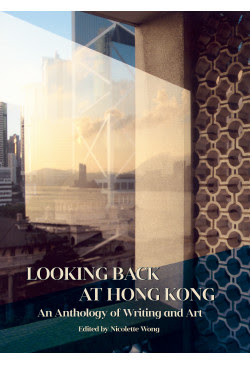
Looking Back At Hong Kong Edited by Nicolette Wong


Looking Back At Hong Kong

Edited by Nicolette Wong

© 2021 by the authors

Cart Noodles Press

Department of English

The Chinese University of Hong Kong

ISBN 978-75646-0-7

Softbound, No Price Given, 155 pages


Review by Zvi A. Sesling


Hong Kong’s known history goes back 35,000 or more years when the first settlers arrived and by 6,000 years ago was widely settled. In 214 BCE the Qin Dynasty made Hong Kong part of China. The Portuguese arrived in the 1500s and the Opium Wars in 1840 resulted in another dynasty, the Qing, ceding the territory to the British in 1842. One hundred and fifty-five years later the British lease expired and Hong Kong became a Special Administrative Region of the People’s Republic of China.


In Looking Back At Hong Kong Nicolette Wong, editor of this anthology, selected writers who lived there and subsequently relocated or returned to their homes overseas. The result is a fascinating combination of prose and poetry who, as Ms. Wong states, “are not from Hong Kong, but of Hong Kong.”


One of the eighteen writers included in the anthology is Pui Ying Wong a Cambridge, MA resident having moved to the Massachusetts city with her husband poet Tim Suermondt after many years in Brooklyn, NY.


Pui’s opening stanza for her poem Hotel Peninsular is:


I know this place since childhood,

a baroque building with fancy boutiques

and an elegant café


Later in the poem she notes her current feelings:


I find myself here after many years,

spotting the hotel on the ferry deck

and know


I have no use for its quaintness –

high tea and hush talks


And then after recalling fond memories she tells of her goal to leave her native land:


Some nights I watched ships

leaving the harbor and the future

grew in me like a sail.


Her last line in the poem explains it all:


I go after it. The sea is open.


Certainly Pui Ying Wong’s poems tell that while the past holds its nostalgic memories Hong Kong currently holds little for her to cling to nor does it evoke desire to return permanently. For those who grew up in one place and return years later this feeling is familiar.


As Thomas Wolf said, “You can’t go home again.” And for most of the writers in Looking Back At Hong Kong it is true. The past was happy, exciting, nostalgic and a meaningful experience in their growth.. The present Hong Kong, however, is not always pretty. There are the demonstrations, the smell of tear gas and additional negative experiences.


For some the memories are not good. In a prose piece Madeline Slavick notes:


My husband grew up in this neighborhood [Block 4 of the Lei Cheng Uk public housing estate] and had felt little affinity with Hong Kong. A colonized mind like a tree with no annual ring.


He had gone to the US to study, live, choosing that country, choosing me. He had felt too confined by expectations and regulations of his Chinese upbringing – as the oldest child and the only son, there were many.


I also left my first culture easily. Born to a German mother who grew up witnessing World War II and a Memphis-born father who grew up witnessing segregation, I saw two parents who saw their native country’s problems. My mother left for the US, my father for the North …dec Yet, too, it was the first I lived overseas as an adult, and the first time being in the minority race.


Andrea Brittan writes about the difference between Hong Kong and England and finds that:

I decided against a move to London or Edinburgh for that very reason: too many opportunities to say ‘This is great, but it’s not Hong Kong. Here [England] I have a slower life, a simpler life. One of milk deliveries and free-range chickens. Of farmers’ markets with organic produce. Of independent cafes and artisan bakers. I don’t need a flash car for this lifestyle.


I’ll always be an incomer, even if I spend the next thirty years here. I don’t have four generations buried in the local churchyard. My connection with the village doesn’t stretch beyond two weeks, never mind two hundred years.


Brittan who knows the long history of both Chinese and English families finds herself with no family and as Robert Heinlein wrote, quoting the Bible, “a stranger in a strange land.” Yet she finds the British countryside slower, quieter with a more amenable lifestyle.


Shui-yin Sharon Yam, a Hong Kong native living in America, views the 2019 protests a Hong Konger living in America in the following way:


On the one hand, I struggled with immense survivor’s guilt and imposter syndrome for not being on the streets of Hong Kong. On the other hand, surrounded by Americans who do not share the same deep tie with Hong Kong, I was unable to convey to them the heartbreak I woke up to every morning.


The authors in this Anthology in addition to Nicolette Wong, Pui Ying Wong, Madeline Slavick, Andrea Brittan and Shui-yin Sharon Yam are John Wall Barger, Jordan Dotson, Nashua Gallagher, Louise Ho, Viki Holmes, Hung Hung, Henry Wei Leung, Ploi Pirapokin, Mani Rao, Kate Rogers, Madelein Slavick,Jennifer Wong and Xu Xi.


Each writer has a unique voice and a strong sense of what Hong Kong meant to these authors throughout their lives. They are all excellent writers whom the readers will appreciate.


Looking Back At Hong Kong is an Anthology worth owning both for its historical perspective and poignant personal recollections

Thursday, December 30, 2021

Shalom, My Teardrop! Mimoza Erebara


Shalom, My Teardrop!


Mimoza Erebara (Translated from the Albanian by Arben P. Latifi)


© 2021 by Mimoza Erebara


Cervena Barva Press


Somerville MA


ISBN 978-1-950063-27-7


Softbound, $8, 28 pages


Review by Zvi A. Sesling


There are fewer than a dozen and a half Albanian poets listed on Amazon, though there are many more you will find via Google. I have read exactly three Albanian poets: Luljeta Lleshanaku, Ani Gjika and now, thanks to Cervena Barva Press, Mimoza Erebara.


Writer, critic and editorPeter Constantine, in his introduction to Luljeta Lleshanaku’s Fresco, states: “Luljeta Lleshanaku is a pioneer of Albanian poetry. She speaks with a completely original voice, her imagery and language always unexpected and innovative. Her poetry has little connection to poetic styles past or present in America, Europe, or the rest of the world. And it is not connected to anything in Albanian poetry either.”


Whereas Lleshanaku’s poetry is praised for being apolitical, Gjika’s poetry employs the political as it is described by former U.S. Poet Laureate Robert Pinsky: “Albania, India, Massachusetts. The mass culture posters of an American adolescent and the mass uniformity of a police state. Snow and bread. Ani Gjika has created penetrating, alert and elegant poems that successfully bring her unique voice to English…”


Erebara’s chapbook, Shalom, My Teardrop! is entirely about Israel, some written in her home of Albania and some on a trip to Israel. Her poetry is translated by Arben P. Latifi. I find this chapbook particularly interesting because it is about Israel and is most likely, though I cannot be sure, the rare setting for a book of poetics among Albanian poets.


Erebara has won numerous awards at home and internationally and thanks to Gloria Mindock’s Cervena Barva Press Erebara will now be better known in the United States.


In Shalom, My Treardrop! Erebara declares her love for Israel in a way few other poets could. As an Albanian, her heritage and her visit to Israel inform her verse and bring the reader, especially Diaspora Jews, a connection to Israel and their Jewish heritage.


In the title poem: “Shalom, My Teardrop” Erebara writes from Albania about a land far away, a land of the soul that many Jews in the Diaspora feel for a homeland they have never visited. She cites her soul from whence her love of Israel comes and even further, in a tip of the hat to politics, she notes “a different air” as a metaphor for freedom as opposed to a police state.


Shalom, My Teardrip!


This land, even though far away,


won’t let me go…


With her love,


hidden somewhere


in the depths of my sinews,


which freshened me up in a different air,


despite the dazzling spears


of negation,


that pierce me through


like slander.


A single leaf of fire


holds me onto the marrow of nonoblivion


like a teardrop


that never dropped down…


In her poem Ha-Shoah, Erebara gets to the crux of the Holocaust including three lines of which on her visit to Yad Vashem struck my heart like a knife because I remember the identical feeling that I had as a visitor to this memorial that I never forgot “I want to leave/But I am pinned there/Petrified,”


There is no sugar coating. There is terror, sadness and pain for those who visit this Holocaust Memorial. It is direct, hard and takes one’s breath away to experience that six million Jews – men, women, children, whole families -- died at the hands of the nazis.


HA-SHOAH*


In Yad Vashem, the Museum of Holocaust Victims


Like a crematorium


Inside me burn


Grain, Bone, Light, Breath


Everything is extinguished


In the ashes of existence,


Which gained its very soul from air…


I want to leave,


But I am pinned there,


Petrified,


Like a black pigeon,


In the hollow sockets


Of those beautiful eyes – once,


When they’d breathe life toward Life


I pause


To find the akin to myself


In the field, where the wheat is freshly cropped…


And here’s where I am,


Me


Along with a wheat-ear of memory


That, twixt smoke and ashes –


poor rosy smoke –


Confides to me in ecstatic whisper


My, wasn’t Hope so beautiful


Under winglets of butterflies


Dripping with dew!


*Ha-Shoah [Hebr.] -- Commemoration


Jewish or not, these poems will help readers understand the importance of Israel to Jewish heritage and its meaning to those who live in countries other than Israel, and feel their connection to this tiny democratic country in the midst of those who wish to destroy it.


___________________________________________


Zvi A. Sesling


Poet Laureate, Brookline, MA 2017-2020


Editor, Muddy River Poetry Review


Author, War Zones (Nixes Mate Books)


The Lynching of Leo Frank (Big Table Publishing)

Wednesday, November 17, 2021

A Home For Laika and other Tails by Phillip E. Temples


A Home For Laika and other Tails

by Phillip E. Temples

Big Table Publishing

Boston, MA & San Francisco, CA

Copyright © 22021 by Phillip E. Temples

ISBN: 978-1-945917-66-0

Softbound, 33 pages, $15


Review by Zvi A. Sesling


Phillip E. Temples is a triple treat. He is a novelist, a short story author and a writer of flash fiction. In his latest publication, A Home For Laika and other Tails, the title reveals his humor as this book is about dogs, all kinds of dogs-- in different scenarios. There are dogs that speak to their humans, dogs that speak to each other and of course, the famous Laika, a Russian mutt that was the first mammal in space, and therein lies the tail … oops … tale.

There are thirteen stories in Temples’ book and each is uniquely special, incorporating science fiction and some hard truths, such as a usually happy dog that is anything but joyous when its human owner pets the family cat first.

There is the man who confesses to his dog about relationships with women and gets the perfect response from his pooch.

There is the human who ignores his dog in favor of reality TV , and tells his downtrodden dog: “What did you expect dummy?”

In all of his stories Phil Temples displays his talent as a master story teller who can flip from the fantastic to science fiction to straight fiction. He always writes with a clever edge and a great sense of humor.

Here is one story from A Home For Laika and other Tails:


Record Breaker


Tyler Lawson and Billy Hajo came across the giant Burmese Python in an Ochopee, Florida subdivision lot and realized it was close to record breaking size..

“It’s long enough, Billy, but it looks to be a few pounds shy of the one they caught over in Sylvan Sores last month.”

All the while, a standard poodle barked incessantly at the duo and the snake from behind a neighbor’s fence. Tyler and Billy came up with the solution to attaining a record-breaker almost simultaneously. As an added bonus, there was no more racket.


The story has an ending which displays Temples’ humor


I thoroughly enjoyed this short, easy read with an appreciation for Phil Temples’ craftmanship and story-telling. It is a book for dog lovers and fiction readers.


Zvi A. Sesling, Brookline, MA Poet Laureate (2017-2020)

Author, War Zones and The Lynching of Leo Frank

Author of forthcoming flash/micro fiction The Secret Behind The Gate from Cervena Barva Press

Editor, Muddy River Poetry Review


Sunday, July 25, 2021

Pieces of Bones and Rags by Michael C. Keith


Pieces of Bones and Rags

by Michael C. Keith

Cabal Books

Catlett, VA

Copyright © 22021 by Michael C. Keith

ISBN: 978-1-734-68324-6-4

Softbound, 280 pages, $14


Review by Zvi A. Sesling


It is always exciting to have a new Michael Keith flash/micro fiction book published. I have read more than a half dozen of his flash/micro fiction books and with each one the stories are increasingly more compelling. In Pieces of Bones and Rags Keith succeeds in keeping the reader totally entertained with stories that encompass  many different subjects in this 280 page volume.


Keith calls to mind some of the finest flash/micro fiction writers such as Jayne Martin, Robert Scotellaro, Francine Witte, Paul Beckman other short story authors such as Phil Temples, Rob Dinsmoor and Gregory Wolos. However, Keith is definitely his own story teller. Very few compare to his unique, sometimes bizarre ideas, pushing the boundaries of the unexpected. Some of the stories in this volume can be fright provoking-- such as:


And He Replied


I’m having my Sunday morning screaming fantods.”


She left the kitchen without saying another word for she knew

There would be knife throwing.


Alternately Keith presents his humorous side in The Gift of Nonchalance


He climbed into his car and immediately noticed the passenger side

door was missing. He didn’t make much of it, reminding himself

he had no passenger with him.


What Keith presents as humor often goes much deeper, exploring a truth that few admit to, though many may contemplate the idea. Read for instance, “Till The End Of Time” a title co-opted from a song Perry Como made famous in the 1950s. Keith’s story has little to do with the song and ends differently.


Till The End Of Time


The day finally arrived when human had the chance to live

forever through the miracle of a one-time pill. Most people took

it, while a tiny handful decided they didn’t want to stick around.

Of the majority who opted for immortality, at least a third chose

to abandon their present lives, claiming that being with the same

family and friends for infinity was a for of purgatory.

Keith’s rather sarcastic streak is displayed as he derides obvious strings of thinking. Instead he presents his world-- which is not what the reader expects. He is a master of psychological stories in which the reader may be left feeling sad, happy, neutral or downright in awe of his ability to evoke inner feelings..


In Echoed Sentiment one might encounter many combinations of emotions Keith evokes.


Echoed Sentiment


Lord love duck,” she’d say, reflecting on her troubled life. It

was something she repeated often, and I wondered where she got

the phrase. “It was a title from an old movie. Something that just

stuck with me. Ducks don’t have much luck when they’re around

people, and I haven’t had much either, so lord love a duck.” When

I heard she’d been hit by a car and died, all I could think was

Lord love a duck.”


To note: Michael C. Keith’s writing is always informative and entertaining. There are no hidden meanings, and no confusing stories. Each story will make the reader want to read another. His books are always worth adding to our collections and spending time feeling enthralled.


I heartily recommend Pieces of Bones and Rags for your summer reading list or for any time of the year.


Zvi A. Sesling, Brookline, MA Poet Laureate (2017-2920)

Author, War Zones and The Lynching of Leo Frank

Author of forthcoming The Secret Behind The Gate (Cervena Barva Press)

Editor, Muddy River Poetry Review

Sunday, May 17, 2020

Insomnia 11 Michael C. Keith


Insomnia 11
Michael C. Keith
MadHat
Cambridge, MA
Copyright © 2020 by Michael C. Keith
$21.95

Review by Zvi A. Sesling

Michael C. Keith is a quintessential flash/micro fiction writer. For the most part readers of the genre want quick fulfilling reads. They do not want to be tied down with several characters and hundreds of pages before arriving at the conclusion. What readers do want is to make the ordinary every day into the memorable and often with a surprise. Keith has written enough fiction, particularly in the flash/micro genre to deliver. His writing is tight, brief, and never repetitive. Readers familiar with Keith’s stories know the expected is often unexpected.

In Ted Kooser’s book on writing poetry the former United States Poetry Laureate makes three points about poetry.  First, it is communication, second, it is for the reader and third, there are no rules. In Keith’s Insomnia 11 these specifically apply to his writing. 

First, Keith is directly communicating with readers through his brief stories. Second, his writing is for the readers’ enjoyment and third, despite those who say the genre has rules, Keith often does not follow rules to the betterment of his stories.


In a review of David Galef’s Brevity, A Flash Fiction Handbook, in the Los Angeles Times Sean Hooks notes, “Despite its diminutive size, flash fiction is not one note. It can incorporate elements of noir and feminism, film, and theater. Flash fiction is something different from just a short story writ small. Flash fiction, while not shallow, does not draw the reader into the proverbial deep end. With flash fiction, the mood is direct, even directive. Decisiveness is key.” This exemplifies Keith’s stories.

Put another way, in his introduction to Fissures, A Collection of a Hundred 100-word Stories, author Grant Faulkner explains that the book is a “bag full of shards”, each one capturing the small, telling moments of existence.

So it is with Keith. His bag is full of shards. Some stories are two lines while others may be long paragraphs.  Some of his stories are science fiction, taking the reader to places they have not been, often displaying the author’s sardonic humor. His cleverness often brings a smile. Whatever the story the ending usually not what the reader expects or guesses.

Some stories might be autobiographical as in “Interview Gaff” in which Keith writes: “I asked Joyce Carol Oates if she were an alien because of her extraordinary literary output (not to mention appearance, I thought to myself). Of course, I was just trying to break the ice, since I was nervous, and she looked like she didn’t want to be there. Unfortunately, she ended the exchange in a huff, saying, “Did they ask Shakespeare the same thing?”

It is possible this event occurred as did some other stories in this extremely entertaining volume. In fact the reader is often left to wonder if a story is fact or a gem from the fertile mind of a habitual writer such as a crossover humorous/sci-fi piece titled “Decoded”.  Here Keith takes fact – the Voynich Manuscript – and mixes in his unique sense of humor:

“Members of the Academy of Cryptographers were skeptical about a theory put forth by famous Romanian chef Vasile Bordelanu claiming the ancient Voynich Manuscript – long a subject of great mystery and exhaustive investigation – was simply a compilation of recipes for Gypsy cabbage rolls.”

There is also a mystery in the title of the book, Insomnia 11. What is the secret to the title and beyond? What is the significance of 11:11? It is a puzzlement for readers to solve. Is it another Michael Keith story within his stories?

Keith is a master storyteller with a vivid imagination and an often wonderfully bizarre sense of humor. Even the shortest of the stories draws in the reader and has them thinking deeply about what they just read. When people finished Insomnia 11 they will want to put it on their bookshelf in a special space so it can be reread. All of Keith’s fiction books are worth reading while the two flash/micro fiction books which preceded Insomnia 11, Let Us Now Speak Of Extinction and Stories in the Key of Me help make a trilogy of fascinating reading. 

Thursday, July 11, 2019

The Number 5 Is Always Suspect by Bob Heman and Cindy Hochman


The Number 5 Is Always Suspect
by Bob Heman & Cindy Hochman
2019 Bob Heman & Cindy Hochman
Presa Press
Rockford, MI
Softbound, 24 pages, $8
Review by Zvi A. Sesling


This book contains twenty-four sonnets by Bob Heman and Cindy Hochman. Heman was the editor of CLWN WR (formerly Clown War) and is known for his collages that have appeared in a number of poetry magazines. He was also the artist-in-residence at the Brooklyn Museum. Heman is poet who has published in numerous magazines and authored several poetry collections. Hochman is renowned as an editor of fiction and poetry as head of “100 Proof” Copyediting Services. For those who submit poetry or read it online she serves as editor-in-chief of First Literary Review–East. Additionally, she has done book reviews for a number of publications and is on the book review staff of Pedestal. Hochman is the author of three chapbooks.


When two fine poets get together in a collaboration one might think the final results would be a tug of war. But the opposite is true. One of them write a line, then the other writes so that each line is alternated between the two. The results contain humor, sometimes dark as in Poem 2.
he arrived at that place where the foghorns don’t blow

where the rocks are deeper than the sea
you can hear the sirens’ delusory call
as real as real as the horizon’s lure
but what is real in these shipwrecked days?
only the words that trickle through us
as the captain steers in blind avigation
toward the port where the sentence ends
punctuated by ballast to batten the hatches
and let the sea crawl slowly away
like rats onboard with stowaway faces
making their own siren calls
as the vessel veers north on its unsteady course
toward a horizon suddenly far too real


This poem shows how two people in their own homes emailing lines back and forth in a set order can create a poem with a touch of humor and with an unexpected dark ending. Even though the poems in this chapbook are experimental, the quality of each poem is extraordinary as if one poet alone had written experimental lines to be published.

Thirteen is supposed to bring bad luck but Poem 13 shows the humor two people can put together:

A priest, a rabbi, and a bear walk into a bar
“Are there any stars in this story?”
No, Just some whiskey with a beer chaser.
“Is the priest a rabbit?”
No. He’s a lapsed cabbage.
“Are his sermons part of the story?”
No sermons, just poetry readings and fairytales.
“Is the bear allowed to have a meaningful role?”
Indeed! No fairytale is complete without a bear.
“What about the rabbi? Will we see him again?” Oy. The rabbi is trying to find his missing “t.”
“So then he really does believe that he’s the rabbit?”
And oh dear, he’s late, he’s late.
“Is that where the story ends?”

One cannot tell who wrote which line when reading these poems. This makes the poems enjoyable. Who thought of the rabbi being a rabbit? Does it matter? The poem unleashes some absurdist humor reminiscent of some of the jokes traversing over time. It shows that two people can be in sync to write a humorous poem.

While Bob Heman and Cindy Hochman are not married to each other, their poetry engagement has produced a poetic child, a chapbook of twenty-four sonnets, each of which is a collaboration of seven lines each. To accomplish this successfully the two poets are in tune with each other when writing these verses.


Having tried a similar collaboration with a friend years ago, I found the results immature and silly. With Hochman and Heman there is a touch of the silly, but the poems are absolutely worth the read. This chapbook a worthy addition to any collection.

Wednesday, March 20, 2019

You're Still Alive! Live from Somerville: The Saturday Morning Bagel Bards!

Sketch by Bridget S. Galway


You're Still Alive!   Live from Somerville: The Saturday Morning Bagel Bards

By Doug Holder

Often we greet our members of the Bagel Bards group (that meets at the Au Bon Pain in Davis Square, Somerville ) with the refrain, “You're still alive!” This group of writers, playwrights and poets take nothing for granted. But this reflects on the group's informal nature, and the gallows humor that we have refined into a high art.

It is a bit like being in a play or a Marx Brothers movie. I sit back and enjoy the humor and drama that unfolds every Saturday morning. Yes—we discuss our writing, but is more than that. We have a member who regales us with stories of union corruption, corporate greed, and his clandestine forays into Afghanistan. Two of our millennial members often stop by to fill us in about their jobs, their navigation of the world, and their writing. Some of our member sit back and take it all in-- while others compete for center stage to make their pitch, plea, joke, gripe, only to be drowned out by other hungry voices.

In some regards it is a madcap dysfunctional family. Many of our members are accomplished writers, and they bring a wealth of experience and talent to the group. No one takes themselves too seriously, and if they do,they will be brought down to the earth quite quickly.

Some times you need to take a deep breath to try to get a hold of the topics our public intellectuals bring to the plate. We can start out with a discussion of Botticelli and it could easily morph into a heated conversation about Donald Trump, or the meaning of meaning.

Most importantly we are a Saturday morning band of friends. We have a spot to discuss the writer's life, present our own work on occasion, and revel in our own eccentricities. We linger, we schmooze, we pontificate.. . And when it comes to the time for our last cup of coffee , and we leave for all points—we can expect to be back next week greeted by the Greek Chorus, “You're still alive!”

Monday, December 08, 2008

Flowering Weeds by Robert K. Johnson


Flowering Weeds


by Robert K. Johnson

Cervena Barva Press, W. Somerville, MA

Copyright © 2008 by Robert K. Johnson

Review by Zvi A. Sesling


The Shakers gave us a song, “Simple Things.” Robert K. Johnson, a retired professor of English at Suffolk University in Boston, MA, and submissions editor of Ibbetson Street Magazine gives us a chapbook of deceptively simple poems. Johnson is an astute observer of people and situations. He also gives them simple titles: “Listening To Three Women At The Next Table,” “To The Person Who Phones Me Every Morning But Never Speaks.” Don’t think those are simple titles, how about: “At The Pond,” “Turning Twelve” or “To Be Sixteen.” Even simpler are “Older” and “Karen.”


These poems and seventeen more are easy to read, pleasing, and will make you think. Take “Turning Twelve”:


Her legs so much of all of her

she seems too tall for her body;

her chest with no hint yet of breasts;


her arms often just in her way;

her hair, though washed and combed,

still dull as this term’s science class;


her eyes aware her classmates’ glances

measure her up and down:

she has no idea how brave she is.

Zvi Sesling is a regular reviewer for the Boston Area Small Press and Poetry Scene. His own poetry has appeared widelt in the small press.


It is one to think about. Remember when you were twelve? Boy or girl, you had to walk into that class and meet the looks of others and you wondered what they were thinking of you. Or was that smile really a smirk. And what does hair have to do with a science class. Johnson has his view, what’s yours?


This, of course, is not Johnson first book of poetry. He has put out seven books, including his most recent From Mist To Shadow (2007). In addition he has two books of nonfiction.


However, in Flowering Weeds Johnson can turn things on themselves, bring back memories of things you had thought long forgotten, even though they are not about you.

That’s Johnson’s unique talent. The poems might be about him, a 16 year-old, weather

and other subjects, yet you will find yourself associating with these simple gems.


In “At The Pond” for example, Johnson writes “Most calming/of all/is the sound/you don’t hear/when you watch a duck/paddling toward you.” It’s so true, yet have you ever thought it about? Can you see it now? That’s the magic of Robert K. Johnson.


---Zvi Sesling