Showing posts with label Zeina Azzam. Show all posts

Friday, August 18, 2023

The Red Letters

 The Red Letters


In ancient Rome, feast days were indicated on the calendar by red letters.  To my mind, all poetry and art serves as a reminder that every day we wake together beneath the sun is a red-letter day.


                                                                                                          – SteveRatiner


Red Letter Poem #173


A Language for Colors


Asfar she would say

pointing at a yellow tulip.


And the color of grass?


Akhdar.


My young daughter had mastered

not only the colors

but also the throaty KH,

two letters in English

that equal one in Arabic.


I would tell her its the same sound

as in khamseh, khubez, sabanekh—

five, bread, spinach


and my favorite name

Khaled, Immortal.


I once confessed to a friend wistfully

that I would not name my son Khaled

because Americans couldn’t pronounce it.

Now I wonder about such wisdom:

even my eight-year-old

could constrict her throat muscles the right way

to say Khaled—


immortal like an ancient olive tree,

a flame that never abates,

a mothers love.


This spring, I saw a patch

of double hybrid tulips,

asfar tinged with akhdar,

and thought of my daughters

satisfied grin at learning those words

thousands of miles away

from her grandparents’ home

in Palestine.


Here we are, hybrid Americans

living between two languages

and speaking in colors,

splendid flowers in a distant field


                             ––Zeina Azzam


“There was a child went forth every day,” wrote the Good Gray Poet, “And the first object he look'd upon, that object he became. . .”.  And, upon first reading Leaves of Grass, the truth of that idea struck me immediately, resonating with my own distant memory.  In innocence, there seemed to be a much more permeable membrane between our consciousness and the surrounding world.  The crossing over from seeing into becoming felt, not only possible, but inevitable, utterly normal.  “And that object became part of him for the day or a certain part of the day,/ Or for many years or stretching cycles of years.”  I can remember, as a child, watching a grasshopper slowly climbing a waist-high stalk of timothy; eye to eye, we ached with the exertion, the need to ascend.  (When was the last time I felt such immersion!)  But soon enough (and just like Adam in the Garden) even children feel compelled to name those tangible experiences–– grasshoppertimothy, such words came later.  And while language created an almost-visceral power and a certain sense of permanence––after all, I can call up that memory many decades later just by speaking those names–– it also brought with it a separation between the beholder and the beauty beheld. 


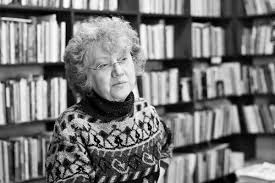
But how to assess the layers of complexity surrounding such a moment if the very act of naming––and the spoken language that child is inheriting––already involves the experience of expulsion, fixed borders, and innocence lost?  Palestinian-American Zeina Azzam has had quite an interesting journey toward becoming the poet she is today.  Her family on both sides was rooted in Nazareth, in the Galilee.  (If memory serves, there was another child that went forth from that ancient town. . .but that’s for another story.)  Her parents fled their home in 1948 as war raged around them––a conflict that would eventually establish Israel as the official Jewish homeland.  But one person’s liberation can sometimes be another’s dispossession; as refugees, and empty-handed, her parents made their way to Syria, where Zeina was born.  After spending some of her childhood in Lebanon, she and her family emigrated to the United States when Zeina was a ten-year-old.  And today––writer, educator, activist–– she is the Poet Laureate for Alexandria, Virginia.  Astonishing, yes?  Last month, Zeina published Some Things Never Leave You (Tiger Bark Press) from which today’s Red Letter selection is taken.  In the memory poem, she is teaching her own young daughter (not to mention her readers) the Arabic words for the colors that surround us in the world.  She is also offering us a glimpse of the path––the many interwoven paths––words blaze before us and which guide our footsteps.  That is true for all of us but especially so in the hyphenated histories (in this case, Palestinian-American) that are integral in the American experience.  We carry within us, embedded in our very words, the lives and landscapes that helped give us meaning and purpose.  You might be interested to know that Zeina’s daughter, ­­­Lena, will give birth to her second baby any day now.  And another child will venture out into this achingly beautiful existence, reaching for fistfuls of the yellow, the green, the red––the asfar, akhdar, ahmar––profuse across the heart’s vast fields.


The Red Letters 3.0


* If you would like to receive these poems every Friday in your own in-box – or would like to write in with comments or submissions – send correspondence to:

steven.arlingtonlaureate@gmail.com


To learn more about the origins of the Red Letter Project, check out an essay I wrote for Arrowsmith Magazine:

https://www.arrowsmithpress.com/community-of-voices


and the Boston Area Small Press and Poetry Scene

http://dougholder.blogspot.com


For updates and announcements about Red Letter projects and poetry readings, please follow me on Twitter          

@StevenRatiner


Saturday, April 15, 2023

Red Letter Poem #156

 The Red Letters


In ancient Rome, feast days were indicated on the calendar by red letters.  To my mind, all poetry and art serves as a reminder that every day we wake together beneath the sun is a red-letter day.


                                                                                                          – Steven Ratiner


Red Letter Poem #156


The tradition of appointing a United States Poet Laureate goes back decades, but I am heartened by the recent proliferation of Laureate positions in cities and towns all across the country. It seems to me to reflect both a desire for a kind of spokesperson for the soul of a community – but also our anxiety that perhaps we, individually, might not possess the words that need to be said, especially in these tumultuous times. I think it’s important to note how diverse are the voices and visions of the poets receiving this mantle, an acknowledgment perhaps that we as a people can be united without necessarily being homogeneous. In her essay "Warning, Witness, Presence", the poet Eavan Boland wrote this about the deep roots of the bardic tradition in her own native Ireland: “Their poems were remembered, recited, kept alive in an oral tradition. Despite the tragedy of their decline, they proved that poetry could keep company with the ordeals of a people." I think this is part of the job description of every poet, but especially those who have accepted this public commission. I am delighted today to bring you the work of the Poet Laureate of Alexandria, Virginia. Zeina Azzam is a Palestinian-American whose family arrived in this country when she was ten. She’s published one chapbook and has appeared widely in journals; today’s poem is from her new collection Some Things Never Leave You (Tiger Bark Press) that will be issued early this summer. She also helps foster the talents of young Palestinians in Gaza as part of We Are Not Numbers, a virtual mentorship program offered by writers from Europe and the US.


Zeina’s poem focuses on the recent earthquake in Turkey and Syria, but it also prompted me to reflect on events closer to home. In the Boston area this week, there’ll be two public commemorations of significance; the first marks ten years since the bombing at the Boston Marathon that took the lives of three individuals and gruesomely wounded 281 runners and spectators at the finish line of the race. We here remember the area-wide lockdown a few days later as police sought out the two domestic terrorists who perpetrated the attack. A decade on, and we remain united in our grief – but in my mind, I’d prefer that the anniversary celebrate the extraordinary efforts that Monday by first responders, medical centers, and even heroic bystanders on blood-soaked Boylston Street – a community coming together in unprecedented ways, and earning the appellation Boston Strong. But this week, we also laid to rest Mel King – politician, community organizer extraordinaire, tireless educator – whose barrier-breaking 1983 mayoral campaign reached into every neighborhood in the city (including places a Black man might have hesitated to visit at that time.) His grassroots movement gave rise to the very first Rainbow Coalition, a term that has since taken hold nationally. Mel – who also wrote poetry, I’m delighted to note – has this signature line as his legacy: “Love is the question and the answer” and it guided all his 94 years on this planet. If I peruse the week’s headlines, it’s clear to me that the questions we’re facing now feel more dire and encompassing than at almost any time in recent memory. It is far from certain how this community, this country will respond to the challenges.


In Zeina’s lovely lyric, she’s using language to extend her compassion halfway around the planet. The people of the Middle East have suffered far more than their share of human-made disasters in recent times, with political clashes often resulting in armed conflict – so it seems grossly unfair for Mother Nature to add to their burden. In her litany of blessings, Zeina is celebrating the aspect of humanity that feels compelled to alleviate suffering – and the enduring spirit that wants to hold on to what precious life is within our grasp. It’s hard not to feel the unspoken question within the poem: what will we do when calamity, in its multiplicity of forms, erupts before us? Is love indeed that bedrock question, revealing what resides deep within us? And will we find the strength to answer in the affirmative?


Prayer for Syria


“When she was rescued, baby Aya was still connected to her mother by her umbilical cord. Her mother, father and all four of her siblings died after the quake hit the town of Jindayris.”


––BBC News, February 10, 2023


Bless the bruised infant, hours old. Bless her life spirit, the holding on.

Bless the mother whose womb sheltered the child,

whose final push was her final breath

was her final mercy.

Bless the umbilical cord that continued to nourish under the rubble.

Bless the sibling souls who wanted to protect their tiny sister.

Bless the father who tried.

Bless the innocent and the brave crushed by walls and floors from above,

injured or dead by fires and flying glass.


Bless the hands that heft heavy stones,

the ears that hear fading cries,

the town that toils on and on.

Bless the doctors and nurses and medicines,

the suturing, the setting of bones,

the healing.

Bless those who bring food and water and warmth.

Bless the ones who sew the shrouds and bury the dead.

Bless the prayerful who bestow grace and blessings.

Bless the life spirit, the holding on, the holding on.


––Zeina Azzam


The Red Letters 3.0


* If you would like to receive these poems every Friday in your own in-box – or would like to write in with comments or submissions – send correspondence to:

steven.arlingtonlaureate@gmail.com


To learn more about the origins of the Red Letter Project, check out an essay I wrote for Arrowsmith Magazine:

https://www.arrowsmithpress.com/community-of-voices


and the Boston Area Small Press and Poetry Scene

http://dougholder.blogspot.com


For updates and announcements about Red Letter projects and poetry readings, please follow me on Twitter          

@StevenRatiner