Wednesday, April 09, 2014

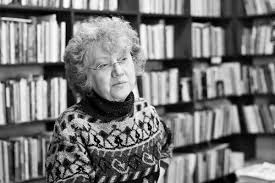
Somerville’s Jon Garelick: The Boston Phoenix and all that Jazz. Interview with Doug Holder


Jon Garelick

 
Somerville’s Jon Garelick: The Boston Phoenix and all that Jazz.
Interview with Doug Holder

Jon Garelick is a freelance writer living in Somerville, MA. He writes about music (jazz in particular) and arts and culture in general, including books, TV, movies, art, and theater. He was an editor at the Boston Phoenix for 22 years, until its closure in March 2013. Currently he writes for the Boston Globe, DownBeat, Jazziz, and other publications. He has also written for the New York Times and New York Times Book Review, and Rolling Stone. He has won two ASCAP-Deems Taylor Awards – in 1993 – for his writing about music. You can find a link to his archive of his work for the Boston Phoenix and other information on his blog jongarelick.com.  He also contributes to the local Web site The Arts Fuse.

 I had the pleasure to sit down with Garelick at my usual self-appointed office space in the back of the Bloc 11 Cafe in Union Square, Somerville.

Doug Holder: So how is it living in Somerville?


Jon Garelick: My wife and I have lived in Somerville for three years. We live in the Union Square area. We love Somerville. The city services are great. I love the robo calls from the city about traffic, etc…The arts community is amazing. The house we have is great for writing—I have a great office space. This is really good because I am freelancing now.

DH: You were the music editor for the now defunct alternative newspaper The Boston Phoenix for many years…starting back in 1990. How did you get started there?

JG:  The first freelance piece I had was in the Phoenix in 1985. That piece was about “The Fringe”—the Boston avant-garde jazz trio. At that time they played at Michael’s Pub. Eventually the paper took me on full time in 1990.

DH: Now with the Phoenix’s demise…is there a big void in the Boston media?

JG: It’s incalculable to me. The cultural ecosystem is supported by things like the Phoenix. Artists need to get the word out. People who are interested in the scene need a place where they can find out about it. Advertisers need the venue. There is still The Dig but they don’t seem any more robust than when we were around.  The Boston Globe is doing what they can do but they are struggling.

DH: I recently interviewed Dan Gewertz—the former arts columnist for The Boston Herald.  He feels the emphasis in journalism now is on the next big thing—like Lady Gaga or folks of that ilk.

JG: Certainly everyone has covered Lady Gaga. You always need something people know about. However, The Globe has been very receptive to any pitches I have made. I have a column, usually the last Friday each month, where I cover jazz. They want me to get local musicians to interview. My experience has been different. There are many people that I pitch that I get no response but that includes famous people as well.

DH: Can you tell me about the atmosphere at the Phoenix in the early 90’s?

JG: In the early days it was very vibrant. Advertising was good; the music was excellent. We worked in conjunction with a music radio station owned by the Phoneix, WFNX. It was a wonderful convergence of writers and the music we found vital and interesting. The kind of music we wrote about became popular. This was Alternative Rock and the Grunge movement... folks like Smashing Pumpkins, The Pixies, Throwing Muses, etc… This was a burgeoning scene. There were actually record stores (Laughs) and record labels. And they did a lot of advertising. There was incredible advertising support that let us do all kinds of things. We had a jazz supplement that I started, and other innovative features.

DH: How about the post-salad days?

JG: The paper lost a lot of pages. The writing was in a smaller space. We went from writing 1200 word pieces to 400 words. We tried to compensate with putting stuff online but that didn’t pan out. Advertising never really turned around.

DH: You have written extensively about many genres of music but especially about jazz. In an article that I read authored by you--you said that jazz was not meant to be “big”—it is small like, say, poetry. Has the jazz scene become smaller since you have come on the scene?

JG: It’s hard to say. You use to use record sales as a barometer. Jazz used to be 10% of the market like that of classical music. Now—how do you measure it? If you measure it by artistic activity I would say it’s at its peak in terms of creativity. I think the things musicians are doing now is amazing. People like Ambrose Aikinmusire from Oakland, California  and Kurt Rosenwinkle do creative things in terms of form, improvisation, rhythm and harmony.

DH: Hasn’t there always been a lot of creativity on the scene?

JG: Yes. But there are many different kinds of jazz now. There has not been a downsizing of creativity. Unfortunately there is no significant jazz radio to get the word out about it anymore.

DH: I remember going to see Esther Philips and Pharaoh Sanders at the Jazz Workshop and Paul’s Mall in Boston years ago. Did you hang out there?

JG: I went to shows there. But I really learned about jazz from jazz radio. But to go to one of those places—it was a big deal for me in 1971. $12 bucks was a lot to shell out for me back then. I didn’t go a lot. But I would go to see big names like Charles Mingus and Miles Davis.

DH: Any jazz clubs you would like to talk about or recommend?

JG: Well of course Scullers at the Doubletree on Soldiers Field Road, and the Regattabar at the Charles Hotel in Harvard Square.  In Somerville The Green Room on Bow St. in Union Square now has jazz performances. Johnny D’s occasionally has good people. In Inman Square—the Lilly Pad has many major, major artists playing there.

DH: How about Jazz films—any favorites?
JG: I like “Jazz on a Summer Day” about the Newport Jazz Festival. “The Black Board Jungle” has a great jazz sequence in it. It’s about a teacher in an inner city school who tries to introduce the kids to jazz with disastrous results. I like the Chet Baker documentary “Let’s Get Lost” as well.

Tuesday, April 08, 2014

Not By Bread Alone Created by Adina Tal and the NALAGA’AT DEAF-BLIND THEATER ENSEMBLE


Not By Bread Alone
Created by Adina Tal and the NALAGA’AT DEAF-BLIND THEATER ENSEMBLE
Tel-Aviv, Israel
Arts Emerson
ArtsEmeson.org
April 1 to April 6th
Paramount Theatre
617-824-8400

Review by Amy R. Tighe

I suppose it might be safe enough to tell you.
In the row in front of me are two women I haven’t spoken to for years . Once I was quite close to them but we had a bad falling out. We can see each other, but we act as if we don’t actually see one other.  They are three feet away and a universe apart.  I live in a culture where this is possible.  Excluding.  Isolating.  None of us have the courage to reach out.

As I entered the theatre, I thought the show was running late—usually the audience is settled and the lights darken and the show begins.  But there are people on the stage, standing in a line over a long table, kneading individual  balls of dough for bread, and wearing aprons and white puffy baker’s hats. Flour streams in the air like smoke. I am disoriented—a stickler for being on time, I can’t understand why the lights are on, the bakers working and we available to watch their work.

The actors hands have a presence of their own- they are present to their dough, creating the necessary texture it needs to rise. The care and the intelligence in their fingers is strong.  I somehow can feel that their gravity is different, that it comes from a different dimension though their patient touch.
“Not by Bread Alone” is created by the NALAGA’AT DEAF –BLIND THEATRE ENSEMBLE from Israel. The troupe formed in 2007 and this is their second production.

All of the actors are blind and deaf. Some had full sight and then lost it.  Some have never heard a word. All are verbal but not all have found access to a spoken language. All of the cast and crew believe “that we can, must and deserve to change the reality we live in.” Theatre and community building are vital to their work.
At first I was distracted by trying to figure out who could see and who couldn’t.  I suppose I can tell you that I married a man who was completely blind but his eyes could track you as though he saw you. We played jokes on people who did not know he didn’t see, and merely thought I was a pushy wife to direct him on my arm so much.

So I am used to looking into eyes that have no idea I am there.

The show begins and a narrator tells us that when a beautiful blonde woman walks by it means nothing to him! He prefers slim strong  hands with silver rings on them. And we all laugh because it’s a safe joke but some of us are not sure if he can hear us. So, some of the audience use sign language for clapping—waving fingers in the air, but we don’t know if he sees that, either.  Are we heard?

A screen at the top of the stage projects the script. We are learning stories, we are able to see the words, see the actors, see the stage and watch them work.  Are we seen?

“I was blind at birth, I lost my hearing at 15. I had sight and hearing and both one year before my nephew was born and when I could not see his face, then I knew I was truly blind.  I was born deaf and my father said it God who had done this. I sit with people who laugh and I can not hear them so I feel completely alone in the group. Sometimes the complete darkness and silence makes my thoughts  lonely.”  So many of these words are the same as mine, same as the words I often hear from friends.

These stories are cleanly told, everyone in the audience understands, the communication is clear.
As a troupe, the actors touch one another for cues, directions and when they leave the stage together, they form a chain with one arm on the person ahead of them so they do not get lost.  Each actor has a darkened angel, a personal interpreter, who taps them, leads them on and off stage, guiding them. One actor, completely blind, walks boldly forward to meet an actress in a scene and misses her. His darkened angel walks calmly on stage, taps him, angles him in the right direction and walks calmly off stage, ever watching and the scene continues.  With simplicity, he has showed me his healed courage.

“But we have dreams.” The stage changes, the darkened angels move their actors into place—sitting on a calm and thorough swing, walking a baby carriage while smiling on stilts, standing in a boat on turgid waters, hiking and bird watching with giant birds. “Swaying before the beauty of creation …”  We dream. We dance. We know you are out there and these dreams are in here.  You can see us. We know you can.
In several stories, the actors say that only by holding a hand can they know they connect. The scent of bread rises, the words “darkness and dreams and silence and loneliness” keep being projected on the screen, the play begins to end and we might meet these people.

Maybe this is a home coming.

I think I could tell you I was raised Catholic, scared of breaking  bread,  eating the Christ and knowing his suffering. I am scared of this communion with people who have lost so much. “I can smell the bread” one says in joy.  He has found our common body.  Have I lost so much in this short life I don’t even notice when I smell the bread?

The play is over, the curtain calls are completed, and we are invited on stage to eat and meet.  Hebrew, English, Sign and laughter are shared.  And bread.

I don’t want to tell you that a few minutes later, on the subway, my fellow travelers are focused on unhuman technology which they push, trying  to communicate.  We do not see one another in this fast moving box. Moments ago, on a stage, I touched and was touched by hands that understand human communication in the exact and unfathomable ways that define us as human.

I don’t remember, but I suppose that at times in my mother’s womb it was very dark and very silent. I suppose I was full of the knowing that only I would be the one to travel her body to claim my own. I had courage then. I have been afraid to tell you that isolation has become my culture’s daily bread and sometimes this darkness stops me from reaching.


With their fierce simplicity, humorous kindness and elegant courage, the actors of the NALAGA’AT Ensemble show us how to do what humans do: they invite us in, touch us back, open their hands and offer their bread.  And teach us to heal our own wounded courage. 

Saturday, April 05, 2014

Mother, One More Thing Poems by Carla Schwartz


Mother, One More Thing
Poems by Carla Schwartz
Copyright 2014 by Carla Schwartz
Turning Point Books
Cincinnati, OH 45254
Softbound,  79 pages,  no price
ISBN 9781625490728

Review by Zvi A. Sesling

Carla Schwartz like many a daughter thinks a lot about her departed mother. Unlike many daughters, however, she writes poetry about the woman who birthed her.  So, while this poetry book is about her mother, it is ultimately about herself. Whenever one writes about someone, it seems the choice of subject matter of each poem, the words and the descriptions reveal more about the author than the subject – though the subject is also bared in the process


November

The box descends
braced by planks
and strapped to hands,
square, thin, raw.
Pine, like all others like it,
except for the remains.

We commence the burial
with shovels full of sandy soil,
our final send-off to what now is just a corpse
the body whose womb I traversed,
who held me through the worst turns.

I held her, those last days
when, to rays streaming through the room,
to Death itself
my mother – joyous, rapt,
proposed the seeming impossible task:
Let’s go outside!      

There are also a number of poems dealing with sex – some maybe are about her mother, some about Ms. Schwartz, some are a bit more explicit than others, but whatever, her poems keep the reader interested and moving through the book. 

The final poem is the title poem and reveals, perhaps, the most of Ms. Schwartz sensitive nature as opposed to what might more carnal or more nostalgic writing:
Mother, One More Thing

A Wellfleet house with sloped ceilings and white walls,
pink light through the trees early morning.
Three large casements on two walls and skylight.
The ceiling follows the slope of the roof.
The casement on the north wall, raised.
Outside, inside our bedroom.

Copies of famous painting, sprinkled throughout
in subdued reds, browns, blacks, and whites.
The furnishings, simple, from the fifties,
with minor updates each decade.

Mother, you don’t know this, you haven’t been there.
One corner we never explored. The painting belong
to the owners. In good taste, but not yours.

Best of all, the pond. It has your name.
I slip in every morning for a swim.
Right after you come to me in dream. After I stretch.
After the subjugation resembling love.

What can be most interesting about these poems is that they are often written to throw the reader off – a word missing here or there, as in the last stanza above: “Right after you come to me in dream.”  Most writers would write “in a dream.”  But the effect here to stop the reader if only for an instant, if only to make you think and think again with what follows. There are also a plethora of commas to slow you down or to make you think they are not all necessary. A hidden trick?   Is it conscious and thoughtful?   There are a number of enigmas in her writing and it is up to the reader to decide on it.

And finally, there is a lot of soul bearing, which many poets seem to do, some not as effectively as Ms. Schwartz.

__________________________________________________
Zvi A. Sesling
Reviewer, Boston Area Small Press and Poetry Scene
Author, King of the Jungle and Across Stones of Bad Dreams
Publisher, Muddy River Books
Editor, Muddy River Poetry Review
Editor, Bagel Bards Anthology

Friday, April 04, 2014

Review of Spells: New and Selected Poems by Annie Finch


Review of Spells: New and Selected Poems by Annie Finch
(Wesleyan University Press, 2013)
By Lawrence Kessenich

In the preface to this collection, which covers her poetic works from 1970 to approximately 2010 (the pieces in the New Poems section are not dated) Annie Finch promises a lot of variety:

The collection includes lyric and narrative poems, performance texts, verse drama, translations, libretti, chants, rituals, elegies, sonnets, villanelles, ars poetica, epithalmia, valentines, prayers, letters, dialogues, pastiche, and other shapes. Most of the poems are spoken in ancient and contemporary rhythms: sapphics, cretics, dactyls, amphibrachs, trochees, anapests, folk stanzas, iambs, and others.

I was afraid that this was a lot for Finch to bite off—and for me to chew. But once I was immersed in the work, I didn’t really think about form all that much, except in a very few places where, for me, the form called a bit to much attention to itself. But mostly the book is a rich feast of words.

The structure of the volume is also interesting, presenting the poems in reverse order of their creation, starting with new poems and moving backward a decade at a time. This seems to me a very sensible way to present a significant portion of a life’s work, because most of us feel that our latest work is our best, so why not start there?

Spells is a good title for this book, because, as Finch herself puts it, “As a Wiccan, I write poems as incantations to strengthen our connections to each other, to the passage of time, and to the sacred cycles of nature.”

The first poem where that incantatory quality comes across is “Your Land,” a poem that plays on the old Woody Guthrie song, “This Land is Your Land,” mostly known in its sanitized version, which eliminates the two more political verses Guthrie originally included. Finch’s poem restores the political commentary to this subject with lines such as:

As I went walking in the land of our heart,
I found animals crying.

and (about trees)

They turned in their power and knowledge and pain.
Their arms grew wide open, their lives fell apart.

The incantatory quality comes in using the words “As I went walking” to begin each stanza and in having a single-line stanza after each of the longer ones that echoes the song: “This land is your land, this land is my land.”
“The Naming” uses surnames as incantations:

Weinstein, Villanueva, West, Sadaque,
(Spirals, dust and some spiraling dust and hours)
Bowman, Burns, Kawauchi, Buchanan, Reilly,
Reese, Ognibene.

While I like this approach, and love the wonderful variety of the names Finch uses (over fifty of them throughout the poem), I wasn’t always certain that the names provided a pleasing enough rhythm.

In a much shorter poem, “Walk With Me,” however, the rhythm is strong enough to create a true sense of incantation. Here it is in its entirety:

Walk with me just a while, body of sunlight,
body of grass, surface of trees,
head bending to the earth we have tasted,
body of death, surface of leaves.
Sinking hooves in the mud by the river,
root of the live earth, live through my body.
Sinking body, walk in me now.

The Wiccan celebration of earth is clearly and powerfully communicated here.

Although nature is by far the most common subject of Finch’s work, she applies her highly sensual sensibility to other subjects, even to something as simple as baking bread.  I really enjoy these opening lines in “Wild Yeast:”

Rumbling a way up my dough’s heavy throat to its head,
seeping the trailed, airborne daughters down into the core,
bubbles go rioting through my long-kneaded new bread;
softly, now, breath of the wildest yeast starts to roar.

Her sensuality and love of nature and the incantatory all serve her well in a poem called “Two Bodies,” about making love, which begins like this:

Two bodies, balanced mass and power,
move in a bed through the dark,
under the earliest human hour.
A night rocks, like an ark.

They reach through the ceilings of the night,
tall as animals.
Through their valleys bends the light
of their fertile hills.

The book also includes a section on performance pieces—and I say “on” rather than “of” for a reason. For me, the excerpts are too short to get a sense of the whole, especially when there are no summaries of what comes before or after the excerpts. I would perhaps have preferred one longer piece, so we could see how it played out in full. But Finch’s sensuality, sensitivity to nature and partiality to the incantatory are well demonstrated in what’s here.

The final section contains Finch’s translations and co-translations of four poets: Louise Labé, Anna Akhmatova, Andrée Chedid and a fragment from Sappho. They are all high-quality translations, but I was particularly taken with Labé’s work, all sonnets, which I hadn’t previously known. Here are the first six lines of Finch’s translation of the Labé poem “Sonnet 16 [Impotence]” to convey a sense of their power:

After a time in which thunder and hail
have beaten the mountains—the Caucasian height—
a fine day comes, and they’re clothed again in light.
When Phoebus has covered the land with his circling trail,
he dives to the ocean again, and his sister, pale
with her pointed crown, moves back into our sight.

Considering her own work, one can see why Finch’s sensibility would mesh well with Labé’s. She serves this poet well as her translator.

I’ll end with an excerpt from the beginning of a poem, “Samhain” (named after a Wiccan celebration of those who have died) that, for me, well characterizes all of the aspects of Finch’s poetry—subject matter, sensibility and use of form:

In the season leaves should love,
since it gives them leave to move
through the wind, towards the ground
they were watching while the hung,
legend says there is a seam
stitching darkness like a name.


Now when dying grasses veil
earth from the sky in one last pale
wave, as autumn dies to bring
winter back, and then the spring,
we who die ourselves can peel
back another kind of veil

that hangs among us like thick smoke…

Tuesday, April 01, 2014

(un) civil magazine of prose and poetry Volume 1 issue 1


(un) civil
 magazine of prose and poetry
Volume 1 issue 1
Winter 2013- 2014
Editor Andrea Gregory
Managing Editor Shilpi Suneja
77 pages
$10.00

Review by Dennis Daly

Civilizations thrive under a strong political leadership and an atmosphere of law and order. The expectation of this law and order generates time and energy and creativeness. It usually follows that the people who populate these societies move toward the wonder of artistry and the expressiveness of ideas. On the other hand, the leadership of these social orders (no matter how kindly in their origination and well-meaning in their intentions) paradoxically edge forward toward tyranny. The lesson taken from this natural progression of things should be an urgency of involvement, the constant challenge of authority, and, occasionally, a little rebellion by the populace. Thomas Jefferson, himself, would approve of a little periodic rebellion. He suggested every twenty years. Magazines such as (un) civil provide a provocative and potentially effective vehicle for this type of protest.

A photographic essay with an introductory editor’s note at the front of the magazine, both by Shilpi Suneja, acts as a centerpiece and brings this publication to life. The photos, entitled Turkish Spring: (un) civil Love for a Park in the heart of the City, chronicle last summer’s protests in Istanbul Turkey. The protests began over government plans to demolish a popular park in favor of a shopping mall. The disturbances quickly spread and took on a national flavor, questioning the hardline and inflexible tactics of the current Turkish administration. The country’s Prime minister, Tariq Erdogan, a man, who, in his turn, once defied authority and was imprisoned for reading a poem, labeled the demonstrators “chapullers,” meaning hooligans, a term which became a badge of honor and, in the form of graffiti, adorns the front cover of this magazine.

Each photo persuasively builds on the central story and engages the reader forcefully. The picture of the protest in Taksim Square especially struck a note with me. Years ago (2003), I also witnessed a very different protest march in Taksim Square that also electrified the Turkish citizenry and won its objectives. There is nothing like the excitement and ground swell of a democracy movement exercising its magical power.

Evil’s banality ripens to fruition in The Torturer’s Peace, a poem by Joaquin Giannuzzi and translated by Chris Philpot. Family life contrasts with professional life in an interesting seamless dynamic. Here’s the heart of the poem,

…with 220 volts he is capable of performing wonders
like uprooting
God’s littlest-known secret.
His wife doesn’t need to know anything
about these matters
which moreover would do nothing to help
her make good soup.
The two children admire their father
for his generous way
of filling the world around them.

In The Road poet Richard Hoffman paints a formalized but affecting picture, a timeless landscape of war’s castoffs—the refugees. Hoffman splices anger and art together very well in this anti-war poem. He begins his piece this way,

Mothers with newborns in knotted slings,
on their heads impossible towers of things,

            the old in carts, the children by the hand,
            these people crossing a cratered land

                        are more than metaphor;
                                    but they are also metaphor.

We are the truth to one another. Look:
don’t wait for some historian’s book

            to understand this (then it will be too late.)
            This is the unchecked power of the State…

Another poem by Hoffman entitled A War. A Fear.  A Scar. An Ear. personifies war as a philanthropic candyman passing out sweets to children. This portrayal does not stray too far from reality I must say. Soldiers often carry candy for the local kids. As a non-combatant, but visitor in a war zone, I once did the same thing outside of a school in Afghanistan. It made me feel rather good. Hoffman explains how it really works,

The children were hungry and
The candy made them hungrier.
That’s the kind of candy it was.
The war liked little bellies
And their high voices and thin
Limbs, and he liked to walk back,
When he had no candy and listen
To their tiny begging, please Mr.,
And how by morning the lovely
Green jewels of the flies flashed
Swarming on their still wet eyes.

Jennifer Martin’s short story The Jerrycan chokes the reader in urine, shit, and mud. It tells a horrifying tale of life on the border of Chad and Sudan. Survival means tribe conspiring against tribe and family sacrifice and cruelty, always cruelty. Martin excels in delivering rich details to the reader. Consider this example,

…Most of her neighbors had gone to the camps to ask the
Red Cross for items. Only those with forged camp cards or money were successful.
On occasion, a beautiful young woman would sob and receive blue plastic
sheeting to reinforce her family’s tukel, perhaps a bucket, a new pot to cook in,
maybe a mosquito net. Zoubaida, not beautiful and not young, had received an
empty one and a half liter Evian bottle. Its plastic body ran now with valleys
of dents and rivers of near-cracks, but it had lasted her a year It held drinking
water and sometimes petrol or peanuts or millet grains or candles or fat white
termites for soup. When her husband was alive and behaved foolishly, it held
Zoubaida’s wedding ring…

Natalya Estemirova, a journalist and Russian human rights activist went missing in 2009. Jared M. Feldschreiber includes a poem of admiration entitled Poem for Natalya. I like very much the contained rage and imagery in the poem’s concluding lines. The poet says,

Natalya:

You did not die in vain.
Your enemies thought you were a robber of truth
And they will be punished.
You are somewhere amongst us
Beyond the withering trees.

Courage to portray the truth in the face of injustice and horror is unfortunately a rare commodity. Publications like (un) civil deserve our interest and, when done as well as this issue is, our thankful applause.