Saturday, November 11, 2006


THE HOLE IN SLEEP
By Corey Mesler
Edition 87 of 410 copies
$9 softbound
Wood Works Press

Review by Lo Galluccio http://logalluccio.com


There is much to commend about this little elegantly made poetry book called, "The Hole in Sleep." In its gray softbound pages lie shortish but deeply felt lyrical elegies to night and its strange ecstasies.
"Being asleep is easy. Being awake is too. But the transitions between the two are ghastly.
--John Bishop
This uneasy declaration of emotional wisdom is inscribed in the opening page. It makes one consider the in between time -- that idea of something missing or absent in the transition into sleep and the subconscious mind from wakefulness.
The packaging includes two finely wood-cut postcards, one the opening poem of Mesler’s called "Night of Desolation," which ends with:
"Electricity recoils. I love you.
‘Who did you say you used to be?"
The other bizarrely enough is a quote from Richard M. Nixon, that deranged and derided President of ours who is known as much for Watergate and impeachment as for "Nixon in China" a post-modern musical.
Nixon declaring the importance of freedom of speech seems to harbor deep irony, but perhaps it is also a token of the good nature of the press.
There is a poem about the Zen Buddhist Ikkyu’s bird. The bird he had killed which he lays at his teacher’s feet. "In the morning the bird was next to Ikkyu’s mat, that morning and many more after. Ikkyu’s bird." So the bird is once again alive, bucking the transition or a ghost who Ikkyu must sleep with.
There are erotic numbers like, "Cock-a-Hoop":
"Your mouth on me like a poem.
Your slim backside bent over
me like a poem. Your sweet vaginal
lips in my mouth like a poem.
And afterwards the holycow feeling
of just being human and
satisfied like a goddamn poem."
I suppose what I like about Corey’s diction is that it’s natural, even corny to him. And for that reason these poems are treats – like slivers of chiffon cake or soda bread; whatever, they are satisfying and mostly very well crafted. I like the modesty of them and the architecture.
He even opens a poem called "Nightwork" with a Tom Waits lyric from his CD Bone Machine, "We’re innocent when we dream." This aligns with the whole hole in the sleep theme of this book. The poem is about a therapist’s transference onto Corey as a patient while he sleeps:
"I feel reprimanded. I want so to please him, don’t you know, he’s that father figure. I go to bed at night trying to dream myself a cure, a way out, a dream that will --- O sing! It’s all I can do to keep from waking."
Most of the poems presented were published previously in different journals and magazines. I think this book, so handsomely put together, and zen-like in its beauty, has been hard earned. I recommend that you read it.
Lo Galluccio
Ibbetson St. Press

Thursday, November 09, 2006


Sweet Curdle. Cathryn Cofell. (Marsh River Editions M233 Marsh Rd. Marshfield, WI. 54449) http://marshrivereditions.com $10.

Cathryn Cofell has written a beautiful and bloody collection of poetry about being a woman, mother and lover. The poems here scream authenticity; the language is evocative, and at times arresting. In the poem “Wrappers” Cofell traces her carnal life with men through the very blood she sheds. In these passages we see a portrait of a young girl’s sexual awakening, and an old woman’s sad/sweet resignation:

“You’re twelve and in love with the boy next door,
only you don’t quite know it yet.
That tingle between your legs
is something you fumble for while your sister sleeps,
while you are awake and dreaming.
You play married, practice that first boy kiss
against your pillow, hide pennies under
your tongue to imagine his taste.

The next day you’re doing laps in the pool
and suddenly blood is everywhere.
You check the water for sharks.
You dead man’s float but no one comes
to save you. This is how you learn
you are a woman: a pool of blood,
underwear packed with toilet paper,
a grocery bag handed over without words,
filled with pads and belts, too many loose ends…

You will bleed through two weddings, one divorce
twelve intrauterine inseminations,
twenty-five pregnant friends,
half a dozen bloated tirades on the way to the movies,
the gas station, through the lipstick aisle at Sears,
a thousand reasons to reject science or God or both
until your done,
done in,
chewed up like a piece of sugarless gum,
bled out like an old brake line,
scooped out like a pumpkin,
all your insides dumped, bagged, tied with a twist,
taken to the curb,
your outside shell washed clean
and grinning.”


In “Expectant Mother” the poet compares her poetry to her life as a doting mother:

“This is my life’s work
a conductor, open and waiting. Limp
from the weight of midnight arias,
afternoon rehearsals. Manic as sheet music,
holding notes like babies. Some will grow
to become riffs, songs, symphonies.
some will not; I will be so full
of the blues I will bang
their small backs until they are still.
None will be what I imagined. At best,
an anthem whistled in gauze, a myth of spittle."

Highly recommended.

Doug Holder/ Ibbetson Update

Tuesday, November 07, 2006


Grace. John Hodgen. (University of Pittsburgh Press, Pa. 15260 http://www.upress.pitt.edu/ ) $14.


I had the pleasure to hear John Hodgen read at the “Out of the Blue Art Gallery” in Cambridge, Mass., as part of the locally popular “Open Bark” music and poetry series hosted by Deborah M. Priestly. Hodgen impressed me as a humble man with a great talent. Hodgen, is a man who I presume, has experienced a lot of the shit out on the street, and has the good fortune and talent to report back to us. Being a middle-aged man I would have to say I was greatly affected by Hodgen’s poetry. I think behind many of my ilk’s dour and doughy countenances, a visceral battlefield of broken dreams and unrealized ambitions still fester. And Hodgen acts like a spokesperson for our “quiet desperation.”
This brings me to the poem “ Men Lying in Fields.” I remember when I was in my late teens, lying down in the midst of a cornfield in upstate New York, and seeing each stalk wave in a fragrant summer breeze; a sort of pastoral symphony of movement. (I was stoned of course!) In this passage Hodgen wonders if in fact his long-gone grandfather ever took the plunge in a field before life chained him in with so much baggage:

“ And I wonder if in his twenties he ever wished to lie in a field,
simply that, the way Thoreau did, before wandering off to Walden,
if he plucked at sweet grass, whistled through it, wondered what to do with his life,
before giving it over to Allis Chalmers and God,
the promise and swath of eight sons in a row.
I wonder in the arc of his arable dreams if he ever envisioned me,
the way I think of him now, the way Noah thought of places
the sons of his flung birds might find, leafy with dreams and silt.” (5)

And in the poem “Proof,” Hodgen looks at the corpse of his father and imagines it as a work of art:

“ When they brought us to see him one last time,
sheet drawn, draped over his chest like chalice cloth,
da Vinci’s Last Supper, his body swollen, sweet tableau,
his torso, head, like Easter Island, Jobson’s Bay,
the turtle shell that holds the restless world.
Remember the blood vessels that had burst into burgundy,
into hieroglyphs, the blotches like brushstrokes,
like the scrawls of a graffitist stuck in a wrong century,
some tagger spray painting his zodiac sign
on the scrolls of the Houses of the Dead.” (28)

Hodgen has penned a masterful work that has left me deeply moved. Highly Recommended.

Doug Holder/ Ibbetson Update/ Nov. 2006

Thursday, November 02, 2006


I first encountered the work of Somerville writer Patrick Smith through a small press publication he put out. I came across it in a Laundromat on Oxford St. in Cambridge, Mass. during my “rent control” days. Patrick Smith is an erstwhile airline pilot, and author of a popular weekly column on http://www.salon.com “Ask The Pilot.” An adaptation of his columns was recently published by Riverhead Books, “Ask the Pilot.”


Doug Holder: Patrick can you talk about the small press ‘zine you put out in the early 90’s?

Patrick Smith: It was called “Stargreen.” It was a name I made up. It sounded good. It was an indulgent literary ‘zine for lack of a better term. Most of the contributors were “me.” I had an occasional poem and travel essay. It had an airplane story now and then. Some of the same stories I used in that zine back in the early 90’s, the skeleton of them, were used in the book: “Ask The Pilot.” They actually come up in some of articles in Salon.com.

DH: Pagan Kennedy, another Somerville writer, started of by self-publishing her own ’zine. Is this a good way to break into writing—get your feet wet— can it lead to other things?


PS: It’s good practice. For some people it is a compulsion, and it is a release. I always have had a latent interest in writing. It wasn’t anything I necessarily thought that I could use vocationally. So my ‘zine was a way of getting my stuff out there; even though very few people actually saw it. I don’t know if it is a way to get a start. More importantly, being good at what you do, is the main thing. Having a niche you can exploit is important. Writing about air travel was nothing that anybody was doing—at least in the way I was doing it. Being lucky; and knowing a few well-placed people, is good to have too.

DH: What was the first writing gig you were ever paid for?

PS: The first thing I ever was paid for was a music review. It was a review of a long-forgotten jazz band “The Jazz Butcher.” It was for the “Utne Reader.” A friend of mine was an associate editor and he got me the assignment. Once you have one article under your belt…it is easier to get the second and so on.

DH: Do you have any formal education as a writer?

PS: Does going to high school count? I went through flight training school. No formal training in writing.

DH: Are most pilots trained in the military?

PS: About half of overall pilots are from the service. On the major airline level it’s about 70 to 30. This is not true at the smaller, regional carriers.

DH: What is the first question people usually ask the pilot? What is the first question they should ask?

PS: The majority of questions pertain to safety. Most questions I am asked are not about flying. Mostly I am asked about the airlines and their safety records. The airline travel is what excites me. The book is not bogged down with stuff about physics, wing flaps, etc...It’s about the industry. A meditation about air travel to me is a meditation about culture. It is not so much on the plane, but where the plane is going. If I hadn’t hooked up with the airlines I would never have gone to the more than 60 countries that I visited. People today don’t see the airplane as romantic like I do. I try to encourage people to see the airplane as more than just a means to an end. It is not just a way to travel, but part of travel itself.

DH: When I fly I feel that I am in the air held up by tons of metal…a very unnatural act.

PS: Fear of flying is a tricky thing. It comes in two forms. There is a tangible aspect to it like “What if this happens?,” A questions like that is something someone like me can answer. There is the other visceral fear that people have that they can’t even put into words. That is something a psychiatrist should deal with and not a pilot.

People always ask me how a plane gets in the air and stays there. If you supply anything with enough lift and power you can make it fly. A 747 weighs almost a million pounds. It flies pretty effortlessly because it has so much power, and because it is so big it creates a lot of lift.

DH: How safe is it to fly?

PS: Recently they found that flying in 2006 was six times safer than it was 25 years ago. This is with twice as many planes now carrying twice as many passengers. We have better technology, better training—those are the two main things. As a percentage—fewer and fewer flights are crashing. Everyday, around the world, about 5 million people fly a commercial plane. There hasn’t been a catastrophic accident since 2001. These numbers speak for themselves.

DH: When is the most dangerous part of the flight?

PS: If you have to be neurotic and worry—it is the takeoff. That’s when you make the big transition from ground to flight.

DH: How have airlines received your book?

PS: Airlines are strange and paranoid animals. There is a mentality around airlines that goes “When something happens, we’d rather not say anything at all.” This creates a climate of mistrust.

When they do talk they have a habit of talking down to people. It makes the operation seem unprofessional. They don’t talk about safety, or use safety as a marketing tool. Why stir the pot?

DH: Any new projects in the works?

Nothing radically different. There is a second book in the works about air flight, but from a very personal view. It will consist of anecdotes about trips I took around the world, cockpit tales, etc….

DH: The movie “Flight 93,” about the ill-fated flight during the 9/11 fiasco—how accurate was it?

PS: It was very accurate. There was an actual pilot, an actual stewardess in the movie. Technical aspects were true to life. It didn’t portray the passengers as heroes. They were portrayed as a group of people in a horrible situation, and how they did the best they could with it.

Doug Holder

Tuesday, October 31, 2006


McIntyre & Moore Booksellers hosts a reading of Ibbetson Street Press:20th Issue followed by an open micSunday, November 26, 5:00 pm


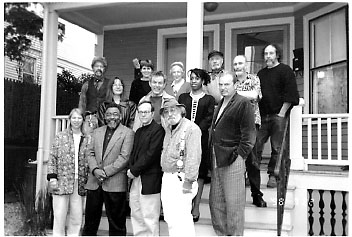
(Ibbetson Poets at the original 33 Ibbetson Street Location, in Somerville, Mass.) left to right: (front row) Linda Haviland Conte, Askia Toure, Richard Wilhelm, Marc Goldfinger, (2nd row) Rufus Goodwin,, Gloria-Deo Agbasi, Robert K. Johnson, Sue Sullivan (back row) Don DiVecchio, Doug Holder, Aldo Tambellini, Dorian Brooks, Joanne Holdridge, Jack Powers.


(Somerville, MA) McIntyre & Moore Booksellers hosts a reading of Ibbetson Street Press: 20th Issue, followed by an open mic. (open to all)Sunday, November 26, 5:00 pm at McIntyre & Moore Booksellers, 255 Elm St. in Davis Square,
Somerville, near the Red Line. Free and open to all; wheelchair accessible. 15% book discount* for all those attending [*discount available for day of event only]. For information call McIntyre & Moore Booksellers (617) 629-4840 or log onto www.mcintyreandmoore.com.Ibbetson Street Press, an independent press based in Somerville, not only celebrates the release of its 20th issue, but also the fact that it has been a champion of the local literary community since 1998. The magazine has received several picks of the month in The Small Press Review and is included in "The Index of American Periodical Verse." Contributors to this issue are Sarah Hannah, Gloria Mindock, Affa Michael Weaver, Harris Gardner, and many others. The reading will be hosted by Ibbetson’s founder Doug Holder. All past and present contributors are invited to read. For more information on Ibbetson Street Press, log onto www.ibbetsonpress.com.

McIntyre & Moore Booksellerswww.mcintyreandmoore.comOn the Red Line, in the heart of Davis SquareGreater Boston's best source for scholarly used booksOpen for browsing 7 days a week until 11 pm

Monday, October 23, 2006


The Confidence Man. Poems by Michael R. Brown. (Ragged Sky Press 270 Griggs Drive Princeton, NJ 08540) http://michael.brown.name/ $10.

Michael Brown, the resident graybeard of the Boston-area poetry scene has a new collection of verse out: “The Confidence Man.” Brown’s poetry is an interesting mix of jaded wit, irony, and world-weariness. The last poem in the collection: “Jon Shea and Teaching,” made me pause because Shea was the founder of the “South Boston Literary Review,”, and the short-lived “Journal of Modern Literature.” Shea died a couple of years ago at the still fairly tender age of 48. Brown resurrects Shea so he can reflect on his own years of teaching, which he reveals is even more important to him than his writing. In the answer to a question from the always offbeat and colorful Shea, Brown riffs on the classroom, and takes a poetic poke at some posturing colleagues:

“It’s like I told him when he asked earlier about teaching and
writing. If I had to give up one, I’d give up writing. Just like
today, I got some student evaluations for my classes last
semester. They have about thirty questions like,” Is prepared for class” and they score one to five. In each set I get one four and all the rest are all fives.

I thank my supervisor for taking all the bad ones before
he gives them to me, and he thinks he’s a good teacher and I’m a wise-ass. I go to the teacher’s lounge and say it’s time to write
my thank-you note to the registrar. Some of those teachers
have been there 25 years and never get good students. I get
them all the time. (85)’

In an excellent poem “BJ’s Poetry Store” Brown takes a swing at the use of prepackaged or clichéd language in the poetry world. He imagines a discount store, where the merchandise is second hand language for bards:

“ …But this BJ shit has me worried.
Big white sheets of paper announce in blue block letters—
rural American figures of speech/
$5 a dozen/6 dozen minimum,
tough urban images/ 2 for a dollar/ boxes of 10.
Inside, the aisles are littered with case-sized lots
of canned poetry pieces; frozen iambic pentameters
are stacked high in Styrofoam trays;
and anyone can afford them.
Soon open readings will be endless,
and the only real poetry will be the conversations
of those who won’t buy language,
and say nothing while everyone else reads.” (200

Brown’s range is wide and he takes in everything from the sculptor Alexander Calder, to the image of the actor Johnny Weissmuller (“Tarzan”) at the pool at a very pedestrian Motel 6.
Brown offers a thoughtful and engaging read. Recommended.

Doug Holder/Ibbetson Update/Somerville, Mass. /Oct. 2006

LUMMOX JOURNAL: An Interview with Raindog: The Final Issues.

with Doug Holder

The "Lummox Journal" founded by R.D. Armstrong ( "Raindog") has been a respected, controversial, and quality literary journal for the past 11 years. I have had the pleasure to be published in it a couple of times, and have subscribed to it in the past. "Lummox" has had a great series of interviews with artists and poets, as well as some memorable all-poetry issues. Most small press magazines fold after a year, but like most of us holy fools in the alternative press R.D. kept plugging away at his labor of love. R.D. has published the next to last issue, and so I decided to interview him about his winning literary enterprise.

Doug Holder/Ibbetson Update


Doug Holder: Why are calling it quits?


Raindog: When I started doing this (publishing the Lummox Journal), it was an interesting hobby, but it quickly grew to become a second job. At one point I had nearly two hundred paying subscribers; but after 9/11 (about a year later) the income began to dwindle. So it became a low-paying second job, and now it's a no-paying second job. Basically, I'm ceasing publication of a hard-copy version because it takes more energy to put each issue out, than I seem to have these days. Plus the cost of production and mailing just keeps going up and up, but not the revenue.

DH: What did you set out to accomplish? Did you?

R: Early on I thought that with luck I'd make some money to buy stamps with and send my own writing out. Eventually it became (so I've been told) a forum for literary expression and an outlet for poetry, above and beyond my own (which kind of fell to the wayside). I never imagined it would end up like this.

DH: Most memorable issue?

R: Almost all the issues are great, but some of the All Poetry issues are pretty damn fine. It's hard to say because I'm looking at over 120 issues between Oct. '95 - Oct. '06. It's like trying to decide which of your kids you love the best...


DH: Can you talk about some of the interviews you have conducted and were printed in the magazine?

R: I think I've interviewed nearly a hundred poets, painters, musicians and even a dancer in the LJ. Of course I haven't been able to get the really big poet cats like you guys over at Poesy, but I've done all right. Here are some of the poets and artists that I have interviewed: Linda Albertano, Steve Abee, Gerald Locklin, Mark Weber, Todd Moore (this is how I got to know Todd), Bill Shields, Paul Krasner, Laurel Ann Bogen, Frank Moore, Lyn Lifshin, Scott Wannberg, S. A. Griffin, Michael Ventura, Errol Miller, Charles Plymell, A. D. Winans, Linda Lerner, Tomata Du Plenty, B. Z. Niditch, Kell Robertson, Tony Moffeit, Donna Cartelli, John Thomas, Holly Prado, Harry Northup, Jazz Morgan, Jack Grapes, Larry Jaffe, Philomene Long, Larry Welsh, Claudio Parentela, Dan Fante, Leonard J. Cirino, John Dorsey, Glenn Cooper and Neeli Cherkovski. I don't know how many of these names your readers will know, but I've highlighted the one's that I liked more. Mostly, I picked interviewees based on people I knew, or thought were interesting (some were recommended by other people I knew). A lot of the poets are from the Western US, 'cause that's where I live. Most were answering a generic set of questions that I had come up with over the years, because most interviews were done via Email/letters.


DH:Do you still plan to publish books?


R: Yes, the Little Red Book series (LRB) continues. I just published Outrun Your Fate by Australian poet Glenn Cooper; Digging my own Grave and Enjoying the Work by Ed Jamieson, Jr. (Lummox Journal's poetry editor for the last few years); and The Painter by Marie Lecrivain with drawings by Aurora Antonovic. I'll also publish other collections when I can raise the funds.


DH: And your own plans?


R: It's time for me to get back to being a poet and going thru the grind of getting my poetry published or not. I hope to publish, or get published, a collection of my own poetry (in an ideal world it would be a collection of my long road poems, some of my fiction and selections of my poesy -- but that's not likely because it would be a 250 to 300 page book and nobody would take that risk on a relatively unknown poet such as myself -- I know I wouldn't). Maybe I'll become egotistical and publish a whole string of Little Red Books of my own work. Lord knows I've certainly served the poetry community by presenting their thoughts and work in the LJ and in the LRB series (over 50 titles thus far). I'd also like to put out a CD of some of my songs and poems.

for more info: http://www.lummoxpress.com/lummoxpress/

Doug Holder

Sunday, October 22, 2006

Poets offer trio of unique voices at Chapter and Verse
Jamaica Plain Gazette

By DOROTHY DERIFIELD October 20, 2006


Chapter and Verse presents its second program of the season on Nov. 1 in its new home, the Loring-Greenough House. Readers that evening will be bilingual poet and JP resident Alan Smith Soto, Lisa Beatman of Roslindale and Doug Holder, a Somerville resident who really needs no introduction in the local poetry scene.

Soto, who writes in both Spanish and English, was born in San Jose, Costa Rica. His work has received international attention, appearing in journals ranging from “Anthropos” in Barcelona and “Cambio” in Lima to the “International Poetry Review” out of the University of North Carolina. In 1998 his book “Fragmentos de Alancia” was published by Asaltoalcielo editors (Cambridge), and in 2000 he published a Spanish translation of Robert Creeley’s “Life and Death” (“Vida y muerte,” Madrid).

Recently, he was the translator and guest editor of the issue “Spain’s Poetry of Conscience” of the “International Poetry Review,” spring, 2006. This is Soto’s first appearance at Chapter and Verse, where he will present a program in English.

Beatman is no stranger to the local poetry community. Author of the prize-winning “Ladies Night at the Blue Hill Spa,” Beatman is an adult education specialist who spent several years teaching factory workers who were mainly Hispanic immigrants. Her forthcoming work, “Songs from the Factory Floor,” grew out of that experience and out of her concern about the loss of manufacturing jobs, historically the economic gateway for immigrants.

Last year Beatman received a fellowship to an artists’ colony in Brazil, where she had the good fortune to be invited to join a local women’s sewing circle, and their creativity in turn nourished her own. Now she will share the results with us.

Everyone in the Boston poetry world knows Holder—poet, editor, impressario—a man who always has time to encourage both beginners and veterans alike. Holder is the founder of the Ibbetson Street Press in Somerville, which publishes poetry books and the journal “Ibbetson Street,” (www.ibbetsonpress.com).

He hosts a number of venues from Somerville to Newton, and his poetry has been published in countless journals. He recently released a collection of poems dedicated to the memory of his father entitled, “Wrestling With My Father” (Yellow Paper Press). Holder’s poems are sharp, funny and profound; definitely not to be missed.

Chapter and Verse takes place at 7:30 p.m. on Wed., Nov. 1, at the historic Loring-Greenough House, 12 South St., just across from the Monument in JP Center. The reading is free, open to all, and refreshments will be served. For more information call 325-8388 or e-mail wileysister@yahoo.com or dorothy.derifield@gmail.com.
The writer is the director of Chapter and Verse.

Friday, October 20, 2006


Porter Square Books: A Success Story.

Since its inception two years ago “Porter Square Books,” in Porter Square, right on the border of Somerville, Mass. and Cambridge, Mass., has become an integral part of the literary community and the community in general. It has become a hub for readings, events, meetings, and even great coffee from its café, presided over by the ever cheerful Rachel, the manager.

The staff, Dale Szczeblowski, managing director, Carol Stoltz ( Children’s Department Manager), Jane Dawson ( Personnel Manager), told me that they view their enterprise as a success—their criteria?—sales of course! The dynamic trio feels that people are still discovering the store—and when they do they realize it is a top shelf organization. All three are far from wet-behind-the-ears; with extensive experience in the book biz. So the store isn’t a “gee-whiz let’s put on a show”
affair.

Ellen Jarrett, the event planner, has attracted local, as well as nationally known talent to read at the store. Some of the readers who have graced the bookstore’s stage are Claire Messud, ( “The Emperor’s Children), Ed Viestries, ( a Mt. Everest mountain climber), poet Richard Hoffman, Ellen Kushner, to name just a few.

The store has community outreach. They often bring authors out to local schools, they host parties ( notably the reception for the Somerville News Writers Festival—5:30PM Nov. 12), the editorial meetings of the local Cambridge newspaper “The Alewife,” and schedule book signings for local presses like: “Ebb Tide,” “sunnyoutside,” and others. In the poetry section the shelves stacked with local poets such as: Patricia Brodie, Martha Collins, Marc Widershien, Steven Cramer, John Hildebidle, and many others.

Dale Szczeblowski, a onetime jazz musician, has started a Pop Culture section, as well as a service that rents cds and tapes.

All three folks agreed that the physical book is far from dead. They have been surprised that many of the under 30 crowd are still hungrily devouring tomes. And be reminded…Porter Square can order and deliver books the goods at least as fast as Amazon.com Porter Square Books is a very nice alternative to the increasingly impersonal world of commerce.

For more info go to: http://portersquarebooks.com/


--Doug Holder

Wednesday, October 18, 2006


A Night in November. Play by Marie Jones. Starring: Marty Maguire. Directed by Tim Byron Owen. (Jimmy Tingle’s Off Broadway Theatre
255 Elm St. Davis Square, Somerville http://www.jtoffbroadway.com/)


If I had to describe “A Night in November” in a few words; I would say it is about a man in a cage. He is trapped by his past, by his petty bureaucratic job, by the entrenched divide between Protestant and Catholic Ireland.

“A Night In November,” written by Marie Jones, is a one man show. The one man, who plays 26 characters, including the protagonist Kenneth McAllister, is the actor Marty Maguire. McAllister is a low level welfare officer living in the Protestant section of Belfast. For his 40 years he has been towing the line. He moves through his carefully choreographed life like a drugged out cipher. He outwardly accepts the racist, bigoted, and hateful doggerel that is dished out by members of his “tribe,” against the Catholics living on the wrong side of the tracks.

McAllister however is starting to crack under the strain. Maguire brilliantly portrays the breakdown of this corseted man, who eventually bursts through the stranglehold of a preordained life. The sweat pours down the character’s face, he screams in rage, as he rails against the stifling bonds of family, friends and job. Maguire's portrayal of McAllister can only be described as a portrait of a raging force of nature. It is a performance of Shakespearian proportions.

Maguire fleshes out the 26 characters expertly, capturing the tics and textures of each and every one. From a wizened old sod of a father-in-law, to an in-your-face New York cop, Maguire is on the money.

In the second act McAllister embarks on a trip to New York City to witness the “World Cup,” and gains a new perspective on life. The director, Tim Byron Owen, told me during intermission that he strived to bring a universal sensibility to the production. He wanted it to be more than an “Irish” play. And indeed, Kenneth McAllister is an everyman. He is an everyman who has a mind. He is an everyman who stops to question his own existence during his all too brief time on this stage.

Doug Holder

Monday, October 16, 2006


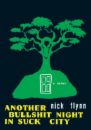
Another Bullshit Night In Suck City. Nick Flynn. ( W.W. Norton, N.Y., N.Y.) $24.

Memories of the past haunt us. Sometimes we try to drown them with booze, drugs, or we leave to get a pack of “Camels” and never return. Nick Flynn, acclaimed poet and writer (and our featured reader at the “Somerville News Writers Festival”, was not able to escape his past, or in a word…his father. In Nick Flynn’s visceral and evocative memoir “Another Bullshit Night In Suck City,” Flynn can’t only escape the memory of his ner-do-well, booze-soaked father, but his flesh and blood father haunts the streets of Boston where Flynn lives, and at times the downtrodden dad is a denizen of the “Pine St. Inn,” a homeless shelter that Flynn was employed by. His father fancied himself a writer, and may indeed have had latent talent, but it rarely saw the light of day. Flynn, a poet first, has infused a wonderful sense of lyricism in many of the passages written about his father. He conveys the love, and hate, for a man who was a stranger to himself, and his son.

One of Flynn’s primal fears was that he would end up like his father—a man with a rapidly fading fantasy of the writing life, holed up in a cheap furnished room in a Beacon Hill rooming house—or worse yet sleeping on the grates in front of the Boston Public Library. In this passage, Flynn writes about seeing his homeless father walking the streets:

“Sometimes I’d see my father walking past my building on his way to nowhere. I could have given him a key, offered a piece of my floor. A futon. A bed. But I never did. If I let him inside I would become him, the line between would speed up. The slogan on the side of a moving company truck read: “Together we are going Places—modified by a vandal or disgruntled employee to read: “Together we are going Down.” If I went to the drowning man the drowning man would pull me under. I couldn’t be his life raft.” (11)

Flynn was well aware that he was traveling the same perilous road as his father. For years, like his father, he fancied himself a writer, but he was starting to succumb to his own demons: drugs, drink and the cage of a worthy but dead end job at the shelter. Flynn writes:

“I’m fast becoming the one who leaves things behind, who blows a rod and pulls into the breakdown lane and unscrews the plate and walks. Who puts his stuff in your basement and never returns. Who steps out onto a sidewalk in a small city, into the stifling car, without his shoes, without remembering he was even wearing shoes; or even wore shoes.” (118)

With the help of a therapist, Fynn managed to get out of the hole he was fast sinking in, and was able to get enough insight into himself, and the burden of his fallen father to move on. In a letter from his father’s friend, Flynn gains insight into his father’s futile charade, which eventually leads Flynn to get his own act together.

“I always felt your father didn’t like himself a lot, that he had a self-destructive side wider than most. That he carried around a sense of failure. You kids were an important part of his life, he would read to me the letters he wrote you, yet it always seemed like he was punishing himself for his failures as a father. Eventually he made a business of being a failure—if he was close to success he would sabotage it. The one role he held on to was that of being a great undiscovered writer—it allowed him to lash out in anger, it became his job to straighten the world out, to point to exactly how he’d been mistreated. The art world allowed him to get away with extravagant and excessive behavior, it encouraged it. His life became a raging performance, piece scripted by Jonathan Flynn. This allowed him to stay in control of something in his life. It became all presentation.”

Not all of us would have the strength to pull out of this maw of despair. Flynn did—and in a way realized his father’s dreams.

Doug Holder/ Ibbetson Update

Sunday, October 15, 2006

Pushcart Nomination for Ibbetson Street 2006


Ibbetson Street Press 2006 Pushcart Prize Nominations.


Tomas O'Leary- "Consolation Breakfast At The IHOP" Issue. 19

Ruth Sabath Rosenthal-- "on yet another birthday." Issue 19.

Richard Wilhelm-- "Ciborium" Issue 19.

Sarah Hannah. "The Haunted Suburb." Issue 20.

Lo Galluccio. "Millennium" Issue 20.

Marc Goldinger. "Jumping Billie from Cambridge. Issue 20.

Thursday, October 12, 2006


Doug Holder Invited to Judge Poetry Competiton In Israel.


Dear Doug Holder,


We are delighted by your positive response to our invitation on behalf of Voices. Hopefully you will judge our 18th international contest at the end of the year 2007. Tradition has it that the judge joins us in a week of poetry festivities generally at the end of December or in January. I will forward by snail mail a copy of our latest anthology and more info about our organization. We see ourselves as a cultural bridgehead between Israeli/Anglo writers and the world at large. The week's festivities will include two workshops, (a weekend and a day long affair) a public reading in Tel Aviv of our contest winners which can also be a forum for you to read also and perhaps give a dissertation relating to poetry. I hope also to organize a reading or lecture at Tel Aviv and Bar Ilan universities and also a public reading at a well known coffee bar cum cultural meeting place in Jerusalem. There will probably be a private meeting relating to Voices members. We meet on a monthly basis in three of the country's main centers. Last year we hosted Prof. Jascha Kessler from UCLA and this year our judge is Vera Rich of Manifold Mag. in the U.K. Have you been to Israel before? It is a small country about the size of New Jersey but rich in contrasts. Is there anyone in Israel with whom you would like me to make contact? I will be sending your impressive resume to the American Library requesting some sponsorship but they don't seem to be functioning very well in recent months; since and during the recent war. As a non profit organization we are usually strapped for funds but as the largest poetry organization in Israel we set a high standard. I'm sure your visit will be memorable. Best wishes, Mike Scheidemann D.Litt. (President and coordinator of Voices; The Israel English Poetry Assoc.)

Wednesday, October 11, 2006


A Poet in the 70's -in Greenwich Village- in love with life... a letter from poet Jared Smith.

Dear Doug,

You sank me into memories. I don’t know how one could write an essay of what life was like in The Village in the 70s…or what my life was like. I was riding a drunken comet…a young man who was making it into the big leagues almost and was able to hang out with and be tolerated by the big boys. And they were billboard big, and I worshipped them and wanted to be able to think like they did and speak as they did, but at the same time I had to figure out how to start to make a living and how to get as many girls as I could into bed and do as many other crazy things as I could.

My writing took off while I was still in graduate school at NYU…30 poems published in literary magazines, some good and some bad in my first year…as many as 120 publications in 12 months only four years later. William Packard invited me to join the screening committee of The New York Quarterly, and later the Board of Directors. Don Lev invited me to be a Guest Columnist on Home Planet News. Harry Smith pegged me as the next big thing, and Walter James Miller had me on his NPR author-interview show twice. I drank and cried with Gregory Corso, watched Allen Ginsberg wander around The Eighth Street Book Shop (“Where Wise Men Shop”), a hulking heavy man bent over with a canvas bag draped over his shoulder, in which he carried an American Express Card machine and copies of his books so people could buy them from him on credit, and I mused about how he looked like a cave man, but he really could howl. I thought nothing of taking multi-hour bus trips to hear poets like Robert Bly read when they blew into New Jersey or wherever else—he reading to my girl and me and three others with his bright serape flailing across his shoulders until he kissed my girl and she fainted dead away at his feet. We wrote back and forth for years afterwards about dragon smoke and other things. And Albert Goldbarth, who like me as years went by, turned into science and technology as well as poetry. Harry Smith, my first publisher, with Lloyd van Brunt and Sydney Bernard and Tom Tolnay, equaling the mighty Smith Press. Talking with Bill Packard in his apartment surrounded by enormous plastic garbage cans—industrial size—which filled his living room and served as waste paper baskets, thinking up personal notices to run in the end pages of NYQ—nasty digs at the lady poets he loved to publish and really didn’t want to feel close to. Writing story-boards for almost-produced PBS films on the works of Susan Fromberg Schaeffer, Charles Bukowski, and Packard’s Ty Cobb Poem…and how I lost that contract because they decided they’d only do those if I could deliver Kurt Vonnegut as well, and I didn’t know how to get to him. A woman from the suburbs who ate my soul because I couldn’t burn it bright enough, and another who saved it by throwing water in my face until I choked. Coordinating readings at The Basement Coffee Shop and The Café Feenjon. Having Jerome Rothenberg attend three of my readings in a row and being too stunned to ever talk to him because his Banging On The Pumpkin had just come out, and I was still a kid and wouldn’t know what to say to him. And Menke Katz—no man who knew Menke or his writing could ever forget the man, nor could any woman, for other reasons which the women could tell you of. His Burning Village remains an incredible epic, and all of his work haunts me. The names come back in different contexts too…Don Lev was my best friend’s roommate, and a good friend of mine as well. I remember him starting up with Enid Dame when they first met each other. Galway Kinnell…well, we’re going to 1963 for this…but him reading from What A Kingdom It Was when that first came out, long before Body Rags and The Book of Nightmares. He had always wanted to spend time on Cape Cod when he was younger, and couldn’t afford to…so one winter when the vacation homes were all boarded up, he dug up through the floor of one. He was a fighter then too: he marched for civil rights in the south and had to be busted out of jail by calling the Dean’s office at NYU’s School of Continuing Education. He never told me this, but it was true. It was just a time to live. I resided for a year at the top of Judson Church, in the room Edwin Arlington Robinson lived in, and above a myriad of tunnels that connected the New York underground and its radicals so that they could slip from building to building without coming up. And I lived at the corner of West 12th Street and West 4th—where parallel lines come together in infinity. An essay could not be written of infinity…of the open doorways between apartments where film-makers from Paris and poets from Canada and artists from wherever came through and stayed a week and left and were replaced by others without the apartments ever changing hands…a building that had first opened in the 1800s as a hotel for whaling men in for a few days from sea. Never enough to eat, but never hungry because you could always find someone with something and it was an endless circle of energy.

And then I had to leave for awhile, and was relocated to the Midwest where I kept writing, but more and more had to devote my creative hours to technology research and business education while raising a family. Would you believe, I—with only my two degrees in literature--ended up assisting in the development of international energy policy, consulted with most of the Fortune 500 and with McGraw-Hill and The New York Merc and several universities, worked with various government agencies, finally advising several White House Commissions on security and emergency response under Clinton, and then landing a major Defense Department research contract and working on that with a team of scientists, before serving as a Special Appointee to Argonne National Laboratory and assisting in various critical infrastructure studies relating to energy and telecommunications. Literature must be a way of thinking in unique ways about a lot of things that are worth a lot of money to other people, I guess. Too bad more people don’t read.
Broke free again in 2000 at the age of 49, and I’ve been writing fulltime ever since. But you can’t put all that into an essay, and it doesn’t scan, and people don’t see how the one set of life experiences fit with the other anyway. I think that too much of what is published today in literary magazines is merely a matter of lay-out and putting down what sells. Poetry is living. You know that, but I don’t know how many others really understand. It doesn’t really matter. You do what you can with the words when they come while you’re riding the cattle car. They never last very long, but sometimes I think they’ll help me and a few friends get through life in better shape than we might otherwise.

Thursday, October 05, 2006


Grief. Poems by Donald Lev. (A Bard Press Chapbook/ Ten Players Inc. 393 Saint Pauls Ave. Staten Island, NY 10304) $12.

Like my good friend Ed Galing, Donald Lev lost his creative and life partner Enid Dame. Lev has produced a collection of poetry in memory of her, and the pain he feels in her absence.

Donald Lev, who I had the pleasure to meet at the “Poet’s House” poetry month celebration in NYC in April 2006, is a small press character of the highest order. Born in NYC, he worked in the wire rooms of the “Daily News,” and “The New York Times,” and later drove a cab for twenty years. Later he worked at and contributed poetry to the “Village Voice,” and operated a bookstore on the Lower East Side of NYC. He had a brief underground acting career, appearing in the movie “Putney Swope.” (1969)
In 1979 he founded the well-known literary tabloid the “Home Planet News” with his partner Enid Dame.

The poems in “Grief” make it viscerally evident of the poet’s love for his dearly departed. These poems have nothing that you would find in Hallmark card verse. They are a call from the living wounded; honest and unreserved. In the poem “Another Day,” the everyday is elevated to the high holy:

“… I am here
to celebrate existence, say that it is
good then go on to another day when
one hopes one’s beautiful old long
haired cat does not die, when one’s
wife’s terrible disease does not hasten
on its destructive path but stops along
the way to perhaps atone? And one’s
own deserved agonies take a holiday.
A lovely day to contemplate. A Disney
day with happy animals and birds at
play. A child’s day.”

In “No Exit Ever,” a poem dedicated to Philip Levine, Lev takes on the ironic sensibility of the posturing existentialists; when confronting the cold slap of the death of a partner:

“Hell isn’t other people, it is also no other people.
Jean Paul Sartre and his cool ilk
fabricated an existential hero alone
in glacial subterranea
making cool decisions…

I wished myself a happy (don’t laugh)
69th birthday at a bar with gibsons and
steak sandwich. Only my second in the last
27 I was not across a table from the one
other person that had been my heaven.
Cool existentialist poet that I was I
guess I gave little inkling on paper all those years
on how it really was”

After reading this chap you might look at your partner and give him or her a hug…like it could be your very last.

Doug Holder/ Ibbetson Update

Sunday, October 01, 2006


Cheryl Perreault: A Poet with many stories to tell.


Cheryl Perreault stopped writing creatively after high school. Years later after earning her PhD in Psychology and starting a family, she found herself gravitating back towards writing. Since this rediscovery she has teamed up with guitarist Steve Rapson, to present her poetry, music and storytelling at many venues throughout the area. Perreault, who has a poetry column with a local Hopkinton newspaper, also works with Hospice and Alzheimer patients through the mediums of poetry, storytelling and song. Perreault has a CD available online, that she produced with Steve Rapson: “On ants, Sandwiches and the Meaning of it All.”

Doug Holder: You describe yourself as a “spoken word artist,” as well as a poet. What, if any, is the difference between the two?

Cheryl Perreault: Well let’s see. A spoken word artist. It’s the fusion of poetry and storytelling. Some of the pieces I share are humorous; some are rather brief. I typically share at open mics coffeehouses, and concert venues. I am preferably accompanied by music. So there is music, storytelling, and poetry combined.

DH: What is poetic storytelling?

CP: Poetic storytelling is more of a personal definition of what I do. I have participated in storytelling open mics and I feel a connection to that world as well—a world where performance is involved. I include reading with rhythm, and music.

DH: What attracts you to storytelling?

CP: The oral tradition. I grew up with storytelling. My grandmothers and my great grandmothers told stories. I have been interested in stories all of my life. I have been a psychologist and I interviewed both parents and children. More recently I have worked with hospice patients, and I have helped them tell their life stories.

DH: What can storytelling do for a child, hospice patient, and even an Alzheimer’s patient?

CP: It brings awareness to different experiences. It might send messages; promote different ways of thinking of things. It is a way of connecting, and opening up to one another.

DH: You work with a guitarist, Steve Rapson. Is music an enhancement or is it an integral part of your work?

CP: I prefer to have it as a part of my work whenever possible. It transfers the poetry into a spoken song lyric, as well as storytelling.

DH: Like me; you have a poetry column in your local newspaper. Do you find a newspaper a good way to spread the word about poetry?

CP: I hope so. It reaches a different type of audience; different ages and groups. My column usually deals with a local poet, and their story.

DH: You work with clients in a hospice. You are around death constantly. Does death frighten you?

CP: Sure. I am human. But I know it is part of our life cycle. Loss, death and dying. The final stage is important, but it is hidden under our carpet in our society; or resisted; or not considered important. A lot of people have a very unpleasant end of life—when it should be a natural part of the cycle.

DH: How much material do you use from your work as a therapist, hospice worker, etc…?

CP: 50%. I started writing again 7 years ago. I am still focused on raising a family. So I don’t go looking for material. I wait for it to come. This past year a friend of mine suggested we have a Friday morning sharing time where we pick a subject and put 10 minutes aside to write about it. I’ve written a lot of poetry because of this idea. I am grateful for that.

For more info about Cheryl go to: http://www.cherylperreault.com/

Thursday, September 28, 2006


Susan Eisenberg

Blind Spot. Susan Eisenberg. (The Backwaters Press Greg Kosmicki 3502 N. 52nd St. Omaha, NE 68104 http://www.thebackwaterspress.homestead.com/

Many of us want to shed our past like it is a cheap, gone-to-seed suit. As a Jew, I saw my father, a child of Russian Jewish immigrants, shed his Jewish roots to fit in his Brooks Brothers suit, and an advertising job on Madison Ave. In poet Susan Eisenberg’s collection “Blind Spot,” the poet examines her grandmother’s attempts to erase her past as a refugee from the Pogroms of Russia. Eisenberg’s poetry is accessible and visceral, as she examines her grandma’s painful ghosts that she can’t seem to exorcize. In the poem “My Grandmother Hated the Neighbors,” Eisenberg capture’s her grandmother’s festering resentment toward her own people:

Was it just to humiliate her
that they prayed outside
wearing long coats and velvet hats,
their sideburns curled like girls,
davening their mumbo jumbo
like it was the Middle Ages
and we lived in a filthy shtetl?

Or, just to shame us all
in front of the goyim
that they grew their beards
untamed-like they wanted
someone to yank at them? Pull them
down to their knees, and her
--an American—with them. (15)

In the lead poem”Heirlooms” the grandmother literally unweaves the past and spins in the illusion of an America with streets paved with gold:

She unstitched all remnants
of the girl from the shtetl
and spun our gold into skeins of straw
washed, dyed, and sewn by hand into
her proudest dress woven
in perfect English: “I was born
in New York City.”

Recommended.


.

Tuesday, September 26, 2006


David R. Godine: Recipient of the Ibbetson Street Press Lifetime Achievement Award

The Ibbetson Street Press poetry award is presented every November at The Somerville News Writers Festival. It is presented to a person who has made substantial contributions to the small or alternative press scene. The first prize was awarded to Jack Powers (founder of “Stone Soup Poetry,”), the second award winner was the poet Robert K. Johnson, and the third was Louisa Solano, former owner of the Grolier Poetry Book Shop. On Nov. 12, 2006 at the “Jimmy Tingle’s Off Broadway Theatre,” we are proud to announce that Boston small press publisher David R. Godine will be presented with the award.

David R. Godine is the president of a small, but very well-regarded publishing house in Boston, David R. Godine, Inc; founded in 1970. Godine worked for Leonard Baskin, the renowned typographer and printmaker, and his master printer Harold McGrath. Later he opened a printing shop in a deserted barn in Brookline, Mass. Godine, who was educated at Harvard and Dartmouth, has published a list of non-fiction, fiction, and translation titles of the highest order.

In 1980 Godine published a number of children’s books that have become classics including: Mary Azarian “A Farmer’s Alphabet,” Dylan Thomas’s holiday classic “A Child’s Christmas in Wales,” as well as the Godine edition of “The Secret Garden.”

Recently Godine has started two new series. One is “Imago Mundi,” that specializes in photography and the graphic arts, and “Verba Mundi,” that publishes the best in contemporary world literature. Some of the authors on their list are: Georges Perec, Jose Donoso, and Issac Babel.

In July 2002 Godine was entrusted with the “Black Sparrow Press,” that publisher John Martin closed down. “Black Sparrow,” most notably is the publisher of the works of the late “bad boy” of poetry Charles Bukowski. Martin paid Bukowski a monthly stipend so he could leave his job at the post office and write fulltime. The rest is history. “Black Sparrow,” has also published the works of Robert Creeley, Charles Olson, John Wieners, Paul Goodman and Paul Bowles to name a few. Since Godine acquired “Black Sparrow,” they have released a number of titles including a reissue of “The Exquisite Corpse,” by Alfred Chester.

Christopher Carduff, the current editor and publisher wrote of “Black Sparrow:”

“In short, you’ll find an alternative history of twentieth-century American-one that somehow flew under the radar of the Norton Anthologies, “Poetry” magazine, Helen Vendler, and all the other Arbiters of Received Taste. Here is a band of poets and troublemakers who make a lovely sound as they cut against the American grain—if you’re not afraid of their music, and if you have ears to hear.”

This is exactly what the “Ibbetson Street Lifetime Achievement Award” celebrates.

Doug Holder for more info about the festival go to somervillenewswritersfestival.com

Saturday, September 23, 2006


“Lisa Locke: I’m All About The Lyrics.”

Doug Holder


Lisa Locke is a singer/songwriter who is all about listening to the music, but just as importantly the words. Locke, who is also a poet, has a new music CD out “In It For The Drama,” and has been anointed the new head of “The Somerville News Poetry and Reading Series” to be held at Porter Square Books in Porter Square. Locke feels the comparatively staid atmosphere of a bookstore would be a preferable venue to the often noisy bars and coffeehouses. Locke, who plans to move the series in November (first Sunday 3PM), told the News: “The types of people who walk in a bookstore are the kind who will listen closely to the words.” Locke wants to create a family atmosphere, with a decided sense of community.

Locke, who works as a financial aid officer at Lesley University, had wanted to play the guitar for a long time. After graduating from Swarthmore College she joined the Peace Corp, and did a stint in Eastern Russia. Locke said she was inspired by the culture she found there. Her job was to teach English to young people. Many of her students were asked to read poetry and sing songs in English at local venues. This inspired Locke to learn the guitar to help the kids hone their English and songwriting talents.

Since coming back to the States, Locke has performed her own work at clubs in New York, New Jersey and of course Somerville. Locke said: “I came to live in Somerville for the culture. I found myself always coming to events in Somerville. So it was natural that I wanted to move here.”

Locke said her poetic influences include: Sonia Sanchez, and Adrienne Rich. For songwriters she mentioned: Ani DiFrano and local talent Kris Delmhorst.

Locke met the outgoing series head Chiemi, at the Burren Pub music series in Davis Square, and they became fast friends. When she heard that Chiemi was having a baby and would be giving up the Somerville News Series, Locke asked and duly received.

Locke said so often audiences don’t listen to what the poet or songwriter are trying to say. Often, she feels they are trying to say something important…at least for them. Hopefully the new venue will make the crowd lend Locke their ears!

For more information about Lisa Locke go to http://www.lisalocke.net/ For more info about Porter Square Books go to http://portersquarebooks.com

Tuesday, September 19, 2006


Claire Messud: A Somerville Writer Who Loves Her Characters.

by Doug Holder


When I read in that other newspaper “The New York Times,” that Somerville-based writer Claire Messud has a new book out “The Emperor’s Children,” (Knopf) I was like a dog on a meat truck … I was hungry for an interview. Messud’s book made number five on the New York Times hardcover fiction list. I emailed her and she graciously agreed to answer a few questions I threw her way.

“The Emperor’s Children,” is about three Brown University post-grads, and their attempts to make it in New York City. 9/11 hangs ominously in the background, but Messud doesn’t define it as a 9/11 novel. Her most recent and past work has been favorably reviewed in many prominent publications Messud is just one of the many fine writers that live, write and thrive in Somerville’s rich literary soil.


Did it come as a complete surprise that your book would be a lead review in the New York Times Book Review, and in general--that it would get this much attention?

The NY Times Book Review was a great -- & wonderful -- surprise. In the past, I've written novels that have been well reviewed, but somewhere deep inside the newspaper, and I expected nothing different this time. In my wildest dreams, I could not have anticipated the lovely reviews and attention the book has received. I feel very fortunate indeed.

From what I have been reading about your book the characters seem rather self-absorbed. 9/11 is viewed as “How does this affect me?” Do you view your characters sympathetically?

My characters are like family to me -- after all, I've lived with them for years! I've always liked what Chekhov said: "It's not my job to tell you whether horse thieves are bad people. It's my job to tell you what horse thieves are like." I have great sympathy -- even love -- for my characters, who seem to me no better or worse than most people. They're self-absorbed, and limited, and self-indulgent, but they have positive qualities, too. I don't believe in idealizing characters, anymore than I believe in pretending that real people are perfect. None of us is without flaws.

Do you think we have developed a genre of “Post 9/11" fiction?”

Gosh. I don't know what that would mean. I do think that every fiction writer who is writing contemporary fiction has to take our times into consideration, and this means that 9/11 will be lurking there somewhere, however obliquely. Even if you set a novel on a fishing boat in Alaska, at least someone on that boat -- and probably everyone -- will have been changed, however subtly, by the global events of the past years. You can't escape it, unless you write historical fiction, or perhaps science fiction.

How do you like living in Somerville? How is it for a writer? Why did you choose to live here?

We moved here in 2003, from Washington DC, and we love it. It's a vibrant, complex, interesting place -- I love its diversity, and I love our neighborhood. On our block, there are people who were born in their houses and who know Somerville, past and present, intimately; and there are people, like ourselves, who are relative newcomers. Everybody gets along. I love that it's a place in which you know your neighbors, and kids play in the street, and everyone has an interesting story to tell. As a writer, you can't ask for more than that.

And how about advice for our aspiring young writers out there.

A tall order! I think the best advice I can give is to stick with it. If you love to write, you'll find a way to do it. That said, it's important to live life, too: I think it's wrong to think there's only one way to become a writer. You don't have to go to a writing program, and hide away from the wider world, although that can work for some people. If you really want to write, you'll make the time somehow. But it helps to find a community of other writers – whether through a writing group, or by taking classes, or just by finding like-minded people to have coffee or dinner with. Writing can be a lonely business, otherwise.

Will you consider; being in our Somerville News Writers Festival nextyear?
http://somervillenewswritersfestival.com

I'd love to! Thanks for asking!

Doug Holder/Ibbetson Update/Sept. 2006