Thursday, June 08, 2023

Red Letter Poem #163

 The Red Letters


In ancient Rome, feast days were indicated on the calendar by red letters.  To my mind, all poetry and art serves as a reminder that every day we wake together beneath the sun is a red-letter day.


                                                                                                          – Steven Ratiner


Red Letter Poem #163


Leaving Friends on a Spring Evening 


I left

blessing them with rainwater

I shook from forsythia petals.


Some people––

like the feeling

of sound


when the spirit 

escapes from a tiny bell

or wind chimes––


are.


                        ––Mary Bonina


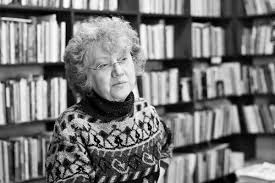
During an interview I conducted with Seamus Heaney many years back, the great poet spoke about “the extra voltage in the language, the intensity, the self-consciousness” that helps give poetry its distinctive quality.  “It's a kind of over-doing it.  Enough is not enough when it comes to poetry…This extra-ness may be subtle and reticent.  Or it may be scandalous and overdone.  But it is extra...”.  But the question every minimalist poem forces us to consider: how much is just enough?  Enough to create that neural tingling as the disparate provinces of the mind suddenly light up, revealing their unexpected connections.  To engage the great archive of sound we carry within us, vibrating in resonance (or dissonance) with this new syllabic music.  Or to make us believe in the unique consciousness somewhere behind those inked signs or spoken phonemes, presented as if for our ears alone.  Like Seamus Heaney (who was famous for his rich music and inventive narratives), Mary Bonina tends to create complex texts that carry readers along on their strong emotional currents – but not this time.  This poem is as spare a piece as I’ve seen from her and reflects the minimalist impulse most Western writers attribute to the legacy of China, Japan and Korea, whose poets worked in very brief forms, many centuries before our own.  Sometimes, poets feel the need to toughen diction, test our skill, by making a simple contour drawing convey what we’d normally do in a thousand layered brushstrokes.  Or sometimes, we get the sense (as I believe Mary has in “Leaving Friends…”) that we are creating a most precarious balance, and even a feather’s weight, misplaced, can topple the whole creation.  That’s why I decided to comment only after you’ve negotiated the 29-word mobile she’s hung shimmering from the page.


If you’ve read much Asian poetry, you’ll remember there’s a long tradition of leave-taking poems, spurred by the fact that many of these poets worked as government officials; when old friends were forced to journey to the far reaches of the empire, they were keenly aware this embrace might be their last.  As the speaker here departs – after what we imagine was a wonderful gathering – did she purposely anoint her friends, or was this the mere happenstance of passing beneath the forsythia?  And when she pauses to look at these familiar faces, it seems she is experiencing right then the emotional surge that will propel her to the notebook page.  I certainly recall occasions when I could feel my skin tingling – with delight? with fear? – at the apprehension of our shared emotional depth/mortal fragility.  She closes the poem with the simplest of declaratives: “Some people. . .are” – but in that intervening parenthetical flash, the speaker feels the full benediction of their shared moment.  Mary and I had a fine discussion as to whether to offset that quiet awakening with commas or em dashes –because, in so carefully-etched a creation, even the smallest choices bolster (or jeopardize) significance.  And if some people simply are, do we dare pause for a moment and remember how many dear faces are not?


Mary is the author of two poetry collections and a memoir – all from Cervena Barva press – and her poem “Drift”, a winner of UrbanArts "Boston Contemporary Authors" prize, was engraved on a granite monolith outside Boston’s Green Street Station of the MBTA Orange Line.  She’s been honored with a number of fellowships including from the Virginia Center for the Creative Arts, and was awarded a VCCA-France residency at Moulin a Nef in Auvillar.  I find her longer narrative poems entrancing (two new ones will appear in future installments of the Letters) – but I’m delighted to see how far-reaching are the ripples from so simple and delicately-tossed a pebble.


The Red Letters 3.0


* If you would like to receive these poems every Friday in your own in-box – or would like to write in with comments or submissions – send correspondence to:

steven.arlingtonlaureate@gmail.com


To learn more about the origins of the Red Letter Project, check out an essay I wrote for Arrowsmith Magazine:

https://www.arrowsmithpress.com/community-of-voices


and the Boston Area Small Press and Poetry Scene

http://dougholder.blogspot.com


For updates and announcements about Red Letter projects and poetry readings, please follow me on Twitter          

@StevenRatiner


Saturday, June 03, 2023

Red Letter Poem #31

 The Red Letters


In ancient Rome, feast days were indicated on the calendar by red letters.  To my mind, all poetry and art serves as a reminder that every day we wake together beneath the sun is a red-letter day.


                                                                                                          – SteveRatiner


Dear Reader,


I’m on the road teaching this week, so here’s a Flashback Friday Red Letter you may have missed; it first appeared during the early days of this project.


I’ll be back with a new Letter next week.


Enjoy!


Red Letter Poem #31


Not the least of poetry’s strengths (and delights) is its ability to allow us access to another reality: to stand for a few moments in someone else’s shoes, viewing the day through a surprising sensibility, our thoughts informed by a radically different sense of history.  This is one of the first things that attracted me to the poetry of Adnan Onart.  I will never experience the pain inflicted on Crimean Tatars as their country suffered invasions – vivid still in the long memories of his Turkish family – though some of his poems provide me with a mouthful of that anguish.  Nor can I feel those American eyes at my back in some street or market – in this, our post-9/11 circumstance – triggered only by the accent of my voice; but Adnan’s poetry has made me imagine what that tremor must be like.  Poetry confirms what most of us have long suspected: that our lives are dramatically different from each other and, paradoxically, utterly alike.  So it is with “Morning Prayer” – a poem that somehow reminded me of voices as disparate as that of Yehuda Amichai and Wislawa Szymborska.  When the young protagonist is instructed in the ways of prayer, I found something of my eight-year-old self re-awakened, and I remembered what I first yearned for in the world.  And when the much older speaker (an immigrant now in Boston) repeats that same gesture, I suddenly felt how sweet and unpredictable is the nature of our answered prayers.

Adnan lives in Boston, MA. and his work has appeared in a number of journals including Prairie SchoonerColere Magazine, Red Wheel Barrow, and The Massachusetts Review. ”Morning Prayer” was published in his first poetry collection, The Passport You Asked For (The Aeolos Press), coupled with Kenneth Rosen’s Cyprus’ Bad Period He earned an honorable mention in the New England Poetry Club’s Erika Mumford Award, and was one of the winners of the 2011 Nazim Hikmet Poetry Competition.  Discouraged from poetry as a young man in Turkey, he has now begun to find an appreciative audience in his adoptive land.  Talk about paradoxes.


Morning Prayer


In a poor Istanbul neighborhood, 

at the ground floor of our house, 

my great-grandmother says: 

It is time for morning prayer.


If you pray, she says, pure as a child, 

from this corner of the room, 

an angel will appear.


I am five years old closing my eyes. 

Allahü Ekber.


Essallamü alleyküm ve rahmetullah. 

I am fifty opening my eyes.


In Boston, Massachusetts, 

in a not so poor neighborhood 

at the top floor of our house 

praying my morning prayer.


From that corner of the room, 

my great-grandmother appears.


                    ­­–– Adnan Adam Onart


The Red Letters 3.0


* If you would like to receive these poems every Friday in your own in-box – or would like to write in with comments or submissions – send correspondence to:

steven.arlingtonlaureate@gmail.com


To learn more about the origins of the Red Letter Project, check out an essay I wrote for Arrowsmith Magazine:

https://www.arrowsmithpress.com/community-of-voices


and the Boston Area Small Press and Poetry Scene

http://dougholder.blogspot.com


For updates and announcements about Red Letter projects and poetry readings, please follow me on Twitter          

@StevenRatiner

Friday, June 02, 2023

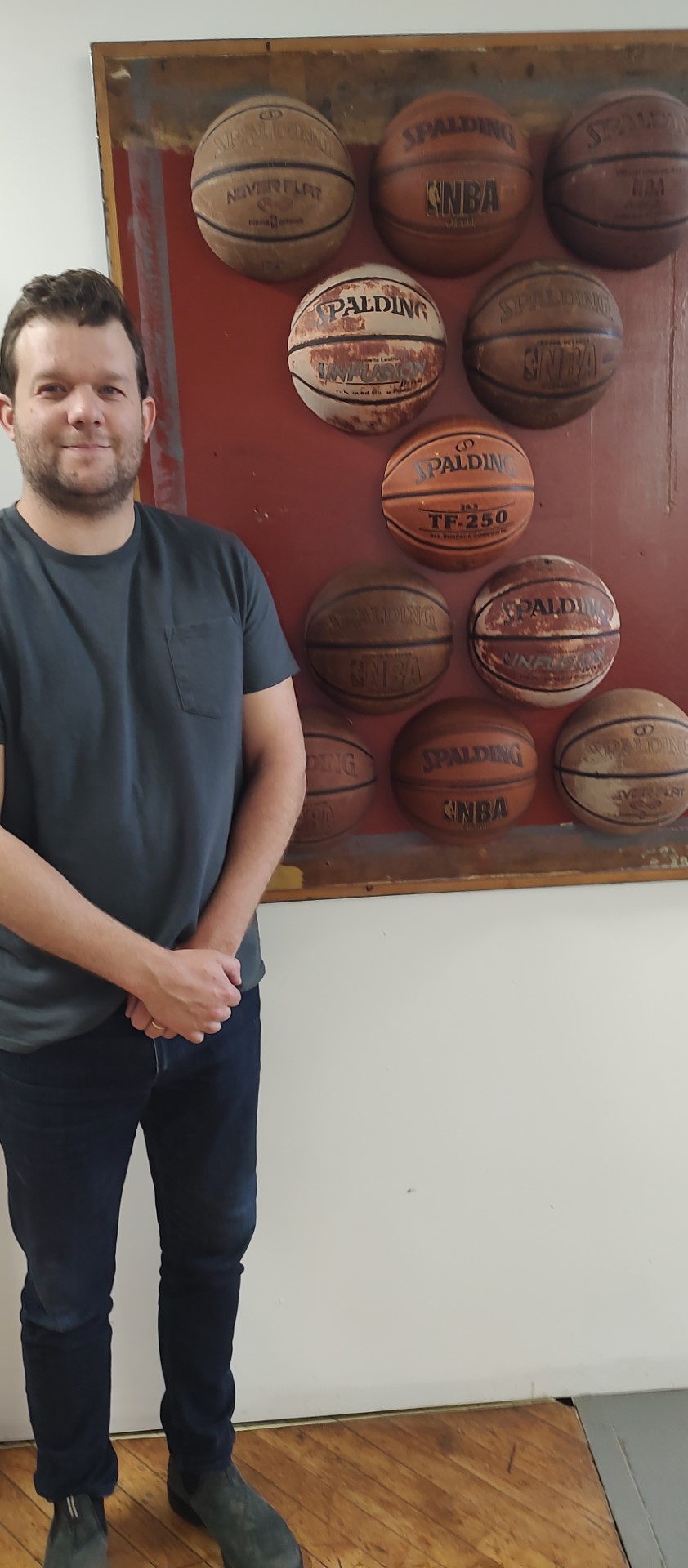
Somerville's Daniel Coughlin: An Artist with a Basketball Jones.


At a recent Open Studio Event in Somerville; I came across an interesting artist Daniel Coughlin. What struck me at first was his work with old basketballs. Coughlin is much more than a basketball artist, and works with many different objects in his practice.


How has Somerville been for you as an artist? What has your experience been like at the Joy Street Studios?

Moving to Somerville represented a significant step forward on my path as an artist. Prior to finding a space at Joy Street I was living in Western Massachusetts where I kept a small home studio. It was isolating on many levels. After a short residency in Berlin (Germany) where I was exposed to a thriving creative community I realized interaction with other artists was vital to the artistic process. Since then my work has greatly benefited from access to the larger Somerville arts community, epitomized by my neighbors here at Joy Street. It's all support. At a time of rapid development in Somerville and the greater Boston area, I hope these communities and art spaces can continue to thrive.


You studied with Cambridge sculptor, Peter DeCamp Haines, and he introduced you to the lost wax bronze casting process. Can you tell us about the process, and how has it manifested itself in your work?


Peter provided my first introduction to a professional art practice. He shared his creative process and taught me the importance of developing your own voice as an artist. He has worked with bronze for decades and during that time created a language that allows viewers to immediately recognize and connect with his art. The lost wax process specifically, allows an artist a high level of control and accuracy in re-creating a wax form in bronze. I have created a number of small bronze works that were an extension of what I learned while working at Peter's studio in Cambridge. I look forward to creating a series of new bronze pieces sometime in the future.


I am particularly interested in your work with basketballs.

The basketball series represents the search for my own artistic process. I've spent years finding, collecting and organizing a library of diverse items that reflect my day-to-day built environment. Using recognizable materials to fabricate structural forms gives viewers immediate access to my process. Additionally, each basketball's unique patina - the weathering of the leather surface - conjures the time, place and histories of these objects. The moment where form and the context of each object or material meet, is the layer where I hope to create and exist as an artist moving forward.


Does your job as an architect inform your work as a sculptor?

Yes, absolutely. My understanding of form, scale and material, and the constraints of factors such as site and space, is a direct result of my architectural training. These elements show up in most of my work.


Why should we view your work?

My work explores the built environment we encounter each day. A new life for a found object, a new use for everyday materials, makes us reconsider our experience in the built world. I hope my work gives viewers a new way to interpret their everyday realities.

The Flounder and Other Stories by John Fulton


The Flounder and Other Stories by John Fulton. Blackwater Press, West Virginia, 168 pages. $18.99.


Book Review by Ed Meek


Some of the best fiction in the past one hundred years or so has come in the form of short stories: Hemingway, Fitzgerald, Raymond Carver, Flannery O’Connor, Alice Munroe, Tobias Wolf, etc. Short stories have some advantages over novels. They can zero in on a particular time period or a conflict or a problem and they can usually provide the reader with a sense of an ending where the endings of novels can be unsatisfactory. Recently there’s been a trend toward micro-fiction but a well-developed short story creates its own little world of escape and contemplation. And despite the availability of so many other ways to entertain ourselves, Fiction still offers insight into the inner lives of characters in a way that is deeper and more satisfying than film and television to give us a portrait of our lives today.


John Fulton is already an accomplished writer with a novel and two short story collections published. He’s won a Pushcart Prize and appeared in Best American Stories. Fulton has a feel for the uncertainty of our age. In The Flounder, his characters are awkward with each other. They grapple with how to love one another and how to deal with childhood pain from fathers that walked out and mothers who were left fearful and sad. They may have grown up religious, and although they no longer are, they still struggle with what they believe in.


His stories jump right into conflict. A store owner is being held up at gun point and telling the robber to go ahead and shoot him, he’s dying anyway. A young wife confesses to her husband that she slept with someone else just before they leave for a vacation together. Fulton grew up in Montana and lived in Europe for a number of years and he is able to write with authority about both settings and give us an insider’s perspective on the American West and on places like Switzerland and Budapest.


The western writer Bill Kittredge says that in order for fiction to be effective, the writer, like a juggler, has to keep a number of story strands up in the air at once. In the best stories in The Flounder Fulton does just that. In “Nocturne,” a young couple, Miriam and Daniel, who fight a lot, comically have to fight in whispers when they rent rooms from an older Swiss woman because the Swiss do not want to be disturbed, ever. Because the older woman sees them as a happy young couple, they are forced to act as if it is true. Miriam reads Daniel’s journal and discovers he is critical of her. He’s indignant because she invaded his privacy. No one in Fulton’s stories is completely honest or forthright with a partner. Instead, they engage in power struggles while talking around things. Fulton is very good at capturing the nuances of our thoughts and relationships. The title refers to the piece by Chopin and the hostess, one night, plays it beautifully and the music seems to draw the couple back together. In this story and others, Fulton is able to delve into the sex his characters engage in in a way that is completely convincing. Here he pairs the sex with the music. The complexity makes for a great short story. Three other stories in the collection are just as good.


Writers of short stories, like poets, can use the form as a means of experimentation, a kind of how about this? So, collections of short stories are always somewhat uneven. Fulton occasionally violates Chekhov’s dictum about firing the gun by the third act. Two stories are sentimental tales of cold fathers and sad sons. One story is all telling and no showing. But, in a short story collection as in a book of poems, we have to judge the author by his best work. For that reason, The Flounder is well worth reading.