Saturday, August 26, 2017

The Sphere of Birds Poems by Ciaran Berry


The Sphere of Birds
Poems by Ciaran Berry
Southern Illinois University Press
& Crab Orchard Review
Carbondale, Illinois
ISBN: 13: 978-0-8093-2838-3
75 Pages

Review by Dennis Daly

Splicing together images from the natural world with internalized passion and the personal re-recorded perceptions of life, Ciaran Berry creates poems with mythical power and winged beauty. He sings like a troubadour and shares the secrets of this bird-world like a twenty-first century Francis of Assisi. Only darker.   

Berry opens his collection with a sonnet, a meditation on a murdered crow. The crow hangs from a pole and serves to warn others of its kind against intrusion. It also seems to exhort the reader to tread carefully in this barbarous life. Even the vegetation has a taste for flesh. Here is the cautionary conclusion,

Things weather fast here, soon bird will be bone,
brittle and white, dead twig snapped underfoot
where the sky alters in seconds, shine to shower,
and harsher truths hit home after hour—
the sundew snagging flies, settling to eat,
a fat gull’s fractured keen that cuts through stone.

With deftness and seeming syntactic ease Berry conjures a powerful narrative in his poem Topography with Storm Petrels & Arctic Tern. He interweaves multiple stories, including a father’s job loss, an Audubon voyage, and a Van Gelderen sketch of an artic tern, which counterpoint and build in strength to a dread-inducing climax. Consider these lines where the poet examines a time of misery and change merging into an Audubon meditation,

it is the year my brother and I find a jackdaw
            with a broken wing, the year the fish farm
                          where our father works closes its doors. The tanks
in the hatchery are emptied of oysters,

            the mussel rafts are dragged ashore, and most
                           of what we know vanishes like the wallet
and keys the magician picks from our old man’s
               pockets as he assists with a trick at the circus,

                               choosing a card, checking a bowler hat for holes.
Although all we know will never be returned.
             Lying on his bunk, nothing left to empty
                            from his belly, Audubon stares through

An iced porthole at the almost black that runs
              beyond the eye and thinks of how his life
                           will be a journey from one fixed point to another
with only open water in between…

My favorite piece in this collection projects a three pronged narrative into a delicately balanced counterpoint. The intersection points of the stories carry the reader back and forth in poetic space like perfectly calibrated railroad switches. The poet introduces Philippe Petit, the French high-wire artist who walked between the twin towers of the World Trade Center early one morning in 1975. Add to that nervy portraiture the poet’s account of his own childhood carsickness in that same timeframe and a seemingly disparate consideration of Harte Crane’s suicide and something magical (read high art) happens. Early in the poem Berry sets up two of his thematic strands,

…They are no bigger than a swarm of flies
from where the wire walker hangs his eye, feels for the fulcrum
    in his balancing pole, and then, with a sharp intake of breath,

         takes his first step, trusts where he must go. All of this happens
thirty years ago, when I’m just four, a nervous middle child
  who takes sick on every car journey of more than five miles,
     retches and heaves until there’s nothing left but yellow bile.

My mother’s tried a series of folk-cures—a length of chain
    suspended from the rusted tow bar to spark all the static
         out of the car, a parsley necklace fixed around my throat,
where it serves as a sort of vegetable amulet, but nothing works.

A Beard of Bees, Berry’s rather strange poem about playing with nature, ends with a question that begs unwanted answers. The protagonist of the poem watches a beekeeper abscond with a hive’s queen and imprison her in a little cage which hangs beneath his chin. Predictably the bees fall upon him forming a beard. Barry’s attention moves smoothly between the performance and the audience as the poem advances into its penultimate stanza,

They dipped and landed on the keeper’s cheeks,

            settled into the beard he wore, mouth almost shut,
                         nostrils blocked with cotton wool. And it struck me
that all of this must be to do with death:
              the way the bees had scrieved across the air,

                            their see-through wings thrashing in unison;
the keeper’s need to feel against his flesh
               that knot of tangled muscle and barbed sting;
                             our need to watch, awestruck, like the rough crowd

at a hanging, as the moment crackled open,
               the field and the minutes suddenly rent,
                            unfixed… 

Sketching a realm of dinosaur-eyes and symbolic Christs in his title poem, The Sphere of Birds, Berry meditates on the limitations of body and soul. The story line switches back and forth between the narrator’s brother and his favorite movie. Augury and omens rise from a Philadelphia neighborhood until local reality turns mythical. The poet closes his poem by lamenting the constraints of memory as well as a change in self,

In one of the last pictures he produced, a boy’s shaved skull—
            his own, I think, although it could be anyone’s—
bends forward in supplication and regret, floats huge

            above the charcoal pews and gothic arches of a church.
And though I set him back at the window, and fill
              his pallet and horsehair brush with watercolor blues

and greens, though I press rewind and watch the bird rise
               from shattering to fly backwards out of the reformed
pane, it’s not the same, it’s nothing I could ever want.

Rising in a flock, beyond miraculous, Berry’s poems soar with self-contained direction. Impressively, they dare the heavens.


The Sunday Poet: Jean-Dany Joachim


Poet  Jean-Dany Joachim


 Jean-Dany Joachim grew up among poets in his native Port-au-Prince, Haiti. Jean-Dany wrote his first poem at age 14. His writing found its voice in the never-ending, complex reality of his country. After moving to the United States, he began writing in English, while at the same time exploring poetry in other languages. Jean-Dany has translated poetry from and into: Spanish, French, Haitian Creole, and English.He currently works and teaches at Bunker Hill Community College in Boston.


Poetry Matters

Even in times like this
Poetry still matters
Even in times like this 
The sun still rises,
And its light shines
Equally on all of us

Even in times like this
Regardless the length
In the distance we put between us
Whether it's the far-right
Or the far-left that we choose
Poetry still matters

Birds continue singing as always
As if unaware of our resentments
Fish and other ocean creatures
Nonetheless, keep on swimming,
And nature quietly continues its course
Even in times like this

Poetry still matters
Though from Kabul to London
From Paris to Charlottesville,
And Barcelona we have open wounds

Poets certainly must speak
Specially in times like this
Along their truth-telling words
God's ways are revealed

Jean Dany

Monday, August 21, 2017

SEAMUS HEANEY MEMORIAL READING featuring AIDAN ROONEY, VALERIE DUFF and DENNIS DALY --Aug 30 7PM

A Young Seamus Heaney


SEAMUS HEANEY MEMORIAL READING TO TAKE PLACE AT CHRIST CHURCH,
0 GARDEN STREET (just one block down the street from First Church, our usual location)
on August 30th, 2017, featuring AIDAN ROONEY, VALERIE DUFF and DENNIS DALY.

The reading starts at 7pm.

By Michael Steffen

Due to summer construction delays at First Church Cambridge, 11 Garden Street, which has been the set location of the Hastings Series poetry readings since we started in the spring of 2014, our summer gathering, the Seamus Heaney Memorial Reading, will take place at Christ Church just a block east on Garden Street, a large gray Episcopal church next to the Burying Ground enclosure.

Our guest readers this year will be Aidan Rooney, Valerie Duff and Dennis Daly, each with impressive publishing bio’s and well-known in the area. Along with a short tribute to Robert Lowell in honor of his centenary, including reflections on Heaney’s friendship with and writings on the celebrated Boston poet, our readers will be sharing their poems with memories and inspirations of the Irish Nobel laureate.

This will be our Fourth Seamus Heaney tribute. Other guest readers for the special event have included Daniel Tobin, Fred Marchant, Joan Houlihan, Doug Holder, Tomas O’Leary, Greg Delanty, Meg Tyler, George Kalogeris and David Blair.

This reading in particular has been very well attended. It’s given authors the opportunity to share insights in the way of inspirations Heaney has had on their lives and poems. A few of our readers have given remarkable talks on aspects of Heaney’s poetry.

Seamus is among the sequoias of poets in English “in our lifetime.”

On behalf of the Hastings Room Reading Series, I mention our gratitude to First Church Congregationalist of Cambridge and Christ Church Episcopal, our co-founder Steven Brown, promotional designer and poet Kevin Cutrer, our series advisor Dan Wuenschel, with special thanks to Elizabeth Doran and Ifeanyi Menkiti and the Grolier Book Store for their friendship and support.

See you on the 30th !

Friday, August 18, 2017

Ghazals 1-59 and Other Poems by Shelia E. Murphy and Michelle Greenblatt


Ghazals 1-59 and Other Poems

By Sheila E. Murphy and Michelle Greenblatt

Published by Unlikely Books, New Orleans, Louisiana

Review by Judy Katz-Levine

In this astonishing collaboration by the living poet Sheila E. Murphy and the deceased poet Michelle Greenblatt who suffered from fibromyalgia, a disease which did not keep her from writing with great passion, the formal structure of the ghazal, a signature of Sufi poets such as Rumi, is reinvented and brought to a contemporary American understanding.

The ghazal form was is as structured as a sonnet, and was often written during the 13th to 16th centuries in the Timurid empire by Sufi mystics.Traditionally, it is known to be composed of couplets between 12 and 15 lines. Murphy and Greenblatt create an alternative form of fifteen couplets per ghazal. While the first two lines of a traditional ghazal end in the same word, every other subsequent line ending in the same word as well, Murphy and Greenblatt play on repetition by taking turns in writing inventive couplets, and therein lies their interplay of form and repetitiion. The similarity between the Sufi ghazals of poets such as Rumi, Hafiz and Navoiy and these experimental longer explorative ghazals by Sheila Murphy and Michelle Greenblatt is one of passion. While the ghazals of Navoiy for example focus on the depth of love for the beloved even when scorned, elevating that to a metaphor for the divine, Murphy and Greenblatt translate that love into a passion for language, the surprise turns of language and image, the light of cognitive play. While Rumi for example would be closer to Lorca in feeling, the cognitive light given to these seamlessly woven couplets of Murphy and Greenblatt do more often reflect the passion of Shakespeare for cognitive delight in the movement of human insight. One also thinks of contemporary avant garde classical music, such as the works of John Cage in “Ocean Of Sound” or the composition of Morton Subotnick, “Silver Apples Of The Moon”.

Here is an example of the astonishing delight and surprise turns of image and thought manifested in Ghazals 1-59:

This quote is from Ghazal Seventeen:

“Look for the wind to gather you from port to prominence;
Landscape’s a deception so keep your camera ready.

The handwriting still runs across the page as if
Electric shock were prompting lines from the beyond.

Staccato overtime remainders figs and salt
Scattered on the late the waves of song rise and fall.”

The sheer inventiveness in language manifested in these 59 ghazals is highly unusual in contemporary poetry, despite our love for non-rhymed forms and discursive narratives. Murphy and Greenblatt love the element of surprise especially in image, and the musicality of both poets is so matched one to another that the true love and passion must be, here, the working together of these two poets, their intense connection, as they devoted themselves to this major project of creative leaps. Here is another couplet which explores existence in contemporary America and illustrates the highly musical lines and imagistic surprises of this collaboration:

Here is an excerpt from Ghazal Thirty-Six

“I owned a mountain full of stony slopes
And descended to exhume its dark past.

Labor exponentially prepares love
For the stains of eyelight squared upon roses.

Your code was more elegant than your word,
More picturesque than ample and not true.

Scented branches are the first clue of brushfire
Raging through the vicissitude of woods.”

Themes of nature are woven with theme of connection with other humans, and human activities, and there is only an occasional reference to the problem of violence in contemporary life. References to Greenblatt’s experiences with synesthesia are somewhat rare but are manifested in the sensuality of surprise evident throughout this collection with its multilayered reliance on sight, hearing, taste, touch, human emotion and intuition.

This is from ghazal Fifty:

“Simpler than blue, more resonant than all within the human
Is a color of inexpressible beauty, of mankind.

Buried in my chest, a weight that humbles
Crafts unmeasured space, still lingering.

Premises vanilla as no foreseeable infection leans
Towards chocolate being a flavor which many people love,

Under the cropped sun, the horizon sinks
Into syllables parallel to sky.”

Sheila Murphy and Michelle Greenblatt can be seen as explorers to a new continent of poetic form, and inventors supreme of language that pushes the boundaries of our senses and cognitive lights. This book, a work of great dedication, which was completed despite the illness of Greenblatt and her battle with pain and death, is a monument to creative invention in its pure form. It gives us the ghazal in a reincarnated state that is an available leap for all who love poetry, ancient and contemporary and explorative.

Judy Katz-Levine

The Sunday Poet: Melissa Castillo-Garsow

Melissa Castillo-Garsow


Melissa Castillo-Garsow is a Mexican- American writer, poet and scholar currently completing a postdoctoral fellowship at Harvard University.   

This poem is excerpted from her collection, Coatlicue Eats The Apple

From Part IV. 

Maiz

He holds up an ear
caresses it lovingly
this is not just a crop
it's our culture, he says.

60 years of holding kernels
his hands are not yet tired
red, white, black, yellow
here are the ones he loves
the ones that grow
here. These are the mestizos
these are our culture, he says.

Here they say the first peoples
were made of Maiz
after clay after wood made only
ignorance and destruction.
Maiz made 4 men/ 4 women
with wisdom who populated the earth
and I believe them.
If people are 98% water
they must drink water.
We are maiz. So we eat
tortilla, tamale, pozole,
huitlacoche.

they tell him plant something else
they tell him work for someone else
they tell him use these hybrids

We are the most researched people in the world
and the least understood.

He doesn't need instruction on
what has fed for 8,000 years
He doesn't need US plants
he has created his criollos
strong roots that grow in rock shallow soils
and impossible humidity
His research is 50 years of knees
and hands and hearts in his soil
his land his feet covering
semilla after semilla watching
them grow year after year.

Not the scientist with 150 lands to report on
Not the gringo stopping by for a 1-day visit
Not the government who hands out wrong fertilizer
and corn that can't survive.

Grow quiet now. Hear that?
Es el conocimiento de los antepasados.

Grow quiet. Hear that.
It's the experience of 50 years
knee deep in dirt.

If you want to help, be quiet now.
They will bring the answers.

They will bring you the answers
in the rich texture of the criollo
the dark fibre of their soils
full of stubborn silences
and occasional roadblocks
and you can find it in
the shadows of their women.

The Aztec had a counterpoint
to Centeotl, the god of Maiz.
Chicomecoatl ruled over agriculture.
Before jade skirts and spiny belts
adorned the Maya queen of Maiz.

Now he says he stubborn.
I say he's pure mestizo Maiz
drawn from the Maya who jumped
to their death rather than
be conquered.

Maybe that's the way the world works.
Maybe it's not enough to say
ancestry, history, cultura, tradición
But maybe it's enough to stand upright
and tell the world:

We grow corn here.

Sunday, August 13, 2017

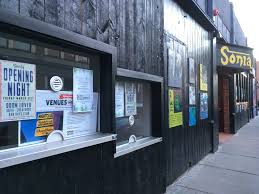
"Sunday Salon at Sonia." Poetry, Writers and More... September 10, 3-6 pm


Location:  
Address: 10 Brookline St, Cambridge, MA 02139  Central Square


"Sunday Salon at Sonia."
September 10, 3-6 pm
An afternoon of musicians, poets, writers and more. Intermission includes refreshments and author book signings. Proceeds benefit
the Boston National Poetry Month Festival. Participants include:

Beth Bahia Cohen
(A master of bowed instruments from around the world, she has performed with Led Zeppelin, Itzhak Perelman, and Phillip Glass)

Kirk Etherton *
(Songwriter, poet, visual artist, free diver, etc., Kirk was recently featured on WGBH's "All Things Considered.")

Boyah J. Farah
(Somalian refugee-turned-writer, his work has been featured in The Guardian, Salon, National Public Radio, and elsewhere.)
Richard Hoffman
(Memoirist, fiction writer and poet, Richard teaches at Emerson and is former Chair of PEN New England.)

Lucy Holstedt *
(Berklee professor and leader of the Women Musicians Network concert; Lucy is also a poet, composer, and performer.)
Thea Hopkins
(An award-winning Americana singer-songwriter-guitarist, her song "Jesus is on the wire" was recorded by Peter, Paul & Mary.)

Daniel Hudon
(University lecturer in Astronomy and Mathematics, his latest book is "Brief Eulogies for Lost Animals: An Extinction Reader." )

Julian Meservey
(A gifted acoustic and electric guitarist, Julian is a graduate of Cornell and will enter Berklee this Fall.

Ada Ren
(Prolific creator of original and enduring things--from poetry and graphic design to clothing. She is currently at M.I.T.)
------------------------------------------

* On the board of the Boston National Poetry Month Festival.