Saturday, August 20, 2022

Red Letter Poem #124

 The Red Letters


In ancient Rome, feast days were indicated on the calendar by red letters.  To my mind, all poetry and art serves as a reminder that every day we wake together beneath the sun is a red-letter day.


                                                                                                          – Steven Ratiner


           Red Letter Poem #124


In Western culture, nothing gets a bad rap.  We are utterly enamored with the substance of our material lives, the bulwark of somethings we cobble together – both as individuals and as part of our societal fortresses. So on those occasions when we confront even a hint of nothingness – perhaps standing before the vast expanse of the sea, the night sky, the cloud of our quiet thoughts – we sometimes feel a tremor inside, and quickly opt for the balm of distraction: reaching for our phones or another beer, turning up the music or dialing down our attention.  It’s perhaps why many Eastern religions – where the concept of nothingness is seen as a vital element in their cosmologies – make some of us a little nervous.  And just the prospect of sitting still for a meditative hour in a quiet space – paying attention to what the mind is not doing – would lead certain individuals to suddenly remember (and gratefully so) that the lawn needs mowing; the laundry, ironing; and the Amazon cart, overflowing with saved items, is whispering our name.  Yet the Chinese sage Lao Tsu begins the seminal Taoist text, the Tao Te Ching, by saying that the Tao is an empty vessel. . .but from it, the Ten Thousand Things rise up.  From that generative emptiness, all the universe (all things as well as all thoughts) comes surging into existence.


“At the Mouth of a Canal in Key Largo” is triggered, I’m sure, by Chloé Firetto-Toomey’s proximity to the sea – but it’s also mindful of the much-loved and iconoclastic 20th century poetry of James Wright (take a look at his poem “Lying in a Hammock at William Duffy’s Farm in Pine Island, Minnesota” for a direct antecedent.)  Chloé has chosen to stand attentively before a great emptiness, allowing her mind to find its place within the open expanse.  A young British-American poet and essayist, she settled in Miami Beach after earning an MFA degree from Florida International University where she studied with poets like Denise Duhamel and Richard Blanco and, after graduation, took the position as Richard’s personal assistant.  Chloé’s most recent chapbook of poems, Little Cauliflower, was published in 2019 by Dancing Girl Press.  Her work has been nominated for the Pushcart Prize, and she received the Scotti Merrill Memorial Award in Poetry.  I like how, in this poem, she is exploring abstract ideas but portraying them in the tangible experiences we all share – inviting us perhaps to stand where she is standing, feeling the salt-spray on our faces.  “Here, as darkness/ takes shape…”, and immediately I remembered what I felt standing at the edge overlooking my mother’s grave – precious something returning to an inconceivable nothingness.  But this poem is not mournful; to my mind, it approaches the mysterious convergence of surrender and love.  And it pleases me a good deal to know that, at this moment, Chloé is engaged in that greatest of all something-out-of-nothing magic tricks: she is about to give birth to her first child.  Where there was no life before, now there is life.  No poem can explain that, and mustn’t even try.  But it can stand as an invitation: to watch the pas de deux between land and the sea, shadow and light, until all words return to silence, and we sense what we’re all a part of.  


At the Mouth of a Canal in Key Largo


After James Wright


Palm leaves wave their mermaid hair

over the shifting shoulders of the sea.

They are ageless


lovers, enamored

with the shape of something

the other will never embody.


Transversive waves

chip jewels

that tremor to seawalls.


The horizon longs to reach back

upon itself,

as I do,


cupping those jeweled shoulders

of shadow

and brine, the faces


of immensity.

Here, as darkness

takes shape,


I am happy to be

nothing.


––Chloé Firetto-Toomey


The Red Letters 3.0


* If you would like to receive these poems every Friday in your own in-box – or would like to write in with comments or submissions – send correspondence to:

steven.arlingtonlaureate@gmail.com


To learn more about the origins of the Red Letter Project, check out an essay I wrote for Arrowsmith Magazine:

https://www.arrowsmithpress.com/community-of-voices


Two of our partner sites will continue re-posting each Red Letter weekly: the YourArlington news blog

https://www.yourarlington.com/easyblog/entry/28-poetry/3168-redletter-071522


and the Boston Area Small Press and Poetry Scene

http://dougholder.blogspot.com


For updates and announcements about Red Letter projects and poetry readings, please follow me on Twitter          

@StevenRatiner


Friday, August 19, 2022

Voices of Poetry Reading Cambridge Public Library Oct 15, 2022

( Click on Pic to Enlarge)


Interview with poet Wendy Drexler: "Notes from the Column of Memory"


I caught up with Poet Wendy Drexler recently. An accomplished poet, Drexler is a fellow board member of the New England Poetry Club, and a very active part of the literary community.


Drexler is the recipient of a 2022 artist fellowship from the Massachusetts Cultural Council. She is the author of two earlier collections, most recently Before There Was Before (Iris Press, 2017). Her poems have appeared in Barrow Street, Nimrod, Prairie Schooner, The Threepenny Review, and Valparaiso Poetry Review, among others. Her work has been featured on Verse Daily and WBUR, and in numerous anthologies. She has been the Poet-in-Residence at New Mission High School in Hyde Park, Massachusetts, since 2018, and is programming co-chair for the New England Poetry Club. She lives in Belmont, Massachusetts.


You have a new poetry collection out " Notes from the Column of Memory." What was the germ of idea for the collection?


The germ of the idea was an ekphrastic poem that I wrote last summer for Art on the Trails as a call for poems in response to sculptures installed at the Beals Preserve in Southborough, MA. My poem received the Juror's Prize and I was invited to be the judge this year. My winning poem was inspired by a sculpture titled "Notes from the Column of Memory" by Donna Conklin King; written in the shape of a column, it begins "See how time breaks us / and still we stand . . ." My manuscript had gone through many versions but seemed to lack an overriding theme. I realized that I could reorganize my manuscript around this poem and the hinge of memory.


You have a number of poems about your late biological father. In one you deftly compare him to a fox. Why did you use this conceit, rather than to approach him straight on as a man you were estranged from?


"My Father as a Taxidermied Fox" began as a poem about trying to draw a taxidermied fox in a class I took at the Peabody Museum of Natural History in Cambridge. I chose to draw a fox because I love foxes and have seen them on the Cape. In fact, one actually did stroll into the Fine Arts Work Center in Provincetown, as I mention in my poem, and sniffed a cup of coffee left on the floor after a poetry reading. As hard as it is to try to draw an animal, it is also difficult to recapture the essence of a loved one, especially a parent, who has died. As I say in the poem, "I've failed to flush an ounce of you from death." But that's the poet's job: to try! I was always very close to my father, not estranged, but he'd told me a secret that I refer to in the previous poem, and the keeping of that secret was a burden and reflected a mysterious side of him that I was, for better or worse, only partially privy to. My mother also features prominently in this collection in a crown of sonnets that explores our relationship.


 In the poem " Bluebird" you celebrate the blue beauty of the bird. I love the last line where you address the bird as,"carrying the sky on your back." So, on one level it is the sky blue on the back of the bird. But you use an Emily Dickinson quote earlier in the book about a bird being the quickest route to heaven. Do you believe birds have a strong spiritual essence to them---are they messengers of some sort?


Yes, I love that line, too, which I stole from Thoreau! I find birds to be very spiritual and can lose myself watching them. Of course they are beautiful too, and endowed with the gift of song and of flight. It can be tempting to anthropomorphize them, however, which I try not to do. Though I kinda do in this poem! I see them more as inspiration and solace rather than as messengers. And when I'm troubled or anxious, going out and to look for and try to identify birds pares time down to the moment and helps me live more fully in the present.


Your poems are steeped in nature . I noticed you have referred to any number of artists  (Cezanne, Monet, Hooper) in the book. So not only nature inspires you, but visual artists' interpretations of nature come into play.


Yes, I'm inspired by art and enjoy responding to images that move me. I majored in art history in college, and my mother was a painter. I grew up surrounded by art and have taken drawing, watercolor, and pastel classes. I enjoy beginning a poem by describing what I see in an image and letting that lead me into deeper territory. Mark Doty does this so well, I think.


How has your stint as poet-in-residence at the New Mission High School in Hyde Park and your programming co-chair at the New England Poetry Club--helped or hindered your writing?


Each of these activities connects me in different ways to poetry and to our poetic community. It's been a joy to participate on the board of the New England Poetry Club (now with you, Doug!), a chance to help promote local poets and to bring more diversity to our reading series, to get to know our wonderful board members and problem solve and plan together, and to have the great joy of hanging out with our inspiring poets and Golden Rose winners. This year, Patricia Smith was the recipient of the Golden Rose and we honored her with dinner at The Little Crepe Cafe in Somerville, which was a delight.


As the poet in residence co-teaching a Creative Writing elective at New Mission, which I've done for the last four years (the last two on Zoom, which has been challenging), I've grown in confidence as a teacher and realize I love teaching! I also have enjoyed a wonderful partnership co-teaching and collaborating with Myles McNamara, a gifted New Mission English teacher. Teaching has challenged me to really own and articulate what I know about poetry: the importance of unpremeditated free writes, the empowerment of each student's voice, and the importance of learning craft (imagery, sound devices, line breaks, form, the turn, metaphor, simile, etc.), and of the importance of not knowing where you are going and discovering an insight along the way. Reading my students' poems can also be deeply gratifying, and often brings tears when I read their work, how brave and open they can be, how much they have to share. They teach me. Through the graces of Mass Poetry, we've also done some spoken word with Crystal Valentine and I was inspired hearing them perform in the auditorium and on the stage at Mass Poetry's new headquarters in the Seaport. I see I've written a lot here! Clearly both these activities have helped my writing!


Why should we read your book?


To answer that, I'd like to refer you to the wonderful blurbs that Martha Collins, Regie Gibson, and Donika Kelly have written for the book. I think my book speaks to anyone interested in exploring and excavating the past and in observing the present and the intersections between past and present, anyone who wants to engage with, and remain alive to, astonishment in a world that often breaks your heart over and over with the terrible, the beautiful, the uncertain, and the diminished. To quote Anne Carson, whose epigraph I use at the beginning of my book, "It is when you are asking about something that you realize you have survived it, and so you must carry it, or fashion it into a thing that carries itself." I hope that those who read my book are moved by that carrying, that fashioning, and in turn will discover and feel compassion toward what they have carried and continue to carry, and to their own aliveness.


Please explore my website, wendydrexlerpoetry.com and those interested in purchasing my book can find it at Belmont Books, Porter Square Books, and Brookline Booksmith. Purchasing links can be found on my website and here

Saturday, August 13, 2022

Red Letter Poem #123

 The Red Letters


In ancient Rome, feast days were indicated on the calendar by red letters.  To my mind, all poetry and art serves as a reminder that every day we wake together beneath the sun is a red-letter day.


                                                                                                          – Steven Ratiner


           Red Letter Poem #123


Re-reading the poems in The Low Passions – the debut collection by Anders Carlson-Wee (published by W. W. Norton)  – I kept noticing how, circling inside my head, brutal and beautiful were chiming responses; how some of the most physically and psychically challenging situations he describes seem also to quietly simmer with an unmistakable love.  If Walt Whitman had somehow been born in the bleak stretches of the upper Midwest, with the dawn of the 21st Century just beginning to gleam on the horizon; had he engaged in daredevil skateboarding escapades with his brother to fill dark winter days; twice pedaled across the country, relying on his own wilderness skills and the kindness of strangers to survive; and later hopped freight trains in order to explore the hardscrabble lives common today across these dis-United States – he too might have sung of the America captured in these pages.


Having grown up in a household filled with sisters but devoid of even one male sibling, I was instantly intrigued and astonished by the no-holds-barred combat Anders and his brother Kai engaged in (depicted graphically in poems like “Polaroid”.)  And yet, despite the litany of wounds, the boys seemed to share an unbreakable bond.  And so I was not shocked to learn that both grew up to become poets; co-authored two chapbooks together; and jointly directed an award-winning film, Riding the Highline – a freight-hopping odyssey-slash-poetry vision-quest.  It made me consider how we often engage in the bloodiest battles with those closest to our hearts.  As America’s own caustic sibling rivalry escalates toward what’s begun to feel like an undeclared civil war, I have to say I took a small measure of hope from Anders’ poems.  He depicts the poorest and most alienated circumstances in our country that, somehow, still end up producing acts of kindness and moments of spectacular beauty.

Granted, this is in no small part due to Anders considerable lyrical gifts and a careful eye that zooms-in cinematically on the telling detail – things Whitman also would have admired.  The Low Passions was chosen as a New York Public Library Book Group Selection; in addition, Anders was awarded the 2017 Poetry International Prize, and has received fellowships from the National Endowment for the Arts, Poets & Writers, Bread Loaf, Sewanee, and the Napa Valley Writers’ Conference.  And even now, with a certain celebrity achieved from his artistic endeavors, Anders describes himself as living closer to the bone than most would find comfortable: “I dumpster dive for most of my food and live a humble life. I piece together an income from touring, publishing, teaching, awards, grants” and, yes, the kindness of people he meets along his travels.  His poems make us, too, want to look “just beyond the lens” to discover what’s out there, waiting for our attention.


Polaroid


A loose flap of skin passes just below

his eye. Bruises ride the bridge of my nose.

The dark ropes of handprints grip

both our necks. Our fresh buzzcuts

lumpy with goose eggs. It's easy to forget

we were trying to kill each other.

Or at least I was. But what I wonder now

is why our father shot the photo before

he bandaged the hole where the nail

went in, stuffed my raw mouth with gauze.

We stand side by side against the garage,

eyes focused just beyond the lens,

each pointing at what we did to the other.


       ––Anders Carlson-Wee


The Red Letters 3.0


* If you would like to receive these poems every Friday in your own in-box – or would like to write in with comments or submissions – send correspondence to:

steven.arlingtonlaureate@gmail.com


To learn more about the origins of the Red Letter Project, check out an essay I wrote for Arrowsmith Magazine:

https://www.arrowsmithpress.com/community-of-voices


Two of our partner sites will continue re-posting each Red Letter weekly: the YourArlington news blog

https://www.yourarlington.com/easyblog/entry/28-poetry/3168-redletter-071522


and the Boston Area Small Press and Poetry Scene

http://dougholder.blogspot.com


For updates and announcements about Red Letter projects and poetry readings, please follow me on Twitter          

@StevenRatiner


Friday, August 12, 2022

Interview with Patricia Harris: New England's Notable Women: The Stories and Sites of Trailblazers and Achievers


Patricia Harris met me at my usual spot at the Bloc11 Cafe in Union Square, Somerville to talk about her latest book "New England's Notable Women: The Stories and Sites of Trailblazers and Achievers." Harris is a travel-writer (who often shares her byline with her husband the writer-- David Lyons)  and is a seasoned food and arts reporter. Her articles have often appeared in The Boston Globe and elsewhere.

Harris told me as a child, " I was always interested in Louisa May Alcott's  novel " Little Women" and particularly the character of Jo March. March was always curious and spunky and did not fit into the restrictive conventions of her time for girls. So it was very interesting to write about these women  of the same cloth from all walks of life, and connect a vivid place or home , etc.... that resonates with their lives."

Harris visited sites of  45 notable women.  She narrowed down her list to places where her readers could visit. Sometimes she wanted to include a woman, but there was just no relevant site that people could focus on.  She said, " I want people to view this as an armchair book, but also as an active one--that people can refer to when they go to the sites such as The Mount or the Alcott Estate, for instance."

I asked Harris about some of the notable women she covered. We started very locally in Cambridge, with Julia Child. Just over the Somerville line - is the Cambridge-based meat and gourmet market Savenor's .  Since Harris couldn't visit the house Child lived in, (it is not open to the public) she brings the reader to Savenor's -- where the iconic " 'French Chef" Julia Child-- was a loyal patron--getting the clarified butter, the rarefied cuts of meats and ingredients, for culinary fodder for her creations that wowed TV goers and readers alike. Child was also a denizen of the  "Harvest"  a restaurant in Harvard Square-- that is still very much in operation today. According to Harris, Child was a very approachable woman, and would often engage in long conversations with pedestrians, as she walked the winding streets of Cambridge.


We also touched on Alice Longfellow, of the "Longfellow House-Washington's Headquarters-National Historic Site on Brattle Street in Cambridge. Alice Longfellow of course was the daughter of Henry Wordsworth Longfellow, who once referred her to as her "Grave Alice," in his poem the "Children's Hour."


According to Harris, Alice was instrumental in the renovation, and expansion of the house. She also  was a George Washington aficionado and spread the legacy of the man, whose Revolutionary War Headquarters was at the Longfellow House. She is also played a major role in the founding of Radcliffe College.


We also discussed Maria Mitchell, the first recognized female astronomer in the United States, who discovered the comet  known as "Miss Mitchell's" comet in1847.  She discovered the comet on the top of her house in Nantucket with her little telescope. She later became the first professor at Vassar College and the director of the Vassar College Observatory.


Another of Harris' favorite women was the enslaved poet Phillis Wheatley. Born in West Africa, she was sold into slavery to Bostonian John Wheatley and his family. This wealthy family educated her and she became a self-taught poet. She later became a household name in the world of poetry.  Later on-she left the family's church and went on be a member of the congregation of the Old South Meeting House in Boston. Wheatley was an extremely pious woman and was strongly connected to her religion. Some contingents believed that the reserved Wheatley should have spoken up more about white oppression. But Harris feels that as time went on and her faith changed, the poet did speak more strongly about the injustice in society. In the 1770s Wheatley had a collection of 28 poems compiled. However, there was no support to publish it in America, so in 1773 her first collection, " Poems on Various Subjects, Religious and Moral" was published in London.


Harris also told told me about Kathleen Moore, who was the keeper of the Black Rock Fayerweather Island Lighthouse off the coast of Bridgeport, Connecticut,  She held this position for over a half a century-- ( she took over duties at age 12) and was responsible for saving many lives. She reportedly said that at times there were 3 or 4 shipwrecks a night. She was responsible not only to maintain the lighthouse, but to nurse shipwrecked sailors back to life. Unfortunately she died in obscurity in an unmarked grave


I asked Harris if she considered herself a feminist and she replied with a wry smile, " I am all about women's empowerment." And indeed-- these stories and places, with a generous amount of illustrations and photography are a testament to empowered women.


Wednesday, August 10, 2022

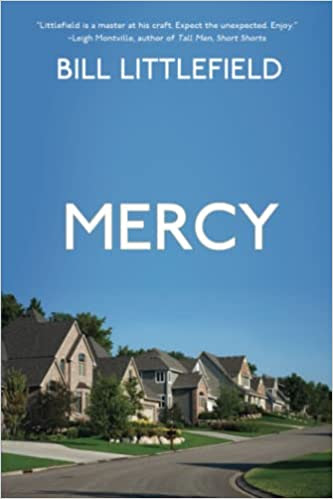
Mercy, Bill Littlefield


Mercy, Bill Littlefield, Black Rose Writing, Texas, 242 pages, $20.95.


Review by Ed Meek


John Gardner (The Art of Fiction) would call Mercy an architectonic novel. It is written using a number of different points of view. For it to be successful, the author has to be able to create convincing characters and, when he changes point of view, we have to be invested enough in the characters to go along for the ride. And somehow, the author must manage to tie or bring these characters together. Littlefield delivers in his compelling new novel Mercy. And these days, with the stress of a pandemic and a Russian invasion of Ukraine, the notion that we could both show and use a little mercy really strikes a chord.


You may know Bill Littlefield from his work as host of It’s Only a Game, the popular NPR show that he created. As someone who spent years telling and listening to stories, Littlefield is adept at storytelling. He has also worked with the incarcerated for a number of years through Emerson College’s prison program. In Mercy, Littlefield is able to bring some of the many tales he must have heard to life. His wide range of experiences lends his voice authority, particularly when he writes from the point of view of characters in the novel on the wrong side of the law.


Mercy is set in a suburban neighborhood inhabited by a cross-section of characters. An older couple with a young son, a woman whose husband loses all their money by day-trading, and a famous gangster who has been returned home from jail to die in the house lived in by his wife. Two guys who worked for the gangster are also integral to the plot. In this type of novel, you’ll find yourself, depending on your background, identifying with some characters more than others or maybe not identifying but appreciating… My favorites were the small-time bad guys, Francis and Gibby, who did odd jobs for the gangster, Arthur Baladino. Their dialogue crackles like the exchanges in a Dennis Lehane novel. Francis tells Gibby about a guy he met in jail for murder who said to him: “I don’t consider myself a murderer.”

“Nobody guilty in here,” Gibby said.

“No, no, that’s not it,” Francis said. “He’s defending himself, the way he sees it…”

“Okay,” Gibby said.

“But the main thing, his point, this guy, he’s just doing what it is he does. He’s out there with his guys, that’s all. He’s got a gun… ‘Murderer?’ he tells me, Murderer’s a guy does it for money.’”


As you read Mercy, you’ll find yourself nodding along with the stories the characters tell. Like Jack you may remember “the cruelty of children.” Jack tells us of a kid coming up behind him as he was walking along with a friend; the kid banged their heads together. “Every kid has something like that to get through. Or bullying. Teasing. Having to go the bathroom and the teacher won’t let you.”


We didn’t have a murderer like Arthur Baladino in our neighborhood in Milton, but we did have a counterfeiter next door, and around the corner was a child molester who seduced (if that’s the word) the paper-boy.


The theme of Mercy comes into play in the ways the characters help and support each other. The couple that sticks together despite having to deal with the unimaginable. The gangster’s wife who takes him in when he’s released from jail. Two women who find love with each other late in life. No matter who we are, we’ve all had difficult situations to deal with. Even Arthur Baladino and his wife have terrible things happen to them that makes them sympathetic characters.


Echoing John Edgar Wideman who writes about the younger brother who has spent his life in jail for his involvement in a murder, Littlefield doesn’t let his wise guys off the hook, but he would like us to see them as human beings.


“What it is, I guess is, people are people, inside or out. Some of ‘em do stuff, you know when they’re young guys, whatever.” Says Francis referring to the way, men he knew in prison grow and change. Most of the violent crime, as we know, is committed by young men. And we’ve learned that young men are not very good at considering the consequences of their actions.


The plot of the novel revolves around the many secrets simmering beneath the surface of the lives of the characters and Littlefield slowly teases them out to connect the disparate voices in Mercy. You’ll find yourself having a hard time putting Mercy down as you turn the pages to find out what happens next.