Wednesday, May 10, 2017

Interview with Somerville novelist and bookseller-- Josh Cook.

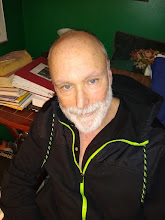
Josh Cook


Interview with Somerville novelist and bookseller, Josh Cook.

Interview with Doug Holder

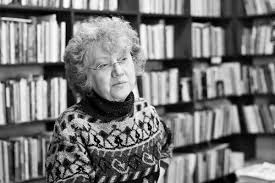
Josh Cook has for many years been an ubiquitous presence at Porter Square Books in Porter Square, Cambridge, where he works as a bookseller. Cook penned a detective novel recently,  An Exaggerated Murder, that has echoes of Sherlock Holmes, as well as the detective Auguste Dupin created by Edgar Allen Poe. I talked with him on my Somerville Community Access TV show, Poet to Poet/Writer to Writer.


Doug Holder: You told me you were influenced by fictional detectives Auguste Dupin, and Sherlock Holmes.

Josh Cook: It was always interesting to me that detective fiction started with the Gothic short story writer and poet Edgar Allen Poe. He created the detective Auguste Dupin, and Poe is highly identified with detective fiction. The detective in my book is very much Sherlock Holmes --style. Trike, my detective, uses evidence-based deduction, mixed with cold intellect. This whole genre that Poe started always starts out with strange, baffling stories. Holmes sprung from Dupin, and many detective stories since have sprung from Dupin. Later British Detective fiction is less about the case and more about the state of mind of the detective. What is so interesting about American detective heroes like Marlowe and Sam Spade --it isn't so much about the actual case they are involved in  (like in Holmes), but the emotions and moral compass they had to sort through.

DH: Trike has a bad cigarette addiction—why did you add this to an already complex character?

JC: If you look at American fiction many writers have their characters addicted to booze, TV, etc...We all have addictions of one sort or the other. Addictions are used to sort through the moral complexities of our society.

DH: The city the novel is set in—seems sort of generic—there is no specific city mentioned.

JC: Well—stories can only bear so much weight. I felt this was the best way to tell the story. I wasn't thinking of any particular city. But—I set one scene in a gross Karaoke bar—and someone said, “ Hey—I know exactly where that bar is” That's very satisfying. I felt the the story could not wear the weight of Boston, for instance. It would have required the reader to keep too many things in his or her head.

DH: You have a number of characters that revolve around Trike—like his assistants Max and Lola. Are these composites of people you know?

JC: No one is a particular person. They do draw on people I know, my partner and other characters that I have experienced in fiction, etc...

DH: Your detective Trike is a pompous, pain in the butt-- type of guy. Why did use such an unlikable character?

JC: Sometimes you need a guy with no social graces to get the truth out. He needs to be tough and abrasive.


DH: Did you grow up in a literary family?

JC: I grew up in Lewiston, Maine. My mom worked in the schools as a guidance counselor—my father was a social worker. Both were big readers. Both of them read to me before bed. My grandparents were also big readers.

DH: How has it been working at Porter Square Books all these years?

JC: It has been fantastic. You see more and more booksellers who are publishing books. I get to see what is published now, and what will be published in the next six months. I have been able to establish relationships with publishers. Melville House published my novel. They are a publisher I liked and I pushed their book at the store. I feel I am part of a community working at Porter Square Books.

Monday, May 08, 2017

Interview with James Maynard--New Curator of the University at Buffalo Poetry Collection

 
James Maynard ( New curator the University of Buffalo Poetry Collection)


 "When the Poetry Collection began in 1937, its original mission was to collect first editions of poetry written in English and English translation published since 1900. Today, the collection houses over 140,000 titles of Anglophone poetry including 6,600 broadsides as well as an extensive selection of little magazines, anthologies, criticism, reference books, ephemera and audio recordings, making it the largest poetry library of its kind in North America." ( From the University of Buffalo Library Website)


I had the pleasure of dealing with the former curator of the University of Buffalo Poetry Collection--Mike Basinski--for many years. Mike is semi-retired, but the new curator is James Maynard. I figured this would a good time to interview his successor. The Ibbetson Street Press has long donated books to this extensive collection--and we are glad that many of our publications have found a permanent home.


I would love to get a statement about your background. I know [former curator] Mike Basinski is a poet--wondering if you are?

I haven't identified myself as a poet in almost two decades, but I did write poetry for several years. Looking back, I've been interested for a long time in poetry and poetics and started writing it in high school, where I also worked on the school literary magazine. I then continued to do both at Ursinus College, where I was an English major, creative writing minor, and also received my certification to teach secondary education. After teaching high school English for two years, I went back to school at Temple University to do what they offered at the time as a hybrid MA English: Creative Writing degree, in which half of my credits were in writing seminars and tutorials, and the other half were in graduate lit and theory courses. While at Temple I was never really satisfied with my writing and increasingly felt like a spy among the poets, eventually coming to the realization that what I really loved most was learning about poetry from the perspective of those who actually made it as opposed to the presumed stance of critical objectivity from which it is often taught. I also loved spending time with poets, and appreciated the opportunity to get to know a wider canon of avant-garde and other innovative poetries as per the aesthetics of Temple's program. Consequently, after finishing the master's degree it was an obvious choice to continue my graduate study as a PhD student in the University at Buffalo Poetics Program, which, like the larger English department in which it is housed, has a long tradition of both hiring creative writers to teach doctoral students and also valorizing more experimental writing practices.

Since first starting as a graduate student assistant in the Poetry Collection in 2004 it has been a long and happy apprenticeship--as I think all special collections jobs are--during which I've served as Assistant to the Robert Duncan Collection, Assistant to the Curator, Visiting Assistant Curator, Assistant Curator, Associate Curator, and now Curator. And after 13 years I think I'm finally starting to scratch the surface of the collection's possibilities!

What are your particular literary interests?

Honestly, I've always been interested in all kinds of poetry from a wide range of poetic practices and movements, and less interested in partisan debates about which are superior to others, although I certainly appreciate historically the value of such social tensions for the development of the art. In the broadest terms I see poetry as a function of need--a confluence of personal and political need--and am sympathetic to how different needs manifest themselves formally into different poetics. My own work--a product of my own needs, I suppose--has focused largely on the poetry and prose of Robert Duncan, which I find endlessly generative and inspiring for the world of possibilities they project. I am also interested in 20th- and 21st-century Anglophone poetry and poetics more broadly, as well as pragmatism and process philosophy, the history of little magazines and small presses, and literary archives.

Previously my book-length projects have included co-editing a single volume edition of Robert Duncan's Ground Work: Before the War / In the Dark (New Directions, 2006), editing Discovering James Joyce: The University at Buffalo Collection (The Poetry Collection, 2009), editing (Re:)Working the Ground: Essays on the Late Writings of Robert Duncan (Palgrave Macmillan, 2011) and Robert Duncan: Collected Essays and Other Prose (University of California Press, 2014), and co-editing Such Conjunctions: Robert Duncan, Jess, and Alberto de Lacerda (BlazeVOX Books, 2014). A longer list of my select publications is available here: http://libweb.lib.buffalo.edu/staff/index.asp?id=88. Right now I am very excited about a collection of Helen Adam's collages which is forthcoming later this year from Further Other Book Works (http://furtherotherbookworks.com/index.php/product/the-collages-of-helen-adam-pre-sale), and in spring 2018 I’ll have a monograph titled Robert Duncan and the Pragmatist Sublime that will be published in the University of New Mexico Press series “Recencies: Research and Recovery in Twentieth-Century American Poetics.” Currently I have either just finished up, am working on, or will shortly be working on an essay on Duncan and his partner Jess's private library, an introduction to a Duncan manuscript on the poet's experiences at Black Mountain College, and a reflection on the relationship between the Buffalo Poetics Program and the Poetry Collection in the early 2000s. Another larger project that I've started is editing an edition of Duncan's uncollected prose.

What is your vision for the library collection?

I became the Poetry Collection's seventh curator last fall (2016) at a particularly auspicious time in the collection's history, which dates back to the mid-1930s. Thanks to my predecessor Michael Basinski (whom Doug you've known for many years) and his distinguished 32-year career in the University Libraries, the Poetry Collection has benefitted from the acquisition of numerous manuscript collections and book donations, award-winning exhibitions like the 2009 Discovering James Joyce, countless collaborations and partnerships, new endowments, and over $2.5 million in grants and private donations.​ I take it as my challenge to continue fundraising and bringing in new collections, grow the collection's staff, increase access to materials through additional digital collections, oversee an eventual relocation and expansion project, and, with any luck, usher in the Poetry Collection's 100th anniversary in 2037.

What do you view as the future of libraries and the physical literary book?

Regarding the future of university libraries, I think the University at Buffalo Libraries provide a telling example. Recently, the UB Libraries have enjoyed a major renovation of what was previously the undergraduate library, with the browsable stacks replaced with new user spaces and reading rooms, smart classrooms, computers, a cafe, and media labs. I've heard many people lament the loss of physical books from the library proper, but the truth is, access to the books and other resources has simply shifted (the books themselves have moved into a library annex and are still available on demand to anyone who wants them), with students today wanting electronic access to everything. As a result, as more and more academic libraries subscribe to the same digital resources, they are becoming more and more homogeneous. However, this is only half of the story. I tell everyone that if they only see the renovated area their tour of the library is incomplete unless they come upstairs and visit Special Collections--the Poetry Collection, the University Archives, the Rare & Special Books Collection--where our rare and unique primary materials complement the digital resources otherwise available. Consequently, more and more libraries are highlighting and promoting their special collections as the answer to the question of what makes them truly distinct. This is by no means an original observation, but I think it is true.

As for the book itself, for the past few years it seems that every few weeks there has been another article proclaiming the decline of the physical book and the ascension of digital texts. Now, the tables have turned and there are stories appearing that claim that interest in both e-books and devices like kindle are lagging. The truth is, we are in a period of publishing where we will see both print and digital copies existing side by side for a long time to come. For many of the presses that have published my own books, for example, they still publish a small number of print books, but the expectation is that they will earn a greater return in digital subscriptions. That said, although one can point perhaps to a certain decline in poetry publishing by university presses, I see overall no decline in the print publication of poetry. This is especially true among small and independent presses, where if anything the rush to digitize everything has led many people back to the analog skills of letterpress and other artisanal aspects of bookmaking. So all such reports of the death of the book have been greatly exaggerated, and in fact poetry books are doing very well, thank you! This is not to say that online blogs and poetry journals don't play an essential role in the art form, but print chapbooks are still the coin of the realm, especially for younger poets.

We know why libraries collect the manuscripts, books, etc. of famous authors, but you guys also warehouse the obscure, the oddball, the fringe. What is your method behind this madness?

We love "the obscure, the oddball, the fringe"--to which I would add the ephemeral, the marginalized, the transient, and the fugitive. In fact, I can think of no other collection that has from its inception dedicated itself to the impossible goal of attempting to collect the sum total of anglophone poetry at any given historical moment. "Completion" is a horizon that forever haunts the Poetry Collection, but I like to think that we fail a little less every year. Of course, we are only able to accomplish what we do thanks to a very large network of friends, representatives, fellow travelers, and ambassadors. I'm thinking especially of people like you, Doug, who have been generously sending us donations for several decades, and countless others who help keep us informed about new presses and publications. One of our founder's--Charles Abbott's--greatest accomplishments was involving poets (and editors, publishers, critics, etc.) themselves as active participants in the process of building the Poetry Collection, and that same extended collaboration continues to this day.

Sunday, May 07, 2017

The Sunday Poet: David P. Miller


David P. Miller


David P. Miller’s chapbook, The Afterimages, was published in 2014 by Červená Barva Press. His poems have appeared in Meat for Tea, Main Street Rag, Ibbetson Street, Painters and Poets, Fox Chase Review, Third Wednesday, Wilderness House Literary Review, Muddy River Poetry Review, Oddball Magazine, Incessant Pipe, Clementine Unbound, and Ekphrastic Review, among others. Anthology appearances include Tell-Tale Inklings #1 and three Bagel Bards Anthologies. His poem “Kneeling Woman and Dog” was included in the 2015 edition of Best Indie Lit New England. David was a member of the multidisciplinary Mobius Artists Group of Boston for 25 years, and is a librarian at Curry College in Milton, Mass.


Conservation of Mass, in Four

Two immature birds, failed.
One at rest on the curb;
its brother toppled in the gutter.
One with a grackle’s speckled
back. The second’s plump
rust-red feather belly.
Flies make electron orbits
eccentric around rotting
nuclei. Eyes like dead cartoons.

Forty steps to the third corpse.
This one a scentless, had-been-
avian delta, flat
as the pavement
and colored the same.
Savorless wing feathers,
spurned by maggots,
creased like an origami,
beak remnant at the apex.
Everything devourable,
devoured.

Ten steps next to a sparrow
hopping from sidewalk
to pocket park.
Claimed down feather
cinched in its beak,
a treasure to cozy the nest.

Friday, May 05, 2017

Robert Creeley at the Wilderness House in Littleton, Mass.


 ** Shortly before his death I had the pleasure to spend an afternoon with Robert Creeley. The Wilderness House Literary Retreat founded by Steve Glines hosted him, and I happened to be on the board for the retreat. The retreat closed after a few years--but we had quite a few interesting guests like Lois Ames, Afaa Michael Weaver, and a number of others...


Robert Creeley at the Wilderness House in Littleton, Mass.

By Doug Holder


It is always exciting to help start a new literary venture. Steve Glines, the founder of the “Wilderness House Literary Retreat” in Littleton, Mass. asked me to be a founding board member last Summer, and finally on Dec. 11 2004 we had our first event. We managed to get the renowned poet Robert Creeley as our first guest. Lo Galluccio, a poet and a friend of mine, joined me and we caught a train out of Porter Square, Cambridge to the hinterlands of Littleton, Mass. Steve Glines met us there and ferried us up to the “New England Forestry Foundation” lodge where the first event was to be held. The actual hunting lodge, where the retreat will be housed hopefully by the late Summer of 2005, is currently being renovated. Later, we inspected the premises, and found it full of promise, not to mention a spectacular view of the nature preserve below.

Lo and I sat down in a spacious room in the NEFF lodge, and enjoyed the crackling fireplace. Creeley was the first to arrive and looked amazingly hale and hearty, and much younger than his 78 years.


The event was advertised as a “chat” with Creeley, and that’s exactly what it was, a “chat,” not a formal lecture. Creeley was free to ramble on about his fascinating career as a literary legend. He talked about the many poets he knew; his years at the experimental “Black Mountain College,” to his experience with Jazz greats such as Miles Davis, to name one illustrious figure.

Creeley who grew up in Acton, Mass. has strong connections to Littleton, the home of the retreat. As a kid he swam at Long Lake which is just down the road from the retreat. Creeley was surprised that the natural beauty of the area has been preserved. Creeley felt that he could now thumb his nose at neighboring Concord that always had a better literary pedigree than Acton and Littleton. Creeley, tongue firmly in his cheek stated; “ I am glad to thumb my nose at Concord.”

Creeley, who taught at the “ Black Mountain College“, which in the 1940’s and 50’s was an innovative avant-garde institution located in North Carolina. Folks like Merce Cunnigham, John Wieners, Robert Motherwell, Buckminster Fuller, Charles Olsen, and others taught there or were students.

Creeley, who attended Harvard, was less than enthusiastic about the years he spent there. He stated: “ Harvard makes everyone feel like an outsider.” He said there was not a welcoming feeling there, and he felt inhibited to approach the formidable and often aloof professors. He said his literature professor at the time excluded the works of Hart Crane, Ezra Pound, and Wallace Stevens, much to his dismay.

Creeley told the audience that at first he wanted to be a prose writer. He laughed: “ I had a naïve sense of supporting a family writing a novel.” However, a publisher told him his novel was all about transitions; nothing ever happened. So Creeley decided to concentrate on Poetry.

Creeley had a plethora of anecdotes about poets he knew like: Allen Ginsberg and Anne Sexton. He recalled Sexton demanding a six-pack of beer before a reading she was to do in Buffalo, NY, that he organized. Ginsberg, commenting on the brevity of Creeley’s poems told him:” What a big book you wrote with such little poems.”

Creeley talked a bit bout his own poetry and process. Surprisingly he said he doesn’t make drafts of poems. If the poem doesn’t work he simply throws it away. He reminded the audience that writing poetry should be fun--not some solemn, painful process. He remembers William Carlos Williams saying “ Maybe we should tell them it’s fun.”

Creeley feels that poetry should be more about the act of “making,” than the final product. He rails against proponents of strict dogma regarding poetic form. He feels there can not be “set” rules for an art form we can not define.

The afternoon went quickly, as Creeley was as an engaging presence. The author Lois Ames was in the audience, and she and Creeley had a fascinating back and forth about Plath and Sexton, both of whom Ames has written extensively about.

Lo and I shook hands with the great man, and of course gave him a few “Ibbetson” books on our way out. We both thanked our lucky charms for this unique experience.


Thursday, May 04, 2017

Poetry and the 'Blues' at Endicott College

photo courtesy of Stephen Basden

Hopson Commissary

The electric night sky
Shades of royal blue
Yanking and pulling 
with all of its strength
To bring darkness over the world

The blue sky pulling 
with all the same force
The millions of hands
And hand and hands
That so long ago
Sowed harvested
And bled
Over the untainted
Purest fields of white
Cotton

The very same fields
Where the songs of sorrows
Would lull in the stagnant
Sweltering air
Melting off skin
Pooling at feet
Under the brightest sun 
That would only be stifled again
In a few short hours

From fields of pure white 
Erupted the darkest blues..

---Nicole Cadro


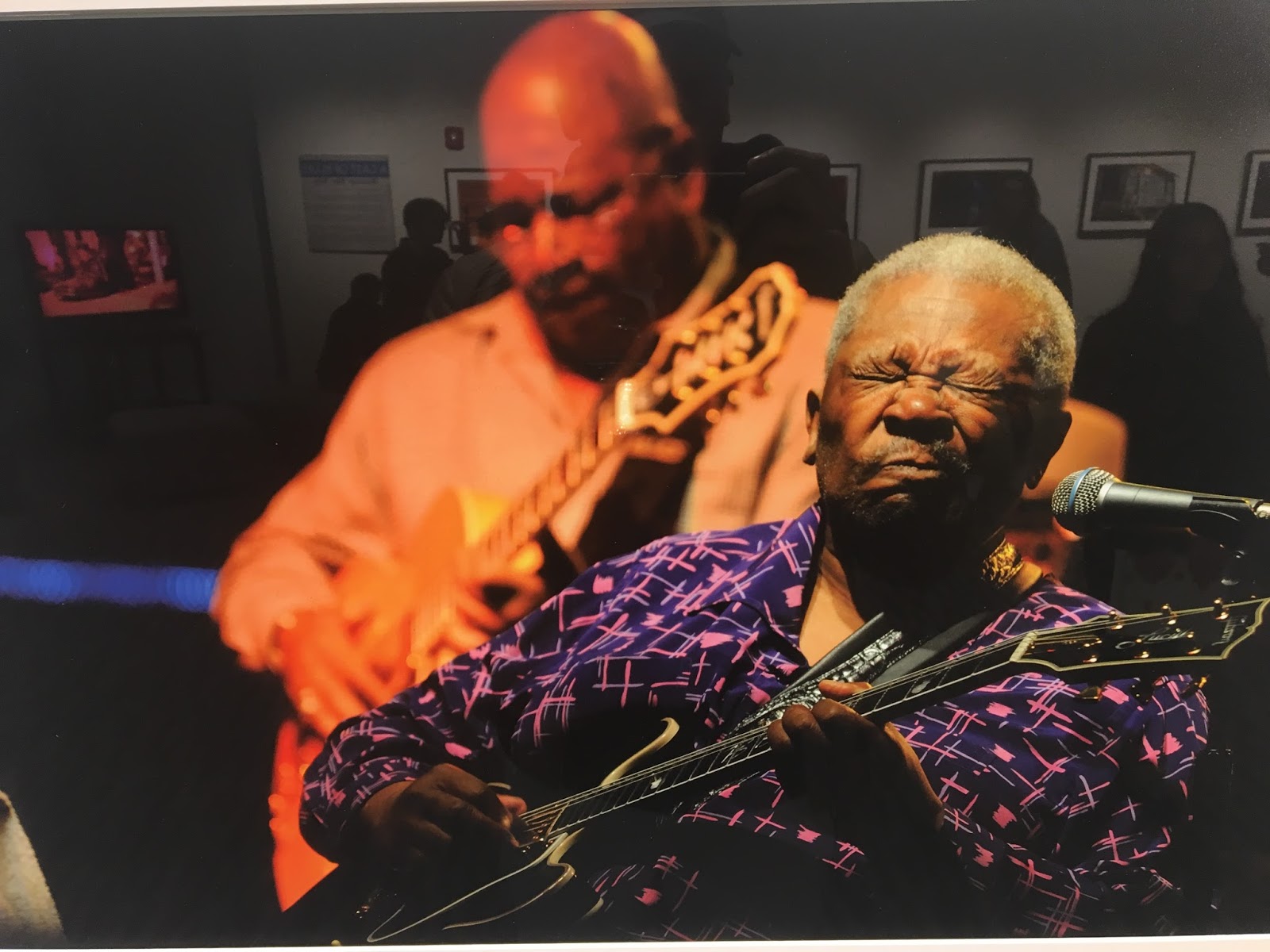
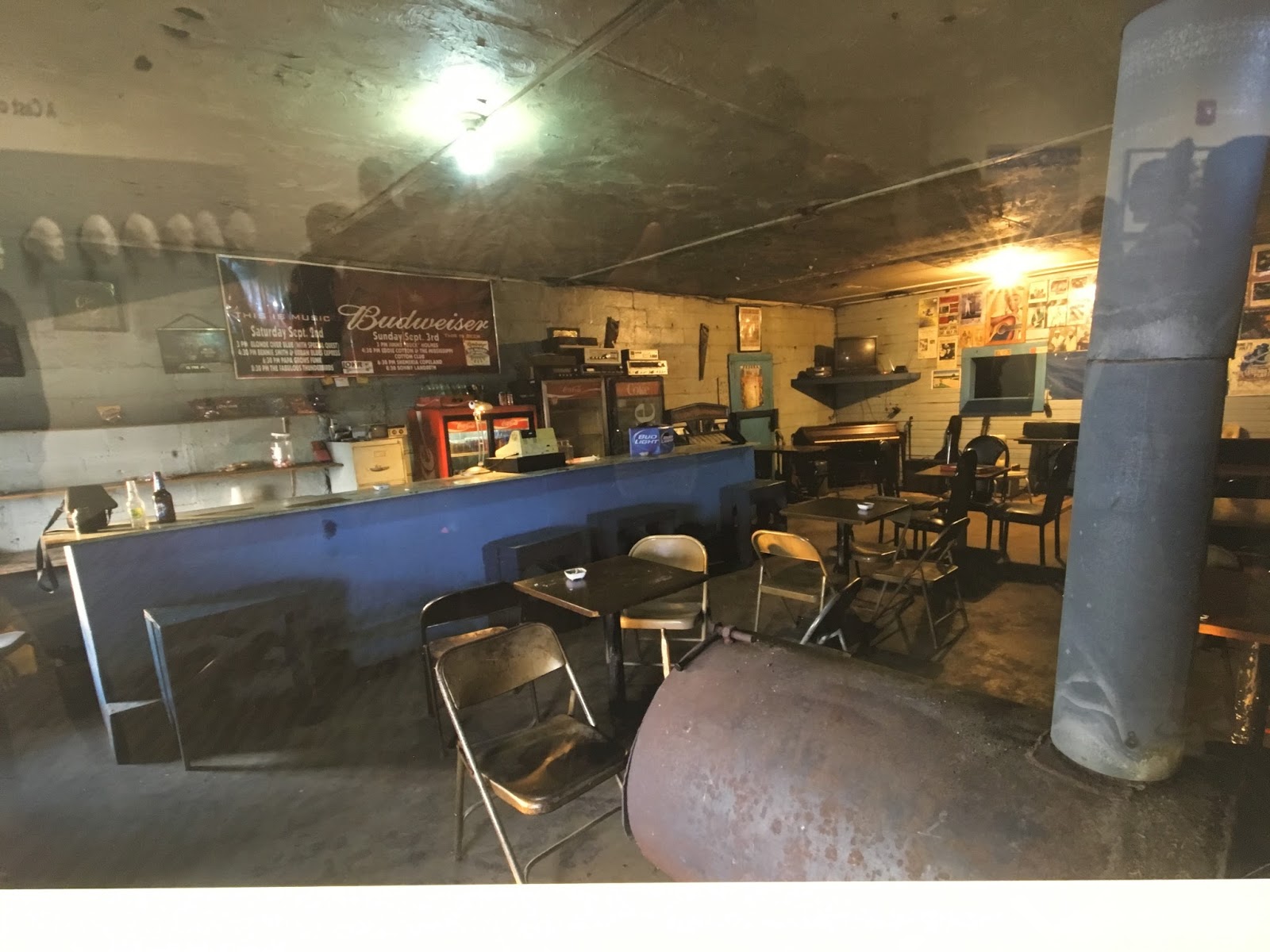
Recently I took my students to the exhibit " A Cast of Blues" at the Walter J. Mannien Center for the Arts at Endicott College. They are creative writing students, and they will present their gallery poems on exam day at the college. From what I have heard they were very inspired by the photographs, masks, as well as the video and audio presentation.  The exhibit is at the Heftler Visiting Artist Gallery at the Center. And who knows if I dig the poems--I may send a few to the gallery.  Here is the description of the exhibit:


A celebration of Mississippi’s rich musical heritage, the exhibition features 15 resin-cast masks of blues legends created by artist Sharon McConnell-Dickerson and photographs of performers and juke joints by acclaimed photographer Ken Murphy. Murphy’s photographs are selected from the groundbreaking book Mississippi: State of Blues.The exhibition is fully accessible to all visitors, featuring braille labels and educational materials, a music playlist for gallery use, and a closed-captioned film about the Cast of Blues project.  Experience new technology that transforms two-dimensional photography into three dimensional touchable art.

For more info go to  http://endicott.edu 


**** Many thanks to Kathleen Moore for her lecture and tour of the exhibit and for some of the photos.


photo courtesy of Stephen Basden.


photo courtesy of Stephen Basden


Before We Were Birds by Susan Richmond


Before We Were Birds

Susan Richmond (Adastra Press, 2017)


By Lawrence Kessenich


A sentence from the blurb by Fred Marchant on the back of Before We Were Birds is a good jumping off point for this review: “Richmond’s poems…continually ask us to imagine the natural world as rife with spirits, ones that for a moment in the ongoing metamorphoses have taken on the form of dolphin or snowy owl…or a fox that stops and stares right back.” Nature, spirits, and metamorphoses are the common threads that run through this collection—and there’s a quality of nature staring right back at us that lends it power as well.


If you’re the sort of person who takes nature for granted, or only sees it in scientific terms, Richmond is not a poet for you. For her, as for the ancients, nature is teaming with stories and spiritual energy that we can tap into for our entertainment and edification. For her, human beings are not detached from nature, but inextricably bound up with it. Take, for example, these lines from “Fox Run:”


…But once

he acknowledges me with deep

fox eyes, quivering black

mustache of mouth. I was out


on the porch and froze, not

breathing. For a moment, I was

fox, too, worthy

to run with him…


Or these lines, from “River Crossings:”


When I tried to push you

from the boat, a fish leapt

from the river, lodged in my arms…


let me draw the night heron

down from its alder perch, to settle

beside me on the bank.


Some of the story poems in this book are of people whose identification with nature goes much deeper than this, who become involved with mythological creatures of the natural world. The first section of the collection, “Boto,” is about a storied Brazilian creature who rises out of the water in the shape of a dolphin:


The smooth lines of his body

were words first and she swallowed them
whole; his, a story of many years waiting

to surface, she, a part of it, never knowing.


In “Arrival,” the boto…


            …comes from underwater


            a man, dressed in white. The moon hovers

            and tilts, a bowl half empty, half full.

            He is searching for other music and finds

            her, open, eager for his
            secrets…


…he takes her

            down by the river, changes
            the chemistry of her body,
            leaves her
            a kiss.


It is fascinating the way the boto and his lover move back and forth between the world of human life and the world of river creatures. As Richmond presents it, the border between the two worlds is easily crossed.


There is also plenty of straightforward observation of the wonders of nature—plants, animals, trees, mountains—in Before We Were Birds. This poet who can imagine becoming one with the natural world has, as one would expect, a keen eye for the natural beauty and bounty she observes every day. In “Wild Fruit” it’s berries:


I can’t tell if I’m too early

or too late, gathering a scant

sweet handful, eyeing the ratio

of hard green globes to blue.


In the high ground, rising

above Pratt’s Brook, the town

burned this circle in the fall

to force a bigger crop,


ripening when
flies are most intense,
and heat condenses
on the upper lip like dew.


In “Three for the Western Island” it’s mountains:


How can we see so far from such a modest height?

It’s all position, the way the peak peers

over the promontory, giddy distance,

water at our feet, the way
the high, soft clouds receive the light.


In Richmond’s hands, it’s hard to tell which is more marvelous, stories of humans dramatically entwined with nature or simple, astute observations of the natural world we  encounter every day. In any case, both spoke deeply to me, both left me in wonder about the depth of connection—too often overlooked in our predominantly urban culture—between human life and the rest of life on the planet we inhabit. Before We Were Birds will open your eyes to that connection.

Tuesday, May 02, 2017

Michael C. Keith to retire from Boston College

Michael C. Keith


 My friend Michael C. Keith is retiring after many years teaching at Boston College. Mike has written extensively about radio and the media in general, and has regaled me with many stories from the trenches. He is one of the most noted scholars on the social impact and the role of the radio in American culture. Keith has written prolifically in this genre as well as in fiction, poetry, and memoir. I have used his memoir The Next Better Place in many of my creative writing classes at Endicott College. The students always respond well to his sad and comic recount of his youth spent on the road with his gone-to-seed dad. Keith has lectured in my classes and has been very supportive of my work. I met him through Robin Stratton--founder of the Newton Writing and Publishing Center. Keith--who is a board member at the center--was one of the folks who awarded me their Allen Ginsberg Award.  Keith--to use a cliche is a "regular guy" despite his distinguished career. He is always quick with a handshake and a smile. I am sure he is going to continue to do great things in the years to come...


 Bio:


Michael C. Keith (born in Albany, New York) is an American media historian and author. He has served as a faculty member of the Boston College Communication Department [1] since 1993 and is the author of some two dozen books on media. He is one of the country's foremost authorities on the social impact and role of radio in American culture. He has lectured in Russia, Spain, Tanzania, and at several institutions in the U.S. and Canada.

Keith served as a visiting professor at George Washington University and Marquette University and Director of Telecommunications at Dean College. He frequently appears in both American and foreign media as an authority on electronic media. Prior to becoming a full-time academic in the late 1970s, he worked as a broadcast professional for more than a decade.

Keith's substantial published output melds his own experience, an excellent network of contacts in and beyond the radio business, and careful research, to produce solid analysis of what a growing number in and out of the industry see as the growing crisis of broadcast radio. A number of his books have been co-authored with Robert Hilliard, now retired from Emerson College. The team usually works this way—with Keith conceiving the topic and doing much of the initial legwork research and Hilliard taking on the initial book manuscript draft. They both work on the final version. Their co-authored works, and those of Keith alone, often tackle controversial topics such as the demise of local radio programming (2005); the legal intricacies of indecent or even obscene programming (2003); the use of radio by extreme hate groups (1999), a title on President's Clinton's summer reading list one year; and the use of radio by Native Americans (1995), the first monograph to appear on that topic. Keith has been a Stanton Fellow of the International Radio & Television Society and received the Distinguished Scholar Award given by the Broadcast Education Association and the Achievement Award in the Humanities by the University of Rhode Island.

In addition to his many media books and academic articles, Keith has written a well-reviewed memoir of his unconventional childhood years—The Next Better Place (Algonquin Books, 2003) [2] [3] [4] [5] —as well as a coming of age novel, Life is Falling Sideways (Parlance, 2009). Recently, he has written an ever-expanding list of short stories, which have appeared in numerous online journals, such as The Literati Quarterly, "The Penmen Review," "Lowestoft Chronicle," and annual anthologies. Collections of his stories––"Hoag's Object" (Whiskey Creek Press), "And Through the Trembling Air" and "Of Night and Light" (Blue Mustang Press),"Sad Boy" (Big Table Publishing), "Everything is Epic" (Silver Birch Press), "The Collector of Tears" (Underground Voices), "If Things Were Made To Last Forever" (Big Table Publishing), "Caricatures" (Strange Days Books), "The Near Enough" (Cold River Press), "Bits, Specks, Crumbs, Flecks" (Vraeyda Literary), "Slow Transit" (Cervena Barva Press) and "Perspective Drifts Like a Log on a River" (PalmArtPress) are available in paperback editions and in ebook formats. His fiction has been nominated for the Pushcart Prize and Pen/O.Henry Award, among others.

Monday, May 01, 2017

Before There was Before: Poems by Wendy Drexler


Before There was Before: Poems by Wendy Drexler ( Iris Press) $16.

Review by Doug Holder

I am not surprised that poet Wendy Drexler is a cavity-nest monitor for the Massachusetts Audubon Society. I am not quite sure what that is, but I imagine she spends a lot of time in nature—watching and observing—all fodder for this wonderfully observed collection “ Before There was Before.”

Drexler has a number of poetry collections to her credit and has been published in top shelf journals such as, Barrow Street, Salamander, Ibbetson Street and others. She uses the props of nature, the nuances of relationships, the very origins of the universe, as the basis for her work. But this not some vague, conceptual work. Drexler personalizes the poetry, and as a result she makes the poem relevant to readers of all sensibilities.

In her poem, “The Elephants,” Drexler observes a group of these animals as they wrap themselves in their deceased mother's bones. This is a poem that Balanchine himself could of put to dance,

“ This is their poetry, their grief.

Slowly they sway
their gentle stamens of their trunks.

One wraps her trunk around
her mother's skull.

One combs his mother's pelvis
with the sole of his foot.

The cheeks of the elephants are matted
with red grass and stained with tears.

The elephants flap the ruffled flowers
of their ears.

They have found her bones.
There's nothing left but bones.”

And Drexler does not have to be situated in some pastoral scene to appreciate beauty. In fact in her poem “ Light 48 on the Storrow Drive Underpass” she praises a banal light fixture in a tunnel on Storrow Drive in Boston. She puts her microscope to it and the poem radiates its life to the reader, as evidenced in this passage:

"Praise the beam of light that slices
through the late afternoon traffic.

And the faint scatter of that light
on the roadbed graded to a gradual bend.

Praise the gradual bend.

And praise the worker who climbed up
the catwalk at 4 a.m. to tape
the stencil, R48 in rusty red ,..."

And the book is beautifully presented. The cover painting is by Tanya Hayes Lee . She presents a misty, primal landscape—our beginnings, our endings—the light—the dark—all encapsulated in this fine collection.

Sunday, April 30, 2017

Pui Ying Wong wins the PUSHCART PRIZE for her work in Constellations Magazine.

Pui Ying Wong --a Somerville Bagel Bard/Cervena Barva Press author/ has won a Pushcart Prize for her poem, "Language Lesson for One" in Constellations magazine, as published by Nina Rubinstein Alonso (another Bagel Bard). Hats off to Pui and Nina!!!

Saturday, April 29, 2017

The Sunday Poet: Julia Monaco


Poet Julia Monaco

 Julia Monaco is a freshman at Endicott College from Sandy Hook, CT. She is double majoring in International Business and Marketing, and has always enjoyed poetry and writing creatively. The poems she wrote each do not reflect one person, but pieces of the many stories she has heard of people throughout her life.


Rose

“A yellow paper rose twisted on a wire hanger in the closet.”
His sweet aroma glides off his sweater just a hanger over.
It lingers in the air,
I inhale deeply and close my eyes,
There he was.
Sitting peacefully in his chair, tea in hand.
A rose is hanging out of his shirt pocket.

I open my eyes and he’s gone.
We are gone.
Our petals have fallen one-by-one.
Our stem turned a corpsy brown and crumbled.
There is nothing but a memory left of us.

A memory of where we once stood proudly, unmoved by Earth,
Our bright yellow and white colors illuminating our surroundings
Like the radiant sun above us.

A memory of a warm summer breeze passing through the yard.
Now memories are beginning to fade
Like the color in our petals before they dropped.
As seasons come and go,
The memory of you slips away. 

--Julia Monaco

Thursday, April 27, 2017

Doug Holder interviews the Owner of the Famed Grolier Poetry Book Shop: ...


Come To This by Jeff Weddle


Poet Jeff Weddle


Come To This by Jeff Weddle. Nixes Mate Books, 2017, 49 pages.


By Ed Meek


Bill Moyers is currently touting what he calls civic poetry by which he seems to mean, political poetry or poetry that comments on our situation now that we’ve elected a plutocrat (as Paxton points out in a recent essay in Harper’s).  That’s right, we’ve elected someone whose priority is the accumulation of wealth and power for himself and his clan.  It’s true that right after the election I noticed people were quoting Yeats and Auden and looking for some way to explain what had happened. In addition to electing a narcissistic, sexist, racist xenophobe we had given the reigns of government to the Republican Party whose goal, it appears, is to dismantle the government of the people and to replace it with a government of, by, and for the rich. Such a state of affairs demands a response and one response for those of us who remain children of the enlightenment is to turn to art and poetry. But, it turns out that civic poetry is not so easy to write.  If the emphasis shifts in art from style and invention to content and meaning, the aesthetic suffers.  Moyers and organizations like Split This Rock may mean well but the poetry they promote is not always good.


Jeff Weddle enters this argument and walks a fine line between poetry that makes a statement artfully and poetry that sometimes lets us down with language that falls flat.  When it works though, such poetry feels necessary and valuable. Take “See America First.”

                        I am sick like you’re sick and I want to understand.

                        America, what have you done to us?

                        You are our pimp and pusher

                        and sainted church of Big Mac outrage

                        and sloganeered righteousness.


Doesn’t that remind you of Ginsberg? It’s refreshing to read someone addressing the country as a whole in this era when we seem to be two separate nations as the great Andrew Hacker put it.  Weddle goes on to say: “America, this isn’t working out. /I think we should see other people, America.”


There are a few strong poems about the country in this section.  One is called “Of Course.”

                        parents love their children

                        and hard work pays off

                        and the man who bags

                        your groceries never

                        tortured a lost hitchhiker

                        in his basement

                        and buried what was left in his wall

                        after making a stew of her parts…


Later in the same poem:


                        And no one you know

                        Goes to bed hungry…


                        And America is number one

                        And Jesus loves you

                        And voting matters…


Right, voting matters when it is done by the Electoral College or by a minority of Americans in a majority of states.


Weddle is also able to be upbeat and whimsical in “This Cool, Green Hour.”


                        Days when air holds you

                        like an absent caress

                        and trees stand like answers

                        to unasked questions…


                        Days when the coffee

                        in your favorite cup

                        tastes like joy

                        and smells like laughter…


Many of the poems are set up with a repeated refrain like “days when” or lines that begin with “you” or “this” and then the poet “free-associates” and expands on a theme. It’s Whitmanesque although Weddle lacks Whitman’s eloquence. Sometimes he’ll just be too tendentious and direct. A poem about a neighbor who walks his impaired daughter to the bus each morning ends with these lines: “A great man, unknown./ Time for coffee.”


Selling for the equivalent of two cups of Starbucks at $9.95, Come to This is, nonetheless, well worth the price.

Monday, April 24, 2017

Somerville's JT Thompson: A Chronicler of Union Square


JT THOMPSON


I usually use my backroom perch at the Bloc 11 Cafe to interview the many poets, writers, artists, and interesting   folks who live in the city of Somerville. On this April morning  my position on the backroom table was to be reversed. I was to be interviewed by Somerville writer  Thompson. Thompson, who early in our conversation spilled a cup of freshly brewed coffee all over my schoolboy notebook--regained his composure quickly--as any pro  would do. Thompson, back in the 90s, was one of the founders of the Washington Street Art Center --just outside Union Square. He was actively involved in the arts scene, and was on the Somerville Arts Council board, working with the former director of the Council-- Cecily Miller-- who he greatly enjoyed collaborating with. As it turns out Thompson is involved in a project that struck my fancy. It consists of interviews with some stalwarts of Union Square--immigrants, barkeeps, artists, poets, hairdressers, and assorted characters who make this piece of real estate unique and diverse. So-- of course-- I had to turn the table on him and first conduct an interview with Thompson himself.

Thompson is somewhere in middle age, of average height, sports an easy smile, and a nonthreatening and attentive presence. He does not have the standard background. His father's work (he set up law schools in Africa and elsewhere)  sent him to far flung places around the globe. As a result the younger Thompson wound up being born in Zambia, lived in Ethiopia , and along the long and winding path he hit the environs of Somerville. Thompson told me he earned a Master of Divinity  degree from Harvard University. For a number of years he worked as a travel writer, and in other forms of non-fiction. He also had stints as a marketing copywriter, and adjunct professor at Emerson College, and a private investigator.

Thompson was inspired by TV personality Jon Stewart, who was asked in an interview, "What makes America great?" So Thompson has interviewed people with that overall question in mind. In my case (and I assume others), Thompson asked me about my earliest memory, weaved through my elementary school years and my adult life--and asked some unexpected existential questions that I haven't thought about deeply in a long time. And I realized that even though I love my country it was hard to articulate exactly why.

Thompson told me that he uses Union Square as his stomping grounds, " Because of its vibrant, diverse community, and for its symbolic resonance as the home of our first flag." He revealed to me that so far he has interviewed Tony and Jerry, the father and son team at the PA Lounge-- the thoughtful and articulate owner of the Back Bar--Sam Treadway,  the owner of Groove Records, the poet/artist Julie Ann Otis and others.

Thompson told me wanted to reconnect with the vibrant art scene in the square--and this seemed to be a ticket in. Thompson worries (like a lot of us) that the jaws of gentrification may displace the very kind of people that are his subjects. But like many of us, he seems to be hopeful. So if you are walking in Union Square, and you see an amiable and inquisitive man stop and ask you questions...feel free to add to this ongoing narrative--it is well worth your while.


-A series of Thompson's interviews will appear in The Somerville Times.