Tuesday, July 26, 2016

Drawing to More: Standoff, Poems by David Rivard


David Rivard


Drawing to More: Standoff, Poems by David Rivard

Review by Marc Zegans

A central concern when taking up a book for review is whether the volume in question is worth the reader’s investment.  For many collections of poems the answer is a nonchalant yes in the sense that if a reader picks up the collection and thumbs through it, more than likely this reader will find a few pieces to his or her liking.  A critical reader may also find some elements of the material fresh, novel, engaging, and possibly worth unpacking and assimilating.   From a reviewer’s perspective, collections such as these function in much the same way as the old vinyl record album, a container for a single and a great, quirky b-side, along with a a few other pleasant but unremarkable tunes to fill out the package.  Such collections—because the stakes for the reader are low—are easy to recommend.  It’s not hard to say, “This is a gatherings of poems well worth thumbing through.”

Less commonly, we come across a collection which functions effectively as a sustained and directly engaging performance, a collection that draws us into its world and makes us want to stick around.   Such works manage the trick of tautly sustaining a project, generating willing attention to the line, the stanza, the page and the poem, while cultivating a sense of urgency, and desire in the reader.  The latter aspect can and often does represent, for the reviewer, a kind of deceptive seduction, an encouragement to relinquish critical faculties and simply be swept up in the succulent moment. If we honor our craft, we find an eddy amidst the rush to consider whether there is something worth giving over to with such abandon. When the answer is yes, we rejoice and commend the book to our readers with verve.

There’s a different kind of collection, more challenging for the reviewer to engage and assess, the kind written by an older poet, one skilled in the craft, wise enough to know the field’s present boundaries and limitations, and concerned with its expansion. Such a poet may proceed by arranging a set of interconnected and mutually dependent poems, not as series or cycle, but as consort—a gathering of associates who know each other’s ways, and who—we hope—play well together.  

While such gatherings of poems may be accessible to and while they may reward serendipitous inspection, their claims to value do not fundamentally depend on such fortune.  Their worth depends rather on how the collection functions as a whole, truly functions, which is a different matter from how it plays as gestalt.   Such books are harder to assess and harder to recommend both, because the aesthetic bar they set for themselves is radically higher than the other types of collections I have described and because a reader may have to do some substantial wading before getting to solid ground.   In order to judge whether the slog was and will likely be worth the effort, a reviewer has to undertake the full journey and weigh the effort before expressing an honest view.


Standoff, by David Rivard, an established poet with five prior collections to his credit is a volume that puts us to this harder test.  Rivard’s collection develops as an encounter with and passage through a poet’s experience of a fierce conundrum particular to, and sharply battled in, late middle age—what comes when our best may simply be to have struggled to a stand-off with the forces and internal failings that threaten full and final dissipation.   The topic is by its nature challenging and it begs disappointment, or, should standoff be the result, perhaps a wan version of Sisyphean nobility—a grudging acceptance that our freedom lies in rolling the rock yet again up the hill.  Why would we want to read a book that might arrive at this conclusion, and what about a journey into the experience of standoff, as poignant and honest as this may be, would make us want to spend the time there? 

Perhaps, because it addresses pressing concerns.  Rivard speaks in honest voice to a reader on the cusp of such dynamic blockage; to a reader in its midst, and perhaps one who has passed through to something else and can appreciate the nature and experience of standoff and what follows in or perhaps as its wake.  For readers such as these, and I count myself one, Standoff, takes us with vulnerability, but without self-pity into this world and invites us to walk with the narrator through it, one difficult poem at a time.  We learn quickly that we won’t find a quick fix in a single poem, nor will we find satisfaction by flipping and dipping.

The cover of Standoff is somewhat at odds, with its project, and this creates difficulties of induction.  Below the title, we find in a smaller black font, the word “poems,” implying that we can take these as one-offs, clustered around a theme, rather than as a collection of poems, functioning as a consort, that do work together.   This is simply not true: The power, beauty and wisdom in this collection lies in how the poems inform each other and in how they proceed.  To access these qualities, we must read and consider each one in relation to the others.   By suggesting that the books contents were more gathered than allied, the cover disserves the enterprise. We would have been better met and more effectively led had perhaps the cover said less and signaled more.

Structurally, Rivard draws us into Standoff, the experience and the book’s title poem (set as a hinge in the book’s middle) by giving us a string of poems that force us to enter intimately and uncomfortably into the tense realities of the narrator’s situation. The first five poems scream for stanza breaks, but he doesn’t give us a single one.  Instead, he places us in the numbing run-on of the stanzaless situation, so different from the experience of life as a pearled-string of moments entered fully.  

The first poem, “Greenwood Tonight, “ thrusts us quickly into difficult and unpleasant questions about, the poem and its construction, or perhaps the narrator as character and what he’s choosing to share.   After the narrator observes, “I miss myself most/these days with friends/I feel a distance from/when talking to;” he rapidly raises the stakes, describing how he stands, “clear-eyed & cold/amidst the murderous/machinery of our birthright—“The careful consonance of  mmmmms denoting both self and situation tells us that these things are somehow related: But why?  What is his pre-occupation with a situation writ so large?  Why is he invoking in this poem forces on such a grand scale? And why does he then shift to cheap, commercial surreal imagery, “…in the  telenovela/based on my life/tall prairie grasses bent/by an Alberta wind/would sprawl snugly/I’ve been told/ behind a woman vaulting/In blue pajama bottoms”  Rivard drives us toward questions, making them pile in our mind, until we reach poem’s bottom, on which there is no line, simply a statement made question by dint of a mark, “greenwood nightfall--/that’s what calls me now?”

He continues and escalates the jumble in “Less Than More Than,” blending images of a used Mazda, Peshawar, Murdoch and privatization, into “ideas,” then question again, landing finally on a double assertion—“a little foolishness/goes a long long way, I’d say;/a lot drops dead/in it’s tracks”—offered without persuasive image, evidence or logical support.   Arriving at these flip, clichéd conclusions orthogonal to the text that preceded them, we are left to throw up our hands and say, “So what?” 

It’s at this moment, and at many that follow in the string of poems leading to “Standoff,” that we’re forced to the dilemma of whether to put the book down and walk away, or to seek a real answer, and Rivard having led us into the predicament of a late-middle life standoff offers neither encouragement nor direct answer.  Having committed to reading the collection, I chip away: “Why the cliché?”

I know from the preceding material that the poet is capable of original image, tightly crafted line and novel thought, so is it possible that these flaccid assertions are a device meant to represent the character and the motive structure of the collection’s perhaps fictive narrator?   If I take the answer to be yes and place the poem’s entire narrative in quotes, thereby making its lines expressions of a character constructed by the poet, the cliché’s begin to make sense.  They’re the utterances of a man in pain, the flailings of one gesturing without conviction at freedom through regression in light of the deeper fear of a futile ending.  We know that he does not believe that foolishness is a solution to a problem that has no answer better than standoff, and yet, having not come yet to this place, the character dissipates his energy and ours with hackneyed and fruitless assertion.  

By so doing, Rivard makes us enter viscerally the experience of a scared, limited, struggling individual, fraught with resistance, reluctantly traveling down the path to a balance of forces in which survival without progress may be the most that this protagonist (or any protagonist) can achieve.  The clichés bring us to this dispiriting generalization, and in the succeeding poems, the poet pushes us to this place again and again.  If we continue, we will share this brutal path to its likely foregone conclusion.

In “Birth Chart,” he begs “Simone,” presumably his daughter, “…don’t think badly/of me when I’m dead & you’ve gone deep/ into the distance of love tangles, moneyed/
Interests & old-fashioned commutes…”  He wants more, and vests in her life beyond his perhaps the possibility of something more than standoff.   The plea is earnest, because the character has come to grief but not acceptance of the inevitability of standoff,  “out of my reach/ your life will make itself in struggle & love perhaps/dependent on the strength that will come/if only I let go when you step out the door…”  But why should we believe him?  In part, because we know that the book does not end with “Standoff,” there are many poems that swing beyond this hinge.  If we stay with it, we will learn what happens when this character meets and passes the point of balance as dynamic tension under threat.

Will the poet teach us how to live in this state?  Will he offer us something different and more?  Will standoff be a stasis that breaks leading to a life richer and deeper?  For me to answer  these questions would be to strip from this collection the method by which it’s author realizes his project, and realize it he does.  If you come to Standoff do so knowing that it’s virtue lies in its completeness, its challenge in that you must travel entirely its crags and bogs without guidepost or encouragement, and that you will gain its treasure only if you stay the course.  Standoff is a demanding work by a mature poet that goes to a place many of us face, but about which few of us speak with humility and candor.  In giving us Standoff, Rivard opens for us the possibility of drawing to something more.


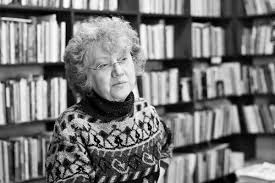
Marc Zegans  Left--Doug Holder--Right

Marc Zegans is a poet and creative development advisor. His most recent collections, The Underwater Typewriter and Boys in the woods are respectively available at

Sunday, July 24, 2016

The Sunday Poet: Susan Tepper

Susan Tepper


Susan Tepper is the author of six published books of fiction and poetry. She lives in the NY area with her husband and her dog Otis.  She has been a writer for twenty years. www.susantepper.com


AFTER/DURING for Chris Nguyen

In a pleasant corner of the garden
we sip tea and crunch biscuits

Each telling what we remember
about that war

You what you remember
After— when
our country conceded
to that split country: North & South
leaving it in ruin

Once divided as we are now
but only by a garden wall
shared and tended,
slathered in honeysuckle,
primrose, vine.

I didn’t see that country
when you saw it
after—
Not nearly one percent
of what you saw.

I saw it during the
loading of soldiers and
the half dead onto planes
then from the air where
everything’s small and
smudged like in a painting

While what you saw were
beginnings of a level plane
on which to finally land.


Wednesday, July 20, 2016

DeWitt Henry Reminisces on the 45th Anniversary of Ploughares Magazine

DeWitt Henry
  

DeWitt Henry Reminisces on the 45th Anniversary of Ploughshares Magazines

***Ploughshares Magazine, based at Emerson College, is a much lauded literary magazine that was founded at the Plough and Stars Pub in Cambridge, Mass. some 45 years ago. I asked DeWitt Henry, a founder of the said journal, to write a small memoir piece about his life and times with the magazine. I had Henry as a guest on my Poet to Poet: Writer to Writer show on Somerville Community Access TV, and  as a visiting author at Endicott College where I direct the Visiting Author Series. Henry proved to be a fascinating conversationalist, full of  anecdotes about the literary world in Cambridge in the 60s and 70s, and his own development as a writer and editor.--Doug Holder/Ibbetson Street Press /Somerville, Mass.


I’ve just received the fall issue of PS, edited by Claire Messud and James Wood and marking 45 years of publication. Meanwhile, I’m still savoring last spring’s issue, edited by Alan Shapiro and Tom Sleigh, not to mention the series of “Solos,” begun by editor-in-chief, Ladette Randolph, three years ago—long prose works first published in digital form then collected annually in a print “Omnibus.”

Co-founding Ploughshares with Peter O’Malley, in 1971, began the adventure (along with marriage, parenting, and my own writing) of my youth, mid-life, and then some. The original volunteer group met in the Plough and Stars pub, as outsiders to what we thought of as the literary establishment, namely people who were paid for writing and editing. We believed in common readers, especially those of our own generation, who would explore the different aesthetics and passions we debated. Our mission was to discover, showcase and cultivate “tomorrow’s classics today.” In time, more and more writers and critics rallied to our cause and helped to broaden our network, and to build our reputation and readership. And some of the writers we discovered or published early on have, in fact, continued to grow in career and their contributions have become classics. 

The idea of such a magazine, and especially of its editorial democracy, has so far engaged three generations of editors, writers, and readers, and led, if not to the world we had dreamed of (where poetry, fiction, and non-fiction would thrive outside of the mass-market system and where all readers would respect the role of literary magazines), then to a world vastly more hospitable to both emerging and established writers, one in which they are served by many literary magazines, small presses, reading series, writing programs, and institutions. The limitations of commercial publishing are better understood today, and with new technologies (social media, the internet, blogs, digital and on-demand publishing) and more independent presses, more writers than ever seem to find audiences and sustain careers.

During my twenty-four year tenure, Ploughshares grew from a local to a national base and from print circulations of 1000 to 3000. Support from grants gave us operating capital, which I turned into renewable earnings, enough so to start paying staff. The workload outgrew volunteerism. We found office space and support at Emerson College, which was starting an MFA program and where I had been hired full-time; and when I became chair of the writing department, I negotiated a full-scale affiliation, making Ploughshares an Emerson publication in 1988. My teaching and administrative duties then pulled me away, and I relied on our first MFA graduate , Don Lee, to manage the magazine. He was a gifted writer and computer-savant , who had grown from intern to Editor, who secured a major development grant from the Readers’ Digest Foundation for promoting the magazine, and then took over entirely in 1992, while I continued as an advisor. He ran the magazine for the next 15 years, computerizing operations, tripling our circulation by direct mail campaigns, broadening the guest editor pool, and increasing Emerson’s support. In 2007, having published his own story collection and first novel to critical acclaim, he left to teach and write full-time (his fourth novel is due next spring). I returned for an interim year-plus and led the search that brought Ladette Randolph from the University of Nebraska Press as our new editor-in-chief. For eight years so far, Ladette has shaped and connected Ploughshares to new generations, new readers, and an even wider community. I was proud to guest-edit the 40th anniversary issue at her invitation. She has also flourished with her own writing: a story collection, two novels and a memoir. If the past is prologue, I hope Ploughshares proves to be a never-ending story. 

I retired from teaching last winter in order to write more. I’ve placed work recently in Brevity and the Massachusetts Review and have work upcoming in the Wilderness House Literary Review (I’m also rejected by other places I admire). My two memoirs were published by small presses, Red Hen and Hidden River Press. My writer’s website (www.dewitthenry.com) has registered some 9000 hits. I’ve published my first story collection, Falling: Six Stories, with Create Space. Meanwhile, I send around my third memoir and a novel. I review books I love. Would I start another magazine or press at this point? No. It doesn’t seem as culturally necessary as it was in the 1970s, if only because there are so many good ones. However, I have joined two on-line magazines as a contributing editor: Solstice, edited by novelist Lee Hope (www.solsticelitmag.org) with a mission to promote diversity, and Woven Tale Press (www.thewoventalepress.net) edited by novelist Sandra Tyler and vested in showcasing graphic as well as literary arts. I still have opinions. I still find writers and writers find me. Literature is a living process and I am passionate about “what I will not willingly let die.”

Saturday, July 16, 2016

Vigil the Poetry of Presence by Pamela Heinrich MacPherson

Vigil the Poetry of Presence
by Pamela Heinrich MacPherson
Red Barn Books
Shelburne, VT 05482
Copyright 2015
ISBN: 9781935922964

The collection’s title, as Pamela Heinrich MacPherson says in her introduction, comes from the “Latin, viglio, ‘to be awake,’ be vigilant; a period of watchful attention; wakefulness that holds calm; bearing quiet witness." The poems were produced from her diary entries accumulated over 30 decades of sitting in vigil with the dying. She was drawn to end-of-life issues while in nursing school in the 60s and eventually would serve as Hospice Volunteer Coordinator for the Visiting Nurse Association of Chittenden and Grand Isle Counties in Vermont between 1988 and 2004. She has continued to sit in vigil following her retirement.

These poems have an artistic innocence; they are what she wrote in the moment and their meaning and much of their power comes from that immediacy; they do not seem to have been worked on, shaped or changed in search of meaning. Here are a two examples the first is a good description of what, in my experience, the approach of death may look like.

Endings and Beginnings

Cold hands
Mottled on their undersides.

As you rhythmically breathe
Your seven breaths
Ascend and descend
And then give way to
Thirty seconds of apnea,
A transition
Not unlike labor and birth.
The intervals of labor
Grow shorter with each contraction;
The intervals between breaths
Grow longer in dying.

This second example should disabuse you of the notion that the process is always peaceful:

Nothing Dignified

There is nothing dignified
About teeth being out,
The urgency of a bowel movement,
Flatulence released,
Ecchymotic hands that are
The extension of tissue paper arms.

The poems are not arranged chronologically but in nine thematic chapters. One is devoted to "Quality of Care," which has a poem, "Mediocre," that begins with these lines:

"Mediocre…
A level of nursing care
Not without polite exchanges
Or meeting basic needs.
However,
Absent was a lingering touch that knows.

Mediocre care can be compounded by indifferent or unaware families as "Care: Acceptance on My Part" illustrates. Pam arrives to sit with a woman who is,

Tiny and frail and barely a shadow of who she was,
This nonagenarian's petite features
Are immersed deeply in somnolence.

The woman has discolored hands, which "tell of medical misfortune." She then discovers the woman has a swollen arm because of a leaking IV. With some difficulty she is able to get a nurse to inspect the patient.

He arrives in the room,
Examines her arm and intravenous site.
"Another must be placed," he announces.
"Her family wants it," he defends…
The sentence is hard for me to hear;
My heart questions.
Her family? What about her wishes?

That question, "What about her wishes?" Is an example of the utilitarian importance of these poems; take heed to be sure that your wishes are known.

            These poems are strongest when they are detailed and specific. My reservations (I always have my reservations – in spite of all the Robert Frost I have memorized I still think some of his poetry is flat) are for the times when they stray from the particulars and a good poem ends with lines of greeting card verse such as these, "May your soul have a gentle landing/In a peaceful place of contentment." But, if you will ignore those lines, Vigil the Poetry of Presence will serve you well; the wisdom these poems share should be of use to all of us when we support family and friends as they are dying and we can only hope that our family and friends will have access to their wisdom by the time we need their support as we begin our near death experience.


By Wendell Smith MD, ret.

The Sunday Poet: Barb Ariel Cohen

Barb Ariel Cohen


Barb Ariel Cohen lives in Watertown, Massachusetts. She is a scientist and entrepreneur who also practices the complementary discipline of writing poetry. She has been published in "The Penmen Review.
 *      *      *

"Flinging"
A scientific love poem


Let it play
What is known and barely believed
The faintest trace of a scientific sign
Beckoning vibrating soft rhythms
Barely a butterfly breathing

I will follow
So long as I go with soul mates
Chasing the faint heat waves just as dawn rises
Mixes the air to the turbulence that awakens the world
Rub sleep from the scientific mind and see!
Miracles permeant and surrounding
With each breath you breathe them in and out

Who would miss this wild nonexistent support
Beneath my feet--skies!
Over my head--stars!
Take my hand, my friend
Nothing but graceful revelation awaits
How the universe will kiss our sun-washed faces
In benediction for the craft that brings truth forward
In worship and the bold dance of moving just that much closer
To understanding
To seeing
The beloved world
Just that much more clearly
Tears of happiness aside
In this moment
Where all pain and joy
Meet to form our heartbeats.

Wednesday, July 13, 2016

Jesus Was A Homeboy by Kevin Carey

Kevin Carey


Jesus Was A Homeboy by Kevin Carey

CavanKerry Press 2016

When you reach a certain age--say sixty or so, things start to haunt you. You are well into the second half of the roller coaster ride, and you are looking back at what you left behind. Poet, documentary filmmaker, and Salem State University professor Kevin Carey is familiar with all this and brings it home in his evocative and expertly crafted collection of poetry “Jesus Was A Homeboy.” Carey, who is a native son of Revere, Massachusetts-- a working class, beach town with its share of rough-trade, hash houses, and dead-ends, often uses this city-on-the-sea as a setting to explore the themes in his collection.

Carey wonders about the child he once was and the adult sensibility he grew into. In the poem, “Summer Storms,” he crosses his wonderment as a child, with his fears as an adult, while he contemplates his own mortality. Here a bolt of lightning gives the reader a charged insight:

...When did the lightning start to scare me?
As a kid I loved the summer storms
hunkered in my room by my closet,
the walls of my mother's house
much stronger than my own.
There are days now when everything
frightens me, my own impending death,
the quick dark skies
and their wild bursts of life,
the violence in everyone waiting to erupt,
the randomness,
the wrong step on the wrong highway,
the wrong movie theater on the wrong night,
the empty street in a lightning storm,
where a young kid stands
under the open sky expecting
his mother's arms to hold him,
going dark, never knowing what hit him...

In the poem “Looking at an Old Man in the Pleasant Street Tea Room,” he captures his late mother's dementia in a stunning stanza:

My mother remembers things
she can't tell me
she said: Did you hear the good news?
And then grows quiet trying to think what it was.
The other day she wrapped half a sandwich
in a napkin and asked me
to give it to the man in the television.
She doesn't know it's hard to see her this way.

From reading the works of Carey I am well aware that he always has a knack for setting. William Carlos Williams had Paterson, N.J., Carl Sandburg had Chicago, Ferlinghetti has San Francisco , but Carey has Revere. And as the reader discovers that Carey is intimately acquainted with the metaphorical night, he is equally enamored with a Revere Beach summer night. In this case it is outside a fast food joint on the beach. If you have been there and done that, you will see the portrait he paints is spot on in the poem “Revere Beach After Hours”

“The crowds swell after the bar breaks
and the people are more drunk
with each order and a girl and a guy
make out in the front of the line
and someone yells, Get a room,
and a white Cadillac pulls up
to the curb and turns a radio loud.
They all start dancing, long hair,
tight pants, hips moving to the disco beat,
boogie oogie oggie, and a plane
flies overhead on its way
to east Boston....

In this collection Carey explores his vulnerabilities, the dreams that headed south—yet there is always a deep appreciation of life-- a sweet/sadness, a taste of honey-- a touch of bitterness—that we all can relate to if we are being honest.

Highly Recommended.

Monday, July 11, 2016

Columbia Poetry Review Spring 2016


Columbia Poetry Review
Department of Creative Writing
Columbia College
Chicago, Illinois
Copyright © 2016 by Columbia College Chicago
ISSN 1930-4900
92 pages, softbound, No Price Given


Review by Zvi A. Sesling


Too many poems that are “accessible” are far too simple. Other poems are labeled “experimental” and are mostly incomprehensible.  Yet a third group, a hybrid of the accessible and experimental seems to thrive in journals that are willing to publish such hybrids.


Based on their latest edition (No. 29), the Columbia Poetry Review published by Columbia College of Chicago is at the forefront of this cutting edge poetic endeavor.


For example C. Violet Eaton’s “Poor Onion”


Some suckers live lyrically
By looking in the body. Poor suckers
Poor math, pure omen. Other folk
Look to the outside, clutch at huff rags &
Try just to get to be nothing: maybe
Score a job down at the chicken plant,
Pulling feathers, cutting throats, best case.
Take a half a year living six to a room
Just to make on an offer on a thirdhand truck.
Poor number.  Hail the great conflicts:
Man vs. the Stankin Ass Pit Void, or
Las luchadoras contra la momia. We could
Find suckers, stake them, pit them against.
We could take bets. A crowd could form,
Thrash its paltry capital, then as quickly
Disperse. They fight hard but non panther.
Their own truth hold out just one flower.


Me, I’m more sensitive than most.
I have a bouquet. Not truth.
I have not a bouquet. I have a bucket.


What the poet is conveys is the pathos of survival, living in squalor, saving money “Just to make an offer on a third hand truck.”  work in  a “chicken plant” where the dirty work is assigned to immigrants and the possibility of having these “suckers” fight each other.  Is she talking about street gangs? Is it Latinos vs blacks?  What it is is left for the reader decide.


On the other hand Craig Santos Perez’s finale, from understory is a clear expression of his worries for the future of a daughter not yet born:


when [our]


daughter is
born, will


her eyes
open to


irradiated light?
when she


takes her
first breath,


will she
choke down


poisoned wind?


How many soon to be parents and parents with young children have not at least thought, if not expressed such fears for the future given the potential for nuclear war, concern about ongoing climate change and even added media fears of a space object’s collision with Earth that might radically alter or change life on the planet. Perez presents a summation of many fears.


Of the poets in this volume, Felicia Zamora, Justin Phillip Reed William Brewer, Sarah Dravec  to name four, present challenging poetry that some readers will find exciting and forward looking.


______________________________________
Zvi A. Sesling


Reviewer for Boston Small Press and Poetry Scene
Author, Fire Tongue (Cervena Barva, 2016)
Across Stones of Bad Dreams (Cervena Barva, 2011)
King of the Jungle (Ibbetson Press, 2010)
Editor, Muddy River Poetry Review
Publisher, Muddy River Books
Editor, Bagel Bards Anthologies 7& 8