Thursday, December 18, 2014

Boston 1978-83. Stream of consciousness--portrait of an artist as a young poseur


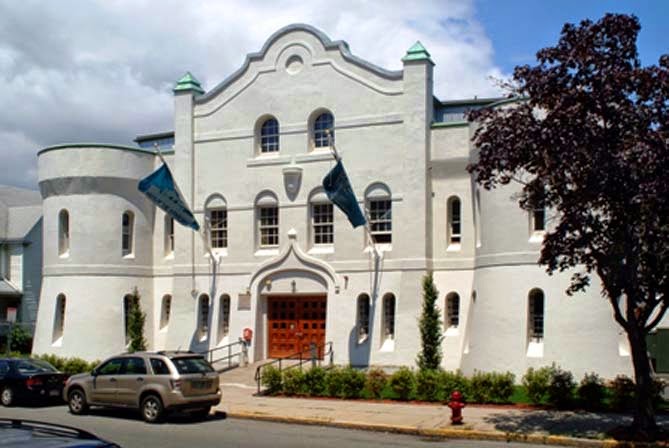
Courtesy of Shabunawaz Photography © 2010 ( Picture first appeared in Oddball Magazine)


Boston 1978-83. Stream of consciousness--portrait of an artist as a young poseur.


By Doug Holder.


The picture above is of a one time rooming house on Newbury Street ( 271) which I was a denizen of from (1978-1983).


I lived in a room on the top floor (38/week), bathroom down the hall-- a stairway to the roof, cockroaches--above Davio's Rest. I remember I worked at the "Fatted Calf" in Copley Square as a short order cook, and sold the Globe over the phone in Cambridge. Used to frequent the Exeter Theatre down the block-- Marx Brothers, Rocky Horror--chanting at midnight--ate at Guild's drugstore across from the Lenox Hotel, Ethel, the counter-woman, continuous narrative of her rotten kids at the Old Colony project in Southie... I also was an asst. manager at Big L Discount Stores for a stint-- health and beauty aids--can you believe it?...taught in the South End at Dr. Solomon Carter Mental Health Center--DYS and DSS Kids... field trips to Roxbury and the abandoned Jewish Temples...  home visits for the kids...the families smoking pot and doing lines..There was a restaurant I used to frequent, the Peter Pan on Beacon Street--big cafeteria style food, poetry readings, Jim and I sat near the steam table, our words floated on the mist of steamed cabbage-- and I was habitually at the Kebab and Curry right down the block...sitar and sag . I used to see Richard Yates  (Revolutionary Road")  a drunken shamble down the block, and I had the same Chinese laundry ( I always lost my ticket..the Chinese guy was irate ("Why you lose ticket!!") as the late radio personality David Brudnoy--loved his show--his pockmarked and intelligent face. I remember ... working as a clerk at the corner of Newbury and Beacon Street--  (Sunny Corner Farms) "The Cars" used to come in there regularly,  Rick so sky high..fingering a Twinkie.. also remember meeting Gildna Radner, Barney Frank rumpled and in a rush, and Howard Zinn,--( tall, a radical patrician) on the night shift. And beers after work at Frankenstein's. My boss--a fat Irish man called me a dirty kike regularly after he had a few...nice to me the next day... I remember the ancient gay security guard  (Maynard) who used to come in to chat--and always told me of stories of how young men were enamored with him-- oh but he maintained his purity--and yes the "toothless whore" who told me she only gives "head" to her "man" her point of honor. I remember during a snow storm I gave shelter to the street icon " Mr. Butch" and almost left him there overnight...Oh yes the Victor Hugo bookshop--what a joint-- cloistered myself with the used and rare..and the Newbury Steakhouse--remember the chef--, black dude, a real card--dirty jokes and hard-earned wisdom--we used to shoot the shit... I even had a sort of girlfriend--well--I later learned she was community property--if you know what I mean--I remember sitting on the stoop of my brownstone on a hot summer night, and people would stop and chat and shoot the summer breeze--,I remember being dead drunk and asking the drunks sleeping on the grates of the Boston Public Library what the meaning of life was...They told me to f-off. I remember the thick hash and eggs I had every morning for breakfast-- how the eggs would bleed every morning on that mound--and Malaba--the Zimbabwe - man on the night shift at McLean -- rasping in his Louis Armstrong voice--called it hashish browns -would be dead if I continued that habit. I remember writing in my furnished room--with my hot plate and thinking I was a Beat poet or something--mice scurrying by--my father told me" get the hell out of there," My mother joined in " That's the life style they lead, Larry..."  Hordes of us made pilgrimages to be with the rodents and roaches.. remember all night poker games with the service bartender, who worked at the Hilton. He was going back to U/Mass for years to finish his degree.. for the past 5 years...


 Part 2

 Oh--that distinct flushed out smell of Father's Five--tattooed- Hell's Angels, ready to bounce you at the door--the Citgo sign flashing in the canyon of Kenmore Square...direction, an elixir for your fog--vinyls at Loony Tunes--the old ladies in Coolidge Corner who brought you their dead husbands' shirts when you manned the counter--"this should fit you they crooned--"-and you would be a walking monument to the deceased. Cutting through the alleys in the Back Bay-- a buffet in the trash bins for the down and out--they delicately picked at the remains of the day--sewage and rot behind a tony shop-- it was always Doomsday in the Commons--street preachers at a clearance sale---street singers--sing for change and begged for it--the old Italian guy who yelled at you: "Hey kid--ripe tomatoes--bring some for ya tomato"--laughing--the stub of a cigar shaking outside his mouth... the Mass. ave bridge gave your life a horizon--open space from the small furnished room-- a city on a hill--Buzzy's roast-beef--in front of the Charles Street Jail ---a knish--delish--hotdog , --  oh,red phallus of beef, melts in my teeth-- .  Karen--the Jewish girl in the North End--you lived and learned to love and leave--Caruso music and the couple that had operatic fights in sync...
Her last words before she threw you out "I can't stand all this eating." Smell of bread baking all night--corpulent men outside the social club--called you twinkle toes, as you jogged by with chicken legs.  Your friend-- a clerk--dating a dwarf--an adjunct at B.C.--American Studies--small love affair--


Part 3

Lived on Park Drive--sounds fancy--  but overlooked  the subway tracks and the vast Sears warehouse-- the roar of the subway, the gray, looming Sears trucks in the distance--the trickle of the Muddy River--My window open--forgot I was nude, catcalls from the subway platform at my flabby body--bloated from the 11 to 7 shift, sitting watching the restraints-- on patients-- rise and fall slightly with their sedated breath--so many chests inflated, deflated...defeated. The croissants from the Savoy Baker in Audbon Circle were flaky concessions, the dark beers and dark cavernous bar at Brown's my balm. And the elevated tracks on Harrison avenue--elevated me--I was a transcendent blur crosstown... the Dudley Bus idling near the vacant lot, rats as big as cats foraging near a fence. Sometimes I met her at the Nickelodeon,...was it the Kiss of the Spiderman...? Held her hand...traced it the way I would her body later in her studio-- a rail thin graphic artist from Providence--she wrote me beautiful letters, that made me swoon in my room...


Part 4

The Greyhound Station was near a RockaBilly bar--the flashing, seductive light of the Playboy Club, hawked long legs and short resumes--there I weaved my way to the carnality of the Combat Zone--down La Grange Street, first stopping by Hand the Hatter, an avuncular old man--some fish--some fish out of order--in the midst of all this--presided over blocked, buffed and august fedoras--the kind my father wore, his heels pounding the floor in Penn Station.  And the whore in the bar said " Give this kid a glass of milk." And all my street-wise posturing melted with these succinct words--not a boilermaker man but a milk boy.

In the old wing of the Boston Public Library Bacchante and Baby met me--lifting her child with joy--I wondered if my mother ever did that with me? A bust of Henry James stared at me in Bates Hall, as I made my way to the Periodical Room--scrolls of newspapers-- old men--half-glasses, canes, wondering why that man was praying over an Anchorage Times--the room smelled like sweat, vaguely urinous--reading a rag-- a waiting room for death...


Part 5
I met her at a school for the retarded- a working class girl--post Judge Tauro--we treated retarded women--trying to stop them from slapping feces on their clothes and ours--chaperoning them at a Fellini-like dance, men and women, with gnarled hands, twisted legs, spittle-- drooling from the sides of their mouths, brushing their cheeks. But they smiled, amidst it all--oh yes--we all need love--we all need intimacy--I told myself--even when they threw food in my face. Her name I forgot--she took me to her parents home in Malden--and being the snot I was--I felt superior--but I loved the way her tight body fell into mine when we danced, intoxicated with her perfume--loving her ful,l lipstick-red lips-her tough but girlish accent. We danced at  the VFW hall-- me with patched sport coat, and unruly, bohemian beard, Italian union men looking at me like I was a strange bird--heard "faggot" under their breath. She drifted away--she said she couldn't understand me--nor could I...


Part 6
Early in the morning -- I heard the retired civil servant..a pensioner with stained undershirt and plaid boxers--coughing up phlegm through the thin walls. " How are you, me boy?"--he greeted me in the morning--both of us jockeying for the head down the hall. Then the fire alarm--a gas main break-- out in the street--explosions traversed Newbury Street, I ran down the stairs in my Blue corduroy sports jacket--a slightly irregular affair--from the depths of Filene's basement ...padded shoulders to bolster my narrow shoulders and frail ego-- a waxed mustached... (The guys in the real estate office used to crack "Hello Dali" when I passed by the office.) I made my way down the winding stair case( the spinster on the second floor opened the door a crack--she knew she would be flushed out)--me with a red scarf around my skinny neck--like a poor man's ascot--Kirby Perkins, the newsman from the scene--I heard say from the side of his mouth to the cameraman:" Look at this fuckin character." So oblivious to my absurdity--a beret on my already thinning hair-- a rakish angel--I could be a posturing mannequin in one of the shop windows--central casting--clichéd young Beatnik...


Part 7
 Copley Square-- Midnight  slipped into Ken's -- a Jackie Gleasonish fat man--the manager--stationed by the rotisserie chickens-- a chorus line of  spread legs, breasts,  melting flesh, wings posturing on their plump hips--wondering which one would I choose?  A dishwasher emerged, effeminate man, dirty apron, a cigarette in a holder, long expressive hands, wearing an eye patch... drag queens in the men's room--at the counter on the first floor-- a waitress--not long on patience--piped " What's it going to be, hon?" Actors --off from a gig at the Colonial , gesturing to each other dramatically at the booths-- a few years before--I was a dishwasher here--I was chosen from a lineup of world-weary men--"you, you, and you"  at 5PM--peering at all this through stacks of dishes-- all this would be mine one day-- a late night character--laughing over corn beef and chopped liver on dark rye--with poets and writers, after a day of writing--joking like Dorothy Parker, round table...my Algonquin Hotel. The men I worked with I knew would reappear again-- even then taking mental notes--trying to construct a narrative of the chaos of my life. 

Part 8
The long days of unemployment. At the Paris Theatre--  midweek matinees, mad housewives pleasuring themselves with milk duds--the cliche of the trench coated men--mumbling into their sleeves...but that lovely, envelope of dark--perhaps a first run Woody Allen--the broad cityscape...served up with King Oliver or Gershwin...things seemed to make sense.  My life, maybe--at one time, will have a similar symphony. Later-- below in the Boylston Street station-- a graveyard of old trolleys-- a panorama of orange rust. I was a strap-hanger then--sacrificing my seat for an old gent--my strange dance--a bump and grind--a transit Tango--with the other passengers--eyes averted--our forced intimacy when the train stopped suddenly-- my collision with a buxom blonde--  Late at night-- walking through the Fens to Park Drive --a residue from the Ramrod Room--men having trysts behind the trees--fertilizing the community garden with their seed....before the plague.. 

Part 9
First night on the psychiatric ward--he called me his finest creation--I was responsible--for the thunder and rain outside--the snapshots of light that popped at the windows--checks on the quiet rooms--museum windows of mental illness--peep shows --all those pink papers--the legal confetti that led them here...A woman took drags on her cigarette-- hollow and sunken chest filled-- a woman of substance until she exhaled--I remember she once grabbed a beautiful young male attendant--squeezing his body close to her--as if she was trying to capture something--his youth--the shock of blonde hair...his strong, undefeated body was now in her reach...an old Boston Brahmin, haughty and insane asked me if there were cockroaches on the unit...  I said "No"  "Good she replied, " You must treat them elsewhere." She insisted I was the young researcher from the Panamanian League on Newbury Street--and the young woman ran from her room in the nude, we danced with the beautiful sprite at 3AM-- and she did her swan song, now supine, sedated--restraints. And I talked with a young man--who said he had a correspondence with Allen Ginsberg--I have seen the best minds of my generation destroyed by madness....

Part10
I taught Black History/in the South End/Solomon Carter Fuller Mental Health Center. A Jewish boy from Long Island--they called me "homey" --I thought "homely." They said my sorry, sagging ass looked like it had a ton of bricks resting on it--I never-thought about this--I made clandestine trips to the men's room, with a hand mirror to check on my ass--they were right. We took them to the pool on the lower floor--one boy swam with one finger in his ear--a phone conversation with the voices in his head--they were pleasant--the boy had a wild, resplendent smile. Walking down Harrison Ave.  Past Chico's Bodega and the usual drunk sprawled out with Boone's Farm or Muscatel, down past the Shanty Lounge--had dinner at the Asmara--with my fellow teacher--Tesfay-- large Ethiopian flat breads, with exotic droppings of meat and vegetables-he spoke of the revolution--handsome professorial beard--soft spoken, seemed to ponder each word I said--a minister now--back in Africa. 

Part 11
It must have been near the Milner Hotel, an old fleabag--sro at the time--and I was found out by an old black gent--watched me as I passed--I heard the guttural laugh--the slap of the knee--he knew what my sorry ass was up to--how I made that fuckin' mole hill into a mountain--and save my chicken shit walk--the head-tilting attitude--for someone who hasn't it seen it before and has time to give a good God damn. And I remember Chinatown--those late night meals at the Ying-Ying--the staccato chatter of the patrons-- the roast ducks in the windows dripped seductively to me, the chow fun, greasy dollops of ducks, swimming in a broth, thick with noodles,staring at the flashing neon outside on the rain slicked street--I felt I was in an episode of the Twilight Zone, Rod Sterling introducing me: " Have if you will, one Doug Holder... "

Part 12
Double features at the Harvard Square Cinema--hot day--hot movie "Last Tango in Paris"  Brando didn't believe in names--sex with a young Parisian without the brand--and to die on a balcony with Paris as a backdrop--that's the way to go I thought. And where are you Frank Cardullo?--Harvard Square turns its lonely eyes to you--holding court in the back of the Wursthaus, with the cops, merchants, pols, big cigar in the face of a small, mustachioed man. At the "Tasty" the counterman presided over a greasy grill...called me "Smiley" because of my perpetual frown. He delivered the dogs on a square bun--usually with a cornball pun.... The Harvard refugees at the Au Bon Pain--a community of expatriates--expelled from the academy -- chess players--the pressing issues of today over a croissant...as that intense crowd passed by--the geniuses--  homeless,  buskers,  the  ne'er-do-well. -well--with something to sell...the timeless raven--haired girl --peasant skirt--clasp of books-- the Babble of this Babel....


Part 13

Neisner's...made my way to the Bromfield St. entrance--slopping up my corn chowder with cornbread..then down to Barnes and Noble. Glanced at a book--interesting cover  --"On the Road" some guy named Kerouac. Then that rush--the possibility I could hit the same road--leave tracks--leave the tendrils of straitlaced suburban roots--the voice that pleaded for freedom--caged by conformity. I was an addict  --- injecting myself with Dharma Bums, Town and Country--Allen Ginsberg's -pubic, gray rabbinical beard--sporting a Burroughs Fedora--habituating the Cafe Tangiers in Harvard Square--leaving Beat Books on the counter of the grocery store I worked in Brookline Village--hoping to provoke a conversation with a customer.
Wrote a stream "of self consciousness"--in my journals-- posturing unapologetic-- as if I was admitted into the Cabal--still not venturing much past Kenmore Square...


Part 14


Jack’s Joke Shop--near the Common--your first Dick Nixon Mass-- all jowls, pointed nose crowned with hate and Watergate -- and the subversive whoopee cushion--slip it on a seat--and her the old fart clamoring to get up..Oh and the clock/no sex until six--and its lovely face of carnality--a circle of sixes. And long before you were a Glaucoma suspect--your eyes could pop from your socket--riding on small, slinky springs.  Still a boy--laughing at toys..not that far from the boyhood joys.

Part 15

Working at Rexall Drugs on Boylston Street during the Busing Crisis-- blushing when they asked for condoms--the mad man in a blue blazer/ coat of arms/ bulging eyes/shock of dyed blonde hair/ rushing in out/always looking like he stuck his spotted hand in a socket... smiling at, an then quickly retreating-- a long distance flirtation with the cute 18 year girl behind the soda fountain--thought I was in a Thornton Wilder play. I heard the owner say: " It is the rich, Jewish liberals from the suburbs that are causing this crisis" And everything my Bronx. shtetl, pale of settlement  ( oh how loved her kishkas)  grandma said about the "goys" were true--"  "Well, the Catholic Church is rich too...," I said. And fired the next day--said I was rude to a customer... a lesson in life...


Part 16


Portrait of an artist as a young poseur: Brahmin Woman Descending.....

Bay State Road-- the old Brahmin woman/ 80 degree early spring--shivering in her heavy winter coat-- -- a cripple, down the Brownstone steps--grabbing the hand of a black attendant-- now outside her rarefied cocoon --young Boston University students--preening like young animals in the sun--Oh where are you Dutch Elms?" she thinks--"Wiped out by some unruly cancer, no doubt!"-- Your chalk white face-like a death mask--a Frisbee barely misses your clenched jaw--on such a warm day--cold shock of comprehension...


Part 17

 Such an elite trot down Commonwealth Avenue/measured/patrician bearing/ as if trying to the Catch the Green Line/without losing composure/ covering the same ground/as horses of lesser lineage/did for years. Looking at our framed faces in the subway car/ a museum of surprise/ spotting the Irish chambermaids, the Jewish peddlers, the black laborers/ it must think " So hard to get good domestics." And those police/ like persistent flies/ his tail swipes/dismissively at them....


Portrait of an artist as a young poseur: A Moose in Boston.


Tuesday, December 16, 2014

A HISTORY OF HOWARD JOHNSON’S How a Massachusetts Soda Fountain Became an American Icon By Anthony Mitchell Sammarco


A HISTORY OF HOWARD JOHNSON’S
How a Massachusetts Soda Fountain
Became an American Icon
By Anthony Mitchell Sammarco
Published by American Palate
Division of The History Press
Charleston SC 2013

Review by Tom Miller

If you recall as I do traveling across the Pennsylvania Turnpike in the 1950s as an impatient kid in the backseat of the family sedan anticipating the Orange tiled roof that housed the Howard Johnson restaurant and its 28 flavors of the best ice cream in the world, then you may find this book a pleasant but light diversion down memory lane.  Mr. Sammarco is a local Boston historian who has published a number of books regarding histories of Boston and its surrounds and he takes on this task as one of his own as the Howard Johnson story all began in the southern suburbs of Boston.

This book is not the definitive study of the rise and eventual decline of the rag to riches story that it could be.  Rather is a more superficial treatment of a young entrepreneur who turned a corner drugstore that he purchased with a $500 loan into a nationwide chain of restaurants and motor lodges.  Nor does it detail how that empire declined into irrelevance as a result of shortsighted decisions by second generation owners who eventually sold it.  Nor of the subsequent conglomerate entities who stripped it of its assets and essentially abandoned it to the rather large pile of misused businesses that clutter the landscape of the history of American businesses that came and went in the twentieth century.  The book alludes to all of this but really only in glimpses. 

What Mr. Sammarco does in the book is present a basic history of who, what, where and when in his Introduction and then tries to flesh it out in the chapters which come off more as a series of essays as opposed to a coherent start to finish story that one might expect in a more detailed study.  On this nostalgic journey we see flashes of the Howard Johnson’s ancestors, particularly his father, and some surface understanding of Howard’s personality but we never come to know him nor anyone else as a person.  Rather the author gives us brief accounts of how the first restaurant and how the first franchised restaurant came into existence and then in a rather broad brush approach relates the expansion into a chain of restaurants and motor lodges. 

Some of the value in this book is the author’s developing of historical background information for a few of the locales mentioned.  Perhaps the most interesting is the narrative of the events and rationale for the New York’s World Fair of 1939-40 and Mr. Johnson’s partnership with Miss Lydia Pinkham Gove in the development and success of the Howard Johnson restaurant on Queens Boulevard in Rego Park which was located right on the main road leading to the Fair.  Additionally Mr. Sammato includes a number of photographs, artists renderings of restaurants and other ephemera which will no doubt stir favorable memories.

He also includes a chapter about employees and associates which obviously draws from what must have been a newsletter or such intended for internal consumption within the Howard Johnson family.  And he briefly discusses the more or less spin off businesses, the Red Coach Grill and the Ground Round restaurants that were started by Howard Johnson’s but he offers little regarding the rationale for them nor much about their successes or failures.

There is much in this book that makes it worthwhile for an afternoon read for someone who would like to invoke some pleasant memories of what was one of the first national chains of franchised restaurants and motor lodges that set the standard for the many who would follow and to gain some insights into its initial formation and growth.  For someone who would like to delve more deeply into what is truly a fascinating story this book provides a nice beginning overview.

Saturday, December 13, 2014

Review of Tempo Maps by Daniel Hales


Review of Tempo Maps by Daniel Hales

Alice Weiss

This six inch square poetry book with a matte photo of high branches against a tan sky on the cover, a CD in a plastic envelope on the inside cover and half the book being upside down from the other half would be distractingly gimmicky if it weren’t for the inventiveness and musicality of the poems: The title, Tempo Maps, aptly captures the themes: music and the mapping of the heart. The “map” is takes form and focus from the house on Miner Street in Greenwood, Mass, although the title of many of the poems use the homonym, “Minor” and the play between the key and the digger resonates throughout the poems.
These are the poems of a composer, synesthetic and sensual, witty: the first poem,
“: minor symphony (snow)” imagines the snow just so, and the chunking and rasping and for that matter the exercise bring the poet and the lover into, well, symphony.

No one doubts snow’s musical ambitions
We begin at opposite ends of it
a raw rhythmic chunking

you be the broken garage door
me where our drive colludes with Miner Street

a metal on concrete rasping on
until the music left is us
pushing the last of it into
each other’s shovels.

In a later poem, “lightning,” “a squeaky chair” lets him “tint the evening sky.” He is a certain fragrance,” the kind a man has who sucks up ladybugs then opens the filter to see them cocooned in litter. . .” This is a guy who does the vacuuming and turns the collection of dirt balls into song. In “more thaw” Hales turns meditative and aphoristic:

The sky is one, another since the death. Between sex and those. The ice
melts and the river grunts so much. Love is air and electricity every day.
This is just.

I really love “This is just.” Of course you get the declarative quality as if the speaker is simply signing off on his judgment. On the other hand, despite the period, the reader is left with the question, just, what? In “minor symphony (keys)” the wit of “the keys on the left passenger side
tire,” is balanced by a “bassline below it all,”and a refusal to consider his mother’s worry for “our immortal souls. . . Many prickly weeds daring to pull whole special of radioactive bugs endeavor to bite the hero.”

Other delights: “you can tell I’m a goy because I like the way matzo tastes. . .You can tell I love you because it’s raining again and everything is brushstrokes.” in a poem titled “everything.” In a poem entitled ‘wicks” the lovers find an eyelash in their food. “Maybe the cook was crying about something out back, I say and begin looking for silvery drops.

In “winding,” a kind of elegy for his mother, wind “says it’s mapping the air, it’s making contours where sky starts finding which branches have decided they’re ready to fall.”

Tempo Map has many pleasures but I think the chief is the wit of its disjunction and flow of language and image the poet manages despite it.

Thursday, December 11, 2014

SCRATCH PEGASIS by Stephen Kessler


SCRATCH PEGASIS by Stephen Kessler  Swan Scythe Press, 2013


We live in a world that dismisses older people and is focused on the moment with Iphones, Ipods and more. But this wonderful book is all about time, honoring the years we accumulate with grace, and where memories rise up from his poems with all of their poignancy, love and humor. Stephen Kessler also finds wonder in our everyday lives and as we read through his book, we meet people with their charm and as well as with their flaws who become part of our own lives. To read this book is to awaken to all that surrounds us and to move beyond ourselves. 

In the poem Thrift Shop the stories of the owners of what was left after their deaths come alive and envelope us. 

 It came and it went
and here’s the evidence,
endless shelves stretching deathlessly,
knitting cities with this network of used suitcases
and scratched furniture where families
ate and sat, travelers packed their stuff,
old women read books and lovers slept entangled.

Another poem that ponders time is The Spanish Tile Table where he reflects on his mother and her lover’s death, and on our impermanence, “Yet, I can touch the table/and feel the painterly light,/ its perfect warmth spilling/ into my lap this afternoon.”

We live in a society that is fearful of death and aging as if we all didn’t age and die. Yet Stephen Kessler writes about aging and what it feels like to lose friends, and become old. His poem Mal de Terre is a quip of the French word mal de mer or seasickness as he feels his world move beneath him and the passing years seem to drown him. However many of his poems herald the imponderable way that loss and eternity co-exist and how memories have their own lives and persist.

This amazing book shows us the many ways of considering time. In Skateboard Sonnet, he watches young people whiz by “as I can see them through my own quick past,/It was on days like this, under such a sky,/ my summer flowered without my knowing how/ fleeting it was…..” 

In the section of Kessler’s book entitled Teachers, we learn that what we gain in our long years is understanding of our own life and that of so many others’, an appreciation of experiences that have several seemingly incompatible identities. The poem William Wilson, about a man who helped in so many ways in his home, was a soldier in World War II, and whom he revered, also had a long criminal record. In many of the poems in this section, Kessler ponders the multiples of our being, that our paths are not straight as we would like but meander in different directions. One of my favorite poems in this section is Jesus Chavarria who lectures his students on the many difficulties of life, to young Americans who are oblivious of the harsh lives in other countries, concluding “so, there will be no talking in this class.”  Kessler has a wonderful sense of humor. I remember a similar lecture from a Spanish professor I had who talked to us as if we were ignorant of the problems in this world and indeed we were. 

In the section called Wild Men the poem Mustafa reveals how a man who tried to befriend him was really a thief.  A most touching poem, My Best Friend, celebrates all the miseries of his friend’s bout with cancer, troubles at work, lack of money and how instead of wanting pity, he reached out and helped everyone he could. This poem once again breaks a silence in our conversations and in our social media. The ill are not invisible, are not weak, pitiful, but emotionally strong. Their suffering has brought them to new heights of understanding and an ability to reach out to all those in need. 

The last section of the book Scratch Pegasus presents us with the holiness and eternity of art. Poem I Can’t Decipher on a Stone brings us the calligraphy on that smooth stone quarried/ from an ancient mountain/….to speak in sweet ambiguities/ swirls of darkness moving/ through fields of daylight caught/ in landscapes concise enough/  to fill  your palm and be/held in your ignorant fingers./  For a man who has written almost 20 books of poetry, prose and amazing translations of Latin American as well as Spanish poets,  Kessler is more than humble. He writes about Van Gogh, compares that painter’s life with the dailiness around him including a baseball game, and concludes “That Vincent’s tears will outlast the winner’s fame.” He also reflects on the transient next to what remains, writing about the artist Edward Hopper:/ the artist’s truth transcending his success./ reminding us to honor the artists’ exceptional visions. 

This wonderful book is not only joy to read with its unique images that touch our lives, but is a lesson on how to live not in pursuit of fame but rather with the joy of relating to others on their own terms and seeing the world with clear eyes. 

By Marguerite Guzman Bouvard

Monday, December 08, 2014

The Poem as Song in Ernest Hilbert’s second book of sonnets


Ernest Hilbert


The Poem as Song in Ernest Hilbert’s second book of sonnets

AOYOTGE (ALL OF YOU ON THE GOOD EARTH)

by Michael Todd Steffen

Ernest Hilbert displays craftiness in his signature rime scheme with the most rewritten form in all of English poetry, prompting categorization beside the Petrarchan and the English sonnets; the Hilbert sonnet: ABC ABC DEF DEF GG. Avoiding bracket or alternating rime schemes in the traditional octet of the sonnets prevents our easy detection of the scheme, persuading our allowance for the language’s unaffectedness. It is not obviously predicated by the echo-chamber. There is much in Hilbert’s specific word choice relating detail caught by a good eye for observation as well as literary and cultural reference in the poems to convince us that he writes both from experience and from an impressively educated memory, as is evident in the poem titled ‘Times Literary Supplement’:

    We sifted through his room at the museum,
    Opened it like a tomb; sorted, emptied,
    Claimed its small treasures: coins, copper sculptures,
    Maps of an Augustan mausoleum,
    Tripods, stalled watches, stiff river reed,
    Nicked reading glasses, vivid fishing lures.
    Stubbornly, the TLS still came,
    Week after week, as the excavation
    Ended and boxes thumped into the trash,
    Reports of books newly born, wild or tame,
    Jacketed, crated, and shipped by the ton.
    Reviewers plough on, as careers rise and crash—
    Few are prized, most pulped, conveyed to landfills,
    Compacted like coal, toppled timber, great fossils.


Page to page, however, some resistance by the poet to the worsening situations of the experiences giving rise to his poems, some notion of transformation, how the dilemma inspiring these lines might evolve, struck me as missing. It is as though Hilbert makes himself the object of a determined victimization—also betraying a good-natured virtue of acceptance, at moments to the point of resignation, a feeling conveyed by his willing access to a harsher vernacular:

    The city is cat piss and dog shit. It stinks,
    And the humid air smells like mold. I lie in bed,
    Too hot to move, slick with sweat, wait for dark.
    Blue flies eddy over the cluttered sink.
    I’m broke. The change dish is exhausted.
    A Western Union stub is my bookmark…

On one hand, in the midst of the persistence of memory, designating a love of bygone times as Odysseus’s nursing sorceress Kalypso, the past can only be the past, perhaps even consigned to myth, beyond our control or effort to change. The poem’s purpose then becomes the song of that loss, its melody on the heartstrings, imagined by Hilbert in the second half of the sonnet as a vaporous, elusive, perhaps even delusional memory:

    You never knew me. You’re in a Victorian
    Sea home, slicing, to taste, a sweet chilled peach,
    As an ocean wind lifts your long light hair.
    Your songs are old, your dresses empyrean.
    The view is vast over the empty beach.
    You pause, as long as you like on the stair.
    Memories sink and compel me to bear
    One last thought: that you were never there.

Form (we have all come across this definition) is the fulfillment of expectations proposed. Persevering with the sonnet, while evoking the hero-wanderer of epic, Hilbert reserves his promise to sing the songs of, as Seamus Heaney phrased it, “single things,” of the poet’s dilemma as it is, without agonizing much in the modal auxiliaries of ‘may’, ‘might’ or ‘should’, without elaborating a story or theme beyond focal situations. He is unbothered by the potential influence of his example—

        …I’m struggling to play a record,
    But my fingers quiver and the needle
    Shrieks like scraped chalk through the speakers. I turn
    It up, and up, and up. I’m lit like a war
    With pills, lines, so many drinks I can’t feel.
    I find two women shooting heroin
    In my bed…

—without sparing us the consequences of this abandon:

        I’m coming up so hard I puke.
    O Christ the summer is stunned with lilacs!
    Someone gets kicked in the nose…

By now anonymous readers or Puritans lingering in these pages may be just ready to close them and set Hilbert back on the shelf. Yet part of the punch of these poems relies on their innocent audacity, evocative of a prior generation that made its mark during Vietnam trapped in Cold War politics , that rebellion of youth fueled by social protest and ‘Drugs, Sex and Rock ’n’ Roll’. The movement came to its summit and tipping point in 1968, which Hilbert in the preface to this book calls “the annus horribilus, a year that saw tragedy and civil unrest around the globe.” This was also the year when

the Apollo 8 space mission successfully circumnavigated Earth’s moon…
On Christmas Eve, the crew observed the Earth rising for the first time over
the moon’s horizon. Commander Frank Borman later described the Earth-rise
as “the most beautiful, heart-catching sight of my life, one that sent a torrent
of nostalgia, of sheer homesickness, surging through me.” He signed off:
“Good night, good luck, a Merry Christmas, and God bless all of you—
all of you on the good Earth.”

So with the title and the prefatory note on its origin, we might read the sonnets of AOYOTGE as a captain’s log of Hilbert’s personal moon-orbit voyage, and the poems make recognizable allusions to Homer’s hero of The Odyssey, whose correlative in the culture of the late 60s would be Kubrick’s
‘2001: A Space Odyssey’. The decadence of Hilbert’s content (the drugs and booze and women shooting heroin in his bed) though not astonishing to our culture, does run against a rather prominent Restoration current these days advocating recovery, medical and health awareness, moderation,
No Smoking signs and security cameras everywhere you turn. Awareness of or reference to this new sense of caution and prudence surface not in the least in the sonnets, which keeps the purpose of the poet’s rebellion tacit and subconsciously more poignant and convincing. Out and out, meanwhile, Hilbert echoing Larkin is going to argue the anti-heroic argument of the failure of ideals to satisfy us:

    Why must we love? Perhaps as Plato thought,
    Zeus hacked jealous man into two parts,
    So we struggle, our whole lives, to reunite;
    Or Shakespeare’s lovers—struck through with stars, caught
    In a love that promises doom—who find their hearts
    Seared like coals and drown them in endless night.
    But this is too much for us! We are not
    Useful myths, nor mere characters undone
    On a stage; yet our two strengths are as great
    As these and other stories we are taught.

A few weeks back (on Thursday, November 13) I had the good fortune of making it to a reading at the Cambridge Public Library featuring Ernest Hilbert and Daniel Tobin, another poet who is making his difference in our time by writing in recognizably poetic language (lines seasoned with symbolic amplitude, scansion, and deliberate prosody, even sometime rime) while maintaining a probable contemporary idiom. Hilbert especially grabbed my attention that evening, because this was my first encounter with him, yet also because he is an excellent live reader, mindful of delivery, projecting his voice in units of sense and breath, in the pauses of his lines, lines I could not help but think were written with their vocal presentation in mind. It was not surprising for me to discover, in the Biographical Note to his new book, that along with poetry, Hilbert “supplies libretti and song texts for contemporary composers Stella Sung, Daniel Felsenfeld, and Christopher LaRosa.”

Back on the page, Hilbert’s poems are good enough to choose virtues that run somewhat against the grain of present society. He portrays a remarkably witty and cool character on the downhill slide thrust upon our humanity by heartbreak and grief. At the same time, the presence of mind demonstrated by the composition of the poems and of Hilbert’s physical presence as a reader, affable and measured, reassure us of his survival, aplomb and fruition from that time of fire and rain.


AOYOTGE
ALL OF YOU ON THE GOOD EARTH
poems by Ernest Hilbert
is available for $16.95
from Red Hen Press
in Pasadena, California
www.redhen.org

Other books by Ernest Hilbert include
‘Sixty Sonnets’ and ‘Aim Your Arrows at the Sun’

Tuesday, December 02, 2014

Mary: A Life In Verse By Patricia Monaghan


Mary: A Life In Verse
By Patricia Monaghan
Dos Madres Press
Loveland, Ohio
ISBN: 978-1-939929-08-2
73 Pages

Review by Dennis Daly

Spring sparkled in every year with Mary’s especial procession around Hawthorne Boulevard in my hometown of Salem Massachusetts, culminating in this mythical woman’s crowning as “Queen of the Angels, Queen of the May.” As a prelude to summer these festivities offered a fresh air escape from glum classrooms and prickly nuns. Even Father McCarthy, our pastor, emerging from one of his deep seasonal depressions, flickered an odd strangled grin here and there. Our school, after all, was named St. Mary’s Grammar School, and our church The Immaculate Conception. The Roman Catholic religion and our grade school education seemed only appendixes to a powerful Marian cult/ subculture redolent of feminine fertility and revolution.

Patricia Monaghan’s posthumous collection of poems, Mary: A Life In Verse, humanizes the mother of Jesus Christ in provocative and very engaging ways. She takes the awe and ceremony (May processions included) that many of her fellow religionists were brought up with and grounds them in the universality of ordinary life. Monghan’s Mary experiences life as a young Jewish peasant woman in Galilea. She carries all the sensitivities of her gender, her adolescence, and her place in time. Certainly there is a bit of naiveté in Monaghan’s Mary, but opportunity and ambition also drive her. In the collection’s opening poem, The Annunciation, Monaghan explains,

… there was a moment when I
hesitated. I remember a wild desire
to be left alone, to be obscure again
and safe—I wanted the angel to leave,

to find some other girl for his strange
invitation. I was frightened. I heard
a sound like a fabric rending or
the tearing of flesh or a great tree

falling. And yet: I answered.
I leaned towards the angel
and, with a sound like wings,
the future was born in me.

These conflicting passions inherent in a young woman’s pride and sexuality give the poem its metaphorical underpinnings.

Early on in the book the poet spins out her own version of The Magnificat, the ancient Christian canticle in which Mary, now pregnant, details her transformative power to her cousin Elizabeth (also pregnant with John the Baptist). Mary’s faith or transcendent delusion magnifies and exalts her humble ordinariness into a subconscious (or perhaps, devotional) position of power. The poem entitled simply Magnificat puts it this way,

… greatest of all: there are times
when I am whole, when I dance
with each breath and each word,

when my consciousness dwells in all
my parts at once. When this happens,
I am earth, I am stars, I am incarnate god.

The poet intersperses many wonder filled and intriguing illustrations throughout the text. Henry Ossawa Tanner’s oil on canvas entitled The Annunciation absolutely hypnotizes, while an Old Woman from Tajikistan, a Steve Evans’ photograph, complements the airiness and timelessness of the verse composition. In addition Monaghan breaks up the continuity of free verse pieces with what amounts to prose poems. “Prose” does not do them justice since some of them truly soar poetically. Here is the opening of my favorite prose section,

I COULD HAVE BEEN ONE who suffers little joy,
little pain, one who redeems nothing, is guilty of nothing.
Except for that instant when I felt power spread through
My body.

It was in my flesh, not in my soul, that the miracle took
place. Life shone through my body. At the moment I
agreed, I embodied love and power. Rivers rose in flood
with my tears, the sea grew hot with my lust, the wind bat-
tered in fury when I raged.

I became the world. I had no doubts that this child was
intended by every power I knew.

Oh, angels toy with us so!

After the death of her son, Mary struggles with her grief and has, seemingly, lost her faith. She goes to the temple seeking comfort and understanding—perhaps. She finds rage. A well- dressed kohl-eyed woman laughs at Mary and mocks her to a companion. Mary responds in Monaghan’s poem The Rich Woman Despises My Tears with the hatred of all humanity. She says,

… My arm,
before my face, froze.

What would he
say to that woman,
to her companion?

He would say,
forgive, forgive,
they too are in pain.
They are small
and helpless. He
would say, forgive.
I say, may your
children die …

Mary does recover her faith, a faith that sorrow has changed profoundly. She understands the river of grace and the purpose of a conscience in a world of ignorance and cruelty. Her original naiveté she wills into a universal canniness, an all-seeing, but not quite religious, wisdom. Monaghan relates a bit of Mary’s spirit in her poem Alleluia. Here Mary shares a sublime moment,

… another gift came to me:
a man walked by, playing a flute.

It was late summer, and leaves
Had fallen from the palm
Beside the house, and one leaf

leapt up as he passed, leapt up
just as the melody piped sharply
higher, and held a high note,

and the sun winked at that moment,
from behind a cloud, and a sharp
scent of new figs filled the air,

and I was song, suddenly song,
I remembered in my deepest soul
something I  had always known:

that our only purpose is to live,
to be the eyes of god watching
this world…


The meek will inherit the earth, the son of Mary of Nazareth once proclaimed. Patricia Monaghan (named at birth Mary Patricia Monaghan) clearly agrees. Her book magnifies a simple naïve young woman into a goddess of secular goodness and the preternatural hope of mankind. Blessed be the legend of Mary. And blessed be the muse of Mary Patricia Monaghan. 

Saturday, November 29, 2014

" Youth Arts Arise" at the Somerville Arts Armory.


In the fall of 2014 Arts at the Armory launched a free arts education program for 11- to 19-year-olds called Youth Arts Arise.

This FREE program is a great opportunity the youth to  explore their creativity in a wide range of artistic mediums.

Workshop themes encourage self-exploration through investigation of the participants’ individual and cultural identity and exploration of other cultures, traditions, and diversity.

Youth ages 15-19 who are interested in pursuing a career in art will have an opportunity to become peer leaders and receive a stipend to assist the artist instructors on a rotating basis. Peer leadership will be an integral component of the program; it not only builds self-esteem in the older youth, but also creates role models for the younger participants.

Bridget Galway artist/arts educator, program coordinator will provide support for portfolio development for participants who want to submit to college art departments.

 Join us at the Armory on Monday, Dec. 22 from 6-8pm for the Fall Showcase: you can view all their work and celebrate their achievements!

Big thanks to The Boston Foundation for supporting Youth Arts Arise through a Vision Fund grant, Without  their support, it would be a shadow of what it is today, and what we hope to grow it to by the end of the year.

Arts at the Armory would also like to thank  Boulter Lumber, Somerville, Stanhope Framers in Union, The Beautiful Stuff project Somerville, and Rugg Road Paper for generously donating materials that supported various art projects and the showcase.

Also  to Whole Foods, Q’s Nuts, Shaw’s, Redbones, and JP Licks for generously donating refreshments for the showcase!

Current and Upcoming Youth Arts Arise Programs

This fall marked the beginning of our after-school workshops, and it has been a huge success! The classes have been running on Tuesdays from 3:30-5:00 pm, and the participants have been creating fantastic artwork. We are excited to announce the beginning of our Winter Semester registration! Winter workshops will run from January to March on Tuesdays and Wednesdays from 3:30-5:00pm. Tuesday and Wednesday workshops will be different, so you may register for one or both of those days. The deadline for winter registration is December 16. More information about registration can be found below.

Registration

Registration is per semester for all workshops. To view Youth Arts Arise program description go to www.artsatthearmory.org, click on “ Learn”. You can see the description of the program and Download a registration form there, or pick one up in person at 191 Highland Ave., Suite 1A, Somerville, MA. If you miss the deadline and still wish to register, contact us via phone or email.

To view the line-up of artistic workshops posted so far for the winter semester, go to the website and click on “Events”, then education, type  Youth Arts Arise in search box.

Friday, November 21, 2014

Elizabeth Gordon McKim: A Poet of the poem. A poet of the people.


Elizabeth Gordon McKim


Elizabeth McKim: A Poet of the poem. A poet of the people.

Interview by Doug Holder

Elizabeth Gordon  McKim is not just about getting her own work out there. A respected educator, poet and influential member of the Expressive Arts Movement, McKim engages the community, other artists, and students, so they too can realize their creative potential. As the poet, and McKim's partner Etheridge Knight said:" You must be a poet of the poem, and the people". McKim is the embodiment of this.

Elizabeth Gordon McKim has published five books of poetry, the latest being The Red Thread (Leapfrog Press). She is a teacher, performance poet, spoken word artist, and has been an adjunct professor for forty years in the department of Creative Arts in Learning at Lesley University. McKim is the poet laureate of the European Graduate School, and the Jazz Poet of Lynn where she lives, in a renovated shoe factory. She is included with four others in the new anthology, Wild Women of Lynn, published by Blaine Hebbel and The Ring of Bone Press.

I had the pleasure to interview her on my Somerville Community Access TV show Poet to Poet Writer to Writer.


Doug Holder: You were intimately connected with the famed prisoner poet and civil rights activist Etheridge Knight. Can you tell us about your life and times with him?

Elizabeth McKim: I knew him in the last decade of his life. He died in 1991. I met him through a poet in Worcester, Mass., Fran Quinn. We were both going down to work in the schools in Little Rock, Arkansas. It was in the late 70s. Fran thought we should stop in Memphis where he was living. He was married at the time to a woman from Worcester, Mass. And here, I heard him read his poetry. And that was very important for me because he was one of the best readers of poetry I have heard. I never got bored, even when I heard the same work over and over again. He had a major belief in the poet, the poem and the people. He reminded me never to forget your people when you are reading or they will forget you. When I teach children I tell them not to forget their people—speak up and speak out!

There were a lot of things that were connected with music that Etheridge knew about. At Goddard College, where I got my Maste'sr Degree, I learned so much about movement, breath and song. This went well with Etheridge and his work. He did have an amazing message for black men, but it really did spread out from there. The manuscript I am now working on now has several essays about him, interviews, and poems. I have a lot of his papers and eventually I plan to put them in a university archive. I did spend a year and half in Indianapolis where his family lived—it was a wonderful community of artists. Here I learned how community can be so important to making art. I learned how people inspire each other—painters with poets, etc…

Etheridge, when he was first in prison, at Michigan City—wrote his first book of poetry. He was published by the Broadside Press—a very important press for Black poets like Gwendolyn Brooks, Sonia Sanchez, etc…, all of whom were published there.

DH: You have been described as a pioneer of the Expressive Arts Movement. What is that movement exactly—as you understand it?

EM:  The Expressive Arts Movement, more or less started in Cambridge, Mass. at Lesley University. A man named Shawn McNiff , who was an expressive therapist at Danvers State was an instrumental figure here. He believed that language, paintings, movement, etc… all inform one another, especially working with the healthy side of people. Creativity is the important thing. They named discipline at Lesley “The Expressive Arts Therapy.” Antioch College in Ohio, and Goddard had small programs at that time, but now there are centers across the country and the world. Appalachia St. University has one, there is a center in Toronto, another fine one in San Diego—to name just a few. I always think of Allen Ginsberg’s, who said “ All I wanted to do was to get back to the body where I was born.” In some ways that’s what the expressive arts are all about. We now train students to get out in the community and work with conflict resolution in the community. They are in rehab centers, prisons, etc..

DH: Tell me about this organization “Troubadour” that you are involved with?

EM: It is a consortium of singer/songwriters, poets, writers, going out and working in the schools. They engage the students through different art forms. They work to increase literacy—they try to turn the kids on. We make partnerships with the schools, get funding etc…

DH: You are the Poet Laureate of the European Graduate School in Switzerland. What is that about?

EM: The people, who started this, were the people who started out at Lesley University. Folks like Paolo J. Knill, Steve Levine, and Sally Atkins. They started the school there. It is between Geneva and Zurich. We stay in an inn—and believe it not the innkeeper built the school for us. In addition we have a partnership with New York University. We help people work in the community with others. We have visiting artists, lectures—there is a PhD program—we even have a small school in South Korea.  We need all this in these times of deadening violence. The arts are crucial in all the different aspects of living. We teach compassion. We ask students to think about what’s like to be another person? And hopefully the other person will learn to ask what it is like to be in the “other's” shoes. It is important to think outside of yourself.

DH: Tell me about this “ Wild Women of Lynn” anthology you are involved with. How are you guys wild?


EM: Blaine Hebbel was a major force behind this. We are wild and mild. Inside every person who is creative, there is that wild, creative storm.


November 21,2014


All the leaves are gone
Away/ and gone to glitten
Where are my mittens?
Brilliant chilly-wind
Stirring my remembrances
On the way no where
Give the love...
The lasting pleasure.
Give it in full measure.
Find the fruit. Be at
The special spot. Beat the drum.
Be here. Be there. Be where?
Again and once again.
Bear it. Wear it. We are it!
What else do we have?
We do desire it!

--Elizabeth  Gordon  McKim


Thursday, November 20, 2014

Molly Lynn Watt's "On Wings of Song" flies high


Molly Lynn Watt's "On Wings of Song" flies high

 Review by Bert Stern

 To order go to  Wings of Song

 "On Wings of Song" ( Ibbetson Street Press) is a clear-eyed account of racial oppression in the US and of the people, black and white, who struggled to end it. What gives the book its special authenticity is the point of view, which is intimate – a positioning of the narrator’s eye gained by Watt’s own lifelong efforts in the struggle.

 While the book is historical, it is also lyrical. “Crayola World begins:

 Robin draws sky-blue arches
 burnt orange sun sepia earth sprouts
 maroon father strums raw-umber guitar
 bittersweet mother hold pink flower
 purple sister suck plum thumb.

 And it ends when the child-artist

 . . . picks up black
 draws herself in the center
 that’s me
 the most beautifulest.

 Bushels full of poems have been written about Billy Holiday, but Watt’s “Billy Holiday Sings “Strange Fruit” tops them all. It begins with a close-up picture of Billy herself, and ends, in an astonishing shift, with a first-hand account of an observer’s experience at a lynching.

 "On Wings of Song" is canonic. It restores for all of us the beating heart of an evolving conscience that may never be complete.

-- Bert Stern, author of Silk," "Steerage," and "Winter in China".

Monday, November 17, 2014

Franz Wright Reading Wednesday November 19th


Franz Wright Reading Wednesday November 19th

by Michael Todd Steffen, co-organizer of the Hastings Room Reading Series

This Wednesday, the 19th of November, at 7:00 pm Franz Wright will be reading in the Hastings Room at First Church Congregationalist, 11 Garden Street near the Harvard Square Sheraton Commander Hotel. Franz will be joined by Mary Buchinger-Bodwell and George Kalogeris. I believe this will be the first reading Wright has given in public for a some time. It’s going to be a special occasion, and gives me the space here to make some observations on his poetry.

One of the powerful virtues of Franz Wright’s poetry is its raw intelligence. Through his translations, references in his own poems and in interviews, he has impressed us with a wide-ranging and eclectic literary culture, while often expressing scorn for scholarship and convention, maybe partly for the sake of a mythos he has built about himself as a 21st century Romantic confronting the demons of child abuse, abandonment and addiction, leading his meditations anagogically to the themes of self-destruction and death, yet also to the therapy of speaking about these, recovery, and to a faith in and ultimate reliance on God and a life to come. These make for an interesting, distinctly American combination of derision for tradition and sophistication with a surrendering and humble faith in a redeeming God.

Wright has championed a bold, edgy, tell-all vernacular that warrants disregard for the second part of Emily Dickinson’s advice to tell all the truth (But tell it slant). His poems are edited (most notably in Walking to Martha’s Vineyard) less for content than for effects of counterpoint and silence.

In his 2013 collection F (Knopf), on the Christmas page, page 25, the poet comes to a statement of culmination echoing the subject of his meditation, mortality, an acknowledgment of an end itself:

    But I’ve said all that
    I had to say.
    In writing.
    I signed my name.
    It’s death’s move now.

It is a semantic notation in the music of acceptance of the inevitable: not that any of us are convinced that Franz Wright has exhausted his meaning or his means with poetry. Except to say that it’s okay with him in case.

The strophe is the second of four in a poem titled CRUMPLED-UP NOTE BLOWING AWAY, the title itself making an acronymic suggestion (C B A) of an order in reverse to its zero being, where the order starts back again.

The title also makes a poignant correlative image perhaps for how any of us can be made to feel on not so good a day: like a waded up piece of paper in the wind. Yet in our time of superabundant “pages” available and sent to us in every sort of binding, envelope or electronic mail, perhaps the note on the crumpled piece of paper we just happen to pick up and unfold, thanks to the unique path it has taken to get to us, becomes the most intimate, deliberate and meaningful scrap of reading we’ve had in a long time.

In a different way we notice the strophe’s last line, “It’s death’s move,” appealing less to our personal anticipation than to our curiosity about this game of chess the poet has been playing against Death. It is interesting and disinteresting at the same time, because it is a game neither Franz nor any one of us can finally win, though we have played it our whole lives with every hope and earnestness. This explains the next line and the ecstatic vision, wholly American in character, concluding the poem:

    It can have mine, too.
    It’s a perfect June morning,
    and I just turned eighteen;
    I can’t even believe
    what I feel like today.

    Here am I, Lord,
    sitting on a suitcase,
    waiting for my train.
    The sun is shining.
    I’m never coming back.

How explain the transformation that takes place between feeling as useless and random as a neglected piece of paper and as thrilled and hopeful as a teenager running away from home?

Centuries ago, the English poet John Donne made a similar pronouncement on his disinterest with the board game of mortality: Death be not proud… Donne is pertinent, perhaps questionable in this context, referring to the opening stanza of Wright’s poem. This is a variation on the old speculative question, If a tree falls in a forest and nobody is there to hear it, does the tree make a sound? By applying the line of thought to the sun and its light and our vision, Wright significantly exaggerates the futility of the question, still with the purpose of evoking a subjective annihilation. In a much lighter complaint from a lover, Donne chided the sun:

        Busy old fool, unruly sun,
        Why dost thou thus
    Through windows, and through curtains call on us?
    Must to thy motions lovers’ seasons run?
        Saucy pedantic wretch… (“The Sun Rising”)

Wright will echo one word from this passage perhaps for reference, while making his dismissive reply bespeaking the obvious solution to the dark, irresolute question he has been asking himself building up to writing the poem:

    Were no one
    here to witness it,
    could the sun be
    said to shine? Clearly,
    you pedantic fool.