Thursday, May 02, 2013

An Interview with Literary Outlaw Alan Kaufman


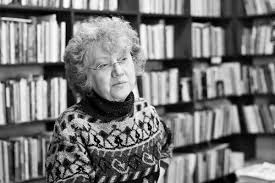
                                                     Alan Kaufman


I sent Alan Kaufman, the editor of The Outlaw Bible of American Literature, The Outlaw Bible of American Poetry, and the final entry of the Outlaw anthologies trilogy, The Outlaw Bible of American Essays, a note telling him I was using the The Outlaw Bible of American Literature in my Urban American Literature course at Endicott College in Beverly, Mass.. He wrote me back:


 "Here's a little anecdote that you might want to impart to your students, as a point of interest. On Tuesday, I was invited by the Sheriff's ...Dept, as part of National Poetry Month, to go into San Bruno County Jail to speak about writing to a group of incarcerated largely African-American military veterans. I asked the inmates if they'd heard of Robert Beck? Hands shot up. 'You mean Iceberg Slim!' they called out and proceeded to reel off the titl! es of his books, PIMP, TRICK BABY, et al., and all kinds of inside information about him. Then, I asked: have any of you ever heard of Donald Goines? More hands shot up!! He wrote, they called out, NEVER DIE ALONE, BLACK GANGSTER, WHORESON, et al. and again poured out a wealth of details about his career and life. Had I put the same question to a room full of literary-minded caucasians, as I often have,I would have gotten blank stares. One of my aims, in editing THE OUTLAW BIBLE OF AMERICAN LITERATURE was to break down this segregating literary wall that still exists in our country. Two worlds, in which one knows nothing about the fact that writers like Goines and Beck are the biggest selling authors in their communities nationwide. But because of their color and because, as the inmate veterans said Beck and Goines "Keep It Real" they are, to this day, and despite being spellbinding writers of high literary merit, critically ignored, and left completely out of the national ! discourse. So, it's heartening to know that college students are using this book and gaining exposure to the Other side of American literature. Thank you for your courage in fostering that."


I asked Kaufman for an interview and he generously consented:


Doug Holder: Give me your definition of a literary outlaw.


Alan Kaufman: Well, the sense that I mean is largely in an American vein. But even there, one must distinguish in kind. For example, Hemingway and Faulkner were very much in the mode of the Damun Runyon hobo/bohemian writer popular at the time-- one who consorts with riff-raff and criminals and the like, a vein that begins with Twain and Whitman and Melville—the 'Redskins' referenced in Philip Rahv’s seminal essay 'Palefaces and Redskins'--and extends through Sherwood Anderson who, one day rose from the paint factory he owned, walked onto the railroad tracks and in a state of breakdown ended up in Chicago, where he became a writer (in realty he made it to, I think, Cleveland, was rescued by his wife and for years continued to work in the advertising business for years whole writing his novels). This refutation of respectability was succinctly American. Only an individual driven to the extreme edge of personal crisis could conceive of abandoning Capitalist respectability for a precarious life of art: one had to be literally nuts to become an uncompromisingly honest writer. As mentor to Hemingway and Faulkner, Anderson passed this model along. And yet this very tradition stops short of Henry Miller who never achieves the acceptance conferred upon these predecessors.


Miller is an important point of divergence. Because though both Hemingway and Faulkner wrote early on with a sense that the respectable is antithetical to great art—that, as Faulkner put it, “a great novel is worth any number of old ladies”--in other words, a writer must be willing to break every rule to express his truth-- still, and despite that Faulkner liked to disport in ragged tramp clothes and Hemmingway never washed--they achieved the unequivocal embrace of the mainstream and even won Nobel Prizes. This is perhaps because they offered versions of the self that were, in the wake of the First War’s horrors, forgivable, understandable, even admirable: a whole generation emulated Hemmingway's hard-bitten and private code-driven heroes.


But there is nothing “admirable” about Miller, who stands in guffawing disdain of America and her values and surrealistically dances, so to speak, on what he perceives as America's air-conditioned zombie corpse. He was a hedonistic and an Europeanly selfish prophet of total rejection of whatever his world stood for.--closer to Spengler then Whitman(he claimed both as influences). And though he earned the praise of such writers as Orwell and Huxley, he could never be fully embraced by the mainstream and to this day remains, an outsider. And even when he finally gained broad commercial success once my friend, co-editor and also publisher Barny Rosset brought out Miller's Tropic of Cancer, he yet faced pernicious rejection---his book stood trial before the Supreme Court, and after a a couple of decades of being read to the amusement of chiefly hippies or the likes of Norman Mailer who appreciated Miller for all the wrong reasons, the author fell from sight again. Today, far fewer read Miller then ever before.


Thus, a literary outlaw is a writer who has either lived on the margins of society or else felt themselves to be relegated by personal circumstance to an extreme edge of human experience.


The author's sense of separation, alienation must be deeply personal and profound. This experience births a new and often radical sort of perspective –though not necessarily political-- that demands to be expressed in an effort to bridge the gulf between oneself and humanity, to make a case for ones membership in the common plight; a corrective to an injustice.


No one ever wanted full acceptance more then Miller. Near the end of his life he campaigned vigorously for a Nobel Prize, to no avail. The very notion was ludicrous. Yet, poignantly, he tried. So, too, with Charles Bukowski, considered a consummate rebel, but who wrote, at the end of his life, about the joys of paying for Hollywood dinners with a gold credit card. Only a true outlaw could grasp the pleasures of finally gaining acceptance.


As such, outlaw writers are inherently more moral then the very society that outlaws them. For in portraying his or her condition the outlaw writer who really craves acceptance learns, since everything is at stake, that any sort of internal or normative restriction on absolute naked honesty constitutes not merely betrayal of their experience but of the literature they are seeking to form. This alone is a paralyzing dilemma. But then, if the decision to write is made the writer often discovers, paradoxically, that not only do the popular formal conventions prove inadequate to what he or she must express but that the only way to express it is through outright transgression—artistic and moral---against the most sacred premises of the society and its literature.


The irony of this must be grasped. For the writer who feels cast out of and seeks somehow to reclaim his relationship to society can only do so by a literary act of complete iconoclastic destruction of acceptable ideas and forms, which in turn only marginalizes the writer even further . The work provokes response ranging from outright dismissal or critical scorn, commercial rejection or social ostrcacization to legal resort and even threats of violence.


This is true of everyone from Allen Ginsberg, poet of HOWL, to Iceberg Slim, author of PIMP. Each are cases made against a version of social norm that has proved, in the author's own experience, not merely hypocritical but savagely murderous. Sometimes, though, as in the case of Donald Goines, author of the masterpiece 'Never Die Alone', one finds among the subterranean social strata of one’s own impoverished and criminalized milieu a vaster reading audience then any mainstream writer could ever dream of having. Goines, brilliant by any standard, is widely known among chiefly Black men incarcerated in American prisons, and remains largely unknown to the mainstream..


DH: I share with you a Jewish heritage. Do you think Jews are natural outlaws?


AK: Because my mother was a French-Jewish Holocaust survivor I was inculcated early on with the sense that even among American Jews I did not belong to a normal state of affairs that the blood of horror and survival ran in my veins. Her tales of horrific ordeals in the war were my childhood Harry Potter stories. She imparted to me a very keen sense that the world of the Holocaust was another kind of world then the one we know, and that though ignored and denied, yet it lurks everywhere, awaiting its return, to devour the rest of us Jews that Gentiles neither grasp nor care about what happened to our people at Auschwitz, Belson, Buchenwald.


My father, a Bronx-born Jewish street guy, came from a very criminalized family. Two of my cousins died at Rikers Island. A third died with a needle in his arm in his mother's bathtub. Neither of these two experiential trajectories are typical of most Jews.


And yet, they are signifiers of an outlaw fate that begins in the Torah when Abraham, the first Jew, an iconoclast, smashes the popular idols of his day, renouncing commonly worshipped deities like Moloch and Baal who horribly required devotions of child sacrifice. A great deal of the Torah is an account of the Israelite effort to purge child sacrifice from the world. Perhaps this is the birthing essence of morality itself, which begins in the helpless child's need for protection from the parents and the parents’ efforts, against all cost, to provide it. Abraham refutes these child-murdering deities through the expression of an innate moral sense that is so alive in him that it drives him to rebellion against the very norms and Gods of his day, in favor of an invisible God who is a new kind of moral authority, a personal God, one guiding Abraham's steps through the very world that he revaluates as not only not commonplace but actually corrupt.


Abraham is an ultimate kind of outlaw of extraordinary faith and courage. That is what I find so moving about the Akidah, the story of Abraham and Isaac, in which Abraham's faith in the essential ethical rightness of his God is so complete that even when he is presented by that God with a seeming contradictory command, to sacrifice his own son, he goes through every step, each motion of the horrific ritual, right to the very last knife-plunging finale when, dramatically, the Angel stays Abraham's hand.


The meaning of this, I think, is that Abraham knows implicitly that his God would never permit him to perform child sacrifice. That God's ethical sense is what guides his, Abraham's own hand, rather than Abraham's own flawed and human personality. But none of this has yet been codified. It is Abraham, the outlaw iconoclast, following his own deviating outsider code, like any Robin Hood would, or Hells Angel.


And then, in Judaism, the most beloved figures, David and Moses are outlaws. Moses, born an outlaw by Pharisaic edict that all first-borns of the Hebrews are to be slain, is saved and lives to not only kill an Egyptian overseer, for which he must lam it out of Egypt but then, leads his entire people out of Egypt—an illegal act of rebellious exodus for which he and the others are pursued, hunted, by Pharaoh’s charioteers, who intend to kill them, man, woman and child.


In the desert, once Moses goes up to the mount to get instructions from God, the Hebrews quickly resort to idolatrous behavior. Moses, in turn, smashes God's commandments on their heads—an irreverent act of personal anger. I mean, God wrote His laws on those tablets with a fiery finger! To destroy that text as an act of their affirmation suggests a literary method that prefigures the Modernism of Joyce and Hemmingway by thousands of years. And then, having brought the Hebrews to the borders of the Promised Land, Moses is banned from entering. He must, even in death, retain his outlaw status. For the outlaw, the smasher of convention, there can be no accommodation, no rest.


There is a Chassidic explanation somewhere that Moses was not allowed to enter the Land because he had killed the overseers, just though it was—that God's holy prophets cannot, under any circumstance, kill. Thus, the Chassidim regard Moses as an outlaw. But I like to think of it rather that Moses was a visionary and that a visionary cannot cross over into his own vision. He, like the artist, is outlawed from that which he summons from out of the imagination.


David, the most beloved figure in Judaism, was, of course, for a time, an outlaw, who served as leader of a mercenary band, who raided and pillaged. As king he was a murderer and a shameless philanderer. Yet, we love David, for his courage, his hubris, his artistry, his beauty and his powerful and repentant poetry in the Psalms.


We Jews have lived on the margins of normal human society for millenniums, hounded, rejected, ghettoized, refused, slain—though that, I think, produced a kind of culture of delusion which made us blind to the real meaning of the coming of Hitler. In some sense, we Jews once more occupy a mindset strangely not unlike that of Jews before the Holocaust. A paralyzing denial about the threatening shadows growing over us.


Zionism was born out of a sense keenly felt by Theodore Herzl (himself a consummate assimilationist his first solution to 'The Jewish Problem' mass conversion to Christianity) that we Jews are doomed never to find acceptance among non-Jews and thus the only possible recourse for us is to possess our own State and military.


Interestingly, he was at the time of the writing of The Jewish State --his call for Jewish statehood--the Paris correspondent for the Neu Frei Presse, the NY Times of his day. He was a journalist of the stature of, say, Thomas Friedman. And he came feverishly to his conclusion that a Jewish State was our only hope after witnessing the public denigration of Alfred Dreyfus, a fully assimilated and completely loyal French-Jewish army captain, who was falsely accused of treason and condemned like any common outlaw to a lifetime of penal servitude in the penal colony in French Guyana, a hellish fate.


Of course, events proved that Herzl was right. Fifty years later, still without a state of our own, six million (!) Jewish men, women and children were systematically slaughtered by the Nazis and with the fairly complete cooperation of the European nations
.

Today, Israel, Zionism and Jews as a people face increasing marginalization on a global scale—an effort to delegitimize not only the Jewish State but the very right of Jews to exist at all. For if modern history has incontrovertibly proved anything, it is that a Jewish people without a state and army of our own are doomed to certain annihilation.


Lastly, Jewish marginalization has produced a tendency among our writers to either embrace the literary mainstream and all its compromises with a zeal verging on self-righteousness---the writers who came up with Partisan Review, like Bellows, Roth, Malamud (once known as the Hart,Shaftner and Marx of Literature) or else to go in the complete opposite direction of literary outlawry, like Ginsberg, or d.a. Levy, or Tuli Kupferberg, or even, strangely, the reincarnated Henry Roth of 'Mercies of A Rude Stream' who goes from classic modernist to late-age shameless post-modern self-revealer of a lifetime of incest with his sister, and other fascinatingly sordid revelations.


DH: Do you find that the outlaw poets and writers you published some years ago are now part of the canon to a greater extent?


AK: Yes and no. Today, writers like Iceberg Slim and David Goines are no better known than they were before I published The Outlaw Bible of American Poetry, The Outlaw Bible of American Literature and The Outlaw Bible of American Essays. On the other hand, thanks to those books they have gained more audience then before among the young, college-educated elite. Some, like Sapphire, have gone through the roof of success and kept going. But is Sapphire part of the Canon yet? Popular, yes; canonized: no. Hubert Selby Jr. is still pretty much overlooked today. Mid-career writers like Patricia Smith, Luis Rodriguez, Paul Beatty have gone on to become respected their books issued by excellent publishers, yet none have reached higher then, say, a mid-list status in the mainstream lit world. And others like d.a. Levy or David Lerner, though more widely recognized for their brilliance, are no more widely read then before. Their names are known. A poem here or there remarked. But nothing more. Or take Kathy Acker, whose name was once a byword of literary discussion. Kathy is almost completely forgotten today. No one reads her. I've been shocked to mention her name to younger writers who return blank stares: 'who's that?' they ask. In other words, the Outlaws still are waiting for their day. The greatest achievement of the Outlaw anthologies was to articulate for future scholarship a new stream of literary discourse which is now part of the larger discourse, and to familiarize young high school and college students—future scholars-- with this kind of writing, and these sorts of authors. Someday, they will be recognized as more then anomalies ---admired for their strange brilliance, their terrifying candor, their gutsy innovations.


DH: There is always a fascination with criminal writers from Genet to Jack Henry Abbott... What do you think the source of this fascination is?


AK: The belief that out of extreme experience some brand new insight into the human will be revealed. Also, there's the Walter Mitty’s voyeurism of the cowardly conformist who vicariously spits in the face of his or her oppression through reading about the outsider life of real revels. Also, behind it is a human intuition that when the chips are down, when authority mutates abusive evil, only outsiders with nothing to lose will dare to risk everything in order to defy it. This was actually borne out during WWII in France by the fact that oftentimes the early resisters were outsiders. A criminal has the ability to pretend to be legal, a square citizen, while secretly conducting his or her illegal enterprise. That is integral to the mounting of a successful act of resistance. It's little known for instance, that Samuel Beckett, a complete literary outsider in every respect, and despite his Nobel Prize, was also an active member of the French Resistance, for which he received a Croix du guerre. He never talked about it. In The Sorrow and The Pity we meet one of the first Parisian resisters: a pipe-smoking Beat-style weirdo with a taste for opium, a penchant for outsider lit and who looks like a cross between Sherlock Holmes and William Burroughs. By the way, as a young man slumming in Nazi Germany in the 30's, Burroughs subversively married a Jewish woman to enable her to escape from Hitler's grasp. So, we sense, or hope, romantically, that the outlaw will possess a rough code of justice that will pull through in a pinch. Sometimes they do.


DH: You have a memoir out about your life--and your trials and travails with booze. What is it about booze and the muse? Do you think a lot of young writers and poets are fixated on libations of one sort or the other. Have booze and drugs helped you creatively?


AK: The book you're referring to is DRUNKEN ANGEL, which just came out in paperback. The hardcover appeared last year. It's my second memoir, actually. The first, JEW BOY, recounts my experiences as the son of a survivor. DRUNKEN ANGEL chronicles my hellish descent into alcoholism and the incredible turnabout in events that lead to my becoming clean and sober, which I now have been for 22 years. Of course, yes, I bought into the whole drinking and drugging myth of the American literary genius. The problem was, I couldn't write a thing worth a damn while drunk. For that reason I strongly suspect that, say, Bukowski was not actually a real alcoholic, but just a drunk who could control his drinking as needed. This was recently confirmed for me by his long-time consort and biographer, Neeli Cherkovski, who said that Bukowski was, in a sense, a very high-maintenance drinker who could keep a job for ten years in the post office while he built his career and crank out book after book. So too Faulkner and Hemmingway. Bad drunks, yes. Alcoholics: I don't think so. A true alcoholic dosen’t write and publish book after book after book and sustain a career in Hollywood or off hunting big-game. Of lucky, he maybe produces one book, like Hubert Selby Jr., who comes out with LAST EXIT TO BROOKLYN and then descends into a nightmare addiction and poverty. It was only when he got sober that he began to generate the other books which kept him alive as a writer. I knew him through the publishers of my book JEW BOY, Fred Jordan and Barney Rosset, who did the paperback and hardcover respectively. Selby Jr. when sober he was the dearest man alive. He once asked me in a telephone chat if I was sober and when I replied yes, revealed that he had 25 years clean and sober. I nearly fell out o f my chair with surprise. For me, the real writing of books and anthologizing of others began when I stopped drinking in 1990. Drinking had taken me into the streets of the East Village where I was dying. It killed every possibility to be a writer. Realizing that, and with help from another writer, I began my climb out, one day at a time, and the books have come one after another ever since. No, I don't believe that drugs and alcohol are necessary to the creation of literature: to the contrary—they are the enemy of creation.

Wednesday, May 01, 2013

Hack License: Beautiful on the Inside and on the Outside and on the Inside too


Play Review by Emily Pineau

"The world’s in a mess and I want romance," the character Maryanne Hobson says to herself while driving her taxi and thinking about life. On Sunday April 14th, I had the pleasure of seeing Dan Sklar’s comedy, Hack License, preformed at the Actors Studio of Newburyport. This play takes place in New York City and revolves around the taxi driver, Maryanne Hobson, and the various interesting characters that she drives around.

The taxicab that the play centers around is simple, but it fits in very well with the surroundings. Also, the qualities of Charles Burchfield’s paintings, an artist that is one of Maryanne’s obsessions, can be seen in the set’s design of New York City. Overall, the set has a very primitive feel to it, which is a perfect fit for the playwright’s style as a writer and artist.

Maryanne likes to keep track of things, drive around in her taxi, and tell everyone everything about herself. In fact, her character is so out there that it is impossible not to like her. All Maryanne wants is to find a sweet, loving boy that thinks she is beautiful inside and out, and who paints like Charles Burchfield. The fact that Maryanne is looking for someone with such a specific qualification like his painting style is very humorous, and adds depth to her character and the plot. One would think that Maryanne would be forever alone, because she is limiting herself to someone that may not exist, or someone that she may never meet.

Maryanne’s first fare is a woman named Harriet, who is irritable and late for a meeting. The audience is instantly laughing when they hear familiar lines like, "Do something about this traffic!" and "Start the meeting without me, you don’t need me. But don’t talk about anything until I get there." People have heard these types of conversations in one form or another through work, or just when they are out in the world. This scene shows that in life people are always so hung up on getting somewhere as fast as possible. When someone is stuck in traffic, instead of being hung up on this concept, they should make the most out of things slowing down.

One of the funniest scenes in the play is when Tom and Nancy, an arguing couple, are going back and forth on whether or not to return the Walt Whitman letters that they stole. Tom is telling Maryanne to step on it, and to take them to Grand Central Station, while Nancy is telling Maryanne to take them back to 75th street. Maryanne’s facial expressions are priceless, because she is so excited to "step on it", because no one has told her to do this before. She is also confused and overwhelmed because she is being given two completely different directions at once. Maryanne ends up pulling over and breaking up their argument. Tom and Nancy take an oath on Maryanne’s hack license that they will let Maryanne decide what they will do about the situation they are in. Maryanne takes this oath very seriously, and the whole situation is so ridiculous and humorous. When Maryanne finally hears the story, it is revealed that Tom’s grandmother stored these letters in her attic, and when a housepainter asked her if he could have them, she gave them to him and he then sold them to an autograph shop. Tom feels as though he is entitled to these letters because he thinks his grandmother should have given them to him instead of a stranger. After telling the story, Tom and Nancy fight again, and Nancy tells Tom that he cares more about the letter than he does about her. Tom says this is not true, and he proposes to her. The fact that Tom and Nancy go from one extreme emotion to the other makes the audience crack up, and sit on the edge of their seats. Maryanne marries the couple, while using her hack license to do so.

The scene that I found to be the most intense and emotional is when Maryanne thinks that Alice Jones, an economics professor, is her mother. The moment that Maryanne looks at Alice in her cab she says that she looks really familiar. Maryanne instantly looks troubled as she searches Alice’s face in the rear view mirror. Suddenly, as Maryanne and Alice are talking about the United Nations, Maryanne calls Alice "Momma". Alice is extremely confused, and tells Maryanne that she is mistaken. Maryanne insists that Alice is her mother though, and that she left her and her eight sisters behind. Alice suggests that they stop for coffee and talk, and tells Maryanne to keep the meter running. "That meter is like our lives, keep it running," Alice says to Maryanne before they walk into the coffee shop. When they are in the coffee shop Alice talks to her as though she is her mother because she tells her that she wants her to own her own taxi. "I want you to be financially and mentally independent," Alice lectures her. Maryanne tells Alice that she sleeps in the Planetarium, that all she wants is to be loved, and how she knows the note, that Alice left years ago, by heart. At the end of the scene Alice tells Maryanne that she wishes that she really was her mother, and that she’d never leave her. "Maryanne, do you want me to be your mother?" Alice asks her. "What?" Maryanne is confused. "I’ll be your mother if you want me to be," Alice says to her as they are standing close together. This conversation is so powerful because Alice wants to care for Maryanne, and it is up to the audience to decide whether or not Alice is actually Maryanne’s mother. When this scene ends, and transitions to the next, that actress playing Maryanne’s character takes a few extra seconds to break out of this strong emotion.

At the end of act II, scene III, Maryanne meets Nick Hart. Nick crashes into the taxi with his bicycle because the taxi stops short. The whole situation is so dramatic, sudden, and loud that it makes the audience burst out in laughter. When Maryanne meets Nick, and apologizes for what happened, she immediately asks him if he paints like Charles Burchfield. He does not answer her, though because he is confused by the random nature of her question, and is too distracted about his broken bicycle. During the next two scenes Maryanne and Nick fill out an accident report together, which Maryanne uses in order to get to know Nick better. She asks him if he paints like Charles Burchfield, and he is in shock because he does in fact paint like him. Maryanne and Nick then look into each other’s eyes and fall in love. During this scene it is also revealed that the Nick is that housepainter that sold Walt Whitman’s letters to the autograph shop. I really like how events from the beginning of the play come full circle and link to the end.

Dan Sklar’s play is very thought provoking and is filled with dangerous situations, lost souls, and a longing to experience life in a different way. Each character reminds me of someone that I have known, or has a persona that I have seen somewhere in life before. At the end of the play I realize that in a way, the audience is like Maryanne’s character. She observes the world and the people, and has big hopes for how her life will turn out. As an audience we observe the characters, relate them to our lives, and hope it will all turn out a certain way.


**** Emily Pineau is the author of  No Need to Speak a poetry collection published as part of the Young Poets Series at Endicott College.

Monday, April 29, 2013

The Better Bombshell: Writers and Artists Redefine the Female Role Model, edited By Charlotte Austin


The Better Bombshell: Writers and Artists Redefine the Female Role Model, edited By Charlotte Austin

By Luke Salisbury

This large size paperback is a collection of short fiction and essays each coupled with artwork to "redefine" as the subtitle has it, "the female role model." "Bombshell," for those not old enough to remember, is a word from the 1940s and 50s equivalent to "broad," "dish," "tomato," "whistle bait," describing a woman found desirable by men, and not for her personality. The use of the word in the title seems provocative and retro. Fear not. The Better Bombshell is as PC as any academic at a New England college might wish.

But this isn’t bad. In fact, the book is good, some of it quite good. Bombshell doesn’t try to be a bombshell. It isn’t shocking, furious or preachy. It makes us feel. There is much here. The word goddess frequently appears; we have the obligatory drag queen; a mountain climbing instructor whose male instructees puke and seek the meaning of life; Angela Davis; a woman superhero with six arms (And six armpits as the story wittily points out); a very good short story Amazon: Three Versions with the memorable line "High school: four year torture chamber for anyone with an original or idiosyncratic thought;" Treatises on Desire, an intense essay from the Georges Batailles post structuralist deconstructed masochist academic void; a fine short story Important Things To Know with sections titled Important Things to Know About Loose Women, Important Things To Know About Frigid Women, Important Things To Know About Crazy Women, Important Things To Know About Mother; a script for a thirty second movie of the Biblical Yael murdering a sleeping man (A male author. Is this a male fantasy of female empowerment?); a very good story of difficult sexual initiation and sad consequence with quotes from Chapter 17 of the Book of Revelations; and more, much more, all accompanied by artwork ranging from a pretty ten year old girl holding an automatic weapon (De rigueur), a fine photo essay of a fashion model caught in that role and New York City, a male mountain climber showing his naked butt (Go figure), the drag queen preparing, young women looking in mirrors, and so on.

Dave Barry’s essay What Men Want is marvelous. What they want is not hair styles and shoes. His tone is perfectthat combination of cynicism, whimsy and desparation that underlies much male attitude. Rick Bass’s essay on fatherhood (Two daughters), nature, and how he might do some of it again, is simply beautiful, and bears rereading, perhaps many times. The piece that broke new ground for me was A History of My Breast Cancer in Bombshells by Eva Saulitis, with equally profound art by Kate Protage. This is the most powerful description of cancer I have read. Not sensational, self-pitying or melodramatic, but the tale told from the inside, of denial, fear, terrible awareness, and tremendous understanding. The graphite and ink black and white images capture the abstract but deadly feel of that silent, terrifying intruder that will affect one in four American women.

The Better Bombshell is an ambitious and intriguing project. It succeeds. It’s worth the money and your time. Let us all have more complex role models.


**** Luke Salisbury is a professor of English at Bunker Hill Community College in Boston.

Tuesday, April 23, 2013

From Behind The Blind By Robert Murphy


From Behind the Blind

By Robert Murphy

Dos Madres Press Inc.

editor@dosmadres.com


ISBN: 978-1-933675-94-7

62 Pages

18.00

Review by Dennis Daly

Religious anthropology and ritual mystery, rare indeed in modern poetry, find expression in From Behind the Blind, an illuminating volume of poems and prose pieces by Robert Murphy. Throughout these writings the poet injects little packets of symbols or allusions, which, in turn, suggest worlds of mythic connections in a revealing, not an obscuring way. It occurred to me that I was reading passages from The Golden Bough by James George Frasier, only in miniature and lyrical forms.

Murphy’s introductory poem entitled Doxology sets the tone with an elegant and soaring hymn of praise. He neatly touches on the pagan god of earthly unity as well as the biblical "I am who am" god. Murphy also introduces the cultural concept of dreamtime, which he elaborates on in subsequent poems. Here’s part of it,

Sleep to wake to dream to hear

the great God Pan at play

upon his pipe, the wind

in the willows quicken where

never harm, nor fear on dread feet comes,

for I am always with you there.

In the poem When the Dark as Night Appears Murphy reinforces his dreamtime realty. This illimitable universe lies just beyond the veil of daylight or wakefulness. Using this interior consciousness we can discover ourselves or perhaps our God. The poet puts it this way,

…As in the daylight

Our eyes cannot see the stars we clearly see at night

Behind a blue otherwise opaque to us.

It is only when the dark as night appears,

Within ourselves the stars the vault of heaven holds

No less than God…

Murphy’s poem At Age Sixty more than touches a chord with me. The speaker, attempting to conserve his youth, dares the outside world to destroy him by his own laborious efforts. In fact he doubles down on his dare seeking oblivion. Reward arrives in the form of a well- earned deep sleep, a sleep that edges him closer to his divinity. Murphy concludes his poem thusly,

… whatever it is that sleeps in me tonight

sleeps dead

certain that his thoughts ring true.

Better ways doubtlessly have been tried,

and quicker too,

but no-one ever slept half so well

in the daily distance of diminishment

between, dear God, the likes of me, and You.

The poet becomes Orion the hunter in the poem entitled The Blind. He has waited out his long day (perhaps his lifetime) behind his blind and emerges or, in this case, descends into his unconscious. The hunter, exhausted, drifts, discovers wonderment here,

And tired, only for a moment

closing his eyes,

is suddenly startled to find

himself awake inside,

outside, Orion,

in a star filled sky, blinking.

The short poem Who Goes There laments the burden and responsibilities of human awareness. There is a bit of Hamlet here. Some men live fully in the outside world, but know that they are actually sentries posted outside a much more elaborate and extensive existence. Action becomes difficult if not impossible. The poet sets up this conundrum,

Where damned if you do

Is damned if you don’t

Is to be doubly damned

When it is only you who knows

That you alone have left your post.


In the poem The Alzheimer House Murphy presents us with a glorious paean to the female sex. It is at once touching in small details (i.e. an elderly woman obsessively stirring her food) and transcendent in its anthropological scope. A mother’s illness has stripped her of specific knowledge, but at the same time an aura of timelessness has enveloped her. She has lost all but the essential woman at her mystical center. The poet references Kali, the Hindu goddess of time and change; Isis, the Egyptian goddess of motherhood and magic; Astarte, a Semitic fertility goddess; as well as Mary, the mother of Christ. He strangely but effectively connects these allusions to Lady Ragnelle, the bride of Sir Gawain of Arthurian legends. Ragnelle championed the empowerment of her gender and rewarded Gawain for his support by transforming herself into a Venus-like beauty. These last six lines of the poem, transforming the multileveled mythic into pathos, are stunning,

Before thought was ever serpent,

Before the apple had earned its bloom.

Before ever Mother Hubbard

Put toe to sock to shoe.

And knew not what to do.

And knew not what to do.

Murphy includes a number of prose narratives in his collection. One such piece entitled Sunday Morning evokes themes of sacrifice and resurrection. Even Lazarus makes an appearance. The universe of abundance within oneself declares its inimitable being through emblematic devices and symbols. At the center of the labyrinth looms Yggdrasil, the densely foliaged and inhabited Norse tree of life. Its structure both proffers stability and threatens destruction. The poet enters the stage with a chain saw. Yes, you heard that right. Consider this description of the tree’s innards,

To look inside the tangle was to look at something impenetrable,

a jungle that could be over topping a buried Mayan ruin with various

kudzus, vines and lianas, inward as much a outward growing, baobab as

much as banyan-like in its span and coverage…

Lest the reader take himself too seriously in following these trails of inner discovery mapped out by Murphy’s muse, the poet presents one part of human duality in the form of an imp. In the poem The Imp as the Imponderable Murphy clears up any confusion about the divine derivation of the imp. The poem begins,

Consider the Imp

that, everywhere, is I Am.

As if he had the ears to hear them by,

finger, nose, and eye,

ten thousand times times ten:

I am! I am! I am!

This remarkable collection by Robert Murphy with its mythic and psychological depth flies in the face of most strains of serious poetry being written today. It’s brave and fresh and permeates with wonder those readers who surrender to this poet’s innovative and measured reflections.

Sunday, April 21, 2013

Defiant Brides The Untold Story of Two Revolutionary Era Women And The Radical Men They Married


Defiant Brides
The Untold Story of Two Revolutionary Era
Women And The Radical Men They Married

By Nancy Rubin Stuart

Beacon Press, Boston

ISBN 978-0-8070-0117-2

216 pages

Review by Tom Miller

Peggy Shippen Arnold, wife of notorious traitor Benedict Arnold.  Lucy Flucker Knox, wife of beloved Revolutionary War hero Henry Knox.  Somewhat of an odd couple to include in a joint biography but Nancy Rubin Stuart does so successfully in her book Defiant Brides

I enjoyed this book.  Stuart tells a good story while offering insights into personal lives of characters who had significant influence on events that took place during the War.    
 
Rather than focus on the labels attached to them by their association to their husbands, Stuart delves into the motivations, actions, personalities and characters of the two women.  By drawing deeply from correspondence and diaries of the ladies and their contemporaries for source material, Stuart develops the texture of their lives.  We see them both as teenagers born to privilege.  We see them marry men whom their families would rather they not.  We see them as devoted to and accordingly supportive of the men they love.  We experience their successes and disappointments as well as their tragedies.  We watch the War exact a terrific cost on each of them in different ways.  We see them grow and evolve into mature women and deal with the loss of their husbands well before their times.

Stuart chooses to tell these biographical stories in the same book because the background of the two ladies is so similar, the time lines match, and while they never met, their husbands did.  Set in a time in which wives and women in general had no legal status other than that bestowed upon them by the fact of their marriage or their relationship to the patriarch of their family – father, brother, husband - in a very patriarchal society, both of these women developed into recognizable and forceful personalities in their own rights.  Both defied their families in choice of mates.  Both bore the burdens of driven husbands whose ambitions carried them away on dangerous and distant missions.  Both learned how to adapt and exert some measure of control over their social environments.

Peggy Arnold we learn is not just the social butterfly we see in other portrayals.  Lucy Knox we find is not just the staid and steady woman behind the man that she is often thought of.  Both are living breathing real people who feel, think, plan, execute and sometimes succeed and sometimes fail.

Stuart’s style is both readable and informative.  The book is well researched and documented.  I think it speaks to both the personalities of the focal characters and to the role of women in general in the Revolutionary War era.

-Tom Miller


***** Tom Miller is a graduate student of History at Salem State University.  He is a retired auto executive, as well as a published poet. He is included in the upcoming Bagel Bard anthology.

Saturday, April 20, 2013

Mass. Poetry Festival to Feature Pulitzer Prize Winner Sharon Olds and 10 Other Headliner Poets


Mass. Poetry Festival to Feature Pulitzer Prize Winner Sharon Olds and 10 Other Headliner Poets

            By Jacquelyn Malone  (Mass. Poetry Advisory Board)

At last year’s Massachusetts Poetry Festival J. D. Scrimgeour, a poet and member of the festival planning committee,  was setting up a table for the book fair. A stranger walked by and asked if she could help. As the two positioned the table, Scrimgeour asked her name, and she replied, “I’m nobody! Who are you?” Scrimgeour replied, “I’m nobody, too.” And the two strangers, laughing, began to recite alternating lines of Emily Dickenson’s famous poem before they went their own merry ways. Not your typical stranger-in-the-street meeting.

But it is typical of the ambience of the Massachusetts Poetry Festival. Last year over a crowded lunch table, more than one person commented on meeting someone at the festival who could become a good friend.

This year’s event, which runs May 3 through 5 in Salem, Massachusetts, will not only have Pulitzer Prize champs like this year’s winner Sharon Olds and previous winners Tracy Smith and Yusef Komunyakaa, it will have camaraderie like that Scrimgeour experienced.

Jill McDonough described last year’s festival, which also took place in Salem, this way: “Shining pedestrian walkways filled with poetry, poets, people who love poetry.” McDonough was talking about a city where store windows sported poems, shower curtains with poems written on them, and bars of soap in paper wrappers with snippets from poems. Like last year’s festival, this year’s will have a poetry trolley car circling the various venues in downtown Salem with poets reciting poems in route from one event to the next. It will have a typewriter orchestra tapping out rhythms of symphonies – or poems. There’ll be a a small press and literary magazine fair, and, back this year by popular demand, a reading by Steve Almond of the winners of the annual bad poetry contest.

Many of the participants in the Saturday session Dead Poets among the Living have ties to Somerville and local group, Tapestry of Voices. They are Lainie Senechal, Kathleen Spivak, Doug Holder, Kirk Etherton, Lucy Holstedt, and Harris Garnder. They will be reading Robert Frost, e.e. cummins, John Greenleaf Whittier and other poets no longer with us, pairing those classic poems with some of their own. The poets will be supported by a talented jazz trio.

The three day program includes poetry readings, workshops, panels on poetry, music, and visual arts, including a Cinco de Mayo reading on May 5. The Peabody Essex Museum, which provides the venue for many festival events, has a special series of programs for families, such as Make Your Own Magnetic Poetry.

There’ll be a session on taboos subjects like race, sex and class. Some of the other sessions include a panel on war and social consequences, the reading of poems about pregnancy and motherhood, a reading of the nine Common Threads poems selected by Mass Poetry for discussions in book clubs, libraries, senior centers, etc.. across the state.

And there will be slam and spoken word performances to delight young people. And their elders.

Each day features headliner poets:

On Friday evening (at 7:30–9:30 p.m. in the Atrium of the Peabody Essex Museum) poets read poems about the humor and the dysfunction of family, Michael Jackson and the Hubble telescope. 
The poets are:
Tracy K. Smith (Life on Mars), winner of the 2012 Pulitzer Prize in Poetry.
Nick Flynn (Another Bullshit Night in Suck City,) poet and memoirist.
Jill McDonough (Where You Live), who chose the poems for Common Threads this year.

Saturday evening (at 7:30–9 p.m. in the First Universalist Church of Salem) three writers demonstrate the extraordinary possibilities of poetry to reveal the personal and political experiences of American life.
The poets are:
Sharon Olds (Stag’s Leap), 2013 winner of the TS Eliot Poetry Prize and this year’s Pulitzer Prize poet.
Terrance Hayes (Lighthead), the 2010 National Book Award for Poetry winner.
Eduardo C. Corral (Slow Lightning), whose first collection won the prestigious Yale Series of Younger Poets competition.

Sunday afternoon (at 2:15–3:15 p.m. at PEM’s Native American Gallery)
The poets are:
Arthur Sze (The Ginkgo Light), Santa Fe-based poet and recent winner of the Jackson Poetry Prize.
Gail Mazur (Figures in a Landscape), Cambridge-based poet.

Sunday afternoon (at 3:45–4:45, PEM’s East India Room)
The poets are:
Yusef Komunyakaa (The Chameleon Couch), 1994 winner of the Pulitzer Prize for Poetry.
Kevin Goodan (Winter Tenor), a poet with Massachusetts ties.
Erica Funkhouser (Earthly) ), a poet with Massachusetts ties.

During the festival more than 100 poets will engage with thousands of people. Admission for all weekend events is $15 or $7 for students and seniors.

The website www.masspoetry2013.crowdvine.com provides a complete schedule of events, a list of book stores for festival buttons sales (your admission to events), and a social media platform for festival goers to pre-register for events.

See you there!

Thursday, April 18, 2013

So Spoke Penelope by Tino Villanueva


So Spoke Penelope


by Tino Villanueva

Grolier Poetry Press

Cambridge MA

Copyright © 2013 by Tino Villanueva

60 pages, softbound, no price given


Review by Zvi A. Sesling


For twenty years a woman waits, waits for a husband to return. Men come to her home— a different kind of siege, they want her to pick a new husband. They want her home, her wealth, her body. What’s a woman to do?


Poet Tino Villanueva who won an American Book Award in 1994 for Scene From The Movie GIANT has written another volume of poetry which deserves a prize: So Spoke Penelope – the woman under siege in her own home.


However, Penelope is no ordinary woman, she is the wife of a king, and no ordinary king.

Her husband is Odysseus, king of Ithaca and Homer’s hero.


As Villanueva envisions her, Penelope is a strong woman, one who many women today would not only admire, but of whom they would be jealous.


Take for example the poem How I Wait in which Penelope tells of her loneliness:


Today I sit by a window, my spirit

swimming out into the deep-azure-blue of the sea.

I’m a woman waiting, in love with a man,

and in love with the love had.

I took an oath with myself to wait,

and keep passionately waiting

even after the great shining of the sun has worn away


I pick up my sorrow and carry it to bed,

and wait some more

before sweet sleep weighs down my eyes.

Next day I rise,

and hear myself speaking words of all-abounding hope

…and go on waiting. These things I say aloud

to have clear thought,

to keep the day alive.


I’m a woman waiting,

waiting with the restlessness of sea-waves

repeating themselves in her head

like messages from afar.

Villanueva has also written some wonderful lines as from Today I did Almost Nothing comes this line, which, within the context of the poem stands out as a paean against war:


Thought about war

…war that spoils the ties of love and mocks my marriage;


Or from God Of Extended Blue Waters:


make the heart soar on wings of contentment


Then these lines from The Suitors:


Those blasted blustery brutes:

the crudest of the crude crowding my thoughts.

Rain or shine,

it’s them again—rowdy louts befouling the air

with the rough language of their praise.


The book concludes with Twenty Years Waiting with the opening lines of:


Just when I thought the star-lights of love

no longer shone for me, that I’d stand apart,


a woman, living more on lament than hope

down the stairs into the hall I went to see


the beggar-man who the day before had walked

straight into my gaze; who was no stranger begging,


but truly Odysseus, the man I love the way a woman

does just the one time….


This book is brilliantly conceived and executed by Tino Villanueva. Placing himself in Penelope’s mind and delivering a stunning extension of Homer’s original is a truly remarkable achievement. So Spoke Penelope fascinates, and there is no need to have read Homer to get understand Penelope’s plight in the context of Odysseus’s twenty-year absence brought about by war, a centuries’ old stain on the human condition which Villanueva shows from the view of she who waits for the return of her love.


This volume of poetry is highly recommended and should bring awards to the author.


_______________________________________

Zvi A. Sesling is author of King of the Jungle (Ibbetson Street, 2010), Across Stones of Bad Dreams (Cervena Barva, 2011) and the soon to be published Fire Tongue (Cervena Barva). He is Editor of Muddy River Poetry Review, Bagel Bards Anthologies #7 and #8.

He regularly reviews for the Boston Small Press and Poetry Scene

Tuesday, April 16, 2013

New Nave Gallery Annex Opens in Somerville

A New Space has opened at the Nave Gallery in Somerville, Mass: The Nave Gallery Annex. It will be hosting art exhibits, readings, etc....

Here is what is happenning now:

The Knit Art House in Crochetville


April 13-May 5, 2013

Curated by Tori Costa


Opening Reception

The Nave Gallery Annex

Wednesday, April 17

6-8 pm directions

facebook


Gallery Hours:

Wed-Fri, 6-8 pm

Sat, 2-8 pm, Sun, 2-6 pm


Extended Hours During Somerville Open Studios:

Fri, May 3, 6-9 pm, Sat, May 4, 12-8 pm

Sun, May 5, 12-6 pm

Sunday, April 14, 2013

Tino Villanueva and the Craft of Waiting


Tino Villanueva and the Craft of Waiting

article by Michael T Steffen

Penelope, the wife of Odysseus from Homer’s epic song about the wandering man of many ways, is the classical figure of long-suffering faithfulness awaiting, twenty years, the return of her husband from the Trojan war. Entreated by a pack of greedy, boisterous suitors, she embodies the craft-worker of the separated couple, weaving and unweaving a shroud in order to stave off the wooings of the suitors who insist and insist that Odysseus is dead and that she remarry. In SO SPOKE PENELOPE (Grolier Poetry Press, Cambridge, 2013, ISBN: 978-1-891592-02-7) acclaimed poet Tino Villanueva himself patiently looms an extended meditation of 32 poems from the persona of this most memorable character of world literature, enacting and reflecting the concentrated task of craftsmanship (in weaving, in poetry…) as a creative preoccupation to help pass the time of waiting, with the potential intensity of the endeavor:

One day I managed from early dawn to dusk,

then until the brightness of the morning shone again

to keep on weaving, to get it right. And there it is

folded up across the bed in color and in cloth.

("In Color and in Cloth," p. 31)
 

My own impression reading through the poems several times was of admiration, admiration for the elegance, charm and clarity of Villanueva’s language, making allowance for poetic diction rare for our times:

when the golden cloth of dawn rose

out of the sea (p.13)


The wind blows,

and I can hear the leaves of orchards breathing (p. 23)


Still and all, Odysseus,

grief-giver of a husband, destroyer of hearts,

let me not die aching in one place (p. 35)


While the maids on their knees

kept grinding and sifting wheat and barley grain,

(six-hundred someone said)

measured into baskets big (p. 58)

I also admired the patience of the book, which imparted a slight anguish, which is the anguish of Penelope herself in suffering the long passage of time and its frequently felt futility.

How many women, I wonder, have waited like me,

like me by the sea, with a racing caring heart,

women who waited, stood waiting,

lay waiting like me? (p. 16)


Here on Ithaca, alas, we had no favoring rain today,

no sun.

And I, who am Penelope, living mother of a living son,

neither got Odysseus back,

husband whose love I miss on awakening,

nor chose to take a suitor as my man. (p. 34)

What’s more and must be said in this battlefield of love:

time and time again I love you,

then I go the other way

and love you not. (p. 35)


The book works its spell of another time and another place on you by maintaining its foothold in Homer’s mythic world, which may chafe some readers in our generation-hab world who may crave to recognize more familiar language and elements. This yet poses the question of how a poet may discipline and mind her craft to be a builder of bridges. That is from the terminology of Ifeanyi Menkiti, whose introduction to this book is so generously informative with details of the poet’s biography and bibliography, and eloquent in his argument for an ecumenical mission for poetry. The bridge the poet builds spans across the differences of the cultural barriers of time and space, so that she is not a mere "tribalist" chronicler of the historical moment. Is poetry what gets lost in translation, as Robert Frost famously coined the definition? Or is it found in the consideration to survive translation? Who will the readers of the year 2053, 2113… be able to appreciate? It’s a staggering yet pertinent question.

Still, relevant both to individual and tradition, Villanueva’s meditation comes to a luminous affirmation from the long-suffering spouse about the insight she has gained as to the carefulness of her affections and surrounding:

I’d been for years at

the heart’s low-ebb, but wise about men set before me,

and gods disguised. Now the man long-awaited

had washed ashore into my room: I opened my eyes

and saw, past the ceiling, an expanse of sky

and Odysseus sailing steadily above me. (pp. 59-60).

Saturday, April 13, 2013

Interview with Meikle Paschal: The Black Buddhist and his spiritual journey


Left  Doug Holder   Right  Meikle Paschal   at the Somerville Community Access TV studios.


Interview with Meikle Paschal: The Black Buddhist and his spiritual journey


With Doug Holder


  When Meikle Paschal arrived at his first meeting of the Bagel Bards at the Au Bon Pain in Davis Square, Somerville, he was the only black man in a sea of white, pasty faces. But he did not seem fazed--he weaved through the crowd like he was at home at the joint—striking up conversations, and cracking the dry air with his wit.  30 or 40 years ago this may have not been the case.   Paschal , a native of the mean streets of Roxbury, was a self-described Angry Black Man.  He was uncomfortable in his own skin, fighting the pressure of a racist society that he felt kept the cards stacked against him. Now, in his 60’s, he is a very different character.  He found his way through the practice of Buddhism, and is transformed into a rather contented  man in the  autumn of his years, as  Frank Sinatra once sang.   Today he is a  respected educator with the pedigree of a PhD, and a home in the tony suburb of Lexington, Mass.  I interviewed Paschal about his new memoir The Black Buddhist: A Spiritual Journey (Ibbetson Street Press) on my Somerville Community Access TV show  Poet to Poet: Writer to Writer.


Doug Holder: Meikle you were in the tradition of the Angry Young Man some decades ago. This literary tradition , and this dynamic in society, goes way back and of course it involves the working class railing against the system. And you added another factor on the plate—you are a black man. What specifically were you angry about?


Meikle Paschal:  Actually I don’t know what I was angry about. It was sort of a persona you kept so no one would bother you. If I looked like a pushover—even girls would come up to me and challenge me to a fight. So I had to have this edgy, urban demeanor so that people would  leave me alone. When you are a young person and in that domain it’s ok—it serves a purpose. But when you finish school and go out to the workplace, and still have that angry edge, it limits you. If you are looking for a job people label you as an angry black man. From that image all kinds of generalizations get passed on. People don’t get to know you. They just tread lightly around you.


DH: You embraced Nicene Buddhism.  Why did you go there –did western religion fail you?


MP: I had an experience when I was quite young. Probably around 14. I had my first sexual encounter in a hallway. My family members were practicing Catholics. So I started feeling guilty and went to Confession. I made the mistake of saying I committed adultery.  And this priest almost started to come through the screen to get at me. He told me never to see the girl again. But she lived upstairs so I wondered how that was going to be possible. I started thinking something was wrong about this. I was on may way out. It was a long trail. For a long while I went to Atheism—you know when you are dead you are dead. After I grew up and grew more accepting of the ways of the world, I realized that I didn’t quite know what was going on. Then I had this experience. It was with my mother-in-law. I  had stayed with her awhile to calm down after completing my dissertation. One day she fell down  in the front yard and never recovered. It turns out that she was riddled with cancer. She died shortly after. One night after this I went to sleep, not thinking about here or anything. In the middle of the night she came to me  just as clearly as you sitting here. She sat at the edge of my bed and told me that everything was going to be all right.  It was such a beautiful experience. I cried; I called my mother and tried to get some understanding. And I began to realize there is more going on in this world that I can understand.  And this lead me to the path of reading. And in my reading I feel into what the Buddha actually said. It lead me to some thoughts I had during my own life. I saw them clearly articulated now. I read even more and I sought out some people who were practicing Buddhists in my family. I became ready to embrace it. It has become a way of life. And this way of life has diminished the Angry Black Man persona. The meditation, etc.. has made me feel more at home in the universe.

DH: Does the angry side ever rear its ugly head?

MP: Every so often I can slide. It is under control. It is relegated to the lower domains. When you become harmonious with the world this stuff doesn't come up so often.

DH: But sometimes isn't it a good thing to get good and pissed off?

MP: It doesn't work for me. Being a black man in this society, if I get angry, it would be a negative thing. Besides it makes me feel sick. I try to let things stay quiet.

DH: You talked about these incidences of foreshadowing in your life--in which someone would say something in passing for instance and it would be of great imporance. Do we often miss these signs?

MP: Well, I do feel we all follow a path. I have had occasions where I could of gone one way instead of the other. When I went down to the Induction Center during the Vietnam War I was very despondent because I thought I was going to be sent to the jungles to die. As I was coming home from the Center I just happened I looked up and I saw a sign for the U Mass Boston. And for some unknown reason I went in. I found the recruiters; they took me in; and I was accepted into college. And being accepted into college-- I am sure-- saved my life. I have had experiences like this in my life and I was able to embrace them. Your path unfolds before you. You have a few choices. You can stay stuck or you can evolve. The universe gives you information to hear; it is up to you to embrace it or not. That is the message I am trying to display in the book.


DH: Does your Buddhist practice manifests itself in your college teaching?

MP: My teaching is all about my Buddhist practice.  I teach Philosophy, English and Composition. I do tell my students that if they do have self-confidence, start a  regime, that the energy will flow. I don't get angry with them. I am accessible. It makes for a more harmonious classroom. We both learn and benefit.

DH: You use quotes throughout the book by Buddha. One is " What we think, we become."

MP: I truly believe this. It took a long time to believe in myself--to not be afraid that all these things were going to be taken from me. I have relinquished fear. I think of myself as a worthy person. I love being a calmer state of being.


To order The Black Buddhist... go to:      http://lulu.com/ibbetsonpress