Showing posts with label Poet. Show all posts

Tuesday, May 15, 2018

Interview with professor, poet, director Anne Elezabeth Pluto


Interview with professor, poet, director Anne Elezabeth Pluto

With Doug Holder


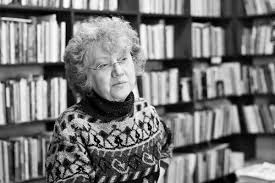
Anne Elezabeth Pluto is Professor of Literature and Theatre at Lesley University in Cambridge, MA where she is the artistic director and one of the founders of the Oxford Street Players, the university’s Shakespeare troupe. She is an alumna of Shakespeare & Company, and has been a member of the Worcester Shakespeare Company since 2011. She was a member of the Boston small press scene in the late 1980s and is one of the founders and editors at Nixes Mate Review.  Her chapbook, The Frog Princess, was published by White Pine Press (1985), her eBook Lubbock Electric, by Argotist ebooks (2012), and her chapbook Benign Protection by Cervana Barva Press (2016). Recent publications include: The Buffalo Evening News, Unlikely Stories: Episode IV, Mat Hat Lit, Pirene's Fountain, The Enchanting Verses Literary Review, Mockingheart Review, Yellow Chair Review, Levure Litteraire – numero 12, The Naugatuck River Review, and Tuesday, An Art Project. I had the pleasure to speak with Pluto on my Somerville Media TV show, Poet to Poet Writer to Writer.


Doug Holder: In your collection Benign Protection you seem to be a master of absence. The absence of your late parents as defined by their “things.”


Annie Pluto: This is sort of my homage to grief, with the death of my father and mother. I had all these things that came from their rent-controlled Brooklyn apartment. I was writing poetry about my father, and when my mother was dying I wrote poetry about her too. The “things” from the apartment represented them. When I would go back to Brooklyn-- I always stayed with friends who were close by to my parents' apartment. So I would walk to their street, but I would never go down it. I didn't want to see the building. Too painful. So I evoked my grief and my parents' stories in my work.


DH: Tell me about your parents.


AP: Well my father had a fascinating life and it was referenced in one of the poems in the collection. My parents were Russian but they lived in Poland. My father was separated from my mother because he was in the Polish Army during World War ll. He wound up as a prisoner in a Soviet camp. He also saw action in Egypt and Italy. Eventually he moved to Canada. And my mother was there. She had thought he was dead. Eventually they married in Toronto. After a waiting a year they came to America.


DH: I know that your are the director of the Oxford St. Players, that is connected to Lesley University. How does your role as a poet mix with that of the theater.


AP: They dovetail. Theater is very group orientated—you work with people. It is very interconnected. Obviously as a professor and director I am in charge of many things. With poetry you pullback. You are with yourself. I need that time too.


DH: You studied at the University at Buffalo in the 70s. I was up there at that time too. I also know Mike Baskinski—the former curator of the small press collection there. What was the lit scene like when you were there?


AP: It was very friendly. It wasn't competitive like New York. I would say people were more interested in helping each other out. I had a lot of mentors. My first collection was published by a Buffalo press, White Pine. I studied with Robert Creeley and Irving Feldman. Creeley was very straight forward. He would get very annoyed if students didn't do their reading. I remember he would deliberately close this large literary tome and dismiss the whole class. I had the privilege to read with Creeley as well.


DH: You were also part of Shakespeare & Company directed by Tina Packer.


AP: Yes. I was always involved with theater. I did a lot of theater as a little girl in Brooklyn. There was a NYC Board of Education radio show at the time. I was in high school then. I would participate in these staged readings they would have. Working with Tina Packer was great—very challenging. I always wanted to be an actor but my parents wanted me to do something more practical.


DH: You were also involved in the small press scene in Allston, MA., a section of Boston.


AP: Yes. I had sent my work to a magazine called, Oak Square. Eventually I met the editor Philip Borenstein. I became involved with the lit mag. Eventually I became the Poetry Editor. Around this time Michael McInnis—( a founder of the Nixes Mate Press), opened a bookstore in Allston. I lived right around the block from it. Allston had a lot of zines. It was a very do-it-yourself scene. It was married to the Punk Rock scene —that was very Allston-centric.  Years later, Mike, Philip and I started Nixes Mate and the rest is history.

Sunday, December 25, 2016

Saturday, September 06, 2014

Poet, Playwright,Israel Horovitz: Nutured by a father of choice, not chance.


Israel Horovitz


 Poet, Playwright,Israel Horovitz: Nurtured by a father of choice, not chance.

 Interview with Doug Holder

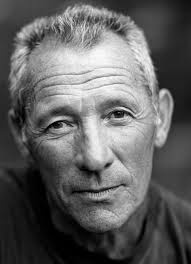
Israel Horovitz, the noted playwright, screenwriter, and director of a new major motion picture : My Old Lady, (Based on his play of the same name) told me at an interview at the television studios at Endicott College, that we have our fathers of chance, and our fathers of choice. His father of choice was the renowned playwright and poet Samuel Beckett, who he met in Paris as a young man. Horovitz, at age 75 has released a first book of poetry Heaven and other Poems, that might not have been birthed if it wasn't for the influence of Beckett. I had the pleasure of talking with Horovitz about his long and fascinating career in the theater, and his distinguished experience with the arts. This interview was a special production for my Somerville Community Access TV show  Poet to Poet: Writer to Writer.


Douglas Holder: Like Samuel Beckett, who you were friends with in Paris--you are a playwright and a poet. What elements of play writing do you bring into your poetry? Does your plays and poetry inform each other?


Israel Horovitz: I don't know. I really haven't given that any thought. I have been writing poetry all my life... starting in my teens. I never had any notion of publishing poetry whatsoever.  My poetry was completely private. The poetry was simply for me.  When it came time to publish I had a helluva time—because I had written tons of poems in notebooks that were long forgotten. I sifted through them and came up with 100 poems. I didn’t go to the publisher and say: “ Hey…publish me.” The publisher of Three Rooms Press, Peter Carlaftes was at a poetry reading I was featured in, and came up to ask me if he could publish my work. I hadn’t been published in poetry magazine previous to this. I would have to wanted  it. I worked a long time to pick out the poems and I hired an assistant who is very poetry friendly.

But back to Beckett. Beckett was 40 years my senior. I was a kid in my 20s, and I wrote a play that was to be presented at the Spoleto Festival in Italy. I was with Al Pacino, Jill Clayburgh—we were absolutely unknown at the time. We were there to perform my play The Indian Wants the Bronx. Someone came up to me at that time and asked me if I wanted to meet Samuel Beckett. It was 1968, I was 27 years old with hair down to my shoulders. Around the same time a French kid ,who was a stage manager for an Edward Albee production, said he would like to translate my work. So since then, I have been back and forth to Paris, overseeing my plays, etc.. But when I first met Beckett—I realized that he didn’t have kids, so that must have played some role in our relationship. We stayed together talking for 3 hours. At the end of the three hours I said: “ Do you think that we could be friends?” He said “ I think we are, boy.” A play of mine Line has played in New York for 40 years, in Paris for 11years, and it gave me enough money to go back and forth to Paris. And of course I wanted to see Beckett. In this life we have fathers by chance, and fathers by chance. My biological  father was a truck driver ( At 50 he became a lawyer)—Beckett made me see the possibilities—beyond the truck driver to the playwright. Beckett had relationship with a lot of young folks like Tom Stoppard, and other emerging artists.

In terms of my relationship with my poetry and plays, none of my poems would never be the basis of my plays.

DH: Camus said, and I paraphrase, “ After 40, a man is responsible for his own face.” You deal with this in the poem “Is this the face I deserve?’ Do you think time and your experience has etched your face as you would like to see yourself?

IH: No one gets the face they want to see. Maybe actors do. I think writers create what they create to obscure their faces. You can only hope for an open and honest one.

DH: I know that France has embraced many American artists from the novelist James Baldwin, to jazz greats like Dexter Gordon. The French have lauded your work. And you seem to have even greater status there than here. What is it about the French sensibility?


IH:  Well... the French laud louder. I joke in an interview with the New York Times that in a former life I was an escargot--loved by the French. But it is more like if you love me, I love you. I have many strong relationships with young troupes in France. When I am not in Gloucester, I am in France. or Greenwich Village.

DH: Your poem " On Boulevard Raspail"--  is a beautiful piece about you passing a young girl in Paris. A moment of time not corrupted by the jealousy, anger, etc...that a relationship can bring. The beauty is in the passing. You wrote that you told Beckett you felt bad because you stole this line from his poem: " the space of a quietly closing door." So as Eliot put it: " 'Immature poets imitate; mature poets steal."

IH: That is such a complicated question because I never intentionally did that. Obviously you write from what you know. What happened was that I was out running in Paris one morning. I often did training runs. I collided with this really pretty young woman. And we fell down and we were looking at each other. Wordlessly she got up and walked away. I wrote this poem of perfection in the passing. Anyway, I was having dinner with Beckett.. I was having a reading but I didn't invite Beckett because he never went out.  He said" You are doing a reading?" I said,"Please come." Then he asked me to read the poem. I read it and he responded: "Boy, that's lovely." Then I told him I inadvertently taken the last line from his radio play Cascando.  He said " Oh yes--I stole it from Dante." He translated my poem. Like me, Beckett didn't write poems with publication in mind--we was writing them for himself.

DH: I remember hearing that when Beckett opened his play Waiting for Godot in Miami the whole crowd walked out. Has this ever happened to you?

IH: Yeah  it did --Bert Lahr starred in it. This happened with me and my play The Indian Wants the Bronx. (Al Pacino starred in this)We would do the play for anyone who wanted to see it. This was before it opened in New York. We did at one place called  the Canoe Place Inn in the Hamptons on Long Island. The place had a 1,000 seat capacity. Only three older ladies with big hats were in the crowd. During the middle of the play they left. Pacino, with that distinctive voice said: "What are we going to do now?"


The Shooters.

All through your life
You see the shooters
Firing guns into the sky
You wait for something to return to earth
But nothing ever falls.
You ask your parents
Why the shooters shoot
You ask ‘What is their target?’
Your parents look away.
Your father dies
You feel the pain.
You see the shooters, once again
And once again
You ask your mother ‘Why?’
This time she weeps
And starts to die.
And when she dies
Your childhood dies.
You search and find the shooters, once again.
You climb into the chamber of the tall one’s gun
And wait your turn.


(c) Israel Horovitz 2013


Wednesday, January 22, 2014

Interview with Somerville Publisher, Poet, Professor Ralph Pennel

Ralph Pennel


Interview with Somerville Publisher, Poet, Professor Ralph Pennel

With Doug Holder

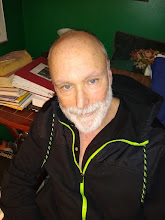
Ralph Pennel, like many Somerville residents I know, has many creative outlets. He brings his creative flair to the classroom at Bunker Hill Community College; he is the fiction editor of a well-regarded online publication the “Midway Journal” and he is a published poet and fiction writer. I recently spoke to Pennel on my Somerville Public TV show  “Poet to Poet: Writer to Writer.”


Doug Holder: Since we last sat down for an interview a couple of years ago, a lot has changed for you. You are now a lecturer at Bunker Hill Community College. How has the teaching experience been for you, and do the students differ in any way from the Midwest where you taught for many years?

Ralph Pennel:  My experience—teaching World Literature at Bunker Hill—has been great. I am always surprised by the experience the students bring to the classroom. The discussions are always lively—it is obvious that they are working towards something.

Many are working to transfer to a four year school. And their efforts to make that happen in terms of how they prepare themselves for class are apparent. A larger percentage of my students in the Boston, than say the Midwest, come prepared and have fewer excuses. At least in the classes I teach they are more than willing to participate.

DH: You told me that the Midway Journal,  which you are the fiction editor for, has been redesigned. How does it differ from the past?

RP: Anything on the internet has got a built destruct button in terms of looks and functionality. When we first went live in the fall of 2007 our site was very indicative of sites that were going up at that time. And if course if you don’t make any changes to your site it looks outdated. So when we redesigned the site we cleared up some of the functionality issues. There were certain problems with navigating the site. The new site makes things easier. The site just looks newer. The person we hired really had her thumb on what was current. Assuming we are around the next two or three years, we will do it again. We are in the process of growing. We brought in new fiction editors. We have an intern to help with Facebook and Twitter.

DH:  Your new poetry manuscript is titled: “The World is Less Perfect for Dying In.”  Tell us a bit about this.

RP: The manuscript is broken into two sections. The themes are loss, rebirth, literally and figuratively. I am grateful to the Cervena Barva Press for agreeing to publish it.

DH: Has your Midwestern sensibility been jaded by your exposure to the Northeast?

RP: Sometimes I forget that I really have been in the East Coast for four and a half years, and that I lived in the Midwest for most of my life. I don’t know if I truly fit in in the Midwest. I tried to be a little more straightforward than folks usually are there—so that brought conflicts. But still people easily identify me as a Midwesterner. Everything in the Midwest is planned on a grid—so it is not as conducive to the out-of-the box creative thinking. When you live on a grid you don’t really need to know how to get places. In New England it is more random type of lifestyle.

DH: I read a poem of yours “Nighthawks” Why do think so many poets are influenced by the paintings of Edward Hopper?

RP: I think it is the paradox that is reflected in his work. He uses bright colors often. The thing he does is set his characters in isolation-- the isolation of the American image. I think that is an interesting idea for poets. There is also an ironic aspect to Nighthawks—it has an everyman level to it. It is heartland America—with failed expectations.

DH: I find in your recent work a premonition of death, and the pull of gravity.  Dark stuff—are you a brooding bard?

RP: I take things hard—I am a poet after all (Smiles). I am emotional. No one is interested in poems where things go well. There is always hope in my work though—after all there is always birth and renewal.

“Planning Our Departure” by Ralph Pennel
Leaving nothing to chance, we start the day
by sharing our only surviving dreams.
Mine is simple.  The two of us driving nowhere
with little regard for the drive.
In yours, we are rowing.  Taking our time.
Taking turns at the oars.
We make nothing more of them than that,
that we have shared them.
You roll away from me, hand dropping
against the box spring,
as if to usher this bed into motion, into
one last feat of greatness though nothing on it stirs.
While we lie here, storm clouds
settle in above us,
rain gathers in their sagging bellies, felled cotton seed
invades every grassless patch of ground below.
I half expect to find this bed covered too,
mistake loose down against my pillow
for some ambitious seed that made it through
the screen beside this bed, seeking some higher,
safer place to land, who knows what falling is,
how it ends where no light reaches and never has.
Not even in the highest noonday sun when
the shadows are but charcoal blemishes no bigger than a sigh.
So much goes unsaid between us now.
The day passes us by slowly, drifts over
the trenches where we lay, the hours ahead
still unfulfilled except by all we cannot manage
the strength to save, by the rain, cold and hard,
falling from the sky to the earth where we wait.
We insist on waging our losses against an hour more
of sleep, against facing our certain departure from this room,
or from any room just like this where we may have landed
seeking shelter from all we can’t possibly begin to begin.

 ****** From the masspoetry.org website