Showing posts with label Doug Holder. Show all posts

Sunday, March 05, 2023

Poet Adam Scheffler: Gets to the Worm in the Heart of the Matter


Interview with Doug Holder


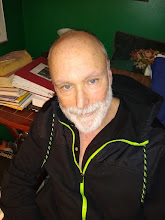
Recently I caught up with poet Adam Scheffler.  He is the author of two books of poetry--the latest being "Heartworm," which won the 2021 Moon City Press Prize, and "A Dog’s Life," which won the 2016 Jacar Press Book Contest. He grew up in Berkeley, California, received his MFA in poetry from the Iowa Writers' Workshop, and his PhD in English from Harvard. He teaches in the Harvard College Writing Program. He is a member of the New England Poetry Club.


George Looney wrote that in your work you "praise the mundane world." Do you find beauty in banality?


I’d turn the question around and say I find banality in beauty, or at least in epic adventure: just try watching all 31 Marvel Movies and you’ll see what I mean. Whereas I think poetry gives you an excuse to savor the details of your actual, supposedly mundane life (peering at a spider web, singing in the shower, noticing the full moon suddenly emerge from behind a cloud) and, to quote my poet-friend Mande Zecca, that’s where the magic is.


I also really enjoy writing poems about unpoetic, silly, or even gross subjects: I have different poems in this book, for instance, about Jeff Goldblum, a cockroach, and my dog finding a used condom in the park. It’s a fun challenge trying to find beauty in something seemingly trivial or off-putting. There might even be more room for failure due to the novelty: if you’re going to try to write another pretty poem about trees, you better nail it.


The title Heartworm—seems to be taken from an affliction suffered by dogs. Did you get inspiration from your own dog?


Yes, from my poodle-mix Bee Gee. You have to give your dog a pill once a month, so parasitic worms don’t form in their heart and kill them. And I was thinking about how Bee Gee does a version of that for me when I’m unhappy: offering me the "treatment" of her company for a more metaphorical kind of heartworm.

And it’s not just dogs: there’s something about the sheer, surprising presence of animals that can amaze you and shake you free of whatever demons are clinging to you. As my former advisor Peter Sacks was rumored to have said, during a talk in a crowded lecture hall: “If a cow were to walk into the room right now, we would all come to attention.”


In your poem "Checkout" you use the setting of a Walmart store to explore what a poem can do and can't do. Explain.


Hmm, well in that poem I was feeling particularly angry and sad during a trip to Walmart around Christmastime: the whole store seemed to be staffed by 80-year-olds wearing reindeer hats. It's awful that this is how we, as a society, have decided to treat the elderly (forcing them to work for minimum wage to make billionaires richer). Poetry couldn’t really teach me how these employees feel: after all they were stuck there for hours and hours, and I could put my poem down whenever I wanted. But I did think it could help me perceive the whole situation more keenly and, as I say in the poem, place a little curse on the Waltons.


I loved your poem "Facebook." You examine the sizzle but no steak of the platform—the snake behind the false teeth smile—and how it defines universal yearning and need. Can you comment on this?


Writers, and particularly poets, have to engage in self-promotion as nobody else is going to do it for us. But the scary thing about Facebook is how it conflates the personal and the public so that each social interaction you have becomes publicly viewable and recorded as if it takes place on an enormous stage. This often makes people behave in a falsely polite way as if each of us were a PR representative for ourselves.


We then come to be more skeptical of each other online because we feel in some sense we’re encountering a “brand” not a person, and that we’re not getting the real truth from anyone. But there’s still that visceral drive to connect: beneath everyone’s online persona is still a complex, needy, ugly, fascinating human vacillating between wanting to be truly seen and wanting only the perfected avatar of themselves to be seen.


There seems to be a theme of looking to be saved from the clutches of the material world. Is poetry a life raft?


I wish! I was once in a graduate seminar in which the professor told us, wonderingly, that Wallace Stevens couldn’t enjoy poems anymore when he was dying. And I remember thinking of course he couldn’t enjoy poems, he was dying! I can’t enjoy poems when I’ve slept badly or have a headache, so expecting poems to save me from the clutches of the material world might be a tall order.


But that said, I do think reading and writing poetry fills a basic need for me like sleep or sex or food. When I go too long without it, I start feeling depressed and scraped out. Or maybe the world starts seeming scraped out. Returning to the theme from the beginning of this interview, I think poetry at its best can restore the material world to us as a place of wonder, a place that no longer makes us ask, like Peggy Lee, is that all there is?


Why should we read this collection?


Well, it’s short! Seriously, though, I tried to trim this collection down, so that it only contains poems I’m happy with, so it doesn’t waste your time. I think of writing poems as hatching thousands of baby sea turtles, most of whom get picked off by gulls, or get distracted by highway lights and wander off in the wrong direction. However, a few of them make it to the ocean/ into the collection where they can grieve their lost fellows and ride the white surf of the page.


Florence, Kentucky

So what if the old man
on the bus is trying and
failing to remember his dead
mom’s face, as if the past were
not a cartoon tunnel scratched
on a wall?

He’s still trying,
and when did we forget our
cattle-shoes and feather-parkas,
how we carry with us a lowing
sadness, an extinguished memory
of flight?

Today I’m going to count all the
blackbirds between the prison
and the Walmart where, right
now, in its galloping sadness
a bald man who sounds like
a car horn is hector-lecturing
his infant-hushing
girlfriend—as her unhappiness,
radiant as a cleat, sharp as an ice
skate, sprays to a sudden stop.

Right now, at the emergency
crisis center right next to the
gun store, the nurse feels entombed
in hours like a fly in amber
as the waiting room TVs
spin despair’s golden honey—

and I think of the ice I waded out
on as a kid, of how often the world
seems like it’s going to shatter,
but then, miraculously,
mercilessly, does not.

--From    "Heart Worm"

Friday, March 11, 2022

No Time For Death By Harris Gardner


No Time For Death

By Harris Gardner

Cervena Barva Press

www.cervenabarvapress.com

W. Somerville, MA

ISBN: 978-1-950063-59-8

82 Pages

$18.00


Review by Dennis Daly


“Oh death, where is thy sting?” 1 Corinthians had it right. So does Harris Gardner in his affecting affirmation of life, fittingly entitled No Time for Death. Slicing through humanity’s Gordian knot of denial, Gardner confronts mortality with memory and poetic craft, assisted by a large dose of wit. His stratagems are nothing if not down-to-earth and sensible. The collection’s three subtitles convey Gardner’s personified logic: An Argument with Time, Contemplating Mortality Instead of My Navel, and Negotiating for an Afterlife.


The third poem in this collection, the title poem No Time for Death, sets the tone. Gardner lays out the human condition earnestly, both what we know and what we don’t know. Like most of us the poet exhibits frustration at the inexorable nature of things. His sober and practical take on time leads to spurts of anger as he plots his possibilities of escape or delay. Although the poet’s impassioned will may not triumph in walking-around reality, it does assert itself in this poem. Here’s a bit of Gardner’s poetic discontent,


When we shatter the fragile hours,

Nothing remains in the bone-man’s sack.

We cannot choose to refuse the invitation.

We can only walk the walk on the streets of the dead.

We can offer up prayers for life on some prefab plane

Where the CFO keeps the brittle book of our days.


Maybe the weights will balance in our favor.

Maybe we shall come back to clean up loose ends.

Maybe the sentence gets upended, gets suspended.

Seven, six, five, four, three, two—

Will you stop for one forsaken minute!


In his poem entitled Inconvenient Baggage Gardiner delves into the essence of time, a phenomenon that won’t quit. Time’s didacticism stamps its emblems on even new beginnings (or, as Gardner describes them, bruised suitcases). The present only enables momentary pauses before the past lurches ahead toward a future of flawed promise or false prophesies. The poet details the problem in his opening stanzas,


The was was awhile ago.

It was not a happy was

Because no one wanted

To be taught by was. They thought

Will be, a promise, more or less.


Was was neglected, abused.

First drafts, tomes, and bridges

Fueled bonfires. Fuming was for naught.

These postcards for posterity

Were a banquet for flames.


Rather then overcoming poverty the poet’s persona confronts it, stares it down and finds another way to accomplish what must be accomplished. Until the Last Recorded Dime, Gardner’s impressive villanelle variation, guides the reader through the process of finding worth and parenting creation out of the depths of impoverishment. The lines meld together perfectly as a good villanelle should. The rhyme and repetition of “dime” and “time” acts as the poem’s insistent knell that offers hope for hard work. Consider this stoic and elevating conclusion,


You can’t stop the hands, the clock tolls the chime,

So you grin and concoct a mask of cheer

When you have been broke a very long time.


Your efforts ease you into the sublime.

You move to the beat only you can hear.

You adapt when you live from dime to dime.


Each day you wash away more of the grime.

Your mind is full, but your focus is clear.

You manage to manage after a time.

No more holding your breath from dime to dime.


Expanding the MRI medical procedure to a Hollywood movie production, and then even further to a metaphoric take on man’s mortality makes absolute sense to me (since I had one of those damn things myself). Gardner’s poem So You Want to Be in Films does this and does it well. Human powerlessness in the face of mortality takes center stage in this performance. The culprit, a heart murmur, cannot be separated from the protagonist, their relationship being one of utter dependency. Luckily for the poet’s persona, the short-term prognosis requires no drastic action. Long term it’s another story, as it is for all breathing creatures. As the street corner prophet proclaims, “the end is nigh.” Here, scripted in a mechanical channel between life and death, is the heart of the poem,


The MRI- The camera covers all

The angles: close-ups and long shots.

My heart is a ham. It performs

An unscripted dance.


A cocoon immerses me in Mozart’s music.

A tunnel floods with light;

Still, I want to dream.


The technician keeps me alert.

“Breathe, exhale, hold your breath.”

I am drowning in light.


Another well-wrought villanelle, entitled Cemetery Visit, appears late in the collection. Overcome by guilt, the narrator addresses his long dead father, a father who monopolizes his prayers. Not surprising, since many petitioners see their earthly father’s face as the face of God. Procrastination, rebellion, and letting-go are the issues to be faced within the poet’s art, not emotionally, but in a quasi-logical, rhythmic way. Gardner negotiates with himself and nears a conclusion,


All our lives are merely on loan.

I rebel and demand to know why.

I write, rather than visit, to atone.


When grindstone struggle compels a groan,

I imagine his face in cloud framed sky.

Years have passed since we’ve seen our father’s stone.


It’s simple to observe that we are prone

To procrastinate when we should stop by.

I write, instead of visit, to atone.


Gardner’s dry-eyed, masterly meditations throughout this collection border on the metaphysical, that is, before stoicism intervenes. Over and over this poet’s understated inventions portend a new world and a concomitant genesis of acceptance and healing. Amen. Yes, amen to that.