Thursday, May 15, 2014

Poet Daniel Tobin: Casting a wide Net with his new poetry collection. Interview with Doug Holder


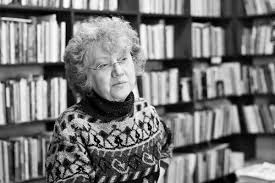
Poet Daniel Tobin


Poet Daniel Tobin: Casting a wide Net with his new poetry collection.

Interview with Doug Holder

Like any fine poet Daniel Tobin casts a wide net in his new collection of poetry The Net. Tobin, like Whitman, takes it all in and uses what he finds for fodder for his accomplished work. He is always on the lookout for what transcends the material world, the steak behind the sizzle, and what makes us run like a mutt after a meat truck.

 Daniel Tobin is the author of seven books of poems, Where the World is Made (University Press of New England, 1999), Double Life (Louisiana State University Press, 2004), The Narrows (Four Way Books, 2005), Second Things (Four Way Books, 2008), Belated Heavens (Four Way Books, 2010), The Net (Four Way Books, 2014), and From Nothing (forthcoming, Four Way Books, 2016). Among his awards are the Massachusetts Book Award in Poetry, "The Discovery/​The Nation Award," The Robert Penn Warren Award, the Greensboro Review Prize, the Robert Frost Fellowship, the Katherine Bakeless Nason Prize, a creative writing fellowship from the National Endowment for the Arts, and a fellowship in poetry from the John Simon Guggenheim Foundation. The Narrows was a featured book on Poetry Daily, as well as a finalist for the ForeWord Magazine Poetry Book Award.

I had the pleasure to speak to him on my Somerville Community Access TV show Poet to Poet: Writer to Writer.

********************************************************************************

Doug Holder: Dan, the poet Bill Knott died recently. He was a colleague of yours at Emerson College in Boston. Any anecdotes you would like to share?

Dan Tobin:  Bill was a terrific teacher. He was a very important poet of his generation. I was his department chair at one point. Bill was an eccentric. He basically did what he wanted to do. On one hand it was difficult to be his department chair, but on the other hand he was brilliant and you had to appreciate his dedication to the students. He was profoundly dedicated to them. He even bought them books…just one of the many things he did for them. He was very challenging in the classroom, and he would challenge his students very vigorously. He pulled no punches. If you could accept Knott’s stringent evaluation then you could learn a few things.

DH: You have a new poetry collection out The Net (Four Way Books). Can you explain the genesis of this collection—the germ of the idea?

DT: The title came to me after a number of false starts over the years. I saw this pattern of water imagery—things being connected to each other—in ways that were cosmic and intimate. The poems in the collection are philosophical and personal. The book has an epigraph from John Donne’s great poem “Anatomy of the World”:


For our meridians, and parallels,
Man hath weaved
Upon the heavens, and how they are his own.


 This book I suppose is a book of boundaries. Part of it is the human consciousness that shapes our view of heaven. But part of it deals with what is beyond our access—beyond our control. It is book of boundaries between the natural world and internal human space. I have to believe there is something that transcends us.

DH:  You were brought up in the Catholic faith. Did that meet your spiritual needs?

DT: Not always. I always had an ongoing argument with the church when I was young. And of course with the disheartening recent history of the church—well... the argument continues. The Catholic writers I admire most were on the fringes. They went out to the wider world to reach something larger than themselves. Then they reported back. Anyway I struggle with my religion, but I don’t reject it.

DH: One blurb on the back of your book states that you combine the metaphysical with the physical. Isn’t that the definition of poetry?

DT: I think so. Poetry inhabits a strange space. It is physical on the page, and a good poem gets into your body. Poems have rhythms that becomes part of the body. The poems often point to the human questions…the ontological. Poems are clarified boundary spaces. We of course use language in a poem. It is a rarefied space—every word counts.

DH: As we have been taught since grade school point of view is important to all kinds of writing. A critic points out that you write not from the narcissistic “I” but from the “eye” itself.  Hard thing to pull off?

DT: It is always hard when one is going to write autobiographical materials to go above that, so it is not just  a documentary recording. So I allow my form to lead me to a broader perspective. I let the poem lead. I follow clues it gives to me. I see the poem as a path beyond the self. The poem wants something from you. It is very important to remember that.

DH: In the poems I have read in your new collection I get the sense that you want to dissolve into the landscape.

DT: Well… there is something to that. The tension seems to me between being alive in the world and wanting to enter a larger reality through nature or whatever. You want to be inhabited by something larger than yourself.

DH: You weren’t born with a silver spoon in your mouth. In fact you grew up in a working class family ( In the then unhip) Brooklyn. How did your path lead to poetry?

DT: It is unprecedented in my family. My father never finished high school. He worked as a longshoreman. We lived in Bay Ridge. I got interested in poetry in high school. A teacher Raul Rodriquez, a Cuban gentleman, encouraged me. He even had me read my work with a microphone. I wouldn’t have been a poet if it wasn’t for him.


THE NET

Translated loosely from a lost Akkadian tablet
discovered among the ruins of Kush.


God of the first waters, Ea, listen,
You who parsed chaos with a net from the day:
Unfasten your knots, let the swells replenish
From subtlest channels, from the seams of flesh.
The galaxies circuit in their bright delay.
The least wind tempts me with what might have been.

_____

This petition you’ve given is nothing new
Since nothing is older than the wish to die.
The dew is famished for the sun’s caress
But disappearance does not bring release.
You long to slip the image from the eye
But the sky’s wide mesh will not acquit you.


Published in The Common.

Monday, May 12, 2014

Little Architects of Time and Space Poems by Susan Nisenbaum Becker


Poet Susan Nisenbaum  Becker


Little Architects of Time and Space
Poems by Susan Nisenbaum Becker
© 2013 Susan Nisenbaum Becker
Word Poetry, Cincinnati, OH
ISBN  9781625490476
Softbound, no price given, 84 pages

Review by Zvi A. Sesling

Becker’s title of Time and Space is exactly that: you know where you are going to be, who you will encounter or what is happening. In “My Father’s Lessons” Becker learns
how to swim, skate, observe, drink and more. That’s followed by “Noon At The Western Wall,” and “Elegy For A State Hospital.”  That is just the beginning.  Ms. Becker could have been in Star Trek doing warp time around the world.

However in “After the Divorce” she takes us all on a different ride:

Meet yourself—
come home at last—
hardly recognizable after
a long journey and perilous.
Climb into bed,
lie down on the white sheet
woven by your doing and undoing.
You will be surprised
how naked you’ve become,
how you tremble
and how like the bridegroom
you re, eager for yourself.
Pull aside the blankets,
look into the face
you’ve missed
and at the body
and, while you trace
still pink, spidered scarmaps
take yourself
back, whisper
welcome, welcome.

Here as in all the poems, despite all the time and space we see the poems are about Becker herself, for, as some would say, what is a poem if does not reveal something about the self – the author? 


In another poem “The Turning” you can see how Backer enters the poem subtly:

Four titmice on the sun-soaked birdbath.
Tufted, breast-blaze rose,

they splashed, chittered
dipped their sturdy beaks

through the water’s skin,
shook out feather on the warm

line of afternoon.
Their throb stole me

from my occupation fingering
the gash of your deceit;

pulled me to watch instead
how each took its turn,

how the basin embraced very
flutter and overflowed.

And then “Loons” which is what you want it to – sex, relationships, love, friendship – whatever.  Or perhaps it is about nothing less than nature and/or parental love.

Draw me to your warm
tuck, your tented wing. Feed me
the red, the silver quivering, gathered

when you let your body be
heavier than water—
when your neck, long as summer,

curled your spine to slice
the lake’s unwrinkled skin
and diving, you became a burst

of webs and thrusts and clear red eyes.
Shelter this down globe, just broken
from its shell, and flick your tongue

to me the song that coaxes
me into this world
and promises nothing.

Several things about this book are sure: it is well written, it is interesting, it evokes deep feelings, and it is a poetry you will remember. The poems led you to these different times of your life and into the unique spaces where you found yourself.


Zvi A. Sesling
Author, King of the Jungle and  Across Stones of Bad Dreams
Editor, Muddy River Poetry Review
Publisher, Muddy River Books
Editor, Bagel Bards Anthology 7 & Anthology 8

Tuesday, May 06, 2014

A Sharp Double-Edged Luxury Object Rodia Draghincescu


A Sharp Double-Edged
Luxury Object
Rodia Draghincescu
Translated by Adam J. Sorkin & Antuza Genescu
Cervena Barva Press
ISBN 978-0-9910091-2-1  $17.00

A Sharp Double-Edged Luxury Object, poems will enchant and intrigue the reader.  Very few books use language in the way Draghincescu does. Most experimental or contemporary poetry seems to me self-conscious. Reading Draghincescu's poetry is like slipping into warm water:

“my loveliness flung her panties in the street
we made a decision to wear everything in the open
(the history of this movement and its glory can be toasted
at its memorial between the first bench in the military park
and the first bench in the tribunal
a clothesline with panties in royal black)”

The first poem, Sight Doesn't Take Everything In, the reader will take a step back and adjust their  perception. The poem's 3 D vision requires consideration and a willingness to be in the poem. At once, the sentence’s tense is part of the present and the past at the same time. It also flings immediacy into another person and syntax. Another reason to read Draghincescu's poems with an open unfettered view is to see what a poem can be and become. We find sense in certain words that help to fuse the poem into its meaning and there are many meanings in the poems' relationship with words. Word like 'military park' and 'tribunal.'  Are we about to be invited to a tribunal of sorts. The end of a relationship --that may or may not encompass everything? It will take much thought to connect the intention:

“I'll exhaust myself saying aaaaaaaaaaaaah into the gizmo
innermost essentials will prick my skin up to
and over my head among white scarves / veils
my scream thanks to which the most abstract of experiences
gets hypostatized in war rivers
will come into intimate contact with the image
of water within”

 And I love the word gizmo. Like the word contraption it confers and shutters with resentments. The poet continues using fragments, Dada deconstruction, or the ordinary as poetry, done in an extraordinary manner; the Surreal clips cut into the poem and form visions, collages, broken watches. The poem ticks. We get to envision how the poem rounds itself, winding timelessly:

“so confusingly concrete I’ll be swimming in myself
anyhow the silence outside has abandoned this place
when I write the word loneliness I write participation
in an inward fanfare of birds
in demonstrations of laid-off virginity
short words muscular pathways still remain
gray hair too (a tendency towards intellectualization
makes itself known in the synapse / thigh in debate versus buttocks)
miss photo so tall so special rendered real as much by affections
as by intelligent ideas”

Disjunction works extremely well in the poem, yet, it flows into the next phrase with the ease of polished slashes and phrases. Rodica uses contemporary images, contemporary language with great skill and confidence. I don't get the sense that Rodica is different in her use of language. I get the sense that she is comfortable using all the nuances of modern poetry and how modern poetry can be made to sound like great poetry. Rodica is not afraid of words and using tense and words in her own tongue:

“where it rains best color with fuji
so much imaginary plasma so much conscious flesh
felling the fact that it's a wrongly perceived concept
miss process with her navel thinking of an everyday brain
without the supernumeraries of mental principles
anyhow my loneliness can be said to be poetry
and poetry wears no panties”

It would be a mistake on the readers’ part to think this poem more than it is. In fact it is what it is in so many ways we get to read about anger, love, intelligent musing about our world and its trappings, its politics, its religions. I find it all there and the poet herself appears ready for the next poem, always ready to write and write she does with the brilliance of any writer I’ve ever read. Bravo:

“but deep psychic phenomena instead
where the world parades with a bare bottom
and it won't depend on sight because sight doesn't take
   everything in
in the final analysis I’m not even lonely
as I lie here under the nightlight”

This is indeed a, “luxury object,” a must buy. Writing at its best is not self-conscious. A poem need not contain the world but I think it speaks to everyone in a language the poets deems understandable. The contemporary reader will adore this universal book.

Irene Koronas
Poetry Editor: Wilderness House Literary Review
Reviewer: Cervena Barva Press

Sunday, May 04, 2014

Eating Grief at 3 a.m. by Doug Holder: Review by Former Boston Poet Laureate Sam Cornish

 (Sam Cornish-Left  Doug Holder-Right)
                                 

Eating Grief at 3 a.m.
Doug Holder
Muddy River Books, 2013

Review by Sam Cornish

Doug Holder is a poet of the old city, the city of our fathers, of the 1950s and later. His most recent chapbook has been published by Muddy River Books, a new literary press. Mr. Holder writes poems like notes in a diary. I found myself struck by their economy, wit and urban melancholy. Holder is also a publisher and lecturer at Endicott College, as well as founder of the Bagel Bards of Somerville. As these poems demonstrate, he has a voice unlike that of any of his contemporaries:

There are no places anymore
Where I can sit at a threadbare table
Pick at the crumbs on my plate...

This poem opens a book with the bleak humor of early Beat writing and it is a welcome change from the evasive realism of current poetry from the mainstream and literary press. It is like reading a newspaper written by journalists who records the life of the city in the poem instead of prose. It’s like reading a white blues poem. From “Abandoned Warehouses”:

Sometimes you must follow
The rat’s path
The vagrant,
The scrawled invective of the graffiti

Doug Holder is a poet of the street and coffeehouses, an observer of the everyday. He writes of old Marxists, security guards and his relationship to his deceased father — themes of the common life. I am drawn to these poems as I am to the poetry of Philip Levine and the prose of James T. Farrell. But Holder’s poetry is deeper than that. He sees the world not for what it is, but on his own terms. He is living in the poem rather than in poetry.

It is late at night
And the fruit
Has gone bad...

These poems are to be read almost as if the reader is observing a photograph, centers the composition and the stories within stories. The poems are not only about what Mr. Holder sees, but how he feels. These are his words and no one else’s. From “Transcendence”:

You see when I am
84 floors up
my feet are still
cemented to
this goddamn floor
and I don’t know
who I am anymore.

This collection, if read slowly, pausing, will break your heart. I recommend it for its honesty and its purity.

— Sam Cornish

Thursday, May 01, 2014

Review of Eating Grief at 3AM by Doug Holder Reviewed in Gently Read Literature Spring 2014 issue.


Eating Grief at 3:00 a.m.
by Doug Holder
(Muddy River Books--Brookline, Mass.)
Review by  Bonnie ZoBell

In the spare yet rich poetry of Doug Holder's book Eating Grief at 3:00 a.m., there is a symphony of voices, places, and sounds. So clear are the ambiences, the run-down settings, the often broken, yet not always unhappy people who populate these poems, it's as if you've read a novel.
You haven't, but the expanse of details encases us in thoughts and a story much bigger than some novels do. There are so few words used in this spectacular chapbook counting them wouldn't take long, and yet they create worlds.
For example, in the poem "Carpal Tunnel Syndrome," we're told:
I thought of my father
As he gripped
His left hand
Prying it open with his right
A hand curling
Into a callused fetus
Holding on to
Something
For dear life.
I know that man, though I've never met him. His tension, his frustration, his buried anger at himself and at others make me twitch. That grip makes him too uncomfortable to want to be around, and yet the idea he has to hold on so hard to keep it all together makes me want to rescue him. There are only 31 words in that stanza, and yet I am able to fully appreciate the man.
Holder's ability to create such depth of character, to show such fully-wrought human beings with his sparse and yet impeccable lexicon is enough to make any novelist envious. In "Father Knows Best-Mother Does the Rest," anybody who is ever watched the TV show—and many of us saw a whole generation's worth—will know the essence of this character in the first few words:
The bland tyranny
of the cardigan sweater.
His smile
creased in brutal condescension.
Holder's ability to portray a sense of place might be even stronger. Consistently throughout these gems the reader feels the setting and its meaning immediately. In "Transcendence," we're told:
I'm 84 floors up
but the city
only seems to
make sense
from my exalted omnipotence.
So many of us who've lived in large urban centers have felt reduced by circumstances and the anonymity that living among great masses can bring.
The old men leftover from bigger days who live in the heart of so many of our cities are elegantly depicted in "Eating Grief at Bickford's," a poem dedicated to Allen Ginsberg:
There are no places anymore
Where I can sit at a threadbare table
Pick at the crumbs on my plate . . .
The old men
Who used to spout
Marxist
Rants from
The cracked porcelain of their cups
Are gone
The boiling water
Ketchup soup
The mustard sandwich
These used to relish
Throughout this collection of a time gone by, there is a sense of a whole nation of people who used to be the carriers of big ideas and ideals, people we may see ourselves as today. Only that older set of folks are in the margins now, hidden in the crevices. Younger people march into bars and cafes, pass them on the street, and don't even see those older humans, so sure are they of their own omnipotence, of their own starring roles. A past art teacher from one of the narrators' third grade classes worked hard all her life and is now reduced to being an old, angry woman painting caricatures of angry old women, something a younger person finds completely irrelevant. A man thinks back to one of his many trips to Kentucky Fried when he tried to put the brittle-boned, old chicken back together again but now understands you can never put the bird together again for all we are bones.
Humor abounds in these poems filled with people who aren't always at the top of their game. This and the alluring use of language allow us to travel the depths of some of these narratives and not become dispirited but instead find a warm familiarity of life expressed sublimely. This is who we are and this is who we will become.

To order a PDF of the Spring 2014 edition of the Gently Read Review go to  http://www.gentlyread.wordpress.com  

To order Eating Grief at 3AM go to:  http://www.lulu.com/us/en/shop/doug-holder/eating-grief-at-3-am/paperback/product-21232327.html

**********************************************************************************

 Bonnie ZoBell’s new connected collection, What Happened Here, a novella and stories centered on the site PSA Flight 182 crashed in the North Park area of San Diego, will be published in February 2014 by Press 53.  .  Her work has appeared in numerous publications, including Night TrainThe Greensboro ReviewNew Plains ReviewPANK, and The Connotation Press. ZoBell has been a fellow at such residencies at Yaddo, MacDowell,  and attended such conferences as the Bread Loaf Writers Conference, Tin House Summer Workshop, and the Squaw Valley Community of Writers. After receiving an MFA from Columbia on fellowship, she has been teaching at San Diego Mesa College where she is a Creative Writing Coordinator. Currently she is Associate Editor for The Northville Review and Flash Fiction Chronicles. .