Saturday, August 07, 2010

The Closing By Chava Hudson


The Closing

by Chava Hudson
Zingology Press
Copyright © 2010 by Chava Hudson
Softcover, 184 pages, no price listed
ISBN 1452865426

Review by Zvi A. Sesling

Chava Hudson has succeeded where other writers have failed: you know what murder is about at the beginning, yet the novel works, the people are believable and so you keep on reading.

Hudson’s story is about a real estate agent in a realty firm that does a bit more than sell realty. In fact, the way they drum up business will just kill you. But that’s all I’ll tell you, except that the novel is filled with irony, a touch of humor, but more important, leaves you with serious questions about moral values, mortality and what the future might bring to an ever aging population, a theme done many times, but here with a new twist.

Singles, Anne meets Steve and the romance begins. But Steve’s mother gets in the way, and not as you might imagine. Still, Anne, whose boyfriend has abandoned her, finds a new romance irresistible, even with the knowledge she keeps inside.

The story is fast paced, easy and fun to read and, perhaps, should be read by people with Victorian ideas of life and death and what is noble and what is not.

This is Ms. Hudson’s fourth book (she also writes poetry and edits the online journal zingology). It took her just over a year to write the closing, but the novel idea (yes I mean that both ways)came during a walk around town where she saw a for sale sign on a front yard. The realtor's name was Kevorkian, which got her thinking. Hudson had also just returned from Costa Rica where she spent two weeks at an artist colony and rode up to Monteverde with some friends she had made there. The result, a book worth reading.

Friday, August 06, 2010

Small Press Review: Poems from the Left Bank: Somerville, Mass.

(July-Aug 2010)


_____SOMERVILLE_____


Poems from the Left Bank
By Doug Holder
Alternating Current 2010
PO Box 183
Palo Alto CA 94302 USA
$5


Review by Hugh Fox


You want a trip into the depths, heights and widths of everyday reality of everyday in Somerville, Mass? Doug Holder’s latest is the best way to begin. You’re there! Just the kind of details that create essential unforgettable realities: “ Two old women/ Walk down my street/ Each morning/ Lugging two shopping bags/ And two widow humps/Arm in Arm/ A tight embrace/ of frail appendages/ Pushing each other/ At no more than a snail’s pace… (“Two Old Women,” p. 10) It’s true that Somerville, just next to Cambridge, is a place that seems to have stepped out of time into time into timelessness, reminiscent of Chatham, a “ward” in Chicago, back in the 1940’s…or Paris’ Left Bank (the origin of the title) more or less at the same time.

Holder has the eyes of a painter/sketcher/photographer. No one else on the scene can evoke so much reality with so few carefully chosen key descriptive words. A line here, a line there, and suddenly you’re right in the middle of his daily street reality “ “I could not decide whether to turn into it. / I was at the cusp of decision. Looking down its dramatic curves/The close habitation of sunlight and brooding shadow, the incestuous tangle of backyards/ The sudden eruption of a hill/In a stretch of flattened pavement/ The indicting chorus of Blue Jays/ Casting invective to the cold wind. (“Hamlet St., Somerville p. 11). It would be fun to see some Somerville film genius do an image-drifting film through Somerville with Holder himself reading the poems as the images drift by.

Thursday, August 05, 2010

COMPLETE LIST OF AUTHORS ANNOUNCED FOR SECOND ANNUAL Boston Book Festival


FOR IMMEDIATE RELEASE

CONTACT: Joyce Linehan (617) 282-2510 x 1, joyce@ashmontmedia.com


COMPLETE LIST OF AUTHORS ANNOUNCED FOR SECOND ANNUAL

BOSTON BOOK FESTIVAL

TO TAKE PLACE OCTOBER 16, 2010

IN COPLEY SQUARE


(BOSTON-August 5, 2010) The highly anticipated and expanded second annual Boston Book Festival will take place on Oct. 16, 2010, in various locations around Copley Square. Festival Founder and Program Director Deborah Z Porter today announced the complete list of authors confirmed to appear at this year’s event. The featured authors represent a wide array of programming, and include Pulitzer Prize winners, Nobel Laureates, children’s writers, and writers of fiction, non-fiction and poetry.

Authors scheduled to appear at The Boston Book Festival:


Susan Abulhawa (Mornings in Jenin)

Caroline Alexander (The War That Killed Achilles: The True Story of Homer's Iliad and the Trojan War; The Bounty)
Tom Barfield (Afghanistan: A Cultural and Political History)

Barry Brunonia (The Map of True Places; The Lace Reader)

Kate Bernheimer (My Mother She Killed Me, My Father He Ate Me: Forty New Fairy Tales)

Lisa Birnbach (True Prep; The Official Preppy Handbook)

*Bill Bryson (A Walk in the Woods, A Short History of Nearly Everything, At Home)

Thanassis Cambanis (A Privilege to Die)

Nicholas Carr (The Shallows)

Kristin Cashore (Graceling; Fire)

Richard Cohen (Chasing the Sun; By The Sword)

Justin Cronin (The Passage; Mary and O’Neil)

Jef Czekaj (Hip & Hop, Don’t Stop)

Kathryn Davis (Hell: A Novel, The Thin Place)

Alan Dershowitz (The Trials of Zion)

Elyssa East (Dogtown)
David Edwards (The Lab: Creativity and Culture)

Hallie Ephron (Never Tell a Lie, The Bibliophile’s Devotional: 365 Days of Literary Classics)

Timothy Basil Ering (Snook Alone)

Haleh Esfandiari (My Prison, My Home)

Noah Feldman (The Scorpions: The Battles & Triumphs of FDR’s great Supreme Court Justices; The Fall and Rise of the Islamic State)

Joshua Ferris (The Unnamed, Then We Came to the End: A Novel)

Tyler Florence (Tyler’s Ultimate; Tyler Florence Family Meals)

Nick Flynn (The Ticking is the Bomb, Another Bullshit Night in Suck City)

Alexis Frederick-Frost (Adventures in Cartooning)

Atul Gawande (Complications; The Checklist Manifesto)

Myla Goldberg (Bee Season; Wickett’s Remedy; The False Friend)

Christina Gonzalez (The Red Umbrella)

Allegra Goodman (The Cookbook Collector, Intuition; The Family Markowitz)

Andrew Gross (Reckless; The Dark Tide)

Jennifer Haigh (The Condition; Baker Towers; Mrs. Kimble)

Eric Haseltine (Long Fuse, Big Bang)
Edward Hirsch (The Living Fire; How to Read A Poem)

James Hirsch (Willie Mays: The Life, The Legend)

Erica Hirschler (Sargent’s Daughters)

Tony Hiss (In Motion: The Experience of Travel; The View from Alger’s Window)

*A.M Homes (This Book Will Save Your Life, Music For Torching, The End of Alice, In a Country of Mothers)

Ann Hood (The Red Thread; The Knitting Circle)

Michelle Hoover (The Quickening)

Marlon James (John Crow’s Devil; The Book of Night Women)

*Gish Jen (Typical American, Mona in the Promised Land, World and Town)

Steven Johnson (Where Good Ideas Come From)

Kevin Kelly (What Technology Wants)

Chip Kidd (True Prep; The Cheese Monkeys)

*Jeff Kinney (Diary of a Wimpy Kid)Jarrett Krosoczka (Lunch Lady series; Punk Farm)
Eric Kuhne (architect)

Kathryn Lasky (Guardians of Ga’Hoole)

*Dennis Lehane (Mystic River, Shutter Island; The Given Day)

Marianne Leone (Knowing Jesse)

Rose Lewis (I Love You Like Crazy Cakes; Orange Peel’s Pocket)

Brian Lies (Bats at the Ballgame; Bats at the Beach; Bats at the Library)

Kelly Link (Pretty Monsters, Magic for Beginners)

Scott Magoon (Spoon; Mostly Monsterly)

Simon Mawer (The Glass Room)

Jill McDonough (Habeas Corpus)

Richard Michelson (Busing Brewster; Tuttle’s Red Barn)

Mark Moffett (Adventures Among Ants)

Nick Montfort (Book and Volume: Interactive Fiction, Racing the Beam)

Dambisa Moyo (Dead Aid)

Nicholas Negroponte (Being Digital)

*Joyce Carol Oates (them, Blonde, We Were the Mulvaneys, Sourland)

Jane O’Connor and Robin Preiss Glasser (Fancy Nancy and the Fabulous Fashion Boutique)

Mitali Perkins (Bamboo People, Secret Keeper)

Michael E. Porter (Redefining Health Care)

William Powers (Hamlet’s Blackberry)

David Rakoff (Half Empty)
Joanna Smith Rakoff (A Fortunate Age)

Aaron Renier (The Unsinkable Walker Bean)

John Rich (Wrong Place, Wrong Time: Trauma and Violence in the Lives of Young Black Men)

Moshe Safdie (architect)

Michael Sandel (Justice: What’s the Right Thing To Do?)

*Stacy Schiff (Vera, A Great Improvisation, Cleopatra: A Life)

Juliet Schor (Plenitude: The New Economics of True Wealth)

Rob Scotton (Russell The Sheep; Scaredy Cat Splat)

*Amartya Sen (Development as Freedom, The Idea of Justice)
David Shields (Reality Hunger: A Manifesto)

Brando Skyhorse (Madonnas of Echo Park)

Jessica Stern (Denial: A Memoir of Terror; Terror in the Name of God; The Ultimate Terrorists)

*Joseph Stiglitz (Freefall, Making Globalization Work)

Francisco Stork (Last Summer of the Death Warriors; Marcelo in the Real World)

Sir Peter Stothard (The Spartacus Road)

Maria Tatar (The Classic Fairy Tales, ed.)

Jerald Walker (Street Shadows)

*Edward O. Wilson (The Ants, The Naturalist, Anthill: A Novel)

*Kevin Young (Jelly Roll: A Blues, For the Confederate Dead, The Art of Losing)

Raffi Yessayan (2 in the Hat; 8 in the Box)

Da Zheng (Chiang Yee: The Silent Traveler from the East)


*previously announced authors


Panel hosts and moderators will include Tom Ashbrook (WBUR), Helene Atwan (Beacon Press), Joel Hyatt (Current TV), Peter Kadzis (Boston Phoenix), Bill Littlefield (WBUR’s It’s Only a Game), Neri Oxman (designer), Henriette Power (The Drum Literary Magazine), Faith Salie (actress, comedian), Megan Marshall (biographer), Nicholas Negroponte (One Laptop Per Child), Bill Littlefield (WBUR), Andrew McAfee (research scientist), James Sebenius (Harvard Business Professor), Stefanie Friedhoff (journalist), and Jared Bowen (WGBH),


Locations in the Copley Square area include The Boston Public Library, Old South Church, Trinity Church, Church of the Covenant and John Hancock Hall.


Author bios are available at www.bostonbookfest.org. The complete program of events, including times, thematic groupings and exact locations, will be announced after Labor Day. In addition, the Boston Book Festival will announce details of a street fair on Copley Plaza, including music, vendors and children’s activities. All daytime events will be free. Details of a ticketed, evening event featuring music, spoken word and other media, will be announced soon.


The inaugural festival, held in October of 2009, was an unequivocal success. Organizers estimate that 12,000 people attended the presentations, panel discussions, workshops, music performances and street fair, most of which were free. The event featured 90 authors and presenters, including some of the biggest names in the literary world, 40 outdoor exhibitors, 30 indoor events, children’s activities, and live music. Internationally-known fiction and non-fiction writers, scholars, critics and commentators spoke to packed houses at historic Boston locations.

The Boston Book Festival recently announced One City, One Story, a new initiative made possible with support from the Goldhirsh Foundation. The Boston Book Festival will publish a short story by a well-known local writer, which will be distributed as a bound booklet to 30,000 Bostonians, free of charge. It will also be available for download to anyone at www.bostonbookfest.org. Festival organizers are finalizing their choice of writer, and his or her name will be announced later this month. Distribution will take place at Boston Public Library branches, subway stations and other places where people gather, in October, in advance of the Boston Book Festival. Complete details about distribution times and locations will be available after Labor Day.

Boston Book Festival sponsors include Liberty Mutual, The Boston Foundation, Other Press, Houghton Mifflin Harcourt, Hotel Commonwealth, The Plymouth Rock Foundation, Hachette Book Group, Bank of America, and The Massachusetts Foundation for the Humanities. Media sponsors include WBUR, The Boston Globe, Boston Magazine, The Boston Phoenix, New England Cable News, WBZ NewsRadio 1030, Mix 104.1, 103.3 WODS, WGBH, The Times Literary Supplement (of London) and The Boston Parents Paper.

Boston Book Festival Partners include Mayor Thomas M. Menino; The Mayor’s Office of Arts, Tourism and Special Events; The City of Boston Parks and Recreation Department; ReadBoston; ArtsBoston; Mass Poetry Festival; ArtsFuse; Boston Public Library; Jewish Community Centers of Greater Boston, the Boston Athenæum; PEN New England; Grub Street; Trinity Church; Old South Church; Boston Children’s Museum; Cambridge Public Library, New Center for Arts and Culture; 826 Boston; Brattle Theatre, Berklee College of Music; Emerson College.

For more information about the Boston Book Festival, visit www.bostonbookfest.org.

Grassroots by Jared Smith


Grassroots
Jared Smith
Wind Publications
ISBN 978-1-936138-09-8

Review by Irene Koronas


Jared Smith is a prolific writer. In his most recent collection of poems, 'Grassroots,' his voice is mellow and strong like a great sequoia. We hear the prosody, his consistent, insistent voice warning the reader of dangers associated with turning out:

"…The sky is cornflower blue tonight,
mountains pasted against orange clouds.
No depth. But in this spring warmth
brought upon us Washington and Wall Street
are as far as a car can run on rum and corn.
Men with heart attacks building in their veins
are shipping coffins across the oceans
but here on the sere sands of home something
more sacred than all their dreams evanesces away.
I watch from my porch as distance falls flat with sun…"

In the excerpt of the above poem, 'monsoon,' Jared Smith's voice, like winter water rushing over boulders, "keeping watch over the dead." Smith asks the earth, questions, "I want to know what they say, what the earth signals to itself rushing outward in the cosmos" His questions are reminiscent of a long marriage:

"It's the knick-knacks on department store shelves that give it away.
I miss the way your hands used to curl about my thoughts
each morning.
So much of life is our mementos being placed in orderly sequence and then sold."

It took me a few reading before I was able to unclog my summer ears and catch the intimacy of Jared's poems, how living beside mountains move him:

"When you live up close to the mountains
disaster comes at you quickly, without worry.
The floods, when they come, are instant washings
of trees, boulders, cars, mud, flesh, and then gone.
You rebuild instantly in a landscape shaped by nature;
you don't worry about the slow-building droughts
or the warring away of cement encased institutions
because you learn where the deepest rivers flow
and where the caribou migrate among the seasons.
You learn the bitter acid tang of Oregon grapes.
You learn to keep a bit of land around you; you
learn to fill the hummingbird feeders in summer
because the bears will follow in their time, and
you never know when you'll need to find a bear."

'Grassroots' holds all the trees, all their branches from top to the bottom shade, the clean breath beside whatever nature provides; her great sentences. Smith's poems relate nature and the nature of situations.

Irene Koronas
Poetry Editor:
Wilderness House Literary Review
Reviewer:
Ibbetson Street Press

Wednesday, August 04, 2010

Ibbetson Street 27 Reading Aug 21 7:30PM Out of the Blue Art Gallery


Ibbetson Street 27 Reading Aug 21 7:30PM Out of the Blue Art Gallery


The release reading for the literary journal "Ibbetson Street" (27) will be held at the Out of the Blue Art Gallery Saturday, Aug 21, 7:30PM 106 Propsect St. Cambridge. We will be a featured event at Deborah Priestly's Open Bark Poetry Series.


There will be an open mic for past contributors and the public. And we hope to have featured readers from this issue including: Zvi Sesling ("King of the Jungle"), Miriam Levine, Harris Gardner, Lainie Senechal, Dorian Brooks, Dan Sklar, Robert K. Johnson, as well as Ruth Kramer Baden, who has published a new collection with Ibbetson: "East of the Moon," and others. $4 donation at the door for the support of this valuable grassroots gallery. If you have any food you would like to bring or drinks we have a large table to accomodate that. Ibbetson Poets may bring books to sell.

* There will also be an informal gathering for dinner at 5:30 PM at the Middle East Rest. in Central Square before the event. Tell me if you plan to attend so I can make reservations. http://www.mideastclub.com/

Tuesday, August 03, 2010

BILLIE HOLIDAY ME AND THE BLUES by A.D. Winans


BILLIE HOLIDAY ME AND THE BLUES

By A.D. Winans

erbacce-press, Liverpool UK 2009

36 pp., $8.00

Review by Terry Reis Kennedy


It’s holy. It’s blue as a bruise. It’s A.D. Winans at his best, so merged with Billie—her pain, her songs, her longing for love—that we feel their Oneness. Winans identifies with the Jazz saint’s ability to survive the worst in life, and remain committed only to her art.

These poems are hard as nails, but paradoxically smooth as honey because they are sprung from the depths of compassion, the poet’s great love of humanity—particularly the downtrodden, the abused, and the outsider. His is a love so large that, like his heroine, Winans never finds an equal partner.

In much of his published work, for example, we discover that personal, sexual love is thwarted by fate. He loves, instead, the unknown suffering, the “huddled masses”. His idealistic longing is always disproportionate; nothing can fill the void that the Truth keeps on enlarging— people are not interested in their fellow men, not interested in seeing them as brothers and sisters, only as objects to be used, abused, and cast aside.

In “Jazz Angel” one of the most evocative poems in the collection, Winans relays what he discovers walking the streets of San Francisco. Delivering the poem like a detective’s report, the straight forwardness of the words eviscerates us:

She sits alone

In her small hotel room

Above the 222 Club

At Ellis and Eddy Streets

8 months pregnant

Forced to give head

For soup and bread…….


And after showing us the woman’s life, as if he was in her room himself, which perhaps he was, he writes:


She heads for the door

Hears the night manager whisper

“Whore.”

Suspended in silence

And grief

Floating face down

In the bowels

Of the American dream….


For Winans, the Jazz Era celebrated the sensitivity of souls who had no interest in superficial values. To him, Jazzers were what William Blake had described poets as, “fallen angels”. Billie Holiday was an alien in a world hooked into money and fame. And Winans who always worked at jobs to support his art never wanted to be part of any Gentleman’s Club. In “Post Office Reflections,” he notes:


Bone-ass tired from

Sorting thousands of letters

Fingers numb from stuffing

Them into pigeonholes

& I smelled of sweat and death

& kept drinking until

I felt good

Or ran out of money

Or both

& rode the 14 Mission Bus

Home with other people

Like me

Who couldn’t do

A nine-to-five shift…


Although Billie Holiday’s archangel wings got burned up in the fires of the country’s heartlessness, its racist Klanism, its failure to perceive women as equal to men, in her performances she was she able to fly. Winans empathizes with her yearning for salvation through freedom. Consequently, he has created this tribute, not only for “The Jazz Lady” (title of a poem dedicated to her); but he sings a sad farewell to the Blues as well. For example, in “The Demise of Jazz in North Beach,” he writes:

No cool cats in North Beach anymore

No cool cats blowing the horn

No jazz at the old Purple Onion

No be-bop snapping fingers

No fallen angels spreading their legs

On the way home after

A conversation with God

No black cats improvising the blues

No white dudes riding the midnight express

No stoned soul train musicians blowing

Mean clean notes crucified suffocating

In the smoking mirrors of the mind

Gone buried in the decadence

Of collective madness

Monday, August 02, 2010

Randy Ross writes from the “Loneliest Planet…” in the midst of Somerville, Mass.


(Randy Ross-center)


Randy Ross writes from the “Loneliest Planet…” in the midst of Somerville, Mass.

By Doug Holder

Randy Ross, an aspiring novelist who lives in the hinterlands of Somerville, Mass. that borders on the Republic of Cambridge, is a “holy fool.” Ross, 49, who was laid off his job as an editor at PC WORLD, works day and night on his novel “ The Loneliest Planet: A Handbook for the Chronically Single.” Ross, who has an advanced degree from North Western University in Journalism, also founded the online and in the flesh group “Media Chowder.” The group is made up of local journalists, novelists, and denizens of the media world from broadcast to the internet. Ross said, “We are open to people of all levels.” The slogan of the said group is “Media Chowder: The best damned excuse for Boston-area journalists to go out drinking, period..." And indeed they meet at Sidney’s, a convivial pub just outside Central Square off of Mass. Ave in Cambridge, Mass. The group is an excellent place for folks to down a few and network with people in the field. Ross told me that AOL.COM once recruited at one of their gatherings and folks have secured gigs through the group.

Ross described his work-in-progress as a story about a never-married hypochondriac who takes a trip around the world hoping to meet his perfect mate. Along the way he gets involved in the lurid world of sexual tourism. Much of the “action” takes place in Cambodia. Ross said the book is very loosely-based on his own travels around the world. He describes the novel as a dark comedy of sorts.

Ross said of the prospects of publishing the book: “I have gone to endless conferences. I have met with about 7 agents, 3 of whom have asked to read it when it's finished in late fall/early winter, and I have gotten just enough encouragement to continue.”

Ross works part time to help keep chowder on the table, and the rest of the time he labors over his novel. He is in three writers groups, and has run workshops with local writers such as Michael Mack and Daniel Gewertz. Like many of the writers I have interviewed Ross is enamored with Somerville, Mass. He loves the proximity to his fellow scribes, and the whole vibrant milieu the “Paris of New England” offers.


*****Go to this link for more info about media chowder and Ross:

http://mediachowder.weebly.com/

Sunday, August 01, 2010

MRB CHELKO: Parting words from a Somerville Poet


Unfortunately at times Somerville loses its many talented artists and writers to the allure of New York City. Poet MRB Chelko is one of them. I interviewed her shortly after she left Union Square to the "City that never sleeps." She has a recent collection of poetry out "What to Tell Sleeping Babies" published by the sunnyoutside press; a press that also left Somerville for Buffalo, NY.


MRB Chelko is a recent graduate of The University of New Hampshire's MFA program and Editorial Assistant of the unbound poetry journal, Tuesday; An Art Project. Her poems have appeared in AGNI Online, Contrary, Fourteen Hills, Portland Review, and other fine journals. She lives with her husband, Nick and dog, Chuck in Central Harlem. Her chapbook is What to Tell the Sleeping Babies (sunnyoutside, 2010).


You got your MFA at the University of New Hampshire, where Charles Simic teaches. You seem in some ways to share his spare and minimalistic style. Was he a big influence on you?


Yes. The first time I read Simic was in an intro poetry workshop at Penn State University. I was nineteen and had never encountered a poetry at once so strange and so accessible. I read all of his books and as many of the Eastern European poets who influenced him as I could. I tried to imitate his style. Ha, I was a pretty intense little wanna-be poet. Thank God I didn't actually know Simic then. He might have needed a restraining order. The Simic influence in my work is considerably watered down now, but in What to Tell the Sleeping Babies it's pretty potent. Mystery is one of the great pleasures of poetry, and, for me, spare poems allow for more mystery because they allow space for silence. Simic is master of eerie silence, but he is also master of undercutting the eerie silence. It's one of the most thrilling things about his genius There's a poem of his in which he lists all the terrible things that happened to him in his life, but the poems ends with something like When I think about these things... I burst out laughing.


You left Somerville, Mass--the Paris of New England—why?


Ha. The Paris of New England, I like that. Well... my husband Nick and I lived in Somerville for two years while I was finishing my MFA. We lived near Union Square and were quickly wooed by Neighborhood Restaurant, Block 11, Highland Kitchen, the neighbor kids, Market Basket, the dog park.... But Nick and I both wanted graduate degrees, and he was kind enough to wait until I finished mine to begin his. We moved to New York City in June so he could attend Columbia University's Urban Design graduate program. New York is a good fit for us; we're fast-paced people really, but we were very sad to leave behind a great neighborhood and beautiful friends.


You published your first collection "What to Tell Sleeping Babies" with the sunnyoutside press. Why did you send it their way?


Great question. I was in a poetry workshop a few years ago with sunnyoutsider Nate Graziano. At the end of the semester, he told me he thought David McNamara—sunnyoutside creator, beautiful book maker, and general jack-of-all-trades—would like my poems. David had published another poet I was familiar with, Jason Tandon, recently as well, so I was somewhat familiar with the press. Anyhow, I sent some stuff along to David, not a whole manuscript, just a few poems, and that was the beginning of what's now been a brilliant two-year, two project relationship with sunnyoutside. I can't say enough good things about David McNamara and his Buffalo, NY press. The books are gorgeous, the work relationship flexible and exciting. Above all, I trust that my poems will be well represented by sunnyoutisde, and that's a big deal.


You worked as an editorial asst. at "Tuesday; An Art Project" a very unusual and artful journal of poetry. Can you tell me about the journal and your experience there?


I am still editorial assistant of Tuesday; An Art Project actually. Most of the work I do for the journal is online: e-mailing, contact info, contracts... so I can still do it from New York. In fact, we are thinking of launching a Tuesday reading series in Brooklyn starting this fall, which I'm very pumped about. The journal is four years old now, so we're poised to expand our reach a little. It's exciting. Tuesday; An Art Project is an unbound journal of poems, photographs, and prints out of Arlington, MA. It comes in a little package twice a year. The idea is each work is an object. Some poems are postcards. Others you can put on your wall or frame or do whatever you want with. You do more than just read Tuesday; you interact with Tuesday. It's a cool concept, but the journal is much more than a concept. It's a collection of truly first-rate art. We've published tons of poets I love, Ralph Angel, Mary Ruefle, and Joshua Beckman to name a few. Working with the journal's creator and editor, Jennifer Flescher, over the past few years has been a great learning experience for me, and a blast.


I loved your poem "the unplucked fruit hangs itself." You have an image of this fly flinging itself time and time to get a t the light. Well, to use a metaphor, ain't that a bit like a poet?


Yup. It sure is. Although, in the poem, the fly is throwing itself into the light “like a bored child throws a ball.” As a poet, I am certainly not bored, but I do think the notion that we are, as writers, constantly trying to fling our bodies and our perceptions towards some great bright thing is pretty accurate. It's all about Frost's idea that a poem is a “momentary stay against confusion.” When you look at the poem, you see the light; when you look away from the poem, blackness.


Dear Whoever's Listening


You can press an orchid anyplace,

provided you've come with an orchid—


for the sake of some great something,

some final, Oh, there you are...


I say let the pigeons alone

rest on the shoulders of great men,


but I've been sitting here for hours

between a fruit basket and an open book,


trying to pick one—

Friday, July 30, 2010

Book Fair --- Haverhill Public Library-- Aug 26, 2010


PARTICIPANTS


Christopher & Nancy Obert, owners of Pear Tree Publishing and authors of “The Next Harvest, Vineyards & Wineries of New England.” (Event Organizer)


Coralie Hughes Jensen, author of the novels “Passup Point,” “Lety’s Gift” & “Winter Harvest.” (Event Organizer)


Christopher Golden, nationally famous author of many comic books, plays, horror & fantasy novels, including “Wildwood Road,” Straight on Til Morning” and Buffy the Vampire Slayer novels.


Allan Hunter, author of “The Six Archetypes of Love” and “Stories We Need To Know.”


Bruce Valley, author of “Seahawk: Confessions of an Old Hockey Goalie, “Flying Frenchmen: The Story of the Berlin Maroons and the REAL Hockeytown USA” and “Rye Harbor, Poems of the New Hampshire Seacoast.”


Claire Gibeau, author of 2 novels and 8 children’s books.


Elena Dorothy Bowman, author of “The Sarah’s Landing” Series.


Jean Foley Doyle, author of “Life in Newburyport, 1900 – 1950” and “Life in Newburyport, 1950 – 1985”


K. D. Mason, author of “Ice Harbor” and “Changing Tides.”


Lucinda Marcoux, author of “King of the Forest.”


Nate Kenyon, author of many horror books and short stories including “Prime” and “The Bone Factory.”


Tracy Carbone, short story author with stories in the “Traps” anthology and many other publications.


Scott Goudsward, author of horror novel “Trailer Trash,” editor of “Traps” and author of the non-fiction horror guidebook “Shadows over New England.”


Paul Stone, author of “Or So It Seems” and “How to Train a Rock.”


Monique & Alexa Peters, authors and illustrators of “Cooper and Me.”


Michael LaFosse & Richard Alexander, owners of Origamido Studio and authors of numerous books on origami.


Ashlyn Chase, author of “Strange Neighbors” and other Romantic Comedy.


Anna Soria, editor of “Voices of Haverhill” poetry by Greater Haverhill Poets.


Jeanine Malarsky, author of “Black Raspberries.”


Anne Ipsen, author of “Karen from the Mill”, a novel from the golden age of sail; as well as other novels.


Christina James, Author of “Naughty and Wicked Romance...With No Strings Attached” and other novels.


Cindy Davis, author of the novel “Voice from the Ashes.”


Dave Daniel, author of “Murder at the Baseball Hall of Fame.”


Ed Marshall, author and creator of the hand made poetry books “Sandalwood,” “Lilacs” and “Ripples.”


John Katsaros, author of the World War II memoir “Code Burgundy, the Long Escape.”


Kevin Conley, comic book illustrator for comics such as “Kid Houdini and The Silver-Dollar Misfits.”


Michael Bisceglia, author of the novel “Room 600.”


Michael Kilday, author of numerous Spiritual books.


Michaeline Della Fera, author of “Women at the Table.”


Nikki Andrews, author of “Chicken Bones” and “A Windswept Star.”


Pat Emiro, author of the memoir “Finger of God” and the poetry book “Expressions from His Heart.”


Roxanne Dent, author of supernatural Romance novels.


Doug Holder, founder and editor at Ibbetson Street Press – which publishes the best of the small press poetry.


William Bond, author of many business books.


The Greater Haverhill Poets, a group of poets and writers based in Haverhill, Massachusetts. Authors of the poetry compilation books “Pen & Brush,” “Voices of Haverhill” and “Poetic Fairy Tales.”

Thursday, July 29, 2010

Lip by Cathryn Cofell


Lip


Cathryn Cofell
www.cathryncofell.com
Abella Audio Productions
$13.00

In the early part of the 20th century poet Basil Bunting was among the first poets to drive home the point that poetry should be spoken, that like a musical score it was not intelligible until it was heard aloud. And so performance poetry began to take shape. Yet it took until the 70’s and the arrival of slam poetry for spoken word and performance poetry to really begin to find their zenith. Today, the marriage of poetry and music continues to expand into libraries, coffee houses, pubs, art galleries and sometimes spills its lyrical beauty in gardens or on street corners. Cathryn Cofell’s CD “Lip” (music by Obvious Dog) combines her love for the written word with her love for music and her talent for public speaking into a journey syncopated with words jazzed up with musical interludes.

Ms. Cofell’s list of credits runs long. In addition to “Lip,” she has published numerous books of poetry, won 40 plus awards, and was nominated not once, but twice, for a Pushcart. Her full-time gig is in the non-profit arena and this Wisconsin girl also finds time to support the Arts, as a self-proclaimed “sucker for a good cause.” While her credits also include speaking engagements and voice-over work, I have to say that this reviewer was somewhat disappointed in the delivery of the work on “Lip.” The poetry is intense, touching on women’s themes from the get-go. The first work deals with puberty, menses, coming of age, and the evolution through the phases of a woman’s moon – yet, the performance barely skims the surface of the emotional sworls and upheavals of women’s cycles of life.

With titles like “Ms. Conception” and “Covered in Hicky’s” we continue to follow Ms. Cofell’s emphasis on women’s themes, sexuality, and fertility or lack thereof. By half way through the CD I found myself humming the old tune, “I am Woman!” (hear me roar)

The musical interludes of Obvious Dog are sound enough in the beginning and the music is allowed further showcase as the CD progresses, but is never the breath of a soundtrack beneath the lyrical spoken words.

This is a CD that addresses the evolution of women; the writing and imagery is solid and I enjoyed listening to it multiple times in my car, even as I longed for a more evocative presentation of the spoken word.


*****Rene Schwiesow is a co-host of Poetry: The Art of Words in Plymouth, MA. She co-owns an online poetry forum (poemtrain.com), has been published in various anthologies including “City Lights” and is a regular at open mic’s on the greater Boston poetry circuit.

Wednesday, July 28, 2010

REVIEW OF VACATIONS ON THE BLACK STAR LINE by MICHAEL CIRELLI


REVIEW OF VACATIONS ON THE BLACK STAR LINE by MICHAEL CIRELLI

(Hanging Loose Press, 2010)


REVIEWER: Manson Solomon


Michael Cirelli’s work is Good Stuff. With an agenda.


His seriousness of purpose is made clear in the epigraph: “Why hasn’t racial anxiety, shame and hatred . . . been more a theme in poetry by Caucasian-Americans? . . . To speak in a voice equal to reality . . . will mean admitting that one is not on the sidelines of our racial realities, but actually in the tangled middle of them, in very personal ways.” (Hoagland, Tony, “Negative Capability” The American Poetry Review Mar/Apr 2003: Vol 32, No.2. )


Cirelli dives right into the “tangled middle” of hip-hop culture, complete with his own personal Brown Skin Lady (well, ladies actually, since there are no less than five poems with that title, some of whom are, not insignificantly, Middle-Eastern and South Asian rather than African-American), and proceeds to


. . . surround myself with black

people, black people that

had space jive, had cosmic

language wrapped

around their fingers,

and I homaged those words

and deconstructed that swagger . . .

as I boarded

every new rocket ship


and from that vantage point he comes at us with his authentic poetry.


So far so cool. But why is this white boy speaking poetry on behalf of blacks? Can’t they speak for themselves? Well, he isn’t – he is actually speaking for himself. The hip-hoppers and rappers are speaking for themselves in the rap and hip-hop itself – it’s their authentic voice, but it ain’t poetry. Cirelli has been called a “hip-hop” poet, and if by that it is meant that hip-hop is often the subject of his poetry, fair enough. On the other hand, if it is meant to suggest that his poems are actually hip-hop themselves, then nuh-uh: he is no more a mere hip-hopper or rapper than Wordsworth was a daffodil or a waterfall. Though he often immerses himself in the rhythms of hip-hop, and many of his poems allude directly to specific hip-hop songs, his work is way too good, too sophisticated, to be mere hip-hop lyrics.


What Cirelli does is to personally enter into the hip-hop scene and write about it from within – or as within as a white boy can get -- giving us real poetry about it rather than merely mimicking it. So, for example, imbedded amongst all the hip-hoppy, rappy, yo’s in “Yo Yeah” -- including ribald footnotes containing scores of them, and even some deleted yo’s and yeah’s -- are real gems, such as: “Yo multiple literacies / Come wrap / Your mouth around / My ear so I can listen / to the ocean in there.”


Or, as in “Tawk”:


When T-Pain . . .

. . . named his album

Rappa Ternt Sanga, he wasn’t being

Ignorant, or ignant at that, wasn’t bad

at spelling . . .

. . . but he was

accounting for the texture of the dirt

in his teef . . .

. . . This makes sense to me.


Cirelli is an interpreter, a translater, a poet with hip-hop as subject who, the better to convey his message, often employs its rhythms and language. In “I Am Hip-Hop”, he says:


I claim nothing but hip-hop

I’m the white Eminem . . .


That makes me part gangsta. You know what time is it ---


When I win the Pulitzer prize, for Realness, the Nobel

for my translation of Hip-Hop.


In the first Brown Skin Lady he becomes an “extra black white boy” who “surrounded myself with all this darkness, packed my mouth / full of Shea butter & AAVE [African-American Vernacular English] until I felt black in sheep’s clothing, / which isn’t black at all, but it comforted me to be so god damn down, / so schooled in hip-hop like hip-hop was a hall pass to blackness” only to learn “that I wasn’t nearly as black as I thought.”


And in “Birthplace”:


wanting to be their “dawg” ---

but feeling like a mailman

another Elvis


So why has he taken this path? Is it only to respond to Hoagland’s injunction, or is it also something more personal?


In “Definition” he speaks eloquently of his childhood, of eating breakfast with his sister in his family’s American dream diner, staring out/ the window/ at the orange leaves / dancing on the hard edges / of the wind, before going off to Catholic school.


And in “Ars Poetica””:


I am herringbone gold chain

hanging from the neck of a Tony Soprano

devotee with dried marinara

flaking from the hairs of his perfected goatee.

Italy laughs at this version of Italian, of us,

but I embrace it because it is something

I can call my own.


On the other hand, as he tells us in RE:DEFinition, he is ambivalent about contemporary Italian-American identity, absorbed as it has become into the general culture: “My People: noun No longer Italiano not even / Wop no longer Irish / Polack”. Or again, in the My People section of “Twice Inna Lifetime”:


. . . My cousins live in Providence

where every wanna-be-thug-gangsta

goomba hangs a lynched Jesus from his neck,

and the wardrobe of African-America

off his ass. I don’t know who’s worse off.

In Brooklyn, my friends with privilege

have the privilege of understanding

privilege. We pay off student loans

from our Adventures in Ethnography.

We read culturally relevant books

from other cultures and swathe our tongues

in hip logic . . .


(In his use of ‘logic’, Cirelli, with his Catholic school education, is surely alluding to ‘logos’, the Word, a concept with a long philosophical history embodying the idea of Truth being made manifest through language.)


In RE: RE:DEFinition we get the college-age kid rolling around the world trying on different scenes. “I could surround myself / with poems in San Francisco / where the Beats have pacemakers . . .”, ending up in “Brooklyn where hip-hop is jacked electricity and beats broken and samples stolen so hip-hop (in a way) is white like me.”


Thanks to MTV et al, and booming bass technology, hip-hop is now a persistent presence in the lives of young people; as Cirelli puts it in “Anecdote of 16 Bars”:


It was the sound of black troubadors.


The projects rose up around it and were

no longer wilderness to those who hadn’t

lived there. Teenagers across the heartland


romanticized the bravado of Bronx, wanted

a lick of the red tongue, to fit into its baggy jeans.

this is the age when the word became fresh


and it took dominion everywhere.


(Perhaps, one might add, not unlike the absorption, after huge initial resistance, of jazz and swing into the mainstream, played as it is today without a second thought by totally white bands.)


And, significantly, interwoven into all this is another powerful strand, the impact of the election of Obama.:


In 2008, the poster on my wall

has a 4-letter word and a black face,

who is not an athlete, not a rapper.

I put black on a pedestal. Pray to black

five times a day. I make black the new

white . . . (“Black President”)


-- and--


I’m afraid this new intergalactic

President of ours absolves my people

. . . like it offered us stripes, like it made us

The Voyeurs of Inequity, like it added

to our bios. (Twice Inna Lifetime”)


But what about the word “Vacation” in the title? That suggests not mere “Voyeurs of Inequity” or privileged “Adventures in Ethnography”, but a sojourn: “When I vacation / on the moon, I don’t want to look like / a tourist . . . When I look into the eyes / of the aliens, I know the pain they’ve seen.”


So are AAVE and hip-hop the inside now and are Caucasian-Americans on the outside, merely vacationing on the Black Star Line (a reference to a hip-hop album which is itself a reference to African nationalist Marcus Garvey’s shipping line)? To a young man questioning the vitality of his own domesticated culture, such a vacation offers an opportunity to engage with a vibrant new energy. Cirelli injects himself into that world, and, being a poet, sings of it – to his great credit in a voice more melodic and harmonious, and of exponentially greater sensitivity, than the music it alludes to, a voice that invites us to enter into a world.


There simply isn’t room in this review to do justice to all the many excellent poems in this collection, the delightful turns of phrase, allusions and insights, or to engage with the accompanying downloadable MP3 or the non-hip-hop-related pieces . Though eminently accessible on the first reading, like all good poetry, carefully crafted and real, it warrants reading and re-reading, as new meanings arise with each sojourn.

Tuesday, July 27, 2010

Review of EAST OF THE MOON by Ruth Kramer Baden


Review of EAST OF THE MOON by Ruth Kramer Baden, Ibbetson Street Press, 25 School Street, Somerville, MA 02143, 2010. Book design by Steve Glines (ISCSPress.com)

By Barbara Bialick

The poetry collection, East of the Moon, is at once mythic, narrative, story telling and bursting with flavor beads of some great stand-alone poems. As she takes the reader through the lifecycles of a mature woman, age 70, we see the span of a full first collection, which has obviously been writing itself in the back of her mind for a long time. It may be a first book, but not a first-time writer. The work echoes with the awful meanings behind fairy tales, the things that the original tellers didn’t dare to say but to imply. It also seems influenced by William Blake’s voices of innocence and experience.

The cover design and inside black and white ink drawings add a lot to the fairy tale theme. But the royal blue cover and its own painting quoting “Schoen ve de le vune”—you are lovely like the moon.—makes its own stamp on the collection as it literally feels like nubuck leather boots, which mimic the boots of the Cossacks and others roaring through history, using and abusing women and everyone else.

Some examples from the book:

“She was the clever one,/Hansel had always been slow./She knew they could not go back/their stepmother would break them/their father would betray them…”
(“Gretel Ever After”).

“She told the prince, If I married you/I would become a frostbitter woman/who could not hear my children/sing or cry/…Touch me and I will kill you…He ran… /She made her lonely way over roots and rocks…(to where) a rosewood piano stood/Her hands spanned octaves./She played a Bach prelude.” (“The Sleeping Princess”)

Compare this narrative style to poetry later into the life cycle—a grandmother’s poetry:
In “Consider the Trees,” she writes sheer lyric poetry: “how I have grown like the cypress/crouched on a cliff/sentinel searching/the inhospitable sea/…all that grows/…must find a way to live.” Or “Rachel’s Birthday Poem”: “You sail into your second year/wobbling and yawing in front/I in your wake/You are the music language makes,/you are the golden heart of the plum.”

Ruth Kramer Baden has been a 1950s married mother, a creator of a local chapter of the National Organization of Women, a journalist, a consultant on children for Wellesley College, and at age 50, she graduated law school! (She practiced elder law). She’s currently working on her retirement dream of becoming a poet. Give her book a try.

Monday, July 26, 2010

"Their Tranquil Lives" by Kathleen Spivack

The following is an excerpt from Kathleen Spivack's poem "Their Tranquil Lives" that won the Allen Ginsberg Poetry Award. Kathleen also won the Sow's Ear Poetry Award and has a new book out "A History of Yearning" ( Sow's Ear Poetry Review) that can be purchased at the Grolier Poetry Book Shop in Harvard Square. The prize-winning poem appears in "A History of Yearning" collection as well.


Their Tranquil Lives


***(First Prize, Allen Ginsberg Poetry Award 2010.)


"Oh lost world of Gustav Klimt,
the jeweled and doe-eyed women
swam the walls and ceilings
of pre-Holocaust Vienna’s
ornate opera. Women’s compliance
did not need to be stated,
was pink and white
and not hidden by drapes.

World War I had not yet happened.
The city was a beaker spilling over
with bits of gold applied
which one could drink
or pour into, carefully
lavish and lucky.

Outside the window apples
shone in their dappled garden.
The women had proud
names, and pregnancies.
They rose like mermaids through
their tranquil lives,
upward and passionate.
The insides of their wrists
were white and still unmarked,
smoothed with kisses:..."


– Kathleen Spivack- ( Excerpt from "A History of Yearning" )

Saturday, July 24, 2010

Dragon Well Poems by Sandy McCord


Dragon Well
Poems by
Sandy McCord
Finishing Line Press
Georgetown KY
Copyright © 2010 by Sandy McCord
Softbound, 27 pages, $12
ISBN 1-59924-582-5

Review by Zvi A. Sesling

Ever want to take a trip to China, but for any number of reasons did not...well Sandy McCord’s Dragon Well transports you there in magical ways. Her poems sparkle with
mountain dew, drips of water, the ancient and the modern, and my personal favorite in
this volume, “Xizhou Market”:

Cloud ears, poison ears,
monster free fungus,
chiles in claws and stars
of anise, sticks of cinnamon,
ginger fingers, ginseng
toes, heaps of leeks,
purple satin eggplants,
fat turbans of garlic,
garlands of corn, baby
bok choy, walnuts
and chestnuts, yams
charring in charcoal,
flat lotus babas
smoking on iron grills,
cucumbers like alligators

There is more to this poem that you will want to read, as you will all of McCord’s poetic endeavors including the real meaning of “Chang Jiang,” and the poems “Yuantong Si,” “Green Lake Morning” and all the rest.

There is also the title poem which opens the chapbook opens with “in fields of tea, a deep well/holds water thick and heavy/with age, its mouth open to rain.....and concludes with
...to leaves light with spring rain/and alive with energy released from winter/washes the tongue with a flash of fierce/green, a sweet fortune of gold.

Born in Nebraska, home of former U.S. Poet Laureate Ted Koozer and now living in Kentucky, home of many poets, including Wendell Berry, to name one, she took her trip to China in 2007 which resulted in this volume of wonderful poems, which are sensitive,
honest and worth the effort of reading, especially if you like the cross culture poetry.

Desolation Paradise by William James Austin


Desolation Paradise
by William James Austin


Desolation Paradise
by William James Austin
Koja Press, 2006, $15, 89 pages, paperback
Copyright © 2006 by William James Austin and Koja Press
ISBN-13 978-0-9773698-2-9

Review by Zvi A. Sesling


On the back of this volume of poetry it states, “It has been said that Austin continues Allen Ginsberg and Frank O’Hara where they left off, surpassing them both. That is a bit far fetched, as is some of the poetry in this book. Take these lines:

jesse, your electron
dance,
quantum on stage
the crusade of desire
to inform
itself
between
palpable thighs

I turned you off.
you turned me down.
you called me “subatomic”
laughing as you walked away
from me
on prince street
where engines collided,
skin and steel –
I watched you
fracture
day after day
under hospital florescent,
navigating swells
of nurse white—
I

witnessed your eyes
when they opened
“why are you here?”
“I love you”


Well, you get the point. This is just a part one of his more poems, not too related to Ginsberg or O’Hara, but none the less an interesting segment from both an interesting poem and book.

In the bio on the author it says, in addition to books, poems, essays, etc. that Austin “composed music and lyrics for Lou Rawls, the fusion group: Hammer, an embarrassing television sitcom and other rock and jazz beez and wannabeez.” At the time of the book
he was an Associate Professor of English and Philosphy, among other things at SUNY, Farmingdale. Reading this book, I wish I had been one of his students.

Friday, July 23, 2010

Somerville writers and musicians in Boston Sunday service.


Somerville writers & musicians in Boston Sunday service.

First Church in Boston was founded in 1630, led by Governor Winthrop. Sunday, July 25, the service will be led by Lucy Holstedt and Kirk Etherton.

“We could have done a pretty good job by ourselves,” says Etherton, “but including some of our incredibly talented fellow Somerville residents is going to make this a great event.” The theme of the service will be “Creating Peace.” Bert Stern will read poetry from his highly acclaimed Steerage (Ibbetson Street Press); Gloria Mindock will talk about her experience working with people who have experienced war.

Somerville musician/singer Yani Batteau will perform two songs, including one co-written by the multi-talented, (former) Somerville artist C.D. Collins. At the request of Kirk and Lucy, Ibbetson founder Doug Holder will be a featured guest—and bring some publications for sale after the service.

Poet Richard Hoffman (who lives in Cambridge and authored the multi-award-winning Gold Star Road) will also give a reading.

First Church Boston has been a Unitarian congregation for several decades. It’s located 66 Marlborough Street, a couple of blocks from the Public Garden and across from the French Library. “Summer services are held in the air-conditioned chapel upstairs,” says Etherton. “It only holds about 70 people, so it’s good to get there early.”

The service runs from 11:00 a.m ‘til noon, and will be broadcast on 88.9 FM, the radio station of Emerson College. The church’s website is firstchurchboston.org

Wednesday, July 21, 2010

Review of MAKER OF SHADOWS, by Joshua Coben

Review of MAKER OF SHADOWS, by Joshua Coben, Winner of the 2009 X.J. Kennedy Poetry Prize, Texas Review Press, Huntsville, Texas, 2010, $14.95

By Barbara Bialick

Joshua Coben’s new book, Maker of Shadows, is a find, a Boston find, a find of a poet. He speaks with tightly-edited elegance to the ugliness in the world, which is nonetheless presented beautifully. As the poet X.J. Kennedy himself wrote for the back of the book,
“the poems are wonderfully fresh…with a superior music going on.”

The poet, who grew up in St. Louis, Missouri, lives in Boston with his wife and three children, and teaches elementary school. He may be influenced by children, who say what they say when they say it, but this is no children’s book. although it can be called lyric and imaginative.

He quickly gets to you by page 5, if not sooner, with poems such as the “Rat Killer of Mumbai” and “The Instruments”, a funny title that implies music, in such a morbid poem. The instruments are the household things that could kill or maim you: “Who was first to fall/on the point of the pen, flay/a finger in the window fan/or trail a bathrobe sleeve/into the cooking fire…”

He also finds art in the awful music of nature and the earth: “He poured the ink/of self into the lake/but left no stain;/he was indelibly blank” (“Invisible Agent in Clear Medium”). He describes the movements of the earth in “Crust and Core” –“One plate overtakes another…and then the blows, the stifled groans begin/that send tobogganing the hilltop houses…” but concludes “Earth is merely earth and we’re the matter/moved or melted, worrying the crust.”

Some of his poems made me say “wow”, such as those about banking, tornado watches or a virus. Read them for yourself. Original topics right out of the daily news and yet well done and edited down to the bone. Even a brochure makes him reach beyond the obvious.

In “Come to the Islands”, he writes “Come before the harbors drown. Buy up/ our trinkets and our land. The oceans rise;/each island is a ship that’s going down.”

Don’t get fooled by these little line snippets. When you read each poem as a whole, as a growing, expanding metaphor, the book booms bigger and louder in both its depression and its art.

Monday, July 19, 2010

Writer Jay Atkinson: Somerville then " On the Road"


Photo by J. Juniper Friedman


Writer Jay Atkinson: Somerville then " On the Road"

By Doug Holder

I met author Jay Atkinson at the morning meeting of Somerville's Bagel Bards, amidst the happy din of revelers at ART Beat, a yearly arts festival sponsored by The Somerville Arts Council in Davis Square. Atkinson is an athletic and intense-looking man in his 50's who has written "Legends of Winter Hill ", the title referring to the Winter Hill section of Somerville once the home to Howie Winter and his nefarious Winter Hill Gang, and other assorted scoundrels, and ner-do-wells. In this book Atkinson traces the career of legendary cop Joe McCain, whose son Joe Jr. is presently on the Somerville police force. In this work there are stories about McCain's experiences with mafioso, bad cops, and ruthless killers, etc.., something the reader can sink his or her choppers into.

Atkinson's, (who is a professor of Journalism at Boston University), latest book "Paradise Road: Jack Kerouac's Lost Highway and My Search for America" concerns Kerouac's famed benzedrine-fueled cross country trips in the late 1940s and 1950s as recounted in his breakthrough Beat Generation novel "On the Road." (1957). Atkinson took his own road trip, minus the drugs, to retrace the route Kerouac took. The reader of Atkinson's account will hopefully glean insights to how things were in Kerouac's era and how they are now in America.

When I asked Atkinson if he "changed" as a result of his travels, he laughed: " I took Kerouac's route to stay the same." Atkinson explained that most men in their fifties are stuck in a routine, ( I am sorry to say that I am one of those slobs) of the day to day grind of work, and other adult responsibilities. But according to Atkinson, Kerouac, who was 25 when he made his journey was open to new experience, talked to ordinary folks in small burgs he visited, slept under the stars, not in the air-conditioned comfort of a Quality Inn. Atkinson told me that he (and the friends who accompanied him) wanted to feel the way they did when they were young--before life weighed them down with the inevitable baggage. Atkinson feels that he and his friends are no strangers to eccentricity and novel experiences, something Kerouac would look favorably at.

Atkinson quotes in "Paradise Road" his friend David Amram, (the jazz musician, who lead a band that accompanied the earliest Beat poetry jams, and musically accompanied Kerouac at his readings in New York City), who told him not to be a "Civil War Reenactor" of Kerouac's trip because that would subvert the spontaneity of the journey--something Kerouac was not about. And indeed, Atkinson brings his own unique sensibility to the table.

As for Somerville, Atkinson is a big fan. He knows many of the folks on the police force, and he told me: " I like a place where you can down a beer in a blue collar bar, and eat high-on-the-hog in some high-toned eatery in Davis Square." Atkinson has written about the "mean streets" of East Somerville and other aspects of the hardscrabble life in the "ville over the years.

Atkinson said Somerville has changed a great deal in his time. Now he feels comfortable parking his car and visiting his students who live in the " Paris of New England." But knowing Atkinson, I am sure he has his reporter's gimlet eye out looking for trouble.

Sunday, July 18, 2010

Holder hosts Jewish Bards of Boston


Holder hosts Jewish Bards of Boston

(http://www.thejewishadvocate.com/news/2010-07-16/Arts/Holder_hosts_Jewish_bards_of_Boston.html)


July 16, 2010

By Zvi A. Sesling

Special to the Advocate

Doug Holder has earned the nickname “Johnny Appleseed of Poetry” for his many years of writing, encouraging, and promoting verse in Greater Boston.

He is a Jewish poet, but while his faith infuses his work, his themes are too wide-ranging to be pigeon-holed.

On July 22, Holder hosts an evening of poetry at the Leventhal-Sidman Jewish Community Center in Newton.

You never know for sure what poems Holder will present, but he may read from works inspired by his childhood memories of New York; a 2007 visit to Israel, where he judged an international competition and conducted workshops: and the Boston Jewish scene.

Full disclosure: I must admit to a special interest in the program. Sharing the bill with Holder are five other Boston area Jewish poets: Ruth Kramer Baden, Freddie Frankel, Bert Stern, Harris Gardner and me.

I met Holder, 55, a few years ago, and we became fast friends. His Ibbetson Street Press published my first book of poetry “King of the Jungle” last March. I attend many of his weekly gatherings of poets at Breakfast with The Bagel Bards each Saturday in Davis Square at the Au Bon Pain.

Having worked at McLean for nearly 30 years, Holder developed a keen eye for detail ( he now teaches at Endicott College and Bunker Hill Community College) His poetry has been inspired by his experiences in the wards of the psychiatric hospital as well as by the various Boston neighborhoods where he lived before settling down in Somerville.

Holder likes to walk around taking notes, which he compiles in journals along with newspaper clippings. It’s all fodder for his poetry, which over the years has become more introspective and more humorous (especially about food).

Holder received a master’s degree in arts from Harvard University where he studied with such formidable figures as Ruth Wisse ( who worked with Irving Howe), James Kugel, and he wrote his thesis on food in the fiction of Henry Roth, the author of “Call it Sleep.”

In 1998, Holder and his wife, Dianne Robitaille and Richard Wilhelm started Ibbetson Street Magazine, now a national publication.

In addition to publishing poets, Holder has been busy getting himself published in Jewish publications such as Voices Israel, Harvard Mosaic, Poetica and recently in the Blue Jew Yorker as well as broader both print and online.

Although he has never written a book that was specifically Jewish themed, many of his poems dwell on his upbringing and his family.

“My mother and father were raised in the Bronx, so I always had a strong Jewish tradition,” Holder said. “My grandparents were immigrants from Russia, and my father, changed his name during The Great Depression from Horowitz.”

That change of name and the shadow cast over his family by the pogroms and the Holocaust prompted Holder to write this poem, which appears in print for the first time.


THAT STOOPED OVER NAME

My father’s name
Was once Clarence Horowitz.

Some stooped
Over, Shtetl affair.
Something in basic black
In a frock coat—

In vogue
When the daily rag
Reported that
The sewers of Europe
Had swung open,
Letting the immigrants
On the teeming New York shore.

Oh—
How we have lost
What’s clean
What’s pure.


An ungainly name—
A pale
Reminder
Of the
Pale of Settlement.

My father wanted
To dye his roots
To something
Blond and true blue
To Lawrence Holder

No one would ever suspect
That he was a Jew.

--Doug Holder


• Zvi A. Sesling is the author of “ King of the Jungle” ( Ibbetson Street)

Friday, July 16, 2010

The Somerville News Writers Festival-2010--Announces its lineup!


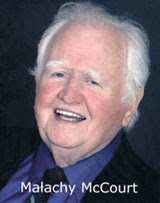
(McCourt will be the featured for the festival Nov. 13, 2010)


( Somerville, Mass.)
Timothy Gager and Doug Holder founders of the Somerville News Writers Festival announced the lineup yesterday for the November 13, 2010 event to be held at the Arts Armory on Highland Ave. in Somerville. Gager, the founder of the acclaimed Dire reading series as well as a well-published author in many genres, and Doug Holder the arts editor of The Somerville News, and a member of the faculty of Endicott College in Beverly, Mass. and Bunker Hill Community College in Boston, are: “Very excited about another literary extravaganza,” according to Gager. This year the Festival will feature such writers and poets as Malachy McCourt, Rusty Barnes, Michelle Hoover, Ethan Gilsdorf, Sam Cornish, David Ferry, Ethan Gilsdorf, Steve Almond, Matha Collins, and others. Holder and Gager proposed the festival to the board of The Somerville News in the summer of 2003 and since then the festival has established itself regionally and to some extent nationally. Over the years poets and writers like Robert Olen Butler, Sam Cornish, Tom Perrotta, Robert Pinsky, Robert Olen Butler, Franz Wright, Lan Samantha Chang, Nick Flynn, David Godine, Sue Miller and many others have read for the Festival. Below is the lineup of poets and writers:


Prose


MALACHY McCOURT-- As well as being the co-author of the play A Couple of Blaguards with his brother Frank, Malachy has written his own New York Times bestseller memoir, A Monk Swimming, published by Hyperion Press. His memoir, Singing My Him Song, now out in paperback is published by Harper Collins. Running Press recently published four of Malachy’s books: the history of the song Danny Boy, a history of The Claddagh Ring, Voices of Ireland, an anthology, and Malachy McCourt’s History of Ireland. Recent books, Harold Be Thy Name and Bush Lies in State, are published by Welcome Rain. In the works is I Never Drink When I’m Sober for Harper Collins. Malachy writes a column, Sez I to Myself, that appears in the Manhattan Spirit, The Westsider and Our Town in NYC. (Read his latest article).


STEVE ALMOND--Steve Almond is the author of the short story collections My Life in Heavy Metal and The Evil B.B. Chow, the novel Which Brings Me to You (with Julianna Baggott), and the non-fiction books Candyfreak and (Not That You Asked). His most recent book, Rock and Roll Will Save Your Life, which comes with a ‘Bitchin soundtrack’


RUSTY BARNES --Rusty Barnes grew up in rural northern Appalachia. He received his B.A. from Mansfield University of Pennsylvania and his M.F.A. from Emerson College. His fiction, poetry and non-fiction have appeared in over a hundred fifty journals and anthologies. After editing fiction for the Beacon Street Review (now Redivider) and Zoetrope All-Story Extra, he co-founded Night Train, a literary journal which has been featured in the Boston Globe, The New York Times, and on National Public Radio. Sunnyoutside Press published a collection of his flash fiction, Breaking it Down, in November 2007. He is a nationally recognized and oft-solicited authority on flash fiction under all its various names and permutations, and serves on writing conference faculties and panels throughout the country, including recently with Associated Writing Programs, Somerville News Writers Festival, Writers@Work, The Parlor, Grub Street Writers and their annual Muse & Marketplace conference. He taught composition, fiction writing, and literature for over ten years in New England universities such as Emerson College and Northeastern University. His stories have been translated into Finnish, French, Polish, and Russian. His collection of traditional fiction, The Ground Always Gives Way, will be published by Sunnyoutside Press in early 2011. His recently completed novel, tentatively titled “Three of a Kind,” is about northern Appalachia, family and community dynamics, sex, drugs, and not so much rock ‘n’ roll.


MICHELLE HOOVER---Michelle Hoover teaches writing at Boston University and Grub Street.

She has published fiction in Confrontation, The Massachusetts Review, Prairie Schooner, and Best New American Voices, among others. She has been a Bread Loaf Writer's Conference scholar, the Philip Roth Writer-in-Residence at Bucknell University, a MacDowell fellow, a Pushcart Prize nominee, and in 2005 the winner of the PEN/New England Discovery Award for Fiction.
She was born in Ames, Iowa, the granddaughter of four longtime farming families.


ETHAN GILSDORF--Ethan Gilsdorf is an American writer, poet, editor, critic, teacher and journalist. He was born in Dover, New Hampshire, and raised in the nearby town of Lee. He has lived in Northampton and Amherst, Massachusetts; Brattleboro, Vermont; Baton Rouge, Louisiana; Paris, France; and currently lives in Somerville, Massachusetts. He attended Oyster River High School in Durham, New Hampshire, and received his B.A. from Hampshire College and his MFA from Louisiana State University.

Gilsdorf is the author of Fantasy Freaks and Gaming Geeks: An Epic Quest for Reality Among Role Players, Online Gamers, and Other Dwellers of Imaginary Realms (The Lyons Press)

A regular contributor of travel, arts, food, movies, books, and pop culture stories in The New York Times, The Boston Globe, the San Francisco Chronicle and The Improper Bostonian, Gilsdorf has also written for National Geographic Traveler, Psychology Today, Fodor's travel guides, The Washington Post, the Los Angeles Times, Poets & Writers, and The Christian Science Monitor. He is a book and movie critic for The Boston Globe, and his blog "Geek Pride" is seen regularly on PsychologyToday.com. He also blogs for TheOneRing.net and Tor.com.[2]

As a poet, he is the winner of the Hobblestock Peace Poetry Competition and the Esmé Bradberry Contemporary Poets Prize, and has published poems in Poetry, The Southern Review, the North American Review and several national and international anthologies. He is co-founder of Grub Street's Young Adult Writers Program (YAWP), volunteers as a guest speaker in the Boston public schools and leads journalism, feature writing, travel writing and creative writing workshops at Grub Street, Emerson College, Media Bistro and, for younger students, in schools and community centers.


JENNIFER HAIGH-- Jennifer Haigh (born 1968) is an American novelist and short story writer.

She was born Jennifer Wasilko to a Ukrainian Catholic family in Barnesboro, a Western Pennsylvania coal town 85 miles northeast of Pittsburgh in Cambria County. She attended Dickinson College in Carlisle, Pennsylvania and earned a Master of Fine Arts degree from the Iowa Writers' Workshop in 2002. Her fiction has been published in Granta, Ploughshares, The Virginia Quarterly Review, Good Housekeeping, and many other publications.

Her debut novel Mrs. Kimble -- telling the story of a mysterious con man named Ken Kimble through the eyes of his three wives -- (2003) won the PEN/Hemingway Award for outstanding debut fiction.

Her second novel, Baker Towers (2005), depicts the rise and fall of a western Pennsylvania coal town in the years following World War II. It was a New York Times bestseller and won the 2006 PEN/L.L. Winship award for best book by a New England writer.

Her third novel, The Condition, was published by HarperCollins in July, 2008. It traces the dissolution of a proper New England family when their only daughter is diagnosed with Turner's Syndrome, a chromosomal abnormality that keeps her from going through puberty.

She now lives in the Boston area.


POETS

SAM CORNISH--Cornish, Sam (b. 1935), First Boston Poet Laureate, poet, essayist, editor of children's literature, photographer, educator, and figure in the Black Arts movement. Born into urban poverty in Baltimore, Maryland, on 22 December 1935, Samuel James Cornish was the youngest of the two sons of Herman and Sarah Cornish. From his older brother Herman he learned early the lessons of the street, which he later would incorporate into a street-tough observancy in his poetry.

Cornish served in the U.S. Army Medical Corps (1958–1960), then returned to Baltimore, where he published two poetry collections—In This Corner: Sam Cornish and Verses (1961) and People Beneath the Window (1964). While working at the Enoch Pratt Free Library, he became part of Baltimore's political and literary underground, self-publishing a sixteen-page pamphlet entitled Generations and Other Poems (1964). A subsequent edition of Generations (1966) appeared when Cornish was editing Chicory, a literary magazine by children and young adults in the Community Action Target Area of Baltimore. Lucian W. Dixon and Cornish edited a selection from the magazine entitled Chicory: Young Voices from the Black Ghetto (1969). In 1968 Cornish won the Humanities Institute of Coppin State College Poetry Prize for his “influence on the Coppin poets” and a grant from the National Endowment for the Arts. Soon poets as diverse as Maxine Kumin, Clarence Major, and Eugene Redmond would acknowledge Cornish's significance.

By 1970 Cornish was represented in the LeRoi Jones (Amiri Baraka) and Larry Neal anthology Black Fire (1968) as well as in the Clarence Major collection New Black Poetry (1969). He reconsidered his early poems of black historicized kinship, restructuring them into the Beacon Press's Generations (1971). After a brief stay in Boston, Cornish returned to Baltimore to work in secondary school and college writing programs. While there, Cornish published Sometimes (1973) with Cambridge's Pym-Randall Press. Teaching poetry in the schools led to several children's books: Your Hand in Mine (1970), Grandmother's Pictures (1974), and My Daddy's People (1976).

Returning to Boston in the mid-1970s, Cornish worked with the Educational Development Corporation and attended Goddard College in Vermont. He appeared in a host of new anthologies, from George Plimpton and Peter Ardery's American Literary Anthology (1970) and Harry Smith's Smith Poets (1971), to Ted Wilentz and Tom Weatherly's Natural Process (1972) and Arnold Adoff's One Hundred Years of Black Poetry (1972). Sam's World (1978) continued the historical and genealogical project of Generations.

Since the 1980s Cornish has divided his time between bookselling and teaching creative writing and literature at Emerson College in Boston. Songs of Jubilee: New and Selected Poems, 1969–1983 (1986) recasts earlier work into sequences of a historical and biographical nature. His autobiographical narrative, 1935: A Memoir (1990), blends poetry and prose into a montage of twentieth-century history. The poems of Folks Like Me (1993) offer political and cultural portraits of African Americans from the depression to the early 1960s. Current projects include the next volume of his autobiography, 1955, and a critical study of Langston Hughes.


DAVID FERRY--Ferry was born in Orange, New Jersey, and grew up and attended Columbia High School amid the “wild hills” of suburban Maplewood, New Jersey. His undergraduate education at Amherst College was interrupted by his service in the United States Army Air Force during World War II. He ultimately received his B.A. from Amherst in 1946. He went on to earn his Ph.D. from Harvard University, and it was during his graduate studies that he published his first poems in The Kenyon Review.

From 1952 until his retirement in 1989, Ferry taught at Wellesley College where he was, for many years, the chairman of the English Department. He now holds the title Sophie Chantal Hart Professor Emeritus of English at Wellesley. He has also taught writing at Boston University. Ferry was elected a fellow of the American Academy of Arts and Sciences in 1998, and he is a fellow of the Academy of American Poets.

In 1958 Ferry married the literary critic Anne Ferry (died 2006), who later became the first full-time woman member of the Harvard University English faculty; they had two children, Elizabeth, an anthrophologist, and Stephen, a photojournalist.Before moving to his current home in Brookline MA, Ferry lived across the Charles River in Cambridge, in the house where 19th century journalist and women's rights advocate Margaret Fuller lived before she joined the Brook Farm community.

In 2000, Ferry’s book of new and selected poems and translations, entitled Of No Country I Know, received the Lenore Marshall Prize from the Academy of American Poets and the Rebekah Johnson Bobbitt National Prize for Poetry from the Library of Congress (for the best work of poetry for the previous two years). He is the author of a critically praised verse rendering of the Mesopotamian Epic of Gilgamesh. The poet W. S. Merwin has described Ferry's work as having an "assured quiet tone" that communicates "complexities of feeling with unfailing proportion and grace."

Ferry is also a recipient of the Harold Morton Landon Translation Award.


MARTHA COLLINS--Martha Collins is the author of Blue Front, a book-length poem based on a lynching her father witnessed when he was five years old. Blue Front won an Anisfield-Wolf Book Award, and was chosen as one of "25 Books to Remember from 2006" by the New York Public Library.

Collins' chapbook Sheer (Barnwood, 2008) is her most recent publication.

She has also published four collections of poems, two books of co-translations from the Vietnamese, and an earlier chapbook of poems.

Her other awards include fellowships from the NEA, the Bunting Institute, the Ingram Merrill Foundation, and the Witter Bynner Foundation, as well as three Pushcart Prizes, the Alice Fay Di Castagnola Award, and a Lannan residency grant.

A selection of poems from Blue Front won the Laurence Goldstein Poetry Prize in 2005; other selections from the book appeared in Kenyon Review and Ploughshares.

Collins founded the Creative Writing Program at UMass-Boston, and for ten years was Pauline Delaney Professor of Creative Writing at Oberlin College. She is currently editor-at-large for FIELD magazine and one of the editors of the Oberlin College Press.

In spring 2010, she is serving as Distinguished Visiting Writer at Cornell University


DIANA DER-HOVANESSIAN--Diana Der-Hovanessian, New England born poet, was twice a Fulbright professor of American Poetry and is the author of more than 23 books of poetry and translations. She has awards from the National Endowment for the Arts, Poetry Society of America, PEN/Columbia Translation Center, National Writers Union, Armenian Writers Union, Paterson Poetry Center, Prairie Schooner, American Scholar, and the Armenian Ministry of Culture. Her poems have appeared in Agni, American Poetry Review, Ararat, CSM, Poetry, Partisan, Prairie Schooner, Nation, etc., and in anthologies such as Against Forgetting, Women on War, On Prejudice, Finding Home, Leading Contemporary Poets, Orpheus and Company, Identity Lessons, Voices of Conscience, Two Worlds Walking, etc. Among the several plays written by DDH, two (The Secret of Survival and Growing Up Armenian) were produced and in 1984 and 1985 traveled to many college campuses in the 80s telling the Armenian story with poetry and music. After 1989, The Secret of Survival with Michael Kermoyan and later with Vahan Khanzadian was performed for earthquake relief benefits. She works as a visiting poet and guest lecturer on American poetry, Armenian poetry in translation, and the literature of human rights at various universities here and abroad. She serves as president of the New England Poetry Club.

FRED MARCHANT--Fred Marchant is the author of Tipping Point, winner of the 1993 Washington Prize in poetry. His second book of poems, Full Moon Boat, came out from Graywolf Press in 2000, and House on Water, House in Air: New and Selected Poems came out from Dedalus Press, Dublin, Ireland, in 2002. He is also the co-translator (with Nguyen Ba Chung) of From a Corner of My Yard, poetry by the Vietnamese poet Tran Dang Khoa. This book was published in 2006 by the Education Publishing House and the Ho Chi Minh Museum in Ha Noi, Viet Nam.


He is a Professor of English and the Director of the Creative Writing Program, and Co-director (with Robert Dugan) of The Poetry Center at Suffolk University in Boston. A graduate of Brown University, he earned a Ph.D. from The University of Chicago’s Committee on Social Thought. He is also a longtime teaching affiliate of The William Joiner Center for the Study of War and Social Consequences at the University of Massachusetts-Boston. He has taught creative writing workshops at sites around the country, ranging from the Robert Frost Place in Franconia, NH to the Veterans Writing Group, organized by Maxine Hong Kingston, in the San Francisco Bay Area.


In 1970 Marchant became one of the first officers ever to be honorably discharged as a conscientious objector from the United States Marine Corps. Recently he has edited Another World Instead: The Early Poems of William Stafford, 1937-1947. This collection of poems, to be published by Graywolf Press in April 2008, focuses on Stafford's time as a conscientious objector in Civilian Public Service camps during World War II. Fred Marchant's new collection of his own poetry, The Looking House, was published in June 2009, also from Graywolf Press.