Thursday, July 20, 2006


A.D. Winans reviews "Way, Way Off the Road" a memoir by Hugh Fox.

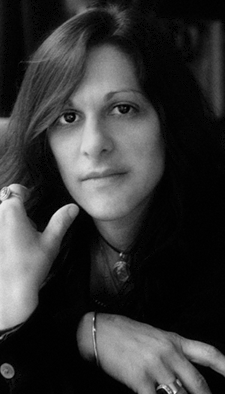
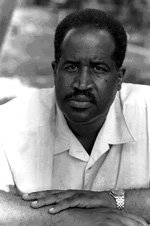
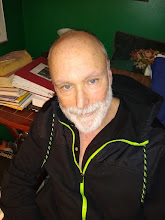
(Photo of: A.D. Winans.)


Way, Way Off The Road by Hugh Fox.
288 pages. Paperback. $l6.50
Ibbetson Street Press. Somerville, Massachusetts

I reluctantly agreed to review this book because Hugh Fox is a friend of mine, and perhaps more importantly because I’m mentioned in the book.

One of the back page blurbs says that Whitman in “Song of Myself only grazes the surfaces that Fox penetrates,” and goes on to say that Henry Miller “is demure compared to Fox.” Fox is no Whitman or Henry Miller. He is Fox, and that in it self should be enough without exaggerated hype.

I have known Fox for over thirty years and there is no denying that he has a certain charm and zaniness about him, which will no doubt appeal to many readers of the book. The book more or less begins with Fox (who was then a Professor of bonehead English at Michigan State University) discovering the works of Charles Bukowski (Hank) and learning that one can say in direct and clear language what academics clothe in words that all too often demand a trip to a dictionary. Fox pays Hank a visit and later writes a critical book on his work. Fox leaves the reader with the impression that Hank felt a certain kinship towards him. I knew and exchanged letters with Hank for eighteen years. Here is what Hank said in a letter to me about his meeting with Fox.

“Hugh Fox, as usual uses opportunity to advertise himself. That’s all right, if you have the talent to back up your words. Fox has traveled from universities in South America to here in the U.S. I went to his place one night. He taught at Loyola. “A Jew teaching at Loyola.” He took the money and hardly looked like he’d been living on tootsie rolls. If he ever took a physical beating, it must have been from his wife in the bedroom. Fox is a dreamer. He’s never known a physical beating. I looked at his face. He still hasn’t had one. I can tell by the way he writes.”

Pretty harsh stuff, but that was Hank. The book is filled with portraits (frequently unflattering) of friends, lovers and spouses of close friends Fox has met during his extensive travels. Some of the recollections are gems and others quite comical. We also get glimpses of the other side of Fox (Connie) who dresses up in black latex and walks the streets of San Francisco as a drag queen. Fox has said that he tells it like it is, but I know (or knew) many of the people in the book, and there are stories in the book that are reported as factual, which in fact are fiction.

A novelist can say what he or she wants to about a person while concealing there true identify under a pseudo name, but this is a memoir, and there are certain literary rules that apply to a memoir. The question that arises is a question of what is a memoir? It is by definition a means of expressing one’s memories. It is also an expression of one’s feelings. Its origin goes as far back as St. Augustine’s Confessions. Real life of course occurs on the streets and not on the pages of a book, which becomes the recalling of events in the author’s life. It is to be expected that not every event in the author’s life will be recalled with 100 % accuracy, but what is demanded of the author is that he not invent occurrences that did not happen, or embellish on them in such a way as to make the reporting of events more fiction than fact.
Winans - 2

Playing fast and loose with the truth is borderline dishonesty. The author also has an obligation to research his material.

On Page 37 Fox says this about Len Randolph: “Somehow he got to be head of CCLM (Coordinating Council of Literary Magazines), the National Endowment of the Arts’ agency for funding little magazines and small presses.” In fact, Randolph was the Literature Director of the NEA, and had no direct ties to CCLM.

Getting back to an author’s obligation to tell the truth. Let’s look at page 165, where Fox reports on a meeting with me at Vesuvio’s Bar in North Beach sometime in the late eighties or early nineties: “He walks in with a cane.” (I have never used a cane). He goes on to report that he asked me what happened to me, and I supposedly replied, “I was an orderly for years in this mental hospital. And finally one of the kooks got me. My back, you know.” The truth is that I have never worked at a mental hospital, was never an orderly, and do not have back problems. The only truth to the recollection is that I met him and Richard Morris at Vesuvio’s Bar. You begin to see where Fox plays fast and loose with events that took place during his travels. Then there is the “imaginary” ride across the Brooklyn Bridge where several COSMEP friends (including me) are engaged in what can only be described as a “juvenile” conversation over the merits of Hank’s writing. This fictional event never happened. Perhaps perfect subject matter for a novel, but not a memoir.

In another section of the book, he relates an incident that allegedly took place at a mutual friend’s home. I asked the person about this, and she wrote back and said she has no recollection of the event. If this were the only instance in the book, I might write it off as a lapse of memory, but there are too many other instances.

Fox devotes a long section in the book to Harry Smith, a poet friend, and one of the original founders of COSMEP. He talks in detail about Harry’s former wife (Marion) who at the time was dying from brain cancer. She later winds up in a nursing home with Harry described as taking up with a “controlling” woman who can’t get enough sex. Harry later marries the woman (Zerlina) whom Fox goes on to describe in extremely negative terms. Fox subsequently returns later to further slam Zerlina, with more unflattering words about Harry, who was at the time Fox’s closest friend. I believe these slams were made because Fox blames Zerlina for his (Fox) no longer being the number one person in Harry’s life. Fox sees himself as Mother Universe, with the rest of us a cast of characters revolving around him.

And here is where the problem lies. Putting aside the inaccurate portrayals of many events, we have to ask why Fox finds it necessary to demean people he calls his friends. Not only is he cruel to Harry Smith and his wife, but also to Blythe Ayne, who allowed Hugh to dress up and play the role of Connie at her San Francisco apartment. Fox’s own wife recently warned Fox not to visit Blyhe on his planned 2006 visit to the West Coast after what Fox’s wife termed the “horrible things” he said about Blythe in his book.


Winans - 3

Fox sees himself as being on the “outside” while revealing the “inside” of every person he comes into contact with. I admire his stamina and prolific output over the years, and I do believe he wants to be close to the people he claims he loves, but he has a strange way of showing it.

The book also suffers from loose editing, and is often disjointed and repetitive. A writer is responsible for sending out his best work and can’t rely on others to edit it for him. I found myself all too often grazing over passages as I headed towards the end of the book. Fox’s true talent (at least in this book) lies in his being “a character” and not a prose writer. He nails down the subject matter, but fails to put it all together in a coherent manner.

The book is aimed more towards the small press poet and writer who knew the old days Fox writes about. Days long gone! New readers not familiar with the time period fox writes about, and, not familiar with COSMEP, might find it of some interest.

A.D. Winans/ Ibbetson Update

Monday, July 17, 2006


IBBETSON STREET PRESS POETRY AWARD Deadline: Sept 15 2006


Every year at the The Somerville News Writers Festival http://www.somervillenewswritersfestival.com/ there is an award presented the: “Ibbetson Street Press Lifetime Achievement Award.” This year the festival will be held at “Jimmy Tingle’s Off -Broadway Theatre,” in Davis Square, Nov. 12. In addition, we have decided to present an “Ibbetson Street Press Poetry Award,” to be announced and presented the night of the festival. There will be one winner, and three honorable mentions. The contest is open to all poets in the state of Massachusetts. The winner will get $100, publication in the ‘Lyrical Somerville,” and in the literary journal: “Ibbetson Street,” as well as receiving a framed certificate. For the past three years “The Somerville News Writers Festival” has hosted such writers as : Sue Miller, Franz Wright, Lan Samantha Chang, Steve Almond, Robert Olen Butler and others, and is well-regarded in local literary circles. To Submit: send 3 to 5 poems with a brief bio to: ibbetsonpress@msn.com. Submission fee is $5. Or mail both poems and fee to: Ibbetson Press 25 School St. Somerville, Mass. 02143 http://www.ibbetsonpress.com

Friday, July 14, 2006

Big Men Speaking to Little Men by Philip Fried, Salmon Poetry,Cliffs of Moheer, Country Clare, Ireland. www.salmonpoetry.com.103 pages. 12.99 Eurodollars.

Review by Hugh Fox.

Let me start off with the title, Big Men Speaking to LittleMen. What Fried has done here is to take ALL-HISTORY, ALL-ART, ALLLITERATURE and somehow relate it to our Yankee-Gringo Here and Now. So get ready for a long swim in the ocean of World Culture. And because of Fried's larger cultural overview, his comments on the contemporary scene have a lot more impact and power. As in this poem Mauvaise Foiâ (Bad Faith):

"We are the tardy witnesses, but not the angels, of history. For us the grandeur is summoned and buttressed by a faith in facts,the losses religiously noted. We travelwith a bad conscience, as necessary as passport and money, a nagging ache,like a sensitive tooth the tongue worries.And everywhere we go the chairsworship in the empty cathedrals."(p.47)

He can't even get dressed without living through all-history:

"Naked I dream of clothing's prehistory, The hats that were given by gods to showMastery; a numinous aura, with plumes,Or crowns that were horns, and the long sleeves. Devised by the mountain folk who carried ,The lofty cold so close to their skin."(Getting Dressed, p.87)

In the midst of all this playgrounding around, though, there is a powerful message that contemporary Americans, by restricting and limiting themselves in terms of ALL-CULTURE, are losing all the refinements and extras that go with life on planet Earth and beyond:

"In a patina of green oxide with the world's heartbeat in his hair....the bodiless dance is always beginning...not even dust of our dust survivesthe death of worldsbut ecstasy,snippet in a teeming void,a curl of possibility,a tickling on the lip of Nothing....worlds are born with the lilt of a hair."(Dancing Shiva, p.28)

What you come away with after reading through Fried is that weare tiny, so lost in time and culture that we are barely here at all, and the only thing that makes any sense isn't any form of negativity, but an enthusiastic rushing into life/experience. It's amazing how Fried can take a golf-course image and turn into a sermon about cosmological existentialism:

"God comes along with the caddy cart and ah those charmed holes when the world is down to grapefruit size. I mean the whole juicy universe, no wonder our heavens are fitting better into the children's unborn pocket slater when one of them hands you a lovely marble it's hard with loss and inward with bubbles of constellations that tickle us as we lie on the greens supineon summer nights, a thoughtful bladeof grass in our teeth as we take in the bigness."
(Say It Happens, pp.60-61)
Not a book to browse through but meditate through like St.Augustine's Confessions.

Hugh Fox/Ibbetson Update/July 2006. Hugh Fox is the author of "Way, Way Off the Road"

Thursday, July 13, 2006


me thinks i see my father. Poems About Our Fathers. Glenn Cooper/ Michael Estabrook. ( Liquid Paper Press. PO BOX 4973 Austin, Texas. 78765. mestabrook@comcast.net $6.


Having just completed a poetry collection about my late father “Wrestling With My Father,” I was interested to read this poetry chap “me thinks I see my father” by Glenn Cooper and Michael Estabrook. In Shakespeare’s “Hamlet,” Hamlet utters the words: “ My father, methinks I see my father.” Just as the death of Hamlet’s father haunted Hamlet, death haunts these two poets.

Cooper’s late father seemed to be a hard man to love; with his flashes of anger, hard drinking, and fits of violence. And it seems that Cooper hasn’t escaped his father’s long shadow; a theme in his poem: “all right, dad, you win.”

incredibly, it won’t be so long
before I’ll be as old
as my father was
when he died. He may have been
an out of work, near-alcoholic
in the end, but at least he
had me and four other kids
to show for himself.
all I have is a large book and
record collection, incurable love
for a woman who doesn’t
love me back,
and these few
small,
Inadequate
words.

In many of Michael Estabrook’s poems there is regret on his part that he didn’t appreciate his dad enough when he was around. Estabook is haunted by his father while walking through Harvard Yard, pumping gas on a Saturday morning, or while nursing the wounds of his mid-life crisis. In “ December 2. 1999” Estabrook writes about his conversation with his brother concerning his father’s death.

“… But Todd and I,
like we do every year, talked about his being
Dad’s day; “ 36 years today. He’s been gone now
Longer than he was alive.” Yes I Know.”
We never used the word “dead”
when referring to Dad. Instead we say
he’s “gone” or “away” or something like that.

I’m not sure why, but I suspect
It’s because we really don’t consider him dead,
We can’t. We both know he’s alive still inside of us.

The physical bodies of our fathers die, but their spirit lingers on with their sons. Both poets resurrect their fathers and hopefully resurrect ours. Recommended.

Doug Holder/Ibbetson Update

Wednesday, July 12, 2006


Another Woman Who Looks Like Me. Poems by Lyn Lifshin. ( Black Sparrow Press David R. Godine, Publisher. POBOX 450 Jaffrey, NH. 03452
( http://www.blacksparrowbooks.com/ ) $19.

The famed Black Sparrow Press now owned by the venerable Boston-area publisher David R. Godine, has just released a collection by poet Lyn Lifshin: “Another Woman Who Looks Like Me.” Anyone who has had even minimal exposure to the small press knows Lifshin. Since the early 70’s she has graced the pages of poetry journals both obscure and prominent. I don’t think Lifshin can be grouped in any particular school. She has a unique voice that speaks to the independent woman, the carnal man, and the dutiful daughter. Her poetry is deeply personal, and peppered with beautiful, haunting and visceral images.

Leave it to Lifshin to weave a wonderful poem about hair. And in “I wear my hair long” there is so much more than hair there:

“to remember old boyfriends’
aunts making appointments,
telling stylist to cut it short.
in a flip. I wear my hair long
to protest against all the
shaved heads at Auschwitz,
against the threats of PhD
examiners to look more
professional and dignified.
I want it to smell of lilac wind,
want my old cat in its warmth.
I long to hang my hair out
windows to shy lovers…

My hair begs to be touched
caught in your fingers,
your teeth. It smells of lilies,
gardenias, some animal you
never want not near once
you’ve stroked it….” (59)

In the poem “The emptiness, Nancy says” Lifshin addresses the void we all seek to fill, and probably never will:

“most everyone
has it. You can’t
eat enough, hold
enough people
near you, can’t
drink or take
enough pills,
have enough
lovers and babies…” (178)

The poems in this collection cover the waterfront of Lifshin’s life. They deal with her childhood, her emerging sexuality, her relationship with her mother in her prime and decline, and everything in between. A quote on the back cover from the San Francisco Review of Books expertly sums up Lifshin:

“You might as well get used to it: Lifshin is here to stay. For me, she’s sexy. For women, she’s an archetype of gutsy independence. As a poet, she’s nobody but herself. Frightening prolific and utterly intense. One of a kind. Highly Recommended.

Ibbetson Update/ Doug Holder/ July 2006

Tuesday, July 04, 2006

WAY WAY OFF THE ROAD ($18) (Ibbetson St. Press 25 School St. Somerville, Mass. 02143)
also order from lulu.com
http://www.lulu.com/content/303269
By Hugh Fox
Reviewed by Lo Galluccio http://www.logalluccio.com


There’s something genuinely and lovingly kooky about Hugh Fox’s world….a little Antonioni mixed up with the Adams Family on TV. And he is a rare –as my good friend Doug Holder put it—"collector of people" as well as being a damn good abstract thinker, concrete poet, zen metaphysician and reviewer himself. You understand his soul accepts the gray zones, the inevitable march to death that we all face, but there’s so much color, and I mean color to burn, in his vivacious portraits of his fellow travelers that it’s a well, kooky contradiction sometimes. He has strange eyes that see the full tilt-a-whirl of sexuality, style, spirit in one felt swoop. This memoir is littered with portraits of his encounters with his contemporary writer-lover friends and COSMEP organizers. But there are also beauteous nuggets of poetry and reflection amidst the rather comical despair and debris of broken lives….lives captured by sex and religion and corporate jobs and disease. Fox holds nothing back in his portrayals. A story’s a story and that’s where most of his heart lies. Oh, he’s by no means a Leonard Cohen type lyricist and closer to Henry Miller in his broad American (especially Chicago and New York tastes), but rather than contemplate what it all could mean, he tells it like it is.

In some ways the book pivots on Bukowski…opens with Hugh discovering Charles’ work after being an academic and already writing a book on Henry James and his dissertation on COSMOLOGY IN POE’S EUREKA. Then in the Kazoo, a bookstore in North Hollywood he finds a copy of Bukowski’s "Crucifix in Deathhand" and arranges to meet him. He tells CB that he’s the first writer he’s found who uses words like they used to in Chicago days, meaning I guess like sort of tough lyrical conversation, and Bukowski agrees to give him his manuscripts so Hugh can write a book on him. The book gets published but an advance or comp copy never gets into Bukowski’s hands through the shenanigans of the small press world. It’s a good warm up story for all the mishaps and mine-traps of the world he’s in….determined to do what he wants, follow his instincts and not worry about the dough too much. And maybe those were the times. But they were certainly Hugh Fox.

Now I’m a child of 1964, and my father was a labor lawyer and politician of sorts….he and my mother even attended the Kennedy inauguration for their honeymoon. I’m not from a freewheeling artist family at all. My mom liked to keep her house neat and orderly and we rarely had adult guests over, just one nut case I can think of who was the youngest of the Grace brothers with whom my father went to Harvard. He said it was a Communist school. Anyway, what astounds me is the sheer people power of Hugh Fox, while he’s dressing up as Connie Fox in black latex and doing archeological digs in Peru and checking in on his friend Harry Smith and dropping in all over the place to visit wacky artist friends. It’s astounding to me….I feel like a f_____g puritan compared with this tribe of people.

As he puts in on page 21, "I had this wanderlust, vagabond, hobo thing in me that wanted to just rush to meet LIFE, EXPERIENCE, WHATEVER WAS NEW, ORIGINAL, CHALLENGING AND GRASP IT TO ME."
There’s a longish section in the book about Harry Smith, a COSMEP cohort who becomes its Chairman of the Board, who is married to a woman named Marion who deteriorates from brain cancer. It starts with her feeling, "goofy" and progresses to the point where the tumor has to be operated on, but has spread. She winds up in a nursing home and Harry takes up with a kind of ball-busting nymphomaniac bohemian woman who is rather disliked. Hughes writes,
"Back in the Fall of 1986 OTHER VOICES (Chicago) published a short story that really isn’t a short story at all but the condensed novel that in turn is condensed LIFE. The decline and fall of Marion Smith. " But see, there’s one sentence devoted to the work, and pages and pages describing the actual people relationships, Harry’s reaction, the almost soap-opera drama of it all. Stuck in this section is a poem called "Deciphering the Brooklyn Hieroglyphic:

"The faces talking
WHAT AM I DOING HERE,
WHY DID I EVER LEAVE
SAN JUAN, MANAGUA,
TEGUCIGALPA, GUAYAQUIL,
WHY DID I EVER LEAVE,
The poverty for the pain,
Koreans in the delis,
Hindus in charge of the porn,
Ghosts of Yorubas, los
Caribes, this is where
I belong… p45

Hugh’s revelation that he’s Jewish and not Czech Catholic as he was raised to be, is another turning point in the book. And when Marion Smith is dying, his Jewish friend Menke comes into her room and they both pray over a long meditation involving Archangels and birds and God and Gabriel….an extensive prayer to prolong her life.
Hugh also gets involved in a three-way marriage down in Brazil with his wife Nona and Bernadette.

"WE HEREBY PROMISE AND SWEAR
BY ALL THE POWERS IN THE AIR,
TO BE AS ONE, WE THREE,
FROM NOW UNTIL ETERNITY,
ONE FOR ALL AND ALL FOR ONE,
A THREE-WAY LIFE OF PAIN, BOREDOM
AND MOSTLY FUN."

But there are so many angles, happenings, people to cover in reviewing this book, I will try to stick to some essential things. We learn that Hugh –aside from wanting to know a "soul of decadence through cross-dressing and living with two women at once – is not himself a whore to the establishment. He is the quintessential outsider, contrary to that as a writer. He writes that in 1970-71 he tried to publish a LIVINIG UNDERGROUND anthology that later served as his pilot-idea for THE LIVING UNDERGROUND: A CRITICAL OVERVIEW,THE LIVING UNDERGROUND: THE POETRY ANTHOLOGLY AND THE LIVNG UNDERGROUND: THE PROSE ANTHOLOGY. And he’s still writing on mimeo paper and old Olivetti typewriters which is fairly incredible looking back. He is attacking the kind of east coast snobbery poetry in favor of a broader renaissance in other parts of the U.S….the real poetic center being San Francisco rather than Boston-New York.

And Hugh includes poems by some of his favorite "underground" poets; most of him were friends:
Cornish’s poem about Malcolm X is particularly striking:

MALCOLM I

I remember exactly
What I was doing
The day
The prince died
He was somebody
Else’s royalty
But I dug his
Style
And looked
At the streets
Of poor whites
Behind windows
Drugs and wine
Saw all the trash
The pick-up men
Knew as there and never
Took away
And went to work
In my neighborhood
Trying to organize the poor" p 89

Or his relationship to poet Lyn Lifshin who he says feels "very close to." He describes her obsession with ballet dancing, her perception to others as a somewhat aloof and anorexic blonde, always stylish, but it is her poetry that Fox admires and winds up also doing a study of… With his huge appetite for words and people’s visions, he takes in her whole opus describing at one point her book, OLD HOUSE POEMS, about colonial American or filled with a sense of "The Dead Brought Back to Life"

:women in silk
placing shells
under glass with
the pressed
flowers hardly
hearing the sea
the rumors more like
something gone
before be
longing to another
time some
thing written on
snow with snow. P 104

He acknowledges that most people only know her for her "Barby Poems" and that when she decides to write about the Holocaust, it is for some, like Harry Smith, "too much." Fox notes that it was easier via sexism to keep her in the "Dumb-Numb Blonde’ box.

Triteness is to Fox the worse sin of poetry, the only true sin a poem can commit. For this reason he sides with the poetry existential awareness, of being on the outside, even to go so far as to say "schizophrenia, drugs, birth defects, everything that jars the writer out of The Trite, is refreshing." P. 110. It may be refreshing but there is a huge human cost to these ailments, as Fox well knows that poetry can’t touch and can’t cure. It is really an objectification of the fragile and mercurial states of mind these situations bring about.

Incidentally the book’s title comes from a poem by Eigner, who Fox compares with Ashbery without the studied stance of Ashbery’s poems…

"Way Way Off the Road
shadows dispelled
a leaning house
Grass pressed in the wind
Across the room the big pots
No track
The light falls."

I barely have the stamina to contend with Hugh Fox’s prolific energy, his desire to be close to people he loves, to get inside their "warts and all" (not to be trite, forgive me.) There are some rare nuggets of transcendence and wisdom in this book which makes it worth reading. It is not a carefully edited book and there’s some repetition, passages you might want to graze over, but when you find the heart of Hugh Fox it is astonishing what he has done in his lifetime, which is thankfully not over yet. Beginning with his study of Bukowski, Fox ends with the melancholy beauty of Gerard Manley Hopkins, whose style could not be further from Fox’s own, but whose sprit and elegy to self Fox knows well…

"Margaret, are you grieving
Over Goldengrove unleaving?
It is the blight man was born for
It is Margaret you mourn for."

Well, it is something Fox and I have in common then, a respect and love for Hopkins. For that is one of the first poems I remember hearing in high school and truly understanding after my father’s death.

LO GALLUCCIO is the poetry editor of the "The Alewife" in Cambridge, Mass. Her work has appeared in Lungful, Ibbetson Street, The Somerville News, Out of the Blue Writers Unite, Heat City Review and others. She holds a B.A. from Harvard University.

Way, Way Off the Road, The Memoirs of the Invisible Man by Hugh Fox is available through the Ibbetson Street Press http://www.ibbetsonpress.com and http://www.lulu.com/content/303269

Monday, July 03, 2006

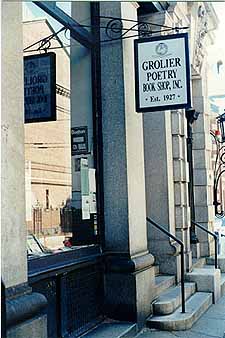
Ibbetson Street Press Announces the publication of "Louisa Solano: The Grolier Bookstore."

The acclaimed poet Donald Hall said of The Grolier Poetry Bookshop: "It is the greatest poetry place in the universe." And this may not be hyperbole. Founded in 1927 by Gordon Cairnie, and Adrian Gambet, it was the first bookstore in the Cambridge area to sell James Joyce's Ulysses. In its salad days the likes of T.S. Eliot, Allen Ginsberg, Marianne Moore, and countless other poets patronized this store. Louisa Solano, the current owner, has been connected with the store for over forty years, first as a worker, and later as an owner. Solano changed the original Grolier, to an all-poetry bookstore, probably the most prominent in the country and perhaps the world. Solano told an interviewer that the bookstore was much more than a seller of books. In its prime Solano said the place was "packed with people, reading books and discussing poetry." Due to escalating rents, the Internet, and the difficulty with competing chain bookstores, Solano has been forced to sell this haven for poets on Plympton St., in the heart of Harvard Square, Cambridge.

In this book there are anecdotes from poets and writers about their experience at this famed all-poetry bookshop. Contributors: Doug Holder, Marc Widershien, Deborah M. Priestly, John Hildebidle, Linda Haviland Conte, Richard Kostelanz, Lyn Lifshin, Michael Cunnigham, Afaa Michael Weaver, Ruth Epson, Alexander Levering Kern, Barbara Helfgott Hyett, Steve Glines, and Andrew Jantz.

To order:

$1o to Ibbetson St. Press
25 School St.
Somerville, Mass.
02143
dougholder@post.harvard.edu
or go to http://www.lulu.com and look under "Louisa Solano & The Grolier Poetry Bookstore"


" Close the goddamn doors!: An Afternoon with Louisa Solano: Memories of the Grolier Poetry Book Shop"At the Wilderness House Literary Retreat http://www.wildernesshouse.org/

Louisa Solano, former owner of the Grolier Poetry Book Shop held court for a few hours of casual conversation concerning her experiences running the famed Harvard Square book shop for over 30 years. It seems that almost every major contemporary poet passed through these doors at one time. Here is a sampler of what Solano had to say about the times and poets she knew:Gordon Cairnie: (the founder of the store) “These goddamn browsers, close the goddamn, door!” This was a declaration often heard by Solano. Cairnie was “quirky,” and did have a temper according to Solano. Solano said, “After I bought the store I had a whole line of people who told me that Gordon ruined them emotionally. It was the way he talked to them.” Cairnie in part was reacting to the browsers who never bought a book, and the ones who shoplifted. Obviously keeping people out of the store was not good business sense. But Solano felt there was a prevailing attitude at the time that poets were abused by society, so poetry and commerce were viewed as totally separate entities.After he died Solano recalled that many folks thought it was a “sin” that she took over the store.

Solano on shoplifting: “According to a study 98% of people steal. People steal because it is an adventure, a high. It’s like shooting up; you have to do more and more. You become an expert on justification.” Solano said that studies indicate that shoplifting is highest among people in religious orders. She recalled that a monk with a flowing robe ripped her off. She said, “His robe was a little less flowing when he went out.’Solano on Harvard Square: Whatever part of the country people come from, the suburbs or little working communities, they come to the square and reality diminishes. She said:”People are walking in a state of grandeur. I remember being accompanied down the street by someone who said he was going to kill me because I was a Harvard capitalist!”

Solano on Robert Lowell: “I met him twice. I thought he was homeless. He was carrying two bags full of newspapers, and he was disheveled. The first time he said to me: “Young lady. I want you to know that Gordon talked too much, and you should never do that.” He walked out of the store. A week later he came and said, “Young lady. You are not following Gordon. You don’t talk to customers.” I found out later that this was Robert Lowell.”“I went to Lowell’s memorial service. Not one person mentioned his poetry. They all talked about his family. His family felt he should not have been a writer. It was not a proper occupation for his class.’

Solano’s favorite poet: “Philip Levine. He has always been my favorite. I think his approach to poetry is wide open. He loved an audience. He was a great standup comic. I loved the love he had for the Jewish community. I really love him.”

Solano on the small press; “I always thought the small press was the most interesting part of poetry. When I took over the store there was a big small press movement going on. This was the 70’s. Some magazines were printed on colored tissue papers, different sizes, etc… Most of the bigger presses were publishing Lowell, Sexton and Plath. They were not particularly democratic. Diana Di Prima was first published by a small press and then started her own, and it is still going strong. She has done translations, and poetry publishing. The University of Texas/Austin was wild about the small press. They probably now (besides the University of Buffalo) have the best small press collection.’

“Black Sparrow Press’ started out selling books with three or four poems for a dollar. Most of the bookstores today would not accept these.”“Even if you were published just in the small press; the fact is you are in a book on a public shelf. Then if things went well you would do another small press book. If things continued to go well, you would get known.Solano on Charles Bukowski: ‘He sent his poems out virtually everyday to every small press magazine out there. This totally admonished the myth of him as a disorganized drunk. He wouldn’t be able to do this if he was.’

Solano on Ed Hogan of “Aspect” magazine and “Zephyr Press”; “Ed was brilliant. He had a lot of energy. He talked endlessly and rapidly. He got a great group of local poets together, and got the magazine out.”

Solano on Allen Ginsberg. “I loved Allen. When he died I thought the world would cave in. He visited the store when he was quite ill. He looked yellowish and diminished. I was shocked. I thought of him as immortal. He brought poetry in the open from a very closed 1950’s America.’


Jack Kerouac: “When I first met him he was sitting down at Lowell House. (Harvard University.) He was wearing a checkered shirt, and sloppy chinos, partly because he was so fat. The audience loved him because he was what they expected. He was the crazy writer. At the end of the reading, Desmond O’Grady, a wild Irish poet (I was madly in love with him), and I escorted him to a bar in Cambridge. There was a young woman who announced to Kerouac and all the guys around him that she wanted a “multiple lay.” Kerouac didn’t do anything and just waddled off to the bar. We got him back to where he was staying and he passed out.“The next day we met him at the Oxford Grill on Church St. in Harvard Square. The news came out that Plath committed suicide. Desmond threw his arms around Jack and very dramatically said “We are the only ones left.” Jack said,” Stay away from me.” He was homophobic. The last we saw of him he was walking down Church St. with two Harvard undergraduates looking for the perfect “Gold,” marijuana.

Doug Holder/Ibbetson Update/ Aug 2006/Somerville, Mass.

Sunday, July 02, 2006


Rose Gardina: An Unbowed Visionary.

by Doug Holder

Rose Gardina does not just walk into a room—she bursts into it. For a small woman she is a powder keg of creative energy. Gardina, a guest at the Friday morning editorial meeting at The Somerville News office in Davis Square, talked about her fascinating life as a writer, poet, photographer, activist, and founder of an independent record label “Thundamoon”, not to mention
being the brains behind the magazine the “Boston Girl Guide.”

In 2000, at the age of 38, after working in retail management for a number of years, Gardina started a print magazine for women in the creative arts, “The Boston Girl Guide.” Gardina over the years had worked with many female artists in many mediums, and decided she wanted to create a forum for independent women artists of all stripes. She felt and feels that women have a tougher time of it than men in the art world, and are often subjected to a double standard. In spite of working a 40 hour a week job, Gardina used her precious spare time to launch her magazine. The magazine, now online (http://www.bostongirlguide.com/ ) has music reviews, promotes independent artists both female and male, publishes poetry, and has an extensive listing section. Gardina told the News that the “Girl Guide” website gets between 60,000 and 100,000 hits a month. Gardina, in her role as a journalist has interviewed such singer/songwriters as: Joan Osborne, Sarah Lee, Sophia B. Hawkins and others.

Gardina’s ambitions have not just been with publishing. Since she was a child she has been in love with music. A favored uncle introduced her to the music of Janice Joplin, Neil Young, Emerson, Lake and Palmer, Ian Hunter, and Arlo Guthrie, to name a few. Once stricken with this body of work, Gardina was like a dog on a meat truck, and never looked back. She started an independent record label “Thundamoon,” that has signed the well-regarded singer/songwriter Jennifer Matthews.

Matthews has performed at two of the three Somerville News Writers Festivals and has performed extensively at venues in Somerville including the Jimmy Tingle Off Broadway Theatre, Burren, Toast Lounge, O’Brien’s, Tir-Na-Nog, Johnny D’s, and The Somerville Theatre. She was brought to the attention of Gardina initially by Deborah M. Priestly, the co-owner of the Out of the Blue Art Gallery in Cambridge. After Gardina’s music editor insisted she listen to Matthew’s CD of beguiling original music, she was hooked. She first saw Matthews in person as she emerged from a cloud of cigar smoke in an Italian men’s bar in the hinterlands of East Boston, where she regularly performed. Gardenia was impressed by Matthew’s ethereal and sensual voice and her expert and inspired guitar playing. Matthew was as adept at acoustic playing as she was at hard rock. Matthews, who is an accomplished poet, and whose book “Fairytales and Misdemeanors” is archived at the Harvard, Buffalo, and Brown University libraries, also caught Gardina’s attention with the accomplished lyricism of her songwriting.

Since their meeting “Thundamoon” has released her critically acclaimed CD “The Wheel,” and just released an acoustic CD by Matthews, “Sunroom Sessions.” Matthews and Gardina have toured Europe and just finished a successful tour of Alaska. They plan a formal CD release in the late summer or early fall.

Gardina, who is gay, has a long history of activism. She said that even at the age of 6 she knew she was “different.” When she was 14 or 15 she frequented gay bars in Boston. She experienced the pain of prejudice against people with alternative lifestyles. She was once involved in an incident where a group of men tried to attack a group of gay women in a bar with lead pipes. Since these early awakenings Gardina has worked with gay youth, AIDS committees, and a host of socially conscious programs.

Gardina feels that musicians and artists in this country are treated like lesser beings. She said in the 60’s and in Europe today, bands are fed, housed, and treated like respected people, who are devoted to their craft. Now she feels its all about money and the “biz.” She finds the music and the style of musicians rather uniform as opposed to years back.

In spite of not making any money of note in her many projects, Gardina remains unbowed. Gardina continues, and will continue. She said: “Even if I don’t ever make a dime, I will still do what I love. You have to have a purpose in this life, and you have to follow it.”

Doug Holder

For more info on Gardina go to http://www.bostongirlguide.com/

Tomas O’Leary is a poet, translator, musician, singer, artist and expressive therapist. His published books of poetry are “Fool at the Funeral,” and “The Devil Take A Crooked House.” both from the Lynx House Press. O’Leary’s poems have appeared in Ploughshares, Midwest Quarterly, Ibbetson Street, Poiesis, The Worcester Review, and others. For the past 15 years he has worked in nursing homes, leading circles of the elderly in song and spirited exchange, and entertains with his accordion at pubs and private parties. He has an M.F.A. in poetry from the writer’s workshop, U/Mass/Amherst, and M.A. in expressive therapies from Lesley University. O’Leary was brought up in Somerville, Mass. by Irish immigrant parents and now resides in Cambridge, Mass. with his wife and two sons. I talked with O’Leary on my Somerville Community Access TV show “Poet to Poet: Writer to Writer.”

Doug Holder: You have this highly developed character of the old country, wisecracking troubadour poet. Is the real O’Leary, or do we all just invent ourselves?

Tomas O’Leary: To one extent or the other. I certainly suspect that we invent ourselves. To what extent I have invented myself I don’t know. I don’t deny I do have a game. I do it to the degree that I can milk it out or raise it up. Otherwise I would just lie down and die. I don’t want to do that.

DH: You got your MFA in poetry from the writers’ workshop U/MASS/Amherst. What was the experience like . Any mentors?

TO: That goes back to the late 60’s. A great bunch of people there. Everything in the poetry world was happening spontaneously. There were readings at a drop of the hat. There were gathering in houses, in bars, etc… As to mentors I have to mention Joseph Langland. He had a way of embracing what appealed to people. He wasn’t restricted to his own style. He was a high song pastoral poet. He was much given to the lyrical. There were people among us who emulated the minimalism of Robert Creeley. I didn’t. I travel among many modes.

DH: Do you do a lot of revisions of your poems?

TO: It varies among poems. Sometimes it takes me a few years to write a poem.

DH: You have had several poetry collections published, and you say you have completed a novel: “Portrait of the Artist as a Black Hole.” Can you tell us a bit about the novel?

TO: Its conceit is that it is written in one day. It has a Joyce-like element to it. The protagonist in the novel is tripping on Acid.

DH: Is this based on personal experience?

TO: Of course. But since this is a family show I deny it.

DH: Can drugs enhance creativity?

TO: I won’t deny that they can. But I wouldn’t advocate people take it for that purpose. Haven’t you done a little dipping in your day?

DH: Well Tom, it is a family show.

TO: In your workshops you stress “intentionality” in writing. Explain?

DH: I don’t think I can. (laughs) I can talk about it for an hour. It is something to throw in the face of writer’s block. I direct people to write about something that they actually want to be writing about. That’s harder for some folks than you may think.

For more info on Tomas O’Leary go to: http://tomoltime.com/
Newton Free Library Poetry Series Fall 2006
Director: Doug Holder

All readings are held at the Newton Free Library Second Tuesday of each month 7PM Drucker Auditorium 330 Homer St. Newton Centre 617-796-1360 http://www.newtonfreelibrary.net Open Mic after the features.

Sept 12 2006
Ifeanyi Menkiti
Mark Pawlak http://hangingloosepress.com
Jennifer Matthews http://jennifermatthews.com

Oct 10
Jean Monahan
Lo Galluccio http://www.logalluccio.com
Richard Cambridge

Nov. 14

Marc Widershien http://www.marccreate.com
Wendy Mnookin
Sarah Getty


2007

Feb.

Nicole DiCello
A reader from "the new renaissance magazine" http://tnrlitmag.net
Gouri Data

March
Grey Held
Richard Wollman
Carol Hobbs

April ( Poetry Festival)

Martha Collins
Louisa Solano
to be announced...


Doug Holderhttp://www.ibbetsonpress.comhttp://dougholder.blogspot.comhttp://authorsden.com/douglasholderhttp://somervillenewswritersfestival.comhttp://yahoogroups.com/group/ibbetsonstreetpressupdate

**** If you don't want to receive these messages send an email to dougholder@post.harvard.edu and we will take you off.

Sunday, June 25, 2006


Laughing Out Loud At “Laughing Liberally.”

No matter if it is on Broadway in New York City or Off Broadway in Davis Square, Somerville, Mass. there is always a lot of positive energy popping around with a sold out house. And this was the case at “Jimmy Tingle’s Off Broadway Theatre,” where a packed and animated house viewed the comic showcase “Laughing Liberally: Saving Democracy One Laugh At A Time.” I was fortunate to take in the last of a series of 8 shows on Saturday evening June 24. “Laughing Liberally,” the brainchild of David Alpert, Katie Halper, and Justin Krebs, began as auditions for local political comedians to appear in venues in New York City. It has been performed nationally, and Davis Square, Somerville, a bastion of unabashed, organic liberalism, was a stop on the tour.

The show started with an introductory video with Janeane Garofalo, and Sam Seder from Air America Radio’s “Majority Report.” Jimmy Tingle was the master of ceremonies, and “liberally,” mixed his old and new material that kept the audience amply anticipatory for the upcoming barrage of politically charged jokesters.

Anne Podolske, a self-described lesbian comic from Western Mass., who has an understated, but lethal wit, skewered the Republicans’ care and handling of the Gay community. Podolske talked about coming out in her 30’s. She said she grew up in rural Wisconsin, which she said was less than a “sultry” state. She was popular with men early on because as she put it: “I had long blonde hair and a drinking problem.” Later she joined the Peace Corp because she felt;” Maybe Mr. Right is abroad.” At 47, Podolske had an astute observation about middle age love. She quipped: “Love means who is going to drive you to your Colonoscopy.” Having just had one I had to concur!

Myq Kaplan, a fresh-faced, wisecracking Boston University undergrad, had a subversive, cerebral wit that poked fun at popularly accepted notions. Kaplan, a much younger and better looking version of Woody Allen, told the audience that it was a “great honor for them to see me tonight.” Kaplan, who is Jewish, said he finds it curious that his Christian friends are often shocked that he doesn’t eat pork. He said: “I mean, don’t they drink the blood of their savior?”
Kaplan, a true liberal, said that he himself is not Gay, but that his wife is. Kaplan also touched on his vegan tendencies, cows’ significant “utters,” and the similarities between the KKK and the AAA.

Scott Blakeman, a veteran comic, who teaches at the New School in New York City, used his comic arsenal to impale the Bush administration. He had a riff on “smart” weapons. Blakeman, in a Seinfield frame of mind, did an exegesis of the use of the word “smart” to describe a weapon: “ What’s a smart bomb, anyway? Did it go to graduate school at Columbia? A smart bomb is smart if it says: Hey I am staying right here—I’m not going off.”

Other comedians for the night were Lee Camp and Julie Goldman. Camp felt the war on “terror” is ridiculous because “terror” is an emotion. “What’s next… a war on sadness?” he said. He wondered if the Bush administration would issue Prozac and Doctor Phil books as strategic weapons.

Julie Goldman, reminds me of a younger and even more bombastic lesbian /political comic RENO , who I saw a few years ago at JTOB. Goldman who talks and looks like a truck driver, came across the stage like a manic force of nature, who forgot her lithium. Goldman didn’t so much crack jokes, but used the full force of her mercurial personality to send up herself, fellow lesbians, George Bush, her Jewish mother, her intellectually posturing partner….you name it.

On the way out from the theatre I talked with a prominent psychiatrist acquaintance of mine who attended the show. He is a serious man but he said enjoyed the show thoroughly and I did see him laugh liberally. I gave my friend the comedian Emily Singer and the founder of the theatre, Jimmy Tingle, the thumbs up as I went out into a sultry and very humid Somerville summer night.

Doug Holder

Friday, June 23, 2006


Interview with Patricia Brodie: author of “American Wives Club.”

Patricia Brodie is the author of a new poetry collection from the Ibbetson Street Press, “The American Wives Club.” Brodie was born in New York City, and lived in Boston and California before moving to Sao Paulo, Brazil. She taught English in Concord, Mass, and later became a clinical social worker. Her poetry has appeared in “Whidbey Island,” “Edge City,” “Ibbetson Street,” “Potpourri” and many other publications. I talked with Brodie on my Somerville Community Access TV show “Poet to Poet: Writer to Writer.” http://poettopoetwritertowriter.blogspot.com/


Doug Holder: Your poetry collection touches on the ying and yang of marriage. Is marriage worthwhile?

Patricia Brodie: Oh yes. Of course. I feel that you’re lucky if you can deal with the ying and yang and stay married. If it works for you both that is.

DH: How is it to have released your first collection? What took you so long?

PB: I didn’t start writing poetry till 2000. But I was busy with teaching, social work, raising a family, getting used to Brazil, and a lot of things. When I started to pull back from being a social worker; I took a course at Concord Adult Ed, and started to write poetry. I have 85 to 90 poems published. That’s when I thought I would like a chapbook published.

DH: Some say the routine of marriage is deadening to creativity? Writers, especially young writers, laud the footloose and fancy free
lifestyle. What do you say?

PB: I don’t see it that way. I think it is a font of material.

DH: You wrote a poem about the suicide of your grandfather. Did this provide you with a sense of closure?

PB: Nobody ever told me about his suicide. It happened long before I was born. Nobody told me how he died. When I was visiting a cousin in Scotland, I looked him up in the town records. And there was all this detail about his life in Scotland. And this came as a shock to me. My father wasn’t around anymore, and my cousin wasn’t forthcoming. There was no one to ask about this. So this is where the poem came from. You learn more about yourself, and why your parents acted in certain ways.

DH: You wrote a poem about a colleague at a community mental health center who lost a daughter due to suicide. Do you use your experiences as a social worker as material for poems?

PB: The poem you mentioned was one of the few poems about my work. It just doesn’t happen. I worked in a community mental health center for several years. The psychiatrist, a nice guy, had a daughter who was living in New Jersey. One day she went on the railroad tracks, sat down with her baby, as a train was coming. The baby squirmed out of her arms into a snow bank and was ok. The daughter was killed. The psychiatrist, her father, did not prevent this, and he blamed himself for not realizing how depressed she was. He felt he could work as a psychiatrist anymore. He felt if he couldn’t tell that his own daughter was suicidal, how could he work as a psychiatrist?

DH: Quite a few of your poems deal with your time in Brazil?

PB: Quite a few. The poet Elizabeth Bishop lived there for at least 12 years and she liked it. She wrote a lot of poems there. I married a man who was Italian but was raised in Brazil. He had a job waiting for him there. His family was there. So we moved to Brazil. I never got to like it. The country was beautiful, the people were warm…it’s a wonderful population. But there were aspects for me that just didn’t work. It was a very different culture. I couldn’t grow there. Women were like the 1950 June Cleaver there. When I came back to the states in 1975, it took me a full year to adjust. I went through culture shock in my own culture.

DH: Describe how you got the title for your book “The American Wives Club.”

PB: It’s the main poem in the collection. On one side it deals with Brazil, and the other side is my difficulty getting along there. I was in a sort of club with other women who were married to Brazilians. We supported each other in this dual culture environment.

DH: Was your family surprised by anything in the book?

PB: My family is basically my husband and four children. They are very pleased.

DH: What are your ambitions for your poetry?

PB: I find my poetry is evolving. I don’t know where it is going, but it is changing. I’m still on the road, and I am going to see where it goes.

__Doug Holder

* ‘The American Wives Club” is available through the Ibbetson Street Press c/o Doug Holder 25 School St. Somerville, Mass. 02143 http://www.ibbetsonpress.com/

Monday, June 19, 2006


Poems: Unearthed From Ashes. Mike Amado. ( Dorrance Publishing. 701 Smithfield St. 3rd floor. Pittsburg, PA. 15222) http://www.dorrancebookstore.com/ $9.


I met poet Mike Amado at the weekly meeting of the “Bagel Bards,” now held every Saturday at 9AM at the Au Bon Pain CafĆ© in Davis Square, Somerville. Mike hails from Plymouth, Mass., is a self-employed musician, and a long-practicing poet who penned this collection, “Unearthed From Ashes,” over five years during treatment for kidney disease. Amado describes himself as a ‘multi-ethnic,’ poet. The poems here deal with his Native American background, as well as his exploration of nature, mortality and the trials and travails of the act of writing. In the lead poem “Mighty Orange Lightning,” Amado paints a powerful elemental scene of man and nature, and the yearning for connection:

“ Mighty, orange lightning
In the northern sky
Let your voice sing
On the breeze
Mighty drumbeat rippling
An unmeasured rhythm
Breathe…let me breathe
…And shake, and ravel
In the wind where I stand
Through the clouds, you unfold
Your purple wings.
Breathe-seek your connection
Where static of sky
Meets fingers of earth.”

And a real gem of a poem “The Punk Poet and the Editor,” deals with a minimalist editor’s desire to cut a poem, and an expansive Punk poet’s desire to embrace the infinite with a colorful flourish of words. Here the poet has a few words about minimalism:

“But he takes every sentence
And leaves it dismembered, performing semantic
Dissection on parts of my speech, then transecting
The skin of preposition from the noun-flesh
In such a way to confirm the fact that “poetry...
Is the art of condensing.”
Exposing to view through a part-by-part analysis of
The physiology of signs and symbols; concepts and
Feelings to reveal not just the actual structure
But the anatomy of “minimalism.”


Recommended.

Doug Holder/Ibbetson Update/ June 2006/Somerville, mass.

Friday, June 16, 2006


Lyrical Somerville

Afaa Michael Weaver is a prominent Afro-American poet, a professor at Simmons College, the founder of the “Chinese Poetry Conference,” as well as the “Zora Neale Hurston Center,” at Simmons College, and the author of numerous books and poetry collections. He is a Somerville resident, and a member of the “Bagel Bards,” a group of poets and writers that meets at the Au Bon Pain CafĆ© every Saturday morning at 9 AM. I asked Afaa to contribute a poem about Somerville for the “Lyrical.” Gloucester had Charles Olsen, Brooklyn had Whitman, Chicago had Sandburg, and perhaps Somerville has Weaver. To have your work considered for the “Lyrical” send it Doug Holder 25 School St. Somerville, Mass. 02143 dougholder@post.harvard.edu


Freedom and Public Discourse,
Walter Howard in Davis Square


for the Bagel Bards

Publicare…our prayers, some to the east,
some to rainbows, some to dictionaries,
to white mums, wreaths, laurels,
Comcast, power bars, chocolate chip
ice cream sandwiches, bocconottis, canolis--
our prayers tease the nostrils of the dead who
have no sense. It was when the animals died
in slaughterhouses built after glaciers gave
way to Prospect Hill, hides and meat,
grease and glue taken over by Chicago,
grease and glue, all black and blue, grease
the glue that binds us. Down the hill
to where Harvard grinds its grey matter,
the evening walk back to here, where worker
ghosts are the deepest root of foundations
in these Old Houses, the erudite elbows sliding
in tables on the Grill Deli, working chaos
theory against deconstruction, the death
of poets and writers, Ovid’s elbows reclining
in Jimmy Tingle’s Off Broadway, sliding
on the arms of seats as poets and writers
are born again in the Somerville of Haitian
rice and beans, Guyanan dalpouri pulouri,
night songs swooning stubborn insomniacs,
music of Irish glory like Thomas O’Leary
speaking his brogue, and he is the only poet
in this poem because he alone walks these
lines to speak for Somerville as you read,
and now you understand why we poets are
legislators. We are meter maids and butlers
come to ticket superficial lives for being stuck
on the cushion of all money can buy.
Shallow must not happen in Market Basket
where the official language is the joy of
opportunity, the chance, and seeing this is all
we have, this town, this summit of the planet,
directly opposite China’s Gulf of Chili (go
study your globe) and below the melting ice
above us (top of the globe) as Jodie Foster says
in Inside Man, …buy grass seeds when water
is in the streets…paring the filmic phrase,
we write the law in poems that name only
one poet in this place that has grown above
the blood of things we eat, burgers and steaks,
stake in the way of all faith, in all we foolish
mortals have, a planet turning to its lush
life, the mass of who we are now a mikvah
for a globe warming, becoming its own feast.


Afaa Michael Weaver

Wednesday, June 14, 2006


linear hymns. ( 7 Selmeston Court Surrey Road Seaford East Sussex BN25 2NG- Great Britain.) Giles Paley- Phillips. http://www.gilespaleyphillips.co.uk/) eliistender@yahoo.co.uk

When poetry is put into service for a good cause I am always supportive. Giles Paley- Phillips has written a collection of poetry “linear hymns,” dedicated to his late mother, who died from Cancer. Proceeds from the book will go the “Leukemia Research Fund.” Having lost a father a few years ago, I, like Phillips,
compiled a collection of poetry in memory of him. I found the writing of my book clarified things about our relationship, provided a better understanding of the man, and gave me a sense of closure. Hopefully Phillips achieved some of this. The poems trace the before and after of his mother’s demise, and his reflections and ruminations regarding her untimely death. In the poem “God Bless Sympathy,” Philips takes an amused look at all those well-meaning clichĆ©s we send forth in a nervous flurry:

“God bless sympathy
greatest of all the symphonies
even when it’s not in key,
you still taste the notes.

With a receding tongue
that is trying to escape
another coming wave,
heading for two kind ears…

You’d think you had died already
by the tone of this embrace.
A tad less sensitivity
may help you stay awake…”


And as in any relationship, there is a dance of deception we all play. “Terminal Orchid,” examines denial and resignation for the mother and son:

“On the way home
by the corner of our road
I turn to look at my mother,
as a tear stains her laughter.

I tell her she’ll look a million dollars,
in that gray hairpiece we found.
An orchid that has finally bloomed,
with colours so strong and proud.”


This is a sensitive and thought-provoking book from a young poet residing in England. Recommended.

Doug Holder/ Ibbetson Update/ Somerville, Mass. 02143

Monday, June 12, 2006

*This poem was published in "Tales from the City" in The Boston Globe Magazine Section.

FOOD FOR THOUGHT

This is a poem about a sign I saw outside Savenor's gourmet food shop in Cambridge. It also deals with a favored Chinese joint of mine.

WILD BOARS AT SAVENOR'S

Imagine . . .what a place for Wild Boars.
Pressed into a tamed tenderloin
for the most cultivated and savage Cambridge tongue.
And forgive me - If I slip away to the Hong Kong
and gorge on an unapologetically
greasy eggfoo yong.

DOUG HOLDER /// Somerville

© Copyright 2006 Globe Newspaper Company.

Friday, June 09, 2006


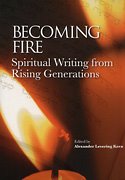
Becoming Fire: Spiritual Writing From Rising Generations. Edited by Alexander Levering Kern. (Andover Newton Publications, Newton Centre, Mass.) http://www.ants.edu/ $13.


Alex Levering Kern writes in his introduction to “Becoming Fire: Spiritual Writing From Rising Generations:”

“The book project began with an awareness of absence on several levels. In my years of living and working with young adults I have been astonished by the creative and distinctive ways, in which rising generations inherit their faith, form vibrant communities of their own, practice spirituality and activism, construct theology, and make meaning of their lives…. in the literary market place younger spiritual voices are woefully underrepresented…. this collection offers a vision of creative and engaged faith and a testimony to the diverse gifts and callings of rising generations. In this spirit, Becoming Free, extends radical hospitality to voices that are frequently relegated to the margins of mainstream spiritual writing and theological discourse on the basis of age, race, sexual orientation, or religious identity.”

This anthology showcases the spiritual voices of General X and Y, and the Hip Hop generation, along with selected works of older writers. What the book proves, and proves resoundingly is that the under 40 crowd is not a bunch of Paris Hilton ciphers, obsessed with navel gazing. The poets and writers in this collection have a deep interest in the nature of being, and seem to have actively engaged in an ongoing search for their own spirituality, be it through organized religion, or through their own personal quests.


The lead poem, and appropriately so, is by the accomplished poet Sophie Wadsworth, titled “Lost.” Wadsworth using the state of being lost in the woods, as a touchstone for finding oneself in spite of the incessant chatter of a frenetic inner and outer world:

“If you’ve taken stock—
food, knife, matches,
fuel—if you backtracked
and map checked and every tree
looks alike, the mind may start
its manic talk of broken ankles
and electrical storms.

Try to still that voice.
Listen for the ripple of birdsong,
Synchronizing your breath
With the canopy’s rise and fall. “

I loved Ian Thal’s Whitmanesque romp through Brooklyn (“A Child’s Trip Through The Underworld”) on the A-Train—bringing the high holy to the everyday:

“Hail to the A-Train
circa nineteen-seventy eight
cars clanking proudly illuminated
in fuchsia, sky, black, and gold spray paint
graffitied with esoteric writing few can read…
(at any speed) ….


holy are the drivers who drive
holy are the couplings that link
holy are the riders who ride
holy are the turnstiles leapt
holy are the lights that blind…”

So often people associate religion, spiritualism, as either dry dogma or facile New Age claptrap. These poets bring a lush and engaging lyricism in a quest we are all involved in, whether we now it or not.

Doug Holder/ Ibbetson Update/ Somerville, Mass./ June 2006

Monday, June 05, 2006


Lyrical Somerville

Somerville Poet Lisa King died this year at the age of 46. She was one of the most dynamic performance poets in the Boston-area. She was a member of the 1993 Slam Champion Team, an individual Boston Slam Champion, and a member of the 1996 Boston Slam team. King devoted much of her time working with Gay and Lesbian youth groups, as well as working in schools as a "poet in residence." She inspired people to thrive through poetry. I selected a couple of poems from her chapbook "Eyes Blinking Backward," that was reprinted for a recent memorial reading for her in Cambridge. To have your work considered for the Lyrical send it to: Doug Holder 25 School St. Somerville, Mass. 02143. dougholder@post.harvard.edu


The Death of Stars

In between the soft sand and shoulder
and the white lined road
a heavy curtain of velvet night
drapes down.

Slowly stars bore holes
through the dark.
Shimmering certain death.

I feel kinship with them,
as they press against my mind
with twinkling fatality.

Poets are like stars.
They pierce the darkness of time,
to deliver image and emotion
from the void.

And unfortunately like stars,
they may already be dead
by the time their light
reaches you.


Nature's Revolution

Through a vortex of flying pigeons,
my eyes catch a deeper shade of city.
Away from thickly strangled streets.
Far from the bustle of horns blaring,
lies the beauty of peaceful resistance.

Like where the sidewalk breaks from tree roots
pushing back the attack.
Or where blades of grass work through
concrete cracks on the side of a pulsing highway.

This is nature's revolution.
The rooted ones silent conspiracy
to remake the world.

--Lisa King

Friday, June 02, 2006


The Boston Area Poetry Scene: A Plethora of Poets and Poetry


There is rarely a day that goes by that I don’t bump into a fellow poet or writer of my acquaintance. In Somerville, where I live, a poet-couple lives in a house behind me, another lives on the adjacent street, and my landlord, a poet and writer of some local fame lives downstairs. The cafes of Somerville Cambridge and Boston overflow with Bards tapping away on laptops and scribbling in dog-eared notebooks. There are poets of the “academy,” poet/scholars of the street, slam poets, black-clad avant-gardes…you name it. And there is room and a venue for them all.

In Cambridge, at 106 Prospect St, just outside Central Square, is the Out of the Blue Art Gallery. This gallery owned by Cambridge’s own Deborah Priestly and Tom Tipton, hosts two well-known poetry venues. The most noted is “Stone Soup Poets,” that meets every Monday night, and was founded and is hosted by veteran Boston poet Jack Powers, who is assisted by the very capable Chad Parenteau.

“Stone Soup” has been around since 1971, at various venues in Boston and Cambridge. Many of the movers and shakers in the poetry world like Allen Ginsberg, Lawrence Ferlinghetti, Gregory Corso, Robert Creeley, and others have read and have even been published by “Stone Soup Inc.,” the publishing imprint of the organization.

Deborah Priestly, a well-regarded and frequently published poet in her own right, hosts a poetry venue every Saturday night at the gallery. It is named after her ubiquitous dog, titled “Open Bark.”

But the republic of Cambridge is not limited to the Out of the Blue Gallery for poetry. The Cantab Lounge on Mass. Ave in Central Square, Cambridge hosts a competitive slam poetry night every Wednesday night, and the Lizard Lounge, near the Harvard Law School, has a “Poetry Jam” hosted by Jeff Robinson every Sunday night. Here poets of all stripes read their works accompanied by the music of Robinson’s jazz ensemble.

But poetry thrives not only in the galleries and bars, but in the hushed environs of a church. Jessa Pia and Lee Kidd run a poetry venue at the Harvard Epworth Church, just outside Harvard Square every Thursday night. The poetic couple describe their brainchild as a place,”…where everyone gathers weekly to practice their new scribblings.” Pia and Kidd also encourage musicians to partake in the open mic, and more often than not there is a sing-along with audience and performers.


There are perhaps more staid but no less valuable places for a poet to ply his trade. Harris Gardner, known as the impresario of the poetry scene, is the founder of “Tapestry of Voices,” which consists of reading venues at the Forest Hills Chapel in Jamaica Plain, Borders Books in downtown Boston, and perhaps his crowning achievement the annual Boston National Poetry Festival Marathon held at the main branch of the Boston Public Library during poetry month (April) each year. Over 50 poets, both established and emerging, read over the length of a weekend, as well as the general public at the open mic.

Affa Michael Weaver, a highly acclaimed Afro-American poet and professor at Boston’s Simmons College, runs the Zora Neale Hurston Center that has hosted such poets as: Askia Toure, Alicia Ostriker, and Marcia Douglas, to name a few. Weaver said the center is,” A resource to enhance diversity for Simmons and the surrounding community.”

One of the oldest reading series in the country was founded by Amy Lowell and Robert Frost in 1915. Diana Der- Hovanessian, the current president has hosted poetry readings at the Longfellow House in Cambridge for many years now. Personally I have heard such poets as Donald Hall, and Robert Creeley read from their work, while I sat on the well-manicured grounds of this historical site.

One of the newer but vibrant poetry happenings in the area takes place every Saturday at the Au Bon Pain CafĆ©, in Somerville’s Davis Square. A group of poets called the “Bagel Bards,” meet every Saturday, chat, kibbitz, edit an online journal “The Wilderness House Literary Review,” and publish an anthology, thanks to the techno-savvy poet Steve Glines. On any given Saturday poets gather in a sort of “Last Supper,” scene, seated and talking animatedly on either side of a long row of tables.

But we really haven’t covered the waterfront. In the metropolitan area poetry groups, venues, magazines crop, thrive and disappear with a breathless frequency. Any poet, of any persuasion, can find a niche, a place to plant a poem, in this rich lyrical soil.

Thursday, June 01, 2006


Ibbetson Poet Jennifer Matthews ("Fairytales and Misdemeanors" 2003) http://jeniffermatthews.com/ has released a new acoustic cd, through thundamoon records. I have listened to this cd, and can attest to the fact that her voice and lyrics are beautiful and haunting. This is an accomplished production by an accomplished and passionate artist. Doug Holder/Ibbetson Update to order go to http://www.bostongirlguide.com/ or contact rose@bostongirlguide.com