Wednesday, December 26, 2018

Editor Harte Weiner: She and her band of editors will make you cut yourself while shaving

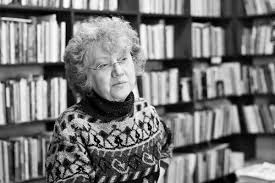
Harte Weiner at the Bloc 11 Cafe in Somerville


Editor Harte Weiner: She and her band of editors will make you cut yourself while shaving

Article by Doug Holder

The renowned poet W. H. Auden said (and I paraphrase), “a good poem makes me cut myself while shaving.” And I guess the same principle applies to good editing. It cuts the fat off the bone of the manuscript, leaving it clean and making the readers hungry for more, more, more.

One morning, at my usual grazing grounds in the Bloc 11 Cafe in Somerville, I met Harte Weiner, founder of CambridgeEditors. We huddled around the fireplace and Weiner told me about the history of the said organization, she recalled “In 2003 I started CambridgeEditors. We have grown to about 35 editors and expanded from what remains our focus, creative writing, humanities and social sciences—to editing in other fields and professions. We are a little and literary company run out of my home in Cambridge, MA.”

Weiner, who is a member of Cambridgeport’s Temple Eitz Chayim where she met the poet Harris Gardner, loves the community there, and its encircling lyric-historic neighborhood. She has a very interesting literary background. Weiner told me in the 1980s she was an intern for the formidable literary magazine The Paris Review. Reviewing manuscripts for possible publication, she and others could work in the Upper East Side apartment of George Plumpton, the Review’s founder, just above the brick walled enclave of the office itself. Three responses slips were provided for return with their SASE’s. On the Review’s famous letter head stationery of iconoclastic American Eagle with pen wearing a French Revolutionary’s helmet of liberty, exciting new submissions received either, ‘Thank you, we’d like to see more;’ or the offer to publish.” Weiner remembers her elation at coming across real talent that she would pass along to Jonathan Galassi, the Review’s Poetry Editor at the time. Later Weiner would join the Masthead for some years as Contributing Editor.

During this period Weiner met such people as Tom Jenks of Narrative Magazine. Jenks, a fellow work-study intern whose Columbia School of the Arts degree took the fiction route. Pursuing a career in publishing, Jenks played a key role in the edit of The Garden of Eden, a Hemingway novel to emerge posthumously from Scriber’s.

Weiner also served as the Assistant Director at The Academy of American Poets. There she worked for a spell alongside the poet Henri Cole, also a Columbia School of the Arts classmate. Meeting ‘more or less every famous poet she’d ever wanted to meet,’ Weiner joined Henri in dining with these poets after Donnell Library readings.

The editor has had extensive teaching experience at Harvard University and Tufts University—right here in Somerville. At Tufts Weiner said, “I taught for five years along with David Rivard, Marie Howe, and a great poet we lost recently, Lucie Brock Broido.”

Weiner's first love is poetry. She has studied with likes of Derek Walcott, Seamus Heaney, Phillip Levine, and Robert Pinsky—to name a few.

Earlier in her literary career she published poetry in the Harvard Review, The Paris Review, and was the recipient of the prestigious Grolier Prize in 1981. She hopes to re-focus increasing each year on writing of her own, and is pulling together a selection called, Haunted Timmy. “It’s not what it sounds,” says Weiner, who first divulged the title around Halloween time.

Weiner told me that she started CambridgeEditors by posting flyers around Cambridge and was a habituĂ© of Gnomon Copy in Harvard Square. This is reminiscent of what Eve Bridberg, the founder of the writer’s organization Grub Street, did to jump start her fledgling enterprise. Weiner told me that her group has grown over the years—to a much more wide-reaching clientele.

I asked Weiner what it takes to be an editor at CambridgeEditors. She replied, “Well, they have to go through a series of tests. We seek people with advanced degrees—mostly PhD’s. With our creative writing it is more by invitation. Poet Charles Coe is one of our creative writing editors.”

The typical client according to Weiner is from Cambridge and Somerville or just across the river that separates the little and literary art scene from Boston’s antiquarian one (although she has a fair number of international clients), usually academics, graduate students, or writers who want to have their manuscripts, articles, poetry, novels edited. And if you view the CambridgeEditors website you will see a plethora of testimony from folks her organization has helped over the years. Is money a little tight? Weiner said she customizes her editing to fit people of lesser means. And if she is really enamored with a project—she might offer a discount as well.

And bye- the-way I had this prolific editor edit this article-- and I am a better writer for it!

Tuesday, December 25, 2018

The Hate U Give written by Audrey Wells


The Hate U Give
written by Audrey Wells
directed by George Tillman Jr.
Based the YA novel of the same name
© 2017 by Angie Thomas
Harper Collins
ISBN 978-0-06-249853-3

REVIEW BY WENDELL SMITH

The Hate U Give is an adaptation of Angie Thomas' best selling YA novel of the same name. The title is shortened from the source for an acronym, THUG LIFE, coined by the rapper Tupac, which stands for “The hate U give little infants fucks everyone.” The novel was begun as a response to the shootings of Oscar Grant, Trayvon Martin, Tamir Rice, Mike Brown, etc. (How dispiriting that such at sentence can end with “etc.”) I hope you will find The Hate U Give as challenging as I have and accept its challenge to seek answers for this question: “What is wrong with us that we need a movie like THUG?”

Even though the story is straightforward, the life of its heroine, Starr Carter, is complicated. She's the daughter of an ex-con and former gangbanger, Maverick Carter and a nurse, Lisa Carter. Her parents have enrolled Starr and her two siblings in Williamson, a suburban, virtually all white, prep school where they hope to educate their children out of Garden Heights. This hope means that everyday Starr must flip her personas back and forth between her black Garden Heights neighborhood and her white Williamson prep school.

The movie begins with a voiceover of Starr describing her discomfort with these necessary personality flips. However, this is not a sentimental movie “I remember mama” voiceover; it is an introduction to a tragic story told in the voice of an 18-year-old who is still processing the trauma of her 16th spring. As her narration proceeds it bleeds into a flashback of their father, Maverick, giving 10-year-old Starr and her 12-year-old brother "The Talk" (instructions on how people of color, must behave for the police during routine traffic stops) and we realize that this movie is not going to be a Hollywoody coming-of-age story. As surely as the gun in the first paragraph of a short story will be used before the last one, this flashback lets us know we will soon see a routine traffic stop fulfill the implied tragic promise of “The Talk.”

The movie led me to read the book because Starr has another flashback this one of a drive-by shooting of a childhood friend she witnessed when much younger. A stray bullet kills her playmate, part of the random violence of the neighborhood. This incident went by so rapidly in the movie that I missed the playmate’s name and became uncomfortable with that anonymity. I got the book from the library to find out and by the time I discovered the friend’s named was Natasha I was so involved in the new details of the novel that I had to finish it.

The Hate U Give in both media entertains as a tragedy of our culture, which is to say both claim our attention to inform us in a way that the nightly news cannot. When, during a routine traffic stop, a White cop shoots her unarmed childhood friend, Khalil while Starr watches and then holds him while he dies, The Hate U Give by association frees the deaths of Oscar Grant, Tamar Rice, Mike Brown, Sandra Bland and a myriad of others from the abstraction they have on the news and gives them an urgent presence. Khalil’s death and Starr’s response to it demand our empathy and provoke a catharsis as theater and other narrative arts have since Aristotle.

The two works complement each other. The young adult novel has five sections and 26 chapters covering the 13 weeks between the murder of Khalil and the grand jury decision not to indict the cop. Each chapter is a coherent scene so that the movie follows the book with minimal modification. What the book gives us that the movie cannot are details of the lives, the families and the community of Garden Heights. What the movie gives us that the book can't is the emotional immediacy of the shootings and deaths. So I recommend them both because they expose us to our cultural ignorance and to the consequences of that ignorance while encouraging us in our remediation.

Racism is a spectrum disorder; out on the right end of that spectrum, we have David Duke, Steve Bannon and Republican strategies to stay in power; out on the left we have biracial couples (the fastest growing demographic in the country) and a human desire to replace politics with a commitment to care for each other. The rest of us us are in the middle and, I hope, trying to grow toward the left. The Hate U Give provides us with an entertainment to nourish that growth. It educates us about a community of which, if we are honest white folks, we know little. This movie and book will help you stop wasting energy on any defensive need to declare, “I’m not racist!” It will free up that energy so you can use it to grow.

Saturday, December 22, 2018

From the Bloc 11 Cafe: Interview with jo jo lazar--poet/writer/burlesque performer, musician

Podcast: Interview with jo jo lazar  ( Click on to listen....)


jojo Lazar, “the burlesque poetess” is a Somer-vaudevillian multimedia visual and performance artist. She plays ukulele and flute in ‘The Army of Toys’ band, and teaches uke, creative writing, and zine-making. You can find blackout poetry & more collages - @poetessS on social media


Podcast: Interview with jo jo lazar

Wednesday, December 19, 2018

Let Us Now Speak of Extinction Michael C. Keith


Let Us Now Speak of Extinction
Michael C. Keith
Copyright © 2018 Michael C. Keith
MadHat Press
Asheville, NC
231 pages, $21.95, softbound

Review by Zvi A. Sesling

Flash fiction, micro fiction, prose poetry. Whatever you choose to call it, Michael. C. Keith’s Let Us Now Speak of Extinction is 231 pages of pure enjoyment. His stories, many of which are just a few lines and others less than one page, encompass many scenarios a number of them with ironically humorous endings and titles that he has obviously spent time creating.


In “Adjusting One’s Priorities” Keith keys in on the self-absorbed viewer of a tragedy: "Frank saw a small plane flip and fall to to earth. He had five minutes left of his lunch hour and still had not eaten his dessert. What should I do? he wondered."


Keith also has a jaundiced eye when writing about old age and its optimism versus its fears. While everyone is doomed to extinction, in “You Bet Your Life” it is not about the Groucho Marx television show of the 1950s but rather a future which Keith sees as a possibility. The story is a cousin to a story which was later made into a movie called “The Four Feathers.”

"Six old friends got together and decided to wager on whom among them would live the longest. Each would put five dollars into the hat each week, and the last person standing would win. Since they all were only in their early 70s, they felt the pot could end up being quite substantial, and that’s what spurred them on -- that and the fact that each septuagenarian felt he was in better shape than the others. The first member of the group passed away after five years, and over the next dozen years, everyone else in the pool had expired, except one.Unfortunately, he could neither stand up nor recall anything about the bet."


As one can see just by these two stories, Keith casts a sarcastic eye on people, his view being that no one is really on the positive side of life’s ledger. In the first story Frank could be anywhere from his twenties to his fifties and not only more interested in his food but sees little interest in reporting a tragedy and possibly saving lives.

The second story paints a bleak look at what all humans face – a future that ends with little hope as death is final outcome for all living things. That theme figures perfectly into Keith’s title about extinctions.

Speaking of extinction, in “Cotillion of the Fittest” Keith sees the end of humanity as follows:It wasn’t three days after the last human died that the cockroaches and rats held a dance. Although he does not tell us why all of humanity has passed into extinction, we learn that two of our most feared creatures on earth, cockroaches and rats have survived and are holding a celebratory dance to acknowledge their inheritance of the planet, or perhaps just simple happiness as not being killed anymore by the top animal kingdom.

Another of Keith’s likes is food, often the sweet. In “Profound Discourse At A Dunkin” he explains the importance of a sweet something to a discussion of human existence:

“When contemplating the nature of human existence, it’s very easy to reach the conclusion that the whole thing is a cruel absurdity,” said Gill.'Oh, jees, fellas, Gill is getting all existential on us. What do you expect us to do with that information?' replied Doug, winking at fellow members of the Somerville Old Farts Breakfast Club. 'Well,' answered Gill, 'You could add meaning to my life by buying me another Vanilla Frosted with Sprinkles.'"

Despite what often seems like a negative spin, Michael Keith’s Let Us Now Speak of Extinction is comedic take on like, death and everything in between. It is a book one fights with one’s self not to put down because what is on the next page might (an often is) more entertaining than the page just finished. Get yourself a copy and enjoy more than 200 pages of pure entertainment.

Sunday, December 16, 2018

The Sunday Poet: Kuoya Dut

Kuoya Dut


I am Kuoya Dut. A junior finance major at Endicott college. I was born in South Sudan and raised and educated in Kenya. I am passionate about writing and fashion design. My hobbies include running, hiking, soccer and playing pool. I have hosted a radio show in the past too.


SEASONAL RIVER

After it pours, after the ever-dry soil

is turned into a mould of mud the

mighty waters of the seasonal river

can be seen snaking down the dry

banks of the laga children playing

in the silt of the riverbeds pulling

their soccer posts out as they beam

in excitement, running around

the waters, frothy at the mouth stealthily

creeping in like a mugger, soon, the current

is a buzzing mass of strong waters, carrying


big branches and boulders underneath.

Friday, December 14, 2018

Spotlight on Gloria Mindock, Outgoing Poet Laureate of Somerville

Outgoing Somerville Poet Laureate Gloria Mindock


Spotlight on Gloria Mindock, Outgoing Poet Laureate of Somerville


ARTICLE BY   Karen Friedland


Union Square resident Gloria Mindock has long had a mission of bringing poetry to the people.  

This month, she’s wrapping up a successful two-year stint as Somerville’s second Poet Laureate, having brought poetry and music to elders at the Little Sisters of the Poor, puppet shows to children at two Somerville libraries, and a bi-monthly poetry round table, poetry readings and how-to workshops at the Arts at the Armory on Highland Avenue, as well as outdoor poetry readings at Union and Davis SquaresHer last event, on December 14, was a tribute to Claribel Alegria and other Salvadoran Poets, reflecting the sizable Salvadoran community in Somerville. To top it all offshe gave away 500 books of poetry all over town.


Explains Gloria, “the mission of a Poet Laureate is primarily to reach out to the community—to get poetry known…and read!” She adds: “Giving books away was so satisfying—people were very happy with the books they took. This is a great way for poetry to reach the community, because many people won’t go out and buy them.” Gloria was especially pleased to give away a book of poems by a Russian poet to one of the nuns at the Little Sisters of the Poor, who had admired a poem of his Gloria had read out loud. She also loved the questions the children asked after the puppet shows. Her only regret: not bringing a mike and amp to the outdoor readings, so poets could be heard over the sound of traffic.

 A long-time poet and theater impresario, Gloria is the founding editor, in 2005, of Cervena Barva Press, which publishes cutting-edge poetry, fiction, and plays from writers around the world. The press provides one to two readings each month, and Gloria co-facilitates the “First and Last Word Poetry Series,” which was founded by poet Harris Gardner, on the third Tuesday of the month. Gloria also founded Read America Read, which leaves free books throughout the country to get America reading again. Learn more about the press and Gloria’s related projects, at http://www.cervenabarvapress.com/

Widely published in the US and abroad, Gloria’s Pushcart Prize-nominated poetry has been translated and published into Romanian, Serbian, Spanish, Estonian, and French. Recent publications include I Wish Francisco Franco Would Love Me (Nixes Mate Books) and Whiteness of Bone (Glass Lyre Press). In 2014, Gloria was awarded the Ibbetson Street Press Lifetime Achievement Award and in 2016, she was the recipient of the Allen Ginsberg Award for community service by the Newton Writing and Publishing Center.

Since 2013, Gloria has used her own funds to rent a cozy, brick-walled space in the basement of the Arts at the Armory, at 191 Highland Avenue. The space acts as a venue for poetry readings and workshops and houses a bookstore called The Lost Bookshelf, which sells new and used books. It was in this space that Gloria provided many of the poetry readings, workshops and round tables during her two years as Poet Laureate.
\
Energized by her experiences as Poet Laureate, Gloria is excited to stay involved with the poetry community via her space at the Armory. In addition to her Cervena Barva Press readings, she will also provide a once-a-month poetry round table—a forum for local poets to read their work
aloud—as well as writing exercises and workshops like the “Get that Pen Out” and “How to Read Your Poetry Aloud—workshops she provided as Poet Laureate.

Recently retired from 30+ years as a social worker, Gloria is thrilled to be expanding her offerings at the Armory in 2019 to include an Open Mic Night on the third Friday of every month and “Monologue Mondays” on the first Monday of the month, in addition to continuing the bi-monthly round table. She’s also started an exciting, new “Pastry with Poets” workshop, recently debuting with a workshop on the villanelle delivered by area poet and professor Richard Hoffman. Learn more about upcoming readings, workshops and events at http://www.cervenabarvapress.com/readings.htm
Gloria recommends that the new Poet Laureate—who will be named shortly by the Somerville Arts Council—“have fun” in the position. She says that, during her tenure, “I met a lot of wonderful people who are now part of my life—we plan to keep working together to enrich the community.” Gloria believes strongly in keeping poetry readings and workshops affordable, and will be charging $10 for intensive workshops. “You should not have to break the bank to take a workshop,” she explains. Area poets and writers are also strongly encouraged to contact Gloria about presenting workshops.

Tuesday, December 11, 2018

Staged Reading: Lawrence Kessenich's new play "The Patient" adapted from the short story "The Quiet Room" by Doug Holder Feb. 10, 2019 6PM


(Newton, MA.) Playwright Lawrence Kessenich's new play  The Patient will have a staged reading at the Newton Woman's Club in Newton, MA. Feb. 10, 2019.  https://www.newtonwomansclub.com/  The event will start at 6PM. The staged reading is presented by the Playwright's Platform   http://playwrightsplatform.org/about-us/

This play is adapted from a short story by poet Doug Holder The Quiet Room  https://medium.com/the-coil/the-quiet-room-fiction-doug-holder-1caac5e02755  that is very loosely based on Holder's experience at McLean Hospital. Holder worked at the hospital for 36 years and used to run poetry groups for psychiatric patients there.


The lead actor is Greg Hovanesian-- who will play the mental health worker, actor Paul Walsh will play the patient;  the nurse TBA.

Actors:
              Paul Walsh http://playwrightsplatform.org/actors/paul-v-walsh/                               
   
              Greg Hovanesian    https://newplayexchange.org/users/12261/greg-hovanesian

              *****Anybody is welcome to come — be prepared to sit through a 10-minute critique of the play, and there’s no guarantee that  The Patient will be read first, so you may hear some other fine plays read, too.

Monday, December 10, 2018

History Lessons: A Memoir of Growing Up in an American Communist Family by Dan Lynn Watt


History Lessons: A Memoir of Growing Up in an American Communist Family
by Dan Lynn Watt
349 pages; Xlibris, 2017
ISBN 978-1-5434-29879

Reviewed by David P. Miller

In History Lessons, Dan Lynn Watt has given us an engaging memoir, weaving his family narrative with some of the great historic events of the United States during the 20th century. Although he claims early on that he is “not a historian” (p. xii), this work illuminates history at the grand level, rooted in intimate individual stories. Informed by years of interviews and archival research, backed by fifteen pages of references, this is scholarship fluently melded with autobiography.

The book’s subtitle immediately lets us know what the stakes are. Watt’s father, George Watt (born Israel Kwatt), fought with the International Brigades against Franco during the Spanish Civil War. In World War II, he again fought fascism in the US Army Air Corps. In both cases, he escaped after being caught behind enemy lines. During the entire time, and for long afterwards, George and Margie (Dan’s stepmother) were dedicated members of the Communist Party. For them, there was no inherent contradiction among these commitments, even if the United States government was at first hesitant to allow Spanish Civil War veterans to serve, labeling them “premature anti-fascists” (p. 8). With the rise of McCarthyism, threatened with prison, George went underground for three years, almost entirely out of contact with his family. Dan and his brother Stevie had no idea what had happened to him. It was 1990 before father and son had an open conversation about the underground years.

This memoir explores the deep family background and rippling ramifications of these and other connections with historic milestones. Dan Watt also writes about his formative contacts with figures such as Paul Robeson, whose double 78-rpm album, Ballad for Americans was inspiring to the young boy and was “one of [his] parents’ proudest possessions” (p. 28). Years later, in May 1956, he chanced to witness Rev. Martin Luther King Jr., preaching at the Cathedral of St. John the Divine in New York City. This riveting experience stimulated what became Watt’s deep commitment to the Civil Rights Movement. Always in the background are this nation’s sustained struggles over “Americanness” and the competing – no, opposing – belief systems which stake claim to patriotism and national identity.

Interwoven with these stories are those of private difficulties. Beside the decades of quiet about George’s three-year disappearance is the story of Dan’s birth mother, who died when he was an infant. His father and stepmother never discussed this with him as a child; he learned the story thanks to a violent outburst from his boorish birth grandmother. That event was so alienating it rolled back into family silence. He tells about his famous uncle, A.M. Rosenthal of The New York Times, who was both affectionate and distant. “Uncle Abe” rarely spent personal time with his nephew, at least in part because of the Watts’ Communist affiliations. Dan Watt’s own complex relationship with his family’s politics led eventually to his sense of having three lives, a phrase borrowed from the mid-1950s TV show, I Led Three Lives. He writes that when his father was underground, “my social life began to fragment into three distinct groups: my political friends from camp [left-wing oriented summer camps] and family connections who were becoming more and more important in my life; my school friends, bright kids who took advanced classes; and my neighborhood friends with whom I played and talked sports, watched TV, swapped comics and baseball cards” (p. 154). In large part, it seems that he took on this memoir project as a means of more fully understanding, and coming to terms with, a complex, conflicted personal history, now lucidly shared with readers.

We are treated to tales of public events, less frequently told. Among these is the blatant racism deliberately embedded in the founding of Levittown, Pennsylvania, the second town by that name after the better-known Long Island suburb. Although the town was eventually desegregated, that happened only after the expected misery of white terror and violence. One telling detail is the worthless expression of regret by the developer William Levitt, who claimed that while he personally abhorred race prejudice, “I know … [from experience] … that if we sell one house to a Negro family, then ninety to ninety-five percent of our white customers will not buy into this community” (p. 231). Dan Watt also devotes two later chapters to his direct involvement in the 1964 Freedom Summer in Fayette County, Tennessee, “a footnote in most histories of the period” (p. 275) as compared with the Mississippi Freedom Summer that same year. His work in Tennessee deepened his commitment to social justice and challenged him to confront his personal fears.

Throughout, History Lessons is a vivid, compassionate portrait of a family’s deeply-lived American convictions, which threatened their security and even, potentially, their lives. It is also, more broadly, a story of American Communism in the mid-20th century. The belief in the Soviet Union by American Communists during this period, and their credulity regarding Stalin, is well-known. George Watt came, much later, to doubt the value of his years underground, a commitment which was caused such hardship to himself and his family. All this must be part of the memoir, but as is characteristic of Dan Watt’s approach, his emphasis is on the costs to real, close, and loved human beings. The pain of gradually realizing misguided trust, of being forced to change beliefs, is here, without mockery or easy retrospective cynicism. And importantly, the political/social story doesn’t end there. Watt’s idealism, at first with no clear outlet given his uneasy pull away from Communism, develops its arc as he finds his place in the Civil Rights Movement (where he met his future wife, Molly Lynn Watt) and as a progressive educator in the 1960s and after.

The book is well-produced, nicely bound and attractive to read and hold, further enlivened by a generous selection of personal and archival photographs. History Lessons is a fine, absorbing achievement.

Sunday, December 09, 2018

The Sunday Poet: Lawrence Kessenich

Poet Lawrence Kessenich


Lawrence Kessenich won the 2010 Strokestown International Poetry Prize. His poetry has been widely published, including in Sewanee Review,  Ibbetson Street and Poetry Ireland. His chapbook Strange News was published by Pudding House Publications in 2008. In 2012, his poem "Underground Jesus" was nominated for a Pushcart Prize. Kessenich has also published essays, one of which was featured on NPR's "This I Believe" in 2010 and appears in the anthology This I Believe: On Love. A number of his plays have been produced. His recent novel is titled "Cinnamon Girl."


Early to Work
I sit at a narrow desk in a tight
corner at the new job and realize that
the new job is turning into the old one,
drab and unsatisfying, discontent
rising inevitably like ground fog
from the floor of my heart. And I want

to disappear into that damp weight,
curl up beneath it and languish
in the darkness. Just then, a single ray
of early morning sun inserts itself
between tall buildings, lights an empty
desk across the office. And all at once
I know the choice is mine: fog
or sun, discontent or appreciation,
a fresh start or the old worn path. I turn
to my computer screen, see a challenge
where a moment before I saw a dull task,
take a sip of coffee and get down to work.

Wednesday, December 05, 2018

The Rock Chalk Cafe


An article about the literary scene in Lawrence, Kansas in the 70s by Stephen Bunch

The Rock Chalk Cafe


In yesterday’s news, linked above, comes word that a storied Lawrence, Kansas, watering hole may be about to vanish from the north edge of the University of Kansas campus. Among its distinctions the Rock Chalk CafĂ©, now known as The Crossing, holds a place in local literary history.

Edward Dorn's poem "The Cosmology of Finding Your Spot" celebrated the Rock Chalk and its denizens (http://www.vlib.us/beats/dorn.html ) and was published (typos and all) as a broadside in connection with a reading in support of the Draft Resisters League in 1969. The reading occurred just across the street from the Rock Chalk, at the United Campus Christian Fellowship building. As I recall, Robert Bly also read that evening. Robert Creeley, Robert Duncan, Galway Kinnell, and Diane Wakoski also came through Lawrence that spring.

George Kimball, poet, sportswriter, candidate for Douglas County sheriff in 1970, presided at the Rock Chalk. He wore a revolver in a holster on his hip and had one eye. His campaign slogan was that he would keep an eye on crime. (George was known to drop his glass eye into his glass of beer when holding forth at the Rock Chalk.) He lost the election, but went on to become a respected sports writer (http://www.thesweetscience.com/news/articles/12903-george-kimball-1943-2011 ). A fellow traveler write-in candidate was elected justice of the peace and announced he would marry gay couples. The state of Kansas quickly eliminated retroactively the office of justice of the peace.

Around the corner and upstairs from the Rock Chalk was the Tansy book store, John Moritz proprietor. John was a printer, poet, and publisher, whose Tansy Press produced a magazine, occasional broadsides but more importantly several books by Kenneth Irby. The story of Tansy Press, complete with a bibliography, can be found here: https://fromasecretlocation.com/tansy/.

The book store stocked small press publications seldom found elsewhere: important literary magazines of the times, such as Caterpillar, kayak, Io; books by such publishers as Four Seasons, Frontier Press, City Lights, Black Sparrow Press, Totem/Corinth; and books by better-known but still niche publishers such as New Directions and Grove. The so-called underground newspapers of the day, both local and national, were available there.

Tansy also was the site for occasional poetry readings. The audience would occupy the few folding chairs but mostly sat on the floor. A gallon jug of cheap burgundy sometimes circulated while local writers regaled the listeners with everything from poems to songs to letters to mother to a shopping list found in the pocket of the reader’s blue jeans.

In the early '80s Allen Ginsberg was the honored guest at a large lunch gathering at the Rock Chalk (by then it may have become the Crossing, I don’t remember). At lunch he signed my old copy of Grist magazine, edited and published by John Fowler out of the old Abington Bookshop, which was formerly just down the street from the Rock Chalk. This particular issue of Grist contained an excerpt from "Wichita Vortex Sutra." This gathering was videotaped by philosophy professor Don Brownstein. Many years later I tracked down Don, who had left the university to become a hedge fund broker in New York City, to ask what had become of the tape. He vaguely recalled making it but, sadly, didn’t know if it had survived his moves over the years.

After that lunch, Ginsberg joined Kemp Houck, English professor at the time (before dropping out of academia to become an anti-nuke activist), and me that afternoon to record an interview about his memories and thoughts regarding Charles Olson. Kemp was an Elizabethan scholar who had become obsessed with Olson’s life and work. The interview was held at the kitchen table in my house at 1005 Rhode Island, but we had to persuade Ginsberg to leave the Hammond organ in the dining room, at which he seemed content to play endlessly. At the table, we drank apricot nectar and Ginsberg recounted a party with Olson and the Beatles in London. At one point he asked the time and said he needed to go to “Mr. Burroughs’” house, which was nearby. I thought it charming somehow that he referred to his old friend so formally. Unfortunately, Kemp managed inadvertently to erase much of the tape. Somewhere in my files is a transcript of the tail end of the interview. That evening Ginsberg read to a standing room only audience, probably around 800 or so, in the Kansas Union Ballroom, also just down the street from the Rock Chalk Cafe. William Burroughs and Andrei Codrescu were in attendance. Steven Taylor, of the Fugs, played guitar.

The Rock Chalk CafĂ© was a center of culture, celebration, and commotion during the Vietnam era. An energy radiated from it every bit as perceptible as the sound of Creedence Clearwater Revival's "Bad Moon Rising" thumping from its jukebox, which I could hear from my future (and current) wife’s bedroom window a half block away down Oread Avenue in 1969.


Stephen Bunch lives and writes in Lawrence, Kansas, where he received the 2008 Langston Hughes Award for Poetry from the Lawrence Arts Center and Raven Books. His poems can be found in Autumn Sky Poetry, The Externalist, The Literary Bohemian, Fickle Muses, IthacaLit and Umbrella. From 1978 to 1988, he edited and published Tellus, a little magazine that featured work by Victor Contoski, Edward Dorn, Jane Hirshfield, Donald Levering, Denise Low, Paul Metcalf, Edward Sanders, and many others. After a fifteen-year hibernation, he awoke in 2005 and resumed writing. Preparing to Leave, his first gathering of poems, was published in 2011 and Transmissions from Bone House, his second, in 2016. Bunch can be found on the Map of Kansas Literature near L. Frank Baum and Gwendolyn Brooks. [He reports that property values tanked when he moved into the neighborhood.