Wednesday, March 28, 2007

Interview with poet, publisher, playwright Diana Saenz


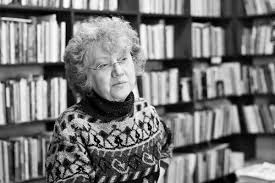
Diana Saenz: A playwright with the soul of a true ‘Boston Poet.”


Diana Saenz is the author of 15 plays, and at least 3 books of poetry. Her plays have been performed across the country and abroad. A former resident of Somerville, Mass., she founded the literary journal “The Boston Poet,” from her home on Putnam Street. Later Saenz went on toCreate the online journal:” BostonPoet.com,” and most recently the “The Boston Poet Journal” which can be purchased on http://www.lulu.com/. I talked with her on my Somerville Community Access TV Program: “Poet to Poet: Writer to Writer.”


Doug Holder: In an essay you wrote about a fictitious argument you had with your cat; your cat argued that he gets unmitigated joy from his art, while you countered all art comes with a certain amount of suffering. So do you feel there is more pain than joy in your writing?

Diana Saenz: That’s a big question. Let’s face it if there was no pain or sorrow then we would be relegated to writing Hallmark Card verse. I don’t think everything we write about is about suffering. Somehow it’s around even when one writes about joy. Everything I write is about a celebration of being alive. But without suffering how would you measure absolute happiness?

If we were to reach a utopian society Poet’s might go out of business. You can only listen to wonderful things so long. There are always going to be things to complain about. Poetry is an art that doesn’t bring in a lot of money, so poets more than any other artists remain honest.

Doug Holder: You are a poet and a playwright. Do the mediums of poetry and theatre compliment each other? Which one do you identify with more?

Diana Saenz: They both compliment each other because they are both oral arts. There is so much poetry in plays. I’ve been a poet since I was fifteen. I am above all a poet. For many years I wrote plays, and for a long period of time I wasn’t able to write poetry. I wrote a play about Lorca, and I had Lorca write a poem in it... But both are definitely connected because they are oral arts.

Doug Holder: Are your plays a vehicle for your poetry?

Diana Saenz: I wouldn’t say that. They are very different mediums. I think being a playwright makes me a much better writer. You are subject to criticism. It’s one thing people saying that they don’t like your poetry, it’s another to read it in The San Francisco Chronicle.

Doug Holder: Were you reviewed in the Chronicle?

Diana Saenz. Yes. Not favorably. But that was one play. I did other plays that got standing ovations and big audiences.

Doug Holder: Did you study Theatre with anyone, or attend a certain school?

Diana Saenz: No. I read a book that was probably written in the 1930’s. I still see that book for sale. I can’t remember the title but it was all about designing a play. I was very involved with the San Francisco theatre scene.

Doug Holder: Why did you leave San Francisco?

Diana Saenz: I had to get out of town. It’s a tiny town. It is a very different town than Boston. San Francisco is a town you can walk from one end to the other.
You run into the same people all the time. It’s a very small pool and I got tired of it. In California people see me as Mexican, and they want me to write Mexican things. Sometimes I do but I am really am an American. I really want to talk about the big questions. Here, in the Boston-area you don’t have a huge Mexican-American presence. People just take you at face value. I like the level of writing—people are a lot more educated here. In San Francisco the “Beat” poetry scene is pervasive. There is a lot of writing about drinking and really being on the outside.

Doug Holder: What is your take on the “Beat” writers like Ginsberg, Corso and Kerouac? They were known to mistreat their women—relegate them to second class citizens—props for the men.

Diana Saenz: One day I decided that I was going to learn everything I could about the “Beats.” I think they drove their women crazy. That’s what I got in my early readings. That women were there to support the male geniuses.

As for their writing I liked “On the Road,” like everyone else. But some of the works I read I wound up throwing them against the wall because I was so irritated about it.

Doug Holder: Somerville has a rich history of small presses. Describe the milieu you were in when you cut your literary teeth in Somerville?

Diana Saenz: I came from San Francisco in 1994, and I was shocked that there were no magazines that listed all the events and venues that were in the area. So I founded my own, “The Boston Poet.”

Doug Holder: What venues did you frequent?

Diana Saenz: I am proud of being part of the open mike scene. I would go to Jack Power’s Stone Soup Poets at T.T the Bear’s. I went to the Cantab Lounge in Central Square, Cambridge.

Doug Holder: Why did you give up “The Boston Poet”

Diana Saenz: It was just so much work. I wound up losing my day job. Bit it was so much fun to do. At the same time I met my husband. He wrote the scholarly articles for the magazine. I wanted to bring the open mike and the academic together.

Doug Holder: Do you think Latina poets are getting more attention now as opposed to when you cut your teeth?

Diana Saenz: There is a tremendously vibrant community of Latin playwrights out there. There is a huge community of Cuban writers from the East Coast. In California there are numerous Latin-American theatres.

Doug Holder: Your play “Dream of Canaries” takes place in an oppressive, fictional Latin American country. Why fictional?

Diana Saenz: I wanted to make the analogy to the United States. I used a Latin American country because of the pressure to write Latin American stuff. The play was commissioned by Teatro de Esperanza in San Francisco. I’ve seen that play produced in Argentina, Guatemala, and yes, even in Poland.

Doug Holder/ Ibbetson Update/ March 2007/ Somerville, Mass.

Monday, March 26, 2007

Two Poets: Two Memoirs: Richard Cambridge/Lo Galluccio

CLICK ON PICTURE TO ENLARGE: Two Poets: Two Memoirs


Poet Lo Galluccio, author of "Hot Rain ( Ibbetson, 2004) ( Pushcart Nominee 2006) and Richard Cambridge ( Curator of the "Poet's Theatre-Club Passim) will read from their anything but coventional memoirs about the artistic life.....

Thursday March 29 7 to 9PM

Emack and Bolio Poetry Series

2 Belgrade Ave. Roslindale

Host: Marc Widershien http://marccreate.com

Thursday, March 22, 2007

Hugh Fox the third's new novel "Half Square"


Hugh Fox 's son has a book out that can be downloaded for free at: http://www.lulu.com/content/720329


INTRODUCTION

“Doctor Delta: This is the most dangerous meme in the transcript. The virulence level is very dangerous (6.45). The meme is also highly contagious (7.4). The reader may consider not reading this section of the transcript. Follow memetic infection countermeasures immediately after reading this session. Infected hosts fall into a nihilistic depression and require immediate treatment or the condition will become permanent.
FS: Yeah, the life stages of God are the big determinant of the overall pattern of the universe and have a direct impact on the macrostructure of the universe. The fusion of cosmology and theology is an understanding of the life stages of God but you left out the Anti-God.
DG: The Anti-God?
FS: Sure, each new Big Bang tends to create a duplicate of the last universe but randomness enters into every system and the duplicate is just a little bit different than the last universe. This is because nothing is certain.
DG: That’s for sure.
FS: I don’t mean this as some sort of saying but that literally nothing is certain. A fundamental property of being is uncertainty.
DG: Huh?
FS: This is the materialistic basis of the existential statement that existence precedes essence. The only way you get certainty is to stick with nothingness. Each time the universe is reborn there is a chance that a slightly different God will be reborn that just isn’t into the whole cosmic density management mission.
DG: So you think this can happen?
FS: God like every being generally wants to survive and have progeny. In the case of God having progeny means taking on the whole cosmic density management mission and making sure there is a duplicate of him in the next universe but there might be God that doesn’t want to have progeny and just wants to have fun.
DG: A slacker God.
FS: Right but a lazy God that doesn’t want progeny isn’t so bad since after billions and billions of Big Bangs life will emerge again randomly and the process will start all over again. What you need to watch out for is an Anti-God.
DG: Anti-God? Sounds heavy. What does this Anti-God do?
FS: It is heavy. The Anti-God decides its just time to end the whole Big Bang nonsense and use cosmic density management to make sure there are no more Big Bangs or being of any sort and just end the whole thing i.e. follow the credo “nothing is certain” to it’s logical extreme.
DG: Literally cosmic suicide.
FS: Right, Old man God invariably has these suicidal thoughts as his body i.e. the universe starts to contract during the last 10 billion years of the universe but generally dismisses such thoughts.
DG: So the universe will ultimately end?
FS: Maybe, but since God is a survivor and this is sort of the essence of the personality of God, the emergence of the Anti-God is very unlikely. Unfortunately, it takes billions upon billions of Gods to keep the living universe going. It only takes one Anti-God to stop the whole show. ”
Dear Reader,

Has the above excerpt from this document left you totally confused? Okay, here is the explanation; a graduate school classmate gave me the manuscript you now hold in your hands. We were fellow graduate students at Texas A&M University were we both received a Master’s. We were taking a class in educational psychology about learning theory. I was getting a Master’s of English with a specialization in TESOL. Gamma was getting some sort of educational psychology master’s and was the favorite student of the teacher, a Dr. Castle. A very intelligent and attractive professor but that is neither here nor there.

My classmate went on to get a doctorate in psychology at Harvard. I was under the impression from reports, by fellow classmates, that he had a brilliant, if slightly mysterious career in psychology. He worked at some sort of military think tank in San Antonio. Years later, my classmate arrived at my apartment talking wildly about some sort of conspiracy and gave me a floppy disc that contained this manuscript. I teach English as a foreign language (EFL) at a university in Taipei, Taiwan. Taiwan is fairly far away from the US and I was very surprised my friend came all the way out to Taipei in order to see me. He explained that he came to Taipei in order to put some distance between himself and his mysterious pursuers. I share this manuscript in the hope that the truth of the nature of this manuscript is eventually discovered.

I have no idea if this Dr. Delta is a real person or a delusion of my friend Gamma. As soon as I got the document I did use Google to try to find the Meta-psychology Institute and found a site dealing with the institute but the computer immediately shut down. I turned the computer back on and when I tried to revisit the site I got a 404-error message. I have no idea whatsoever what a 404-error message means. The first Google search yielded about ten references to meta-psychology. A second search using Google was fruitless. All references to meta-psychology that showed up in my first search had disappeared by the time I did my second search. Gamma is of course not the real name of my friend but he wanted me to use this code name and I have decided to respect his wishes. The document follows a transcript format and I have gone ahead and added notes I made as I read the document. The document is not always the easiest read but I assure the reader well worth the time and trouble. There are many interesting and novel ideas in this document. I am positive there is no such thing as memetic infection or a memetic infection control law. I would ignore the warning against reading the document without appropriate security clearance. I would also skip the memetic infection counter measures nonsense at the end of each chapter.

Hugo Ungaro

Letting Go Poems by Robert Collet Tricaro

Letting Go Poems
© 2006 by Robert Collet Tricaro
ISBN 0-89002-385-9 ($16.95)
Northwoods Press


Reviewed by Steve Glines

Most of the poems in this book are not thematically connected to letting go, at least not that I could tell, but there were just enough hints of the catharsis of “letting go” that forced me to read this volume from that point of view. Letting go includes morning past loves as well as past loved ones. The title and the first few poems got me thinking about the nature of immortality.

Our collective conscience knows everyone alive today and we remember many of what could be loosely called the last generation. We no longer have a collective memory that includes what it was like to be at the battle of Gettysburg, to pick a spot at random. Out collective conscious let go of those memories with the passing of the last Civil War veteran. We do have descriptions of events, many poetic, of the people and places of that era. The catharsis of letting go involves the emotional draining of the swamp of past relationships. For a writer with the talent of Robert Collet Tricaro, letting go creates the immortalitzation of places, people and events. That is what I take to be the meaning and purpose of this little volume.

The book opens with a commentary on life:

Carousel

Faro seems bigger than the others,
harness and reins bejeweled with ruby
and sapphire glass, mane dusted
with gold. His eyes are
the wildest of all.

Children stand in his stirrups flailing
the air, shouting to a crown struck
by Faro’s glitter, as this magic carpet
whirls to the tune of the Wurlitzer.

Faro travels at great speed going
nowhere. Perhaps the wildness
in his eyes is really terror, having
learned that no rider can pull him out
from the centripetal rut he is in, as
he is rushed toward
an open distance he’ll never reach.

To immortalize someone gives them life beyond the grave. Plato gave immortal life to an otherwise miscreant character named Socrates. So to Tricaro gives life to an otherwise unnamed Irish cleaning lady:

The Irish Cleaning lady

Eyes gray as industry.
She’d boarded a ship in Cork
a city on her beloved isle,

but where living was hard,
to seek a better life.
Now she wears the starched

pink uniform that her school
kitchen job requires, which
passes for maid’s garb

when she cleans houses
late into the night. This lady
who speaks the brogue

of broad a’s
has work to do,
and a clean house it will be.

Poor in the sense that cars, rings
and fashions are of no
interest to her. Rich

in that cards, rings and fashons
are of no interest to her.
Resourceful in that she can

sew a silk purse from a sow’s ear,
but there’s be nothing in it
a friend, beggar, or thief could want.

Weak tea with a half slice
of marmalade toast for breakfast, thin
Mulligan stew with soda bread

for supper, perhaps
a pear, suit her well.
Her husband has but a small pension,

so she cleans houses.
With no child
of her own, she nevertheless

puts her deceased sister’s children
into their callings – white
turned-around collar for the boy,

nurse’s pin for the girl.
For decades, crouched
under the lash of moral obligation,

could her life have been more
spare, less giving had she

not left her emerald star
in its sky of sea?

We have all known them the little old ladies with a sad story to tell but a story largely kept to themselves so as not to trouble the grandchildren. We secretly wish for divine intervention, a lightning bolt of luck that transforms that losing lottery scratch ticket we all know to be in her purse into a winner capable of transforming her life into “Queen for a day,” a week, a month, just long enough to make her forget her past and smile the broad grin of someone inhaling life for the first time with the appetite of a hungry child. Alas life rarely works out that way and the poet is left with immortalizing a life that would otherwise be forgotten, a life that, without the poet, would cease with its passing.

Mrs. Dory’s Teacups

When her husband was alive a porch was called veranda, Later,
the New York Times became her seat on the stoop
of a four-story, run down walk-up.

Lines in her heavily rouged face, if placed end to end
could mark distance greater then the dimensions of her world –
the stoop and one room just inside the building’s front door.
The closest thing she came to activity was watching
UPS deliveries and girls playing hopscotch near the curb.

Her neighbor Todd ran errands for her. She’s offer him
coca in one of twelve teacups she and Mr. Dory brought
from their native England. Matching plates were sold
to pay for her husband’s cremation,
so she used saucers to serve her home-made scones.
Todd would run his fingers along the cup’s
fourteen-carat rose petals and smile.

She’s sip tea, her little finger extended, speak with clipped
eloquence about children she couldn’t have, her favorite nephew,
slightly older than Todd, who roomed in Greenwich Village
with a friend. She’d ask Todd why he blinked his eyes
so often.
Why at almost eighteen, he’d never dated.

When Mrs. Dory died some months later, her building super
gave Todd a box and a note. Ten teacups were exchanged for
scattering her ashes over Sleepy Hollow.

Two cups were for Todd. The note
included her nephew’s number.

And so it goes. This is a beautiful book of poetry. I recommend it to all.

Wednesday, March 21, 2007

Bagels with the Bards 2- an anthology of poetry by Boston-area breakfast poets

Introduction by Afaa Michael Weaver
Edited by Molly Lynn Watt
Designed by Steve Glines

"Bagel Bards" founded by Doug Holder and Harris Gardner

"An anthology of poetry by a diverse, and iconoclastic group of poets who have met for breakfast at Au Bon Pains in the Boston area for the past two years..."

To order: http://www.lulu.com/content/729666


From the introduction...


It all came to fruition the day we made our first bagel, after a few energetic drafts of the thing. It got up from the table, shook its rolling shoulders, yawned from the hollow core mouth of itself, and began to dance. At that precise moment, the miracle came as sure as the Matrix Oracle would have predicted from over her pan of cookies. Sunlight hit the bagel, and it became lines on the floor, long lines that would have been perfect for any chorus line, but instead filled themselveswith words, words that made promises to all of us. These words spoke the premise. The poet is a baker although he may never have the dough. We looked at each other and knew this was our creation myth, this dance of language on some piece of paper, or in our hearts, or in the burrowed brow of the manager trying to wrap his head around the idea that poets gather in the corner of his place on Saturdays and spend a few hours living, living, living. O bard, a bagel has become a poem.

-- Affa Michael Weaver

Poets included:

Lo Galluccio
Regie Gibson
Gary Hicks
Ian Thal
Barbara Thomas
Mike Amado
Tom Daley
Gloria Mindock
Matt Rosenthal
J.C. Foritano
Ellen Steinbaum
Irene Koronas
Ricardo Fitter
Doug Holder
Steve Glines
Harris Gardner
Tino Villanueva
Beatriz Alba Del-Rio
Mia Champion
Henry Braun
Pam Rosenblatt
Ann Brudevold
Ann Cahart
Elizabeth Leonard
Marc Goldfinger
Patricia Brodie
Martha Boss
Barbara Bialick
Varsha Kufaka
Barbara Thomas
Deborah M. Priestly
Julia Carlson
Nataniel Mayes
Mignon Ariel King
John Hildebidle
Walter Howard
Elizabeth Doran
Tim Gager
Lainie Senechal
Martha Boss
Robert K. Johnson
Eytan Fichman
Abbot Ikeler
Afaa Michael Weaver
Tomas O'Leary
Molly Lynn Watt
Chad Parenteau
Mary Buchinger
Richard Wilhelm
Henry Braun
Llyn Clague
Mike Amado
Elizabeth Tom
Harris Gardner
Doug Holder

Opening the Door to French Film by Hugh Fox


OPENING THE DOOR TO FRENCH FILM
by Hugh Fox
2007, World Audience, Inc. (no price listed)
review by Richard Wilhelm http://richardwilhelm.blogspot.com


I was looking forward to digging into Hugh Fox’s "Opening the Door to French Film." As the introduction by Eric Greinke says, the book is designed to be an informal commentary on the work of various French directors from the 1930’s to the present. The writing is certainly free of academic jargon. The tone is conversational, sometimes to a fault. Street corner vernacular is frequently less precise than standard English. Fox is so informal that his language on occasion confuses rather than clarifies. The informal, conversational approach seems welcoming in the first pages as Fox describes the plots of the various films of each director. Forty or fifty pages into the book however this approach grows tedious. Imagine sitting down with a friend who starts telling you, one-by-one, the plots of a hundred and twenty-some films. Interesting at first, but it quickly gets tiresome.


It seems there could have been a better way to organize this book but Fox had a vision of the book he wanted to write, so it is only fair to judge the book as it is written. And his vision was to write a chapter on each director, describing the plots of various films with commentary. Fox has some worthwhile insights on each director’s themes and methods and this makes the book worth owning. But since the approach makes the book tedious to read cover-to-cover, the reader is better served by just diving in at any point of interest, i.e., pick a director one likes or is curious about and jump in. To this end, it would have been helpful to have an index, though the spacing of the typeface makes skimming the chapters relatively easy.


One must take Fox to task for the many errors, typos, misspellings, and stylistic inconsistencies in this book. In his chapter on Luis Bunuel, he launches into a description of the 1977 film "The Obscure Object of Desire" which he correctly calls "Bunel’s (sic) last film. Two pages before, he discusses "The Discreet Charm of the Bourgeoisie" which he tells us was released in 1991. It was released in 1972. In a discussion of Bertrand Tavernier’s 1986 film, "Round Midnight," Fox speaks of "the friendship between the Frenchman and the gringo saxophonist." Why would he use "gringo" to describe an African-American musician in a context devoid of any Mexicans? The saxophonist is not a "gringo" to the Frenchman. It is depressing to encounter a book published by a writer who shows so little regard for his craft. It makes the reader not trust the material.


I was surprised Fox did not mention the 1945 film "Children of Paradise," written by Jacques Prevert and directed by Marcel Carne, regarded by some as the greatest French film ever produced. (Not to quibble, but neither was there mention of the 1986 film by Jacques Beineix, "Betty Blue," a personal favorite of this reviewer. But, in fairness, Fox can’t possibly be expected to mention every film produced in France. The book is a personal, rather than an encyclopedic, survey of French film.)


Fox’s knowledge and insight—and his reputation—would have been better served
had he taken the time to give his book a serious, professional editing. Nonetheless it’s a fun book for film buffs.


--Richard Wilhelm
Ibbetson Update


* Richard Wilhelm is the arts/editor for the Ibbetson Street Press.

Cervena Barva Press Celebrates Two Year Anniv. April 26 McIntyre and Moore Books--Somerville

CERVENA BARVA PRESS CELEBRATES TWO YEAR ANNIVERSARY
McIntyre & Moore Booksellers
255 Elm St. (Davis Square)
Somerville, MA 02144-3222
April 26th, 7:30 PM, Free, Handicap Accessible

Readers: Andrey Gritsman, Doug Holder, and Don Share
Andrey Gritsman is a native of Moscow, Russia, lives in the NYC area, and works as a Physician. Mr. Gritsman is the author of poetry in Russian: No Man’s Land (Petropol, S. Petersburg), Double (Hermitage, New York), Transfer (Arion, Moscow), and Island in the Woods (Pushkin Foundation Publishing House, S. Petersburg), and View From the Bridge (poems & essays in Russian and English) published by WORD in NY. Other books include Long Fall: Poems, Texts, and Essays in English (Spuyten Duyvil Press, 2005), and In Transit (English with Romanian translations, Bucharest, Romania, 2005). He has been published in numerous literary magazines including Richmond Review, Ars Interpres, Poetry International, Confrontation and others. His work appears in numerous anthologies including Modern Poetry in Translation (UK) and Crossing Centuries (New Generation in Russian Poetry), and in The Breath of Parted Lips: Voices From The Robert Frost Place (CavanKerry Press). Twice nominated for The Pushcart Prize and was shortlisted for the PEN/American Center Joyce Osterweil Poetry Award in 2005. He runs the Intercultural Poetry Series at Cornelia St. Café in NYC and is editor of Interpoezia, an online journal of international poetry.
(Andrey has a poetry postcard forthcoming by Cervena Barva Press and was interviewed in the February, 2007 Newsletter).

Doug Holder founded the Ibbetson Street Press in 1998. He has published over 30 books of poetry by local and national poets and 20 issues of the literary journal Ibbetson Street. Doug is co-founder of The Somerville News Writer’s Festival and curates the Newton Free Library Poetry Series. Doug interviews contemporary writers and has a show on Somerville Access Community TV called "Poet to Poet." His work has been in numerous literary journals including Rattle, Doubletake, The Boston Globe Magazine, Poesy, Small Press Review, Artword Quarterly, Manifold, the new renaissance, and The Café Review. Work in anthologies include Inside the Outside: An Anthology of Avant-Garde American Poets (Presa Press), Greatest Hits: Twelve Years of Compost Magazine (Zephyr Press), and America’s Favorite Poems (edited by Robert Pinsky)
(Doug’s chapbook, Of All The Meals I Had Before: Poems About Food and Eating, will be released at this reading from Cervena Barva Press and he will be reading work from his chapbook. Doug was interviewed by Cervena Barva Press in the May, 2006 Newsletter).


Don Share is Curator of the Woodberry Poetry Room atHarvard University, Editor Literary Imagination, andPoetry Editor of Harvard Review. He teaches atHarvard and in the Lesley University MFA program. Hisbooks include Squandermania, new from Salt Publishing;Union, (a finalist for the Boston Globe/ PEN NewEngland Winship Award for outstanding book), Seneca inEnglish, and I Have Lots of Heart, translations ofMiguel Hernåndez (which received the Times Literary Supplement Translation Prize). His critical edition of the poems of Basil Bunting is forthcoming from Faberand Faber.
(Don was interviewed by Cervena Barva Press in the February, 2007 Newsletter).
Gloria Mindock founded Cervena Barva Press in April, 2005.
The Press publishes poetry and fiction chapbooks and full-length plays, fiction, poetry, memoirs, and poetry postcards by writers from all over the world. The press has published many writers with prestigious awards between them such as Gary Fincke, Eric Pankey. Michael Burkard, David Ray, John Minczeski, Dzvinia Orlowsky, Catherine Sasanov, Simon Perchik, Rane Arroyo, and others. Many international writers will be published this year including Flavia Cosma, Martin Burke, Susanne Morning, Ioan Tepelea, David Hill, Michael Nash, Denis Emorine, to name a few.
Local writers published this year are Doug Holder, Mary Bonina, Harris Gardner, Philip Burnham, Leela Arnet, and poetry postcards by Irene Koronos, Debra Priestly, Matt Rosenthal, and others.
On the Cervena Barva Press Website, readers can find out what’s new with the press, read the monthly newsletter online where writers are interviewed, look for readings and events in the local area as well as from all over the world, and check out the chapbook poetry and fiction contests that are held each year by the press.
Cervena Barva Press runs an online bookstore called, The Lost Bookshelf, where the press sells their publications as well as books by writers/publishers on consignment.

Contact Information: Mary Curtin, Events Coordinator, 617-241-9664, 617-470-5867 (cell), marycurtin@comcast.net
Gloria Mindock, Cervena Barva Press, Editor: editor@cervenabarvapress.com
http://www.cervenabarvapress.com
http://www.thelostbookshelf.com

Monday, March 19, 2007

Fairy Tales For Writers by Lawrence Schimel


Fairy Tales for Writers. Lawrence Schimel (A Midsummer Night’s Press. 16 W. 36th St. 2nd Floor. NY, NY 10018 http://www.amidsummernightspress.com) $6.50

“Fairy Tales for Writers” by Lawrence Schimel is a new release by the small press “A Midsummer Night’s Press” of New York City. I love Schimel’s conceit of using fairy tales as templates for his poems of the writing life. In this little book you have all the players and places you most likely encountered in your travels in the literary milieu. In “Little Mermaid” a young, idealistic woman falls under the spell of a charismatic but Janus-faced MFA professor:

“She slaved to scrape together on
enough money to join the MFA
where he taught working double shifts
as a waitress that sent sharp pains
shooting up her legs from being on her feet
all day and night. She had no time to write
But she bore it all silently, buoyed by the memory
of their time together at the conference,
and the promise the future held.

At the cocktail party, the night before
the first day of classes, where the students were
to meet and mingle with the faculty and each other,
he introduced her to his wife,
who had also once aspired to write, but now
was content to remain in his shadow,
to be seen on his arm when he won awards and
to look the other way when he followed
his wandering eye.”

And in the poem “Sleeping Beauty” the poet examines the damage unconstructive and mean-spirited criticism can do to a writer in the formative stages; literally freezing him or her in their track, like, well, “Sleeping Beauty”:

“Be it from parent or teacher, sibling or spouse,
just one tiny prick of criticism is all it takes sometimes
to put a burgeoning writer to sleep
for a hundred years,
for a lifetime
for so long that no princes are left
to hack through the brambles,
or if one is, he can’t imagine that he should bother.”

This is a charming mini-chap from “A Mid Summer Night’s Press.”

Doug Holder/Ibbetson Update/ March 2007/ Somerville, Mass.

Sunday, March 18, 2007

Shay Duffin as Brendan Behan

THE BREW OF THE NIGHT MEETS THE DAWN OF THE DAY: SHAY DUFFIN’S PORTRAYAL OF IRISH REBEL BRENDAN BEHAN


One of the more impressive things about Shay Duffin’s portrayal of Irish rebel, playwright, poet and novelist Brendan Behan (Besides his impressive acting) is the amount of glasses of Guinness he downs in the course of the play. Behan was an alcoholic and so Duffin portrays this bard with a bad elbow as a prolific downer of libations. But Duffin can obviously hold a drink and he pulls off his one man show “Shay Duffin as Brendan Behan: Confessions of an Irish Rebel” (At Jimmy Tingle’s Off Broadway Theater), with accomplished showmanship and humor.

Behan was born in Dublin in 1923 and died in 1964. In both his plays and his writings he took shots at the Church, the State, England, authority: anything that smacked of sham or hypocrisy.
His signature play was “ The Borstal Boy” which he wrote when he was in prison.

Duffin had a casual acquaintance with Behan in Dublin, when Duffin was a boy. Duffin captures this expansive, brilliant, witty and tragic man, with the expert skills of a well-oiled mimic, as well as a scholar of the nuances of speech and tics of personality.

Duffin had this reviewer on his toes from the start, quoting Behan on his views of theatre critics:

“Theatre critics are like eunuchs in a harem; they watch performers, but they are unable to do it themselves.” I could have sworn he was looking at me… no matter… well noted.

Behan, as portrayed by Duffin, proceeded to regale the audience with his tales of prison, his time as an Irish Republican Army operative, his writing and drinking life, and his too early, tragic demise. Duffin has mined a great treasure chest of great lines from Behan like:

“They say I drink like a fish. Well, we don’t drink the same f...g thing.”

Here is Behan’s account of his father berating his long-suffering mother:

“Kathleen if Jesus was married to you, he would climb back on the cross!”

And this succulent droplet of Behanian philosophy about the lean times in Dublin:

“To eat was an achievement, to get drunk a victory.”

The play follows the decline of Behan, and at the end the spotlight narrows on Behan’s wizened face, to show the sorrows behind the drunken bombast of the man. Behan died in a hospital in Dublin in March of 1964. His words were heard clearly on a cold Somerville night in March 2007.

Doug Holder

To order tickets call 1-866-811- 4111

Saturday, March 17, 2007

Interview with poet Michael Graves with Charles Ries


ADAM AND CAIN
By: Michael Graves
Black Buzzard Press
Price: $15.95
80 Pages/ 9 Poems

ISBN: 0-938872-29-X

Order from:
Michael Graves
The Phoenix Reading Series
P. O. Box 84
Dyker Heights Station
8320 13th Avenue
Brooklyn, NY 11228

Review/Interview By: Charles P. Ries


Adam and Cain is Michael Graves first full length collection of poetry. He work has been widely published, and well received within academic journal. In 2004 he was the recipient of a grant of $4,500 from the Ludwig Vogelstein Foundation. He has taught full-time for The Pennsylvania State University and been an adjunct for various branches of The City University of New York for fifteen years. Currently, he is an adjunct at New York City Technical College of The City University of New York

When Carol Novack, Editor of the edgy on line literary magazine, Mad Hatters Review (http://madhattersreview.com/) asked if I would review a new book of poetry by a writer named Michael Graves I was expecting free verse, something crazy and narrative like much of the work I read on her site. I was surprised when the book I got in the mail was (what I have come to consider), academic in style – a style that often leaves me lost, losing interest, and running for my dictionary. In Adam and Cain, Graves uses the original story of sibling rivalry, and turns it into a morality tale that transcends its biblical origins. Using a series of nine long poems Graves tells his version of this story. Here are part #1 and #2 from the forth poem in this collection titled, “Cain to Adam”: “#1 / At first, / There was one, / Adam, the Master, / Unrivalled. / Now, / There are brothers / Who envy their father, / But tremble to show it, / It is not so, / Abel, my brother, / You, whose face I see / When I look for my own / in the still waters of dream? // #2 / I would do anything / To quiet the voice / That argues within. / The unceasing voice / That drives me to fight / With arrogant Adam - / That tyrant! / And rages and quails / At the peacekeeping gestures and words / Of smooth, solicitous Eve! // O, brother, blest is your peace!”

While I have written over one hundred poetry book reviews, I don’t have an MFA. I wondered if I was qualified to review a collection of poems as erudite as this one. Everything I know about poetry has been through my own reading, living in the small press, and talking with (mostly) non-academically trained poets. Maybe I not a fan of formal poetry out ignorance, but I just don’t find it accessible. I think this issue of accessibility is at the core of the debate I often see in the small press between academically trained poets and non-academically trained poets. Some, in the non-academic small press would say poets like Graves have lost contact with the people and common expression; and some in the academic press would say the work of non-academic small press poets is not informed through study, and has not progressed.

So what was I supposed to do? Toss this book or deal with it? I knew certain poetry circles find Michael Graves work to be exceptional, and this made me curious enough to ask Graves if he would help me understand why I should care about his work. He graciously agreed to do so.

CPR: You are an academically trained writer; how does this training color or influence your writing?

MG: I am an academically trained writer, but one of the academics who trained me, James Wright, was a translator of and deeply influenced by twentieth century Spanish language poets such as Pablo Neruda and Cesar Vallejo, to mention only two. He also translated Georg Trakl, an important early twentieth century Vienese poet, among other German writers. Wright’s association with Robert Bly is well-known so I think I don’t need to go into it here. The brilliant Joycean Leonard Albert who arranged my introduction to Wright frequently encouraged me to be sure to read “juicy” work not included in the canon.

I think academic should be divided into at least two categories--the academic which honors and celebrates the archetypal, the universal, that approaches its subject rigorously, but humbly, say Socratically, with a genuine sense that basic assumptions and truths might be true but must be tested, explored, presented, etc., over and over and second the dead arrogant, prescriptive only academic. The letter killeth but the spirit giveth life. The arrogant academic would be that which honored only the canon of DWEMs –Dead White European Males, with only token exceptions, and it would assume it always had the final say as to what was worth reading and why. Dictionaries and those who work on them recognize the reality that language is a living thing and that words and meanings and usages phrases enter languages and become accepted, so why shouldn’t academics recognize that poems come into being and gain and deserve recognition, even if they compete with canonical works for attention.

CPR: Adam and Cain is your first full collection of poems; have you done chaps? How come so few books of poetry?

MG: I have a chapbook Outside St. Jude’s (REM Press, 1990) from an extremely small press that a friend, Remington Murphy published for awhile. It’s been reissued as an e-book by Ram Devineni who publishes Rattapallax. It’s available by going to the Rattapallax site and as a pdf. I also have a chapbook Illegal Border Crosser forthcoming from Gloria Mindock’s Cervena Barva Press

I have about another five to six hundred good or better than good poems on a wide range of subjects. I have one manuscript ready to mail out and the rest are waiting for me to find the time and energy to finish organizing into mss. That work was interrupted by my mother’s death in March, 2006. Gloria Mindock is interested in publishing a full-length collection. Last but not least, this is an opportunity for a good publisher to get some of my work while it’s still available!

CPR: Do you rewrite your poems extensively?

MG: Though I rewrite some poems extensively, in general, the answer is no, but they have long gestation periods. Some are looked at over many years, five, ten, fifteen until I know what to do. They are often not finished when they come, but they are often close. I jot notes for poems all the time. And I have long stretches when I’m thinking about writing on and off all day long. I suppose I’m obsessive and don’t mind thinking about trying to transform my life, especially my inner life, into poetry. However, I know that writers can be extremely unreliable commentators on their own creative processes, like a narrator in a novel.

CPR: In your Cervena Barva Press interview you say, “The book [Adam and Cain] was written slowly over many years. The initial impulse came to be during Leonard Albert’s course Religious Ideas in Modern Fiction, and I think the style of the poems might be indebted to Auerbach’s discussion of Biblical style in Minesis.” You also say, it was written in a ‘non-discursive in a high modernist manner.’ What is Minesis? What is a non-discursive in a high modernist manner?

MG: I started the book with the short story Cain in Exile, originally titled Cain and written for Leonard Albert’s course in the short story, probably sometime in 1976-77. I finished the book in 2005. So, the book took about thirty years to complete. Mimesis is the transliteration of Aristotle’s word for imitation. He writes that art imitates life; mimesis is the representation of life. After that, it gets complicated: we could probably say that any poem or work of fiction imitates life. I think it becomes a question of by what means, in what style, what degree of success, what truth?

By non-discursive high modernist manner I mean that the transitions are left out between the poems and that the reader must think about the relationship of the parts without help from the writer. Also, the reader is not told how to interpret the work. For example, he is not told Adam inflicts a psychic wound on Cain. The rationale is the writer need not tell the obvious to the reader and that the reader gets more pleasure out of participating in the creation of the text, and that the impact of what he gets is more powerful and profound, and that it is modern in a deep sense to give the reader the freedom to determine for himself.

CPR: What audience did you have in mind when you wrote Adam and Cain? Will my neighbors who shop at the Pic’n Save down the street enjoy this book?

MG: Everybody who’s interested in poetry. Everybody who doesn’t say I hate Biblical themes on principle. Everybody who doesn’t say there must be no difficulty in poetry. Everybody who doesn’t say the Bible is the final word and no one can add to or subtract from it. Anybody who hears the music in the poems and imagines the human situation will feel their power. I have already had a wide range of readers buy or praise this book, readers without college degrees, from various ethnic groups, people from various walks of life.

CPR: A few of your metaphors in Adam and Cain were meaningless to me because I am not a biblical scholar; so in a sense these metaphors have not deepened my appreciation of your work, but obscured it. Maybe as we read widely, travel, think, experience life with growing awareness and evolve, our art reflects this insight and complexity of thought that come with our personal and creative growth. For example, we may use metaphors that are common to us, but uncommon to most people. I recently read a New York Times Book Review interview with a noted poetry critic who said she didn’t review poetry collections from writers born after 1950 because she felt so out of touch with some of the cultural images they were using (cartoons characters, TV. shows, cultural events, movies etc) images that were very clear to them, but not clear to her.

MG: Absolutely, there are books I could not do justice to. For one example, I find Allen Mandelbaum's, The Maxioms of Chelm beyond me, I have not found the time and energy to look up the terms I don't know, though I have spent some time looking for critical articles on it, but I love its music. Though I like to think one could sense/perceive that something is interesting, worthwhile, etc., even if one's grasp of it were limited.

CPR: Do you feel elevated or formal language, such as you use in Adam and Cain, looses its audience because it is difficult to grasp?

MG: No. My most important audience is composed of people who can enter and/or accept the book. In one sense, the audience by definition is the people who read the book. I’m not writing for people who won’t look a word up when necessary. I suppose it’s fair to call the language elevated, but I think the better term, which you mention, is formal. It carries no negative or satiric connotations. And there are plenty of poems in the collection that are made of easily understood mono or disyllabic words only.

CPR: You wanted Adam and Cain to be read; yet your writing style will not be accessible to most people. Why publish it?

MG: I’m not worried about being a best seller and I’m not sure my work won’t reach a wide audience. Nonetheless, I am aware that it is quite possible that it won’t. Perhaps this comparison would be helpful: getting to really know someone takes time and effort. Even though there is a place for connections that are immediate and wonderful, all too often, when we connect immediately and “completely” we are sorry later. Most of us would agree that long term relationships need investments of time, energy, willingness, open mindedness, dialogue, etc and we are very used to saying reading a book is a conversation… In addition, I think that Adam and Cain has qualities that a reader could connect with immediately. Sir Philip Sidney settled for, “Fit audience though few.” I want as many fit audience members as possible, and I think a lot of them are out there. Whether or not I’ll reach them…

CPR: What attracted you to this morality tale?

MG: I think the key moment came in Leonard Albert’s class Religious Ideas in Fiction or The Bible as Literature, when he pointed out that God gave no reason for His rejection of Cain’s gift in the King James Bible. To paraphrase, I thought something like “What an amazing thing.” I didn’t have these words but it pointed to God’s nature as Manichean and suggested Gnostic perspectives on Biblical texts were possible. I think there was also something deeply rebellious in me. I had already shown some of my writing to Professor Albert and he had voiced the opinion that I had an argument with God, very unMiltonic I suppose! And I had already discovered my conflicted anger, which might be too mild an expression, at my parents.

CPR: In the same Cervena Barva Press interview you say Jame Joyce is a big influence of yours. The American writer, Max Eastman once asked Joyce why Finnegan’s Wake was written in a very difficult style and Joyce replied, “To keep critic busy for three hundred yeas.” Some critics considered this book a masterpiece, though many readers found it incomprehensible. I guess you don’t find Joyce incomprehensible? How come I do?

MG: I’m willing to read a lot of Joyce criticism and join Joyce reading groups.

CPR: Fair enough, but tell me why you love James Joyce and how has he influenced your writing?

MG: Joyce was one of the very first writers I was exposed to after I returned to school and he represented the triumph of the artist over repression. The first of his works that made a major impact on me was Dubliners. Central to Joyce’s purpose in that collection of stories was the revelation to both the reader and the characters that the characters were trapped and paralyzed in a living death, although the naturalistic surface of stories remained undisturbed. I encountered those stories at a messianic phase in my life and they filled me with enthusiasm.

I have spent many years misreading Joyce in important ways and unable to penetrate much of his work, especially Finnegans Wake, but what was accessible to me was so immediately rewarding, so full of beauty, human importance, respect for art, intellectual interest and excellence, I have been willing to persist in my attempt to read him. It is said of Joyce that one only rereads him. His work has inspired me to explore the sexual content of religious symbols and images, to strive to make theme/form and content inseparable, to explore indeterminacy in narrative sequences, to charge writing with as much meaning as possible.

CPR: Let’s talk about whether or not poetry can not be formal. I believe this term (form) is most often used when referring to academics that choose to write within various forms (sonatas etc). Yes, narrative poetry is a form; but for the most part narrative poetry, of the sort I find throughout the small press and enjoy, does not obscure.

MG: There is no necessary opposition between form and clarity. It could be argued that form is a clarity that emerges from the flux or obscurity of experience or that form is the underlying structure or can be. The sonnet, for example, is based on the statement of a situation or problem in the first eight lines, which reaches its fullest tension about the eighth line and the comment or resolution in the last six. It is a form that is true to the mind’s perception of experience: problem and solution. It is true that some forms, such as the sestina, if followed rigorously, are complicated and difficult. But even so, the content in a form need not be obscure; need not be filled with arcane or specialized facts or allusions. Narratives have formal elements, as I assume you agree—plot, protagonists, narrators, conflicts, symbols, irony, setting, situation, rising action, climax, resolution, images. I think the question is always whether or not they are well used.

CPR: It feels like our poetry worlds are, indeed, worlds apart. Do your students at NY City Technical College relate to your poetry?

MG: Surprisingly, yes, some of the students do relate to my poems. I read them a selection from Adam and Cain and my other work. Of course, some of them have little interest in English and little if any of the course content seems to reach them. It’s not appropriate to read them many of my poems or spend a lot of time on them. I teach remedial writing and freshman composition. And City Tech students are not succeeding at passing the CPE, the Competency Proficiency Exam, so there is great concern to get them ready for the Final exam. I think that teaching poetry could be one way to try to get them enthusiastic about language, but our curriculum doesn’t really include that as much of an option. Our freshman composition course has a required text and there is only one poem in it, but I take a little time near the end of semester to give the students a sense of who I am as a writer, and some of them feel the emotion the poems generate and give –I can’t find the words,--grunts, wows, gasps. Not a whole lot of them, but some. This semester I had a student ask to purchase the book. I asked him to contact me after the semester ended, that is, after final grades went in. Though he asked twice, I haven’t heard from him, so he might have been hoping to influence his grade.

CPR: How old are you? What do you do for a living? Are you married? Do you have children?

MG: I’m 55. I work as an adjunct instructor; technically I believe the term is lecturer for the City University of New York and a reader for a faculty member at New Jersey City University with weak eyes. I’m single and don’t have any children. I still have fantasies, but I’m getting old….

CPR: We are both getting old; but (I pray) immeasurably wiser. Thank you for widening both my vocabulary and my mind with regard formal poetry and narrowing the great divide between academic and non-academic poets.

Graves earlier comment that, “long term relationships need investments of time, energy, willingness, open mindedness and dialogue” has timeless truth to it. How many times have I been surprised to become close with someone who after a first and second meeting I feel no connection with? Yet over time something begins to happen; we begin to be aware of something deeper. Through process of preparing this review I have had to look deeper, think deeper, and read again. Adam and Cain was no fast dance, but I got through it. It was hard work, and I will read it again. After all, we’ve become friends.

____________________________________

If you would like to hear Michael Graves read his “Blatnoy Series go to: http://www.madhattersreview.com/issue3/poetry_graves.shtml

To find Michael Graves interview in Cervena Brava Press go to: (http://www.cervenabarvapress.com/gravesinterview.htm)

______________________________________________

Charles P. Ries lives in Milwaukee, Wisconsin. His narrative poems, short stories, interviews and poetry reviews have appeared in over one hundred and sixty print and electronic publications. He has received four Pushcart Prize nominations for his writing, and most recently read his poetry on National Public Radio’s Theme and Variations, a program that is broadcast over seventy NPR affiliates. He is the author of THE FATHERS WE FIND, a novel based on memory. Ries is also the author of five books of poetry — the most recent entitled, The Last Time which was released by The Moon Press in Tucson, Arizona. He is the poetry editor for Word Riot (http://www.wordriot.org/) and Pass Port Journal (http://www.passportjournal.org/). He is on the board of the Woodland Pattern Bookstore (http://www.woodlandpattern.org/) in Milwaukee, Wisconsin. Most recently he has been appointed to the Wisconsin Poet Laureate Commission. You may find additional samples of his work by going to: http://www.literarti.net/Ries/ .

Friday, March 16, 2007

Review of "The Gardner and the Bees " Helena Minton

Review of The Gardener and the Bees by Helena Minton

$9 plus $2 S&H to March Street Press, 3414 Wilshire, Greensboro, NC27408.> web site address: marchstreetpress.com email address:> _rbixby@earthlink.net_ (mailto:rbixby@earthlink.net)

Helen Minton has a new poetry book out called The Gardener and the Bees. Like Emily Dickinson1 and Marianne Moore2, Minton is a modern poet who pays intricate attention to word usage and concrete imagery. In her poems, Minton takes ordinary observations, adds some unusual twists and turns and makes her poetry something special to read. She writes about nature and its influences on human experiences, especially focusing on gardening, flowers, animals, and nature’s relationships with man/woman. She paints with words. Sometimes the tone of a poem is happy; sometimes it’s sad; sometimes it changes from happy to sad; or sometimes it’s simply angry.

And she writes about personal experiences, too, as seen in “The Birch” (p. 26), when the speaker recalled planting a birch with her father and says, “The week before my wedding/how did we find a moment, my father and I, who rarely/worked together with our hands?/During the tissue-paper preparations/it felt urgent that we dig,/heft the compact root ball. Lowered it. Pack in the dirt./Less urgent as we stood back and admired what we’d planted,”(Stanza 1) How more personal can an experience between father and daughter (or son) get?


Or, as read in “Building the Compost” (pp. 16-17), how more personal can a moment be as when the speaker describes a scene where a woman creates a frame for compost upon the request of her husband and Minton writes “Now, he thinks, she will be happy.” and has the woman “…herself moving/toward the thrift/of a woman in wartime,/saving scraps, starting seeds/for a victory garden.” (Stanzas 11-12) Though written in the third person, Minton has the reader appreciate the personal achievement of the woman.


In “The Birch” and “Building the Compost”, Minton has illustrated how the speaker deals with the main masculine figures in her life.


Minton writes with wit and imagination, as viewed in “Wedding Day” (p. 27). She has taken an ordinary, though special, event and changed it into a potentially disastrous one which, through a twist of fate and imagination, everything turns out okay. The speaker says, “Out of the branches, inch-long bodies fell/all afternoon, softly, on the patio,/on the chairs and the tablecloths/as the brown creatures stripped trees of green./My father paid the grandchildren/a penny a bug to collect them.” How unfortunate for the bride and groom and everyone present to experience this act of nature. But, Minton wittingly writes that “The caterpillars don’t appear in any pictures./They never dropped in my hair/or landed on the neck of a guest,/or were caught in David’s Mexican wedding shirt.” So things didn’t turn out as badly as the reader first thought they would. Though Minton’s use of imagery and description and wit, she has captured the reader’s attention and left him/her feeling like the children at the wedding – “…not frightened/as they filled their buckets/strung between the maples limbs,/close to lovely from this distance.” (Stanza 1)


Often she writes with vivid detail and description, as seen in her opening poem “Perennial Bed” (p. 3). The reader can visualize Minton’s bees who “spend hours/on the saucers of rose sedum, their curled legs moving over petals/fleshy as rubber brushes” (Stanza 1) or the lone bee who “lands on a filament/ of coreopsis moonbeam,/floating down, down to the dirt,/then flung back/through the undulating architecture.” (Stanza 2)


Her poetry is often sensual, appealing to the mind and the body, and allows the reader’s mind to look for pleasure3, as read in her poem “The Marie Selby Botanical Gardens”(p. 31), where the speaker “stroll(s) past hibiscus/jacaranda and frangipani,/ through the black shadows of the banyan,/crushed oyster shells underfoot,/in the early morning Florida cold/sharp as a comb across the scalp.” (Stanza 1) The speaker is enjoying herself as she is “trying, as I tried last year,/to learn the difference/between palmate and pinnate, royal and sabal,/and the lower fanned shrubs/which look like palms but are not.” (Stanza 2) The reader is having a pleasant time reading the poem that Minton ends happily questioning, “Who said we should suffer/to study flowers?” (Stanza 4) Minton’s style is sincere, sometimes feminine, sometimes heartwarming and sometimes heartbreaking. She doesn’t use traditional stanzas and doesn’t rhyme words, though her sentences flow smoothly, as if the speaker is having a conversation with the reader.

It may take a couple of reads to understand Minton’s inner meanings in her poetry, The Gardener and the Bees is just like the title suggests – a productive, happy yet possibly confrontational experience. As the speaker concludes in “Perennial Bed”,
“Let them sting me,/brash as I am.” (Stanza 3) Minton has written a book of poetry that should be read and enjoyed and discussed by both men and women.
###
1 enotes.com. “Dickinson, Emily │Introduction: Feminism in Literature”, 2007.
2 enotes.com. “Moore, Marianne │ Introduction: Feminism in Literature”, 2007.
3 John Timpane, Ph.D. with Maureen Watts, Poetry FOR DUMMIES, New York: Wiley Publishing, Inc., 2001, p. 31

Pam Rosenblatt/ Ibbetson Update

Sunday, March 11, 2007

Alfred Nicol: From Printer to Award-Winning Poet


Alfred Nicol: From Printer to Award-Winning Poet.

By Doug Holder

Alfred Nicol, a graduate of Dartmouth College, worked as a printer for twenty years. During this time he continued to write poetry and honed his craft. Nicole left his printing business and now concentrates on his writing full time. He is a member of the Powow River Poets of Newburyport, Mass, and edited the critically acclaimed anthology “Powow River Anthology.” He is the recipient of the 2004 Richard Wilbur Award for his first book of poetry “Winter Light.” (University of Evansville Press). His poems have appeared in “Poetry,” “The New England Review,” and many others. I talked with Nicol on my Somerville Community Access TV Show “”Poet to Poet: Writer to Writer”

Doug Holder: You worked as a printer for many years after graduating Dartmouth. Can you talk about this, and why you gave it up to write fulltime?

Alfred Nicol: I began as a pressman. My father had worked in a factory. We take this model of what a man should do. I had the idea if I took this artisan position, then I would have my mind to myself in the evening. But I wound up exhausted at the end of the day. So I tried to get up earlier and earlier before the kids got up so I could write. It didn’t work out that well. Eventually I got the opportunity to give it up.

Doug Holder: What do you do for a living now?

Alfred Nicol: I live the life of Riley. I punch in to my studio and write my poems.

Doug Holder: You are part of the Powow River Poets, and edited their anthology. Can you talk about the group and your involvement?

Alfred Nicol: The Powwow River Poets don’t have a head. Rhina Espalliat brought the group together. There are so many personalities in the group. She is someone who can smooth over the rough edges. She is a great encourager. The Powow River is an absolutely democratic group. There is no one in charge. What I did with this anthology was to honor this diverse group. It has sold well for a poetry book. There are 24 poets represented. Bill Coyle, a distinguished poet from Somerville is included, as well as Len Krisak, Deborah Warren, Richard Wollman and others. There are more formalist poets in this group than there would be in a slice of any other group of poets.

Doug Holder: I am told that you started out as a Free Verse poet but switched to Formalist. What happened?

Alfred Nicol: This is true. I had been writing Beat-influenced verse for over 20 years. The first poem I brought to a workshop, the poet Len Krisak commented “Not bad for Free Verse.” I took offense. I thought: “I’ll show this guy.” So I did. I thought my experience with Formalism would be a hit and run affair, but having done it just once I was so taken with working with meter that I didn’t stop. I couldn’t stop playing with it. I haven’t stopped playing with it.

Doug Holder: Rhina Espaillat wrote of your work “Nicol is much more than a poet’s poet, he is also a reader’s poet, and his work, though dazzling, is not intended to simply dazzle but to convey, with charm and profundity, the experience of our common life.” Do you think poetry is “common?”

Alfred Nicol: Well, poetry has to be uncommon no matter where it gets it start. I suppose what Rhina is saying is that if you are writing about your neighbors then you are writing about the common life. But you still better make it poetry if you are going to call it poetry.

Doug Holder: What makes it poetry?

Alfred Nicol: I’m not going to take the easy route; saying you put into verse and make it rhyme. You have to lift away from common speech. It has to urge the reader toward song. As you read it or write it, somehow the work has to be a magnet and take you away from common speech towards song.

Doug Holder; You won the prestigious Richard Wilbur Award for your book “Winter Light.” How would you have handled this when you were younger as opposed to now at 51?

Alfred Nicol: The way it affected me now is it allowed me to publish a book. I waited a long time. I started writing as a high school student. I never thought I was anything but a poet. You don’t need to have the world applaud you to keep on writing, but it sure does help. It helps for someone to acknowledge that it has been worthwhile. It tells you that you haven’t wasted your life.

Doug Holder: Would you have said you wasted your life if you didn’t win the award?

Alfred Nicol: I don’t think I would have. (Laughs.)

Doug Holder: Are you the product of an MFA program, or do you consider yourself part of any school?

Alfred Nicol: No, but I had a lot of good teachers at Dartmouth like Sydney Lea.
Church

In what sense am I nearer to my God
For being here? This priest's a kindly dullard:
His sermon's borrowed, stumbled through slipshod.
These windows are not art, though brightly colored.
The choirmaster's voice is grandiose.
My neighbor in the pew would have me gone.
(Such spinsters clutch the third commandment close.)
The muscles of the neck suppress a yawn.
How many of the men believe as I do,
Who come to waste part of this least of days
Waiting in hope to kindle faith, or try to
Affect the candle's flicker with my gaze,
Or watch, as the communicants parade
Back to their seats, to see the glimmer fade?

Alfred Nicol

Doug Holder/Ibbetson Update

Friday, March 09, 2007

Shay Duffin and His Portrait of an Irish Rebel


Shay Duffin and His Portrait of an Irish Rebel

By Doug Holder

If you want the full Shay Duffin experience then listen and keep your mouth shut. Duffin a master storyteller, is an accomplished Ireland-born actor and writer, who is in town performing his acclaimed one man show “Shay Duffin As Brendan Behan: Confessions of An Irish Rebel,” playing through March 31 at Jimmy Tingle’s Off Broadway Theatre smack dab in the heart of Davis Square, Somerville. This work pays homage to the iconoclast, novelist, playwright, Irish Republican Army operative and poet Brendan Behan (1923-64) Duffin, like the late Behan, is a man who has the gift of gab (or “crack” as they say in Ireland”) and has a reputation of regaling folks with his ribald anecdotes about the actors, writers, ner-do-wells, holier than thou hordes, drunks, stumblebums, and pikers he has encountered in his eclectic life. I talked with Duffin at The Somerville News offices on a bitterly cold March morning.

When I asked Duffin why he chose Behan as a subject for his play, and indeed for a fair amount of his creative work, the usually loquacious actor simply said “I admired his honesty.” Behan was not only honest according to Duffin, but he was sick, a dyed-in-the-wool drunk from a long line of people with “bad elbows.” Duffin said that he is totally different from Behan. For starters he rarely drinks. Behan’s extended family was very political, stolid Republicans; while Duffin’s was decidedly apolitical. Duffin who overcame the challenge of clubfeet as a boy, turned out to be a fine athlete, while Behan was chubby, slovenly, and after awhile toothless. Both men were residents of Dublin, but Duffin went out of his way to avoid the drunk and boisterous Behan when he would see him stagger down the street. In spite of this Behan was quite an influence on the budding actor. Duffin said: “I like what he had to say.” Behan according to Duffin did not tolerate any hypocrisy or sham.

Duffin said that the playwright wrote one great play “Borstal Boy” that was set at the Borstal School; a reform school Behan was a resident of. Duffin feels that Behan had other great plays in him, but he died at the tender age of 41, so they never saw the light of day… much less Broadway. He recounts that Behan wrote “Borstal Boy” when he was poor. Duffin opined: “Success is the worst thing that can happen to a writer. When he was rich he stopped writing. He became more popular for the character he was than the writer he was.” Duffin recalled that when Behan wasn’t drinking he was quite a charming and funny man, but when he downed more than a few it affected his “chemistry.” Behan was a Diabetic, and alcohol consumption had severe repercussions for him mentally and physically. Duffin remembered: “He had a long-suffering wife Beatrice who loved and stood by him. She literally wiped his “arse” for the 7 or 8 years that they lived together.”

Behan was involved with the Irish Republican Army. Duffin said that the IRA that Behan was involved in was a lot different from the very violent one that took over in the 70’s. Behan’s IRA did not indiscriminately kill. Although they could be vicious, Duffin feels:” It was more romantic—more patriotic. After 1969 or so the IRA turned to indiscriminate violence, and my sentiments turned against them.” Duffin describes himself as a pacifist, more of a lover—although he has had his share of fights.

Many writers like Dylan Thomas, Eugene O’Neil F, Scott Fitzgerald have turned to alcohol for comfort and maybe to open the floodgates of creativity. I asked Duffin about this. He said: “The writing life is a lonely life. When the writer picks up a bottle it is a lot easier. Maybe it does release some creativity. But in Behan’s case it probably was heredity.”

Duffin has a long resume as an actor with appearances in such classics as “Raging Bull,” and “Butch Cassidy and the Sundance Kid.” Recently he was in the movie “ The Departed” with Jack Nicholson that was set in Boston. He played “Jimmy” the barman to Nicholson’s gangster character. Of his experience with “Jack” he said: “Jack was very much to himself. Very quiet, just being ‘Jack.’”

When we moved our conversation to the Diesel Café right next to the theatre, Duffin shared anecdotes about Cardinal Law who he said berated him severely about bringing his Behan play to the Cardinal’s hometown some years ago. It seems, according to Duffin, that the Cardinal took objection to the hard drinking and talking Behan and was worried about the negative influence the play would exude. Duffin reportedly said in reply: “I don’t think he was a pedophile though.” Duffin recalled Law turned white as a ghost and left. This was in 1988 or 1989 before the scandals became public. There were also stories about former Boston Mayor Ray Flynn, and Whitey Bulger, who saw his play more than a few times.

Duffin, like Behan, calls a spade a spade, and doesn’t pull his punches, which is a refreshing quality in these oh-so-politically correct academic environs we live in. If Duffin’s performance for me is any indication of the play he stars in, get your hands on tickets now!

Doug Holder/ Ibbetson Update *The play runs through March 31st at Jimmy Tingle’s Off Broadway Theatre. Davis Square Somerville.

Thursday, March 08, 2007

Doug Holder, Harris Gardner and Jennifer Matthews At Squawk March 15 9 PM

Featured Poets


Doug Holder http://authorsden.com/douglasholder

Harris Gardner http://www.tapestryofvoices.com

Jennifer Matthews http://www.jennifermatthews.com


A Talk with Squawk
February 18, 2005 by Doug Holder
Somerville News

On any given day, at the Sherman Cafe, in Union Square, you are bound to run into any number of poets, writers, and artists nursing their respective cups of java.

On this particular Saturday I ran into the former owner of House of Sarah Books in Inman Sq. and June Gross who co-wrote the play “The Dangers of Empathy.” But, who I was really waiting for was Lee Kidd and Jessa Lynne, of the “Squawk Coffeehouse,” a long-time venue of music, poetry and performance housed at the Harvard Epworth Methodist Church just outside Harvard Square.

Since 1988, the coffeehouse has presented such folks as the poet/writer Ed Sanders, the singer and 60’s activist John Sinclair, the jazz musician and Kerouac confidant David Amram, and a host of local poets and musicians. Their other brainchild is “Squawk Magazine” an art and poetry journal that they have put out with artist/poet Mick Cusimano and others. There are 57 issues of the print magazine, and now “Squawk” is solely online, but a new print run may be in the works.

Lee Kidd, one of the founders of the “Squawk” enterprise, is decidedly a Renaissance man. Since 1976, he has owned and operated a language school in Harvard Square that specializes in foreign language immersion. Kidd is not just a self-educated bohemian. He attended Harvard Divinity School; he is a Fulbright scholar, and has been published in “The New Yorker.”

Jessa Lynne has an equally fascinating background. Originally from the Milwaukee area; she moved here looking for a counterculture venue when she heard of the “Naked City,” an earlier incarnation of “Squawk,” which was located at the “Allston Mall” in Allston. “I was impressed with the warm and open environment,” she said. Since then, she has graced the stage at “Squawk.” She has performed skits, political satire, dance and other modes of expression.
Lynne works at Harvard, and also has a gig where she portrays historical figures like Susan B. Anthony, Emilia Earhart, and other notable women, at libraries and schools in the area. Kidd said that “Squawk” has changed a lot from 1988 to 2005. Before it was basically music and poetry, now there is anything from jugglers to book signings, he said. “We are more eclectic now. We have a coffeehouse consciousness, a mix of people from the homeless to Harvard professors,” he said.

Kidd and Lynne are optimistic for the future of “Squawk.” Kidd said, “There will a great golden age of music and poetry in the third millennium, and we'll be part of it.” “Squawk” meets every Thursday night at 9 p.m. at the Harvard Epworth Methodist Church, 1555 Mass. Ave., Harvard Square, Cambridge. More information is available at www.angelfire.com/music/squawk.


SQUAWK Coffeehouse, an open-mike venue for musicians, poets, & other performing artists.


Every Thursday night, from 9:00 pm to 12 midnight,
located in the Harvard Epworth Methodist Church, 1555 Mass. Ave., Harvard Square, Cambridge, Massachusetts, USA (between Harvard & Porter Squares, right next to Harvard Law School's Pound Hall), or call (617) 776-3625.

Sunday, March 04, 2007

LYRICAL SOMERVILLE ARCHIVE

LYRICAL SOMERVILLE ARCHIVE

This is the archive of the "Lyrical Somerville" column in "The Somerville News" ( Somerville, Mass.) edited by Doug Holder. The column features a poem by a select poet each week. To submit your work to the "Lyrical" send it to dougholder@post.harvard.edu This archive is in progress. There are several years of columns to archive.

Oct. 14, 2009: Kirk Etherton "Perfect Day"

Sept. 30, 2009: Len Solo "Karner Blue"

Sept 23, 2009: Tino Villanueva "Sending Out A Note"

Sept. 16, 2009: Kate Chadbourne " Never Alone"

Sept. 9, 2009: Heather Angell "Tephra"

Aug 26, 2009: John Flynn " Gathering Contradictions In A Cheap Room."

Aug 12, 2009: Steve Glines. "Into the Heart of Winter"

Aug 5, 2009: Deborah Gage "Girl Place, MFA"

July 29, 2009: Bert Stern. "Buffalo, 1938"

July 22, 2009: Keith Tornheim "Three-Kiss-Funk"

July 15, 2009: Mary Rice "Mandalas"

July 8, 2009: Linda Larson "Dixie, 1960"

July 1, 2009: Ruth C. Chad "Regrettably, Mother..."

June 24,2009: Ann Hutt Browning "An Ordinary Life"

June 17, 2009: Elizabeth Swados "Houdini's Private God"

June 10, 2009: Fred Marchant " For the Matinee"

May 27, 2009: Paul Bura " The Drunk on the Train"

May 20, 2009: Celia Gilbert "Coming Back"

May 13, 2009: Reza Tokaloo "Seeking the Leaf," "Letting Go"

May 6, 2009: A.D. Winans " 71 Going On 72"

April 29, 2009: Doug Holder "Mr. Freimour"

April 15, 2009 Lainie Senechal "Verdant" "Aubade"

April 8, 2009: Diana Der-Hovanessian "Angel in Somerville" "How to Ruin A Poem"

April 1, 2009: Cameron Mount "Abandoned Chair"

Mar. 25, 2009: Bridgit Brown "Back and Forth"

Mar. 18, 2009: Zvi Sesling "Breathe, Smell"

Mar. 11, 2009: Bridgit Galway "New Yoork 1960"

Mar. 4, 2009: Donna Bechar "Fog"

Feb. 25, 2009: Cynthia McGinty "The Congregation of Union Square"

Feb 11, 2009: Ellaraine Lockie "First Five Months in Venice"

Feb. 4, 2009: Susan Rosenburg "Trying To Bring It Back"

Jan 28, 2009: Rebecca Schumejda " Four Months From Now"

Jan 14, 2009: Carolyn Gregory " Holy Fool"

Jan 7, 2009: Leah Angstman " i don't respond to hey baby"

Dec. 24, 2008: Miguel Miro "North Star"

Dec.17,2008: Ed Galing "intitation"

Dec. 10, 2008: Irene Koronas "Family Tree"

Dec.3, 2008: Marilyn Jurich "Her Brother Feeding at The Breast..."

Nov 26, 2008 Sam Cornish "Sinatra"

Nov. 19,2008 Afaa Michael Weaver "In the Walking"

Nov 12, 2008 Kim Triedman "Best Laid Plans"

Nov 5, 2008 Lisa Kaufman "His House"

Oct 28, 2008 Martha Boss "to keep from splitting"

Oct 22, 2008 Nicole DiCello "Red Shift"

Oct 15, 2008: Jim Foritano " The Surly Waiter and You"

Oct 8, 2008: Michael Todd Steffen " A Blank"

Oct 1, 2008: Ruth Kramer Baden "Nuevo Ano"

Sept 24,2008: Linda Mannke "Little Sapling"

Sept 17,2008: Larry Kessenich "Shopping Cart"

Sept 10, 2008: Lucy Holstedt "Autumn"

ept 3, 2008: Dorothy Shubow Nelson "Recognition in Central Square."

Aug 27, 2008 Barbara Bialick "Sitting Alone in the Au Bon Pain--Davis Square"

Aug 20, 2008

Aug 13,2008 Ed Galing "Family Reunions"

Aug. 6, 2008 Deborah M. Priestly "I Fired My Therapist"

July 23, 2008: Julia Carlson " Advice to the Lovelorn"

July 16, 2008: Steve Lappen "Galloping"

July 9, 2008. Pam Annas " Find the line and cross it"

July 2, 2008 Bob Silverberg " A Self-Centered Writer Named Hank."

June 25, 2006 Linda Larson " Narcissus"

June 18, 2008: Ryk McIntyre " The Jesus of Ugly"

May 28, 2008: Elizabeth Quinlan "Promise Supermarket"

May 21, 2008: Gary Duehr "The Big Book Of Why"

May 14, 2008: Ed Galing "Boardwalk"

May 7, 2008: Doug Holder " Spring: This Ain't A Love Poem"

April 30, 2008: Jennifer LeBlanc " unrestrained"

April 23, 2008: Elizabeth Gordon McKim "Saas Fee Bridge"

April 16, 2008: Edie Aronowitz Mueller "The Fat Girl"

April 9 2008: K. Peddlar Bridges "Bikers are a strange breed"

April 2 2008: Ellen Steinbaum "Fortune"

March 26 2008: Tim Gager

March 19 2008: Barbara Helfgott Hyett "Consider Killing Him Instead"

March 12 2008: Kirk Etherton "Composition"

March 5 2008: Dorian Brooks "Pollution"

Feb. 27 2008: Philip Burnham, Jr. "1963"

Feb 20 2008: Chad Reynolds: " Women are from Venus, Victor is from Mars."

Feb 13 2008: Susan Rosenberg "Memorial Service At The Cemetery"

Feb. 6 2008: Doug Holder " The Bun"

Jan 30. 2008: Michael Graves "Mother"

Jan 23. 2008: Barbara Bialick: " The Silvery Spiral"

Jan 16. 2008: Lisa Beatman. " Good Bones."

Jan. 9 2008: Ed Galing "Diner"

Jan. 2 2008: Reuven Goldfarb "72 Virgins"


2008


Dec 26 2007 Richard Wilhelm "White Birch"

Dec. 19 2007: Ron Southern " Mary's Child"

Dec. 12 2007: Harris Gardner. " Among Us"

Dec 5 2007: Mary Bonina "Sleepless"

Nov. 28 2007: Dale Patterson. "In Transit"

Nov 21 2007: Michael Todd Steffen "Looks"

Nov 14 2007 Pamela Annas "Waitress"

Nov. 7 2007: Jenna Humphrey "The Weapons We Choose"

Oct 31 2007: Marc Goldfinger. "Sylvia Plath Flies Over Northampton"

Oct. 24 2007: Julia Carlson. "Hotel Caribe," "A Love Poem"

October 17 2007: Robert K. Johnson " Out There."

October 10 2007: Mignon Ariel King "Ken's Pub: When My Father Was Alive."

October 3 2007: Norma Roth "Soldier's Lament"

September 26 2007 Jack Powers "Birds"

September 19 2007 Jasen Sousa " Small Breasts"

September 12 2007 Jennifer Matthews " Captures The Light"

September 5 2007: Afaa Michael Weaver. "Radio Days"

August 29 2007: Ed Meek "Denis Martin"

August 22 2007: Taylor Altman. "Before Rush Hour."

August 15 2007: Linda Larson. "Bowery Time."

August 18 2007: Catherine Wang Hsu "Fishing A Wish"

August 1 2007: Dori Cameron. "Prince Diana"

July 26 2007: Lolita Paiewonsky: "Illusions of Movement."

July 19 2007 Freddy Frankel: "Black Jew/White Jew"

July 12 2007 Christopher Cunningham. "I Notice Wildflowers"

July 5 2oo7 Ifeanyi Menkiti. "Pretty Lady" "South of Fifth Avenue"

June 27 2007: Susanne Morning. "Yellow."

June 20 2007: Taylor Stoehr. "Reply to Chief Chang" "Too Many Words"

June 13 2007: Helen Bar Lev:" In The Old City of Jerusalem"

June 6 2007: Ruth Sabath Rosenthal: "For Sarah"

May 30 2007: Anne Barnett: " White Asparagus Child"

May 23, 2007: Mary Claire. "The Silver Sea." Marcia Felth. "Substances of Life.

May 16, 2007: Mort Brenner: "Rite of Passage" Mark Leonard: "Billy Collins Creative Process"

May 9 2007: Elizabeth Leonard. "Beantown Commute."

May 2, 2007: Jason Tandon: "Ars Poetica: While I Wait For Takeout At The Chinese Restaurant."

April 25 2007: Julia Carlson "Anorexia"

April 18 2007: Jade Sylvan "Paris"

April 11 2007: Richard Wilhelm " Continuance"

April 4 2007: Helene King "A Crown of Thorns" "St. Patrick's Day"


March 28 Llyn Clague "The Kenyon Review"

March 21 2007: Thade Correa " Winter Morning Poem"

March 14 2007: Flavia Cosma "So Many Clocks In The House."

March 7 2007 : Don DiVecchio " The Walk Down Newbury Street"

Feb 28 2007: Jared Smith "Dark Machinery of Maybe"

Feb 21 2007: Deborah M. Priestly "In the Backyard Waiting"

Feb 14 2007: Jacques Fluery "Learning My Mother Tongue."


2006


Jan 31 : Molly Lynn Watt "Aspiration"

Jan 24 : Gloria Mindock. "She's Not A Good Mother, Joe."

Jan 17 : Anne Brudewald. "Cat"

Jan 10 : Doug Holder "Jack's Joke Shop."

Jan 3 : Jennifer Matthews " Trees in December"

Dec. 27: Tim Gager "Rabbit Maranville."

Dec 2o: Steve Glines. "The Last View of Mortal Man."

Dec 13: Abbott Ikeler " Pistachios"

Dec. 6: Josh Cook. " Verse1 In The American Book of the Dead."

Nov. 29: Pam Rosenblatt. "Any Neighborhood."

Nov. 22: Michael Cantor. "Lament"

Nov. 15: Richard Wilhelm. "Behind Windows."

Nov. 8: Joanne Holdridge "Measure of Man"

Nov. 1: Doug Holder "The Undertaker Takes His Lunch."

Oct. 25: Roxana Boboc "Blues For a Little Girl."

Oct 18: Blossom Spigner "The Wrong Words."

Oct 11: james de crescentis "Clear Cutting The Heart"

Oct 4. Danny Sklar. "Books"

Sept 27: Tim Gager "Drinks at Five to Ten P.M. "Euthanized"

Sept 20: Alan Catlin. Plans.

Sept 13: Sue Red. Miss Muse.

Sept 6: Beatrzi Alba Del-Rio. "Walking Slowly By Andrew Craigie Spring House, CA. 1860 in Somerville."

Aug 30. Diamond Riley "Our Father"

Aug 23. Doug Holder. "Davis Square, Somerville: A Colonial Woman at the Au Bon Pain"

Aug 16: Gloria Mindock "Stunned"

Aug 9: Alison Ide Pech "Nursing Musings"

Aug 2: Robert K. Johnson " Why Ruth Is Not A Good Poet"

July 26. Edwin Arlington Robinson. "Richard Cory"

July 19: Lyn Lifshin. "I Wear My Hair Long."

July 12: Ed Miller. "The View" "Letter to McMahon ll"

July 5: Patricia Brodie. "Invested"

June 14: Lisa King. "The Death of Stars."

June 7: Susan B. Weiner "My Mother's Nails."

May 31: Marc Goldfinger. "Jumping Billy From Cambridge."

May 24: Danielle Remingo. "The Valiant Officer."

May 17: Doug Holder. "A Sherman Oatmeal Scone."

May 10: Lawrence Ferlinghetti. "Speak Out."

May 3: Tomas O'Leary. "Gathering The Cast."

April 26: Gloria Mindock. "Walking In El Salvador." "Glass Picture, Rosario Church, San Salvador"

April 19. Raffy Woolf. "A New Drug That Will Never Make it to the Shelf."

April 12. John Hildebidle. "Sheer Persistence." "Denver Omelet, Sausage, Hash Browns."

April 5. Ashley Roy. "Misreading Motives." "Affectionate"

April 22: Mary Beth Abel Hughes. "Monuments'

March 15. Jane Etzel. "Shifting Sands."

March 8: Mike Booth. "Buffing The Casket."

March 1: Walter McDonald. "A World of Books."

Feb. 22: Barbara Bialick. "September 24"

Feb 15: Ann Fletcher. "This Old House"

Feb 8: Molly Lyn Watt. "Songs of Consuming." "Eyes."

Feb1. Matt Rosenthal. "Momentum."

Jan 25. Simon P. Augustine. "When I am an Old Man."

Jan 18. Doug Holder. "Poem for the Sherman Cafe"

Jan 11. Sarah Hannah. "Quincy Quarry"


2005

Dec. 21. John Curtis. "Red Line Blessing For An Unborn Child."

Dec 14. Iole Damaskinos. " A Clash of Cultures."

Nov. 23. Doug Holder. "Wrestling With My Father." " Wallace Ave., Bronx,1965."

Nov. 9. Tomas O'Leary " Down-Time at the Tir Na Nog"

Nov. 2. Tina Louise Kayal. "Walking The Sands Alone."

Saturday, March 03, 2007

Dog Watch by Valerie Lawson


Poets Michael Brown and Valerie Lawson.
Dog Watch. Valerie Lawson. ( Ragged Sky Press 270 Griggs Drive Princeton, N.J. 08540) $10.

Valerie Lawson, a veteran of the Boston poetry scene is known for her work both in the Slam and the more traditional Spoken Word genre. She is a dramatic reader and her writing speaks as well on the page as the stage. In her new collection “Dog Watch” Lawson covers pets, downtown Boston, the passage of time; with vivid and memorable language. Take her portrait of two lovers in the poem “1369 Coffeehouse”,” a well-known coffee haunt in Cambridge, Mass. In this poem Lawson appoints the stage with telling and evocative detail:

“ You wore that brown sweater and plaid shirt.
Throat clearing sounds of coffee machines.
The counter man was funny, said,
“Get desert, he’s buying.”
Food unnecessary,
we sit at the tiny table in front,
ignore cups of tea.
You face the back,
I the street.
Above our head hangs a map of Cambridge.
You show your first poem of the new year,
Images in my mind an Escher print.
I give you a turkey feather,
it gleams as you twirl it,
as you smooth the barbs.

And in “Time Addict” Lawson captures the frenzied nature of the rat race—a maddening, life-deadening pace:

“ I can make it, I know I can,
less than living wage just a point
on the line, I need to run faster, work later
do more, shave sleep fifteen minutes at a time,
sleep is the drug for the weak, give me some sleep deprivation,
heady buzz a counterpoint to the pounding in my temples,
gotta go, got a thing, got to get somewhere, fast,
where’d the time go?”

Reccommended.