Friday, August 10, 2012

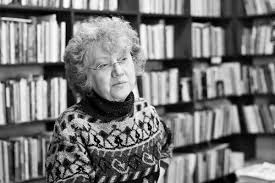
Somerville Poet Tara Skurtu: At the cusp of med school to the depths of poetry.


Somerville Poet Tara Skurtu: At the cusp of med school to the depths of poetry.

By Doug Holder


  Somerville poet Tara Skurtu has followed an unusual path. She started out with ambitions to go to medical school, and indeed she got as far as an interview at UMASS Medical School, but didn’t get by the gates. As the old saying goes: “One door closes and another opens.” So Skurtu decided to follow her old flame: poetry. She was accepted in the very competitive MFA program at Boston University.

  Skurtu, who lives in the Union Square section of Somerville, met me at my usual window seat at the Bloc 11 Café. Tall, blond, and blue-eyed, she could pass as a fashion model. This 30 something poet counts as her mentor Lloyd Schwartz, another Somerville poet who won a Pulitzer Prize for his music criticism, and has taught at U MASS Boston for many years.

Skurtu said: “Lloyd has been the best editor I ever had. He has the rare ability of tweaking a poem without changing its essence.” Skurtu also admires Schwartz’s conversational style in his poetry, and she employs elements of this in her own work.

  Skurtu likes working either in a café work amidst the white noise, or in a perfectly quiet setting in her apartment. She reflected: " My poems start in memory or visual images or both. I eventually put them together in a skeletal structure. I do a lot of revision. A single poem can take me years to complete”.

  And in spite of being part of a generation that did not use typewriters; she still pounds out some of her work on one. “With the typewriter you are very aware of language. You think more of the moment—you feel the typing of the words. I also hand write my poems, but I finish up with my computer,” she said.

  Skurtu who has lived in Somerville, Mass. for 12 years has compiled a number of impressive publication credits. Her work has appeared in the Poetry Review (London), Hanging Loose, Salamander, and she will be a guest editor of the online literary journal Amethyst Arsenic  started by Somerville resident Samantha Milowsky.

  Skurtu expects that she will be spending the fall and winter immersed in writing projects for school.  And who knows?
 “You may see the young poet /scribbling away/ at the Bloc 11 Café/ on any given day.”  


The Art of Craft
(for Elizabeth Bishop)


The art of finding could be such disaster;
if memory restored be cumbersome,
to lose may be a better craft to master.

To conjure those things best forgotten faster:
the fear of death, love lost, an illness from
the past—this craft, it would be such disaster.

If dreams spy memories left in the past, or
startle you, fearful, paralyzed and numb,
their loss may be a better craft to master.

This morning I discovered how at last, or
perhaps it was just why or when you’d come?
Regardless, what I found felt like disaster.

You’ve come and gone. Now I long for vaster
loss—the mind be numb, speech dumb until some
memory loss becomes a craft that’s mastered.

You’ve long forgotten me yet I still clasp, or
scout for strands of your hair like beggar’s crumbs;
The art of finding could be such disaster
—if only loss were easier to master

---Tara Skurtu


…. Hiram Poetry Review

Thursday, August 09, 2012

Duckwalking Is The Only Way Out Of Armageddon by Dustin Holland


Duckwalking Is
The Only Way Out
Of Armageddon
by Dustin Holland
Kanev Books
New York
Copyright © 2012 by Dustin Holland
ISBN: 978-0-937131-19-7
Softbound, 119 pages, $10.95

Review by Zvi A. Sesling

The enigma of Dustin Holland is: is he putting us on, or is he serious?  My guess,a little of both. He is funny, perhaps experimental, with undertones of seriousness that the reader needs to find for him/herself.  For example In Capitalist Anxieties:

poetry is
handed out on
street corners
no one is starving
doctors and food
for everyone
shoes and warm
too
property is a
myth in the business
man’s nightmares
war is over
and the earth
still has room
for the human race
the banks and
ammunitions factories
are closed
while supermarkets
hospitals
and libraries
open up
everywhere without
cash registers
the streets are art
galleries in
capitalistneofacist
bad dreams full of
smiling masses
swapping stories
in what used to be
government buildings
and television studios

This poem presents what appears as a humorous poem, but as you read and re-read it the
seriousness which may also seem as obvious as the humor, suddenly hits you – Holland is writing about a future utopia, but is that utopia only in Holland’s head? Is it the anti-Orwell utopia. Is it a libertarian view?  Is it green? Is post-apocalyptic?  What exactly is Holland’s message to us?  Is he prophet or fool?  Like a law school challenge, any answer might be correct.  What do think?

There are more poems of humor intertwined with horror with titles like Lenny Bruce Is Not Afraid, Cartoon Villains, Disgruntled, I’m The Child, A Dramatic Think Establishing Elizabethan Liberation/Revolution,  02750, Listening To John Cage’s Fonatana Mix and many others you cannot help but revel in.

Take one of the shortest poems: All

art if
you can call
it that
is meant
to be
misunderstood
loudly

So much truth in so few words, 13 to be exact, in which he puts down critics, people who speak loudly about art in a museum and the modern gobbledygook art of Pollack, the neo pointillism of Lichtenstein, perhaps even Picasso or any other number modern artists for whom a critic’s explanation is necessary for the average viewer to understand and the ultimate put down of the critics who determine whats is good or great and what is a trash.

In many poetry books you may get interesting ways to use words, or you might be challenged by the poet or perhaps you get political statements buried in verse. Rarely do you get all three.  However, Dustin Holland has risen above the ordinary, beyond the dull or romantic, away from the everyday and presented a book you will have to read a few times to absorb the many facets of his writing.  In the end, you will enjoy the time spent with it. And at $10.95 it is a bargain (also available as an ebook).


_____________________________________

Zvi A. Sesling is author of Across Stones of Bad Dreams (Cervena Barva, 2011), King of the Jungle (Ibbetson Street, 2010)  and the forthcoming Fire Tongue (Cervena Barva). He is Editor of Muddy River Poetry Review and Bagel Bards Anthology #7.


Tuesday, August 07, 2012

New Lummox Press--Nov. 2012, Release.... A Collection of the Best Poets from the Independent or Small Presses.


.......I am glad that I have been asked to be a  Contributing Guest Editor for this great new anthology put out by R.D. Armstrong's Lummox Press. I am representing the Boston Area Small Press Scene, and I have selected these significant poets: Dan Sklar, Zvi A. Sesling, Timothy Gager, Irene Koronas, Deborah Finkelstein , Robert K. Johnson, Harris Gardner, Gloria Mindock, Dennis Daly, and Sam Cornish.  My own work will be included as well . Many of these names you may recognize as significant contributors to Small Presses and Independent Magazines for the last few decades.  Best-- Doug Holder


Some other contribtors include:


Doug Draime, Matt Galletta, Ed Nudelman, Aaron Belz, April Ossman, Patricia Fargnoli, Grace Cavalieri, Sam Rasnake, Pris Campbell, Tara Birch, John Macker, Frances LeMoine, Frank Kearns, Frank Reardon, Gary Jacobelly, Tim Peeler, Mike Meloan, Jane Lippman, Gary Moody, Janet Eigner, Joan Logghe, Judith Toler, Mary McGinnis, Blair Cooper, Elizabeth Raby, James McGrath, Yves C. Lucero, Catherine Ferguson,

Jayne Stahl, John Yamrus, Tony Moffeit, Krikor n. Der Hohannesian, Kyle Laws, Larry Rogers, Marie Lecrivain, Linda Lerner, Luis Campos, Lyn Lifshin, Micheal Spring, Mather Schneider, Mike Adams, James Taylor III, Jared Smith, Jerry Smaldone, Karen Douglass, Phil Woods, Captain Barefoot, Mike Grover, Nancy Shifrin, AD Winans, Marc Olmsted, Lynn Hayes, Rick Smith, Sheryl L. Nelms, H.L. Thomas, Guy R. Beining, RL Raymond, Ron Koertge, Sean Dougherty, Simon Perchik, Judith Skillman, Suzanne Lummis, Terry Sanville, John Swain, Larry Gladeview, Tim Tipton, M. Mitchell, Walter Ruhlmann, Adam Walsh, Wanda Clevenger, William Doreski, Will Taylor, Winnie Star, Wolf Carstens, Jay Passer  

 http://lummoxpress.com

Monday, August 06, 2012

Author Becca Chambers is Beyond the Great Abyss


Author Becca Chambers is Beyond the Great Abyss
Interview with Doug Holder

  At one time author Becca Chambers found herself weighing over two hundred pounds, chronically depressed, with a litany of health problems. If you saw her today you would see an animated and fit woman who has left her ills in the dust. Chambers, a Doctor of Naturopathy, has discovered energy therapies that have transformed her. She has a written a memoir of her experiences Beyond the Great Abyss. I talked with Chambers on my Somerville Community Access TV show Poet to Poet Writer to Writer.


Doug Holder: Can you tell us about the Whole Body Vibration you practice—the very therapy that transformed your life?


Becca Chambers: It is therapy that involves standing on a platform that visually moves. It sends vibrations throughout your body, and it is enormously therapeutic on many levels all at once: body, mind and spirit. It has changed my life.  Vibration is part of everything. Every part of you is made of molecules that are vibrating. It works on the vibrational energy or life force. It is sort of like acupuncture. It works on your energy. The Russians invented this therapy 40 years ago. Astronauts use it—it increases bone density. It is an extensive workout. It has great systemic benefits. It increases serotonin levels in the brain, and gets the toxins out of you.

DH:  The cover of your memoir has a picture of a half owl and half woman.  What is the idea behind this?

BC: The idea is that I grew up depressed—I had thirty years of  depression. I felt hopeless. But the owl is symbolic of wisdom. And the Great White Owl—is very powerful—so watch out! So this was a symbol of my transformation.

DH: So the memoir is about transformation?

BC: Well there is my story in the book. It is also about a man I met. It starts about five years ago after I got divorced. I was married 23 years; it was traumatic. I met this man about a year after the divorce. He too, has been deeply traumatized by things that have happened to him in his past. And I had my own baggage with 30 years of depression.  . So we came together and it was rather dramatic and scary at times. But we are changing. We use Whole Body Vibrations, and homeopathy. This is vibrational energy medicine. It is really energy transforming medicine. It helps you overcome your negative energy, fear and anger. I can’t begin to tell you how functional I am now. I’m happy, creative, and have good relationships. I didn’t do anything for years.

DH: You chose the diary format for your book—why?

BC:  It is written directly from my journals. I kept a journal through this whole period. A  few years ago I was looking through the journals and realized there was the book. I actually had a huge fear of writing. I had to fake my way into this. I really like the diary form. It is so immediate—it has a lot of power. I had to polish it up of course. I had some excellent writing coaches.

DH: Some memoirists have told me you have to exaggerate things  to get to the greater truth.

BC: I did not have to exaggerate. My life has been dramatic enough.

DH: Has writing this memoir helped with the healing process?

BC: I would say so. It gets your brain thinking, reviewing. You have a distance. Just the fact that I could write a book was a very healing thing for  me.

For more information go to  http://www.beyondthegreatabyss.com

Saturday, August 04, 2012

Passion Play by Sarah Ruhl, produced by the Circuit Theatre Company


Passion Play by Sarah Ruhl, produced by the Circuit Theatre Company, directed by Skylar Fox with music direction by Linda Bard and set design and lighting by Christopher Annas-Lee
review by Tom Daley August 4, 2012


Last night I went to see Passion Play, a play by Sarah Ruhl produced by the Circuit Theatre Company and directed by Skylar Fox. I believe this company coalesced around Fox and is largely composed of people who worked together at Newton North High School (with a few additions from Fox’s contacts at Brown). Last year I saw their production of Enron, a dazzling entertainment and a memorably professional creation. Chris Annas-Lee, Bagel Bard Pam Annas’s son, designed the lighting and sets in both productions, and he acted in Passion Play. Chris is a powerful presence. He has a strong, deep voice and his long face and sturdy jaw accommodate both the deadpan humor and the deadly serious pieces of his repertoire in this extravaganza. He was best as the young director of the last of the four incarnations of the passion play (one set in Elizabethan England, one at Oberammergau in 1934, and two in Spearfish, South Dakota —one in 1969 and one in the era of Ronald Reagan (circa 1984)).
Perhaps the most extraordinary feature of this production was the music—this is a very gifted ensemble of musicians.The harmonies on the songs (a list of which, alas, was not given in the program) were flawless, and the instrumentation bright if not exactly bold (neither the banjo and the cello always achieved, given the acoustics of the Cambridge Family Y Theater, the volume needed). And how on earth did they get that piano to work? I was told, when I rented the same theater for Every Broom and Bridget, that it was nigh near impossible to tune. Spirituals, folk tunes, rollicking ballads (one anchored by a swaggering and spunky Natalie McDonald), old hymn chestnuts—all of them were handled with astonishing savoir-faire; all made a profound impact. 


Director Fox, deft at staging and a sensational choreographer of big productions, has not yet been able to coax many of the actors in this troupe out of their earnestness (or perhaps he is coaxing them into this, but I doubt it). If at times some of them had a hard time sorting out intensity from industriousness, there were some brilliant individual moments manifesting nuance, particularly the performance of a very big, very imperious Queen Elizabeth (Elizabeth I—played by Emma Johnson). The Queen, whose face had a greater thickness of white clown paint than the mug of Tammy Faye Baker had of facial powder, abruptly entered the village where the play was being produced. She delivered a monologue about how monarchs must paint their faces so that their subjects cannot see them growing old or getting ugly. She asked if there are any Catholics being hidden in the houses and then proceeded to cancel the passion play. Johnson (who later played, somewhat less innovatively, Adolf Hitler and Ronald Reagan) managed, as Queen Elizabeth, to be both haughty and scarily comical, to come across as caricature and character, to tower over the rest of the players (she is very tall) and seem detached and yet excruciatingly connected to the electric static emanating from the body politic of the little village.


Of his three characters, Louis Loftus managed best as a rather tamped-down VA psychiatrist—the subtleties of his acting craft emerged more completely in that role than they did when he was a hectic and passionate friar or an insufferably English aesthete/reviewer. An energetic Juliet Roll played the Village Idiot, and at times was ridiculously, hysterically little-girlish, although when the passion play’s exasperated director (Caleb Bromberg) put her in a cage at the Oberammergau production, she abandoned the screechiness and became prophetic and compelling. The female lead (Madeline Schulman, who had the female lead in Enron) was damn good, especially when she broke out of the souped-up sincerity. In the final scene from the Elizabethan section, she is carried back from drowning herself in the river and laid on the stage by a very tender John the fisherman (Sam Bell-Gurwitz), and water pours out of her mouth. She is sensually dead, an Ophelia dragged from her river, her white gown wet and revealing her comeliness. This was one of the most arresting scenes in the play.
The giant (oil?) paintings (by Nellie Robinson, Amalia Sweet, and Tess Vasiliadis) that were used for backdrop for the Elizabethan productions were quite amazing—there’s a painting of the Last Supper that was a kind of carnival version of Caravaggio, at least in the portraiture--crooked noses, balding pates, and the kind of faces you might have seen in some Jewish ghetto—stark, almost violent profiles of men as they reached middle age. Christ was dark and somberly Semitic-Mediterranean—not the blond ideal of the Renaissance. The paintings had a bluish-gray cast to them, as in Picasso’s blue period, and the profiles were almost distractingly good.


One of the most beautiful musical pieces was a rendition by four or five of the singers of the old-timey ballad “I’ll Fly Away”—sung with such touchingly sincere grace that I felt compelled to sing along. Here the subdued jubilance might have been a model for some of the overcooked talking parts of the play. The earnestness had such an authentic ring to it, such a humanity—as if the actors actually were feeling what they were singing without pumping it up to enhance their projection. There’s a young man in the ensemble (one of the carpenters) who played the banjo who was a particularly good singer. The cellist, Linda Bard, was the musical director. She did an extraordinary job

.
A love triangle with shifting angles between John/Eric/J (Sam Bell-Gurwitz); Pontius Pilate/FootSolider/P (Justin Phillips); and Mary 2 (Madeline Schulman) manifests in all the different productions of the passion play. By the end of Passion Play, the three actors had grown into their roles, and done so beautifully. In the final scene, after “P” returns to South Dakota after years of wandering from VA hospital to VA Hospital, the experience of rejection seems to sober both the character and the actor. His Vietnam War-induced madness blooms into a kind of seer’s glory. In the finale (brilliantly designed and choreographed), Phillips is rolled towards the front of the stage on a platform as he conjures the wind while the rest of the cast flows around him with clouds on sticks and other props, whistling like the wind. I even heard the expert effect of snatches of an instrumental version of the refrain, “Turn, turn to the wind and the rain,” from Bob Dylan’s “Percy’s Song.” Viola, “P”’s daughter (Juliet Roll), gyrates a large pole with a dove over her head—a most affecting touch.
The issue of the rabid anti-Jewishness of the passion plays was dealt with most successfully in a performance at Oberammergau. Hiding under the stage, the Village Idiot (Roll) prompts the Christus, who has forgotten his lines, and improvises, “And I am a Jew.” At the end of the Oberammergau production, the character Eric (Bell-Gurwitz), who was playing the Christus, sends her off on a train because she is not like the other Oberammergauans, and is presumably Jewish. I forget which song the ensemble was singing (perhaps there was none)—but that was another deeply moving scene—the two of them staring quietly for a long time at the future.


The play went on for three and a half hours, with two intermissions, and it was tough to sit through in all that barely mitigated heat and humidity (the company had brought in large portable air conditioners and fans—they moderated but did not massage away the discomfort). They are moving to air conditioned venues  for the next three performances--for tickets to their August 10 and 11 (The Gordon Chapel at the Old South Church) and August 12 (Oberon at the ART) performances, go to http://www.passionplayboston.com/tickets.html.

All in all, a pretty amazing production, especially given the fact that this is such a young company (most of them 18-20). Director Fox and Music Director Bard are visionaries; it will be interesting to watch them as they further deepen their insight.


****Tom Daley serves on the faculty of the Online School of Poetry and leads writing workshops at the Boston Center for Adult Education and Lexington Community Education. He is the author of Every Broom and Bridget, a play about Emily Dickinson and her Irish servants, which he performs as a one-man show. His poems have been published or are forthcoming in a number of journals including Massachusetts Review, Fence, Harvard Review, Barrow Street, Prairie Schooner, Diagram, and Rhino. 

Thursday, August 02, 2012

Following Tommy: a novel Bob Hartley


Following Tommy
a novel
Bob Hartley
Cervena Bara Press
ISBN 978-0-9831041-8-6
2012   $17.00


“With a crooked scale and a brick stuffed in my pocket,
I weighed 135. still, I played the tough kid with my hair
slicked back and the cuffs of my razor-creased gray
baggies folded...”

In my thinking on dickens and what Dickens would be writing
today, this book by Bob Hartley, satisfies my on going quest
to visit the back streets, the needs, the resolutions from
self discovery, through persons met during needy times; how
a story may transform history into a personal telling:

“How come you care,” I said, forgetting for a second
who I was talking to, taking the chance of getting
smacked. He let out a little laugh, shook his head
and said that he had planned to do his last few months
sitting behind the wheel sucking on cigarettes and
listening to McGovern wisecrack, but then the thing
with Jerome happened and that messed up everything...

Throughout this novel the sentences connect without any glitches,
they run smoothly into each other, chapter after chapter, we
the reader are memorized by the writing as well as the story.
There are so many tucks and turns in the story that the
reader will be carried along without being able to stop
reading until they get to the end. This is a powerful first
novel by an accomplished writer:

“We drove back to the garage. Hippo was passed out
in the back seat, one arm over his eyes, the other at
his side, his head hanging over the end, his mouth
wide open, snoring. Tommy was banging away at
the mailbox with a hammer and chisel...”

Hopefully this novel will evolve into a movie. I'll be on
a front row seat eating popcorn with out any anticipation
of the end. This is a must read.

Irene Koronas
Reviewer:
Ibettson Street Press

Monday, July 30, 2012

Captive Cities B.Z. Niditch


Captive Cities
B.Z. Niditch
Presa Press
2012 $8.00


“Neon passing hours
fallen out of sleep
in restless illusions
and you, Andy Warhol
waiting for the factory
to gate crash, to start rolling
the film in your cinematic
Valhalla,
extras, even murderers
replete with manifestos
arrive on the scene
even now the Sixties
still has bitter nostalgia
when art deconstructed
in your time.”

Niditch pitches his poems into the past, bringing
the reader into the present place and time. Along
with his experiences, political and otherwise, he
relates and sculpts the poems with sensitivity.

“Off  Gloucester
with the wind sails
burning up the coast
that tomorrow's red sun
disappears at first light,
my brow beaten
into a Melville frenzy...”

Irene Koronas
Reviewer:
Ibbetson Street Press

Saturday, July 28, 2012

The River Within By Ann Taylor


 River Within
By Ann Taylor
Ravenna Press
ISBN:  978-0-9835982-8-2
65 Pages

Review by Dennis Daly

Heraclitus, the pre-Socratic Greek philosopher, exclaimed “no man ever steps in the same river twice.” Ann Taylor goes one better and internalizes the river, punctuating each bend and turbulent eddy with her own riveting memories and graceful musings. Her faith in the legitimacy of her singular vision and her ability as a passionate observer sustains a measured tempo and delights with intelligence and occasional twists of wry humor. 

 
In Jenny and Charles, Taylor portrays the historical obsession that Charles Darwin once had for an actual monkey named Jenny. As the poem progresses the monkey’s actions become comingled with the human observer’s. Darwin in fact is introduced into the piece as a “cagemate.” The cagemate is observed by the monkey scratching incomprehensible markings into a notebook. This neat twist the poet accomplishes in a seamless fashion. Jenny seems to evolve right before our eyes into a child. Here are the last three stanzas:

Darwin was entranced with Jenny,
housed himself with her, smiled, and wrote
when she threw a tantrum for an apple,

placed his gift of a mouth organ straight
to her lips, astonished herself
with her own image in a mirror.

At home, he was happier still to record
whatever she and his children had in common—
their monkeyshines, her humanness.
Jumping into history’s river again, unhesitant, Taylor grabs hold of Cleopatra, Queen of the mighty Nile and remolds her into a model of excess and consumption. Antony is left in the background with plain pancakes and peasant fare. Taylor’s queen knows her magical power and uses it,

She removes her huge pearl earring,
the largest in history, a king’s treasure,
richer than all roman banquets combined,

dropped it into her cup of wine vinegar,
and as it sizzled
drank it.

Again the poet dares history in a poem entitled Annie Taylor takes the Falls. Here we are presented with another river queen, the poet’s namesake. Over sixty this schoolmarm took a terrifying chance and found fame tumbling in a four and half foot barrel over one hundred and seventy feet down Niagara’s magnificent Horseshoe Falls to find her place in this world. A true artist: Taylor the daredevil. Coincidently, this reviewer composed your present reading material standing in the mists of those same falls and he does attest to the crushing power of Taylor’s metaphor exhibited in the water’s cataclysm, first hand. A true artist: Taylor the poet.
The poem concludes by quoting the daredevil Taylor cautioning,

“No one ought ever do that again!”
She warned, quaking,
Propped from rapids across a shaky ramp—

A “Queen of the Mist,”
Numbered forever in the company
Of daredevils.

Maybe. Or was she just scaring off potential rivals who might diminish her feats by their future accomplishments, in other words protecting her immortality.
Sigmund Freud famously said that sometimes a pencil is just a pencil, nothing more. Our poet makes the opposite case in her poem, Pencil. Here this writing tool brims with generative powers. Taylor intimates,

I read that a pencil can write 45,000 words,
draw a line thirty-five miles long—
consume itself
with its own verbosity.

The poet clearly makes this pencil, snatched from her river of memory, her own. Her first confession, a traumatic affair to begin with, as every Catholic child knows, included the theft of pencils.  And now her husband’s personal use of them tie past and present together in her memories. The poem ends with very little ambiguity this way,

Less hungry, I love them still—
my glittery red stocking- stuffer
rolling to me across the desk,
my husband’s just sharpened

hexagonal yellow at the phone,
the one touting in green script
down its side a challenging
Dixon Ticonderoga 1388-3H, HARD

In the poem So much of my journeying has been with you, Taylor beautifully describes discrete incidents in her travels as if they were flowing past her, river-like. Each incident she reconstructs with details defining her companion more than the geography. It is, of course, a love story. Her lover leads her though the darkness in Oxford. He provides the cheese and wine in the Alps. The Taj Mahal exists only in shadows without the presence of her lover. The Great Wall of China exists only as her lover’s running course. Her lover in the heart of the poem appears as her classic protector against life’s physical threats. Speaking to her lover she remembers the scene this way,

My memories of Kenya bring you
Tugging my camera from the robber monkey,
Your breadknife protecting our tent
From the lion roaring just feet away.

In short the river of reality has been changed forever for this intertwined couple and the objective details of life have become, at least in this one poetic iteration, wholly personal and unique.
Lucky couple.
Terrific poet.

Thursday, July 26, 2012

Confucius Say by Martha Boss


Confucius Say


By Martha Boss

BOSSPRESS

22 Pages

Price: negotiable


Review by Dennis Daly


Each unpretentious poem in this amazing little chapbook by Martha Boss sneaks up on you and pulls you in to its seemingly surface world of charming stick characters and humorous observations. But there is something else here too: an unusual texture that produces depth in a hologram-like fashion.

Boss infuses her books with mystery from the moment of manufacture. The cover of each book is fringed off-white canvas held together by three staples and common brown twine. The author illustrates each chapbook with an original drawing. Mine has a primitive sketch of a rather angry and protective bird, a mother I think. The pages are cream-colored sturdy paper stock with retro lettering. Boss uses a Hermes Rocket portable typewriter, circa 1987. Occasional production errors are corrected with the use of white out fluid. The occurrence of imperfection only adds to the three dimensional quality and a comfortable feeling of accessibility.

The title poem, Confucius Say, is also the first poem in the collection. It sets the stage for what comes after with witty observations as well as a hint of something deeper. After comparing the actions of a young woman in the midst of a tai kwon do workout and six resting ducks that are getting fat and therefore fit to eat. Confucius, the observer, then notices a ripple on the water’s surface. The poet continues,


Confucius have cell phone.

henot just sit there

like a duck.

he have number

he call number.

he say something.

he say: ah, ripple on top

of water

come from

under water.


Boss’ poem Let Them Eat Cake shows off the poet’s sense of timing and wit. She says,


… sodium aluminum phosphate

propyleneglycolmono esters

mono&diglycerides

sodiumstearyllactylate

xanathan gum

polysorbate 60

tetra sodium pyrophosphate


now you know

why it’s called

marble cake…


The poem ends with some laugh out loud irony. The baker apologizes but he apologizes for the trace nutritional ingredients that the cake mix contains. And thusly does the poet accurately describe thepresent state of poetry.

Both breathtaking in its simplicity and profoundly sad, the poem Mother’s Work dazzles. Boss’s persona brings new life to the old term describing life’s mortality: dust to dust. The poem is relatively short. Here is the better part of it:


…2 hooked rugs


i made one.

my daughter made the other.


the one she gave me had

her dust in the yarn.

the broom scattered it.


it’s looking for her ashes.

we scattered them years ago.


the ashes, somewhere,

have been waiting

for the dust.


i hope they find each other.


Did I say “profoundly sad.” Well okay, but it’s also a sadness tempered by acceptance and a touch of hopefulness. I like this poem a lot.

In her poem Peace Boss delivers a meditation on the title word suitable only for grown-ups. The poet sees world peace as a quaint expression hiding within more modern slogans. She then fleshes out her own understanding of peace in very personal terms.She says,


i remember the cradle

presumably soothing

to& fro

to& fro

back& forth

back& forth.

there are echoes

of motherly screams

in passive rocking.

blips on the radar.


peace.

a strange word.


Indeed a strange word. In its very essence the seeds of disquietude grow. The poet makes that very point this way,


peace.

it’s like dust

settling down

in the afternoon sun

as calmly

as wars are planned.


Another poem by Boss reinforces this theme of connections within opposites. In the poem The Battle In Surrender, she sees the adult world as a bit more complicated than some would have us believe. She says,


…the good

in the harm


the chink

in the armor


the enlightenment

in capital punishment


the hug

in the closed arms…


Boss in the poem entitled The Old Moviesmeditates on yesteryear’s popular habits as portrayed in film. But, of course, the sum of the poem is much more than that. She begins,


in the old movies

smoking was popular.

almost everyone smoked

especially when they were

angry. They just lit up.

literally.


slapping was big too.

all the women slapped

all the men.

love, hate, it didn’t matter.


The poet’s observations then zero in on the toothy smiles which have apparently replaced cigarettes but not necessarily slaps. We are talking about artists now and artistic fads and it’s quite funny. Boss comments,


if you look closely tho,

doesn’t that smile look

weirdly hostile?

i mean look near the nostrils…

there’s a little bit of grrr…


To read more of this wonderful poet you must find her and her books, a selection of which she carries with her. She reads regularly at the Stone Soup venue at the Out of the Blue art gallery in Cambridge on Monday evenings, and often meets with the Bagel Bards Saturday mornings at the Au Bon Pain in Davis Square Somerville.


Wednesday, July 25, 2012

Ibbetson Street Press/Medicine Wheel Productions/ Small Press Celebration


Small Press Festival Sept. 29, 2012


( Boston, Mass.)

Medicine Wheel Productions in collaboration with the Ibbetson Street Press is proud to present A Celebration of the Small Presses at the home of Medicine Wheel Productions in South Boston on Sept. 29, at 7PM. The event is free and open to public.


This event is conjunction with Medicine Wheel’s Spoke Gallery’s exhibition, Terrain. The Spoke exhibition is based on the word Terrain and all of its meanings- although maps and mapping will be key the thread of investigation. Many small presses are named after the sites where they were founded. The event is also in conjunction with the annual international event, 100 Thousand Poets for Change which is also occurring on September 29th.


The small presses and little magazines have long been the life blood for the literary community. Many poets from Walt Whitman to Allen Ginsberg got their start in the print and now online literary subculture. The Small Press has been there to give a voice to the emerging, the iconoclast,, the experimental, the mad man, the holy fool, all of whom would not have a chance with mainstream publishers.


Participating local presses will included the Cervena Barva Press http://cervenabarvapress.com/
Wilderness House Literary Press http://www.wildernesshousepress.net/

South Boston Literary Review

Off the Grid Press http://offthegridpress.net/

Ibbetson Street Press http://ibbetsonpress.com/.


There will be a reading from authors from the said presses as well as a student readers Samille Taylor and Kara Bonelli from Endicott College that is now affiliated with Ibbetson. Books will be available for purchase, and a small reception will follow.


"Ibbetson Street Press is a unifying force in the Boston poetry scene, and the most viable way for poetry lovers to keep in touch with what's happening. There's nothing sectarian or cliquey about Ibbetson, and I think the variety of its poets...reflect the breadth of its community." (Peter Desmond- Cambridge, Mass. poet and winner of two Cambridge Poetry Awards)


Medicine Wheel Productions (MWP) is a nonprofit organization whose mission is to transform communities from the inside out by inviting all members to participate in the healing and transcendent power of public art. MWP’s Spoke Gallery is an innovative new program that seeks to act as a hub for artists of all disciplines who want to join the conversation.


Medicine Wheel Productions and its exhibition programs are supported by the Massachusetts Cultural Council, a state agency, and in part by a grant from the Boston Cultural Council, a local agency which is funded by the Massachusetts Cultural Council, administrated by the Mayor’s Office of Arts, Tourism, and Special Events.


Medicine Wheel Productions


110 K Street – 2nd floor, South Boston, MA 02127


(617) 268-6700, http://www.mwproductions.org/ , Email: dougholder@post.harvard.edu  617-710-0163 MBTA: Redline Broadway Stop- no 9 Bus to K St.


The Custom House by Dennis Daly


The Custom House
© 2012 Dennis Daly
Ibbetson Street Press
Somerville MA
ISBN  978-0-9846614-1-1
Sofbound, $12.95, 105 pages


Review by Zvi A. Sesling

Dennis Daly has been there, done that and the poetry in Custom House takes you there: ancient foreign lands you have dreamed about, places of the heart where we all want to be and the love-hate relationship with work place. Daly is a master artist painting portraits of places and people, telling stories and in the end revealing himself as a sensitive soul whose poetry we will not only enjoy, but ultimately associate with and let enter our hearts.

That is what I wrote for a blurb of Dennis Daly’s book of poetry and a second reading has not changed my opinion. In fact, it may have reinforced my feelings about his poetic prowess.  This is a book one can thoroughly enjoy for the images they conjure, for the imagination they ignite.

Take for example the title poem which could be a movie scene, but is poetry that brings you to the moment of action:

Another age: our greed-governed ancestors
Venture forth, significant super cargoes
Compelling the twins: speed and economy
They bounded oceans

We watch for their return with telescope
Of brass: pennants streaming, hull stowed with teas
And silks.  We dream them into our harbors.

Long doldrumed – their ships in need of repair:
Sails split and rotting, spars sprung.

There is also The Dogs of Mazar-I-Sharif where you are taken to a place where past and present converge in a picture of present into modern horror in the last two stanzas:

…They ordered blood-barbarity

Against Mongol Hazareas. The outrage began
As door to door they slaughtered them where they stood,
Dragging them into the street like firewood
and there they remained by decree. No Afghan
Could touch the on pain of execution.
The starved city-dogs came out and feasted.
The howling that I’d heard was the cry of those cheated
Animals, recalling their lost fortune

In The Violinist shows musical insight and how music plays on the heart:

The action of our hearts
In your instrument’s fire,
Sounding in soulful parts
Celestial: a string choir

The examples exhibit just a bit of Daly’s depth and breadth of observation, imagination and poetic reportage.  His book is well worth a read, but be warned,
reading between the lines or rereading lines or stanzas yields even more satisfaction.  Highly recommended.


Zvi A. Sesling
Author, King of the Jungle and  Across Stones of Bad Dreams
Editor, Muddy River Poetry Review
Editor, Bagel Bards Anthology 7

Tuesday, July 24, 2012

Marge Piercy To Be Visiting Poet at Endicott College--Nov. 13, 2012


Beverly, Mass.

 Endicott College Professor Charlotte Gordon and Creative Writing faculty member Doug Holder are pleased to announce that Marge Piercy will be the Endicott College Visiting Poet on Nov. 13, 2012, at 4PM at the  Chapel on the main campus.  Her biography on the Poetry Foundation website states:

"Marge Piercy was born in Detroit, Michigan, into a working-class family that had been hard-hit by the Depression. Piercy was the first member of her family to attend college, winning a scholarship to attend the University of Michigan. She received an MA from Northwestern University. During the 1960s, Piercy was an organizer in political movements like the Students for a Democratic Society (SDS) and the movement against the war in Vietnam, an engagement which has shaped her work in myriad ways. Perhaps most importantly, though, has been Piercy’s sustained involvement with feminism, Marxism and environmental thought. An extremely prolific writer, Piercy has published 17 volumes of poetry and 17 novels. Her novels generally address larger social concerns through sharply observed characters and brisk plot lines. Though generally focused on issues such as class or culture, and usually written from a feminist position, Piercy’s novels have taken on a variety of guises, including historical fiction and science or speculative fiction. Her novel He, She, and It (1991)—published as Body of Glass in the UK—won that country’s prestigious Arthur C. Clarke Award; an earlier novel of speculative fiction, Woman on the Edge of Time (1976) has been credited as the first work of cyber-punk.


Piercy’s poetry is known for its highly personal, often angry and very emotional timbre. She writes a swift free verse that shows the same commitment to the social and environmental issues that fill her novels. The Moon is Always Female (1980) is considered a classic text of the feminist movement. Early Grrl (1999) collects Piercy’s earliest work and includes some unpublished poems. Of the autobiographical elements in her poetry, Piercy has said that “although my major impulse to autobiography has played itself out in poems rather than novels, I have never made a distinction in working up my own experience and other people's. I imagine I speak for a constituency, living and dead, and that I give utterance to energy, experience, insight, words flowing from many lives. I have always desired that my poems work for others. 'To Be of Use' is the title of one of my favorite poems and one of my best-known books." Piercy has also written plays, several volumes of nonfiction, a memoir, and has edited the anthology Early Ripening: American Women's Poetry Now (1988). Increasingly interested in Jewish issues, Piercy has also been poetry editor of Tikkun Magazine.


In 1971 Piercy moved to Cape Cod where she continues to live and work. She and her husband, the novelist Ira Wood, run Leapfrog Press."


Also the Visiting Author Series at Endicott directed by Doug Holder will feature award-winning poets and writers Fred Marchant and Richard Hoffman. Hoffman, according to the Poetry Foundation: 


"Poet and teacher Richard Hoffman earned a BA in English from Fordham University and an MFA in creative writing from Goddard College. He is the author of the poetry collections Without Paradise: Poems (2002) and Gold Star Road (2007), which was selected by Molly Peacock for the Barrow Street Press Poetry Prize and won the Sheila Motton Award from the New England Poetry Club.

Hoffman is also the author of the memoir Half the House (2005), chosen as Book of the Year by the Boston Athenaeum Readers’ Group, and the collection of short fiction Interference &; Other Stories (2009).

A writer-in-residence at Emerson College in Boston, Hoffman also teaches for the University of Southern Maine’s Stonecoast low-residency MFA program."


Fred Marchant is the author of Tipping Point, winner of the 1993 Washington Prize in poetry. His second book of poems, Full Moon Boat, came out from Graywolf Press in 2000, and House on Water, House in Air: New and Selected Poems came out from Dedalus Press, Dublin, Ireland, in 2002. He is also the co-translator (with Nguyen Ba Chung) of From a Corner of My Yard, poetry by the Vietnamese poet Tran Dang Khoa. This book was published in 2006 by the Education Publishing House and the Ho Chi Minh Museum in Ha Noi, Viet Nam.

He is a Professor of English and the Director of the Creative Writing Program, and Co-director (with Robert Dugan) of The Poetry Center at Suffolk University in Boston. A graduate of Brown University, he earned a Ph.D. from The University of Chicago’s Committee on Social Thought. He is also a longtime teaching affiliate of The William Joiner Center for the Study of War and Social Consequences at the University of Massachusetts-Boston. He has taught creative writing workshops at sites around the country, ranging from the Robert Frost Place in Franconia, NH to the Veterans Writing Group, organized by Maxine Hong Kingston, in the San Francisco Bay Area.

In 1970 Marchant became one of the first officers ever to be honorably discharged as a conscientious objector from the United States Marine Corps. Recently he has edited Another World Instead: The Early Poems of William Stafford, 1937-1947. This collection of poems, to be published by Graywolf Press in April 2008, focuses on Stafford's time as a conscientious objector in Civilian Public Service camps during World War II. Fred Marchant's new collection of his own poetry, The Looking House, was published in June 2009, also from Graywolf Press.


Fort directions go to http://endicott.edu


Monday, July 23, 2012

Ronnie’s Charger A Play by Lawrence Kessenich


David Brooks Andrews/Correspondent  -- metro-west news --Playwright Lawrence Kessenich (front left) discusses "Ronnie's Charger" with director Jess Viator (front right) and actors Frank Bartucca and Kate Blair.


Ronnie’s Charger
A Play  by Lawrence Kessenich
Peformed at Hovey Players
Waltham, MA
also 9 other plays

Review by Zvi A. Sesling

The concept of the Hovey Players is wonderful: ten 10-minute plays by talented playwrights
blended with experienced and new actors. The play I was to review was Lawrence Kessenich’s Ronnie’s Charger, which was recently a prize winner in Chicago.   It was ably directed by Jess Viator.  Frank Bartucca and Kate Blair are the  parents whose grief thirty years after their son was killed in action in Vietnam has not abated.    Both actors portray their thirty years of suffering realistically and Kessenich has dialogue that is perfectly believable, portraying anger and heartbreak at Ronnie’s death. The Charger, of course, is the auto that Ronnie owned and was proud of, which has become a metaphor for life, death and rebirth: the car at first serving as Ronnie’s life then as it rots in the driveway, symbolizes his death and finally, after the car is vandalized and the trunk popped open, raccoons move in to raise their ones and the final symbol of resurrection culminates the play. 

There are five dramas, all of which in one way or another are didactic. The first Life Choice is about abortion, a mother (Kate Forrestall) and her daughter (Kate Blair), argue about life, death and abortion. It is written by Andrea Clardy and directed by Jesse Strachman. The second, It Doesn’t, is about a Good Samaritan-like counselor (Jon Nuquist) and a young man (Richie DeJesus). The latter, who has been outed in school as being gay wants to commit suicide and calls the counselor who tries to talk him out of suicide.  The play is written by George Smart and Directed by Kaitlyn MacPherson.  The third is entitled Fork in the Road and has a wonderful concept of four women – all one person? speaking about cancer survival. The four women are Sami Malnekoff, KC O’Connor, Nicole Pavol and Tristyn Sepersky. The drama is written by Eoin Carney and directed by Mike Haddad.

The final drama is Rosie the Teddy Bear acted by Tristyn Seperksy. Written by Steven Bergman and Liz Fenstermaker it is a sad monologue by a teddy bear who has been discarded and waits for its child to return. It is also about abuse and abandonment, and like the others is didactic and attention getting.

Of the five, however, Ronnie’s Charger stands out as being the best acted, least didactic and most easy with which to associate.

Hovey Players also performed five comedies, Diamonds & A Girl’s Best Friend is a very humorous play with some great lines, well acted by Stephanie Grinley, Kimberly Truon, KC O’Connor and Sami Malnekoff.  Clever writing by Katelyn Tustin and well directed by Kristine Mackin. 

The theme song to the movie and TV show M.A.S.H. was “Suicide Is Painless.”  Playwright John Greiner-Ferris and director Katelyn Tustin show us that while suicide is not painless, as acted by Kimberly Truon, Ron Gabrielli and Matthew Hathorn, suicide can be funny.

Dan in the Lion’s Den is clumsily funny. A family watches as the father-husband enters a zoo’s lion area and emerges intact. Cody Tustin, just out of high school plays the son, Kristin Riopelle, the daughter and Carolyn Cafarelli is the mother. 

The Change along with Ronnie’s Charger were clearly the night’s best.  The Change is about a man entering a hospital for an appendectomy and waking to find they made him  a woman. Written by Peter Floyd and acted by Kate Forrestall and Robin Gabrielli, it is extremely funny
especially when discovering his/her plight Ms. Forrestall provides the audience with the ultimate
look of horror.

Not Funny lives up to its name.  It is the final “comedy” but as conceived by playwright Chris Lockheardt and director Mike Haddad it is more of a serio-comedy, perhaps more drama and
well performed by Kristie Norris and Andy Leburn.

Thursday, July 19, 2012

JONES AV. XVI/4


JONES AV. XVI/4

Oel Press
88 Dagmar Av.
Toronto, Ont. M4M 1W1 Canada

Review by: Samille Taylor


Showcasing a variety of poets such as Neil Wilgus, David Huebert, Blair Ewing, Chantelle Rideout and a few others, Jones Av. is a journal of poetry that takes simple concepts and allows readers to think more deeply about them. Being a first-time reader of Jones Av. I was disappointed that this would be the last issue created. As stated before, each poet has found his or her own way to crack the hard exterior and find the inner core.

The collection starts with a very simple poem, two stanzas consisting of only sixteen lines total, by Neil Wilgus.


Classics


A billion light-years

away

a poet writes

what I just wrote

and what I just wrote

may see print

in the nanosecond

of my life

and be forgot.


Whereas that alien poet

may be forgot

for nanocenturies,

then be rediscovered

and live forever

in the minds of those whom

we’ll never never know.


The concept of no thought being original was the first thing that came to mind while reading Wilgus’ words. This idea, represented in the first four lines of the poem, is one constantly touched upon in my literary studies at Endicott College. Therefore, the fact that Wilgus has found a creative way to reiterate this concept leaves me smiling. Wilgus’ word choice is original and caught my attention.The “alien poet” (line 10)  could be interpreted in various ways. It could represent the poets that disregarded the social norms and refused to conform to what was seen as popular for his or her time, and or it could symbolize the poets that some readers are unfamiliar with simply because of where the readers are coming from.- -be it locale, state of mind, or period of time. Neil Wilgus’ poem “Classics” has a very fitting title that brought writers such as Thoreau, Poe, Dickenson and Kafka to mind; alien poets who constantly thought outside of the box and refused to conform to societal norms.


As an English Literature major, when reading Blair Ewing’s poem “One Way” I was itching to deconstruct it. Here we have yet another poem that takes something so ordinary and allows it to sink in and consume one’s thought process.


One Way


Voices burning low like embers

below the dawn line, dream residue

ebbs & gives way to a fevered sea.

Buildings emerge from the mist

like concrete spears.


Still need wood

to shape those towers.

Still need money to name a crime.

Still need poets

to write the verses.

As we will

till the end of time.


Ewing uses powerful metaphors such as, “Voices burning low like embers” (line 1). Also: “Buildings emerge from the mist / like concrete spears” (lines 4-5). When really examining Ewing’s word choice the vocabulary packs a mean punch that leads readers to reevaluate their view on the way everyday society functions. By comparing the voices to embers Ewing gave the impression that the voices, that were strong at one time, are now weak and dying down. Also, by combining the words “concrete” and “spear,” two very dominant words, concrete being almost indestructible and spears being a form of weapon, Ewing creates an image of indestructibly dangerous buildings that could represent anything from industrialization, consumerism, the high dependency on technological advancement etc... Yet, no matter how fast paced and ever changing the commercial world may be, some things will always be the same, like the need of for a poet to write what the masses feel but can't express. This makes the last stanza extremely valid. This poem, like Neil Wilgus’, is short yet full of wisdom. Through Ewing’s work readers can understand that the world will continue to spin and nothing really changes, especially because no one is speaking up to make these changes.


Overall, I enjoyed reading Jones Av. XVI/4. As a young poet I was able to view different poetic styles and appreciate the poets  and how they crafted their work.. This chapbook is a quick and satisfying read that will keep you re-reading and finding new meanings with every turn of the page.


.....Samille Taylor is 21 years old. She is a budding literary scholar, and a senior at Endicott College.  She is also a poet, and of course, an English major. Her work both poetry and prose have appeared in the Boston Area Small Press and Poetry Scene, Lyrical Somerville, Endicott Review, and other publications, both online and print.


100,000 Poets For Change

                                                          ( Click on pic  to enlarge)

Wednesday, July 18, 2012

Somerville Writer Maria Judge Tells The Story of her Uncle: Legendary Jazz Drummer Jake Hanna


Somerville Writer Maria Judge Tells The Story of her Uncle:  Legendary Jazz Drummer Jake Hanna

By Doug Holder

  It was not an ordinary Saturday morning at the Bagel Bards meeting at the Au Bon Pain in Davis Square. A disgruntled artist sat down with us. The very one who is pursuing a lawsuit against one of our members who just happened to be present at the time. You could cut your bagel and the tension with a knife. So I was glad to go to a separate table with Maria Judge to discuss her new book.

  Judge is a member of Somerville’s Bagel Bards, lives in the Ball Square vicinity,  has worked as an administrator at the Fletcher School at Tufts University, and a few non-profits groups for decades. She is also a member of the Somerville Community Chorus. Judge said of Somerville: “ I love the diversity of Somerville—there are so many different types of people from all parts of the world here.”

  Judge has also written for The Somerville News, The Irish Reporter, MIT Tech Talk, and other publications. Judge told me that most of her writing is memoir, personal history and personal essay.

  In her new book: Jake Hanna: The Rhythm and Wit of a Swing Jazz Drummer she tells the story of her late uncle’s sixty year career as a  jazz drummer. Hanna’s story is told through 189 friends and fellow musicians, including Charlie Watts, Warren Vache, Marion McPartland, and others. Hanna was a drummer for the big bands of Harry James and Woody Herman. He also had a ten year gig with the Merv Griffin Show. When he went out on his own he worked with Bing Crosby, Oscar Peterson, and many other notables.

Hanna passed away in 2010. Judge recalled: “ I didn’t see him often over the years. I sort of reconnected the last 10 years of his life. Judge continued: “ It was the opening night of the Olympics when I got the word that he died. So I experienced the Olympics through a veil of tears. At his wake musicians got up and told wonderful stories about him. Guys like saxophonist Harry Allen, and trumpeter Randy Reinhart. They all fondly recalled things he said and did.

  Judge felt if she didn’t save these stories they would disappear. She decided to get them down on paper. What started out as a booklet became  a book. And she found a publisher: Meredith Music Productions.

 Judge told me that after working on the Merv Griffin show he free-lanced. He worked with Rosemary Clooney, Tony Bennett, and others of this ilk…and toured the world.

 Evidently, according to Judge, Hanna was quite the wit. When Carl Reiner appeared on the Griffin show and his cohort Mel Brooks showed up late, Reiner told Brooks that he had a lot of nerve.  Brooks countered that he was at his doctor’s. “I got arrhythmia!,” he said. Hanna chimed in “Who could ask for anything more?,” quoting from the Gershwin tune titled:  I Got Rhythm.

Judge has a few book launches planned for the near future. One is at the Berklee College of Music, and the other is at Porter Square Books. She plans to promote the book and is not afraid to press the flesh.

Judge recalled that she wrote part of the book in the Diesel Café in Davis Square, and at True Grounds in Ball Square.  She usually went with a friend and like yours truly can create and be productive with all the white noise of a busy café.

 As Charlie Watts, the famous Rolling Stones drummer told Judge when she was researching the book: “ I loved Hanna since the first time I met him." I ask you “ Who could ask for anything more…”

**** For more information go to:  http://jakehanna.blogspot.com