Saturday, April 23, 2011

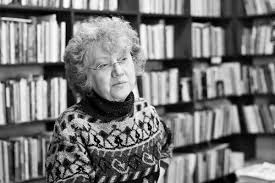
"Poet Ruth Kramer Baden: A Writer from 'East of the Moon'


"Poet Ruth Kramer Baden: A Writer from 'East of the Moon'”

Interview by Doug Holder

Ruth Kramer Baden is well into her 70’s, but is an emerging poet with her first poetry collection “East of the Moon” (Ibbetson Street Press). This book which was recently selected as a “Must Read” by the Massachusetts Book Award, is according to reviewer Barbara Bialick “a mythic narrative, storytelling, and busting with flavor beads… she takes the reader through life cycles of a mature woman—with the span of her first collection, it is obvious that her writing of this work was in the back of her mind for some time.” I talked with Baden on my Somerville Community Access TV show “ Poet to Poet: Writer to Writer.”


Doug Holder: So Ruth what took you so long?

Ruth Kramer Baden: Well I guess I succumbed to the myth that was thrown around when I was a young person. That was once you get married—you have children and you stay at home. I know Sylvia Plath was writing at 2 A.M. with two little children—but then she put her head in the oven. I felt like I had to devote myself to my husband and children. It wasn’t until the Feminist Revolution that I got the message that there is room for family but other things too. Yes there was love for the family but you had to fulfill your promise in the world as well. I started writing because of a teacher who inspired me in high school. I decided that I wanted to be a world famous writer, if not that, somewhere near that. So I went to college, and did what women of my generation did-- I got married and had children. I turned away completely from poetry and all the things I was thinking about in college. My husband didn’t want me to do anything that would interfere with my duties as a wife. I think I accepted that. That was your job—you didn’t think about your own needs.

DH: As Lois Ames, a confidante of both Sexton and Plath told me you were a revolutionary if you were a woman, and doing something outside the kitchen.

RB: I guess then I was a revolutionary. I took a writing seminar at the Radcliff Institute which was for “older women.” So there were some of us in our 30’s. (Laugh) I just got hooked, all I wanted to do was write, write, write. So I started writing poetry. And my dream was to publish. But somehow I didn’t think I was good enough. I didn’t know how to go about it. It was not like today when you can go on the internet and find all these publishers. I was very lucky to go to a reading at Porter Square Books to hear Kathleen Spivack read. She became my mentor and later I got my book published with her invaluable help.

DH: You were a lawyer—does this experience figure with your work?

RB: Yes I was a lawyer and I decided to retire at 70. The law did not inspire my work, but my teaching does. I teach at Brandeis University in a program for adult learners. It has been the greatest experience working with these people. They are seniors with a lot of life experience.

DH: What do you consider the traits of a good poetry teacher?

RB: In my own case I’m told that I communicate my passion for poetry. You really have to like and enjoy people. You should be able to explain in a very down-to-earth way about what you are talking about.

As far as Kathleen Spivack goes she had been a teacher many years ago when I was in my
30’s. When I saw she was reading in Porter Square ( Cambridge, Mass.), I also found out she helped her poetry students get published. I hooked up again with her. She was very encouraging. She made feel like I could become a published poet.

DH: Your poems seem to have a strong Jewish bent to them. Do you consider yourself a Jewish poet or a poet who is Jewish?

RB: I guess a poet who is Jewish. I didn’t realize that I have a decidedly Jewish slant. But now I realize it is true, many of my poems are imbued with Jewish Humanism. That is that they have a feel for the culture, the history, and what happened to the Jews during the Holocaust. Writing poetry is a way to find out who you are—where you came from.


Under The East River

What would you give to ride again
to Flatbush Avenue in the front subway car
wondering about the rails, why they meet
in the distance of the dark tunnel?
to climb the stairs up to the ozone-scented morning
holding your schoolbooks tight against your blue-sweatered
chest
and stride under the arch of Erasmus Hall High School
where Desiderius, the bronzed Dutch scholar stands
with his tome eternally open to the same two pages
to throw a Lincoln penny into his book for luck
in passing all your tests, and you do
to have your luck follow you out into the copper afternoon
and to never doubt it will be with you forever?
What will you do when your luck slips clinking onto the
rails
somewhere between Times Square and Coney Island
and you ride to and fro under the East River
while your reflection watches you from the soot-smeared
window?
you know now you will never get off at the right stop
you will fail all your tests year after year
the rails will never meet.
What would you give to ride to Herald Square and see luck
get on
wearing a faded Dodgers cap and his back-pack of tricks?
when he moves to the strap-hanger next to yours
when he sways with you
will you dare look straight into his cobalt eyes
and invite him to come home in the lowering afternoon
to lie with you, to love each other’s bones
until they meet in the tunnel of light?

Friday, April 22, 2011

"FUSION” A Magazine of Literature, Music, Art, and Ideas


“FUSION”
A Magazine of Literature, Music, Art, and Ideas
www.fusionmagazine.org
Berklee College of Music,
Boston, Massachusetts


Review by Rene Schwiesow

Berklee College in Boston is known world wide for its excellence in music education. Well known graduates include Quincy Jones, Melissa Etheridge, Joey Kramer, and Branford Marsalis. However, Berklee College is also committed to showcasing the talents of their students beyond the music genre. “FUSION: A Magazine of Literature, Music, Art, and Ideas,” was developed as the “literary and multimedia” voice of the school. FUSION’s main goal is to publish Berklee’s students, but the magazine also solicits work from faculty, staff, visiting artists and guests.

Volume 2, Issue 1, 2010 included six poems by Somerville’s Bert Stern. Stern was a visiting artist at Berklee, spring of 2010. The poems were originally published in Stern’s collection, “Steerage,” published by Ibbetson Press and the grouping includes the title poem, “Steerage.”

“In a corner, on blankets, we made house: here bundles to lean against,
there, to keep garlic and bread.”

Stern’s poems are interspersed with photographs by Berklee student Alexander Muri, alum Cailin Peters and Irish guest photographer Fionan O’Connell. O’Connell is just one of the Irish artists represented in a section entitled “Irish FUSION.” FUSION editor-in-chief Joseph Coroniti spent sabbatical time in Ireland as a visiting research professor at the Centre for Irish Studies, National University of Ireland in Galway. During his stay, Coroniti commissioned work. In addition to O’Connell’s intriguing images, eleven Irish poets are represented, including Louis de Paor, the Irish language poet, whose poems are printed in Irish with the English translation. From “Blackberries,” by Paor:

The white tide
is high as the sun
surging in her pulse,
and a thorn in her talk
unbeknownst to her,
skins my fingers.

There are no thorns in the words of Kathryn Bilinski, author of “Metropolis: A Bostonian Summer.” Bilinski threads 50 word vignettes into a fusion of sight, sound and emotion that may inspire the most committed suburbanite to board the train for a day in the city. After all, “There is nothing like a muggy summer evening in Boston.”

While I could go on for paragraphs mentioning authors and sharing quotations from the interesting reading in “FUSION,” I will leave the rest of the journey to you. You may read more about FUSION at: www.fusionmagazine.org. The magazine accepts submissions year round. However, individuals who are not Berklee students or alumni, must send a letter of enquiry before submitting.

Rene Schwiesow is co-host of the popular South Shore venue, Poetry: the Art of Words held the second Sunday of each month in Plymouth.

Thursday, April 21, 2011

Bunker Hill Community College--National Poetry Month Reading

(Click on to enlarge)

Somerville Poet’s Book Selected as a “Must-Read” by the Mass Book Awards


Somerville Poet’s Book Selected as a “Must-Read” by the Mass Book Awards

By Bert Stern

Triage, by Tam Lin Neville, Cervena Barva Press, Somerville, MA, 2010

Tam Lin’s book, Triage, was recently selected as a “Must-Read” by the Mass Book Awards. She is a Somerville poet published by Cervena Barva, a Somerville press.


Many of the poems revolve around her neighborhood, Union Square.
The chastened compassion of the poems in Triage is strikingly original and at the
same time, a precise rendering of a feeling common to our times: the daily witnessing of a suffering we can’t relieve but can only try to take in with our steadiest eye. “Late Nursery Rhyme,” the opening lyric, is also the book’s “argument”:

The stars have fallen
from their glade
and deep in the long grass
lie winking in the shade.

Come with me to gather them –
Some dark, some diamond.
When we have done,
climb and wind this string of beads
through limbs and golden leaves.

And who can say, when the last star
has faded out, what these strange garlands are,
that once were light and now are char?


The exquisite poignancy of “Late Nursery Rhyme” establishes the book’s theme but represents only one of its many voices. The company Neville describes includes a manic-depressive women in the “psych ward,” a street person who “wanted the leaves to care for me,” an army wife who runs a care center for disabled vets, and many more.

Some of these poems are about Neville’s own Somerville neighborhood, where one family, when power goes out on the block, brings out a case and makes a holiday of the event: “Drink the beer before it grows warm.” In another, “Ghost Tenant,” a dead woman reflects back on her eccentric life in a house full of junk, and again the poet’s eye offers of kind of healing that was denied to the woman in life.

While many of these poems deal with dark subjects, they take place in an extended natural reality in which sun and moon shine, leaves fall, snow flakes grace a moonless street. Such flashes of beauty hint at a larger harmony that frames our human predicament.

Wednesday, April 20, 2011

Fathers: A Literary Anthology edited by Andre Gerard


Fathers

A Literary Anthology

Edited by Andre Gerard

Patremoir Press 2011

ISBN 978-09865554-0-4


Depending on the writer, this book is a father's dream, being

the center of attention, his children's remembrance, as in

Annie Dillard's excerpt from, "An American Childhood."

We hear the soft foehn, the breeze of being a daughter:


"…He walked lightly, long-legged, like a soft-shoe hoofer

barely in touch with the floor. When he played the drums, he

played lightly, coming down soft with the steel brushes that

sounded like a Slinky falling, not making the beat but just

sizzling along with it. He wandered into the sun porch,

unseeing; he was snapping his fingers lightly, too, as if

he were feeling between them a fine layer of Mississippi silt.

The big buckeyes outside the glass sunporch walls were

waving…"


The book came from the editor, Andre Gerard's awareness,

the need for an anthology which would speak to children, young

adults, or anyone, or anyone who came to America, often without

their fathers. Gerard taught young people in such situations and these

situations often would cause anger and sadness in his students. Gerard

read father poems to comfort and help them to relate, help them understand

they were not alone:


"…Your father was a dutiful, honest,

Faithful, and useful person."

For such plain praise what fame is recompense?

"A horn-painter, he painted delicately on horn,

He used to sit around the table and paint pictures."

The peace of God needs nothing to adorn

It, nor glory nor ambition.

"He is twenty-eight years buried," she writes, "he was called home

And is, I am sure, doing greater work."

The strength of one frail hand in a dim room

Somewhere in Brooklyn, patient and assured,

Restores my sacred duty to the Word…" Derek Walcott


An introduction to each poem and essay, makes them personal,

an experience, Gerard studies to find the poem's meanings. The book

took many years to compile and he often met with some of the writers,

such as, Rita Dove and Diana Der-Hovanessian.


Some of the work relates to the oppressive nature of a particular father.

The influence of any particular poem or writing can be felt as the reader

hears his large footnotes step down in open verse, as in the famous poem

by Sylvia Plath:


"…Daddy, I have had to kill you.

You died before I had time-

Marble-heavy, a bag full of God,

Ghastly statue with one gray toe

Big as a Frisco seal…"


Every poem, essay, represented in the book is gender balanced

and sensitive to a gender balance. "Nothing can be said about fathers

without first saying a word about mothers. Fathers and mothers are

inextricably, intimately linked" Gerard points out in the introduction to

'Fathers' which inspires and continues the tradition of either blaming

or elevating our parents to a godly, priestly, evil status. The reader will

find what is needed to substantiate their relationship with their father

with poems and excerpts from books we will trudge along pulling our

parents out of their graves. Sometimes the scent is rotten, sometimes

wisteria wafts through out the rooms filling us with recognitions:


"In the steamer is the trout

seasoned with slivers of ginger,

two sprigs of green onion, and sesame oil.

We shall eat it with rice for lunch,

brothers, sister, my mother who will

taste the sweetest meat of the head,

holding it between her fingers

deftly, the way my father did

weeks ago. Then he lay down

to sleep like a snow-covered road

winding through pines older than him,

without any travelers, and lonely for no one" -Li-Young Lee

I recommend this book. It will be read many times and then passed on

to the next generation of readers as a reference book as well as

a direction to further one's knowledge:


"On the morning on May 13, 1998, my father woke up, had breakfast,

got dressed and walked away from the Steinbach Bethesda Hospital,

where he had been a patient for two and a half weeks. He walked

through his beloved hometown, along Hespeler Road, past the old

farmhouse where his mother had lived with her second husband, past

the water tower, greeting folks in his loud, friendly voice, wishing

them well. He passed the site on First Street where the house in

which my sister and I grew up once stood. He walked down Main

Street, past the Mennonite church where, throughout his life, he had

received countless certificates for perfect attendance, past Elmdale

School where he had taught grade six for forty years…" Miriam Toews


Irene Koronas

Poetry Editor:

Wilderness House Literary Review

Reviewer:

Ibbetson Street Press

Monday, April 18, 2011

Two Somerville artists bring poetry and music to the PRECINCT


(Lisa Kaufman-- Somerville Bagel Bard and one of the featured readers)


Two Somerville artists bring poetry and music to the PRECINCT

By Doug Holder

Somerville residents Yani Batteau and Olga Solomita started a poetry and music series at the Precinct Bar in Union Square, Somerville for the month of April (2011)--every Monday night. Such Spoken Word Artists as Angela Counts, Betraz Alba Del Rio, Lisa Kaufman, Judah LeBlang and others have or will read in this new venue. This series will also include musicians of various genres. They hope it will continue at the Precinct or in some form at another venue in the near future. I have interviewed Batteau before, and found she is a multi-talented artist, and musician. Recently I connected with her partner in this venture:


Doug Holder: What was the germ of the idea for the series?


Olga Solomita: Yani Batteau has been working with her band, 'The Styles', for just about one year. Within this year she has worked very hard to establish herself, specifically, as a professional musician. I have been along side her throughout this process. During this process, as Yani has found her voice, I, in turn, after a long hiatus, have begun to find mine again, and in more ways than one. Hence, without knowing exactly what I was looking for, I was searching through Craigslist looking for opportunities for myself as well as Yani. I came upon an ad that was asking for someone who was interested in being the resident band for the month of April at the Precinct, and who was also interested in booking other bands on the same night.I did think it odd when I read it, but rather than wonder too much about why such an opportunity was being put out there, I jumped on it. I responded to the ad instantly even before speaking with Yani, who when once informed that I had already volunteered her, was in. Of course, the resident band would be Yani Batteau and the Styles and the other performers were yet to be determined. Yani and I had several discussions about just what we wanted to happen on these Monday nights. I very much wanted to include a different genre, and in my mind, this was Spoken Word. I attended a night at the Lizard Lounge with the Jeff Robinson Trio in Cambridge to see who might be right. Jeff had already suggested a few artists, but I really wanted to see them first hand. As a result many of the Spoken Word artists chosen for this Month in April have been hand picked based on our completely visceral and subjective responses to their performances at the Lizard Lounge. Since they have been competing for the the national slam finals, I have been fortunate in that I have seen some of the best. I already knew some of the poets as well as their work and hence have invited them to participate based on their work.


DH: I had a reading series some time back at the Precinct. It is an unusual space, an old police holding cell--I believe. Part of its charm--perhaps?


OS: The Precinct is an interesting venue. It was chosen by Yani and I because the opportunity presented itself and we both had seen performances in that space. We also suspected that it would be quite a challenge to not only put together the program, but also to bring in an audience on a Monday night. Our suspicions have been confirmed, but we are none the worse for it and neither it seems are the wonderful and gracious artists that have already performed. We are proud of the program, and despite the frustration in bringing in an audience at this unusual night and place, at least for Spoken Word.


Yes, it is interesting to me that you mention that the space use to be a police holding cell. Everyone seems to mention this about the place, as if it carries the negative karma, or just karma of such an environment. Well, I imagine, some great poems were written in those cells. Didn't Oscar Wilde write while behind bars? I'm sure the blues rang out from those dark spaces. Who knows, opera, even, perhaps. I believe in order for a program to be a 'complete' success, many things have to come together. Luckily, we have had extremely gracious performers such as Scripture, Harlym 125, Nicole Perez, who this time anyway, appreciate the opportunity to perform and as well be in the company of other artists. I absolutely believe that this venue at the Precinct presents a spectacular opportunity for poets and spoken word artists in the future. We have had some incredibly powerful and wonderful poets and spoken word artists that performed as well as some great bands. In order for this program to continue at this venue, It really has to be something the owners of the Precinct want and would require a great deal of collaboration between the promoters and owners. I am not sure this is on their agenda. If it is not, the program should absolutely find a home, even if it is a mobile home. I plan to make sure of this.


DH: Some might say there are already too many poetry venues, etc... in the city of Somerville.


OS: I don't think there is too much poetry in Somerville. There are plenty of poets whose voices should be heard. Why not have as many opportunities as possible?


DH: What is your Somerville connection? Do you consider it the "Paris of New England?"


OS: I lived in Somerville in 2005 and 2006, left briefly and now have returned. I expect to stay in Somerville. I lived in Cambridge for 25 years and loved it, before I moved to Somerville for the first time. I live near Davis now and I have never been so happy in a place. I have never been to Paris, I have to be truthful, so I don't know if I'm the one who should comment on that question, but I will say that this an extremely exciting, beautiful, and complex, in some ways, place. . And it offers so much in the way of the arts and lacks the pedantry of some certain other towns.


DH: Can you tell us a bit about your background?


OS: Oh yes, my background. I am an artist, teacher, writer. I received my MFA in Media and Performing Arts at Mass College of Art in 1989 and Master in Education in 2001 from Wheelock College. I am a photographer, painter, and closet writer, but not for long. I grew up in Cambridge and Newton and come from a large family. My siblings are artists, writers, filmmakers, clinicians and pretty regular and amazing people are some of my greatest influences, but none are so great as my childhood dog, Prince.


************


Tonight April 18, 2011:


PRECINCT 70 Union Sq. Somerville
We are hosting our Third Spring Masala Monday on the 18th of April with resident band Yani Batteau and the Styles 10:30
with a smashing night of Music and Spoken Word
Featuring:
8:00 Special Appearance Robin Lane of Robin Lane and the
Chartbusters will, rock over folk into new wave will
get your feet moving.
8:30 Nash Satterfield aka Martha Bourne and Steve Mayone
will turn the room 'Inbetwang [misspelling intentional]
Country'...Folk? Rock? Country? ALL OF THE ABOVE
Bourne is a prolific composer/singer/songwriter.
9:45 Spoken Word Poetry

Angela Counts poet, award winning playwright, filmmaker

Sunday, April 17, 2011

"A Full Life" Joseph A. Cohen

“A Full Life”
Joseph A. Cohen
Bound by Khoni Bindery
Lowell, MA

Review by Rene Schwiesow

The beauty of a Saturday morning spent with the Bagel Bards at the Davis Square Au Bon Pain in Somerville is the interaction with wonderful, creative, artistic individuals. The numbers of attending Bagel Bards has grown so that there are now two groupings of tables and the best way to work the situation is to spend some time at one grouping and then move over to the other grouping so as not to miss people and/or discussions. I don’t always make that move. I was fortunate recently to have done so. I spied an empty chair next to a poet that I had known for some time. She was talking with a man from Long Island who was in the area visiting his daughter and I wriggled my way into the conversation. The sparkle of his eyes and his warm demeanor made an immediate impact as he told me how welcoming the people in the Boston area had been. I secretly held the thought that it was his sparkle and warmth that drew others close. Recently this 93-¾ year old man lost his wife and he spoke of the loss and her death with a mixture of love and awe for the quiet grace in her passing.

Cohen spent the majority of his life creating a successful table linen business. However, a love for the artistic is in his blood. His wife, Sonia, was a visual artist, a musician and a composer. His daughter, Beth, is a world-renowned violinist. After his retirement, Cohen began taking courses in poetry and found the music in the rhythm of words. He also teaches photography (yes, he is still teaching) at the college level and most of the photos in “A Full Life,” are his own work. The cover photo is a beautiful, touching image of children, Algerian orphans. When the photo was taken, Cohen who was in Orange near Avignon, spoke to the children in Arabic, designating one of the girls as “director,” asking her to lead the children in their roles for the camera. Based on the composition of the photo, I would say they were both successful!

“A Full Life” is an unfolding of the pages of Cohen’s life laid open for his readers to witness. By the time we’ve finished reading, those pages have quietly folded themselves back into a metaphorical origami crane, which takes flight with an underlying peace. It is a peace that threads its way through even the harshest of Cohen’s times. Cohen spent three years overseas during World War II; and in spite of the war he continued to find beauty in humanity and the world around him. In “Buzz Bomb Christmas,” we join in the party created in the midst of “snow, sleet, sirens and the stench of exploding gunpowder.” Another round of buzz bombs above does not dampen the spirit as singing women and children rush for basement shelters. And as night brings weariness to the children, he ends the dance with “like chaperones at a prom, Madame Nys and I sound taps.”

The book is dedicated to his wife, Sonia, and her presence is a constant through every facet of the work.


The poem “Anyone for MRI?” speaks to the trauma of the stroke Sonia suffered.

In a cold white room
stripped of jewelry, glasses and hearing aid
she enters the world of MRI.

It is followed by two poems that honor her will to continue living in full color. Though her right side is greatly weakened, she continues to play her piano and teach; and she continues to paint.

Sitting at her easel painting watercolors
with her left hand for hours on end,
I look in on her only to hear her
cry out, “Leave off, I am busy!”

The poem is entitled “She Speaks,” and yes even those words are music to Cohen’s ears as he watches his wife battle her way back to “A Full Life.”

In both Cohen’s book and in the conversations he has with others, it is clear that he is filled with passion for living, compassion for others, and a deep love and respect for all. What a privilege it was to have had the opportunity to speak with Joseph. What an honor it is to have been able to take a look into his life through the pages of his work.

Cohen is planning a second book of poetry. If you would like to purchase “A Full Life,” you may do so by contacting the author at: JCohen3041@aol.com

Rene Schwiesow is co-host of the popular South Shore poetry venue: The Art of Words.

Saturday, April 16, 2011

Pictures from the Endicott College/Ibbetson Street Press Visiting Author Series March 2011

March 2011 Mark Pawlak--editor at Hanging Loose Press, and Gary Metras --founder of the Adastra Press---read from their work, and talk about small press publishing at Endicott College--Halle Library http://endicott.edu


******(Click on pictures to enlarge)


( Mark Pawlak Reading)


(Gary Metras Reading)


Tuesday, April 12, 2011

Popt Art Portraits. Popt Art Vol 1 Spring 2011--Review by Jason Roberts

Note: this is the first in a series of reviews by Endicott College English and Creative Writing majors.


Popt Art Portraits. Popt Art Vol 1 Spring 2011 Edited by Jessica Harman (Lulu Press jharman14@aol.com)


Review by Jason Roberts


The mixture of poems, essays, stories and portraits is a beautiful thing. Popt Art is something you can pick up and put down (if you can) whenever you’d like. Inside you will find blunt humor, confessions and poems that will provoke you to reminiscence. Sometimes you might not understand them, but you don’t have to and that’s why I enjoy it so much. Some things are easy to relate to, at least for me, like the financial struggle people in the world must go through:


“The young mother is pushing through the supermarket, her toddler packed into the cart and screaming because she won’t buy the sugar doodles he saw on TV. She picks up a box of detergent, squints at the price, tries to read the fine print [glasses needed] she puts it back. Reaches for the cheaper store brand. All around her the boxes are cooing, buy me, you have to have me, I am the best. She skips the aisle of candies, she turns her head from the meat. Packaged hot dogs again. See her. You don’t, but try. Her life is pushing through supermarkets where everything costs way too much while her son cries and whatever she wants, she can’t have.” By Marge Piercy


Or how a pet walks around the house like we are its guests/servants:


“Puck the Abyssinian colored like a fine rabbit does not consider himself a cat. I am the son and heir, he says, am I not superior in my mien and breeding?...” By Marge Piercy


Take a journey into the mind of Antonia Jennifer Traitwright as she writes in her blog about What It’s Like To Be Schizophrenic:


“On the subject of beginning a description of my journey as a psychiatric patient, I will say that it’s easier to begin a novel than to begin a blog about psychosis. If I were writing a novel, I’d begin with direct, clear sentences, like “I decided to put on the pearl earrings,” or “it was a dark and stormy night.” But, I’m not writing a novel. I’m writing a blog about my schizophrenia.”


Thing that’s you may or may not regret from your childhood past:


“As boys – we dropped rocks, a flurry of bomblets, on a passing phalanx of toads. Commanders for once, free from the clamp of parental constraint, punch drunk with the notion of our control of fate – life – death. And like mini Dr. Mengeles, we experimented stuffing firecrackers down their twitching throats …” By Doug Holder


My favorite Entry would be by Joshua Abelow in his brief explanation of his work:


“A work of art is only as interesting as the conversation it generates”

“I use geometric shapes because geometry is the language of order and I am an orderly person.”

“My work is filled with skepticism and doubt and I’m not afraid to poke fun at my own stupidity or the stupidity of others or the absurdity of trying to make paintings in a world that doesn’t care if you make paintings or eat dog shit.”


He is a very blunt person. He doesn’t beat around the bush or try to push his art out into the world more than it should be. He does his art the way he wants to and not how it is expected to be. That’s how I plan to be as a writer, not following any rules or views by people concerning the way things should be written. Creative freedom is something of great importance and I’m glad Abelow has captured that fact in his art and introduction to his art.


Popt Art is something you can pick up whenever you want. It’s large selection of various pieces is something to enjoy in bulk or in part. Whichever you prefer, it is a great piece of literature.


* Jason Roberts is a Creative Writing major at Endicott College. This is his first appearence in the Boston Area Small Press and Poetry Scene. For more information about Endicott College go to http://endicott.edu

Sunday, April 10, 2011

REVIEW OF COURT GREEN 8


REVIEW OF COURT GREEN 8, Columbia College, English Department, 600 S. Michigan Avenue, Chicago, IL 60605, 216 pages, $10, 2011

Review by Barbara Bialick

COURT GREEN 8, (DOSSIER: FRANK O’HARA), is a thick, juicy, glossy new, since 2004, college literary magazine out of Columbia College, Chicago, Illinois. It is ripe and jubilant with good writing by young voices whose work is often universal yet sometimes taken down a notch by the addition of bragging about “weed” or by using coarse words near the end of the poem, which adds an odd twist to the flow. But these are their words and interests, and their apparent ages, give or take a few years. Even the “dossier” topic—react to the poetry of the late poet Frank O’Hara (1926-1966), is about someone who only made it to age 40… This batch of 80 poets plus O’Hara, is new to me, but I suspect many will be making names for themselves, as the old saying comes around again anew.

Given that collegial flare, I don’t find the poems to be what we sometimes call academic.
No Greek gods and goddesses. Actually one of the first poems is quite funny: “My Dog as the Reincarnation of Heath Ledger”, by Steve Henry: “He’s such a great actor. He pretends/to chew on his bone when he really/disembowels my laptop charger/…But really he is Heath./He, too, loves drugs having eaten/my roommate’s weed more than once/…Maybe he’s really Plath, then, or maybe they’re all the same;/some amalgamation of all our desires/to snuff ourself trying to get what we want…”

Here’s a few examples of their intriguing sorts of titles: “Nude Ants”, “Hot Dogs Have Legal Problems” “Death Radiant”, “The Closet is Grieving (After Wallace Stevens)”—
Take that closet one by Julia Guez: “The closet is grieving/all of the trim black suits./None of them are sequined/or mauve with seafoam rings/…a man is not driven to dream of papayas and parakeets/only here and there a beldame (accountant by day) will marry/Quaalude and tequila. Asleep in drag on he sofa…”

There are many tributes to Frank O’Hara. James Schuyler (born in 1923) writes: “Stay up all night? Who wants to sleep?/it is not your voice I hear/it is your words I see/foam flecks and city girders/…” And “Monologue: Frank O’Hara” by Elaine Equi: “Untie your muse/for an hour and stay with me/I come in pieces across a great test pattern/…When will you see me as I am/as industrious with grief as you are?...”

For ten dollars you may or may not find a new market for your poems, but you’ll surely get some good idea of where good poetry is going in the future.

Saturday, April 09, 2011

Arthur Winfield Knight's Chapbook: CHAMPAGNE DAWNS.”


A Review of Arthur Winfield Knight's Chapbook: CHAMPAGNE DAWNS.”


by L. E. Bryan


In his opening poem, “A Simple Life,” Arthur Winfield Knight conveys an easy eloquence that threads its way throughout his latest chapbook, “Champagne Dawns.” His poetry transforms rituals and routine pleasures of everyday life such as walking his dog, Happy Hour at a local bar, or his wife bringing him coffee in bed into an equally relaxed and unadorned reality. Within that reality he also includes interweaving themes of love, desire and devotion. Knight welcomes the reader with understated words into an intimate world of joy and pain he shares with his wife and writing partner, Kit. Like scenery in a play, Knight's poetry is set against a West of the past and theever-changing West of today.


He evokes pain with casual lines in the poem, “FEBRUARY 1st, 12:01 A.M.”:“Thirty-eight years ago,/you were hit by a car/on a rainy January night./The doctors gave you a two percent chance/
to live.”


His poem, “ON THE ROAD, begins with a graphic leap into lust with the lines, “We don't make love/in Las Vegas,/ although I'm always hot on the road,” and halfway through the poem, “I have a hard-on/and the beginning/of a headache.”


Knight ends his chapbook by returning to its title, expressing love and devotion in the opening lines,
“I open a bottle of champagne/shortly before dawn./Kit and I drink it/from lead crystal glasses/as we watch the dark fade to amethyst.” He then closes both the poem and the book with acute observation: “Everything is different/but not much changes.”
Born in San Francisco, December 29, 1937, Arthur Winfield Knight grew up in Petaluma, California. He graduated from Santa Rosa Junior College with an A.A. Degree in 1958. While at San Francisco State College he received a B.A. in English in 1960, and an M.A. in Creative Writing in 1962. He taught English at University of Pennsylvania from 1966 to 1993. He also taught at San Francisco State University and has written for various California newspapers. On August 25, 19776, he married Kate Duell. They have a daughter.


Knight and his wife co-wrote, “A Marriage of Poets,”published in 1984. In his Western poetry chapbooks like, “Wanted!/Basically Tender,” “Outlaws,” and “Prairie Village, KS,” his novels, “Blue Skies Falling,” “Darkness Starts Up Where You Stand,” and “The Secret Life Of Jesse James,” also a nonfiction book titled “The Beat Vision,” as well as, his only play, “King Of The Beatniks,” Knight incorporates not only the West of today and yesterday, but, as its chronicler, the literary sensibilities of The Beat Movement, which had its Post-WW II beginnings during what was called the San Francisco Renaissance, and included writers such as Kenneth Rexroth, Jack Spicer, and Michael McClure.


Knight is currently adjunct professor at the University of San Francisco. He lives in Yerington, Nevada.

Friday, April 08, 2011

Ghosts and Whispers by Krikor Der Hohannesian


Ghosts and Whispers

Krikor Der Hohannesian

Finishing Line Press

ISBN 978-1-59924-620-8

2010 $14.00


“...From the refuge

of America, it is left to you

to hold those birthplaces with

strange names, to pass on the tales

of those whose histories survive

only as faces in grainy sepia or a gold

ring engraved with a name, a date...”


A long time coming, 'Ghosts and Whispers,' is the culmination of many years

of publishing in various magazines; his poems are now in one book; this

chapbook by Krikor graces our minds with his profound implications,

poetry written from those hidden places, brought to light, they dare line

dance across the pages. The poems are cohesive, interspersed recollections

and historical truths:


“...With no forewarning

it sneaks through a side door

in any number of disguises

a nod

a touch

a word

a sidelong look

weighty silences

and yes, sometimes,

even a smile

wry at the edges,

sly in the knowing.”


Der Hohannesian manages the present tense with the past tense in ways

that captures the readers attention and preserves recognition. The poems

impart, “the honed stick is transformed-bone white, smooth as a sliver” he

regales us with portraits of people and place:


“What do you do

with the ghosts of melancholy

that lurked in dark, dusty niches?


What do you do

with lies that lay hidden

like a smoldering peat bog?


What do you do

with a thirst for what was lost

hanging like beads of fog on the skin”


What do you do

with the weight of the unspeakable,

the grief which you could not lift?


These tears I shed,

that fall on your headstones

under the weeping willow,

these tears are for you.


Irene Koronas

Poetry Editor:

Wilderness House Literary Review

Reviewer:

Ibbetson Street Press

Wednesday, April 06, 2011

Michelle Hoover writes a tale of two women.


Michelle Hoover writes a tale of two women.


Interview with Doug Holder

Michelle Hoover is a petite woman but her writing is anything but diminutive. In her critically acclaimed novel “The Quickening” she writes of the friendship of two farm women during the early part of last century. These women and their significant others speak plainly, but the subtext of what they say is loaded. Hoover, who was born in Iowa and from a long line of farmers, captures the hardscrabble life of these straight-no-chaser women. Hoover currently teaches at Boston University and Grub Street in Boston, Mass. I spoke with Hoover on my Somerville Community Access TV: “Poet to Poet: Writer to Writer.”

Doug Holder: Your first novel “The Quickening” was a huge success. You ever worry that your second book might not measure up to your first—you know the sophomore jinx?

Michelle Hoover: I do. You want to do something different. It’s hard. I am excited about my new book—but certain aspects of it will be totally different from the first. I think the next book has a lot of promise though.

DH: What is the next book about?

MH: It is about two of my great aunts who disappeared from the family right after WW II. They were quite young. They were never heard from again.

DH: Like poetry, every word counts in your writing. With an economy of words you write a very evocative novel.

MH: I am a terrible poet. I grew up in a family where simple language was preferred. When I took my GRE to get into grad. school my vocabulary was got the lowest score. So I had to work on that. This stripped down language works with these two ladies in “The Quickening.” I wanted it something like the landscape—very plain and flat. Gertrude Stein wanted her sentences to evoke a certain message and so do I.

DH: “The Quickening” sounds authentic. How much research did you put into this--to get it just right?

MH: My grandmother’s journal that I used was only 15 pages long. In the beginning of the book one of the ladies, Mary, almost kills her husband Frank by feeding him chicken when he was sick. And that really happened. But that was only a few sentences in a long book. For instance, pigs are slaughtered in the novel. Now I never slaughtered a pig, but my uncles told me how it was done. My family gets together every February in Arizona and tells stories and sings songs- all that kind of stuff. They are a bunch of old farmers. That’s how I got the story right, by getting all these oral histories from my family. I wanted to get personal stories which were the basis of my research. I did historical research but I found it went against what I was doing.

DH: In the harsh and unforgiving lives that Enidina and Mary lived there was the church. The church offered a respite, the one place where these women would have the chance to address spiritual concerns, to transcend their day to day grind. However, the minister Borden had a major lapse in his ministry, as he was brought down to earth by the loneliness of his calling. Do you view religion as a front, offering the illusion of an afterlife for people with a very unsatisfying real life here on the material plain?

MH: I don’t think religion is always a bad thing. A lot of my family is religious; I am more of an agnostic. I am suspicious of the self-righteousness that religion can take on. A sort of “I am better than you because I believe in God.” Borden has a lapse. Bordon is human. Mary uses religion to prop herself up. I don’t think it is bad that people have religion if it helps him. I don’t like people who use their religion against other people.

DH: No one could accuse you of writing a Chick Lit. novel. There is nothing glib, or superficial about this work. Do you think you can reach a wide audience with these straight-no-chaser women?

MH: I would hope so. I was hoping to create a new woman heroine with Enidina. She is very different from me—big-boned and awkward. Mary is the more typical character you would find in Chick Lit. She has her own darkness too. But both of these women are very stoic, no navel-gazing—the type that if they have problems they would keep it to themselves. I admire this but I can see how it can be harmful.

DH: You said in an interview that your characters are like the landscape. Don’t we all take on characteristics of the landscape?

MH: I think so. I am part of my characters' landscape. I find the farmland of the Midwest beautiful—other people may not.

Interview with Spoken Word Artist Lauren Whitehead


Interview with Spoken Word Artist Lauren Whitehead

By Doug Holder


Spoken word artist Lauren Whitehead will be a featured guest for Somerville's acclaimed, youth-targeted Books of Hope Project on April 14th 7PM at the Main Branch of the Somerville Public Library (79 Highland Ave.) She will conduct a reading and a workshop that deals with performance poetry and the new generation of poets commanding the stage! This event will include an open mic,refreshments,is free, and open to the public.

Lauren Whitehead is a University of Michigan graduate and multi-time U-M U-Club Poetry Slam Champion. She is a founding member of Ann Arbor Wordworks, has been featured on National Public Radio and in HBO’s Brave New Voices documentary series, has worked as a mentor for young writers at Youthspeaks in San Francisco, and has toured the country as a member of Robert Redford’s Speak Green poetry squad.


I interviewed Ms. Whitehead--and here is what she had to say:


You are a performance poet--Doesn't every poet give a performance of sorts when she or he reads?


You might be right. There is a performance in all of it, right? The reading, the slam, the open mic, right? But I think the main difference between what you're describing -a poetry reading- and what I am (and other performance poets are) doing is that we are working for, banking on and in need of participation from our audience in order for the thing to work. And so, what is perhaps quiet/reserved/tame at a reading is intentionally stirred by the performance poet to create noise/community/excitement in the folks we are performing for. It's much more of a give and take, and it involves the body in a way that a podium, perhaps, doesn't always allow for.


What do you plan to tell the kids are the elements of a good poetry performance?


I will tell them that the best poems are honest poems, are poems where we can tell something is at stake, are the ones that are more confession than fact, the ones that are urgent, are waiting to be written and said and heard. I will tell them that reaching their best performance is really only possible if they reach toward their best and bravest writing.


We know a lot of poetry sounds good on the stage--but how about the page?


I think this is a dichotomy that some poetry god must have a ton of fun stirring up over and over. The truth is I think good performance poets are, at base, good poets and that means on the page, on the stage and everywhere in between. One of my Poet Mentors Jeff Kass says that poetry is about playing with sound. Some poets do that by the sound of the voices that in their heads, others need to say it out loud to really hear it. I fall into the latter category, but we're all poets just the same.


Can you tell us about the Youth Speaks program that you were involved with?


Youth Speaks is a literary arts organization in San Francisco that, in short, seeks to change the perception of youth by offering them the tools they can use to speak their own truth to power. So, we (and I say we because even though I'm not there, I'll never be gone) offer young people writing workshops and performance opportunities so that they might have a chance to say what they feel without being measured against a standard - we believe the standard is yourself and without being told you are wrong - in our workshops there are no wrong answers. I think the goal is a safe space for self expression in whatever form in comes in. And young folks want that. It's clear.

Youth Speaks also programs Brave New Voices, and international youth poetry festival that connects young people from all over the country who are interested in performance, poetry and community. It's really a beautiful place. www.youthspeaks.org see for yourself.


I know from experience that poetry can make changes in the lives of people, especially kids. Any anecdotes?


I have so many moments in my short life of young people -and old people come to think of it- who have found some part of their selves in a poem. On any given day at the YS office. I remember one kid, Dominic, who is now a student at UW Madison. He used to just come to my workshop because his friend was coming, and he would never write and when he did, he certainly wouldn't share. But the group was forgiving and patient and welcoming, really. So he came every Wednesday, or whatever, until one day, before the workshop started he said to me, "I think I wrote something last night off that prompt you gave us before, can I read it." And that initial share, that first sound, really transformed him. He believed he could say it now, he believed he had something to say, and it's really quite beautiful to see as it's happening.

Sunday, April 03, 2011

IMAGINING THE SELF, Poems by Laverne Frith


Review of IMAGINING THE SELF, Poems by Laverne Frith, Cherry Grove Collections, an imprint of WordTech Communications, PO Box 541106, Cincinnati, Ohio 45254-1106, www.cherry-grove.com, $18, available on Amazon.com, 88 pages, 2011

Review by Barbara Bialick

Laverne Frith, of Sacramento, California, is the husband of poet Carol Frith, who has also been reviewed on these pages. He is co-editor of “Ekphrasis”, a journal of ekphrastic poems, each of which focuses on a single work of art. He’s also a monthly poetry columnist for “Senior Magazine”, among other accolades to be mentioned later.

Many of the poems in this book rest on abstract ideas and images of life experiences writing poetry about art and about poetry itself. To read the poems is to define them, such as in the following examples:

In “Why Poetry?” he writes “I rather think we challenge/imagination, capability/that we drive the mind/into fields of metaphorical/horrors and joys/that there is something/redemptive about process,,,”

He even defines his own self this way as in “Exhibit Me in a Well-Lit Window (after ‘The Thinker’ by Rodin)”: “as exotically as I command/in my musings/flaunt my patina/changeable as a chameleon’s/…reveal the unfulfilled/dream/in my hidden eyes.”
And further delving into the mystery of the arts in “The Hotel Window” (after Edward Hopper)”: “pure loneliness…/something she sits and endures each time anew,/relearning the bitter lessons of regret…”

As Judy Halebsky says on the back of the book, “Frith reads our emotional lives through the natural world and captures moments of insight…The poems…are in equal measure brave and gentle, facing up to the imperfections in our lives and finding in them points of illumination….”

Frith has also published chapbooks from Talent House, White Heron Press, and Finishing Line Press and a photography and poetry chapbook from Rattlesnake Press. He is a Grand Prize winner two times in the Artists Embassy International Dancing Poetry competitions. He and his wife wrote “Practical Poetry—A Guide for Poets.”

Saturday, April 02, 2011

Holder to his readers: "Take a walk."


The famed poet, Rock musician and memoirist Patti Smith told a graduating class at Pace University in New York City that if she had to tell students one thing about the creative life it would be to get good dental care. She said in her day ( She is 64), artists were pretty poor and they let their teeth go. She went on to say that you want to pace back and forth in your garret because you are in close contact with your muse, not because you need a root canal.

One thing I would add that is a necessity for a poet or writer is walking. I've written about it before. You know the old slogan " I 'd walk a mile for a Camel." Well, I'd walk 10 miles for the hell of it. In a recent article in the American Poetry Journal poet Ed Hirsch explains very nicely why walking is the right stimulant to get the creative juices flowing:

" Poetry is a vocation. It is not a career but a vocation. I have associated that calling with my life's work, with walking. I love the leisurely pace amplitude, the spaciousness of taking a walk, of heading anywhere, somewhere on foot. You cross a threshold, and you're on your way....Poetry is written from the body and mind, and the rhythm and the pace of a walk gets you going and grounded. It's kind of a light meditation.. Day dreaming is one of the key sources of poetry--a poem often starts as a daydream that finds it way into language--and walking seems to bring a different sort of alertness, an associative kind of thinking, a drifting state of mind."

If you have one book to read I would try Alfred Kazin's "A Walker in the City." Kazin remembered the walks he took as a child, and captures his neighborhood of Brownsville, Brooklyn--the dark and dank tenements where immigrant Jews from Russia and Poland lived lives of cramped desperation in the Depression Era. His walks lead him past the mysterious Irish and Italian neighborhoods, and even the enigmatic horizon of Manhattan, a veritable Emerald City for this provincial boy. By reading this book, and walking Kazin's walk, you will learn what it takes to be a writer--a close observer. You will the read streets like you are reading a text--with a discerning eye for details, and for what's behind the surface of things--a critical reader, indeed.


Walking through Boston and Somerville is like walking through different phases of my life. And with each walk I take I am flooded with images and memories that enter my writing. Walking down Bay State Rd. through Boston University I can recall stumbling home to my Brownstone dorm from some keg party at Shelton Hall across the street. I was told F. Scott Fitzgerald had a room in Shelton when it was a hotel. I could imagine the great writer sleeping off yet another bender in a room that was now occupied by some kid pulling an all-nighter. Walking further down into the campus and hitting the Nickerson Field football stadium I suddenly remember the streakers who traversed the field in their birthday suits on a chilly fall day. I never had the body for that.

I might find myself walking on the streets of Chinatown, looking for the drooping, fat-sweating ducks in the window of my favorite long defunct haunt the "Ying-Ying. All those pungent smells, the chattering Cantonese of the customers, the mass produced wisdom of the fortune cookie--all those ghosts that walk by me on my walk.

And if I find myself in Somerville, and I am walking up Ibbetson Street;I might come across that orange colored Victorian that first housed my independent press Ibbetson Street. This was the first apartment my wife and I lived in when we were married. I remember the day we took a photograph of 30 poets sitting on our front porch, old hippies, Hip-Hoppers, graybearded leftists from the New York City East Village scene , young women with peasent skirts and long flowing hair blowing in the fragrant spring breeze. I remember the bemused gaze of the neighbors when we posed for that shot.

So if you have writer's block, grab your coat, grab your hat, leave your troubles at the doorstep, just relax your feet on the sunnyside or even the darkside of the street, and that pensive pen will hit the blank sheet yet again.

Tuesday, March 29, 2011

REVIEW OF GUY R. BEINING'S CHAPBOOK: Nozzle 1-36

REVIEW OF GUY R. BEINING'S CHAPBOOK: Nozzle 1-36 (Presa Press http://presapress.com)

By L. E. Bryan

After reading, Guy R. Beining's, latest chapbook, Nozzle 1-36, and never having read any of his work before, I wasn't quite sure, at first, whether or in what way his conceptual poems appealed to me, a poet from the school of the concrete. So I sought out and read more of Beining's work, discovering in the process that he often creates arresting artwork to both accompany his poetry and as art on its own. So I read his current chapbook again, and began to see a fascinating correlation and relationship between poet and visual artist, the way his poems create quick, contrasting images in rapid succession, generating with words collagist images reminiscent of such artist as Max Ernst, Anna Hoch, Romare Bearden, et al.

The first five lines of the poem Nozzle 17. read,

who is the ringer now,
in this bellhop urgency of things?
The intruder wondered about
the difference between a
bellhop & doorman.

In those lines we see and feel, equally, Beining's words as opposed to our understanding of a conventional path to meaning. Beining brings to his chapbook, Nozzle 1-36, a in past poetry, a dynamic and iconoclastic vision. In doing so, he chooses then paints his words upon a personal canvas consisting of a blank page. He draws abstract imagery from its original sources, in particular, Cubism, Dadaism, and Surrealism, transforming them into a matrix of words emphasizing conceptual value. Referring to a previous chapbook, Botola (Trapdoor), Beining reveals wit and a sense of play he brings to his poetry when he says about the book, it's a collage lover's delight: smutty, eccentric, and profound like 'neon on nylon.'”

What I also find interesting about Beining is a certain mystery about the man himself. I've yet to find a picture of him. Biographical information is sparse and illuminates very little about his life as poet and visual artists. I found the following information: Born, Guy Robin Nicholas Beining, in London on September 26,1938. Mother a Russian aristocrat. Norwegian father. Confined to his house with rheumatic fever from 1951-54. Schooled at home. Attended University of Indiana from 1955, University of Florida 1958-1960. Discharged from the Army in 1963. That same year he moved to New York City. Relocated to Connecticut in 2000, where he continues to live.

French-American artist, Marcel Duchamp seemed to have defined the poetry of, Guy R. Beining, when he made this observation: The creative act is not performed by the artists alone; the spectator brings the work in contact with the external world by deciphering and interpreting its inner qualifications and thus adds his contribution to the creative act.


***** Louis Edward Bryan is a New Jersey native, a published poet, journalist, and fiction writer. His work has appeared in the Hayden's Ferry Review, The Wisconsin Review, Seattle Post-Intelligencer, and in various other literary and commercial publications. Awards include those from the Seattle Arts Commission, Jerome Foundation, and the Anna & Perry Lee Long Prize for Poetry. He lived and attended schools in the U. S. and overseas as a former Army dependent, a background that has given impetus to Bryan's extensive travels as an adult, more recently, residing in Paris from 2002 to 2004. Having lived in Massachusetts during his youth, Bryan returned to the Boston area in 2009.

Monday, March 28, 2011

Wrestling Angels: Poetic Monologues by Freddy Frankel


Wrestling Angels: Poetic Monologues by Freddy Frankel

Wrestling Angels
Poetic Monologues
Freddy Frankel
Ibbetson Street Press
ISBN 978-0-9795313-7-8
2011 $14.00

“Abraham takes my hands unschooled
in love to brush them with his lips.
Passion wrinkled and approximate...”

Frankel's poems; each vertebrae connects the verses, the reader is then
invited to join the monologues; “you made me in your image, without cunning,”
making a complete body of poetic work:

“...He admires Esau, loud, rebellious;
leans toward him, craves his brash
assertiveness. I lean toward
the gentler Jacob, he shows me
love, the only one who does”

Wrestling Angels, speaks from, as well as, biblical histrionics, foist characters
shape shift like shamans cruising through the blood each page generates
in gentle reprimand:

“Victory accumulates throughout the night
on sweat – stained grass.
I hold Jacob in a headlock, stare

into his leopard eyes, the slits don't flinch-
we grasp and grip the bulging sinews,
naked shoulders, naked waist

wet and smooth as oil – slick. We press against
each other's flesh we both resist.
Fingers sweep the texture

of our body skin smooth as glass. Who are you
he gasps, clinging – sharp as a blade I
twist his hip, flee into the dawn.”

While reading the poems I think about Joseph Cambell's delve into myth.
Frankle demystifies the messengers by latching onto the surface reality
of the man – made intentions, taking on larger messages and then perhaps
missing the mark, using the message:

“Conflict in the open at Mohammed's
death, a Shiite in the Prophet's house
wanting to succeed him. That dream
was blown away like desert dust.

Who should succeed the Prophet.
Neither branch of Islam yields. Will we
forever bow, some with foreheads
to the ground, on opposite sides

of Mohammed's mountain. Silent
violent ambush after ambush spills our
blood. For whom, Allah?”

The book florets, pierces motivations, culture, the cut foreskin. The poems
wrestle with illusions of control – cotton threads history sews together, belies
the under current themes, starting from page one. Freddy ties a knot, making a bunch
of flowers we can smell, scent our minds, he also present us with, the politics
of religions, like stink weed repels and pricks our touch:

“Inform this morning's heavy
fall of snow;
the earth that breathes
out murder in its layers;

inform its twisted cartilage;
the pollen blown
to white indifference.

Tell them this: in that sealed chamber
our lips shrank,
shrank to utter loneliness.
Where was God!”

Readers will become acquainted with who we have become because we
were and will be:

“...Your praise
is like bone china chipped to sentiment alone.”

Clearly the poems frame educated thought, present day musing,
prophetic learning into lessons. We may partake and we maynever
implement, or so it seems to me, the poems clarity. what has become
pruned wild bushes planted on roof top gardens, Frankel weaves
dry grass, he engages pluralism, he redefines purpose:

“Lord here in this place one thousand
miles from anywhere that cares,
there is no church, no shrine
to Mary, no cross. It seems
no one forgives the last crusade.
The Caliph makes demands: step
aside, Muslims have the right of way.

I sew our robes in darkest green,
they must reach the ankles.
We wear our skull caps inside out;
our houses must be small and stand
on sand; butchers sell us only lungs
and liver wrapped ion leaves of palm,
Dhimmi meat.”

Washing away certain directions or even tiny paths that characters
forge through books, holy books, big books, small books, is a big
endeavor that Frankel takes on and takes apart in well mannered
strophes. His astute observation to form and word juxtaposition lends
to the wonder of poetry:

“...How often since eternity has such ecstasy,
silent and celestial, slowed down
the human pulse, as men and women

stand and stare from water's edge...”


Irene Koronas

Sunday, March 27, 2011

Why Is My Lemon Tea Red Jeff Fleming


(Jeff Fleming)


Why is my Lemon Tea Red
Jeff Fleming
Nibble Press 2011
nibblepoems@gmail.com

"a delicate
skein
clasping rice
paper wings..."

Love poems and all the different aspects of love; exploring spectacular views, emotions, "tell me, help me
because I can't stop trembling..;" even the lower case used for the poems and larger case for the title, lends
to the purity of what is being emparted:

"Every year on my birthday
mother would dress me
in my church clothes:
little wool suit, dark grey,
black shoes, leather belt,
starched
white shirt and somber
tie, she would lead
me into the living
room, through the kitchen
and down
into the basement.

We would stand
for a moment
beside her hope
chest, emptied out,
she would lift
the lid and usher
me in, "lay down,
hands together
on your chest,
close your eyes."

I would hear
a tiny chirp
as the lid closed,
she would whisper
into the darkness
"this is death,
never forget."

Then she would let me out
take me in a strong hug
and say, "Happy Birthday, son."

Any words i use in reference to these poems seems small in comparison to Fleming's writing,
"from small speakers, filling the room." I'm giving the reader more poems to read because
they say what needs to be said in this profound plain talk poems:

"The ocean had finished
with us, tossing
our alien bodies
back on land
with a last great
swell

we retreated inside
helping each other
out of wet suits
our hidden bodies
gone pink
nipples at attention
in the cool
conditioned air
of our bungalow

I took you
by the waist,
fingers splayed
across goose-flesh,
guided you beneath
borrowed sheets

and warmed
your shivering body
oh so slowly"

Love poems without all the frosting words, phrases I can nibble on; sometimes i laugh
sometimes i cry or feel quiet while the poems pull me in and hug me close. This chap book
is a gift, is humble and scrutizes the love of others as well as self, put succintly.

contact the poet to buy this chapbook a must have.

"laying in bed tonight,
reading Frost by the light
from a small lamp,
I look over and see
your breath and for a moment
I think you have died
and this is your soul
escaping, but no,
it's just December
a recession, and there is no
money to pay the heating
bill or even buy
a little bundle of firewood"

(another sample)

"Stumbling out
of the bar
you see a woman
leaning
against your Ford

Taurus, her ass
bumps the grill,
her right hand
flat on the hood.
In her left hand

a cigarette, or
a joint. She
seems pretty
but the overhead
street lights

throw deep
pools of shadow,
your eyes are
beered up.

Need a ride?
you ask, trying
to sound sincere
and suggestive.
Sober.

She breathes out
a ghost
of smoke,
definitely a joint,
and nods.
Your pulse quickens.
You reach for

your keys and
some clever retort

but the moment
is already over.

My boyfriend,
fucker's
late again.

You nod, your pulse
finds its regular
gear, your key
finds the doorlock.

Driving home you wonder
iof there was anything
you could have said

to get her back
to your bed, fucking
and somking weed
until dawn's early light."


Irene Koronas
poetry editor:
Wilderness House Literary Review
www.whlreview.com

Reviewer:

Ibbetson Street Press

Friday, March 25, 2011

For Enid with Love-- edited by Barry Wallenstein


For Enid with Love
Barry Wallenstein, Editor
The New York Quarterly Foundation, Inc.
$16.95

Review by Rene Schwiesow

Enid Dame was a woman dedicated to the art of the written word. She was a poet, scholar, teacher, mentor, and a political activist. When Enid died in 2003 she had touched the lives of many. The 2004, #50 edition of “Home Planet News,” the journal founded by Enid and her husband Donald Lev, was sweetened with poems, memories and tributes to the prolific writer. In 2007 Donald Lev and the poet, D. H. Melhem, began work on “For Enid with Love,” edited by Barry Wallenstein. This collection by friends and colleagues and, indeed, some who only knew her profound impact through Rene Schwiesow
her work, is a “festschrift,” a festival of writinFor Enid with Love Barry Wallenstein, Editorgs.

In Dame’s essay, “Art as Midrash: Some Notes on the Way to a Discussion,” she opens with: “I’m a poet: many of my poems are dramatic monologues, in which characters from Jewish mythology (particularly women) explain or reinterpret their experiences, often from a modern sensibility. In the past, I’ve called these poems ‘confessions,’ but they are in fact midrashim.”

Her friend Alice Ostriker, called her a Midrashic Prophet and writes: “Her midrashic writing is a tree of life sprouting through disasters.” Midrashic literature refers to writing that interprets a Biblical text. The Midrashic writer focuses on, among other things, diving into the deep meaning of a text in order to bring life to the surface and fill in the gaps. For example, Enid’s poem “Lot’s Wife,” follows her thoughts post pillar of salt:

I’m not surprised
this happened in some ways
I
was always numb

But she may be best known for her midrashic writings on Lilith, Adam’s first wife. Enid wrote “Lilith” after ending a marriage and processing the fact that she could never return:

kicked myself out of paradise
left a hole in the morning
no note no goodbye. . .

sometimes
I cry in the bathroom
remembering Eden
and the man and the god
I couldn’t live with.

As a festshrift, “For Enid with Love,” is a wonderful success. The many contributors have shared their love, respect and admiration for Enid as person and writer with open abandon. That Enid Dame lived her life as a Mensch is clear.

Rene Schwiesow is a South Shore Writer and co-host of the popular monthly Plymouth venue, The Mike Amado Memorial Series: The Art of Words.