Saturday, January 03, 2015

Imperial Jewelry: A new store that displays the art and craft of local artists.


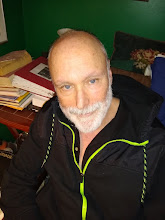
The artists of the Imperial Jewelry with Doug Holder (Center)


Imperial Jewelry: A new store that displays the art and craft of local artists.


By Doug Holder


 Medford Street, between Union Square and Ball Square, is sort of a forgotten neck of the woods in our city. As the gentrification of our burg progresses and speeds to the inevitable displacement that always happens at times like these, the city is taking some action. They are providing help to fledgling businesses so they can survive in a rapidly changing Somerville—a lofty goal to be sure. Adriana Fernandes, a Community Engagement Specialist for the city of Somerville, is a face of the city—who is helping Imperial Jewelry at 499 Medford St. have a fighting chance in the “new” Somerville. Fernandes is helping the new owner Cleuder Morias, negotiate the shoals of a new language (Morias recently arrived from Italy), as well to encourage his outreach into the community. Fernandes told me; “My role is not just about business, but about changing lives.”


I was introduced to this new enterprise by enamel artist Barbara Marder. Marder is a former art teacher at the Kennedy School in Somerville and currently has a space at the Artists Asylum outside Union Square. At the Kennedy School she supervised students who created a mural that involved glass enamel that is still on display today. Marder, who trained at Skidmore and Boston University, works extensively with enamel, and a lot of her enamel jewelry is on display at the shop. I purchased one of her inexpensive brooches for a friend of mine—and she immediately adorned it on her coat. I say that is a  strong endorsement. Marder has also produced enamel on copper bowls and paints landscapes of the Berkshires, and other scenes. Marder tells me she is hardly a provincial artist, as she has a following nationally and internationally.


Another resident artist at the shop is Consuelo J. Perez. Perez describes her genre of arts as “Trash to Treasure.” She recycles items like bottle caps, key rings, and other items into off the grid jewelry, brooches, zipper earrings, etc… that are displayed at the store. Perez is a longtime Somerville resident and works from a home studio. She sees the neighborhood changing rapidly, and is glad there are still venues for her work. She has also displayed her work at the Somerville Open Studios, and other events that the Somerville Arts Council offers.


The third artist I spoke to was Jennifer Weigel. She describes herself as a conceptual artist, photographer, and painter.  She recently relocated from St. Louis to Somerville to be near her boyfriend.  She described her painting as Monet-influenced, and she works with oil and acrylic.  A few of her paintings were displayed at the shop. She told me “I am and identity-based artist. I work with costumes, gender identity, etc… “ Weigel has had exhibits around the country, like the ARC gallery in San Francisco and others.. She continued, “I consider myself a social  and environmental activist, and a feminist. My work reflects that.”


Weigel and this band of artists have plans.   They will have an open house event on Saturday January 31st from 1-4PM
.  For more info about the gallery call: 857-417-6631.

Thursday, January 01, 2015

Jim Baab: A Somerville photographer who sees the “naked” possibilities.


Vegetarian Nudes


Jim Baab: A Somerville photographer who sees the “naked” possibilities.

By Doug Holder

Photographer Jim Baab is a man who sees the naked possibilities in both the human and vegetable form.  This Prospect Hill Somerville resident met me at the Bloc11 Café in Union Square to discuss his unique brand of photography.

Baab told me that he and his wife moved to Somerville in 1999, and lived in the reconverted church (Built in 1887) next to the café. Later they bought a home and put down roots in the ‘Ville. Baab told me he feels right at home with the artistic community in Somerville.

Baab, who has previously worked in the Film and Video Department at Boston University, works with pictures he has posted on Instagram, that he took with his digital camera. Baab said “They can be pictures of my garden, common everyday objects around the home, etc…” One of his projects is titled “Vegetarian Nudes.”  This was inspired by the photographer Edward Weston. Baab started this project back in college after taking a Photo1 class.  Now, you may stalk the aisles of Market Basket to find vegetables to cook, but Baab is a bird of a different order. Baab use vegetables to photograph the human form. He uses things like a Brussel Sprout that makes for the elegant back of a woman’s head. And while you adorn your salad with a Bell Pepper, Baab turns it into a sensuous, curving back—and-- me thinks, with a hint of the crack in the lower back.

But Baab works with the real thing as well. He has a project titled “Palm Spring Nudes,” in which he photographed fine art models at Palm Springs in California, a few years back. Baab told me: “I like to photograph with natural light. Actually, for me, overcast days are the best for shooting.” Baab is also attracted to strong lines, shadows, structures and distinct shapes—all of which the human form evokes or encompasses.

Baab said that he studies with Karen Rosenthal. Rosenthal, according to Baab, explores what she has coined the “Human Landscape,” and that’s what Baab is intimately involved with—here—in the landscape—of the Paris of New England.

Wednesday, December 31, 2014

Granting AGNI More Room to Grow


Granting AGNI More Room to Grow

By Emily Pineau


    AGNI Magazine (located in Boston University since 1987) was founded in 1972, and has been dedicated to its history ever since. In fact, the editors are proud to note that the 2014 Nobel Prize winner Patrick Modiano was first published in English in AGNI 10/11, and last year’s National Book Award finalist Cynthia Huntington appeared in AGNI 7. This 42-year-old literary magazine publishes poetry, fiction, essays, reviews, interviews, and artwork twice a year in print and biweekly online. Now as 2015 fast approaches, AGNI has been given a chance not only to stretch its literary limbs, but to also, in a sense, be reborn.

    Recently The National Endowment for the Arts awarded AGNI with a grant of $20,000, which is twice as big as the grants received in recent years. Senior Editor Bill Pierce says, “In 2014 we were able to go up 50% from the prior rate [that we pay our writers] due to the [past] $10,000 grant, but we weren’t sure if we’d be able to sustain that.” Due to this $20,000 grant, the magazine is now able to double the amount they pay writers for their work. This substantial increase from past years also supports the magazine’s social media, which has helped it gain subscribers. AGNI has a considerable Twitter presence, is active on Facebook, and has digital versions of the print magazine available.

    During a time where the Internet is starting to dominate the publishing industry, AGNI is embracing this fact by upholding and improving their strong web presence. Pierce explains:

    "We are not scared of this new era—we publish as much work exclusively on the     web as we do on the print magazine. We are focused on making our digital     presence reflect our print presence. The idea is to not have the digital drain the  print. They feed each other."

AGNI is not trying to be something they’re not, and they do not want to stray too far from their roots. The goal is for their website to be accessible to the public and to be more like a companion to the print version of the magazine. So, to pursue this quest, AGNI Online is being launched with a new design in early 2015. This new design rebalances the site so that the print magazine and the digital content are equally visible.

    AGNI looks for ways to build their community, engage them, and make them feel like an intricate part of each issue. The new issue—AGNI 80—features Erica Funkhouser, Tony Eprile, Anna Journey, and many other notable and talented writers. Also, the art feature by Rosamond Purcell showcases chocolate Oscars hanging out amongst various landscapes and appearing to be quite human-like. This is just one of many examples of how this issue comes to life, and how AGNI continues to create new boundaries, move the soul, and make new connections. As Martin Rock writes in his poem “Portrait of a Sixteenth-Century Etching of the Body,” it is “Not the word that changes,/ but the chambers that move/ around it” (p.76). The heart of AGNI is still hand-stapled, but its digital windows are angled towards the future.

***** Emily Pineau is an intern at AGNI magazine, and an English major at Endicott College in Beverly, Mass.
................................................................................................................................................

If you would like to support AGNI, you can donate (safely) here:
https://www.bu.edu/agni/donate.html

If you would like to subscribe, you can do so (safely) here:
https://www.bu.edu/agni/subscribe.html

Sunday, December 28, 2014

Black Stars Poems by Ngo Tu Lap Translated by Martha Collins


Black Stars
Poems by Ngo Tu Lap
Translated  by Martha Collins
and Ngo Tu Lap
Milkweed Editions
Minneapolis, Minnesota
ISBN: 978-1-57131-459-8
110 Pages
$16.00

Review by Dennis Daly

Sometimes old memories and the ephemeral present don’t collide; rather they embrace in a rhythmic dance through a dream-like planetarium where these celestial bodies both repulse and attract. This phenomenon manifests itself elegantly in Black Stars, poems by Ngo Tu Lap as translated from the Vietnamese by Martha Collins in collaboration with the author.

Lap’s words evoke the Vietnam conflict and his childhood in that country gently and in a circuitous but insistent way. His memories seem to emerge from a rich Manichean darkness, take on the shine of life and then submerge to invisibility again. At times the metaphoric landscapes become the only tangible reality, absorbing not only sadness and suffering, but the persona’s self.

Early on in the collection the poem entitled Women from the 1960s (1) conjures up remembered images of childhood, both basic and affecting. A bit of background: Lap was born in 1962 and lived in a town sixty miles from Hanoi. The poet says,

The first women I ever saw
Were huge and dark, with warm breasts
And tired eyes like sad stars

While I played with a snail
In a bomb shelter flooded with rain
The women disappeared without a sound

Thirty years later I still see them
Millions of breasts cut from suffering bodies
Fallen to earth like young coconuts
Full of milk even in the grave

In Lap’s poem Darkness he develops a textured geography redolent of sweat and filled with life. The wording (read lively translation) drips wonderfully and sensually onto the page. Darkness, as used by Lap, delivers freedom of memory and imagination and acts as a life giving prod to continue toward whatever end we seek. Here’s the heart of the piece,

Though ravens flock and thieves prowl
Though wicked intrigues hover above me
Though droning insects sadden my heart
I still choose you, darkness, as my companion

With you, the snails of childhood crawl out again
Eyes, both strange and familiar, close together—
Like heat suffused with the odor of sweat
Darkness quietly honors my faithful smile

Lap appends invisible heavenly pulsars to his own body and gives them substance in his title poem Black Stars. The circularity of the self and its subjective infinity appear and reappear from childhood memories of war time. Lap creates a tension between present and past. They orbit and, quite often, inform one another. The poet’s field of view expands exponentially,

There, in the village, a rooster is crowing
In the scent of burning rice-fields, dew is sparling
Over there is my mother
There, my country

On guns and plows, millions of diligent stars
Are flying in silence
Black stars, black stars

One life might have drifted away
But one has returned

In many of these pieces I’ve noticed a continuous rising and falling motion as if to offset life’s vertigo and develop direction. Tears, coconuts, rain, friends, leaves, years and hair succumb to gravity, while wind, blood, stars and the road rise to the heavens. This lyrical motion mimics breathing and gives the collection its magical momentum. Lap’s poem Viet Blood opens with this versified rush,

Sometimes it rises excited on lips
As red as the sun of Vietnam
Sometimes it flows silently
Like mud, dark in veins
While I travel this vast land, these long rivers

Clouds spread white mist through the border sky
My sweat flows into deep chasms…

And later in the same poem, Lap’s flow of words fall again,

It didn’t choose me, I didn’t choose it
Viet blood
Is like life, love, death
Sometimes hardening into resin

Green leaves keep flowing down the hill
Where my friend has fallen

Lap employs a “well” metaphor to get at the nature of mortality in the poem entitled Empty Well. Everything collapses into non-existence and silence and the silence is deafening. Yet this well cannot be quenched. Is it circular? Does it give up its dead? The poet seems to meditate on this conundrum,

Like eyes in a decomposing skull
Black wells
Look into the earth
Black wells filled with silence

Beneath the acacia tree
Cai flowers withered long ago
Onion stalks have yellowed
Cannas have gone wild

Rainwater keeps falling

Lap delves into war’s horror in his poem Praise for the Dead not with squeamishness but with distance. His response to vulture-like demons feasting on dead carcasses is one of thoughtful sadness. War’s glory and nobility rots in the frozen past, along with unfinished dreams and squandered potential. Lap handles his remembered and imagined goblins with not a little irony. He concludes the piece this way,

I used to be very sad
And afraid
Of their sharp white teeth
Their drunken eyes gleaming like mercury
Their frozen kisses sharp as bamboo knives

I used to be very sad
But who knows, maybe I’m lucky

Thank you, stinking corpse:
Because of your nobility
I now have fewer friends

Lap’s poems flower into movingly phrased English in this not-to-be-missed collection. Martha Collins and Milkweed Editions deserve much praise for this inspired poetic collaboration.

Wednesday, December 24, 2014

NICOLE TEREZ DUTTON NEW POET LAUREATE OF SOMERVILLE!


Nicole Terez Dutton


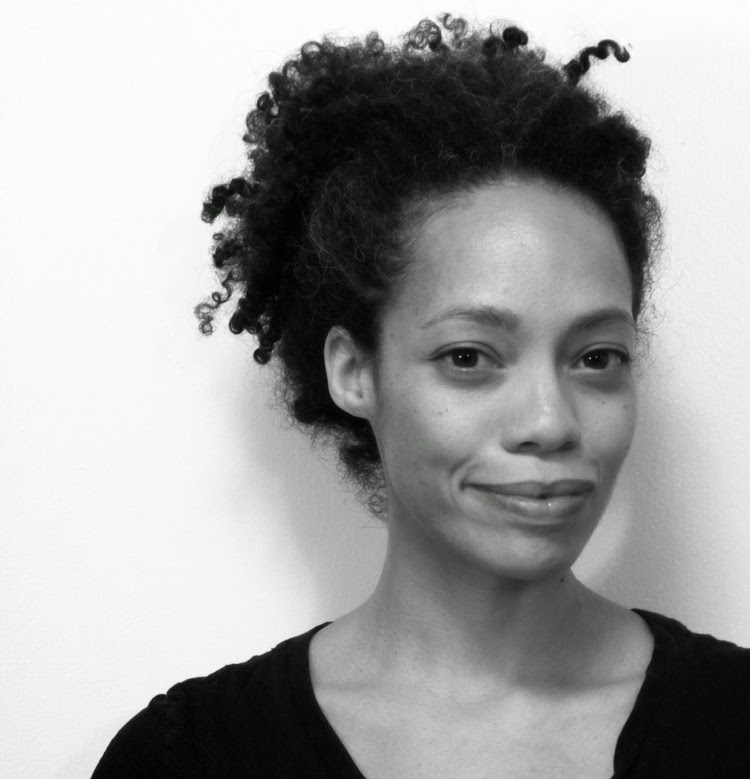
Nicole Terez Dutton's work has appeared in Callaloo, Ploughshares, 32 Poems, Indiana Review, and Salt Hill Journal.  Nicole earned an MFA from Brown University and is currently serving as the the 2013 Dartmouth Poet in Residence at the Frost Place. She has been awarded the fellowships at the Fine Arts Work Center, Bread Loaf Writers’ Conference, Cave Canem and the Virginia Center for the Creative Arts. She is the winner of the 2011 Cave Canem Poetry Prize for If One Of Us Should Fall.  She lives in Somerville, Massachusetts and teaches at the Solstice MFA Program at Pine Manor College and Grub Street.

  The panel that selected Nicole consisted of  Somerville Arts Council Director ,Greg Jenkins, Ibbetson Street Press founder and Arts Editor of The Somerville Times, Doug Holder, Tapestry of Voices founder, Harris Gardner,  Poet Linda Conte,  Poet Bert Stern,  Mass. Cultural Council, Charles Coe, Grolier Poetry Book Shop owner, Ifeanyi Menkiti, and  Interim Director of the Somerville Library, Ron Castile. The panel and position were founded by Harris Gardner, Greg Jenkins and Doug Holder.


The finalists were: Gloria Mindock, and Ralph Pennel.

Sunday, December 21, 2014

Interview with Christopher Busa: Founder of the Provincetown Arts magazine


Interview with Christopher Busa founder of Provincetown Arts Magazine

With Doug Holder
Christopher Busa, founder and editor of Provincetown Arts magazine, was born in New York City in 1946, the son of a painter who participated in the formative years of  Abstract Expressionism. Spending part of every year in Provincetown  since infancy, he slowly absorbed its mythology as a place where artists  and writers gather to work and live. After graduation from the University of Minnesota, he studied for a year in Paris at the Sorbonne, and then pursued a Ph.D. for ten years while teaching English at Rutgers University. His interviews and profiles of artists and writers have appeared in the Paris Review, Arts, Partisan Review, Garden Design, and other magazines. Two published pieces were reprinted in Interviews and Encounters with Stanley Kunitz, edited by Stanley Moss (Sheep Meadow Press). Another essay, “Being a Great Man Is a Thesis Invented by Others,” appeared in Such Desperate Joy: Imagining Jackson Pollock (Thunder’s Mouth Press). He has curated exhibitions and written catalog introductions for many artists. He co-edited and introduced the Erotic Works of D.H. Lawrence (Crown, 1989), the subject of his dissertation. He is the author of The Provincetown Artists Cookbook, with Written Sketches of the Artists Creating a Contemporary Portrait of the Town as an Art Colony (Abingdon, 1988).Over the past 20 years he has taped several hundred interviews and created files on over 1000 artists and writers in preparation for a comprehensive title about the century-long history of the art colony.  His WOMR FM 92.1 radio program, “ArtTalk,” airs three times a month over the past five years, introducing new and established artists, performers, and writers discussing their current project and what moves them to do it.He is a member of the International Association of Art Critics (AICA), based in Paris, and he is one of 16 members of the American New England Chapter, which selects two dozen “Best of” exhibitions annually in museums, commercial galleries, and university art galleries in painting, sculpture, and architecture. He is on the board of the Norman Mailer Society and on the editorial board of the Mailer Review,published by the Society and by the University of South Florida. He teaches one semester a year in the low-residency Graduate Program in Creative Writing at Wilkes University in Pennsylvania.

 I had the pleasure to speak to him on my Somerville Community Public TV show: Poet to Poet: Writer to Writer.

Doug Holder:  You have created over 1,000 interview files of artists, writer and poets that will be the basis of a memoir of years in Provincetown. Tell us about this project.

Christopher Busa: That book is going to be two books. The memoir I am working on is titled: Provincetown Arts. Many of the pieces that will appear in the book have been published already. I am editing it for redundancies—repetitions, etc… My motivation to start Provincetown Arts magazine—was well, after 10 years of graduate school at Rutgers University—that brand of a PhD on my hide—made me feel diminished in some odd way. I was the son of an artist who participated in the formative years of the Abstract Expressionism movement, and he taught at many universities. But every time he went to a new university art department there was always a war between the scholars and the creative people. I saw my father suffer. He was a very distinguished professor—many of his students became top artists in the country. I can think of Robert Hass, as one of them. I kind of escaped  just after I did all my work for a PhD. I moved to Provincetown to start Provincetown Arts in 1985. Our magazine has covered all the major figures that have populated Provincetown since then. Provincetown is known as the nation’s oldest art colony. It began in 1899. Originally it was a Portuguese fishing village. It was much like an European fishing village, not unlike the end of the railroad places in France. Those were places where all the artists in Paris would escape to in the summer. They could live cheaply and in a beautiful environment. And Provincetown picked up on that after the First World War. One of the ex-patriots came back and said:’ How can we replace Europe?’ And Provincetown reminded him of Europe, not only because half of the population were Portuguese fisherman, but because the fishermen and the artist were part of the “gift economy.’ Fishermen would give fish to the artists, and in turn the artists would gave them paintings, etc…

DH: Is there still a gift economy?

CB: Artists still barter. For dental work they will give a painting.  There is still a “this for that” sensibility. I grew up watching my father doing that routinely to pay bills. I found it a very natural thing to do. I take the gift economy very seriously. I have seen this with artists, and poets too—like Stanley Kunitz. Poets don’t get a lot of money for their books of poetry—but you got a prize, a teaching job, and other sources of compensation.

DH: I remember living in the Back Bay of Boston in the 70s, in a furnished room, writing, living cheaply. Is the Bohemian lifestyle harder to achieve now?

CB: I always think that it was difficult. The terms just change. When my father was audited by the IRS, they said to him: "You are not selling your painting--you are taking off too much for expenses--maybe this is a hobby." My father replied " No, No--it is a necessity ."  You see artists--either poor or rich--they have a compulsion to work.

DH: What is the difference between the artist and non-artist?

CB: One of the ways to distinguish between a non-artist--is to talk about the way artists totalize. The non-artist can do work that they  don't enjoy for the sake of earning a living.  The artist totalizes--everything he or she wants to do is everything.

DH: Some would claim art is useless...

CB: If it is so useless--then why do we create so much?

DH:  Provincetown Arts has interviewed and published a huge amount of writers since 1985, not to mention a plethora of artists have appeared on your pages. Can you talk  a bit about this?

CB: Our cover subjects tend to be major artists and writers--and they sort of cut through the theme of each issue. We have featured such writers as: Jhumpa Lahiri, Norman Mailer, poets Mark Doty, Mary Oliver, Stanley Kunitz, the filmmaker John Waters, not to mention the artist Robert Motherwell, and many others.

DH: Are all off your features connected to P-Town?

CB: Either they live down the block or they are from neighboring communities.  They have deep roots.

DH: Many people have told me interviewing is an art. How is it an art?

CB:. I couldn't be more affirmative to the question of " Is interviewing an art?" I want to bring out the genius, the genuine voice of the artist--not some secondary rendering. As a son of an artist, I heard my father speak about painting with astonishing vividness. Robert Motherwell published a series of artists writings, including interviews--that influenced me a great deal. To me  interviews are a way to isolate the artists' voice. The interviewer is talking to the face of the moon, and through the interview he can see the dark side too.

DH: You have a memoir coming out about your life ant times in Provincetown--including your experience with Norman Mailer--who you knew since you were 7 years old. Can you talk a bit about this?

CB: Norman rented my father's studio in P-Town.  I would watch Norman come in to work for 5 or 6 summers. He wore work clothes--got into his studio around 10AM--and left about 4PM. He was like a house painter going to paint a house. He really had a profound work ethic. One story that went around was you had to catch Norman in the evening between his 7th and 14th drink--to talk to him. Hey--he wrote 50 books--so he didn't waste a lot of time. Norman was interested in things that altered his state of consciousness. And writing could do that for him. He has an unpublished manuscript about his experiences with cannabis titled Lipton's Tea. Mailer said of Provincetown  "This is a town you can find yourself digging in and fighting for." So he thought Provincetown was worth protecting. He called it the " Wild West of the East." He liked the fact that there was a town in America that people of all types could co-exist.

DH: You knew and wrote about the poet Stanley Kunitz who also had a home in Provincetown.

CB: I wrote one essay about his garden. How he started this garden from which was once a barren sand dune. He terraced it--like stanzas in  a poem. He worked on this garden for two years, in many ways like he worked on a poem.

Friday, December 19, 2014

Ibbetson Street Press Lifetime Achievement Award--Gloria Mindock

Gloria Mindock


The Ibbetson Street Press Lifetime Achievement Award has been awarded to many prestigious, and community-- minded poets, publishers and writers over the years. Here is a list:


Louisa Solano ( Former owner of the Grolier Poetry Book Shop)

David Godine ( David Godine, Inc.--publisher)

Jack Powers  ( Founder of Stone Soup Poets)

Frank Bidart ( Renowned Poet and Critic)

Afaa Michael Weaver ( Poet- Tufts/Kingsley Award-winner)

Robert Pinsky ( Former Poet Laureate of U.S.)

Robert K. Johnson ( Poet, first Ibbetson Street Press poetry editor)

Most of these Awards were presented at the Somerville News Writers Festival from 2003 to 2011. The winner is given a small cash reward, and a plaque. 

Gloria Mindock is being awarded this honor for her long years as an editor, publisher, director, poet, and her commitment to community, and grassroots organizing. Gloria is the founder of the Cervena Barva Press,  http://www.cervenabarvapress.com ,edited the Boston Literary Review for many years, headed an award-winning theatre troupe, and is a widely published poet and author.

Further details will be forthcoming.....