Monday, September 26, 2005


Jim Kates and the Zephyr Press


Probably the most significant of small presses birthed in Somerville, Mass. is the “Zephyr Press,” (now based in Brookline, Mass.) that was founded by the late Somerville publisher Ed Hogan. Hogan, started the much-heralded “Aspect,” magazine in the 1970’s. In 1980 he and a group of his editors formed “Zephyr,” and for seven years the press published a small but significant list of poetry, fiction and non-fiction. In 1990, Zephyr published its hallmark collection of Russian poetry: “The Complete Poems of Anna Akhmatova” translated by Judith Hemschemeyer. After this collection of work by this groundbreaking early 20th Century maverick female writer, other titles from Russia followed, as well as the first anthology of Ukrainian writing in English, “From Three Worlds.” With the untimely death of Hogan, Kates, an old friend of Hogan’s, assumed responsibility for the press and relaunched it in 2000. Since then Zephyr has published numerous books of translations, including the work of Nobel-nominated Chinese poet Bei Dao. Zephyr also has an imprint, “Adventures in Poetry,” that publishes fiction and poetry, and they cooperatively publish a British-based journal “Modern Poetry in Translation.

To interview publisher Jim Kates is no problem because he is an affable man, who seems to have an endless supply of information about the “Zephyr Press,” and the literary world at-large. Kates describes “Zephyr,” as an “alternative” press, an alternative to the commercial presses, who Kates feels has all but abandoned serious literature. Kates realizes that running a “small” independent press is usually a money-losing and often all consuming undertaking. He doesn’t make a living running Zephyr, and the press lives “hand to mouth,” from grants, be it state, federal or private. Zephyr only has one paid employee on staff, and now its office is based in Brookline, Mass.; although it makes no secret of its Somerville roots. The late Ed Hogan, the Somerville publisher was according to Kates “...a child of Somerville, and Somerville was an essential part of his vision.” Unfortunately when Hogan died in a freak canoe accident Zephyr was forced to move to Brookline.
Asked to remember what the Somerville literary scene in the 1970’s was like, Kates’ memory was somewhat cloudy. However he did mention his memory of the “100 Flower Bookstore,” and Hogan’s wife June Gross’ lit mag. “Dark Horse.” Somerville in the 70’s and 80’s was not like the gentrified city it is today, Kates said. He remembers one poet who got a Cambridge PO BOX, so it wouldn’t be known that she lived in Somerville. “It just looked better to be in Cambridge,” Kates said.
Since Zephyr published the Akhmatova anthology many subsequent books on the great poet have hit the market. This anthology according to Kates, “opened up the gates,” for the others. Later, June Gross, inspired Kates to publish an anthology of contemporary Russian poets, and more recently Zephyr published the acclaimed Chinese poet Bei Dao. Dao, was a member of the dissident “Misty” poets group in China and has been a champion of Chinese writers. Dao often sends promising Chinese writers ‘Zephyr’s” way. Zephyr published a collection of Dao’s essays concerning his dislocation from his motherland: “Blue House.”
Surprisingly, American readers are buying Chinese poetry. Another popular title of the press is: “Iraqi Poetry Today,” that gives Americans a much needed window into Iraqi culture.
Kates and I could have talked much longer. He had a plethora stories about the fiction titles the press has released, and the translation group he is part of. Kates’ enthusiasm is contagious, and after speaking with him I found myself brainstorming for my own small press. Kates brings me back to my belief that a man or a woman who has a true passion for something, is a very lucky person indeed.


Doug Holder

Saturday, September 24, 2005


William Taylor, Jr. (http://www.sunnyoutside.com ) POBOX 441429 Somerville, Mass. 02144.


I know of William Taylor, Jr’s work through the bi-coastal literary journal Poesy Magazine. So when the publisher of the Somerville small press “sunny outside,” Dave McNamara, sent me a broadside of his poetry I dove right in. McNamara, a recent graduate of the Emerson College publishing program, is involved with a lot of different projects, and he likes to experiment with format, paper, etc... This broadside is really a thin chap, with ordinary gray cover stock, and waxy transparent paper inside. This paper makes for faded print. This may be for affect- but I find it a bit distracting. However... the poems are excellent. Taylor paints a well-studied portrait of a stoic old man, as well as a study of the arcane pleasures of an “old man’s bar.” The bar portrayed in “Like Winter,” captures the dark refuge that only a venue like this could provide:
“...inside these walls/ time moves slow/ and we have all/ the necessary things/ smoke, drink,/ and silence/ a little talk and some/ gentle laughter/ all of us hiding/ from something/ waiting for yesterday’s love/ and tomorrow’s unemployment/ checks”/ All I can say is : “Pour me another, Joe,” as I wrote this review in such a place; situated on an undistinguished stretch of Somerville Ave, far from the hip environs of Davis Square in our fair city. I advise you to go to http://www.sunnyoutside.com and keep up with their talented stable of writers.
Doug Holder

Thursday, September 22, 2005


This is a poem about the disaster in New Orleans by Ibbetson Street Press Arts Editor Richard Wilhelm that I plan to read at the Katrina Relief Reading Oct. 18 at the Old South Church in Boston at 7PM. --Doug Holder


ELEGY FROM THE SECOND LINE

After the flood—
a bitter drink,
crimson words,
the poor herded at gunpoint—
slack faces of the waiting, waiting
for relief or for death—
sky empty of everything
but the final notes
of a brass band dirge
falling across the lake.

--Richard Wilhelm

Wednesday, September 21, 2005

Please check out this event my good friend Harris Gardner has organized:


One People- A Benefit for Katrina Relief Fund/American Red Cross

TAPESTRY OF VOICES
Presents:

ONE PEOPLE
A Benefit for Katrina Relief Fund/
American Red Cross

OLD SOUTH CHURCH
(Corner of Dartmouth and Boylston Streets)
Tuesday, October 18th, 2005 - 7:30 P.M.- 9:30 P.M.
Event Coordinators:
Harris Gardner & Ellen Steinbaum

( Each participant will read one poem)

Participants:

American Red Cross (T.B.A.) Elizabeth Lund
Kaji Aso Fred Marchant
Alex Beam Gail Mazur
Lisa Beatman Elizabeth Mckim
Frank Bidarrt Askold Melnyczuk
Kevin Bowen Ifeanyi Menkiti
Bob Buckley Joanna Nealon
Shari Caplan State Rep. Byron Rushing
Charles Coe Diana Saenz
Nguyen Ba Chung Lloyd Schwartz
Diana DerHovanessian Lainie Senechal
Alden DiIanni-Morton Don Share
Elizabeth Doran The Rev. Canon Peter Southwell-Sander
Leslie Epstein Ellen Steinbaum
Harris Gardner Sandra Storey
Regie Gibson T. Michael Sullivan
Carolyn Gregory The Rev. Dr. Nancy S. Taylor
Doug Holder Dan Tobin
Walter Howard Tino Villanueva
Brian Scott Kelley Rosanna Warren
Mel King Afaa M. Weaver
Irene Koronas Carol Weston
Danielle Legros-Georges Marc Widershien
Frannie Lindsay Sam Yoon
Lois Lowry

Special thanks : Old South Church - Ivy Associates, Real Estate- Townsend Associates Real Estate - Ellen Steinbaum- Charles Coe- Pen New England- Lainie Senechal- Doug Holder-Fred Marchant -The William Joiner Center at U. Mass Boston- and The Media.

SUGGESTED DONATION: $10.00 - Whether you donate $1.00 or a $1,000, you are very welcome.

Monday, September 19, 2005

A report from Irene Koronas about "Breaking Bagels With The Bards," a group of poets that meet in Harvard Square every Saturday at 9AM in the basement of Finagle-A- Bagel. Please join us!


carrying our stories in front pockets like baseballcards or marbles; we compare, exchange; the value ofeach exchange depends on the popularity of theplayers, their home runs and with marbles, the unusualmarkings that make a poet's life gleam. we flick ourmarbles into designated holes while clicking othersout of the way. team games played alone.on Saturday we exchange family (and other) influences.my life is not full of extraordinary stuff and i don'ttalk much about my early years. i figure if you readmy poetry it is not hard to come to an understandingof who i am, of my being a first and second generationAmerican. like so many other families who work theirtails off to help their children lean forward, we haveout faults. i prefer expressing my gratitude for beingborn here (yeah, i know it sounds corny and sometimesit is not politically correct) so i may keep my mouthshut when it comes to imperfections. i listen to thepoets exchange stories, their influences spread overthe table, offering us a chance to come to anunderstanding of each other. listening is likecollecting baseball cards or marbles. i keep a jarfull of those old round glass balls in the back of oneof my kitchen cabinets. once in awhile i hold one inthe light to marvel at the reflections. i figure itain't right to discus other people's personal storiesin public, so my childhood and yours are in jacketpockets with lucky stones and pressed flowerswords caught:chaos theory (poetry magazine)bathtub gin (another magazine) cool names)talking in-lawssome kind of fleasbohemian intimacyfinancing the American revolution (hyam soloman)family politics and pornographymiserable failuresbraggingyour as good as your weakest linkshe impressed herselfan exercise in scatology

Sunday, September 18, 2005

My Blog: "Boston Area Small Press and Poetry Scene" just got a ringing endorsement from Karen Wulf Executive Director of the literary organization "PEN NEW ENGLAND."

"Just wanted to say that you're site is great, and thanks for keeping us in the loop..."

Karen Wulf Executive DirectorPEN New England Emerson College 120 Boylston StreetBoston, MA 02116 (617) 824-8820 tel (617) 519-0882 cell

Saturday, September 17, 2005

LO GALLUCCIO REVIEWS....

HOUSEKEEPING

Poems out of the ordinary
By Philip E. Burnham, Jr.
63 pages
Ibbetson Street Press

http://www.ibbetsonpress.com/

One of my mentor poets told me as a precautionary note, that writing a poem is a thankless task. He wasn’t bitter about creating beauty, just realistic about how much the world might care. In Philip Burnham's book, "Housekeeping" –"Poems of the Ordinary" we find a poet who is exquisitely thankful for the world and the poetry of it.
For an elegiac book, it is full of warmth and cheer. For a cheerful book, it is remarkably profound about loss, but never tragic. And for a book about the ordinary, Burnham exerts himself to write in extra--ordinary ways.
Thought I tend to like the jagged and surreal, I was easily taken up by the consistently elegant tone of Burnham’s poems. His rhyme schemes and imagery, if sometimes conventional, never fail to inspire. In "How Much Love is There in Laundry?" his last stanza reads:
"With affectionate, gentle knowing hands
Turning each article a careful smooth,
Arranged, drawered away in bureau stands
For naked morning to disclose as love."
There is a lovely ghost in this collection, Burnham’s lost wife, and much of his tribute to the ordinary and to the ethereal is channeled by her memory:
"But you songs for children and for love were
never recorded to be replayed when
You were out of touch, time; their echoes bear
On my hearing as ocean waves wear through
The icy gates of great December’s end
And winter’s opening, songs whisper in
My heart’s good ear where I may often spend
Time’s purse to recall you as I listen."
--Voices of the Dead
We hear inflections of Shakespeare in a poem like this and are captivated.
Perhaps my favorite poem is called, "Birthday Greetings III" which takes its melody from a Mexican Christmas Carol, "Fire in the snow and snow in the fire."
Where I will light small celebratory fire
Candles for you, each one a measure of desire
To hold you, to have kept you still closer to me
So I might not know you within the contraries
You are, fire in the snow, snow in the fire,
You melt, you cool my heart as each season requires
My presence here before some final letting go
Of earth, snow in the fire, fire in the snow."
In his world, there are divine powers in nature and an underlying sense of God. Being a true Boston poet, and on a less serious note, Burnham challenges himself to write about Baseball and God. It reminds me that wonderful Calvinist preacher who described how the world was made with bowling alleys and well, sundry things exalted and mundane I can’t now recall:
"And on the ninth day, God
in his infinite playfulness
Grass green grass, sky blue sky,
Separated the infield from the outfield,
Formed a skin of clay,
Assigned bases of safety
On cardinal points of the compass
Circling the mountain of deliverance,
Fashioned a wandering moon
From a horse, string and a gum tree,
Tempered weapons of ash,
Made gloves from the golden skin of sacrificial bulls,
Set stars alight in the Milky Way,
Divided the descendents of Cain and Abel into contenders,
Declared time out, time in stepped back,
And thundered over all of creation:
"Play Ball"
Yes, indeed. This is a masterful collection for which we should be very thankful.

Lo Galluccio Lo Galluccio is the poetry editor of the Cambridge Alewife. Her work has appeared in Ibbetson
Street, Lungfull, The Somerville News and many others. http://logalluccio.com/

Friday, September 16, 2005

Harris Gardner (Tapestry of Voices) and Ellen Steinbaum ( Boston Globe Columnist) have organized a reading in support of Katrina Relief. It will be Oct 18 at the Old South Church in Copley Square, across from the Boston Public Library. 7:30 PM to 9:30 PM. There will be quite an impressive lineup of readers:

Boston Mayor Thomas Menino
Mel King
Alex Beam ( Boston Globe Columnist)
Frannie Lindsay ( May Swenson Award Winner)
Dianna Der-Hovanessian ( President of New England Poetry Club)
Elizabeth Lund ( Christina Science Monitor Columnist)
Doug Holder ( The Somerville News/Ibbetson Street Press)
Brother Blue
Leslie Epstein ( Director of Creative Writing-Boston University)
Charles Coe( Mass. Cultural Council Award Winner)
Don Share ( Curator Lamont Poetry Room -Harvard)
Steve Cramer ( Director of MFA program Lesley University)
Fred Marchant ( Director of Creative Writing-Suffolk University

Wednesday, September 14, 2005


Watermark by Jacquelyn Pope (Marsh Hawk Press PO BOX 206 East Rockaway, NY 11518 2005) http://marshhawkpress.com/ $13. Jacquelyn Pope's new collection of poetry "Watermark" ( Marsh Hawk Press) is an undeniably melancholy, haunting, and accomplished collection of poetry. Pope's use of language is fine-tuned, clear, clipped, concise and most of all evocative. I was most impressed with the poems that dealt with human relationships. Her imagery beautifully defines estrangement, and the ultimately unknowable entity the "other." In "Mrs. Robinson," ( I'm assuming modeled after that disaffected, booze-swilling cipher of "The Graduate" fame), Pope paints a portrait of an empty woman with chilling precision: " He's fixed her off the page, where she'sabandoned: mid-century,semi-continential. Cold sunlightstabs the medicated air.Too bored to sitand suck the mentholated tipof her malaise, she wondersat the nerve that led him on" (41) In " By Light," Pope skillfully traces a woman's realization that even in what we feel are the most intimate relationships; we are ultimately strangers to one another. It is impressive how Pope uses the most banal of things such as: lamplight, and shadows on a wall to bring the poem home: " ...I sat/ in my own pool of light,/ still wholly/ untranslated into rooms that had/ learned you long ago. Our shadows/ hovered on their walls, dark forms/ drawn across the future./ Time flickered,/ fading from the room the night/ I saw our boundaries were drawn..." (39) When I read the work of some contemporary poets, often I find that the poems are obscure, inaccessible, and I simply can't relate to them. And just as often when I read small press poets whose work is accessible, I found that the poems are too facile and lack the heightened language a poem requires. Pope has written a collection that most of us non-academic poets can understand, relate to, and go back to in years to come. Doug Holder/ Ibbetson Update/ Somerville, Mass. 2004/ Sept. 2005

Sunday, September 11, 2005


"The Art of Writing Poetry." I will be running this workshop starting Oct 18 2005 for six Tuesdays. $105 for single $105 for couple. Call Newton Community Education. 617-559-6999 to register.

Description: Poets want two things: to write compelling poetry, and too see it in print. In this participatory workshop we will develop poetry through creative brainstorming. Feedback will focus on the effective use of language, imagery, and metaphor in the construction of a poem. The instructor will provide leads for publishing and contacts at small presses. Many former students have published their poems for the first time in the course of the workshop. Please bring three poems to each class. Make 5 copies of each. You will have the chance to read your work aloud, and get feedback from other class members.
*** Doug Holder is the founder of the Ibbetson Street Press of Somerville, Mass. He is the Arts/Editor for The Somerville News. His own poetry and articles have appeared in: Buckle, The Boston Globe, The Harvard Mosaic, Arts Around Boston, Poetry Motel and many others. His interviews with Contemporary poets are archived at the Harvard University poetry room at the Lamont Library. He curates the poetry series at the Newton Free Library, and is on the faculty board of "The Wilderness House Literary Retreat."Doug Holder
http://www.ibbetsonpress.com
http://dougholder.blogspot.com
http://authorsden.com/douglasholder

McLean recognized as literary landmark * This article has appeared in the McLean Hospital Newsletter


McLean has often been the subject of works of art, including novels, films, poems and song lyrics. Earlier this year, the Academy of American Poets recognized McLean for its contribution to literature, naming it a national literary landmark. The hospital is one of 31 landmarks to be included on the Academy’s list. Other landmarks include poets' birthplaces, poetry museums and libraries, places of poetic inspiration and sites that commemorate poetry.

"We tried to identify places where people can literally walk in a poet's footsteps," said the academy's executive director Tree Swenson. "We received hundreds of poetry landmark nominations, and we heard from people in all fifty states. We are excited to recognize points on our country's physical landscape, from Maine to Georgia to Montana, which are important to the cultural landscape."

McLean was chosen for the inspiration it gave to poets Sylvia Plath, Robert Lowell and Anne Sexton, all of whom had ties to the hospital.
Plath’s The Bell Jar and Lowell’s Walking in the Blue are two works most notably inspired by their time at McLean.

"…This is the way day breaks in Bowditch Hall at McLean’s;
the hooded night lights bring out ‘Bobbie,’
Porcellian ’29,
a replica of Louis XVI…"
~from Lowell’s Waking in the Blue

"The use of poetry and writing can be beneficial for those battling a mental illness," said published poet Douglas Holder, a mental health counselor at McLean. "What you bring to the paper can clarify things." He added that poetry allows a person to see behind the surface and to explore humanity instead of the label of "psychiatric patient."

"In spite of mental illness, creative work can be done," said Holder. "McLean is an inspirational place for many. I’m not surprised it has been named a literary landmark."
The 31 literary landmarks are part of a larger project by the Academy of American Poets called the National Poetry Almanac. It can be viewed at www.poets.org.
Doug Holder http://www.authorsden.com/douglasholder

Saturday, September 10, 2005


“Somerville News Writers Festival featured author Hallie Ephron appears at the Wilderness House Literary Retreat.”


One of the readers on the bill at the Somerville News Writers Festival,” (Nov. 13 7PM at the Somerville Theatre in Davis Sq., Somerville, Mass.) is mystery novelist Hallie Ephron. Ephron, along with Donald Davidoff, a nueropsychologist at McLean Hospital, have created a fictional forensic neuropsychologist, Doctor Peter Zak, and investigator Annie Squires. Ephron and Davidoff have written five in a series of mystery/suspense novels featuring these characters.
On a cool, early September morning, poet Irene Koronas and I drove out to the “Wilderness House Literary Retreat” in Littleton, Mass., to attend a casual talk and lunch with the author.
The “Wilderness House Literary Retreat,” is situated high atop a hill in the midst of a scenic nature preserve, which makes for a picturesque setting for these gatherings.
Ephron, who exuded a friendly and unaffected air, said that for many years she denied she was a writer. She comes from a long line of writers. Her sister, the famous Nora Ephron, has been plying her trade for years, and has written many well-received novels and screenplays. Partly out of fear of being compared with her sisters, and partly because she was involved with other pursuits, she put her writing off. But as she put it: “The Genes came into play,” and her writing emerged. Her first project was the writing of “Exit Wound,” an unpublished piece that dealt with the death of a friend’s husband.
Ephron, like Lan Samantha Chang, another festival featured reader, and the new head of the “Iowa Writers Workshop,” took a course at the “Cambridge Center for Adult Education,” to jumpstart her writing. Ephron feels that every novice writer needs to get a bit of encouragement to see them through the slew of rejections they inevitably experience. Ephron got that in a big way when “NPR” broadcast an essay of hers. One thing lead to another and Ephron and Davidoff started to collaborate on the Peter Zak mystery series, that includes the titles: “Amnesia,” “Delusion,” and the most recent “Guilt.”
Ephron and Davidoff plan the book together, and Davidoff offers advice concerning the character, Peter Zak, that he is modeled after. But Ephron stated definitively, that she does the writing. Davidoff describes himself as a “pointy-head academic” more comfortable with research papers than with the treacherous shoals of fiction-writing, according to Ephron. Peter Zak, the wine -snob and antiques aficionado (like Davidoff himself), could not of been fully-fleshed if Ephron did not have Davidoff to consult with. Although Davidoff doesn’t write the book per se, he is an essential part of the process.
Ephron is an admirer of Robert Parker of “Spenser” fame and the well-regarded Boston -area mystery writer Linda Barnes. Ephron is a writer, who likes to schmooze and has numerous friends in the writing community. An activist, in a local writing group” Sisters in Crime,” she also receives a great deal of support from her biological sisters, and regularly frequents “Kate’s Mystery Books,” in Cambridge.
Ephron is a decidedly morning kind-of-writer. She cranks out her 250 words shortly after she wakes. Ephron said that although she cares about her work, she is not the type of writer who takes it too seriously, and is not prone to go off the deep end if things aren’t going well. She believes mystery writing has a “form”, but she doesn’t have a formula. She feels the dogma of a strict formula can make for a dead-on-arrival novel.
Ephron stays away from politics in her writing, but uses everything from her love of cooking to her intimate knowledge of having and being a “Jewish Mother” of sorts. Zak himself lives under the ying and yang of a loving matriarch. Ephron said she feels protective of all her characters...after all they are her “babies.”
Ephron told the group assembled at the retreat that she feels more comfortable writing nonfiction than fiction. Her most recent “How-To” book “Writing and Selling Your Mystery Novel.” (Writers Digest Books), answers many common questions that mystery novelists have in the seminal stages of their career.
Make sure to catch Ephron and Davidoff read at the Writers festival this November!

Doug Holder * for more information about Hallie Ephron and “The Somerville News Writers Festival,” go to http://www.somervillenewswriterfestival.com

Monday, September 05, 2005

Newton Free Library Poetry Series Begins Tuesday Sept 13 7PM 330 Homer St. Newton, Mass. Open Mic to follow features.


Poetry Series Features Jacquelyn Pope, Sandy Weisman, Suzanne Berger & Open Mike
The Library Poetry Reading Series will present Jacquelyn Pope, Sandy Weisman and Suzanne E. Berger reading their poems on Tuesday, September 13, 7:00PM. The reading will be followed by an Open Poetry Mike with a limit of one poem per reader. Come early to sign up.

Pope is a poet and translator whose first book of poetry, Watermark, won the Marsh Hawk Press Poetry Prize for 2004. An editor for Houghton Mifflin, her poems appear in The New Republic, Agni, Gulf Coast and other journals.

Weisman is a published poet and visual artist who creates artist books. A member of Barbara Helfgott Hyett’s poetry workshop, she works at Massachusetts College of Art and is co-director of the Center for Art and Community Partnerships in Boston.

Berger, poet, essayist and teacher, is the author of a book of poetry. These Rooms, the collection Legacies and Horizontal Woman, a memoir about being disabled by back injury; this received world-wide notice. Among her honors are a MacDowell Colony residency and a National Found. for the Advancement of the Arts award.

The fall series, coordinated by Doug Holder, continues on October 11 and November 8.

Tuesday, August 30, 2005


On Friday Sept 2 2005 we are going to have Louise Reynolds as our guest at "The Somerville News " editorial meeting at the Diesel Cafe in Davis Square. Louise is the publisher of this 30 year old+ literary journal ( the new renaissance) of the arts and ideas. Our reporters will be interviewing her about her interesting, and varied career.

Kudos from the literary, library,and alternative presses... "the new renaissance is one of the best literary magazines around. It publishes known and unknown writers from India to Indiana and has only one criterion: excellence. tnr has a unique and vital approach to literature and the arts."-Bill Katz Library Journal
"tnr is for a thought-provoking blend of opinions and ideas, consistently fine fiction and poetry and a staunch commitment to the visual arts."The Christian Science Monitor"

Combine the journals of Foreign Affairs, Artforum, TriQuarterly," and Poetry and what do you have? -a multifaceted publication of arts, literature and thought called the new renaissance."- Small Magazine Review"

tnr is always a wonderful surprise. No library interested in the range of international literature should be without it"-David LyonNew England Foundation for the Arts"


the new renaissance may be based in the Boston area but it has a mailing list with addresses from around the world. With the October 1986 issue tnr continues an 18-year old tradition - - the acceptance and nurturing of writers and artists of disparate styles in order to attain both quality and breadth of vision. The next issue of the new renaissance (#21) will contain not only the usual photographs with the non-fiction lead article (...a piece on toxic wastes in the U.S....witten by Greenpeace program director) and the featured artwork, but alos photos accompanying an essay on the history of the first racially integrated [Broadway] musical, Beggars Holiday."-Matthew F. Witten The Tab

"the new renaissance is a handsomely produced literary magazine of exceptional quality [tnr #21] contains a 25 page essay by Daniel C. Caine entitled "A Crooked Thing" [which] deals exhaustively with "Beggar's Holiday," the 1946 musical comedy that featured Duke Ellington's music and John Latouche's lyrics... There are six full photographs from the show, and altogether the essay documents an episode of Ellington's career with very valuable detail." -Stanley Dance, Book Report Jazztimes

Sunday, August 28, 2005

8/26/ 2005 Meeting.


Irene Koronas reports from "Breaking Bagels With The Bards," a group of poets that meets every Saturday at 9AM in basement of Finagle-A-Bagel in Harvard Square. It is open to all interested poets or writers.


The anticipation of autumn seems to have lent to ourenergy this morning. The bagel bards and the bagelbabes were toasted and ready for a variety of cheesespreads beginning with a plain cream cheese to ajalapeno. i was ready for any and all cool colorfulchanges after the heat of this summer.First i apologize to Elizabeth Doran for misspellingher name last week. I take full credit (oh no, that'sfull criticism) for the miss spelling. miss spellingwas my first grade teacher and she had a heck of atime with me always raising my hand to answerquestions i never even heard. when she caught on to mystraight up arm, she ignored me, hoping I'd just putthat arm down and learn to listen. i needed all theattention i could get, after all, keeping a raised armthere for 20 minutes is quite a feat. (qi gongposition). we briefly discussed yoga, health, metaphysics, andthe benefits of gossip. (huh. not really. we don'tgossip. you know that.) honestly, there was so manysubjects, so many conversations that it was hard forme to focus on any one in particular. so i salsadanced, instead. I need to start recording oursessions, meetings, gathering more information so Ican be more responsible to the greater audience. Ithought I got rid of the idea of writing for othersbut here it is again.After our initial greetings and finding out how ourweek went, (a catchup) we settled into conversations,(some very brief) like cell spits (mitosis)(niosis).ya know I'm going to have to check this out on thecomputer if i want to spell the words right and toknow what it all means. Did i say cell spits or wasthat suppose to be cell splits? yikes. pass the bananasplit with everything on it. Another briefieconversation; Juno taking the eyes of somebody,(another god, i suppose), and putting them into apeacock. Harris thinks it is from the Greek myth,garden of Hesperus. Any help here would beappreciated...it was all over my head today. Myths,science, and ancient movements. as a matter of fact idid have to visit the water closet often, just to getmy bearings. We ended the morning with talk aboutpoetry and some of us exchanged chap books and recentpoems. There was no sea glass this week and no potatochips. We ate our bagels and drank our preferreddrinks in our own noisy friendly arena.caught words (and look-ups)Junochanera (nasa)Marya zaturenska 1902-1982 Pulitzer prize 1938 forpoetry. Lived in Shelburne Falls, Ma.my mythology is shakya real poet is one who connects with a higherconsciousness; writing without a filter. (debatable)you have to believe in your self (or, at least,someone will have to believe in you)sorter dropped outspelling problems (you know who has that problem)gorged the woodvaingloriousnothing worse than a mediocre loveri was old fifteen years ago

Friday, August 26, 2005


The Grolier Poetry Book Shop in Harvard Square has been around for many years. It is one of the very few all-poetry bookstores in the country, and certainly the most respected. Louisa Solano has owned it since the early 70's. The store has seen its share of difficulties, and it has been recently sold. Awhile ago I asked a number of poets about their memories of the shop.--Doug Holder

First let's start out with an interview I did with Louisa that was published in a number of small press magazines.


Interview With Louisa Solano

The acclaimed poet Donald Hall said of The Grolier Poetry Bookshop: " It is the greatest poetry place in the universe." And this may not be hyperbole. Founded in 1927 by Gordon Cairnie, and Adrian Gambet, it was the first bookstore in the Cambridge area to sell James Joyce's Ulysses. In its salad days the likes of T.S. Eliot, Allen Ginsberg, Marianne Moore, and countless other poets patronized this store. Louisa Solano, the current owner, has been connected with the store for over forty years, first as a worker, and later as an owner. Solano changed the original Grolier, to an all-poetry bookstore, probably the most prominent in the country and perhaps the world. Solano told an interviewer that the bookstore was much more than a seller of books. In its prime Solano said the place was ".packed with people, reading books and discussing poetry." Due to escalating rents, the Internet, and the difficulty with competing chain bookstores, Solano has been forced to consider selling this haven for poets on Plympton St., in the heart of Harvard Square, Cambridge. I talked with Solano on my Somerville Community Access TV show Poet to Poet/Writer To Writer.

Doug Holder: What was the straw that broke the camel's back that made you feel you might need to put the business up for sale?

Louisa Solano: I essentially have been supporting the store on my charge card for the past two or three years. I have no real money of my own. It came to the point when I had to pay, and I just couldn't. And also one year there was a very heavy theft in the store, and I couldn't recover from it.This store actually existed on mail-order business for many years. In 1998 the Internet started coming up, and gradually ate up my business. Poetry is the texture of life and language, and if you don't have it on an actual page in front of you, you are losing your language.

Doug Holder: In an interview with a group of Emerson College students you said of the original owner, Gordon Cairnie: "Gordon was famous for his postcards and correspondence with everybody. He never sold books, he never paid bills, and he just wrote postcards. And he was cantankerous. People who would come into the shop would leave insulted. How have you changed things?

Louisa Solano: I don't write postcards, I send emails. I do sell books. I try not to be cantankerous, but admittedly I have my moments.I have Temporal Lobe Epilepsy. I was diagnosed in my 40's. I know people have accused me of looking through them or being a snob. Actually when I am doing this it may very be in the midst of a Petite Mal. People say that I sometimes yell at them or say some really horrible things, but quite frankly I have no memory of it most of the time. It's unfortunate when people have that experience of me, because since I am not aware of it I can't do anything about it. To apologize is to say I am responsible, but I am really not. People don't comprehend how this disease controls one's personality. Sometimes the way you speak comes out like Tourette's Syndrome.

Doug Holder: It doesn't seem that you had warm, fuzzy feelings for Gordon Cairnie.

Louisa Solano: I was often in there when I was 15 or 16 years old. He let me sit in the shop. And as a lot of the younger people came along, he did the same thing. We could project on him the "second father" and things like that. When I first came to the Grolier he was not cantankerous. I understand that he had an accident that changed his personality. Gordon's social life centered on Harvard international students and the B-School. It was a very sophisticated group that hung around the store. So the whole group that surrounded him was urbane and well educated. And you had the students from The Harvard Advocate. At this time there was also a great sense of warmth.

Doug Holder: Could Cairnie be called a snob?

Louisa Solano: Cairnie was very class conscious. Gordon definitely liked people who were upper class, had money, were beautiful. There was a sign on that door that read "No Law Books" "No Text Books". It was very confusing and ugly for the younger people and students who hung out there. When I took over the first thing I did was to take down the signs. I democratized it out of the white male poet syndrome and moved the store to more involvement with the community.

Doug Holder: How as it for a woman to run a bookstore, when it was a mostly male-dominated business?

Louisa Solano: I was chronically, acutely shy. I hardly ever opened my mouth. I never talked. I was the youngest person there usually.I took over the store in Jan. 1974 after Cairnie died. It took me over 10 years of owning the store to get any kind of confidence or raise my voice. People were always saying to me: " Can you please speak louder, we can't understand you!"

Doug Holder: It is common knowledge that well-established, famous poets patronized your store. But how about the BEATS, or poets outside the mainstream?Louisa Solano: Elsa Dorfman, the well-known Cambridge photographer, was one of the employees of the Patterson Society, which basically brought people like Robert Creeleyand Allen Ginsberg to Cambridge. Dorfman was and is a friend of mine, so she provided a Beat scene. Ginsberg happened to be her best friend.Jack Kerouac read at Harvard toward the end of his life. Irish poet Desmond O'Grady shoehorned me into a meeting with him. We went to see him read. The audience was packed with students, waiting for Kerouac to behave like Kerouac. He was inebriated. Afterwards Desmond took Kerouac, myself, and a number of students, to visit (it seemed)every single after hours bar in Cambridge. We eventually walked Kerouac back to the place he was staying. I remember, that same weekend, Sylvia Plath died. We were at Cronin's in Harvard Square and Desmond came in waving a newspaper and said: " She's dead, she's dead, we are now the only remaining poets." He grabbed Kerouac, and Kerouac backhanded Desmond, and said "Don't touch me!" Later, two young men came in and told Kerouac they had "gold", and he staggered down the street with them. That's the last we saw of him.

Doug Holder: What gave you the idea to change the Grolier from a regular to an all-poetry bookstore?

Louisa Solano: First of all it wasn't an all-poetry bookstore. It started out as a Fine Press bookstore. They had quite beautiful, limited, first edition books by Edna St. Vincent Millay, John Galsworthy, and others. When I went in there these books were covered with dust. A second printing of Edna St. Vincent Millay is not worth much to most people. Tastes change. He had a lot of poetry for that time, which made him a leading poetry bookseller on the East Coast. . Gordon changed it from a Fine Edition to a more literary bookstore.When I took over all I inherited was a lot of bills, and unsellable books. I first tried to run it as a general bookstore. I realized if I were going to survive, I'd have to decide what this bookstore represents. After a month of sleepless nights, I decided to make it a poetry bookstore. I felt that was really needed. My decision to make it a poetry bookstore wasbecause of how undervalued poetry was. In this country the only way anything gets respected in this country is by money. Money defines anything that's worthwhile. If I could create a poetry bookstore that actually existed on commercial terms, people would say: "Look its got some worth". And it worked. It influenced the Academy of American Poet to start a National Poetry Month.

Doug Holder: Can you talk about some of the famous poets who visited the store over the years?Louisa Solano: Robert Lowell visited the store twice. The first time I saw him I thought he was a bagman. Octavio Paz passed through here. I had a really wonderful conversation with him in the store. I couldn't believe I was talking psychology with OCATAVIO PAZ. I kept thinking I was going to freeze up, and will not be able to speak. When Seamus Heaney came to town, I noticed a couple with two kids in the Irish section. A little girl turned around and said, " My Daddy (Heaney) wrote this." I thought that was just wonderful. Jorie Graham comes through, as well as Peter Sacks. Donald Hall once said: "I want to be buried under the boards of this store." I said " Not on your life!"

Doug Holder: You started a prize competition and a reading series. Was this an innovation for a bookstore?

Louisa Solano: Gail Mazur started her reading series, and I followed shortly after. She and I actually started the poetry prize together. Yes, it was an innovation. Most stores did not do that. I also started autograph parties. That was a lot of fun.

Doug Holder: What do you view as the role of the Small Press in the poetry world and literary world in general?

Louisa Solano: I happen to love the small press. To me the small press is the supporter of poetry. The small press brings back the adventure. When I first came to the Grolier there were all these pamphlets in the store. I was the first store to carry Language Magazine In fact; I was the first seller to carry many of the small press literary magazines.

Doug Holder: Poetry can bring out the best and the worst in people. You have had a host of difficult and even irate customers in your store over the years. Can you tell me about your experiences?

Louisa Solano: A student came in the store and started to yell at his professor, who happened to be there. He claimed the professor had "stolen his mind." I calmed him down, and took him to the outpatient clinic of a local hospital. That was an interesting event. Another time a young man came into the store half-naked, swinging a tire iron.I had to take it away from him. One man who was totally obnoxious told me: "I have never been treated in such a manner before!' I said: "Wonderful, now you have a new experience!" I didn't want to disappoint the man, so I gave him a new experience.

Doug Holder: Can you name some of your favorite poetry journals?

Louisa Solano: Hanging Loose Tin House, to name a couple.

Doug Holder: Do you plan to write a book about your experiences?

Louisa Solano: Yes I do. People were suggesting I write a memoir of the store, but they were thinking of themselves as a central figure. I informed them the store would be the central figure. They didn't like that. I have been around so long, and I know a lot of "stories" I feel I am going to need a good lawyer before I publish anything. The Houghton Library at Harvard will receive many of my papers.

Doug Holder: Are you a frustrated poet and or novelist?

Louisa Solano: I am a frustrated poet. About 7 years ago I was ready to shut the doors of the store, and do my own work. Then I figured what I was doing was more important than writing second-rate poetry. I very much want to write again when I leave the store.

Doug Holder is the founder of the Ibbetson Street Press and Arts/Editor for The Somerville News. http://www.authorsden.com/douglasholder


I do remember one fine day, strolling in, and seeing two figures seated there, one at either end. Both were poets but "public figures" enough to be recognizable: Robert Lowell at one side, Allen Ginsberg at the other. Each seated so that they need not cast the slightest glance at the other.

John Hildebidle


As a teenager, I went to the store often, before I began to write and then even before my first book. I have a photograph that appears in a small book, OFFERED BY OWNER, standing in front of the Grolier. In the window, a peace sign, an Eberhart book (later he became very very supportive of my poetry and invited me to Dartmouth, was part of why I won a Bouder Writer's award-- I actually visited with him as recently as 1995)

I can't read many of the covers of the books -- one I don't recognize but what I can read is " The Carrier of...Lad...Po by M....? I'm holding a copy of a magazine that I think looks like Lilibulero...Probably in the original I could read more titles. But Grolier Book Shop is clear

I know things change but I'm not very good about change. And today is the anniversary of my mother's life so I feel nostalgic-- I came to Grolier's with her often since we were in the Boston area often, relatives, Brandeis....

I hope somehow Grolier keeps on.


yours: Lyn Lifshin


It's the only bookstore devoted entirely to poetry,
When I first entered the Grolier Bookstore, it was like a new world open up for me. It felt like I was in my favorite friend's livingroom, just having fun browsing through all of her cool books! And now that I look back on it -- I was in one of my cherished friend's livingroom - Louise Solano! At the time, I wasn't even aware of Louisa by name, but I knew that I liked her and I loved her dog. She was very helpful and seemed to know by psychic connection where any author was that I inquired about. Her dog at the time was also cheerful and fluttering about the shop, making the place quite charming as well. There was and still is no other poetry bookstore like the Grolier. It has a history and warmth that goes unmatched in today's technical and competing world.

I have always been quoted as saying that competing in poetry really doesn't make sense. And I must add on that note, that no other bookstore that I know can even compare to the Grolier -- especially in the variety and diversity that is offered in the poetry. Louisa I believe has had much to do with that intensity! I have had the pleasure of knowing Louisa on a personal level as well because I cared for her last dog that unfortunately had a bout of cancer. Louise has many challenges and we seem to share one challenge
that many people often mistake for a mood disorder, namely epilepsy - temporal lobe epilepsy.

Temporal lobe epilepsy affects one's short term memory and moods constantly and it is always a constant battle to concentrate on daily tasks and to keep one's wits in tact. With all of this in mind, Louisa was able to manage an entire bookstore, contribute to the poetry community and offer a passion for the arts that goes beyond what many of the local bookstores even try to mimic. I personally respect what Louisa has done for all of the poets and she has been an inspiration for me as well in a very unique way.

My love and best wishes to you,


Sincerely,

Deborah M. Priestly
Local Cambridge poetess
Co-Owner of the Out of the Blue Art Gallery
106 Prospect Street
Cambridge, MA 02139


It is a little like the Five & Dime store around the
corner from where I grew up in East Baltimore. It
has everything. The Five & Dime was the first inner
circle of heaven when I was a little boy. As a man
in the world of poetry, I have often peeped in the
window of Louisa's store the way I did when I was
nine or so, looking to see what all is there in a place
that has everything. She is a little hard to talk to
some days, just like the guy who had the Five & Dime.
When I see the lights are on but the door is locked,
I know she will likely be right back, or she has had
enough of the unenlightened to need to take a longer
break. There is a certain confidence you have to
have when you go in there, and you have no choice
but to get to know Louisa, her love of poetry and
of pets. If you are lucky you have seen her chase away
prose fans or you have gotten your own dose of her
occasional lack of patience. Under all the toughness
and the ongoing battle with the Harvard dons, there are
the tender Louisa moments, such as when she and I traded
tales of getting older and what health can be. She
looked at me through and above the vinegar facade
to ask, "Are you okay now?" Louisa is sincere in those
moments, just as when she says, "This is not a browsing
store."
Neither was the Five and Dime. Just ask us kids
who got chased away.
Afaa Michael Weaver
(b. Michael S. Weaver)


aka Wei Yafeng"You must be the change you wish to see in the world."--Gandhi

I don't remember any other bookseller, upon meeting me for the first time, immediately identifying a book of mine on his or her shelves. This was well over 25 years ago. Do that thousands of times graciously, as I'm sure she has, and you'll succeed at the otherwise impossible challenge of SELLING poetry for a lifetime, as I gather she has, yes.Kiddies, take note. richard kostelanetz PO Box 444, Prince St.New York,NY 10012-0008

www.richardkostelanetz.com


Many years ago I started organizing poetry readings for Oxfam America,the relief & development agency. The first year we held a marathon reading in a Cambridge church, and Louisa was one of the readers--I believe it was one of the first times she had read her own work publicly.-- Ruth Lepson

I have been at the Grolier Poetry Bookshop many times and it is dear to my heart.My most vivid memory of it is the day I asked Louise to help me locate: "The Battle of Lepanto" by G. K. Chesterton. It is a relatively unknown poem by a poet who is better known at the author of the Father Brown mysteries.When I was a freshman in high school, we did an all school assembly choral presentation of "The Battle of Lepanto". We rehearsed it so often that I still have most of it memorized. But as one gets older, memories do fade and I had forgotten parts of it.
I had searched anthologies in the libraries; did a 'google' search on the internet, looked everywhere. Finally I asked Louisa --- expecting full well that she might never have heard of it.Much to my amazement, she asked no further questions on it, but went straight to a shelf, pull down a book, opened if up to the exact page and presented my beloved "Battle of Lepanto" to me!Since then, Louise has had a special place in my heart and I am eternally grateful to her.--Cora Ott

When I was a high-school aged truant from the Wellesley Public School system, I would often flee to Harvard Square in search of bookstores full of all the things Wellesley lacked.
Part of my specific rebellion against my school, public education, and the world in general, was to sart spelling my name "like a poet would". What I came up with was
r-y-k. The fact that it sent my Born-Again Christian Biology Teacher nearly over the edge just confirmed my choice.

While looking through the shelves that were full of more poetry than I thought possibly existed, I came upon a book called "Trusting Your Life To Water And Eternity", poems by Olav H. Hauge, chosen and translated by Robert Bly. And there, on page 14, I saw the poem "Det Ryk" which was translated on page 15 as "Smoke".

It was proof I existed in the world of poetry.

ryk mcintyre
ryk mcintyrepoet-at-will

When I was an undergraduate in college in the early 80's, I took a poetry course with the Irish poet Richard Murphy, who
was visiting from Ireland. Murphy wrote some significant works back in the 60's, 70's, and 80's and had been friends with Ted Hughes and Sylvia Plath when they were married and living in England (in fact they stayed with him at his farm). Anyway, when I began writing my own poetry 10 years later, I thought of him a lot (he was an excellent teacher, and thought he would have been proud that I was writing and on the verge of publishing my first book), but had no idea where he was, or even if he was still alive. Then one day, when I was browsing in the Grolier, I came across a copy of his selected poems, which I had not seen before. I opened it up, and there was an inscription inside: "Inscribed for the Grolier Bookshop on the 1st October, 1994 -- Richard Murphy". He had been to the shop just a few months before! Reading those words suddenly made me feel that connection to him again, as if he'd left that book for me to find. It was a wonderful feeling for me, and the incident shows, in a small way, how the Grolier has truly been a waystation, or a communal home, for poets from around the world. Needless to say, I bought the book! Regards, Andrew Jantz


Marc Widershien

The first time I met Gordon Cairnie in 1965, he threw me out of his store for smoking. He was ahead of his time. He had a huge beatup couch to the left side of the entrance, with a photo gallery of some of the best living poets, including Lowell, Pound, Jarrell, Williams and many others. I remember meeting William Corbett with whom I had my first disagreement. He said that Pound's legacy would last longer than Eliot's. Time changed me. When I went to visit Pound in August, 1966, I felt transformed, so much so that when I wrote my doctoral dissertation it was on Pound's relationship to French literature. I once asked Gordon about James Laughlin, the publisher of New Directions. Gordon exclaimed, "Do I know Jas. Laughlin? I knew him when he was a kid!!"

It was a tiny tiny store, but it generated so much kinetic energy and inspiration. I put it on a par with the Gotham Bookmart in New York, and City Lights in San Francisco. At Gotham I met Frances Stellof for the first time, and Ferlinghetti later in North Beach, San Francisco. Gordon was the third line of the triangle.

Ezra Pound in his old age said, "It is sad to look back," but it is even sadder when a legacy is not perpetuated. Ms. Solano carried on that tradition for over three decades, and in my opinion, never got the respect she deserved. Many of us had a part in putting her out of business. For that, my deepest regrets. Harvard Square is not the place I once knew. Perhaps I'm the one who changed. But I meet so many serious poets who have never read even half the books on Pound's must reading list, let alone a fraction of the great books on Louisa's shelves. May the future re-discover lost legacies.

Marc Widershien

Having worked in Harvard Square 45 years ago, my feelings about this are as youmight expect. I suppose I was more than a little intimidated by the place as ayoung fellow, though—Grolier's already seemed older than time, the very namesounded medieval, and I was sure that everyone in there had grown incrediblyfamous with age.... I literally can't believe it will ever close. Maybesomeone will buy it.... There was one imminent demise thereof round about themid-sixties, when a toffee-nosed men's clothing store at the corner of Plymptonand Mass Ave decided to expand its rear end. They wound up leaving Grolier, butwith only half its former space. Frank Kramer might have some interestingmemories, since his store was G's neighbor for so long. I'll ask him if I see him soon enough....

Bill Cunningham


Alexander Levering Kern
51 Berkeley Street, #2
Somerville, MA 02143
617-666-8814 akern@ants.edu


Harvard Square on Christmas Eve

-- for Louisa Solano and the people


of Grolier Poetry Book Shop
The door cracks wide and deep
as I dive headfirst into the venerable
bookstore seeking shelter from the slant-
wise rain. Inside the escape hatch I breathe
at last, yet words like water choke
and I gasp for air. Across this aquarium
the owner throws a lifeline and fish food
to a novice learning to swim.
How can I help? she asks
for she sees not simply a customer
but a would-be, may-be poet
casting a net. She fields questions,
proffers wisdom, lends an ear
to the word emerging in the
modest manger of my life.
After long minutes listening
to a litany she must have heard
rehearsed a thousand times,
she drops a depth charge, breaking the news.
In a bush-whacked economy,
a world averse to verse
and awash in war, the well has run dry.
The doors will close, barring a miracle.
Quietly we return to our business:
shopping and shelving,
browsing and bailing out the flood.
I buy two books, fumble for feeble words
to convey gratitude or hope.
The door closes behind me.
Outside, the homeless tin man
greets me, his sign reporting AIDS
abruptly, like a worn medical chart.
Kern, "Harvard Square on Christmas Eve"


Dreadlocks fly as the sea lion roars
and holiday shoppers indulge their
impulse-buying instincts in megastores,
smiles frozen like creatures of the deep.
Rain falls, and the young man playing guitar
hopes that lightening will strike, for once.
The national security code flashes bright orange,
an empty beacon in this Christmas storm of scarlet
and green.
A homeless carnival barker peddles Spare Change News.
Hey young man!
Have a heart
Haveaheart
Havvaheart
Havaheart.
Christmas eve at the bottom of the sea.

(Published in the "Ibbetson Street Press")


I met Louisa in Jogn Malcolm Brinnin's Modern Poets course at BU, in the front row of his classroom, in the late sixties. It was the term Randall Jarrell died. I didn't yet know who he was, but Louisa, and Brinnin, and It seemed everyone else did. She told me she was working at Grolier, then, and offered to bring me a copy of Horton's biography of Hart Crane, whose "Bridge" we had just studied. I was thrilled. The fitrst book I'd bought at college outside of texts. I refer to it still.

It would be 10 years more until I began to write. The Grolier was my hangout and Louisa, mentor, advisor, friend. By the time I was teaching workshops, I had my students but their texts there, and have their readings tehre as well. I was overwhelmed when Louisa sponsored my first book-signing, and everyone thereafter. The reading at Adams House was my "made it" moment, this small town scholarship kid, strutting her stuff there!

Louisa got me going in a way she could not know. And kept me going. And keeps me still. An inspiration and supporter of us all.

We are all wiser for her labors.

Best,
Barbara Helfgott Hyett

After editing an anthology of poems from the feminist magazine Sojourner, I went to the Grolier & asked Louisa if she had any suggestions as to where to send it. She said, there are 4 midwestern university presses that wouldd publish this, and she told me what they were. I sent the MS to those 4, and Illinois took it!-- Ruth Lepson


I'll never forget bringing City of Poets to Grolier to see if Louisa would sell some for us. I nearly lost my liver when she insisted on reading my poems then and there. Then I nearly floated home after she expressed appreciation and agreed to carry some books for sale. Maybe I never got paid, but I sure was encouraged. I can't imagine that the charm of Grolier will be quite the same under a new owner. I hope there will still be great readings at Adams House. --Linda Haviland Conte


Doug Holder http://www.authorsden.com/douglasholderhttp://www.ibbetsonpress.com/

Tuesday, August 23, 2005


Interview with Susie Davidson: “I Refused to Die: Stories of Boston area Holocaust Survivors..."


In her introduction to her book: “I Refused to Die: Stories of Boston Area Holocaust Survivors and Soldiers Who Liberated the Concentration Camps of World War ll,” Susie Davidson writes: “ The darkest chapter in Modern Jewish began long before and extends far beyond late April, 1945 in the minds of those who lived through the horrors of the Nazi Holocaust. For these survivors, the pain has never changed, diminished, never ended. Endured long ago, yet forever feeling like yesterday, it defines their existence like a gray shroud of gloom that indelibly drapes every waking moment.” (17) In this book the words of the Holocaust survivors and their liberators capture the horror, despair, and the salvation of those who survived this nefarious time in history. In a project three years in the making and partially funded by the Mass. Cultural Council, Davidson has compiled a collection of testimony, poetry, and essays of Boston-area Holocaust survivors and liberators that should be in the classroom, as well as in the home. Hillel Newman, Consul of Israel to New England wrote of Davidson: “In writing this book Susie Davidson advances the eternal message of the most significant event in Jewish history. In doing so, she is fulfilling a most important service to the entire community.” Davidson will be participating in the “The Somerville News Writers Festival,” Nov 13, 2005 at the Somerville Theatre in Davis Square.

Doug Holder: What was the germ of the idea for this project?
Susie Davidson: Well, I have written for the ‘Jewish Advocate,” for many years now, so I have met some of the survivors. I was always very impressed by them. Here were people who experienced things that are even hard to imagine. Yet they were out there contributing.
They were living their lives. They were not self-centered and wallowing in misery. They were doing the best they could and making contributions to our society. They are teachers, educators, scientists, and engineers, etc...They rebuilt their lives. I found that so amazing. In June 2002 I went to the groundbreaking ceremony of the Liberator’s monument in downtown Boston at the N.E. Holocaust Memorial. It was a very nice ceremony, with the mayor and other leaders. Al Rosen, a World War ll vet got up and made a speech that inspired me to write “I Refused to Die...”
There are Holocausts going on in our current times, such as: Somalia, Sudan, etc... It seems that it just doesn’t end. It is a horrible state of human affairs. We all have to do what we can to stem this tide.

DH: Do you view this book as a formal educational text as well?
SD: I’ve included many supplements inside the book with WW ll material. My aim is to market this as a secondary school text. I think you don’t want the kids too young when they read about this. It is important however to place that seed of “awareness” in them.

DH: Was it difficult to get the survivors to relive these horrific memories?
SD: Some people were ready to go. Others I had to convince gently. You don’t want to exploit their experience, but their story must be told. There is nothing like a first hand witness to counteract Holocaust denial. The general awareness must be encouraged. This is not a group of people who are applying to do this. I didn’t pry but I would strongly suggest. I knew these stories would mean a lot to many people.

DH: You must have had a number of emotional outbursts during the course of your interviews.
SD: Sure...in both myself and with them. Almost all of them cried; both men and women. Some cry everyday still. I tried to be stoic, but when I proofread I would cry. These are things that you could not believe one man could do to another man.
This is true of the liberating soldiers as well as the survivors. A few of the soldiers in my book bared their lives around their experience.

DH: Can you tell me about the Black regiment that liberated the camps?
SD: There was an all Black regiment that liberated the camps. In the book there is a poem by Sonia Weitz. She was liberated by a Blackman. She had never seen a black face before. It turns out that the 761st Battalion was an all Black regiment. This regiment included many noted people like Jackie Robinson--the baseball player. They had the highest casualty rate among similar units in World War ll. They were on the frontlines for three full weeks at a time.

DH: Was there a lot of guilt around the folks who did survive. Did they ask “Why me?’
SD: Sure. Why was I spared, while my family members perished in front of me? A lot of it was dumb luck. Crazy things would happen at the last minute that would save them. This is something that you can’t get over quickly. They had to use their heads constantly to fight against the odds. Every minute was a struggle to stay alive. One survivor, Meyer Hack, took a string inside his prison uniform and pulled it every morning to bring blood to his face. This way he would not have to face the gas chamber.

DH: Did you find yourself taking on the role of a therapist to these survivors?
SD: Who am I to take that role with people that I respect so much. I think they were grateful someone was doing this. I suppose this was a catharsis of sorts.

DH: You included the work of a lot of local poets in this book. What does poetry add to this compendium?
SD: A poem often takes a third person perspective. You are taking on a persona when you are writing. So you become a sort-of first hand witness. With the images and metaphors that are used; it brings it all home in a very sharp way.

DH: What are your ambitions for this book?
SD: Right now I am doing a lot of readings. I will be doing a large reading at the Boston Public Library in Nov, as well as reading at “The Somerville News Writers Festival,” Nov. 13. I have been on Channel 2’s “Greater Boston,” show with Emily Rooney. My main objective is to get the information out there.

DH: If there is one message you would want to convey with this book what would it be?
SD: Wherever you see racism or bigotry stand up and say something. We really need to be more active and make the world a better place.

Doug Holder* For more information on Susie and her book go to http://www.irefusedtodie.com/

Doug Holder
Aug 23 2005
“The Somerville News Writers Festival"


Three years. In the world of literary ventures, venues, etc.... this can seem like a lifetime. Tim Gager and I started “The Somerville News Writers festival,” a few years ago, when “The Somerville News,” was undergoing big changes with new ownership and staffing. I asked Tim to join me in this venture because of his reputation for running an excellent reading series for fiction writers, “Dire Reader,” at the “ Out of the Blue Art Gallery,” in Cambridge. Since then Tim and I have presented poets and writers like Andre Dubus lll, Tom Perrotta, Jack Powers, Marc Goldfinger, Deborah Priestly, Robert K. Johnson, Steve Almond, Harris Gardner, and others, at the “Jimmy Tingle Theatre,” in Davis square.
To tell you the truth, I am surprised that we lasted this long. It takes a lot of work, and a cadre of loyal interns, not to mention money, to put on these literary gigs. There is always the clash of personalities and considerable egos, along with the attempts to attract an often indifferent media to contend with. But with the backing of “The Somerville News,” both owners and board of directors, we have presented what we believe is fitting for the impressive literary community Somerville has become.
This year, Nov. 13 2005, to be exact, we are moving to a larger space at the historic “Somerville Theatre,” in Davis Square. We will be housed in a 900 seat theatre, and have an impressive roster of readers. On board will be two Pulitzer Prize winners poet Franz Wright and novelist Robert Olen Butler. Louisa Solano, owner of the famed “Grolier Poetry Book Shop,” will be presented with the “Ibbetson Street Press Life Time Achievement Award,” and poets and writers such as Sue Miller (“The Good Mother”), Alex Beam (“Gracefully Insane”), Lan Samantha Chang, the new head of the “Iowa Writers Workshop,” Susie Davidson (“I Refused to Die...”), Steve Almond (“My Life in Heavy Metal”), Afaa Michael Weaver ( “These Hands I Know), Tim Gager (“Short Street), Hallie Ephron and Donald Davidoff ( “Delusion,”), will read from their impressive body of work.
The music will provided by that gifted poet/singer/ songwriter Jennifer Matthews. Matthews is a published poet, who has just released a critically acclaimed CD “The Wheel,” (Thunda Moon Records).
We are keeping the ticket prices low at $9, to make this an accessible festival. Both Tim and I feel strongly that the rich artistic milieu of Somerville, Mass. should have a festival that aspires for national recognition, but still stays true to its local roots.
*For info. About tickets contact: ctgager37@aol.com The festival will start at 7PM.
Doug Holder

Monday, August 22, 2005


This is a report from Breaking Bagels with the Bards by poet Irene Koronas. Bagels with the Bards meets every Saturday at 9AM in the basement of Finagle a Bagel in Harvard Square. Come join us....

there were four women and two men at our meeting thismorning and that is the first time our gender has outnumbered the men. ellen steinbaum columnist for theglobe graced us with her intelligent, gentle presence.elizabeth dornan joined harris gardner, phillipburnham and me for a four-way discussion of greatimportance. that great important subject momentarilyevades me. (not really)(more later) the last womancame ten minutes before we left and by then i put mypen to rest and was too lazy to retrieve it or toremember her name. please forgive me. hopefully shewill return next week and tell us about her recentmove here from california. i do remember she islooking to join a group of poets who workshop. if youknow of any free writing workshops around bostonplease let me know.words caught:byzantiumwriting communitiesbeing and non-beingwhich doctor "i think continually of those who were great." stevenspenderpersimmonswhole languagesea glass (again or the continuation of the seaglass)(phillip brought me a small bag full from hisvacation)being whatever in america"boston streets are like drunken spiders." said by newwomantaking care of or remedies for writing andconversationinitially, we conversed about writing grants, whoreceives them, how much monetary gain, and what somepoets do with their grants. of course, we coveted thewinnings, winners, wing-its. for myself, i feel content with being 'almost' virtually unknown. whatdoes 'almost' mean? ya got me. it sounds good, so islipped it in, hoping to keep the door open to gloryseeking poetic availability; the poems that peoplelike to give money for, even though i've been toldmany times my poetry can be inaccessible(inexcusable?). i'm ambiguous today so (bare) with me.after we took all the poet laureates to task, rankingthem according to our perfection meter, we began toreminisce about poets we knew, know, not know. wetalked about jack powers and the stone soup venue; thedifferent locations, when we read there, and some ofour experiences with jack. we have concern for hiswriting and what might or might not be done with hispoetry. we have great respect for him and his ongoinghelp to the little poets, and the street poets. welove you jack through good times and not so goodtimes. we discussed, or some of us discussed, (ilistened) about writing workshops with prominentwriters in distant lands like maine, vermont, newhampshire and boston. there was much more conversationbut being the lazy slouch that i am today, i'll signoff with phillips two paintings. the first one is ofsea shells, he and his wife bought when they firstmet(married) and the second one is of the sea,purchased before his wife passed on. being andnon-being, the qi gong movement of energy, the tidecoming in and going out, shells brought in by oceanwaves, their inner luster like the byzantine empire'sinner beauty surrounded by the craggy wall of protection.

Wednesday, August 17, 2005


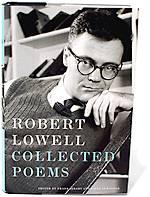
Robert Lowell and McLean Hospital: Waking In The Blue

Robert Lowell, the noted poet, was hospitalized at McLean Hospital on and off for many years. When I worked on Bowditch Hall at McLean Hospital in the early 80's there was a framed copy of his poem "Waking In The Blue" hanging on the wall in our Staff Room. "Waking in the Blue" recounts Lowell's time as a patient on Bowditch Hall in the late 50's and 60's. Some years after I became aware of Bowditch's history I sent a letter commenting on the poem, and the poem itself to the then Poet Laureate Robert Pinsky. He put my letter and the poem in the first edition of his anthology "America's Favorite Poems. " Here it is:


" This poem is significant to me because it takes place at McLean Hospital, where I've worked since 1982. I run a couple of poetry groups for psychiatric patients. Every patient that I talk to can relate to Lowell's line ' each of us holds a locked razor.' The poem captures the privileged milieu of Brahmin mental patients at a very elite hospital in the 1950's. I am stunned by the contrast of the present environment. The poem presents men in their most vulnerable condition, despite all the patrician posturing and trappings." ( Doug Holder) p. 179.


Waking in the Blue
by Robert Lowell
The night attendant, a B.U. sophomore,
rouses from the mare's-nest of his drowsy head
propped on The Meaning of Meaning.
He catwalks down our corridor.
Azure day
makes my agonized blue window bleaker.
Crows maunder on the petrified fairway.
Absence! My hearts grows tense
as though a harpoon were sparring for the kill.
(This is the house for the "mentally ill.")
What use is my sense of humour?
I grin at Stanley, now sunk in his sixties,
once a Harvard all-American fullback,
(if such were possible!)
still hoarding the build of a boy in his twenties,
as he soaks, a ramrod
with a muscle of a seal
in his long tub,
vaguely urinous from the Victorian plumbing.
A kingly granite profile in a crimson gold-cap,
worn all day, all night,
he thinks only of his figure,
of slimming on sherbert and ginger ale--
more cut off from words than a seal.
This is the way day breaks in Bowditch Hall at McLean's;
the hooded night lights bring out "Bobbie,"
Porcellian '29,
a replica of Louis XVI
without the wig--
redolent and roly-poly as a sperm whale,
as he swashbuckles about in his birthday suit
and horses at chairs.
These victorious figures of bravado ossified young.
In between the limits of day,
hours and hours go by under the crew haircuts
and slightly too little nonsensical bachelor twinkle
of the Roman Catholic attendants.
(There are no Mayflower
screwballs in the Catholic Church.)
After a hearty New England breakfast,
I weigh two hundred pounds
this morning. Cock of the walk,
I strut in my turtle-necked French sailor's jersey
before the metal shaving mirrors,
and see the shaky future grow familiar
in the pinched, indigenous faces
of these thoroughbred mental cases,
twice my age and half my weight.
We are all old-timers,
each of us holds a locked razor.

Monday, August 15, 2005


Yellow Pepper Press to release "Wrestling With My Father," in Fall of 2005.


A poetry collection dedicated to my late father Lawrence J. Holder. It deals with the ying and yang of our relationship, that was always informed with love.
My poetry collection "Wrestling With My Father" will be released by the Yellow Pepper Press of Pittsburgh, PA. this Fall. (2005) It is a collection dedicated to my late father Lawrence J. Holder.


In Doug Holder's New Collection, Wrestling With My Father in the Nude digs deep into familial roots, tracing history and blood lines with tenderness and truth. In lean verse, he head straight for difficult content, the clash of cultures, the silences between men, the silenced women, dreams and losses. He holds all these close, preserving what has past and seeing clearly what remains. Holder's metaphors rise so organically from the content... "the bridge to the Bronx/ a spurt of connective tissue/" or "Rows/of ancient Jewish mothers/ like angry crustaceans, perched on lawn chairs/... that they grab you viscerally, draw you in, shake you up, and set your down enriched and satisfied.Go get this book, take it home, savor it.by CD Collins ( Winner of a Cambridge Poetry Award and member of the "St. Botolph Club" Foundation Board)

These keys open upon the tabernacles of memory where words as kisses act as resurrection and their poetry engages the forgotten smell of fathers and those lost worlds of words in which they live and still speak. Michael Basinski ( Curator of the Rare Books and Poetry collection at the University of Buffalo.)

----- Wrestling With My Father by Doug Holder. Hugh Fox reacts. I never cry at films, reading anything, “real” life doesn’t touch me....but reading Wrestling With My Father in the Nude, just a few pages into it, and it really got to me, tears in my eyes, deep emotions. He pushes all the real-world buttons here. Him and New York, the old Jews, old stores on old streets, meeting old pals, Marx Brothers movies, fedoras at rakish angles, ball parks, elevated tracks, hot dogs...he gets all the right, evocative, reality-evoking details, like his mother’s jaw cracking as she (now a widow) has dinner alone, his father’s photo on the refrigerator door “held tenuously/by a cheap magnet.” (“Portrait of My Mother During her Solitary Meal.”) We’re surrounded by all this wealth and run-over of reality, but what Holder has done here is to get the key details that resurrect it all, bring it all back. I felt I was living my own life all over again, and the night after I read Wrestling With My Father in the Nude I stretched out in bed and started thinking about dead friends, dead grandmothers, dead parents and all the streets and stores, the whole ambience of Chicago that somehow merged in my mind with Holder’s Bronx and came back to painfully haunt me: “Which man will know me/from my birth as a bald bawling baby to a balding middle aged man?....Who will make impossibly corny jokes/and impossibly dry Martinis/in front of a fire/on a long winter/Sunday afternoon? //Yes he is dead. And I will miss him./And I will remember/and mark/his passage,/because there will never/be someone quite/like him/who will cross/this stage again.” (“Which Man Will Know Me Now.”)Hugh Fox, 2005. ( Founding editor of the Pushcart Prize, and founding member of the Committee of Small Magazine Editors/Publishers)


With words carefully etched into the touchstone of a father’s love, Holder looks back to directly grasp, sans sentimentality, the struggle of men to be fathers and sons. In lines that are spare and piercing, like the thin rays of truth that linger long after the weighing of successes and failures in the lives of men, Holder evokes his father, resurrects him, not as whole phantasm but as whole human, alive in the bonds of trust generated by a son’s love. (Afaa M. Weaver is a professor of English Literature at Simmons College in Boston)
There is a universality in his verse and in the pervasive emotional tug of war that Holder threads
neatly throughout this collection; and ,ultimately, the bitter-sweet bonding that occurs when
we all finally discover our fathers. Kudos for this grand effort that makes us wish that we were the authors of these poems.

Harris Gardner/ Tapestry of Voices (Author : LEST THEY BECOME)

Douglas Holder's poetry is strongest when it is reminiscentof days gone by. In "Wrestling With My Father in TheNude", Holder, through the eyes of boyhood, pays homage tothe father of his past. Through the eyes of the present,he is able to look at mortality of father and son. His poetry covers the internal, external and if possible, the molecules of life of one man, while giving us the panorama of two.
Holder has struck a nerve and a chord in constructing a potent, forceful memorial to his father.er--

( Tim Gager- cofounder of the "Heaty City Review,"
http://www.heatcityreview.com and author of "Short Street.")

Sunday, August 14, 2005


This is an article I wrote a few years ago for the 30th Birthday of Stone Soup Poets in Boston.


Stone Soup Poetry's 30th Birthday By Doug Holder

These days a 30 year old woman or man is still, ( to use the vernacular), "wet behind the ears." However, if you are talking about a poetry venue, you have reached a ripe old age. At the end of April, in what T.S. Eliot called, " the cruelest month," Stone Soup Poetry celebrated three decades of open mike poetry readings and book publishing. The co- founder, Jack Powers ( and Peggy Durkee who was not in attendance), presided at the birthday party of this unique organization, held at the IMPROV ASYLUM, in the North End of Boston. Before the festivities began I spoke to Powers, and other long time friends and cronies, who have made the scene over the decades. Jack Powers, who currently runs Stone Soup Poetry in the basement of the MIDDLE EAST restaurant in Cambridge's Central Square, didn't mince words when he described the significance of the event. As always, he preached the gospel of nonconformity and the power of the "word." His nascent idea behind STONE SOUP was to challenge the ordinary, the status quo, and provide a venue where a person could confidently declare themselves a poet, and proudly pronounce to the mandarins, " I've got something else to say." BUDDHA, a local poet and organizer, of expansive verbal and physical presence, has been connected with STONE SOUP since 1975. He was a member of a folk music collective, and started playing at STONE SOUP in the 1970's. This bear of a man became emotional, as he described the seminal setting on Cambridge Street at the foot of Beacon Hill. He described a bohemian style store front, a mixture of a bookstore and gallery, filled with paintings, shelves of poetry books, and torn paperbacks, sold for a song. Evidently, the SOUP was a place to "hang." It held a constant parade of workshops, readings, discussions, and folk music performances. Buddha, misty eyed, remembered it as, " A real hang out, a genuine BEAT crowd." I asked Jack Powers what was the very first Stone Soup Poetry session was like. Powers told me the original Stone Soup was part of the BEACON HILL FREE SCHOOL, which he founded in 1970. The first setting was at a Cambridge St. store front. Jack lived on the floor above. The first reading consisted of a circle of 14 to 16 poets, of all backgrounds, be it race, gender, or economic status. Powers recalled, during the first years of STONE SOUP, " All these people came down to help and share. The poets... John Weiners ran workshops, Joe Dunn helped out, Carol Weston, so many people sharing, giving of themselves, it was beautiful." Over the years there have been many memories. I asked Powers the impossible question, " Which of them was the most memorable" The founder did not struggle with his reply. He spoke about the first visit from his literary mentor and founder of CITY LIGHTS Books in San Francisco, Lawrence Ferlinghetti. Powers was highly influenced by the Ferlinghetti's collection, CONEY ISLAND OF THE MIND: " Imagine how I felt, when back in 1975, my hero is sleeping in my own place, and reading for the STONE SOUP POETS." Another thing close to this poet's heart was his sponsoring of the Mental Patients Liberation Front : " I just gave them a key to the place on Wednesday nights.. It was a support, and activist group. I freely gave to people who needed a voice." Like any Stone Soup event the birthday reading was peopled with an eclectic mix of poets. Powers lead off with two powerful pieces, one that unapologetically railed against the failings of God, the other bemoaning the fate of a homeless man of his acquaintance. Poet, Carol Weston read a number of beautifully executed poems that touched on the journey through the shoals of an often angst ridden existence. Ian Thal, the secretary for STONE SOUP POETRY, wore his trademark Joker's hat, and voiced a tribute to Jack Powers, by the poet Walter Howard. It heralded Jack as one of "...God's holy fools...his hands reach to the stars..." After JEWISH ADVOCATE reporter Susie Davidson piped in with a poignant piece, a father/daughter team consisting of 16 year old Kitty Glines and her dad added a wholesome familial touch. A STONE SOUP regular Joanna Nealon, proved that even though she is blind, she can see clearly. She dramatically read a hilarious piece, THE PLIGHT OF THE POET. A demure and cultured presence, she had the audiences in stitches of laughter as she put to good poetic use, a commonly used four letter word. Marc Widershien, an editor for the IBBETSON STREET PRESS and THE NEW RENAISSANCE, did justice to Power's poetry, with a skillful rendition of his work. The featured poet was John Weiners. Weiners, is an old friend of Power's and one of the original Boston Beat poets. Allen Ginsberg once referred to him as, "the most lyrical of the Beat poets." He goes way back to the Beacon Hill Free School days, and is firmly rooted with the history of this venue. Weiners is the author of many poetry books, most notably his signature collection, THE HOTEL WENTLEY POEMS. If central casting put out a call for a Beat poet, Weiners would fit the bill. He is a shambling man in his mid 60's, with requisite beard and a long ponytail. He leafed through the yellowing pages of his manuscript and came up with gems. One poem that brought tears to the eyes of an emotional Powers was "PREFACE FROM TRANSMUTATIONS" (1959). This poem celebrates the simple life in Boston in the 50's and early 60's. Weiners lamented, " Oh, for a room with the rent paid." He whispered to the audience about the joys of living on Arlington street in the Back Bay, and writing poems about the Boston Common, before the burdens of time and age took their pound of flesh. I asked Jack Powers what he sees in the future for STONE SOUP. He told me that money is always needed, and that eventually he will have to find a younger person to take over. Poet, Carol Weston summed up the past and hopefully the future of STONE SOUP, " STONE SOUP has saved many by releasing the voice within." Hopefully many more will be saved in years to come

Well the 2006 edition of the Poet's Market is out and Ibbetson Street is listed. In that listing books by Lo Galluccio, Jennifer Matthews, Joanna Nealon, Jack Powers, Deborah Priestly, Marc Goldfinger, Marc Widershien and Tim Gager are included. Our editors Lynne Sticklor, Robert k. Johnson, Dorian Brooks, Richard Wilhelm, Linda Conte and Dianne Robitaille are also on record. Poet's Market is carried at all major bookstores across the country, and purchased for major university libraries as well. That along with the International Dictionary of Little Magazines and Small Presses http://www.dustbooks.com are essentials for your small press pursuits. Ibbetson is listed in both.
Doug Holder http://www.authorsden.com/douglasholder

Saturday, August 13, 2005


I ran into Louisa Solano, the owner of the "Grolier Poetry Book Shop,"in Harvard Square. She is recovering from her physical problems and will be at the Grolier on a limited basis and by appointment. She plans to continue running the shop, and will hold her afternoon teas on Saturday afternoon at 5PM at the shop. Please patronize her store and support a valuable institution!

Wednesday, August 10, 2005


Lyrical Somerville
Edited by Doug Holder

Do you remember your first kiss? No? Robert K. Johnson, retired professor of English/ Suffolk University (Boston), will remind you of that seminal press of lips, the sweet sensory overload, the amorous taste of a new relationship. To find out more about Robert K. Johnson go to: http://www.robertkjohnson.com/ To have your work considered for the Lyrical send it to: Doug Holder 25 School St. Somerville, Mass. Dougholder@post.harvard.edu


In A Long Moment


We kiss and discover
how much we love each other,
because everything around us
pauses, and everything makes sense--
but, most of all,
because we feel like guests
at what had been a dull party
now alive with bright laughter.

Robert K. Johnson

Monday, August 08, 2005


Ibbetson Street enjoying those hazy, lazy days of summer.

Right to Left: Ibbetson editor Dianne Robitaille with husband Doug Holder, Arts/Editor Richard Wilhelm with his wife Elissa, at friends barbecue.

Another report about "Breaking Bagels With the Bards." from Irene Koronas.


O wondrous joy of being with poets, poets, those worddecoders, recorders of the hopeful, the futurists;bringing together our experiences and strengths. OKAY.some of us don't agree the future is all that great orhopeful. not that we have to agree. during oursaturday underground table talk the dark flat wallstake on a creamy hue which causes, (like vanilla icecream in rootbeer,) me to float off the ground.grounded by the bagel and tea i"m able to check outour surroundings. a homeless man sits watching us. hismuttering almost seems like our own. he's a bulky manwho blends into the walls. his clothing takes on thenondescript generic setting of this place, that isuntil he stands up. he walks toward the men's roombehind us. his size intimidates me. quietly he getsthe key and helps a customer open the female symbolrestroom door. if he didn't mumble, we might mistakehim for an eccentric tourist or even a bank teller onhis day off, or a poet looking for spare change tofeed a poet's insatiable appetite for something tosay. since i'd seen him before i knew his situationwas none of the above.after we are all seated with our bread, markgoldfinger talked about his journey, his income earnedfrom the homeless newspaper 'spare change.' startingas a vender in march 1993, now he has become theeditor of poetry. i feel proud to be here with thiskind gentleman. in fact, all the men around me aregentle men. O such a wonder. such grace. served likelox on cream cheese it fills me and i am grateful.lo galluccio shared her love of writing, explainingher interest in open verse, and her tendency for postmodern poetry. our table connections this week includesteve glines, phillip burnham, doug holder, markgoldfinger, jim toritano, elizabeth dornan, logalluccio and me, irene koronas. i brought three smallhandmade artist poetry books, little tidbits of seaglass formations to show off. i loved the attentionthe books brought: "wow, hey, alright, your're thegreatest, wish i could do that, wish i could make artthe way you do, how much are they, i'll buy all three,the price is right, only one thousand dollars, that'sa steal." (OKAY. i'm lying through my teeth.) thereactions were much more refined and i wrapped themback up and took those books home.doug told us stories about a cranky cantankerous oldsemi-famous poet. how his attitude did not endear himto the young women he pursued in public. phillippassed out his two reviews for his forthcomingpublication of his third volume of poetry, 'housekeeping.'stragglers like myself remain after the lights havedimmed, after others have departed, after otherstraverse the great square. we remain to talk, converseabout our past, our appreciation of the bizarre, ourneed to find meaning, our need to deconstruct meaning,our need to transform our own ordinariness, our needto question authority. after which jim, lo and myselfread some of elizabeth's poems. her poems have astrong sense of the moment expressed in short powerfulverse. we read lo's journey to self value, enrapturedsurroundings, her expressive images. jim tells usabout his travel from murky instructions at the hands(or from the mouth) of nuns and priestly dogma.satiated, we finally set off, climb the stairs, hitthe fresh summer heat and go on our way. "until wemeet again."words caught:pigeon turdi don't care what anyone calls mepre-colonial mussel shell hillsyou can't say memorable words when your askedto speak memorable words, it just can't be doneover the edge"like electrons, souls touch all their potential spaceat the same time." john freemani'm grateful but i'd like more moneyon my walk home i pass a throw away alter nailed to amaple tree; it's green wire shaped like a pine tree,with three snow people jutting out from the front. iwant to kneel and laugh at this visual gift on thishot day. instead, i keep walking, grinning at thecreative perfection of the out of the ordinary.irene koronas


I just talked to Maria McCarthy, an editor of the Ibbetson Street Press book division, and also co-founder of the well-regarded Heat City Review http://heatcityreview.com , about the Hugh Fox memoir she has been working on "Our Gang." It has been a slow and painstaking process edting this book, but Maria tells me she will have it ready for the printers by the first week in September. Steve Glines, the founder of The Wilderness House Retreat http://wildernesshouse.org is going to get a print-on-demand presence for the book, and we hope to have it listed in the Ingram database. We will be also doing a hard copy run as well. Hugh Fox, is a founding editor of the Pushcart Prize, and a founding member of COSMEP, Committee of Small Press Magazine Editors and Publishers. This memoir, will deal with the personalities that Fox encountered in the world of the small press like: Richard Morris, Len Fulton, and Harry Smith, to name a few. We feel this will provide a valuable personal history of The Small Press of the past 40 years. Thanks--Doug Holder


The Ibbetson Street Press http://www.ibbetsonpress.com is a releasing a poetry book by Philip E. Burnham, Jr. "Housekeeping" It basically concerns his life after his wife dies, and how after a time his world opens up, and ordinary moments are transformed.

Douglas Worth, author of "Catch The Light," http://www.dworthworks.com says of this book " Philip Burnham has crafted a powerful sequence of poems that moves us from the deep ache of grieving over a beloved's death, through the tension between time's "recessional velocities" and love holding against "an undertow of loss."

Harris Gardner, author of "Lest They Become," and founder of "Tapestry of Voices, " http://www.tapestryofvoices.com writes: "Throughout these pages, Burnham tends his verses like a well-planted, well-organized garden with vivid living colors and scents."

We expect to release the book at the end of Aug 2005, along with a first book of poetry by Cambridge poet Ann Cahart.