Showing posts with label New England Poetry Club. Show all posts

Wednesday, December 10, 2025

Vijaya Sundaram: A Poet who reverberates and celebrates


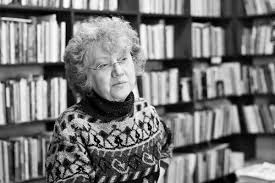
As the publisher for the Ibbetson Street Press, I am glad that we are going to release a book of poetry titled " Reverberations" by former Medford Poet Laureate, and New England Poetry Club advisory board member Vijaya Sundaram. I caught up recently with Sundaram for an interview...


This collection of poetry embraces the senses with food , nature, etc... It is imbued with a sensibility of celebration even in the midst of loss. Explain.

Thank you, Doug. Yes, I cannot help but celebrate life, both the inner life of the imagination and spirit, and the outer life of the senses. Sometimes, I dwell morosely on death, and fondly contemplate Lao Tzu’s concept of Inaction, especially when I see how horribly our world is being treated by rapacious capitalists, climate change denialists, and genocidal maniacs. However, I also know that I cannot live in that mindscape, nor give in to despair – and that’s because my immediate, personal world is beautiful. I love everything – the trees whose green soothes me on jangled days, my dog’s snout, earnest and scientific as she inspects everything, my husband’s voice in the other room when he teaches Indian music, our offspring’s joyful presence in our lives, my own guitar and singing, the silly dog and cat reels online that distract me from human horrors, my students and our interactions when I teach, writing poetry, doing visual art, seeing the comedy in the midst of tragedy, seeing the kindness of friends, neighbors, strangers, the goodness of those who give freely, despite their own lack. Sorry, I’m getting carried away here! In short, yes, I celebrate life, even as I contemplate death.

Your father appears in the book, and he was quite the punster. ( My Dad was too) Do you think his play with words influenced your own work?

My Dad’s punning sensibilities definitely influenced all of us at home. He was always good for a chuckle, silly jokes, belly-heaving laughs. He was able to laugh through decades of pain, and taught us what it means to be fully human and experience moments of happiness in that way.

In my daily life, I pun in response to other punsters; I pun from time to time, but not necessarily for laughs, although there’s the accidental fun-pun. My husband Warren and offspring Sharada also pun. Warren is a brilliant and hilarious punster, himself. We all love punning – I guess a family that puns together stays together! However, I don’t think it influenced my written work, which tends to be more serious, and rarely indulges in puns.

It seems that your poems flow easily between the hard shell of the earth, and their transcendence from it. Explain. 

What a beautiful observation! For me, the membrane between the Seen and the Unseen is thin. I know I sound all mystical and super-Indian when I say it, but it’s always been true for me – I used to “see” things when I was young; the walls between my waking and dreaming worlds were osmotic. I am not an adherent of any particular spiritual belief or practice, except my own, self-generated, secret one. I know that life is an accident, and yet, in this amazing accident, we found consciousness, and developed morality, conscience, a spirit of inquiry. To me, that is the most breathtakingly magical thing, no matter how scientifically it can be explained – and yes, I love science, and prefer it to the mumbo-jumbo of religion, though religion can be compelling in its way for those who need it, and it cannot be slighted or denied.

So, going back to poetry, when I write, that “lift” from the mundane to the sublime writes itself into a poem – sometimes, I consciously try to subvert it, because it always wants to go there, but I end up surrendering to the impulse.

Getting back to food. I love Indian food. Whenever I have it I feel this strange sense of contentment...the curry speaks to me. Some people think food is trivial. Not you evidently! 

Ah, yes! I LOVE food. I think of it often. It’s terrible, because I have to now be careful, pay attention to my health and all that, as I edge slowly towards the abyss (I’m only half-kidding!)

Food is the ultimate comfort; it’s no surprise that some of us gain weight as we get older (I have!) – when the world seems to be going down the wrong tube, at least food is there to comfort and console, despite its dangers. Oh, and Indian food is the best – it wakes you up; it cozies up to your taste buds; it reminds you that life is worth living (even if it’s only for that half-hour or hour when you’re eating). It reminds you that the pleasures of the palate are things to rejoice in, to share. And it definitely gives one that “strange sense of contentment” as you so eloquently put it!

It seems we are so divorced from nature these days, but you seem to be one with it. Does your Hindu background contribute to this? You seem to have a love relationship with flowers, etc

Being out among trees, flowers, the woods, a pond – any and all of it has always made me feel as if I’m stepping out of my own narrowly defined self, stepping out of the borders of my body. I’m hopeless about remembering the names of various flowers; I have to look up books or the Internet to remind myself of their names. I do love flowers, but I wish I were a more disciplined gardener! Also, when I walk in the Fells, and trip over root systems on the slopes, I am struck time and again by how all those roots hold the earth together. When I read what Suzanne Simard wrote about trees, or when I read the research done by others about how mycelium works underground, connecting trees to each other, taking nutrients from mother trees to younger ones, I was, and am filled with a kind of holy awe. When I step on roots in the forest, I thank them, and offer thanks to the earth that’s holding them, and being held together by them. Sounds silly, yes? Nevertheless, I whisper my gratitude to them all (when people cannot hear me). I am always reminded that I am part of it. When I was young, I loved looking up at the gold and green of sunlit mango and neem trees around me, and wanting to become them, to become a sun-filled leaf or branch, or the whole tree. I used to read a lot of William Wordsworth, and his poems about nature are a deep part of my poetic DNA. Apart from that, I used to delve deep into Greek and Roman mythology as a pre-teen, and remember being quite struck by the myth of Daphne, who turned into a laurel tree trying to escape Apollo’s clutches. I also loved reading the story of Hyacinthus (another Apollo-struck victim, sort of), and Narcissus – both turning into flowers, the latter into a rather self-obsessed one, haha.

To answer your question, it’s not really a part of my Hindu background, though - or maybe, it’s part of some mystical part of my ancient Hindu background of which I might be unaware. Mostly, it comes from how I feel, and from absorbing poets like Wordsworth, Keats, Emily Dickinson, Robert Frost, Christina Rossetti, Rabindranath Tagore, Oscar Wilde, Tennyson, and other writers who influenced me when I was young.

Why should we read your book?

I loved writing it, and love what’s in it, and want to share it with others. No, I don’t think it’s some sort of unseemly pride, or anything like that – just the need to share what I have seen, or been, or felt. Poets did that for me, and still do that for me. We need to emit what light we have, and absorb more poetry, more beauty, more love, more of the good parts of ourselves out in the world.


_____________________________________________________________________________

Seaweed

When everything's been said.

And yet, I haven't said it all.

Should I speak?

And why?

What need is there?

Surely it is silence I crave.

All this noise, a railing

Against encroaching night,

Drives a stake into my eyes.

Eyes closed at night,

I wonder and wonder.

Lines from Prez's "Lady Be Good" solo

Run around like rats in a maze

Within my forlorn cranium,

Where tangled thoughts,

And sudden sorrows

Float like detached balloons.

Recycled lines from songs

Pound against my dovetail joints,

So that the sutures threaten

To come undone.

If I speak, it is to reveal

And yet, I wish to stay secret –

A decorator crab, seen and unseen,

Covering its shell with seaweed and seaglass,

Hiding within its little garden,

Hoping not to be noticed,

And yet, decorating away.

The pull and push

The yearning and repulsion

The silence and the speech,

Keep me tied to this post.

Untie me, let me go free,

And when I let go,

I shall walk on the waves,

Then sink below, and I shall

Bury me in sand under the sea

So I will hear the heaving of the waves

The endless sigh, its rise and fall,

And the comings and goings

Of silent, secret creatures,

And be glad of the company.

There, the music will filter

Through my ears, and escape,

Like strands of seaweed,

Floating under a full moon

With shimmering algae.

Saturday, May 03, 2025

Poet/Translator/Videographer Nidia Hernandez finds a Haven in America.

 
                       Nidia Hernandez with Doug Holder

By New England Poetry Club board member Doug Holder

I first met Nidia Hernandez at a meeting of the literary group the "Bagel Bards" that was then housed in the basement of the Panera Bread in Porter Square, Cambridge. She had recently arrived from Venezuela--and all ready was in a frenzy of activities for the poetry community. Right off the bat she recorded the poetry of many of our members, and seemed to bring the high holy to our work.

Nidia Hernandez was a refuge from the oppressive Maduro regime in Venezuela. For over three decades she was considered a leading figure in the Latin American poetry scene. She had a long running poetry interview program "La Maja Desnuda." Her radio show was eventually closed down, and she wound up leaving her homeland for the promise of America, and its freedom. Since 2017 she has been an immigrant in this country, and has proved to be a valuable member of the poetry community.

Hernandez who resides in the Jamaica Plain section of Boston, noticed that Silvia Plath's first house-- near Hernandez's own residence--has been overlooked.  Hernandez, a zealot of all things poetry, organized a successful effort to get a plaque on the outside of the house--so it would have more recognition as a valuable literary landmark.

Hernandez continues to record important poets during her stay in this country. Many of them are on Spotify, and can also can be accessed from the Arrowsmith Press website. Hernandez reflected, " I have interviewed poets like, Marie Howe, Charles Simic, Joy Harjo, Robert Pinsky and many others."

She has worked consistently with Askold Melnczuk, the director of the prestigious Arrowsmith Press on a Latin American  Poet Curation project. She featured such poets as Rafael Cardenas, and other writers from Cuba, Venezuela and elsewhere.

When Denise Provost and I were the co-presidents of the New England Poetry Poetry Club-- a venerable literary institution, that was founded by Robert Frost, Amy Lowell and others-- we decided to lead the effort to bring her on the board of directors. She went right to work. She has spearheaded a project to honor the poet Amy Lowell, and even  secured  Massachusetts governor Maura Healey to read a Amy Lowell poem--which she videotaped. She created a string of well-designed posters and flyers, and had done valuable work on our website.

While in the country, Hernandez has completed her first book of poetry " The Farewell Light," a bilingual edition that is a profound compilation on culture, family, language, as well as a critically acclaimed anthology that she edited, " The Invisible Boarders of Time: Five Female Latin American Poets. ( Both Books from the Arrowsmith Press)

Hernandez has truly thrived and contributed to her new homeland as evidenced by her body of work. She is an essential, and notable woman in our poetry community.


For more info on Hernandez go to:   https://www.arrowsmithpress.com/journal/tag/More+by+Nidia+Herna%CC%81ndez


Monday, February 03, 2025

Governor Healey Signs Executive Order to Establish Massachusetts’ First-Ever Poet Laureate


Governor Healey Signs Executive Order to Establish Massachusetts’ First-Ever Poet Laureate


   I remember I asked in a recent issue of The Somerville Times, "Why don't we have a Massachusetts Poet Laureate?"  Well, we got a great answer from the Governor, today!


For immediate release:
2/03/2025Governor Maura Healey and Lt. Governor Kim Driscoll


Boston — Today, Governor Maura Healey signed an executive order creating the first-ever Poet Laureate of Massachusetts. This new, honorary position is intended to promote poetry and creative expression across the state, serve as the Governor and Lieutenant Governor’s ambassador of the arts, and inspire the next generation of writers.

“Massachusetts has a rich legacy of pioneering poets, from Phillis Wheatley Peters to Robert Frost to Emily Dickinson to Henry Wadsworth Longfellow. Our administration is committed to honoring this legacy by celebrating the many contributions of poets to our state, including their ability to inspire future generations,” said Governor Maura Healey. “We’re grateful to the Mass Cultural Council for their strong partnership in creating this important position, and we encourage poets from across the state to apply when the application goes live.”

“From day one, our administration has been committed to supporting arts and culture in Massachusetts," said Lieutenant Governor Kim Driscoll. “The creation of the Poet Laureate is not only an investment in our creative economy, but also an invitation for us to embrace the unique power poetry has to open our minds, stir our hearts and educate us all.”

“Mass Cultural Council is thrilled that today, Massachusetts – a celebrated hub of arts, culture, history, creativity, and innovation – is embracing poetry and creative expression and establishing an official Poet Laureate,” said Michael J. Bobbitt, Executive Director, Mass Cultural Council. “This position will continue our proud tradition of using language and creativity to tell stories, evoke emotion, inspire new ideas, and sometimes, call others to action. It is truly an honor to partner with the Healey-Driscoll Administration on this initiative, and to again shine a bright spotlight on the power of culture.”

The Poet Laureate will be charged with encouraging the appreciation of poetry and creative expression across Massachusetts, organizing and attending public readings and other statewide literary and cultural events in different regions, composing poetry for ceremonial occasions, and advising the Department of Elementary and Secondary Education on an outreach program for schools focused on the celebration and advancement of poetry.

The Executive Order establishes an advisory Poet Laureate Nominating Committee to review applications for the role and submit recommendations to the Governor. The selected candidate will be eligible for a stipend provided by the Mass Cultural Council.


Tuesday, June 11, 2024

A chat with poet Gail Mazur- winner of the Golden Rose Award


Interview by Doug Holder


Recently, the New England Poetry Club awarded poet Gail Mazur its Golden Rose Award. The Golden Rose, one of America's oldest literary prizes, is awarded annually to a poet who has done the most for poetry during a lifetime. Gail Mazur, besides being a celebrated poet, and teacher, is the founder of the famed Blacksmith House Poetry Series.  Founded in 1973, the award-winning Blacksmith House Poetry Series brings established and emerging writers of poetry and fiction to Harvard Square. I got a chance to chat with Mazur, shortly after she received the award.


Doug Holder: Gail, when you started the Blacksmith House Series in 1973, were you connected with the poetry scene or was this an entry point for you? 


Gail Mazur:   I had moved to Cambridge with my husband, Michael, and our two children, Dan and Kathe, a few years before. The first place my oldest friend, Elsa Dorfman, introduced me to was the Grolier Bookshop. A whole (little) book store devoted only to poetry. I spent many hours there talking with Gordon Cairnie (the already elderly owner—he’d begun it in the late ‘20s) By then it had become an institution. I loved being there, being able to browse and chat with Gordon—When Gordon died in 1972, I thought the “poetry world” of Cambridge was over, so I got the idea to run some readings… (And of course, the poetry world wouldn't have ended, but that bookstore's hominess was gone .Now fortunately it’ s been rescued and that little poetry haven should be there a long time.


DH: You have stated in an interview that Robert Lowell was one of your earliest influences. Lowell was part of the "Confessional" school of poets. Do you feel your work is confessional? Isn't all poetry confessional in some sense?  

GM: I guess I think of it as autobiographical! But no, a lot of poetry couldn't possible be called confessional, unless you mean that we’re revealed somehow in every poems we write! Lowell experienced many episodes of illness and he wrote about the world of it, inner and outer, with brilliant craft and humanity.


DH: You have had a long teaching career. When you teach novice poets-- what books do you suggest that they cut their teeth on? This could mean on craft or poetry books themselves.

GM: It varies. It’s such a pleasure to introduce students to poems and poets they don’t know. To discuss the craft of poems. If I look at my shelves, now hundreds of books of poems—well, some days, some students, some weather—different poets!


DH: At the Golden Rose Reading the audience often crackled with laughter. Do you have fun writing poetry—is there a sense of play? I often use humor in my own work, even with poems with the darkest themes.

GM: Sure, sometimes! When it comes through, fun.


DH: Finally-- you have had a very accomplished career—with many accolades, awards, books, etc... What does getting the Golden Rose mean to you​?

GM: This award surprises and delights me, our community of poets in this area is so varied, we all bring our own stuff to it. As my grandfather would say, also our own mishegas (you can look it up!) I work alone, like all of us, and being in the room with so many writers I admire to receive the Golden Rose just pleases me so much.


Friday, January 19, 2024

Longfellow Audio Book Project


From Doug Holder--Co-President of the New England Poetry Club

“As a member of the Board of Directors of our partner organization,  Friends of the Longfellow House, I am engaged in a project, with fellow board member Mike Bavaro, to create an audio book of Longfellow’s poetry. We plan to emphasize his Revolutionary War and Civil War poems. We are looking for suggestions of poems that would be a good fit for our project, and eventually, for selected readers from the community and beyond...

Contact me if you are interested in this project, at  dougholder@post.harvard.edu

Thursday, July 13, 2023

Afaa Weaver Winner of the New England Poetry Club's Golden Rose Award


****At the Longfellow House in Cambridge, MA. poet Afaa Weaver will be the recipient of our New England Poetry Club's prestigious Golden Rose Award. Last year's winner was Patricia Smith.

Here is an interview I conducted with him in 2015     https://www.youtube.com/watch?v=kWP6o2zjhXc

For more information about the award:  https://nepoetryclub.org/contests/golden-rose/

August 13, 3:00 PM | Poetry Reading: 2023 Golden Rose Award with Afaa M. Weaver

Afaa M. Weaver (formerly Michael S.Weaver) is the author of sixteen collections of poetry, several plays, and some short fiction. As a journalist in Baltimore, where he was born in 1951, Afaa wrote for the Baltimore Sun, the Baltimore Afro-American, and other papers. His awards include a Fulbright appointment, a Guggenheim fellowship, multiple Pushcarts, the PDI Award in playwriting, the Kingsley Tufts, and the 2019 St. Botolph Distinguished Artist Award. His collaborative translation and cultural communication projects with Chinese poets in the U.S. and abroad has earned him national recognition in China, and in Taiwan. He has taught at several colleges and universities in the U.S. and in Taiwan. At Simmons University he held the Alumnae Chair in English for twenty years. Afaa’s newest collection of poetry is A Fire in the Hills (Red Hen Press). He lives in upstate New York with his wife Kristen Skedgell Weaver.