Sunday, June 06, 2010

Poet/ Performance Artist Michael Mack: Honoring His Mother's Tragic Life


Poet/ Performance Artist Michael Mack: Honoring His Mother's Tragic Life

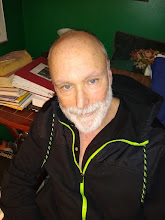
Interview with Doug Holder


After serving in the US Air Force as an aircraft crew chief, Michael Mack worked a variety of factory and labor jobs before returning to school and graduating from the Writing Program at MIT.

Mack has performed at the US Library of Congress, Boston's Museum of Fine Arts, the Columbia Festival of the Arts, Philadelphia Fringe Festival, the Austin International Poetry Festival, and Off-Off-Broadway at the Times Square Arts Center.

His work has aired on NPR, and has been published in the Journal of the American Medical Association (JAMA), America, the Beloit Poetry Journal, Cumberland Poetry Review, and is featured in Best Catholic Writing 2005.

Mack has also performed at scores of venues for consumers and providers of mental health services, including McLean Psychiatric Hospital, the national conference of the National Alliance on Mental Illness (NAMI), and for faculty and students of the Harvard Medical School and Yale Medical School.

Awards include an Artist's Grant for new theater works from the Massachusetts Cultural Council, First Prize in the Writers Circle National Poetry Competition, and an Eloranta Fellowship, which funded a residency at the Tyrone Guthrie Centre for the Arts in Ireland.

Mack lives in the Boston area, supplementing his work as a poet and performer with assignments as a freelance writer.

I spoke with him on my Somerville Community Access TV show " Poet to Poet: Writer to Writer."


Doug Holder: Mike your mother was diagnosed with schizophrenia right?

Michael Mack: Yes, she was diagnosed when I was five. As you know, it’s a life long commitment not only for the people who have the illness, but also the family. It is the kind of illness that ripples out in many ways.

Doug Holder: You wrote a play about your experience with her while growing up titled: “Hearing Voices, Speaking in Tongues.”


Michael Mack: I am grateful to say I performed all over the country with it. When I first started writing it; I really didn’t understand what I was writing. All I know I was writing sketches, poems, about my earlier life. I wrote about Mama, Dad, about how we all were trying to navigate the illness. It was in 1985 when I first scratched out that first line.

For me as a kid to see my mom in the state hospital, heavily medicated with thorazine—well, the term to describe what was being done to her was warehousing. Just give them enough drugs—so the patients won’t give you any trouble.

Doug Holder: You are a versatile artist: Performer, Playwright, Poet. To which role do you identify most closely?

Michael Mack: Everything starts with my spiritual life. I was raised Catholic. I am no longer a practicing Catholic. But the spiritual life is still central. So everything springs out of that. The poetry and the playwriting.


Doug Holder: What do you mean by the “spiritual life.”

Michael Mack: Well, I have heard it said you can leave the Catholic Church, but the Church doesn’t leave you. I think the Church has informed a lot of my life. But I moved on to explore other religious teachings. My poetry accesses that same center the spiritual does. Before every show I invoke the spirit of my late mother.

Doug Holder: If your mother were alive would she feel that you exploited her for your work?

Michael Mack: That is a great question. My dream had been for a long time than Mama would see the show and after I finished she would come up and take a bow. That never happened. She died before that could happen. When I first told her that I was writing about her—that I was starting to perform this show—she didn’t want anything to do with it. For her it brought up a lot of memories that she didn’t want to watch on stage. She started to come around though.

Once I took her to a poetry open mic in Baltimore. We sat down. Poets started getting up to read. She was dumbfounded. It was like she never saw anything like this in her life. For weeks afterward she said: “There is this place you can go in front of a microphone—and say whatever you want and the FBI won’t get you.” From then on I think she was starting to think more positively about seeing the show. Unfortunately—a couple of months later she died of colon cancer—she was 73.

Everybody in the family has seen the show. My father flew up to see me perform it. He sat in the front row. I couldn’t look at him. After the show he said, “ You know son, you spend your whole life with your kids, and you think you know them. And then you see your son doing this and its beautiful.” I’m pleased to say I have the family stamp of approval.

Doug Holder: How was it performing the play in mental hospital for patients?

Michael Mack: I had to take a poetic leap of faith to capture the experience of someone else. When I first performed it in hospitals I was very anxious about that. I am pleased to say the response has been quite positive. Almost to a person, people who have a major mental illness said they appreciate having somebody giving voice to the experience. I would like to see more people with mental illness have an opportunity to give voice to their experience through the arts. I want them to tell us what it is like.

Doug Holder: Why do you think there is so much mental illness between artist and poets? Look at Lowell, Plath and Sexton, for instance.

Michael Mack. I can’t speak as a clinician. People with mental illness, I think, as well as artists, often have a more direct access to those feelings, thoughts, to the dream world. We all have access to this when we sleep, but I am guessing that artists and poets have more access to that dream world in their day-to-day life. The trick is to managing it in the day to day.


For more information about Mack go to: www.michaelmacklive.com


**************************************************************************************


becoming annie


who wakes in a wrinkled cotton nightie.

She watches a luminous hand

touch her ticking wrist.


Becoming Annie, who groans and walks


to a medicine chest, rummages for her rosary,

finds a Band-Aid box of buttons and dimes,

one gown propped in the closet.


Are we becoming Annie?


Trailing water, she bends for the stairs

and squeaks down the banister,

dropping lilies of tissue paper.


Barely aware we could be Annie


we cannot remember what to forget,

pray to ourselves in baby voices,

lose names, faces, keys,


till one night we see Annie


sailing out our doorway,

gown lisping over the porch

sidelong to the street.


May a city rise in the gleam of our breathing.

May love brush its sudden

feathers on our bodies,


our running feet.


– michael mack

Friday, June 04, 2010

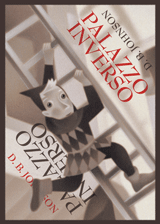
Palazzo Inverso by D. B. Johnson


Palazzo Inverso
D. B. Johnson
Houghton-Mifflin Harcourt Children’s Book Group
www.hmhbooks.com
$17.00

“I don’t grow up. In me is the small child of my early days.” As we prepare to enter the upside-down world of Mauk, his Master and a host of carpenters, bricklayers and other workers, we are welcomed by this Escher quote. Impossible Structures – M. C. Escher was famous for creating them and Mauk, the pencil-sharpening apprentice who just may have turned the blueprints every so slightly on numerous occasions when his master was not looking, created a very Escher-like impossible structure in “Palazzo Inverso.” What a gem of a children’s book D. B. Johnson has written! And for those adults fascinated by the mathematical artistic creations of M. C. Escher, a quick topsy-turvy read of Palazzo Inverso will be a welcome adventure.

When Mauk enters the Palazzo for work one morning he finds carpenters standing on their heads and bricks being spilled onto the ceiling. Mauk finds that he, too, is running the staircase down to the tower! Mauk longed to draw but was never allowed to. His input came while the Master was doing other things and Mauk turned the drawings ever so slightly. When the Master went back to drawing, the blueprints became very strange indeed. Mauk was delighted by the way the structure had evolved, though his Master was not amused. As Mauk runs to escape the agitation of the Master, a wonderful, fun chase takes place through the Palazzo. What Mauk does not realize is that at some point during the chase all of the workers and the Master began laughing with Mauk. A new and wonderful world had been created. Topsy-turvy wasn’t so terrible after all. Perhaps it’s in the way we look at things and impossible structures may not be so impossible in the world of our imagination. Find a child to read to and enjoy the never-ending loop of this book. Or pick up the book yourself and read it for the fun of it. Remember, if anyone is looking, just remind them that life is a far more lively adventure if we never grow up.

************Rene Schwiesow is co-owner of the online poetry forum Poem Train. She is one of the co-hosts of the Mike Amado Memorial Series, Poetry: The Art of Words in Plymouth and Director of the newly formed Plymouth County Coalition for the Arts.

Wednesday, June 02, 2010

4th annual Ibbetson Street Poetry Contest Deadline Sept 15, 2010


4th annual Ibbetson Street Poetry Contest


Ibbetson Street Press is pleased to announce the 4th annual Ibbetson Street Poetry Contest.

The winner of the Ibbetson Street Press Poetry Contest award (must be a Massachusetts resident) will receive a $100 cash award, a framed certificate, publication in the literary journal "Ibbetson Street" http://ibbetsonpress.com/ and a poetry feature in the "Lyrical Somerville," in The Somerville News. The award will be presented at the Somerville News Writers Festival: November 13, 2010. The Somerville News Writers Festival is in its eight year and has hosted such writers and poets as: Rick Moody, Franz Wright, Robert Olen Butler, Sue Miller, Tom Perrotta, Steve Almond, Sam Cornish, Margot Livesey, Robert Pinsky, and many others. The Festival was founded by Timothy Gager and Doug Holder in 2003, and has been sponsored by The Somerville News, GRUB STREET, Porter Square Books and others.

To enter send 3 to 5 poems, any genre, length, to the Ibbetson Street Press 25 School St. Somerville, Mass. 02143. Entry fee is $10. Cash or check only. Make payable to "Ibbetson Street Press." Deadline: Sept 15, 2010.

The contest will be judged by The Somerville News Arts Editor and founder of the Ibbetson Street Press, Doug Holder http://dougholderresume.blogspot.com.

The winners will be announced at the Somerville News Writer's festival, where they will receive his or her award. A runner up will be announced as well.

Somerville Musician Dan Blakeslee lives honestly and lives modestly.


Somerville Musician Dan Blakeslee lives honestly and lives modestly.


By Doug Holder


Somerville musician and artist Dan Blakeslee exudes a frenetic energy from his diminutive frame. No, he is not on drugs or booze. He told me that he doesn’t have a taste for either. But he is a man who obviously has a passion for his mission—that being his art. I met with him at the Saturday morning meeting of the Bagel Bards that meets at the Au Bon Pain in Davis Square.


Blakeslee lives in the Teele Square section of Somerville, Mass., but he is a native son of South Berwick, Maine. Although he has strayed from the ‘ville on more than one occasion; he is very happy to be smack dab in the “ Paris of New England.” Blakeslee said, “ I have grown as an artist here.” We discussed the fact that many artists of my acquaintance have defected to the wilds of Brooklyn and other places South of the Charles River. Blakeslee replied,” Somerville is my Brooklyn.”


I first encountered Blakeslee at a guitar contest that I was judging at the Bloc 11 Café in Union Square. I was impressed by the artistry of his guitar playing and the passion he brought to his songs. Blakeslee describes his music as “Modern Folk.” He said: “It is a hybrid between Country and Folk.” Being the Bard that I am I asked Blakeslee if he was inspired by any poets. He mentioned the poet Robert Dunn. “ I love wordplay, and Dunn is the king. He writes short and potent poems.” And of course Blakeslee is influenced by such iconic songwriters as Bob Dylan and Leonard Cohen, to mention just a couple.


Blakeslee is an accomplished poster artist as well. He makes posters for any number of the gigs he has in clubs in the area. He said he has been influenced by the 1930s artist Rockwell Kent, who among other things was a draftsman and accomplished print maker.

Blakeslee who graduated from the Maryland Institute College of Art , designs posters that are a mixture of the surrealistic and the comic.


Blakeslee has a new CD coming out of his music titled TATNIC TALES, based on a rural part of South Berwick, Maine, where he grew up. He said he and his fellow musicians recorded the CD in a bird-dung infested old barn. The CD will be released on June 13, 2010. On Oct. 6 Blakeslee will have a CD release concert at Club Passim in the Republic of Cambridge. And if you attend you can get a vinyl album available only at the concert.

I asked Blakeslee about his philosophy of life, he said: "Live honestly; Live modestly," and you know--I sort of think the man practices what he preaches.

Dan wrote the News:


Here are the lyrics to my song "On The Watch" which is on the album "Tatnic Tales" due out July 13th. It's the song I was describing to you of a real story that happened to me while playing a late night subway set down in Copley Station:


ON THE WATCH

By Dan Blakeslee

Written on January 1, 2009


Last night I played deep in the tunnels of town.

Bear witness my trade if you took the rails underground.


The smoke and the signals they gave me a sign.

I'm far from the whispering pines.

Tonight I am stuck with luck being blind.

And I feel someone watching me.


A few stragglers hear that greed has me under its blade.

As my words fell so desperate those witnessing fade.


Just then a stinging scent took the room.

Of Listerine, oil and perfume.

Somewhere between darkness and doom.

I feel someone watching me.


In through the gate came an Indian tall as an oak.

Just a wandering drunk I though as he saw me and spoke.


"Surrender your song and your fortune too!"

As fury in my eyes it grew.

Then across the tracks came the boys in blue.
Which left no one watching me.

Tuesday, June 01, 2010

My Fix Takes Another Twist: A Review Of Stephen Kessler’s The Mental Traveler


My Fix Takes Another Twist: A Review Of Stephen Kessler’s The Mental Traveler


By John Flynn


Poet, translator, essayist and Redwood Coast Review editor Stephen Kessler in his first novel has penned an honest, articulate and arresting auto-biographical nightmare odyssey of 23-year-old UC Santa Cruz dropout Stephen the K. Starting with Love Creek Lodge in Central California, and getting high with the older loving maternal Nona, Stephen’s Kafkaesque journey takes him, ultimately, to an understanding that “the world was the poem.”


Stephen abandons graduate studies in English for a confused trek into all his fathers. My favorite part of the novel was the description of the Altamont Speedway Festival of 1969, where Stephen’s day peaks with a spontaneous friendship with a fellow named Norm. The memory of that day stays with Stephen as his spiritual trek lands him in treatment at San Francisco General Hospital, to consoling friends in Benedict Canyon, to maverick eccentric profs at UC Santa Cruz, and to City Prison where Stephen becomes a bard behind bars and admits “A pattern was emerging. Each time it seemed my ordeal was about to end, something went wrong and my fix would take another twist.”


Stephen’s fix is rendered in a frank disciplined telling, a torturous soul-searching identity quest that exemplifies the youth-to-age anguish of his generation at that time. Thorazine, hitchhiking, the Zodiac Killer, acid trips, hashish, instant poems, earthy pot-smoking friends, the experimental psychiatric wing of Franciscan Santa Cruz Hospital, talk of Nixonian politics and the Vietnam war, a move to Beverly Hills and St. James Hospital in Santa Monica “because the revolution would have to include Hollywood.”


Spiraling out of control, Stephen cloys to the LA shrink El Silver Man, to street philosophers, Dylan songs, poems, fellow inmates, ward residents, a casual-sex girlfriend with a split personality. He escapes more than once from his various nuthouses. More than once he willingly returns. He rambles along certain of his purpose if only he can discover it, “the gods of the revolution secretly directing my trip.”


In the end, he returns to Santa Cruz County General Hospital, not bereft of hope, but in despair, addled on Thorazine, lost and growing aware of patron saints of lost causes, the art of obedience, choosing to “play it straight” if only to avoid electroshock therapy and a lobotomy, “deeper into despair of ever escaping…the drama of my so-called psychosis had ceased to be entertaining.”
Unable to write, he continued to read poetry, particularly Robert Bly. He then began “working on another life.”


There’s no miraculous coming of age here. No pat answer, quirky minimalism or self-indulgent dream sequences. It’s about the story, plainly told. For readers like me from the East Coast who were children during the Vietnam War era, this novel offers a close, uncompromising look at a specific time and place, and a universal examination of one artist’s sojourn into fragile self-awareness.