Friday, May 20, 2016

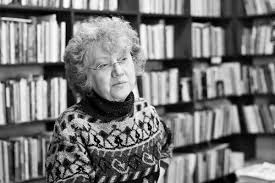
Alex Ivy: A Poet Who Is Looking for Trouble.


Alexis Ivy is an educator of high-risk populations in her hometown, Boston.  Her most recent poems have appeared in Main Street Rag, Off The Coast, Spare Change News, Tar River Poetry, The Santa Fe Literary Review, Eclipse, Yellow Medicine Review, Borderlands: Texas Poetry Review, J Journal and upcoming in The Worcester Review.  Her first poetry collection, Romance with Small-Time Crooks was published in 2013 by BlazeVOX [books].  She is  finding a home for her next collection, Taking the Homeless Census which has been a runner-up for University of Wisconsin's Brittingham & Felix Pollack Prize. I had the privilege to interview her on my Somerville Community Access TV show, " Poet to Poet: Writer to Writer."


Doug Holder: From the poems you sent me I get the idea you lived rather a hardscrabble existence when you were younger.


Alexis Ivy: Yeah. I have given myself a hard time. I feel that poetry is truth and beauty together. My work is not strictly autobiographical; but there is a definite truth to it.

Doug Holder: So what was your life like?

AI: Well, today I am living a much better life. I had a drug problem at one point, and I am in recovery right now. I was on the road awhile—just looking for trouble. I got it. That was my interest—getting into trouble.

Doug Holder: What was the philosophy behind that?

Alexis Ivy: I thought it would be an interesting life. I was attracted to it.

Doug Holder: You worked as a copywriter. Like a poet, when you write ad copy every word counts, and you try to get to the essence of things. In-fact, my late father who was in advertising in the 1950s, and beyond, told me it was not unusual for Madison Ave. to have poets as copywriters. After all Ginsberg worked in advertising.

Alexis Ivy: I wrote descriptions of wallpaper for Lowe's and Home Depot. My descriptions of wall paper were very flowery. In my regular poetry work I never used adjectives much. It was interesting. Actually...I really did get a real good poem from working in the field. The work helped me with developing my language to a certain degree. But I wasn't interested in an office job....so I moved on...I am not afraid of change.

Doug Holder: You study with the renowned poetry workshop leader Barbara Helfgott-Hyett. What has that experience been like?

Alexis Ivy: By attending her workshops I have learned to write. I think the first time I went there was during my senior year of high school. I had written much before. I wasn't a poet. I read the Beat Generation poets and that type of thing. I was familiar with Ginsberg and Snyder—but not much else. I learned how to write—a sestina –among other things. I learned how to give criticism. I met some great folks there. I have been going there for over a decade. Barbara is a great teacher.

Doug Holder: I read in an interview that you gave where you said,  “Poetry saved my life.” Explain.

Alexis Ivy: I feel like poetry and writing in general—when everything is just inside of you and you need to get it out—the page is where you can release it. Writing has always been therapeutic for me. It lets me let go of things. It makes an ugly experience...perhaps—beautiful. Without this outlet who knows where I would be now. With my collection “ Romance with Small Time Crooks,” I had to get over everything that happened in order to write the poems. I needed not to have it in me anymore. Once I published the book I was able to get over it—I had freedom once again.

Doug Holder: Are you over the bad times? Do you see open pastures?

Alexis Ivy: I am getting there. What I am writing about and how I am living is way better. My goal is happiness.

Doug Holder: When you were on the road did you have the idea that you would write about it?

Alexis Ivy: In the back of mind I thought I would write about it. I wasn't writing when I was on the road. Now when I go on a trip I write all the time.

Doug Holder: How long where you on the road?

Alexis Ivy: Two years. I was all around the country. I got stuck in a number of places. Once I worked for a gem and mineral show, and lived in the desert with other folks. I traveled with musicians . I made money from our gigs. I was 18 when I went on the road and 20 when I was finished with it. It was really intense not knowing what was going to happen next.

Doug Holder: I have always liked writing on trains and buses. How about you?

Alexis Ivy: I took an Amtrak to Chicago. It was a great experience. I too love traveling by train or bus. It is about the experience of getting there. There is a lot to see out the window of a Greyhound.


HEROIN OFFERS ME A CIGARETTE
I light one of my own.
I like my own.
Since I’ve read Bukowski,
nothing’s beautiful anymore,
it’s always somebody
to save, and somebody
save me: a sure-sign,
ever-refined, adamant.
If only I could hurt
his feelings instead
of mine. If only
I could quit things cold.
–THE DIFFERENCE
Flushed my stash down
the toilet. Eighty-three
capsules. And maybe
the green was good-night’s-
sleep. The blue, revelation.
Pink made me popular
in the parks downtown.
And every white I kept
a fist on, that was the best one,
it prescribed me.
I had no friends to send
greeting cards, no happy
this, happy that.
How far I’d go
in my self-defense—
I’m not that bad, not bad
like them, never sold,
robbed, been in debt.
No arrests. Never used
a needle, just slid
into the direction of sliding.
I never died. Thank God
for that. If I believed in God.
Thank God.
--Alexis Ivy

Thursday, May 19, 2016

Noted critic pans James Franco's latest poetry collection Straight James/Gay James

Poet James Franco


Many people agree that James Franco is a fine actor... but poet? Critic Dennis has strong reservations...

Straight James/ Gay James
Poems by James Franco
Hansen Publishing Group, LLC
East Brunswick, NJ
http://hansenpublishing.com
ISBN: 978-1-60182-262-8
58 Pages
$12.00

Review by Dennis Daly

Some purist reviewers of poetry posit the importance of their responsibility as gatekeepers. I don’t see it that way. My critiques tend toward books that I like either in whole or in part. But … but there are limits. My button gets pushed by elitist practitioners of award winning drivel or wannabe celebrities showcasing their narcissism by caricaturing the artistic tradition they pretend to comprehend. The subject of this review is an example of the latter.

Two for two. James Franco’s new collection of poetry, Straight James/ Gay James, follows on the heels of his debut disaster in the same genre entitled Directing Herbert White. Both books exercise a self-indulgent and presumptuous posture unrivaled by anything this writer has perused since the fourth grade assignments of Sister Therese Immaculata were corrected and passed back for peer review. Petulant children of whatever age crave attention.

However, Straight James / Gay James goes one step further than its predecessor book in promoting the apotheosis of the sputtering, unapologetic cliché. From the opening poem, Dumbo, Franco rehashes long-suffering dead metaphors, blathering on into moments of unintended irony. Franco’s Dumbo drips down the page in numbingly expected ways. The poet’s young persona suffers shyness and alienation (How devastating and singular that must have been!) and then proceeds to associate with metaphoric circus clowns. Did you know that clowns were malevolent persons under their painted merriment? Of course not. Consider these lines in the heart of the piece,

Isolation followed me
And the only recourse
Was to drink hard with the clowns

Pink elephants
Paraded and sloshed
Through my youth
Until I became a sinister clown,

With a smile painted

Walt Disney must be cringing in his grave. I’ll spare you the poet’s last few lines which are gag-inducing.

Franco gushes out a description of his sinister, but well-meaning, self in his poem Custom Hotel. He apparently stays at this hotel, conveniently located near the LAX airport, once a week as he travels to parts unknown in order to quench the demands of inquiring cameras. Accommodating the egotism of this actor/ writer cannot be easy. The hotel provides Franco the same room, numbered 1212 for each stay. Get the binary significance in sync with the collection’s title? I thought so. The piece goes on to chronicle Franco’s penchant for deflowering sweet little things, all the while instilling in them his own vast acting knowledge and sinister (yet oh so sensitive) overall wisdom. Here the poet cites his beneficence embedded in wickedness,

And then I step out of the screen
And take them in their petrified awe.
I take the wise ones too,
But they are of my coven.

I know my own Satanic strength,
And I check it with good will,
Giving back the charity of my experience,
Growing little actor gardens …

In the piece Twenty-Year Chip Franco details the drunken driving accident that caused his turn to temperance. Nothing much here. No drama. No lyrics. No images. No twists. No turns. The poet explains,

On Middlefield Road, and a car
Slammed into our front,

Spinning the Accord
I chose to drive away,

First a side street
letting Beau out—
And then a roundabout way
Back home, where

The cops were waiting.

Okay, so what? Franco presses forward educating his readers on his bright future, that is, in comparison with his teenage drinking buddies—one of whom killed himself by jumping off a parking garage roof. The poet’s use of the phrase, “I chose” in the above selection seems odd. Franco’s acceptance of responsibility may ring true at a twelve step program but does nothing to portray the rebellious nature of his persona that he obviously seeks to establish. Quite the contrary. The writer comes across as compliant and smug.

Epic and uninteresting self-absorption poses and preens itself throughout Straight James/ Gay James, Franco’s title piece. This tedious production, pretending to be an insightful investigation into Franco’s selfhood and gender identification, goes on for nine pages. It’s structured as an interview with Franco’s straight alter-ego interviewing his gay alter-ego and vice versa. It also includes two embedded, very forgettable stanza-poems. Aside from a few sexually-worded quips (even these seem non-subversive and ho-hum), apparently interjected for their shock value, there seems to be no real focus to these dangling passages. One section did momentarily grab my attention because of its group-think generalizations and naiveté. Straight James puts it this way,

Sure. I teach to stop thinking about myself for a bit. But also
because I find the classroom to be a very pure place, largely un-
affected by the business world. I like people who still dream big,
who are consumed by their work. And that’s how most students
in MFA programs are.

I guess Franco would know. He has five MFAs.

The great critic Yvor Winters argued the importance of the complementary relationship between concept and feeling in poems. Franco borrows his own concepts by utilizing meaningless clichés. Additionally, his stock, off-the-shelf feelings summon only uncharged limp responses from befuddled readers. The sad truth is that Franco’s words do not rise to the level of poetry, nor even publishable prose.

Monday, May 16, 2016

CD Collins: Portrait of an Artist as a Provocateur

CD Collins


CD Collins: Portrait of an Artist as a Provocateur

With Doug Holder


Kentucky native CD Collins follows the storytelling traditions of the South, both as a solo artist and when accompanied by musicians.  Her short fiction collection Blue Land was published by Polyho Press, her poetry collection by Ibbetson Street Press. As one of the originators of the resurgence of spoken word with live music, her work has been archived in four compact discs: Kentucky Stories (winner Best Spoken-Word album Boston Poetry Awards) Subtracting Down, and Carousel Lounge. Her most recent disc, Clean Coal/Big Lie, is currently being released in a series of one-woman shows.  Afterheat is her first novel.
Collins has performed in a variety of venues including Berklee College of Music Performance Hall, Boston Public Library, Club Passim, Boston’s Institute of Contemporary Art and the New York Public Library.   Collins’ fiction has appeared in numerous literary magazines including StoryQuarterly, Phoebe, Salamander and The Pennsylvania Review.
Collins has received grants and awards from Massachusetts College of Art, Somerville Arts Council, the St. Botolph Club, The Kentucky Foundation for Women, the Cambridge Arts Council, and Women Waging Peace.
Collins holds a B.A. and an M.A. in English Literature from the University of Kentucky where she studied with author and activist Wendell Berry.
 She was recently a guest at the Kennedy Center for the Performing Arts for a pilot conference to advance the development of innovative technologies that support the inclusion of people with disabilities.  I had the privilege to have Collins as a guest on my Somerville Community Access TV show  " Poet to Poet: Writer to Writer'


Doug Holder: We published a poetry collection penned by you “Self Portrait with a Severed Head.”

A provocative title—are you a provocative writer?

CD Collins: I am not allowed to cuss on this program right? No cussing. ( Laugh). Yes I am willing to be provocative.

DH: What does art require of you?

CD: Art requires me to try to create life by putting these squiggly lines on paper. That is provocative in itself.

DH: What do you think a writer should do to perfect his or her craft?

CD: We need to go out more and experience life. For instance—I hate poems that are about writing poems.
DH: Your recently released novel “ Afterburn” that deals with a little girl and her family who were burnt in a gas explosion in rural Kentucky. Part of this novel is based on a true life experience you had as a child. In the book you link the burns to the ones that people suffered in Hiroshima.

CD: The book is a novel. And the young girl Ruby Chambers has some similarities with me. The trajectory of her life has not been my trajectory. I write fiction because I want to write whatever I want to write, and search for the truth.

DH:You were burnt, right?

CD There is a chapter in the book titled “Heat” that is completely autobiographical. It is the chronicle of the explosion I was involved in when I was ten. This explosion touches on a lot of different aspects of culture. The character identifies with the bombing of Hiroshima; as they suffered similar injuries. Ruby suffers burns over 70% of her body and these were like the burns suffered by victims in Japan. Her father is a U.S. soldier . She has an ambiguous relationship to that war. By-the-way this year is the 70th anniversary of the bombings. We commemorated the event in Lexington, Kentucky in Jefferson Park. We floated lanterns in the water; which is the very way Japanese commemorated the tragic event. I read from my novel—and the Japanese people who were there were very moved.

Getting back to the explosion that I was involved in, it was an underground pipe explosion that burned me and my family. Over 50 years later the same pipeline, in the same county exploded again. The pipeline consisted of re-purposed pipes.. A group of diverse people got together: lefties, righties, nuns, rednecks, etc... and closed that pipeline down. There was a documentary film made—and I appeared in it testifying talking on a panel.

DH: You are not only a poet, but a documentary filmmaker. You produced a documentary about the coal industry. Do you take Michael Moore as an inspiration? Did you get a lot of flak during your investigation into “ Big Coal?”

CD: Yeah. I get a lot of flak in general. I adore Michael Moore and I can't believe he is still alive. I have an album that deals with Big Coal titled “ Clean Coal, Big Lie.”. A lot of folks in the industry did not want to speak to me when I was working on my documentary. The title of my album“Clean Coal, Big Lie” is used in various initiatives around the country. It is a big lie. There is no clean coal. What people are not aware of is mountaintop- removal. Entire mountaintops are removed and dropped into valleys in the quest for coal. Where I grew up this process destroyed 17,000 miles of streams, and destroyed the lives of people. This process cracks foundations, destroys roads and water supplies. My culture is being destroyed. And all this doesn't provide many jobs...the dynamite does most of the work.

DH: You have discussed a writer's retreat you have established back in Kentucky.

CD: I have a farm in Eastern Kentucky. I put a down payment on it when I was 16. Even on a poet's salary I was able to hold on to that property. It has a beautiful Victorian home on the land. The house has a number of bedrooms. It is a beautiful home. Anyway I am renting out rooms—and I have called it the Savannah Retreat. I am also going to create a nature sanctuary on the land in honor of my late mother. I think what many writers are missing is quiet, and I am going to provide that. I have had a playwright reside there, someone is working on their dissertation, etc... Every dime goes back into the farm.

DH: You have been described as a key figure in the resurgence of the “Spoken Word” in these parts.

CD: It was accidental. We did not think we were creating something new. Jeff Robinson and others were also key players in this. Robinson keeps the tradition alive at the Lizard Lounge in Cambridge where his band accompanies poets—very inspiring.

DH; The novelist Stephen McCauley said of you that you are a natural born storyteller. Do you come from an oral tradition?

CD: There is a big oral tradition in Kentucky. We have a style of storytelling that is unique. The whole point in our stories is the journey—not the end. It is a whole way of living. We create the time to talk.

Find out more about CD on  http://cdcollins.com 

Sunday, May 15, 2016

Contributors for Ibbetson Street 39

Back Cover--Bridget Galway/ Front Cover--Dianne Robitaille


 THECAFE...................................................................................................................................... 1
            Kathleen Spivak VISITING JERUSALEM.............................................................................................................. 1
            Jennifer Barber THE PURPOSE OF THE WORLD............................................................................................... 2
            Kathleen Lentz AS WITH POEM............................................................................................................................ 3
            Judy Katz-Levine DREAM DANCERS...................................................................................................................... 4
            Beatriz Alba Del Rio
 RED APPLES................................................................................................................................. 4
            Triona McMorrow BRIEF ENCOUNTER................................................................................................................... 4
            Philip E. Burnham, Jr. THE REAL THING....................................................................................................................... 4
            Triona McMorrow
 I NEVER REALLY TRUSTED YOU........................................................................................... 5
            Rene Schwiesow IT’S NOT ONLY IN HER DREAMS THE MAD GIRL IS TURNING INTO CINDERELLA... 5
            Lyn Lifshin
 YOUR RETURN TO ME.............................................................................................................. 6
            Danielle Legros-George CONTENTS FROM THE DISPLACED...................................................................................... 6
            Marge Piercy
 WHERE YOUR PHONE RANG................................................................................................... 7
            Tim Kinsella JUNE AFTERNOON..................................................................................................................... 7
            Ted Kooser POEM FOR FRED MARCHANT................................................................................................ 8
            David Blair ON A POEM FROM DAVID BLAIR.......................................................................................... 8
            Fred Marchant YESTERDAY AND TOMORROW.............................................................................................. 9
            Molly Mattfield Bennett THE REAL THING....................................................................................................................... 9
            William Harney
 WHEN I THINK OF MY CHILDHOOD................................................................................... 10
            Tim Gager
 GREENWICH VILLAGE 1959................................................................................................... 11
            Bridget Seley-Galway
 CLIMB.......................................................................................................................................... 11
            Richard Hoffman NICOLAS..................................................................................................................................... 12
            X. J. Kennedy FROM A LOST POEM............................................................................................................... 12
            Richard J. Fein BAT MITZVAH BOY STUDIES THE LOBSTERS IN THE TANK....................................... 13
            Paul Hostovsky PIER REVIEW............................................................................................................................. 13
            Tomas O’Leary
 NATURAL HISTORY................................................................................................................. 14
            Teisha Dawn Twomey WHAT A POEM CAN DO TO YOU.......................................................................................... 14
            Lawrence Kessenich
 ACOUSTIC LESSONS.............................................................................................................. 15
            Michael Brosnan DON’T EXPLAIN........................................................................................................................ 16
            Gary Rainford THE MERRY-GO-ROUND........................................................................................................ 16
            Alfred Nicol STUCK IN A TRAFFIC JAM NEAR VICTORIA’S TERMINAL IN BOMBAY................. 17
            Simrin Tamhane A CALCULATED RISK.............................................................................................................. 18
            Ed Meek BLUE, CERULEAN BLUE......................................................................................................... 19
            Lucy Holstedt ASTONISHMENT....................................................................................................................... 19
            Brendan Galvin
 SUPPER........................................................................................................................................ 20
            Llyn Clague SALISBURY SUMMER............................................................................................................. 20
            Lainie Senechal DOWN.......................................................................................................................................... 21
            Daniel A. Harris
 O WOMAN GET OFF THE ROCK........................................................................................... 22
            Susan Nisenbaum Becker FROM A LOST POEM............................................................................................................... 22
            Richard J. Fein INTERVIEW WITH PULITZER-PRIZE-WINNING NOVELIST PAUL HARDING........... 23
            Interviewed by Nicole Cadro
 MYCENAE REVISITED............................................................................................................. 27
            George Kalogeris JAMES WRIGHT’S HAMMOCK............................................................................................. 28
            Tom Laughlin
 PUNCTUATION.......................................................................................................................... 29
            Ruth Chad NO EXPECTATIONS.................................................................................................................. 29
            Sandra Thaxter
 IN KENSINGTON GARDENS THAT DAY............................................................................. 30
            Babara Claire Kasselmann MORTALS WITH SPIRITS....................................................................................................... 30
            Harris Gardner
 HEART OF STONE..................................................................................................................... 32
            Zvi Sesling
 THE FIGURE............................................................................................................................... 33
            Kirk Etherton
 TRIPLE-ARCH BRIDGE........................................................................................................... 34
            David Miller THE LONGFELLOW.................................................................................................................. 35
            Denise Provost METERN CEMETERY.............................................................................................................. 35
            Ruth Smullin
 QUIXOTE COUNTRY................................................................................................................. 36
            Nina Rubenstein Alonso
 WHEN MILTON FLEW THE COOP........................................................................................ 37
            Peter Fulton
 THE ANVIL CLOUD................................................................................................................... 38
            Wendell Smith BE WELL,..................................................................................................................................... 38
            Mary Buchinger MISERERE.................................................................................................................................. 39
            T. Michael Sullivan FOR JOHN WILLIAMS............................................................................................................. 41
            Robert K. Johnson
 TOP OFF....................................................................................................................................... 42
            Lisa D. Kaufman
 THE BEES.................................................................................................................................... 43
            Susan LaFortune
 THE ENVY OF THE GODS........................................................................................................ 44
            Joyce Wilson
  WRITERS’ BIOS......................................................................................................................... 45

Saturday, May 14, 2016

The Sunday Poet: Tom Miller


Tom Miller
 Tom Miller is a Somerville Bagel Bard, a graduate student in History at Salem State University, a retired auto executive, and a much-published poet.


The Marathon
Boston April 15, 2013


The next day.
Friends and loved ones accounted for.
All are well.

But all are not well.
Counts are done.
Casualties tabulated.

Dead identified.
Wounded suffering.
Psyche flat.

Flags at half staff.
Bells will soon toll.
Tears shed but again.

The randomness.
Not so much of the act
But of the victims.

Just ones out to enjoy the day.
An accident of timing merely.
Malice in its anonymity.

And what do you accomplish
With your venal act?
Retribution? Salvation for self or others?

Meaningless.  Meaningless.

Suffering and loss.
Gains to you only in the negative.
For you have added nothing to the world

But misery.

Friday, May 13, 2016

Sometimes I Hear the Clock Speak By Lori Desrosiers


Sometimes I Hear the Clock Speak
By Lori Desrosiers
Salmon Poetry
Cliffs of Moher, County Clare, Ireland
www.salmonpoetry.com
ISBN: 978-1-910669-30-3
67 Pages

Review by Dennis Daly

Samba scat, pot-laced giggles, a baby crying in tune, bugled reveille, a cantor’s baritone, the thwap of a heron’s wings, the hiccup of time, and many other lyrical moments punctuate the deep mnemonic resonance flowing through Lori Desrosiers’ captivating new poetry collection entitled Sometimes I Hear the Clock Speak. These poems shimmy successfully past the emotional complexities of life with organic joy and growing perception. Desrosiers’ words thrill with the thrum of life needing to be lived.

In her piece, The Year of Bad Decisions, the poet splices aural childhood memories with adult concerns. The touch is light and the onward movement detailed and deepening. Desrosiers acknowledges life’s events with nods of interest, her eyes always returning to the yet-to-be determined future. A brother’s trombone competes for attention with the poet’s violin in the heart of the poem. Neither prevail.

We’d practice in our rooms upstairs,
his bleating drowned out my high notes.
Mother begged us to take breaks,
tempted us with plates of Ritz and cheddar,

a bribe to soothe her delicate ears, knowing
full well we would start again next day.
Perhaps we were the reason she spent so much
time out of the house, finding excuses to leave

us alone for hours on end, we didn’t know
her newly single life or what she did at night.
Found out later she was dating the chorus teacher,
whose classroom both my brother and I attended.

It’s Hard to be Six, Desrosiers poem that explains everything you ever want to know about childhood, works uncommonly well by modulating its humor and toning its irony. The poet’s persona opens this childhood chronicle by insisting, “I tell my mother the truth.” Indeed she does. A young Cassandra, this protagonist confronts the grown-ups that run her world. Here’s one pretty funny stanza,

I tell my parents my baby brother can talk.
They never believe me.
Playing upstairs, I say to him
make the teddy bear say I’m going to school.
My brother says, I’m going to school.
He says whatever I tell him.
When they put him in the high chair
and he wants something,
all he has to do is point and say Ummm
and they jump to get it.

Sometimes chance intervenes and childhood memories need revising. Desrosiers, in her poem My Violin, learns the difference between a student violin and a professional instrument years after discontinuing her lessons. Illuminations like this can upset an artist’s complacency and assumed self-knowledge. The piece concludes by separating the artist from the instrument,

Year’s later, a friend’s violin sitting out

Scheherazade on the music stand,
asked if I could try, it was one we played.
So shocked I almost dropped the instrument.

She explained it was the violin.
If only I had known,
all those years in High School

when I sounded worse than
everyone else, no matter
how hard I practiced.

It was my student violin
That lacked resonance, not I.

Good art ages well, but good artists sometimes not so much. In her poem entitled My Brother’s Voice Desrosiers chronicles her family’s genetic choral talents. Inheritance proceeds not in straight lines, but unpredictably, in many artistic families. Wrinkles inevitably appear and intertwine with everyday life. Consider this cruel misdirection of nature,

Dad would try to sing
Loudly, out of tune, the Marseillaise
Running into the ocean.

When he was seven
before antibiotics
they removed his right eardrum.

My brother sings
more like my grandfather
on our mother’s side

who sang Russian songs
and snippets of operas
as he cooked fried matzo.

My favorite piece in this collection is a well-crafted poem entitled Sestina for my Daughter Margot.  Desrosiers navigates successfully between the dual shoals of sentiment and regret into a sea of reconciliation and potential. Vocal memories and music are the oars that get her there. The repetition of word endings in this classic sestina work beautifully by controlling and channeling the emotion. Here’s two of the more telling stanzas,

Amazing now, our closeness of late.
You call me often on your own.
My lovely girl, you seem less gone.
You visit me and hold my hand,
I bask in the timbre of your voice.
Time helps forget the pain we left.

For a time you and I were left.
We played together, slept late,
I learned to fix things, found new voice,
figured out our future on our own,
slowly stilled my trembling hand.
Years went by before the fear was gone.


Reverie Obscura, Desrosiers clever meditation on the art of poetry, catches reality in a novel way. The poem begins as a panorama, then progresses into a camera obscura metaphor, where the world appears through pin holes as platonic projections, only upside down. Consider how the poet exits that world,

Then we are on a train, going backwards.
The world goes by upside down,
a camera obscura, light peeks
through pinhole windows
reflecting on black walls.

We sit upside down
To see the world right side up.
“This is poetry,” he says,
And I am falling now,
Falling out of this poem.

As Desrosiers’ persona tumbles back to human actuality and its constrained visions, her poems seem to continue on. One oral memory after another hesitates like a charmed particle in “time’s flutter,” then spins off into the arcing buzz of space.  Singular poems like these orbit their readers.

Tuesday, May 10, 2016

Longtime Somerville, Mass. Poet and Publisher Received Allen Ginsberg Award


Gloria Mindock


By Doug Holder

(Somerville, Mass.)


For years I heard about Gloria Mindock the founder of the Cervena Barva Press, but I never met her in the flesh. She was the editor of the Boston Literary Review for a decade; she was involved in avant-garde theatre, ( her theatre company won a  Rockefeller Grant)  as well as being an accomplished poet and a strong presence in the arts scene in these parts. About 10 years ago I finally got the chance to meet her. I had noticed that she started a new venture--the Cervena Barva Press. I was intrigued--Somerville has always been a home for small presses--and so I want to see what this lady was about. She agreed to meet me in the basement of the now defunct Finagle-a-Bagel in the heart of Harvard Square. Our early meetings of the literary group  the Bagel Bards met there every Saturday. At first glance she seemed to be very reserved and a bit nervous. But we all know what can be beneath placid waters. Gloria Mindock proved to be a dynamo -- with an infectious, zany laugh. With the help of her partner Bill Kelle, she has published over a hundred titles, including translations, plays, fiction, poetry collections and has received international recognition for her work--especially in Eastern Europe.

The Ibbetson Street Press of Somerville published her poetry book Blood Soaked Dresses that pays tribute to the Salvadoran people who suffered greatly during their civil war in the 1980s. I am also glad that Mindock published my first perfect bound collection of poetry The Man in the Booth in the Midtown Tunnel.

Mindock has now established a studio and bookstore for her press in the Somerville Arts Armory and has established a number of reading series, the current one being The First and Last Word Reading Series with  her cohort Harris Gardner.

Mindock is an accessible, warm and kindhearted women, but doesn't suffer fools gladly.

Robin Stratton, the founder of the Newton Writing and Publishing Center presented Gloria with the Allen Ginsberg Community Service Award on May 14, 2016 at 1PM. For more info go to  http://newtonwritingandpublishingcenter.com

Tuesday, May 03, 2016

Age of Wonders, poems by Lawrence Kessenich (Big Table Publishing, 2016)


Age of Wonders, poems by Lawrence Kessenich (Big Table Publishing, 2016)

Reviewed by Denise Provost


In Black Swans, for instance, the setting is straight out of a fairy tale – a visit to a daughter spending “a semester in a castle –transformed/into a college campus ….” Contemplating the black swans (“known to chase visitors/across the broad lawns, honking madly”) in the moat, the narrator contemplates the grown child who has “we suspect, taken a professor/ for a lover.”

What to think of such a turn? What is the device that will move us from here to the happy ending we’ve been primed to anticipate? With a profound and subtle turn the narrator reveals that “[p]art of me would like to be

angry at this dark prince of learning, but I
can’t be sure I’d be able to resist,
if I taught young women, the temptation
to wind myself around them like

the lithe, muscular neck of a black swan.
Besides, our sons and daughters sail their own
moats, honking madly if we get too close.
It’s their castle and they will defend it.

Like so many of Kessenich’s poems, Black Swans is a masterpiece of equipoise, its elements twining into a perfect balance of emotional insights. It’s evident in The Buddha’s Shoulder, one of two meditations on the narrator’s relationship with a wooden figure of the teacher whose name is almost synonymous with enlightenment. This statute is one which has, quite literally, been lightened: “faded by morning sun./The nut-brown wood has turned blonde,/like a washed out dye job.”  The narrator confesses:

Being less compassionate, and more attached
to things remaining as they are, I’m bothered
by these blond patches on the Buddha’s image.
I’ve considered retouching him with a stain….

The great teacher’s lessons having been? seen as? too powerful for such interference, the narrator considers that

Perhaps I’ll learn to meditate on his 
imperfect shoulder, his marred knee, come to
accept that life is a long, slow fade toward death.

There Is no self-pity, no melodrama in the tone of this poem, or in other poems contemplating the trajectory of life to its end – or even beyond. A poem which undertakes the latter course is the extraordinary Afterlife. I know of several readers whose reaction to this breathtaking poem has been to say that they wanted to read it at the memorial service of a loved one, or have it read at their own. Afterlife reimagines the Biblical seven days of creation as a creative deconstruction:

Day 3
Your individuality begins
to melt like the Wicked
Witch of the West, all your
beautiful wickedness –and
you do see its beauty as
it goes –melting in a puddle
at what was once your feet. 

It’s surprising to find such a spirit of equanimity in any collection of contemporary poetry, but it consistently manifests in this collection. When, in the poem The Zen of Mescaline, the narrator says “[m]y identity slips the leash of form,” we recognize the cast of mind that unifies this work. It is one which is open to the particulars of experience, its marvels and mysteries, with a deep acceptance and a self-aware, sly humor.

In the title poem, a scene of natural beauty at an ancient cultural site is interrupted by the rumble of a jet:

….Immediately
my mind goes to dissatisfaction
with the world of whining engines and progress.
It is then the ancients speak to me: “You live
In an age of wonders. Enjoy them!”….

It may not be possible to read these poems and not absorb even a little of the attitude of even-handed appreciation they convey.  Lines from these poems may bubble up into the ordinary, the tedious, the vexing, and even the painful episodes of life, with little breaths of patience and peace. Who knows? Wider dissemination of these poems may help make America grateful again – for, after all, we live in an age of wonders.

The Sunday Poet: Karen Klein


Karen Klein


Karen Klein dances and writes poetry. She is a member of Prometheus Dance Elders Ensemble and dances with the intergenerational group Across the Ages Dance and with several independent choreographers, including Kelley Donovan, Brian Feigenbaum., Karen Bray. Her poetry was a structural part of Prometheus Dance regular company's full evening length performance, Desiderare, and her poem Hello, Babies, a movement/text/live music production was recently performed as part of We Create.Her poems have been published in The Drunken Boat, Pudding, The Aurorean, and are forthcoming in Cape Cod Poetry Review and The Comstock Review


Planted


Two summers gone since Jim became ash.
The hunter green square box
so heavy
           and him
           so skinny
           so wasted.
Some of him scattered from kayaks into the clam-filled bay.
Some of his cremated bones honor the earth,
           Adamah,  our birth mother,
intermingle with the soil under my newly planted
           Turtleheads
           chosen because they can survive
           Joe Pye Weed
           because weeds grow better than cultivars.
They’re natives and perennials and will come back next season
and the next and the next because that’s what perennials do.

But I made the wrong choices.
Unaware, I brought home swamp plants
who like to keep their feet wet
and put them in a sandy, dry soil.
They won’t come back next year.


                                                           Karen Klein