Saturday, May 14, 2016

The Sunday Poet: Tom Miller


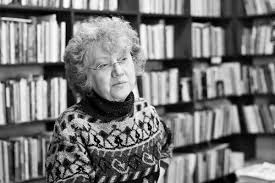
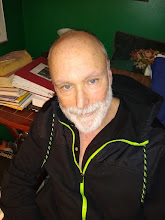
Tom Miller
 Tom Miller is a Somerville Bagel Bard, a graduate student in History at Salem State University, a retired auto executive, and a much-published poet.


The Marathon
Boston April 15, 2013


The next day.
Friends and loved ones accounted for.
All are well.

But all are not well.
Counts are done.
Casualties tabulated.

Dead identified.
Wounded suffering.
Psyche flat.

Flags at half staff.
Bells will soon toll.
Tears shed but again.

The randomness.
Not so much of the act
But of the victims.

Just ones out to enjoy the day.
An accident of timing merely.
Malice in its anonymity.

And what do you accomplish
With your venal act?
Retribution? Salvation for self or others?

Meaningless.  Meaningless.

Suffering and loss.
Gains to you only in the negative.
For you have added nothing to the world

But misery.

Friday, May 13, 2016

Sometimes I Hear the Clock Speak By Lori Desrosiers


Sometimes I Hear the Clock Speak
By Lori Desrosiers
Salmon Poetry
Cliffs of Moher, County Clare, Ireland
www.salmonpoetry.com
ISBN: 978-1-910669-30-3
67 Pages

Review by Dennis Daly

Samba scat, pot-laced giggles, a baby crying in tune, bugled reveille, a cantor’s baritone, the thwap of a heron’s wings, the hiccup of time, and many other lyrical moments punctuate the deep mnemonic resonance flowing through Lori Desrosiers’ captivating new poetry collection entitled Sometimes I Hear the Clock Speak. These poems shimmy successfully past the emotional complexities of life with organic joy and growing perception. Desrosiers’ words thrill with the thrum of life needing to be lived.

In her piece, The Year of Bad Decisions, the poet splices aural childhood memories with adult concerns. The touch is light and the onward movement detailed and deepening. Desrosiers acknowledges life’s events with nods of interest, her eyes always returning to the yet-to-be determined future. A brother’s trombone competes for attention with the poet’s violin in the heart of the poem. Neither prevail.

We’d practice in our rooms upstairs,
his bleating drowned out my high notes.
Mother begged us to take breaks,
tempted us with plates of Ritz and cheddar,

a bribe to soothe her delicate ears, knowing
full well we would start again next day.
Perhaps we were the reason she spent so much
time out of the house, finding excuses to leave

us alone for hours on end, we didn’t know
her newly single life or what she did at night.
Found out later she was dating the chorus teacher,
whose classroom both my brother and I attended.

It’s Hard to be Six, Desrosiers poem that explains everything you ever want to know about childhood, works uncommonly well by modulating its humor and toning its irony. The poet’s persona opens this childhood chronicle by insisting, “I tell my mother the truth.” Indeed she does. A young Cassandra, this protagonist confronts the grown-ups that run her world. Here’s one pretty funny stanza,

I tell my parents my baby brother can talk.
They never believe me.
Playing upstairs, I say to him
make the teddy bear say I’m going to school.
My brother says, I’m going to school.
He says whatever I tell him.
When they put him in the high chair
and he wants something,
all he has to do is point and say Ummm
and they jump to get it.

Sometimes chance intervenes and childhood memories need revising. Desrosiers, in her poem My Violin, learns the difference between a student violin and a professional instrument years after discontinuing her lessons. Illuminations like this can upset an artist’s complacency and assumed self-knowledge. The piece concludes by separating the artist from the instrument,

Year’s later, a friend’s violin sitting out

Scheherazade on the music stand,
asked if I could try, it was one we played.
So shocked I almost dropped the instrument.

She explained it was the violin.
If only I had known,
all those years in High School

when I sounded worse than
everyone else, no matter
how hard I practiced.

It was my student violin
That lacked resonance, not I.

Good art ages well, but good artists sometimes not so much. In her poem entitled My Brother’s Voice Desrosiers chronicles her family’s genetic choral talents. Inheritance proceeds not in straight lines, but unpredictably, in many artistic families. Wrinkles inevitably appear and intertwine with everyday life. Consider this cruel misdirection of nature,

Dad would try to sing
Loudly, out of tune, the Marseillaise
Running into the ocean.

When he was seven
before antibiotics
they removed his right eardrum.

My brother sings
more like my grandfather
on our mother’s side

who sang Russian songs
and snippets of operas
as he cooked fried matzo.

My favorite piece in this collection is a well-crafted poem entitled Sestina for my Daughter Margot.  Desrosiers navigates successfully between the dual shoals of sentiment and regret into a sea of reconciliation and potential. Vocal memories and music are the oars that get her there. The repetition of word endings in this classic sestina work beautifully by controlling and channeling the emotion. Here’s two of the more telling stanzas,

Amazing now, our closeness of late.
You call me often on your own.
My lovely girl, you seem less gone.
You visit me and hold my hand,
I bask in the timbre of your voice.
Time helps forget the pain we left.

For a time you and I were left.
We played together, slept late,
I learned to fix things, found new voice,
figured out our future on our own,
slowly stilled my trembling hand.
Years went by before the fear was gone.


Reverie Obscura, Desrosiers clever meditation on the art of poetry, catches reality in a novel way. The poem begins as a panorama, then progresses into a camera obscura metaphor, where the world appears through pin holes as platonic projections, only upside down. Consider how the poet exits that world,

Then we are on a train, going backwards.
The world goes by upside down,
a camera obscura, light peeks
through pinhole windows
reflecting on black walls.

We sit upside down
To see the world right side up.
“This is poetry,” he says,
And I am falling now,
Falling out of this poem.

As Desrosiers’ persona tumbles back to human actuality and its constrained visions, her poems seem to continue on. One oral memory after another hesitates like a charmed particle in “time’s flutter,” then spins off into the arcing buzz of space.  Singular poems like these orbit their readers.

Tuesday, May 10, 2016

Longtime Somerville, Mass. Poet and Publisher Received Allen Ginsberg Award


Gloria Mindock


By Doug Holder

(Somerville, Mass.)


For years I heard about Gloria Mindock the founder of the Cervena Barva Press, but I never met her in the flesh. She was the editor of the Boston Literary Review for a decade; she was involved in avant-garde theatre, ( her theatre company won a  Rockefeller Grant)  as well as being an accomplished poet and a strong presence in the arts scene in these parts. About 10 years ago I finally got the chance to meet her. I had noticed that she started a new venture--the Cervena Barva Press. I was intrigued--Somerville has always been a home for small presses--and so I want to see what this lady was about. She agreed to meet me in the basement of the now defunct Finagle-a-Bagel in the heart of Harvard Square. Our early meetings of the literary group  the Bagel Bards met there every Saturday. At first glance she seemed to be very reserved and a bit nervous. But we all know what can be beneath placid waters. Gloria Mindock proved to be a dynamo -- with an infectious, zany laugh. With the help of her partner Bill Kelle, she has published over a hundred titles, including translations, plays, fiction, poetry collections and has received international recognition for her work--especially in Eastern Europe.

The Ibbetson Street Press of Somerville published her poetry book Blood Soaked Dresses that pays tribute to the Salvadoran people who suffered greatly during their civil war in the 1980s. I am also glad that Mindock published my first perfect bound collection of poetry The Man in the Booth in the Midtown Tunnel.

Mindock has now established a studio and bookstore for her press in the Somerville Arts Armory and has established a number of reading series, the current one being The First and Last Word Reading Series with  her cohort Harris Gardner.

Mindock is an accessible, warm and kindhearted women, but doesn't suffer fools gladly.

Robin Stratton, the founder of the Newton Writing and Publishing Center presented Gloria with the Allen Ginsberg Community Service Award on May 14, 2016 at 1PM. For more info go to  http://newtonwritingandpublishingcenter.com

Tuesday, May 03, 2016

Age of Wonders, poems by Lawrence Kessenich (Big Table Publishing, 2016)


Age of Wonders, poems by Lawrence Kessenich (Big Table Publishing, 2016)

Reviewed by Denise Provost


In Black Swans, for instance, the setting is straight out of a fairy tale – a visit to a daughter spending “a semester in a castle –transformed/into a college campus ….” Contemplating the black swans (“known to chase visitors/across the broad lawns, honking madly”) in the moat, the narrator contemplates the grown child who has “we suspect, taken a professor/ for a lover.”

What to think of such a turn? What is the device that will move us from here to the happy ending we’ve been primed to anticipate? With a profound and subtle turn the narrator reveals that “[p]art of me would like to be

angry at this dark prince of learning, but I
can’t be sure I’d be able to resist,
if I taught young women, the temptation
to wind myself around them like

the lithe, muscular neck of a black swan.
Besides, our sons and daughters sail their own
moats, honking madly if we get too close.
It’s their castle and they will defend it.

Like so many of Kessenich’s poems, Black Swans is a masterpiece of equipoise, its elements twining into a perfect balance of emotional insights. It’s evident in The Buddha’s Shoulder, one of two meditations on the narrator’s relationship with a wooden figure of the teacher whose name is almost synonymous with enlightenment. This statute is one which has, quite literally, been lightened: “faded by morning sun./The nut-brown wood has turned blonde,/like a washed out dye job.”  The narrator confesses:

Being less compassionate, and more attached
to things remaining as they are, I’m bothered
by these blond patches on the Buddha’s image.
I’ve considered retouching him with a stain….

The great teacher’s lessons having been? seen as? too powerful for such interference, the narrator considers that

Perhaps I’ll learn to meditate on his 
imperfect shoulder, his marred knee, come to
accept that life is a long, slow fade toward death.

There Is no self-pity, no melodrama in the tone of this poem, or in other poems contemplating the trajectory of life to its end – or even beyond. A poem which undertakes the latter course is the extraordinary Afterlife. I know of several readers whose reaction to this breathtaking poem has been to say that they wanted to read it at the memorial service of a loved one, or have it read at their own. Afterlife reimagines the Biblical seven days of creation as a creative deconstruction:

Day 3
Your individuality begins
to melt like the Wicked
Witch of the West, all your
beautiful wickedness –and
you do see its beauty as
it goes –melting in a puddle
at what was once your feet. 

It’s surprising to find such a spirit of equanimity in any collection of contemporary poetry, but it consistently manifests in this collection. When, in the poem The Zen of Mescaline, the narrator says “[m]y identity slips the leash of form,” we recognize the cast of mind that unifies this work. It is one which is open to the particulars of experience, its marvels and mysteries, with a deep acceptance and a self-aware, sly humor.

In the title poem, a scene of natural beauty at an ancient cultural site is interrupted by the rumble of a jet:

….Immediately
my mind goes to dissatisfaction
with the world of whining engines and progress.
It is then the ancients speak to me: “You live
In an age of wonders. Enjoy them!”….

It may not be possible to read these poems and not absorb even a little of the attitude of even-handed appreciation they convey.  Lines from these poems may bubble up into the ordinary, the tedious, the vexing, and even the painful episodes of life, with little breaths of patience and peace. Who knows? Wider dissemination of these poems may help make America grateful again – for, after all, we live in an age of wonders.

The Sunday Poet: Karen Klein


Karen Klein


Karen Klein dances and writes poetry. She is a member of Prometheus Dance Elders Ensemble and dances with the intergenerational group Across the Ages Dance and with several independent choreographers, including Kelley Donovan, Brian Feigenbaum., Karen Bray. Her poetry was a structural part of Prometheus Dance regular company's full evening length performance, Desiderare, and her poem Hello, Babies, a movement/text/live music production was recently performed as part of We Create.Her poems have been published in The Drunken Boat, Pudding, The Aurorean, and are forthcoming in Cape Cod Poetry Review and The Comstock Review


Planted


Two summers gone since Jim became ash.
The hunter green square box
so heavy
           and him
           so skinny
           so wasted.
Some of him scattered from kayaks into the clam-filled bay.
Some of his cremated bones honor the earth,
           Adamah,  our birth mother,
intermingle with the soil under my newly planted
           Turtleheads
           chosen because they can survive
           Joe Pye Weed
           because weeds grow better than cultivars.
They’re natives and perennials and will come back next season
and the next and the next because that’s what perennials do.

But I made the wrong choices.
Unaware, I brought home swamp plants
who like to keep their feet wet
and put them in a sandy, dry soil.
They won’t come back next year.


                                                           Karen Klein

Saturday, April 30, 2016

My Dinner with Larry: Steve Glines recalls a dinner with poet Lawrence Ferlinghetti


Lawrence Ferlinghetti


**** Years ago the late poet Jack Powers invited me to a lunch with poet Lawrence Ferlinghetti founder of City Lights Books. I had to work that day--and I regret that I didn't call in sick. Fortunately Steve Glines, the designer for the Ibbetson Street Press had dinner with the grand old man, and here is his story...


My Dinner with Larry

It was in the mid 1990's, Jack Powers called to invite me over for dinner. Jack didn't drive so I took an invitation like this to be an invitation to drive him all over town. Jack was a lousy cook. His specialite de maison was spaghetti drenched with oil covered tuna, beans, chili and a few more unappetizing components. I politely declined. Jack insisted, promising dinner in a real North End restaurant, with a celebrity.

Jack was the kind of person who knew everyone in his tiny universe. He was a celebrity in his own right, but only in the poetry community of Boston. Not a very big world as far as celebrities go. Still whenever a big name poet came to town to give a well-paid lecture or reading at one of the universities, they would always pay a visit to Jack and occasionally read at his venue, the venerable “Stone Soup Poets.” 

“Is it anyone I know?” I asked.

“His name is Larry.”

I could hear laughter in the background and someone said, “He's the light of the city.” Still more laughter.

I thought I knew who the mystery celebrity was. “I'll be there in an hour.”

I had known Jack for over 30 years. When I first moved to Boston in 1970 I hung around the Grolier Bookshop where I sit in an overstuffed chair and read for hours. In 1970 Harvard Square was full of literary-want-to-be's, poseurs, for whom being thought of as a writer was far more important than actually being a writer. I mentioned this to Gordon Carnie, owner of the Grolier, who expressed a dislike for most of his clientele, those same poseurs for whom being seen at the Grolier and acknowledged by Gordon was the apex of their status. Gordon suggested I try the Stone Soup Poetry in Boston. You'll find real poets there, he said.

I went to Stone Soup off and on for the next forty years. I became a regular in the 1990's when my daughters expressed an interest in poetry and literature. My youngest daughter made it her mission to catalog the thousands of poems Jack had written over the years. She gave up after cataloging well over a thousand items in just one pile in one corner of just one room. The poems were written on the back of envelopes, utility bills, shreds of Newspapers, etc. Each item was carefully placed in a plastic bag, numbered and accompanied by a 3 x 5 index card stating what it was, when it was written (if Jack could remember) and any other interesting information. A duplicate card went into a file box.

As I was walking to Jack’s apartment in Boston's North End I saw him carrying a dozen loaves of bread from a truck to a restaurant. He went back and forth supplying every restaurant on the block with fresh bread. The North End is very crowded and a delivery truck stopped to deliver anything can be the cause of a major traffic jam. With Jack doing the delivery the truck didn't have to stop for long. That was Jack's explanation as we walked to his apartment.

When we got to the apartment there was a young couple that had hitchhiked to Boston  and Jack had taken them in ,and a bearded old man with a red beret sitting in a very old, third hand, overstuffed chair, likely saved from a trash heap. The old man got up and Jack introduced us. It was Lawrence Ferlinghetti. “Call me Larry,” he said with a twinkle in his eye. I have a photograph, someplace, that I took of the occasion. Its got everyone in it but me, of course.
 Jack lead us around the corner to an Italian restaurant where Jack was acknowledged to be the celebrity of the moment. We were lead to a private room. I sat next to Larry but I could never bring myself to call him that. The two young kids were enthralled by Jack. I don't know if they even knew who Lawrence Ferlinghetti was.

I love poetry and I love history and, sometimes, I can talk intelligently about both but I am not a scholar. Talking about poetry with Lawrence Ferlinghetti required at least three large glasses of Italian red wine before I dared to bring up the subject and voice an opinion. Before that point was reached, however, we talked about his time in the U.S. Navy during WWII. His first assignment was on a yacht re-purposed as a sub-chaser. A few short lived assignments and he was put in command of a Destroyer Escort (DE). These clumsy little vessels could steam at twelve knots, fifteen if they had to, while the convoy they were protecting sailed along at eight to ten knots.  Of course, they had a five inch gun on the fore deck but without continuous target practice there was little chance of hitting a target as small as a surfaced submarine. His ship wasn't equipped with depth charges because it wasn't fast enough to drop them and get out of the way of the resulting explosion. They would have been hoist on their own petard. But the real purpose of the DE, Ferlinghetti concluded was to take a hit from a torpedo launched by a German sub to protect the convoy. On D-Day his ship was part of the anti-submarine screen. Ironically, Ferlinghetti never fired a shot in anger and was never fired at, as far as he knew.

Three large drinks later we were ready to tackle poetry. We rambled around various topics until we came to Haiku. Ferlinghetti claimed that we misunderstood it in the West. He said it was a lot more than just a three-line poem with seventeen syllables, written in a 5/7/5 syllable form. Indeed it could be any number of syllables as long as it kept to the Hegelian, point, counterpoint, exclamation model. As an example he offered:

Look, a cloud.
No, a flock of birds.
Wow!

After a mildly heated debate, and several more glasses of wine, Ferlinghetti admitted that he had made it up. Then, with a gleam in his eye he announced that he had just invented a new form of poetry: American Haiku.

For the next few months I wrote dozens of bad American Haiku, every one of them read at Stone Soup.

A bed of wet leaves
on solid rock?
Lookout, Ouch!

Frogs in the pond
bad news for bugs
Slap, not bad enough


You get the picture. 

The Sunday Poet: Robin Stratton


A Sign


I was sitting in a coffee shop

with a friend

telling her about a woman I know
who for years has been visited
by spirits
both benevolent and malicious

One time she was driving
in a rain storm and
her windshield wipers just
stopped
She prayed for a miracle
and they started again

Another time she came home
and her house was a mess
nothing was where it belonged
and the children denied any
responsibility for the disorder

One night she asked the spirits
for a sign to let her know
that everything was going
to be okay

And in the morning she went
to the kitchen and there
on the table was a piece
of paper
and written on the paper
was the symbol for infinity

When I told my friend this story
I drew the symbol for
infinity
on a napkin and when
we got up to go
I left the napkin on the table
so it could be a sign

for someone else


Robin Stratton has been a writing coach in the Boston area for over 25 years. She is the author of four novels, including one which was a National Indie Excellence Book Award finalist, two collections of poetry and short fiction, and a writing guide. A four-time Pushcart Prize nominee, she’s been published in Word Riot, 63 Channels, Antithesis Common, Poor Richard’s Almanac(k), Blink-Ink, Pig in a Poke, Chick Flicks, Up the Staircase, Shoots and Vines, and many others. She is Acquisitions Editor for Big Table Publishing Company, Senior Editor of Boston Literary Magazine, and Director of the Newton Writing and Publishing Center.

Friday, April 29, 2016

From Drums to a Pulitzer Prize: Interview with Paul Harding


******** Endicott College student Nicole Cadro interviews acclaimed novelist Paul Harding


******************************


Endicott College had the pleasure of hosting 2010 Pulitzer Prize- winning novelist Paul Harding on April 7, 2016. He was a speaker in the Endicott College/Ibbetson Street Press Visiting Author Series. His prize-winning novel Tinkers deals with a dying father and a son who returns to tend to him.  Laura Miller, who was on the selection committee for the Prize wrote, " I think sentence for sentence, it was the most beautifully written and  had the most gorgeous use of language of any books that we looked at."  At the event Harding captured the audience’s attention as soon as he uttered the first word. His poetic prose, had a rhythm that kept listeners buckled into the roller coaster of  words that came together to create this lyrical literary piece. It was a distinct pleasure  to have been able to have a conversation with an individual as engaging as Paul Harding. 

Nicole Cadro: I read that Carlos Fuentes’ Terra Nostra was the work that you read that flipped the switch and helped you decide you wanted to become a writer. I was hoping you could elaborate on that, what specifically about that work made up your mind?


 Paul Harding: When I read that book it was a time in my life that I was an avid reader, but my own reading was not self-directed very well. I had not found the kind of books that I wanted to read. So I was reading other books, the ones I read in college. But I knew somewhere there was the headwaters or the writing that I could really dig in and relate to. So actually, the most intuitive thing that I would do is just go into the fiction section of the local bookstore, in Amherst or wherever (I went to UMass Amherst), and I would look for the thickest books I could find that weren’t just “pop” novels. I would just pull them off the shelf and look at them; that’s how I ended up reading Thomas Mann and Tolstoy. I just found Terra Nostra because Terra Nostra is just like a brick, it’s like a doorstop.  And I was like, “I want me some of that.” That is what I want to do. First of all, it’s like I want to be in conversation with works of art that are that large in scale. I write actually quite small books but I think of them as being really dense; they are one hundred and fifty pages long but hopefully they are seven hundred and fifty pages sort of dense. Just that vision and just the fact the license he had--I didn’t know you could do that. You get to write about all of this wild stuff and his vocabulary was just really exotic and really, really esoteric. It’s funny because I don’t write like him at all, or not so much anymore. In subsequent years I am almost afraid to go back and read that again because I don’t think I’d like it as much. It just set me off on that trajectory. It was one of those funny things. The old version of that book had an afterword by the novelist Milan Kundera and he wrote The Unbearable Lightness of Being and I read that, and then I read some of Fuentes’ essays and he talked about how much he loved Thomas Mann. So then, kind of from that one book and just that one author I just started finding all of these other authors until now it’s hopeless. But I take comfort in that: that I’ll never be able to read all of the books I want to read, it will never run out.


Cadro: To stem off of that question, once you started to delve into your literary career and your schooling, specifically college, I know that I look for things to take away from every class. I think, “Okay this might help me later on in life.” What was a big thing in your schooling that you feel really affected your career and your path?


Harding: Well, undergraduate was a little bit of this and that. I was an English major so I kind of cut my teeth and worked up my chops by reading a lot of Shakespeare and all similar works. I spend all of my time doing now too. But sort of circumstantially all the while I was in college I played drums in rock bands and that’s what I ended up doing ten years after that. So I was thinking about music a lot but also thinking of it as art. A lot of it was musical and I just so happened that UMass Amherst had a really good AfroAm (African American) department and studies program. And at the time I was there they had really amazing Jazz musicians. So I was able to listen to lectures about art and about music by people like Max Roach, a very famous Jazz drummer. I was able to take a yearlong course called Revolutionary Concepts in African American Music with a Jazz sax player named Archie Shepp who was just a really extraordinary guy. So anyways, I found that all of the guys I hung out with were these pretty radical music dudes from New York City. I grew up in Wenham, and so I had these informative experiences about art but also social justice and race in America, and art forms that arose out of that in the black community. It really furnished a context for thinking about art for the rest of my life that has never changed, I still feel that initial thing and that is what is still evolving.


Cadro: Our English 101 class just had a guest speaker, Robin Stratton, and she talked a lot more about the writing process itself versus the actual works. When you were writing Tinkers was there page ripping, fingernails flying frustration? Then, if there was this frustration how did you know you had “it”?


Harding: That’s a good question because with me it’s very intuitive. I don’t write things in a linear way. I sort of collage. I have all sorts of weird, mixed metaphors that I use so I sort of think of it as a big painting. I add layer after layer then scrape layers off and adding more layers, and just sort of collage and move things all around, very improvisational and musical. So all I can report that there was one day that I finished writing whatever the passage was that I was working on, and I sat back and I realized, “I’ve got the whole thing, the whole thing’s here. I’ve told the story.” But then I had to go back and put it all in order because I had written it in such a crazy way, sort of a mess.


Cadro: So it was kind of like putting all of the pieces into the timeline?


Harding: Yeah, basically, more or less it was doing it chronologically. But  in Tinkers the point of view is a guy who is in his final illness and his consciousness is starting to dissipate. So it [Tinkers] it’s just the way his memory sort of works and doesn’t work, and the way the ideas sort of surface and then sink back down and then recrudesce in a sort of weird refracted ways. So I had to fool around with that and get it so it was almost prismatic. I had to make it so it was a cohesive whole. But chronologically what I did,--I printed it up and I cut the whole manuscript up into all the different scenes and pieces. I put them all out onto the floor and I spent a weekend rearranging them into the prism. The published novel is forty-thousand words and the original manuscript was probably about seventy-thousand words, so I cut about a third of it. There is not a sentence in that book, anyways, that I didn’t rewrite thirty times.


Cadro: How long did it take you?


Harding: It took me probably four years to write it, to really get to the point where I felt I could show it and try to get it published. But then nobody would publish it; so I had it on my hands for another five years. During which, once in a while I would take it out on a Sunday or Saturday night and just fiddle around with it and just keep trying to get the language as precise and lucid as I could make it.


Cadro: I bet those publishers are kicking themselves now.


Harding: Chuckles. There are a few who wrote me nasty rejection letters, who when it won the Prize, I  thought, “Told you.”


Cadro: So my last question for you is a two-part question. Tinkers, I know is mainly focused on a man dying and going through all of those ideas and memories. He’s kind of facing reflecting on his life and also facing death; you must have had to ponder a lot of that on your own. So with that, what do you strive to take out of each day?


Harding: It’s funny, that’s a good question because I don’t approach each day with the idea that there has to be a “take away” from it. It’s to be observant. It’s just that idea of being as fully engaged and conscious and aware as possible. It’s inextricable. Because I’m always thinking in the context of writing. I think of my writing as having no lessons to be had from my writing. My writing is experiential, it’s descriptive, so what I mean to do is make my prose. Whatever I’m working on I have something of the density of lived experience so when other people read it there will be just recognition.


Cadro: So every day is an experience, adding on to what could come out of your literature?


Harding: Yeah, yeah. Then I mean there’s always is, because I’m preoccupied with theology and I read tons of philosophy-- so I’m always thinking about morality and ethics and just  “loving your neighbor” and all of that sort of stuff. So often the “take away” is that I’ll try to do better tomorrow. It’s sort of like falling short of your own ideal, just being mindful in that way and just trying to be honest. As a writer, one of the principle things is that everything you write needs to be true.


Cadro: The second part of that question was that you also deeply explored the possibility of death, Did this made you more comfortable with it?


Harding: I don’t know, you know it’s funny, I don’t think of it as death I think of the subject as mortality. Because that’s philosophy and religion and all of that sort of stuff. Artistically and aesthetically too, it’s kind of the ultimate counterpoint. It’s the ultimate juxtaposition, it sets in relief being, the whole idea of non-being or the whole idea of why is there something instead of nothing, metaphysics. Because just by disposition I spend all my time thinking about metaphysics and consciousness and the nature of consciousness, and out of what does consciousness precipitate? Some substratum? Or is it a function of complexity, like biological, something that gets complicated enough so it’s an emergent property. It’s a great mystery. A lot of times too I just get cranky because popular writers-- like celebrity science writers or celebrity philosophers give people a portrait of the human mind and of the human life that is so impossibly simplistic and simple minded that it just makes me crazy. They explain everything a way, and really what it is rhetorical, just slight of hand with grammar, language games. Partly, I just think of it as my, (and again this is an idea), but just that if that art stands for anything it stands for a corrective against simplifying human experience. Taking away the dignity of each person’s human experience by presuming to tell people of what it is that their lives consist of because it’s been empirically demonstrated by some positive-esque “jerk off”. Just that idea that what your art does is that it bears true witness to the experience of life, and that’s the key because if there is  that authenticity and you can get that authenticity on the page that’s the deepest connection you can make with the reader, which is that the reader will recognize herself in your art. Very humanistic, very old school humanism.