Friday, June 21, 2013

Somerville Artist Christina Tedesco: Ability Amidst Disability


 Somerville Artist Christina Tedesco:  Ability Amidst Disability

By Doug Holder

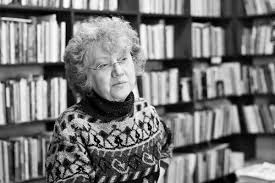
  Christina Tedesco, a Somerville resident who suffers from cerebral palsy faces many challenges, but she remains a committed artist. Tedesco, who I met at my usual perch at the Bloc 11 CafĂ© in Union Square, wrote on her website that her art “…deals with the movement of the human body through space and time. Specifically with the control between balance and imbalance, control and the lack thereof.” “Control and the lack  thereof" are issues that Tedesco faces with her own body, and in her art.

  Tedesco works at the “Mad Oyster” studios on Bradley St. in Somerville. She has lived in Somerville for the past 10 years and she is a graduate of Tufts University and The Museum School in Boston. Of Somerville Tedesco said: “ I love the combination of the city and the suburbs. I find the arts community very down to earth here, certainly more than say the Harrison Ave. crowd in Boston. And Somerville is very easy to get around either by foot or bus.”

  Tedesco said her introduction to art was due to a mistake. She wanted to get into a specific literature class at Tufts but as it turned out it was full so she opted for a photography class.  All this lead to her desire to become an artist. And later, the budding artist moved on to sculpture and painting.

  As for her disability-- it is hardly an asset in the artworld. She said: “ The people I draw have no face. I think people often look at my disability first—not my face or personality.”   But there are advantages according to Tedesco: “ I think I have to observe more closely than the average person. I have to move at a much slower pace. I have to be very conscious of what’s around me, so I don’t fall. And part of being an artist is having the ability to concentrate.”

  Tedesco counts the artist Louise Bourgeois as an influence. She reflected: “ I feel I paint the way she did. She didn’t care about detail, but yet the content is there. Many of her subjects are faceless. She’s like me—concentrating on parts of the body.”

  Tedesco continued: “I draw in a child-like fashion. When I attempt to draw detailed faces—I feel they are not good enough.”

 Tedesco, who works at the Institute of Contemporary Art in Boston has had mixed reactions to her work. She said” Some people like it, others find it sad or scary. My new work for instance incorporates a lot of deep and dark shadows, which may off put folks..”

 Tedesco has participated in a lot of shows in the area. Her work has surfaced at such places as the Harriet Tubman House in Boston, the State House, and Bloc 11 in Union Square, where this interview took place.

 Somerville, Mass. is a home to artists of many types. Tedesco is certainly a unique presence in the Paris of New England.

Thursday, June 20, 2013

Imaginary Planet Poems by Alan Elyshevitz


Imaginary Planet

Poems by Alan Elyshevitz

Cervena Barva Press

Somerville, Massachusetts

editor@cervenabarvapress.com


35 Pages

$7.00

Review by Dennis Daly

Some writers puzzle over words and phrases, positioning them, trimming them, easing them into place. Others, like Alan Elyshevitz, take their poetical wands in hand and, through a kind of grammatical gravity, spin their imaginary worlds into solid being from the dust and debris surrounding their commonplace lives.

Like the orbiting planets they mimic, these poems appear from afar to rotate seamlessly, peacefully, and, above all, with a uniform consistency. But upon closer examination the fragments of broken lives and the awful motes of death and change become quite evident.

In his poem entitled Debris Elyshevitz details the calamities inherent in the dissolution of a civilization,

The smoke won’t clear, nor the waters

recede: the sixteenth calamity

this montha record.

Fences and turnstyles have toppled,

reverting to sour metal

in a reservoir of mud and glass.

Ashes quiver in the updraft;

soggy textiles plug the drains.

The poet, intent upon creation or perhaps restoration, explores this devastated urban landscape and transforms himself into a solicitous healer with practical applications. The poem ends thusly,

… proving himself

indispensable, as his alcoholic

mother always claimed when

he dabbed her elbows, steadied

her finances, and snapped her

memory back from the storm.

Elyshevitz serves up a bit of art theory in his poem This Fragile Planet. He seems to consider both the subjectivity of the reader as well as the essence of the poem itself. He laments his lack of control over his own creation. As artists create they dissipate into their work until they themselves disappear. The poet puts it this way,

it engenders dinosaurs and

burlesque

It cracks

with the slightest quake

of interrogation

Psychiatrists

pull artifacts of shame

from every breach

For years

it cultivates eccentric

rifts

In the end

it fears what we all fear

eclipse

Yes, mortality spares neither poet nor poem. Something to think about.

The poem Hurricane recounts the violence that hits our placid world periodically targeting the weak, the aged, and those who through pride resist. All but the "squat dense things" of life are at risk. Debris is everywhere. Here’s the heart of the poem,

The car horns, the embarrassed medical

team, the fluids bursting from every sewer

In public shelters the dispossessed cough

into their hands like guttering candles

How they yield to the deepening blackout,

jostle, compete, exchange ingratitudes

There is no refastening dislodged pride

Nor the limbs of any man or tree…

Lot’s Wife portrays the great Russian poet Anna Akhmatova in exile. In fact the poem is dedicated to her. Her cottage world that Elyshevitz has spun together comprises chickens, potatoes, eggs, bad memories of her ex-husband, and her dreams of foie gras. Outside she hears only the universe’s white noise, or perhaps something more. In spite of her entrapment and the isolation of her planet, there is some comfort here. Elyshevitz explains,

Outside, the cackle of falling leaves may be

White noise or the very message you desire.

Meanwhile, for dinner you dream of foie gras

And a smuggled morsel of hope from the city

Of your sentiments. By morning the coop may

Produce a few eggs which some say contain the

Biographies of martyrs, for they taste unbearably

Sublime when accompanied by a pillar of salt.

The poet points to the protective cocoon of suburbia and concomitant dangers in his piece entitled August. The denizens of this comfortable world enjoy music, central air and spicy dips. Outside of this zone lurks vagueness and dangers. Here’s how the poem ends,

… If you squint

hard,

you can make out the city.

vague as an un-hyped investment

Hard to imagine people out there

moaning

in slow-motion Spanish. If only they

w plutonium, petroleum, paper:

useful.

A slow

news day. Feel better. No one

you

know has been raped or tripped a land mine.

And the metal detectors are working

just fine.

In Let Us Not Speak Of Legacy Now the poet’s persona spoon feeds his dying father. The claustrophobic scene grows more and more uncomfortable as the poet describes the punctured veins, the thickened eyes, and the strangled muscles. The description is spot on and captures the reader within its sterilized dizzy confines. The semi-private hospital room becomes a spinning planet and only the human connection between father and son allows focus. Here are some neat and also telling lines,

Encrusted in doctors’ orders,

you wear the stigmata of punctured veins,

your muscles strangled by atrophy

in a gown without pockets.

All that remains of your fussy desires

is the dusty flavor of your gums

Last but not least, take a look at the spectacular picture on the front and back covers of this book, courtesy of NASA and Caltech: Out of the Dust, A Planet is Born.

Wondrous cover. Otherworldly book.

Sunday, June 16, 2013

Poet Charles Coe: Forgiving himself. Forgiving his Parents. All Sins Forgiven.


Poet Charles Coe


Poet Charles Coe: Forgiving himself. Forgiving his Parents. All Sins Forgiven.


Interview by Doug Holder


Poet Charles Coe has lost both of his parents, but he still talks with them through his poetry. In his new poetry collection from the Leap Frog Press: All Sins Forgiven: Poems for My Parents he writes about his parents with eloquence and insight. He has been around the block and realizes we are flawed, we love and hurt each other, we sin, and we forgive. In his collection he deals with the complex relations between parent and child in an evocative manner that only a skilled wordsmith could pull off. I spoke with Coe on my Somerville Community Access TV Show Poet to Poet: Writer to Writer.


Doug Holder: E. Ethelbert Miller, author of Fathering Words: The Making of an African-American Writer wrote of your work: "Here is a collection that captures the and intimacy within the black family that sadly goes unnoticed by much of America." Why are these qualities not noticed by society?


Charles Coe: I think a lot groups, cultural groups, ethnic groups, are portrayed by the media in pretty stereotypical ways. A lot of the time when you see a black family portrayed on a TV show or movie, you see them in the context of violence and gangs, domestic discord, sports and music. But I think there is not enough about ordinary life. A lot of the poems in my collection All Sins Forgiven are about ordinary family life.


DH: Your new collection is from the Leap Frog Press. Ownership has changed recently. Can you give me a brief history of the press and your involvement with it.


CC: Leap Frog was started in the 1990's by the marvelous poet Marge Piercy and her husband the novelist and writer Ira Wood. In 1999 they approached me to see if I was interested in submitting a manuscript for publication. A I was very excited to and we worked out a deal for my first poetry collection Picnic on the Moon. Because of my other writing and my full time job it took awhile for the next to come out All Sins Forgiven. Leap Frog was under new ownership when they published All Sins Forgiven.


DH: You have an extensive background as a jazz vocalist. Can you talk a bit about your influences?


CC: That would be a large task. But my platinum standard is Ella Fitzgerald. She is my alltime favorite vocalist.


DH: Do you ever do Scat singing?


CC: I don't focus on that as some jazz singers do. Scat is like peppering a stew. I think scat singing is one of the influences that Hip Hop artists look to for inspiration. I think in some cases the most creative writing around is Hip Hop lyrics.


DH: Your new collection deals with your late mom and dad. How has your view changed about your folks from when you were young to now in your 60's?


CC: When you are young it is very difficult to realize that your parents are actually people and that they are flawed and complex. When you are young they are viewed like your high school teachers. It is as though someone puts them in a closet and unplugs the battery, and shuts the door. And they are awakened just in time to teach the next class. The older you get you realize there are a million questions you want to ask: What were they afraid of? What were they sad about? What were they proud of? I can't have those conversations with them now because they are gone. My book is in a way a route to asking them those questions.


DH: I remember when I was writing my Master's thesis on food in the fiction of Henry Roth, my thesis advisor thought food might be a trivial theme. You use food through out your book: your father cooking pot roast, a Thanksgiving dinner, etc... Through your use of food in your poetry you really get at the texture of life.


CC: I really like to eat food. I love food...perhaps a bit too much. I think food is an incredible way to share time together--bonding, comfort and community. The knuckle heads that told you food is trivial don't know what they are talking about. They practice a form of literary snobbery. There is no subject under the sun under the sun that is trivial. The only thing that is trivial is the mind that approaches the subject. You know great poetry can make the banal profound. Bad poetry can make profound, banal. It is not the subject matter--it is the writer.


DH: Did this poetry collection give you a sense of closure?


CC: Yes and no. I am very glad that I wrote it. I wrote it to understand something about my parents. But it was not just through writing the book, but it was in the process of getting out there, plunging into readings and explore things through the questions people ask me. The idea that I came to some ultimate understanding of my parents is not the case. The people you are closest to can be the most mysterious. We are a mystery to ourselves.


DH: Tell me about your work with the Mass. Cultural Council.


CC: I have been with them for 17 years. I oversee a grant program that gives money to arts organizations. This is not targeted money. The money can be used for many things. This is the hardest money to get. Part of my job involves traveling around the state. I go around the Commonwealth to see what art organizations are doing. Porch sitting I like to call it.


DH: The title of your new collection is All Sins Forgiven. Whose sins are forgiven here?


CC: I am sort of forgiving myself for not helping them more and spending more time with them. But I am also forgiving them, for their shortcomings as well.


TEACHING MY IMAGINARY SON TO FISH


Never take fishing too seriously. Find a shade tree

by a creek bank to lean against on a sunny day with

a mild breeze blowing. Toss your line into the water

and set aside, for awhile, the cares of the day.

Never move too fast; in fact, try to move as little as possible.

And remembe...r; sometimes your best days fishing

will be the ones you go home empty-handed.


These are lessons my father taught me; not in words,

but in the way he’d whistle while unraveling a tangled line,

or laugh when some big catfish slipped the hook. I am

the end of my father’s line, with no one but you to teach

those things I am only now beginning to understand.

And I struggle with his final lesson, the mere fact

of his absence, an the idea that wriggles in my grasp,

like a worm I can’t seem to thread onto the hook.     --- Charles Coe


Some Plum Poems Jane Etzel


Jane Etzel


Some Plum Poems
Jane Etzel
Dove's Wing Press
ISBN: 978-0-578-10317-4
2012  $10.00

“...As the old man prepares to resume his walk,
he sits a moment longer,
amazed to see these solitary birds

gathered together
in a flock on the sides of the dinghy -

a nautical vision
worthy of being called poem.”

This small book of poems plum the depth of what the poet hopes
we may hear. Love for one another:

“...The moon's reflection sparkled
across the water,

and I thought God
had flung a handful of diamonds
to create such a beautiful dazzle!

Now,
looking out over the moonlit ocean,

I believe He still does.”

Etzel's work reflects how she bites into the fruit and tastes
the sweet meat words offer and these poems give thanks:

“...to develop loving relationships
not formed
because of too much solitude

for unexplored decisions
resulting
in colorful consequences...”

We the readers delight in these truthful poetic expressions given
by the poet from her faith. I appreciate the poetry for what it says
and for what is written about gratitude.

“Encircle me Lord
so I may see with Your eyes...”

Irene Koronas
Poetry Editor: Wilderness House Literary Review

Wednesday, June 12, 2013

City of Possibilities by Jane Williams


City of Possibilities
by Jane Williams
Interactive Press
Carindale, Queensland, Australia
Copyright © 2011 by Jane Williams
ISBN 9781921869105
73 pages, softbound, no price given

Review by Zvi A. Sesling


The best way to explain the poetry of Jane Williams is to
present On entering the city of possibilities:

Cry a little. People expect it. It will show you are happy
to be there.
Reach out; touch all you can before it’s frowned upon,
before you are accused of appropriation
(any imprint you leave will have some historical value).
Learn the language. Learn how to speak it with your eyes,
with your hands. Lose your accent incrementally –
too slow and you’re not trying hard enough,
too fast and who do you think you are?
Experiment with suspension of disbelief as if
any city could be city of possibilities.
Don’t forget to breathe.
Sear for meaning. Briefly. It’s not worth the grief.
Turn your longing for something more into art,
into the opposite of neutral territory.
Fall apart. Pull yourself together. Fall apart. Don’t make
a habit of it.
Break all the rules but not all at once.
Remember you are just visiting. Try not to get too attached.
When you’re ready, come home. I’ve left a light burning
in the ruins.

The poem sums up a life or a divorce. A child gone off to live with someone or maybe just a temporary separation. It could be a poem of self-blame or a poem of realization or
even a memoir like tale.

Then there is Portal, a poem of which most people have probably experienced at one time or another:

A day in bed scribbling and surfing the net, looking out
through six panes of dirt-flecked glass. Like my mother I
need a window to wake to. The day is cloud-heavy but the

sun doles itself out in intense bursts, highlighting the blood
red roof of the house opposite. In the distance the rhythmic
thwack of our neighbour’s axe splitting firewood. Closer to
home a child’s superior weekend whine – insistent, defiant,
so sure of its place in the world. That was me I think,
decades ago, looking at the same sky, calling myself into
being.

googling my name still I can’t find myself


There are many more insightful, revealing and ultimately truth poems in this volume of poetry by Jane Williams, her fourth collection. She has received numerous awards in both Australia and New Zealand, where she now resides.

Many of the poems have first lines that seem to bear no relation to the title, for example:

Introduction to origami

The passenger from bus 42
reads like a who’s who
of the wrong side of town.


Living things

in a mood so absent
it could have been
the subject
of a post modern
still-life painting…


Levels of incapacity

it seems only yesterday
he was free loving his way
around a world open to
suggestion his suggestion

I found this book interesting not only because it is from “down under” but because it does not have the pretentiousness that many American poets seem to have. It is also a thinking person’s read.
__________________________________________
Zvi A. Sesling
Reviewer for Boston Small Press and Poetry Scene
Author, King of the Jungle and Across Stones of Bad Dreams
Editor, Muddy River Poetry Review
Editor, Bagel Bards Anthology 7
Editor, Bagel Bards Anthology 8

Tuesday, June 11, 2013

Somerville Artist Katherine Vetne Will ‘Spoon’ Feed You Her Work


Somerville Artist  Katherine Vetne  Will  ‘Spoon’ Feed You Her Work

By Doug Holder

  I have interviewed many Somerville artists who like the late Andy Warhol find rather banal objects like soup cans, shoes, etc… as material for their art. Katherine Vetne, a graduate of Boston University, who I met at my usual well- appointed table at Bloc 11 in Union Square is no exception. In the case of this young artist she has chosen the spoon as one of the objects of her obsession. One of her exhibits at the Somerville Open Studios this year was her pencil drawings of 30 spoons. Vetne is like a moth on a cheap suit when it comes to detail…she concentrates intensely and blocks out all the noise around her. She has spent time with these utensils and has a scholarly take on them. Now spoons to you or me might simply represent a way to transport grub into a salivating mouth but to Vetne they represent marriage, domesticity, family, and changing roles. Quite a mouthful—don’t you think? Vetne, 27, said her work is germane to her own phase of life in which women are expected to think about marriage, family, and silverware.

 
  Vetne also told me she also explores feminist themes in her work. And to take it another step further she examines her own biology. Her bowl shape constructions strongly hint at the womb.


  And of course Vetne is looking to produce innovative work. One installation she described to me was a pair of latex gloves she blew up, dipping the fingers in plaster and filling the concavity with gold leaf
.
 Vetne has a day job to pay the rent.  She works for a non-profit arts organization in Boston that provides artwork to human service organizations.

 She also started the Boston Critique Group in 2010. Here with other artist she shares ideas, and is involved in an ongoing conversation about art and life. She told me: “The group plays an important role for the artist to feel validated.”

 Although Vetne cannot survive on her art alone— she is making big strides to become an independent artist. As I always say there are a million stories in the Paris of New England—this has been one of them.


http://katherinevetne.com/  for more info

Sunday, June 09, 2013

Refuge in the Shadows By Krikor Der Hohannesian


Refuge in the Shadows
By Krikor Der Hohannesian
Cevena Barva Press
Somerville, Massachusetts
44 Pages
$7.00

Review by Dennis Daly

Those of us who hear disembodied voices have been given a bad rap in today’s technology-based world. How unfortunate! A good case could be made that human beings are sentinels deployed by our planet, or perhaps universe, to listen and record. But even sentinels have a responsibility to their own species and must respond by acting accordingly.

Some of the most adept of these sentinels society calls poets. They provide conduits for the competing voices (or muses as other generations have labeled them) buzzing around the ether.

Krikor Der Hohannesian takes his responsibility as a poet-sentinel seriously and responds to his voices with a righteous fervor and a singular decency. His first poem, Elegy, sets the tone and stakes out his territory. The poet speaks from the Granary, a Boston graveyard. He says,

…But listen…

in the shadows of ancient elm and maple

and you may hear it…

the wispy, low keening
of founding ghosts
mourning the sins of us,
their promise. Take heed,
take heed they whisper—refuge

from their judgment elusive as grace
for the inattentive…

After these ghostly, somewhat pissed-off, whispers, the poet opens up the context to all creation, or at least all creation as we know it. The Poem In the Beginning ties the existence of nature’s many voices to man’s ability to hear and understand. Der Hohannesian explains,

The puffs of cumulus born of
sea mist and updrafts, wind-blown urns
for thirsty primeval forests. The desultory
sowing of pod and seed, the destruction
by wildfires, hurricanes, tornados,
ice, snow, flood and drought. Rebirth
rode the fickle winds of change. Until

erectus, habilis, neanderthalis, sound  
fell on no human ear. But once heard
there was no denying a force to be heeded:
a herald of tidings, bearer of gifts, the messenger
that warned of danger…

In the same poem the author fearlessly engages his voices with indignation and passion. Consider these lines,

… human sounds, too, that rise
on the wind but are easily lost:
the wail of a Darfuri child, starved,
black flies feasting on black skin,
a Shia wife keening—
her lost husband lost to a vest
of detonated shrapnel,
the shouts for justice
from the disenfranchised,
from those who have lost heart
a thunderous silence, whispers
from the souls of the dead…

Sometimes the voice of silence both comforts and confounds, whereas the alternative introduces another reality, nullification. The poem entitled A Way of Life sounds out   clattering, splintering, a screech, and a thud. These are sounds of demolition, the end of a way of life. The poet describes the terrible suddenness of change and life’s non-transitions here,

Henry and his wife both near 100 years,
eight decades together in this his house of birth,
defying entropy—suddenly vanished
like wraiths in the night…

Voices come in many forms. Sometimes even the motion of hands delivers a jaw-dropping eloquence. Der Hohannesian begins his poem These Hands this way,

How strange to look at them
with a young child’s awe
these hands I take for granted.

These hands that point
and beckon, clap and slap,
accent speech with dips and swoops,
and held my children new-born,
tiny fists clenched, grasping at air…   

In the poem A Man is Down the poet’s persona lies awake listening the musical voices of nature. He uncodes the dirge of wind and rain and discovers death by violence. The sounds of suffering fill the air. The poet expresses it this way,

a wife is keening…

            a child is squalling…

I must grieve with them, I must
mourn him and all like him who
choose to rise against the oppressor

a man is down…

and others will rise in his stead,
the rain, and wind, they tell me so…


I found the poem entitled Lest We Forget irritating, grating, and probably the most interesting piece in this collection. The narrative focus on an adolescent Iraqi child named Ali who has lost both arms, his parents and his siblings in an American missile strike. He whispers a wish for new prosthetic arms. Apparently the news media has taken an interest in Ali for the moment and his voiced wish has possibility. But the fickle media jumps onto the infamous rescue of Private Lynch and Ali is abandoned to his horrendous fate. I accept the story line and the ensuing pathos. Only a hard-hearted son-of-a-bitch realist would suggest apologies, reparations, and leaving these devastated people alone. The emphasis placed on the word leaving. A feel-good trip to the US for Ali seems beside the point. Hundreds of limbless, perhaps less photogenic, children would never be considered for such staged missions of mercy.  Such a mission strikes me as just as dishonest and as political as the Lynch rescue farce. But  Der Hohannesian sees it differently. Whether he’s right or wrong, the world needs more people who think as Der Hohannesian does.  He’s clearly a better person than I am.  He believes one act of kindness, staged or not, cynical or not, should carry the day. His poetic passion rages defiantly from the page.  Here is a lovely meditation hidden in the heart of the poem’s narrative that says a lot about the sensitivities of this poet,

…His pain pulsates

Behind dilated eyes, brown
Iraqi eyes, soft as those of a desert
camel. Bewilderment flickers like passing
shadows through the merciless yellow-white
of klieg lights. I wonder where
his adolescent soul wanders…

The poem Requiem, a hymn of remembrance to the poet’s dead mother, conjures up the genocide against the Armenian people perpetrated by the Ottoman Turks around the time of the First World War. Ghosts are everywhere, haunting the wind with atrocity after atrocity. Memories like this do not die. Der Hohannesian laments,

Almost a century has passed, fresh rumors float on the wind.
Osman’s descendants intend to plow under
All vestiges, once and for all to silence the screams,
The pleading, the cursing against a forsaking God,
The raging against their butchers by ghostly spirits…

But, the poet continues,

…Anatolian breezes
Will forever betray them, bearing bone dust
And blood motes into every fissure and crevice
Where Armenians once lived…

Many of today’s Turks, it is worth noting, including the great writer Orhan Pamuk, are breaking with the past and admitting these long denied historical truths. Here’s hoping that this trend continues.

If you like a writer who puts his conscience first before other considerations and you appreciate the delicate and intricate language of weather and wind chimes you will love Der Hohannesian. Another terrific book from Cervena Barva Press.