Charles Ries Reviews books by "Young" Poets
WORDS
By: Nancy Gauquier
12 Poems / 29 Pages / $5
Weird City Publishers
P.O. Box 8245
Santa Cruz, CA 95061
Words by Nancy Gauquier is mind blowingly clever, fast, nimble, insightful and fun. As I read Words, I thought how such new talent could write with this great range and agility? But then I found out this emerging talent was sixty years old and learned she, “flirted with theatre, tried stand-up comedy for a year or two on the gay circuit in San Francisco. They had the best comedy! And they actually let me on the stage!”
She has not been published much in the small press. “I have been published in several mostly local, now defunct, very small circulation literary magazines that very few people have ever heard of. And three publications that are still alive and functioning.” I than asked her how long she’s been writing, “I've written poetry off and on since adolescence, but only in the last few years have I decided to take it "seriously" (only I don't know if that's the right word). To commit to it. To trust myself to just keep writing. To not lose heart.” I asked her how she developed poems in this collection, “Words, Men, and Worried were all developed when I was doing comedy; Get Used To It and Angry Old Women were developed as spoken word at the New College Experimental Performance Institute. Aging Dysgracefully was the first poem I ever read at a slam (The Berkeley Slam, which is totally gung-ho and can be incredibly intense) and it was the first slam I had ever attended (out of curiosity) and I went way overtime, but it was still voted the best poem of the night. So I got reeled right in, and How Are You, The Fence Sitters Ball, My Muse, and Blues for Paul were all performed at slams (along with the other funny stuff, which the slammers love). The thing I love about the slams is -- it is so great to see so many young people caring so passionately about poetry. Any kind of poetry. Or spoken word or humor. It feels so vital and important. I think it has injected some energy into my work.”
Here is one example of her work from Words, it is titled, “Men”: “I just could never understand men! / But then I moved to the Castro, / and I discovered gay men! / Gay men are way easier to understand. / Most gay men actually want their partners / to have equal rights. / Most straight men say, “Oh, I’m all for women’s rights, I just don’t like feminists.” / That’s like saying it’s okay / if you want equal rights, / as long as you don’t think of any way / you might possibly get them.” And further along in the same poem, “I did crazier things than that / when I was young. / I used to wear this black fake-fur mini-dress / with these tight brocade bell-bottoms / and purple high-tops. / And hair down to my ass. / It was so thick, when I wore my glasses, / I looked like It! / I took acid every week! I danced naked in a graveyard in Bolinas. / I lived with a musician. / I fucked a perfect stranger / under the psychedelic puppet stage / at the Avalon Ballroom. / That’s what youth is for! / I should have said, “Yeah, I’m gonna die my pubic hair purple. Why not? No one’s gonna see it. ‘Cept me, and I could use a change.”
Not bad for a young, emerging talent with only a few publication credits
________________________________________________
THE SEEDY UNDERBELLY OF THE HIGH-FALUTIN’ OVERSOUL
By: Steve Henn
15 Poems / 15 Pages (30 Page Book) / $4
THE LAST REDCOAT
By: Oren Wagner
21 Poems / 15 Pages (30 Page Book) / $4
Platonic 3 Way Press
P.O. Box 844
Warsaw, IN 46581
Oren Wagner and Steve Henn are close friends. They are also co-editors along with well known Small Press poet, Don Winter of the new Platonic 3 Way Press. They are 28 and 30 years old respectively. They have been submitting work for about three years and have an average of eight publication credits between them. This is their first book of poetry. They divide the space between the covers; half the book entitled, The Last Redcoat is devoted to Oren Wager’s work and the other half entitled, The Seedy Underbelly of the High-falutin’ Oversoul is devoted to Steve Henn’s work.
I asked Henn about his background, “I don't know that I've started writing in earnest yet. I've been writing a lot more these past three years than ever before, but really I started in high school. There were several years of awful stuff, tho, and then after that several more years of mediocrity. For quite a bit of the last three years I've been thinking of myself as a prose writer who is too busy teaching and schooling to get at the novel I've got about 4/5ths of a complete rough draft of, but lately I've been thinking of myself more as a poet, intentionally trying to expand my abilities and come up with creative subject matter in verse. I don't buy that "find truth and beauty in the mundane" crap. I've always written to entertain, and primarily to entertain myself. Novel subject matter, taking risks with what I write about are what I find stimulating.”
Henn’s poems are direct, narrative, and clear. They are warm hearted and good natured. Here is an example of one of his poems entitled, “Church League Softball”: “Oren and I love softball but we don’t / believe in God, so we decided to collect / a team of atheists to join the church league. / We filed for entry, marking “other” / in the spot for affiliation. Our fake name / was The Church of One, as in one life, / one chance, no soul, nothing to pray / to or for but today and tomorrow until we’re dead. / The rumor spread that we were eastern mystics, / that our experience of Him bordered on the sexual. / Janice, our token woman, got a lot of attention / from opposing men. She’d wave her tight ass / back and forth in the batter’s box, and they / served ‘em up with a slight arc, aiming / for her sweet spot.”
Oren Wagner’s work in The Last Redcoat is equally well written, but has more edge and bite to it then does Henn’s. Wagner writes impressionistically. This may be a bi-product of his years as a musician where song lyrics by their nature are often not linear in structure. I asked Wagner when did he begin writing poetry in earnest? “I've been writing for about twelve years, I was 15 or 16 when I started, you know, sad teenage poetry kind of shit. I was about 21 when I started writing stuff that doesn't make me recoil in shame (retrospectively speaking.)” I asked about his education, “An honor roll student in the school of hard knocks. After high school I was in a couple of touring punk bands. I've lived in Detroit MI, Warsaw IN, Seattle WA, South Bend IN, North Manchester IN, Colorado Springs CO, Zionsville IN and now Indianapolis IN, six of those cities have been in the past eight years, so moving around has been very formative or educational...I spent a year in college in Colorado, and have spent the last three years at a university in Indianapolis. Since I can't go to school full time, I am on the eight year program.”
Here is an example of one of Wagner’s poems entitled, “icons of the virgin”: “icons of the virgin are painted in the etceteras on the wall / surface, texture, erosion. / you don’t know that I can hear assembly line / efforts in your voice. / midnight sky of Braille and Arabic numerals / counting, falling. dot dot dot dash, / immaculate Morse code for V,/not for victory or for varsity / or for virtue. /latitude lines on an uncreated earth / still have their degrees and intervene with longitude / baby born into a cartilage cage / a metaphor for the unspoken / benedictions for the perishing apostle / zodiac, monkey pox , increased rations / assembly line icons of the virgin / etcetera etcetera written on her face.”
This is a very fine set of poetry. Well crafted, clever, mature, visual, surprising – from the minds of two friends, editors and emerging poets.
__________________________________________________
JUST ANOHTER ADOLESCENT BRAGGART
By: Mark Gaudet
28 Poems / 41 Pages / $6.43
Order by going to: www.lulu.com
Just Another Adolescent Braggart is Mark Gaudet’s first print poetry collection. He is 36 and started actively submitting work to small press publications about a year ago. He has a degree in fine art, but no formal training in writing. In his bio he notes his major influences to be Charles Bukowski and William Carlos Williams. His poems are word light and earth bound. I was curious about his use of light-up words such as fuck, sex, cigarettes, booze, blow job, vomit. He told me, “I try not to use a lot of symbolism; usually what you see is what you get. I like it simple, to the point. I want my poetry to stand up, grab a hold of someone and slap them across the face. I like it hard and with an edge, but I also like to mix in some humor.” He went on to tell me, “But my first love is Bukowski. He told it like it was. For some reason his words hold my attention. I'm not reading something and saying to myself what does that mean? Or trying to understand the hidden meaning behind him screwing some woman while watching cockroaches scattering across the floor.”
I asked Gaudet if he could determine a writer’s age by their writing style or themes. I wondered if there was such a thing as young poetry and old poetry. Here is what he told me, “Its hard sometimes; I don't try to make judgments on someone's age. Hell there are kids in High School who write wonderful poetry, and people who've been writing poetry for 40 years, and their stuff is just plain shit. At least that's my opinion. Poetry's a funny thing you could write something half assed in the bathroom stall, and someone can think it's the next Jack Kerouac.” Maybe so, but good or bad writing does not seem to be a function of age.
Here is an example of Gaudet’s writing a poem entitled, “Replacement”: “We met / I found another / cute, naïve, innocent // happy? // Let me peel / her face back / probing through / bone / tissue / bloody pulp // Are you hiding in her?” And here is another example, “Killing Degas”: “Paint / on my pallet // Pretty / yellows / cyan /burnt / sienna // Mash together / biting the brush / not knowing / waiting // Horses over steeple chase / pretty ballerinas glide / across / his paintings // Bourbon and pills / hues / of vomit / green / and yellow / spew / across my / canvas // Voluptuous / women / bathing / in a tub // Slit / wrists / grasp / the shower tiles // French / Impressionist / American / Depressionist “
Gaudet writes in a non-narrative, impressionistic style that is more difficult to master. Some of the poems work and some nearly do. His best work are those poems that don’t push so hard and where he backs off the adverbs and elevator words, allowing his curious world to unfold before us – just as it is. All in all, a solid first book of poetry.
_______________________________________________________________
Charles P. Ries lives in Milwaukee, Wisconsin. His narrative poems, short stories, interviews and poetry reviews have appeared in over one hundred and twenty print and electronic publications. He has received three Pushcart Prize nominations for his writing and most recently read his poetry on National Public Radio’s Theme and Variations, a program that is broadcast over seventy NPR affiliates. He is the author of THE FATHERS WE FIND, a novel based on memory. Ries is also the author of five books of poetry — the most recent entitled, The Last Time which was released by The Moon Press in Tucson, Arizona. He is the poetry editor for Word Riot (www.wordriot.org) and on the board of the Woodland Pattern Bookstore in Milwaukee, Wisconsin. Most recently he has been appointed to the Wisconsin Poet Laureate Commission. You may find additional samples of his work by going to: http://www.literarti.net/Ries/ .
Saturday, March 25, 2006


Monday, March 20, 2006
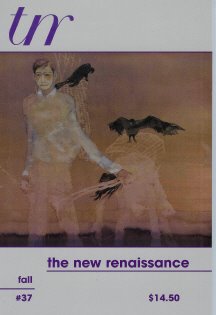
Simmons College hosts a gathering forthe new renaissance (tnr) celebrating the local literary magazine'snew issuetnr #37
Simmons College hosts a gathering for the new renaissance (tnr) : celebrating the local literary magazine's new issue, tnr #37: a reading with reception following. Wednesday, April 5, 7-9 pm, in the Trustman Art Gallery, 300 The Fenway, 4th floor, Boston. Free and open to all. For more information, contact Rachel Ruggles, Rachel.Ruggles@simmons.edu, 617-521-2220. Featured Readers: Marc Widershien, Doug Holder, Dan Tobin, Doc. Mal Hammond, and Afaa Michael Weaver.
Against all odds, the new renaissance (tnr) insists on upholding its over 37-year tradition of excellence by publishing tnr #37. Full of literary and visually artistic gems that provoke, titillate, satisfy, and/or haunt the senses, tnr #37 vibrates with contributions from the present and the past, pulled from the international, national, and local scene. Where else can Russian poet, Marina Tsvetayeva (1892-1941), Paris-born painter, Zevi Blum, Boston-based poet, Daniel Tobin, East German short story writer, Barbara Honigmann, traditional Chinese poets, Liu Yung and Su Shih (11th century), and an article on “Reigning in on Rainforest Destruction” by the UN’s Indian environmentalist, Ashindu Singh and Virginia-based international forester, Gyde Lund, co-exist?
tnr, established in 1968, has always been grounded in the real world. Each issue contains a lead article that deals with a hot socio-political topic. This is a rare approach in the literary magazine world in the 1960s and still is. tnr also differs from most litmags in its high emphasis on the visual arts. In tnr #37, artist Zevi Blum has eight fantasy-laden etchings and the talented but unpredictable Kai Althoff has nine “paintings” (his preferred term: drawings on canvas). The translations of non-English literary work are also visually engaging: the Chinese calligraphy and Tsvetayeva’s Cyrillic are displayed right alongside their English translations. In 1969, tnr was the first non-scholarly magazine to feature bilingual poetry (which, in 1980, became a tnr standard) and, in 1989, the magazine introduced bilingual fiction.
Some of tnr #37’s other highlights:--“Reigning in on Rainforest Destruction” cautions that “…if deforestation continues at its current rate, the world’s tropical rainforests will be wiped out within 40 years.” The authors conclude their article by suggesting the steps that governments, corporations, and individuals must take to prevent further destruction.--Russian poet Marina Tsvetayeva, who along with her more famous contemporary, Anna Akhmatova, is now considered to be the “other” great Russian woman poet of the last century. Like many Russian writers and artists of the early 20th century, Tsvetayeva led a life of suffering and sorrow – in 1941, she committed suicide.
--Many fine poems from American writers, including Daniel Tobin, a professor at Emerson College in Boston, and winner of many awards including the “Discovery/The Nation Award”; the Robert Penn Warren Award; the Greensboro Review Poetry Prize; and a Creative Writing Fellowship from the National Endowment for the Arts.--A satirical essay “The Swoon of the Unknown Soulmate” by Norman Ball, a widely published Glaswegian native, who lives in Virginia.--A review, “Blissful Dreams of Long Ago” by Ruth Moose of Helen Masson Copeland’s memoir “Pill Hill: Growing Up With The Mayo Clinic”. Moose teaches at UNC-Chapel Hill and is the recipient of many awards, including five PEN Awards for Syndicated Fiction, a Robert Ruark Award for Short Story, and a MacDowell Fellowship.--Other contributors: fiction by M.E. McMullen, newcomer, Kenneth Rapoza, Germany’s Barbara Honigmann, and Bruce Reeves; poetry by Karen Braucher, Miriam Vermilya, Lynn Veach Sadler, Thomas Robert Barnes, Myrna Stone, Karl Patten, Thomas Kretz, Alice Jay, Jay Baron Nicorvo, Judy Rowley, Ann Struther, and Marvin Solomon; and color photographs by H. Gyde Lund and Ashbindu Singh. Without a doubt, this tradition of mixing various artistic disciplines makes tnr unique in the litmag world. No matter the medium or the message, tnr “has only one criterion: excellence.” (Library Journal) Other acclaim for tnr’s unusual approach: Magazines for Libraries states that tnr’s writers “…write with a skill and objectivity rarely associated with the traditional little mag genre” and the Christian Science Monitor has proclaimed that tnr “…offers the originality one demands from a small press, without the annoying quirks ….
”An independent, unsponsored literary magazine (itself amazing in an audio/visual age), tnr is the brainchild of Louise T. Reynolds and her teacher at Columbia University, the award-winning short-story writer, Sylvia Shirley. While they were still collecting material for the first issue, Shirley collapsed at The New School and died. More than a year later, Reynolds returned to her home in Arlington, MA, to launch tnr#1 in October 1968. The dream had become real -- and its loyal subscribers have come to expect the unexpected.From the beginning, tnr took a somewhat different turn from traditional litmags. Reynolds and Shirley wanted tnr to be part of the real world, a literary canary as it were, in a universe that is sometimes as dark as coal. Their seeking in-depth lead articles on political/social issues alienated them at once from the world of belles letters, the traditional litmag approach, and it didn’t endear them to the world of the alternative press either. Their insistence on publishing pieces which they might not agree with or support, and on eschewing fashions, fads, and coteries by accepting work only on merit, made them an outsider even among the world of litmag outsiders.But with more than 175 of their writers/artists having received international, national and local awards after being published in tnr and with at least 70 having received such honors and awards before ever submitting to tnr, Reynolds and her talented staff believe they’re doing something right.
The Boston National Poetry Festival: Going on Six Years and Reaching Poetic Heights!
For the last 5 years, in April, (Poetry Month) I have participated in probably the most ambitious poetry event in the area: “The Boston National Poetry Festival.” This brainchild of Boston impresario, and “Tapestry of Voices,” founder Harris Gardner, will take place this year, as it has the last five years, at the Boston Public Library, Copley Square Branch, April8 and 9, 2006. Over fifty established and emerging poets will be reading as well as 15 1st and 2nd Grade students from the “Blessed Mother Theresa School,” of Dorchester, as well as students from the “Boston Latin High School.”
Each year Gardner, a man with a graying Einstein fro, and a generous amount of creative and nervous energy, manages to raise the funds and organize this Herculean effort, much to the admiration of the poetry community.
Gardner told me in a recent conversation we had that he will have several new poets in the lineup such as: James R. Whitley, Simmons College Literature Professor Afaa Michael Weaver, Endicott English Professor Dan Sklar, Stone Soup Poetry Coordinator Chad Parenteau, and Pulitzer Prize-winning poet Jorie Graham. Somerville will be represented with C. D. Collins, Lesley University lecturer Suzanne E. Berger and yours truly.
Gardner told me that he got a late start this year, but was able to raise the funds to keep the festival alive. He plans to include an open mic, and he is excited about student readings he has planned. As always there will be a book table. Gardner told me that it does a brisk business and people often get the featured poets to sign their books.
Although Gardner is better known as a poetry activist; he is an accomplished poet as well. He was a featured reader at the “Somerville News Writers Festival,” and has a number of collections and magazine publication to his credit such as: The Harvard Review, Ibbetson Street, Vallum, Aurorean, to name just a few… As Gardner told me: “I consider myself a poet first and foremost.”
The Boston National Poetry Festival starts on Saturday at 10A.M. (BPL-Copley sq. Branch) Sunday at 1PM. For more info go to: http://tapestryofvoices.com/
Sunday, March 19, 2006
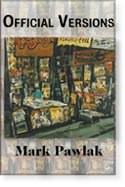
Official Versions. Mark Pawlak. (Hanging Loose Press 231 Wyckoff St. Brooklyn, NY 11217-2208) http://hangingloosepress.com
Mark Pawlak, long-time editor at the “Hanging Loose Press,” reminds me of a lyrical “junk,” man—and I mean this in the best sense of the word. He collects phrases, archaic songs, ephemera from the past, and makes a strong poetic statement. In his poem: “A Boy’s Life, 1960” he pretty much lists things in a way that captures the unique texture of an animated, intellectually curious boy:
Painted candy-red stripe
on model ’56 Mustang; added decals.
Bowled three strings, made 5 strikes.
The Day The Earth Stood Still-scary!
Ice breaking up on Niagara River.
Easter. Bopschu’s sauerkraut pierogies
and duck’s blood soup!
Played charades with cousins.
Learning Latin to be altar boy (ugh.)
30 situps, 16 pushups.”
And how about this well-rendered picture of the owner of a cottage “resort,” on the coast of Maine in: “Hart’s Neck Haibun, Book 1 2000?” I think we all have encountered the type:
The “man of the house,” arrives later—the others, now gone were
relatives down for the weekend. In contrast to his wife’s girth, he
is skinny as a rail, has a nervous tic, and is weighted down by an
enormous ring of keys, dangling on a chain from his belt. (Mary:
Are you sure he is not a speed freak?”)
But anyone who is familiar with Pawlak’s work realizes there is a very strong political component to it. In: “All the News: Sept 23, 2001,” Pawlak has a deliciously ironic poke at the war in Afghanistan:
According to the Times,
Air Force bombers are heading
toward distant airfields
to fight a shadowy foe
flitting through mountains
in a deeply hostile land
already so poor and so ruined
by two decades of war that it is
virtually bereft of targets.
“FORGET THE PAST,”
the headline instructs
“IT’S A WAR UNLIKE ANY OTHER.”
I review a lot of poetry books, and I can say Pawlak has a very quirky, engaging and unique style. Recommended.
Doug Holder/ Ibbetson Update/ March 2006/ Somerville, Mass.
PRESS RELEASE: BOSTON NATIONAL POETRY FESTIVAL APRIL 8 to 9 2006.
THE BOSTON NATIONAL POETRY MONTH FESTIVAL !!
Now in its SUCCESSFUL 6th !!! Year
CO-SPONSORS:
Tapestry of Voices & Kaji Aso Studio in partnership with
The Boston Public Library. Starts Saturday, April 8, 2006 10:00 A.M.
To 5:00 P.M. and Sunday, April 9, 2006, from 1:00 P.M. to 5:00 P.M. OPEN MIKE
Sunday: 2:00 to 3:30 P.M. The Festival will be held both days at the library’s main branch in Copley Square.
52 Major and emerging poets will each do a twenty minute reading; also
Featuring 15 elementary school students from Blessed Mother Theresa School (Dorchester). These first and second graders will open the festival with memorized poems by Langston Hughes, Ogden Nash, Carl Sandburg, Shel Silverstein, other poets and their own original poetry. They will be followed by prize winning poets: Alden DiIanni-Morton, a junior at Boston Latin High School and Shari Caplan, a sophomore at Boston Latin Academy. The 53 major and emerging poets will follow with A POETRY MARATHON.
Some of the many luminaries include Jorie Graham, Diana Der Hovanessian, Rhina P. Espaillat, Afaa M. Weaver, Frannie Lindsay, Fred Marchant, Barbara Helfgott-Hyett, Dan Tobin, Charles Coe, Jean Monahan, Regie Gibson, Marc Widershien, Tino Villanueva, and Doug Holder.
In light of the very recent passing of the internationally revered and acclaimed artist/ poet/ opera singer and humanitarian, Kaji Aso, there will be a forty minute tribute during the festival. A number of poets closely affiliated with the Kaji Aso Studio will read Mr. Aso's poetry, both in his scheduled spot
in the Rabb Lecture Hall (Auditorium) and simultaneously in room 5-6 next to the Rabb.
This Festival has it all. A plethora of Professional poets, celebrities, a Pulitzer Prize winner; numerous award winners, student participation. Even more, it is about community, neighborhoods, diversity, BOSTON, and MASSACHUSETTS. This fast-growing tradition is one of the largest events in Boston to kick off National Poetry Month. FREE ADMISSION!!
For Information: Tapestry of Voices: (617)- 306-9484 or
617-723-3716 Library: (617)- 536-5400
Wheelchair accessible. Assistive listening devices available. To request a sign language interpreter or for other special needs, call (617) 536-7055 (TTY) at least two weeks before the program date.
For a complete list and schedule of Festival participants, please go to tapestryofvoices.com. Thank you.
Harris Gardner
THE BOSTON NATIONAL POETRY MONTH FESTIVAL !!
Now in its SUCCESSFUL 6th !!! Year
CO-SPONSORS:
Tapestry of Voices & Kaji Aso Studio in partnership with
The Boston Public Library. Starts Saturday, April 8, 2006 10:00 A.M.
To 5:00 P.M. and Sunday, April 9, 2006, from 1:00 P.M. to 5:00 P.M. OPEN MIKE
Sunday: 2:00 to 3:30 P.M. The Festival will be held both days at the library’s main branch in Copley Square.
52 Major and emerging poets will each do a twenty minute reading; also
Featuring 15 elementary school students from Blessed Mother Theresa School (Dorchester). These first and second graders will open the festival with memorized poems by Langston Hughes, Ogden Nash, Carl Sandburg, Shel Silverstein, other poets and their own original poetry. They will be followed by prize winning poets: Alden DiIanni-Morton, a junior at Boston Latin High School and Shari Caplan, a sophomore at Boston Latin Academy. The 53 major and emerging poets will follow with A POETRY MARATHON.
Some of the many luminaries include Jorie Graham, Diana Der Hovanessian, Rhina P. Espaillat, Afaa M. Weaver, Frannie Lindsay, Fred Marchant, Barbara Helfgott-Hyett, Dan Tobin, Charles Coe, Jean Monahan, Regie Gibson, Marc Widershien, Tino Villanueva, and Doug Holder.
In light of the very recent passing of the internationally revered and acclaimed artist/ poet/ opera singer and humanitarian, Kaji Aso, there will be a forty minute tribute during the festival. A number of poets closely affiliated with the Kaji Aso Studio will read Mr. Aso's poetry, both in his scheduled spot
in the Rabb Lecture Hall (Auditorium) and simultaneously in room 5-6 next to the Rabb.
This Festival has it all. A plethora of Professional poets, celebrities, a Pulitzer Prize winner; numerous award winners, student participation. Even more, it is about community, neighborhoods, diversity, BOSTON, and MASSACHUSETTS. This fast-growing tradition is one of the largest events in Boston to kick off National Poetry Month. FREE ADMISSION!!
For Information: Tapestry of Voices: (617)- 306-9484 or
617-723-3716 Library: (617)- 536-5400
Wheelchair accessible. Assistive listening devices available. To request a sign language interpreter or for other special needs, call (617) 536-7055 (TTY) at least two weeks before the program date.
For a complete list and schedule of Festival participants, please go to tapestryofvoices.com. Thank you.
Harris Gardner
Tuesday, March 14, 2006
The Complete Yiddish Poems of Menke Katz. By Menke Katz. Translated by Benjamin and Barbara Harshav. 2005; 779pp; Hardcover; The Smith, 69 Joralemon St., Brooklyn, NY12201.$35.00.
Here we have another volume that both libraries and readers interested in modern poetry/cultural history/Jewish history/world religion can't really do without. Katz was a Rabbi originally from Lithuania (born in 1906, died in upper NY state in 1991), who came to the U.S. in 1920. He was a mystical kabbalist and spent a few years in Safad in Galilee, the home of kabbalism. For some twenty years I visited him two or three years a year in upper state NY, up in the Catskills, with the publisher of this volume, Harry Smith, and I found him to be a kind of incarnation of Judaism, perhaps the most profound Hebrew scholar I've ever met. Reading through this volume is like taking a time-trip back to old Yiddish-Jewish Europe, to Israel, NY. And to top things off, there is a 134 page expository introduction to Katz and his work by his son, Dovid, who, after years as a professor of Yiddish at Oxford, is now at the Vilnius University in Lithuania. Lots of Yiddish translations in the introduction, so you don't really need them throughout the whole volume, although it would be nice to see another volume perhaps of selected poems with both the Yiddish and English on the same page. Katz's poems about Lithuania evoke the Jewish European past as no one else does: In Michaleshik, a spasm of silence,/The huts huddle in danger.../The ferry raft is moored, the guard has gone.../Over the nearby graveyard they hear/The wind saying Kaddish through the grass. (p. 155, from Bk.1 of Burning Village.) Kaddish, incidentally, is the Hebrew prayer for the dead. But Katz isn't all remembrances of times past. How about his NY poems, before he moved out into the country: in my alleys -- the gray houses/Clamor for light...//Young robbers run/Like sleepwalkers on housetops./In dirty courtyards/Cats are pregnant -- and sick nights hear/The distant, choked rustle/Of half-slaughtered children.You might get the impression that Katz is pure anguish and gore, the incarnation of angst and horror. But the Katz I knew was Rabbi Optimism, more than that, Rabbi Pure Joy, always referring back to the Torah, singing old Jewish songs from the old days, just talking, just being: Wandering at a table is the oldest voyage around the world./A friend at the table is more beautiful than the beauty of all travels./What sunrise can lighten the world like a friend at the table?...//All the good things remain baffled by this dazzle of joy, zest and plenty--/The earth grows young, man is new as Adam's first gaze at Creation. (Friends at a Table, from Midday, 1954,p.671) Maybe he was happiest in Safad, totally immersed in the Kaballah, learning Arabic, not one word ever against the Muslems, who accepted him as if he was one of theirs: All the/alleys of/Safad become in/the sunset holy/meandering paths where/stray angels beg each dying/ray of the sun: O take us with/you, O lead us....back/home to the Garden of Eden. This is a book not simply to read but to immerse yourself in, like reading the work of The Buddha until you finally feel his sanity descend upon you like warm rain, washing everything away but nirvana.
Hugh Fox/Ibbetson Update
Here we have another volume that both libraries and readers interested in modern poetry/cultural history/Jewish history/world religion can't really do without. Katz was a Rabbi originally from Lithuania (born in 1906, died in upper NY state in 1991), who came to the U.S. in 1920. He was a mystical kabbalist and spent a few years in Safad in Galilee, the home of kabbalism. For some twenty years I visited him two or three years a year in upper state NY, up in the Catskills, with the publisher of this volume, Harry Smith, and I found him to be a kind of incarnation of Judaism, perhaps the most profound Hebrew scholar I've ever met. Reading through this volume is like taking a time-trip back to old Yiddish-Jewish Europe, to Israel, NY. And to top things off, there is a 134 page expository introduction to Katz and his work by his son, Dovid, who, after years as a professor of Yiddish at Oxford, is now at the Vilnius University in Lithuania. Lots of Yiddish translations in the introduction, so you don't really need them throughout the whole volume, although it would be nice to see another volume perhaps of selected poems with both the Yiddish and English on the same page. Katz's poems about Lithuania evoke the Jewish European past as no one else does: In Michaleshik, a spasm of silence,/The huts huddle in danger.../The ferry raft is moored, the guard has gone.../Over the nearby graveyard they hear/The wind saying Kaddish through the grass. (p. 155, from Bk.1 of Burning Village.) Kaddish, incidentally, is the Hebrew prayer for the dead. But Katz isn't all remembrances of times past. How about his NY poems, before he moved out into the country: in my alleys -- the gray houses/Clamor for light...//Young robbers run/Like sleepwalkers on housetops./In dirty courtyards/Cats are pregnant -- and sick nights hear/The distant, choked rustle/Of half-slaughtered children.You might get the impression that Katz is pure anguish and gore, the incarnation of angst and horror. But the Katz I knew was Rabbi Optimism, more than that, Rabbi Pure Joy, always referring back to the Torah, singing old Jewish songs from the old days, just talking, just being: Wandering at a table is the oldest voyage around the world./A friend at the table is more beautiful than the beauty of all travels./What sunrise can lighten the world like a friend at the table?...//All the good things remain baffled by this dazzle of joy, zest and plenty--/The earth grows young, man is new as Adam's first gaze at Creation. (Friends at a Table, from Midday, 1954,p.671) Maybe he was happiest in Safad, totally immersed in the Kaballah, learning Arabic, not one word ever against the Muslems, who accepted him as if he was one of theirs: All the/alleys of/Safad become in/the sunset holy/meandering paths where/stray angels beg each dying/ray of the sun: O take us with/you, O lead us....back/home to the Garden of Eden. This is a book not simply to read but to immerse yourself in, like reading the work of The Buddha until you finally feel his sanity descend upon you like warm rain, washing everything away but nirvana.
Hugh Fox/Ibbetson Update
Sunday, March 12, 2006

Poets Grey Held and Shelby Have A Captive Audience.
(Grey Held)
Grey Held and Shelby Allen are more than just publication -focused writers. Both are accomplished poets, but they don’t spend their time getting their nose-browned in the rarefied groves of the academy. They go the trenches of the poetry world. They run poetry workshops for inmates at the “Northeast Correctional Center,” in Concord, Mass. Grey Held who was the recipient of a NEA grant and a nominee for a Pushcart Prize, and Shelby Allen a 2004 Boston Herald Poetry Prize winner told me that they are constantly surprised about how insightful and bright the inmates are, most of whom lack a formal education.
Shelby Allen told me she came to poetry from acting. She said: “Acting was a way not to write. Poetry came to my life after a period of creative confinement.” Her work in a correctional center was a natural progression. She recalled: “So naturally I responded to people who were literally confined.”
Held got his start with poetry in College. He had a teaching assistantship in Creative Writing at MIT. Held told me: “I work in the business world, but I did drawing and painting on the side for many years. About six or seven years ago I really felt the urge to write again. I took a workshop with Barbara Helfgott-Hyett. I just loved the creative, free-write process they practice there.”
Held met Allen at the workshop, and through literary circles they found about volunteer opportunities in prisons. This lead to their current stint as poetry workshop teachers at the Concord Correctional Center. Both find that poetry is a lifeline for prisoners, and a way for them to come to terms with their inner demons.
This poetic duo uses poems that inmates can relate to, and encourages them to use objects and experiences from their everyday life.. One inmate poem they shared with me concerned the prisoner’s hat, and the symbolic weight it carried.
Allen said what’s interesting about her experience as a workshop leader is: “Once you get into the experience, it feels like any other poetic situation. The prison goes away.”
Both Grey and Held agree that many of the prisoner’s poems they have read would stand on their own merits in the outside poetry world. Held said their work is: “Evocative and pretty amazing.”
The workshop is voluntary so participants really want to be there. The prisoners are not the caricatures you see on the TV prison drama “OZ” Many of the prisoners are self-educated and erudite. There is a complete range of skills, according to Allen.
The inmates according to Grey and Held write because they are in prison and in spite of it. Held speculated that if they were not in prison in the first place they may not have had the opportunity to study poetry. But many of them do turn to self-enrichment courses like poetry at this phase of their lives. Ironically, Held told me that many inmates have told him: “Prison has saved my life.”
Doug Holder
Wednesday, March 08, 2006
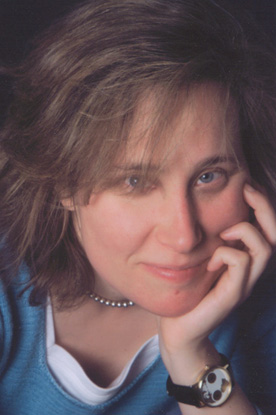
Emily Singer: A Comedian Who Laughs Out Loud!
Emily Singer does not laugh like an ordinary person. Her laugh is such an off-beat chortle that one can only speculate about its origin. Singer, like her laugh, is an original. She is a live-wire, and one can not be quite sure when she is going to subvert your conversation with a verbal whoopee-cushion. Singer is a local comedian, and a spokesperson for Jimmy Tingle’s Off-Broadway Theatre in Davis Square, Somerville. Singer, who writers her own material has been doing stand up since 1997, gravitating to it from acting. She has performed at the Comedy Connection in Boston, The Comedy Studio in Cambridge, at various venues in NYC, and spaces around the country. She also had a part in a documentary about the poet Emily Dickinson. I talked with Emily on my show “Poet to Poet: Writer to Writer,” on Somerville Community Access TV.
Doug Holder: Why did you switch to comedy from acting?
Emily Singer: I don’t think I ever gave up acting. It is the same thing in some ways. You are out there on stage interacting with the audience. I got into comedy mainly because of a friend who was a comedian. She was in her mid-40’s and she was hysterically funny. I didn’t know a lot of female comedians at that time. She actually had a terminal illness. We went to a grocery store once and she had her oxygen tank with her. But she had everyone laughing in spite of being very sick. That was an incredible gift. When she died I was very sad. I thought a way to honor her was to try to do comedy.
DH: Are comedians inherently sad people as the cliché goes?
ES: Some of my best jokes are written as a way of healing. For instance: if I break up with someone am I going to cry about it? No. I am going to turn it into my best material. Actually the guy I broke up with wanted to get back with me, I said: “I don’t know…I’ve written so many good jokes about you.” (Laughs) No, I really didn’t say that.
DH: You write your own material is that unusual?
ES: We live in an era where most comedians do write their own stuff. Obviously the bigger names have comedy writers. In the past I think it was more acceptable to go into a joke book. But now it is frowned on if you do. So you are performing and writing.
DH: Are writers like Woody Allen, Fran Leibowitz, Wallace Shawn, inspirations to you?
ES: Woody Allen is obviously an inspiration. Some of the people who inspire me are the local comedians who perform right here at Jimmy Tingle’s and in Boston. I see them over and over again…like Jimmy Tingle for instance. D.J. Hazard, Steven Wright, Lily Tomlin, are great comics. When I teach I tell people to be “who they are,” and in doing so they find their own brand of humor. Everybody’s got a sense of humor.
DH: Can you talk about your training?
ES: I went to Brown University for Studio Art. I always focused on art in college. Then I took acting classes after college in the Boston-area. I studied at the American Repertory Theatre. In fact I will be a teaching-assistant in acting at Harvard this summer. Later, I went to L.A. for three years to study acting with various teachers. I just went where the good teachers were.
DH: How did you support yourself?
ES: I did computer graphics. I went into Public Relations in the mid to late 90’s.
DH: Where do you find your material? Describe your creative process.
ES: I am a very organized person. Everything has to be written down. I’ll come back to it later and read it. If something odd happens I’ll take it and twist it. I get my best jokes when I am in motion. In an airplane, running or walking. I hear little conversations in my head. (Laughs)
DH: I know in the poetry/writing world a lot of folks have skeletons: drug abuse, mental illness, etc… How about comedians?
ES: It depends on the comedian. Some comedians are the most logical people you can meet and others are just piecing it together in a very scary way. The more mature of a comedian I become, the more I am able to use stuff that I can’t stand about myself. I am willing to put myself out there.
DH: How does your PR writing fit with your comedy?
ES: I am doing P. R. about people who are doing comedy. A lot of comedians come through Jimmy Tingle’s that I respect. So this helps me write passionately. I am able to get to the heart of what I am writing be it music or theatre. I try to experience the piece before I write about it.
DH: You said in an interview that comedy is very addictive. Explain.
ES: An incredible thing happens to you when you are laughing at a joke. You are transported and you can’t think about anything else. You don’t know why you are laughing. I am always getting paid in laughter. It is addictive to get out there and make people laugh and get out of their everyday life. The most mysterious things make people laugh. They are so variable. The addiction part is trying to figure it out.
DH: I remember the writer Norman Cousins claimed he cured himself from a terminal illness by watching Marx Brother movies. Can you talk about Comedy as a healing art?
ES: I perform comedy in Rehab. Centers. If you have a bad day, and then put yourself in front of comedy, you are not going to be thinking about your problems. You are going to be transferred somewhere else.
DH: How is it for a woman in comedy? Is it still a man’s game?
ES: I think it varies from region to region, city to city. Different cities have more female comedians than others. I did a women’s comedy event in East Hampton and it was completely sold out. In terms of me being out there as a woman, 9 times out of 10 I don’t pay attention to the sex of a person who is on stage with me. If I know they are funny, good people—I don’t care if they are a man or a woman.
…To find out more about Emily go to: http://www.emilysinger.com
Doug Holder
Sunday, March 05, 2006
CITY TYPE
Poets, yes, but these two adept at spreading the words
By Ellen Steinbaum, Globe Correspondent March 5, 2006
On April 8 and 9, when the sixth annual Boston Poetry Festival is held at the Boston Public Library in Copley Square, it will reflect the vision of one poet, Harris Gardner. And, each week when Somerville Community Access Television airs the program Poet to Poet/Writer to Writer, another poet, Doug Holder, brings the written word to a television audience.
I think of Gardner and Holder as the Johnny Appleseeds of Boston-area poetry, planting a reading series here, a publishing venture there, sprinkling poetry from Amesbury to Warwick, R.I. Most of their efforts are concentrated close to home. Holder cofounded the Somerville News Writers Festival and started the monthly poetry series at Somerville's Toast Lounge. With his wife, Dianne, he founded Ibbetson Street Press, which publishes books, a magazine, and an online newsletter. He presided for a time over the legendary Stone Soup Poets and is the current host of the Newton Free Library poetry reading series.
Gardner originated poetry readings at Borders in Downtown Crossing and at Forest Hills Cemetery. He has organized benefit readings after 9/11 and Hurricane Katrina. His biggest project has been the Poetry Festival which, each year, organizes more than 50 poets into a free weekend marathon reading.
Although they are publishers and venue hosts, the two consider themselves poets first. Each has amassed a solid list of publishing credits. Gardner is author of the collection ''Lest They Become" and coauthor, with Lainie Senechal, of ''Chalice of Eros." Holder's most recent collection is ''Wrestling with my Father."
I catch up with them at yet another event they started. It is 9 o'clock on Saturday morning and I am in Harvard Square with other early-to-rise poets at what Holder and Gardner call ''Bagels and Bards." Open to all poets, it's a place to bring new work, share experiences, and schmooze, which, in the basement of Finagle a Bagel, seems about right.
It's hard for any poet, especially a beginning one, to find an audience, and the city is filled with poets grateful for the audiences these two have helped them find, including at the open mikes their venues often feature.
''I feel I'm in this world to be a catalytic agent," says Gardner, ''to provide space and opportunity for other poets. I'm a bridge builder -- sort of a civil engineer of poetry."
He's enjoyed bringing together poets from both the city's academic and performance communities and is known for venues that combine poets with major reputations and those he calls ''emerging."
''I like the mix of new and established voices," he says. ''I think it encourages beginning poets to push themselves more and bring themselves to the next level."
Holder agrees.''I like showcasing other poets. I like to bring out a new exciting voice. And I like to make a venue lively, not too formal. The poetry should be solid, but I want to have fun. I want it to be eclectic. I like to encourage people who are engaging to put on a show. Poetry should be a joyous thing."
They are clearly having fun. I picture puppies or maybe lion cubs as they talk, tumbling over each other's words, interrupting, finishing each other's sentences, trading verbal jabs over who's younger (Holder), who has more hair (Gardner).
Holder says, ''If we lost everything else, tomorrow we'd still be writing poetry." And maybe organizing a reading series.
Ellen Steinbaum can be reached at citytype@globe.com. Past City Type columns are at http://www.ellensteinbaum.com/.
Poets, yes, but these two adept at spreading the words
By Ellen Steinbaum, Globe Correspondent March 5, 2006
On April 8 and 9, when the sixth annual Boston Poetry Festival is held at the Boston Public Library in Copley Square, it will reflect the vision of one poet, Harris Gardner. And, each week when Somerville Community Access Television airs the program Poet to Poet/Writer to Writer, another poet, Doug Holder, brings the written word to a television audience.
I think of Gardner and Holder as the Johnny Appleseeds of Boston-area poetry, planting a reading series here, a publishing venture there, sprinkling poetry from Amesbury to Warwick, R.I. Most of their efforts are concentrated close to home. Holder cofounded the Somerville News Writers Festival and started the monthly poetry series at Somerville's Toast Lounge. With his wife, Dianne, he founded Ibbetson Street Press, which publishes books, a magazine, and an online newsletter. He presided for a time over the legendary Stone Soup Poets and is the current host of the Newton Free Library poetry reading series.
Gardner originated poetry readings at Borders in Downtown Crossing and at Forest Hills Cemetery. He has organized benefit readings after 9/11 and Hurricane Katrina. His biggest project has been the Poetry Festival which, each year, organizes more than 50 poets into a free weekend marathon reading.
Although they are publishers and venue hosts, the two consider themselves poets first. Each has amassed a solid list of publishing credits. Gardner is author of the collection ''Lest They Become" and coauthor, with Lainie Senechal, of ''Chalice of Eros." Holder's most recent collection is ''Wrestling with my Father."
I catch up with them at yet another event they started. It is 9 o'clock on Saturday morning and I am in Harvard Square with other early-to-rise poets at what Holder and Gardner call ''Bagels and Bards." Open to all poets, it's a place to bring new work, share experiences, and schmooze, which, in the basement of Finagle a Bagel, seems about right.
It's hard for any poet, especially a beginning one, to find an audience, and the city is filled with poets grateful for the audiences these two have helped them find, including at the open mikes their venues often feature.
''I feel I'm in this world to be a catalytic agent," says Gardner, ''to provide space and opportunity for other poets. I'm a bridge builder -- sort of a civil engineer of poetry."
He's enjoyed bringing together poets from both the city's academic and performance communities and is known for venues that combine poets with major reputations and those he calls ''emerging."
''I like the mix of new and established voices," he says. ''I think it encourages beginning poets to push themselves more and bring themselves to the next level."
Holder agrees.''I like showcasing other poets. I like to bring out a new exciting voice. And I like to make a venue lively, not too formal. The poetry should be solid, but I want to have fun. I want it to be eclectic. I like to encourage people who are engaging to put on a show. Poetry should be a joyous thing."
They are clearly having fun. I picture puppies or maybe lion cubs as they talk, tumbling over each other's words, interrupting, finishing each other's sentences, trading verbal jabs over who's younger (Holder), who has more hair (Gardner).
Holder says, ''If we lost everything else, tomorrow we'd still be writing poetry." And maybe organizing a reading series.
Ellen Steinbaum can be reached at citytype@globe.com. Past City Type columns are at http://www.ellensteinbaum.com/.
Thursday, March 02, 2006

SPARKS IN THE DARK
Selected Poems by Jacques “thehaitianfirefly” Fleury
2006,
I’ve had the good fortune of knowing “the firefly” for about a year now, featuring him first in my column for the North Cambridge Alewife, “Words & Music”. It was in fact exactly a year ago, March 2005, when we talked about his childhood in Haiti, his mother’s red dress (which almost cost her life to the gangster Ton Ton Macoute) and his profound love for her. Born in Port-au-Prince, Haiti he told me that he came to America when he was 13, but not on an immigrant boat, on American Airlines. And there begins the wondrous “zebra stripes” of a maverick poet with Jacques’ humor, fortitude and transition to a new world. He looks back and he looks forward in his latest release of poems with a strikingly passionate Purple Rain cover. The dedication reads:
“For my dear and relatively sainted mother, who is the most intrinsically beautiful woman I have had the pleasure of knowing and will ever know and who knows me better than anyone else alive today! Thanks for believing in your very own, “Garcon MamMam.’
In his opening piece, The Totally Unfabulous World of a Haitian Firefly, he goes through his coming of age, leaving Haiti behind, with his courageous mother insisting:
SNAP OUT OF IT!….Haiti is behind us now.” And then he writes, “Still I sleep in a clamorous still, in nightmares influenced by subversive ideologies….” Yes the poet’s imagination remains haunted by his roots, the exploding guts of a country called, Haiti.
In the next selection he affirms just who he is, in Creole with line by line English translations: “the haitian fire fly that’s me.” “I grew up taking blood baths, basking in the epoch of oppression.” “I am a Creole poet” “but my nation was occupied by the French.” “But still I am a Creole poet.” “My Caribbean spice rack is stock full of flavored stories…”
From The Haitian Fire Fly Speaks!
And indeed Jacques is full of spice and sparks of language about his experience, the world he sees, the light and darkness in it, those he loves, friends he is inclined to practically worship with words…as in A Goddess Intervenes, for Colleen, the Goddess of Love, which I heard him recite at Squawk just a week ago….
Interestingly, Jacques is so empathic the last few lines remind of me of something Colleen herself might write:
“One day she opened her eyes in horror/to see the moon a reddish color!/to see her world of beauty in fury/crumbling around her like a fallen deity/so then she crumbles too;/ having been made of snow,/ with wrath of the wind broke through her window,/then there she lies like the ashes of winter,/succumbed to the intemperate weather/then I watch her die, beautifully die. From A Goddess Intervenes
Jacques is a rarely blessed talent who blends together a strong historical awareness and sensuality and unusual syntax that is both compelling and enlightening. Sometimes his poems are pitched to an almost Shakespearian crescendo, and then there is the child-like brilliance of a poem like, Krik Krak:
“Krik Krak
I am like an almanac
So use me to count your days
War was here and war did play
Bruised bodies are on their way”
Krik Krak
I am like a tic tac
Sweet smelling breath of storms
We are pulled from our roots feeling forlorn
Fallen over knee deep in crap flowers grow thorns…”
Krik Krak
I say you said what?
Werewolves walk around in sight
Creep back in your mother’s womb in fright
But sooner then later all must come out to fight!”
You say you want a revolution, well read Jacques’ poems. He has his eye on the past and the future and his own yearnings. He has his eye on America and Haiti. He has his heart in love with people who sustain and teach him. And Jacques knows in his abundant soul, how to give back.
NB: Also, you will find Jacques’ column on the Alewife website, http://www.thealewife.com/, currently a tribute to Black History month.
His book is available at his readings and at The Out of the Blue Gallery on Prospect St. in Cambridge. Go and buy it! Check him out!
Lo Galluccio
Ibbetson St. Press
Cambridge Chronicle > Arts & Lifestyle
Poets come for coffee, bagels, and community
By Shanti Sadtler/ CorrespondentThursday,
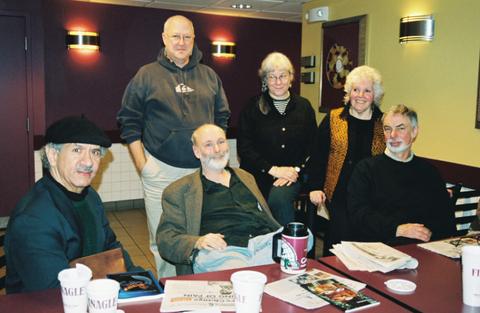
March 2, 2006 An eclectic community of local poets is sprouting in the basement of a local Finagle A Bagel.
"[I] come out of isolation, to connect, make relationships with other creative people," said IRENE KORONAS, a member of Breaking Bagels with the Bards. "It's brought me back to life again."
Koronas is the group's "word catcher," meaning she records interesting words and phrases during the meetings.
Breaking Bagels with the Bards is a group of professors, professionals, artists and writers bonded by their interest in poetry.
Members attend to exchange information on performance venues, new books and upcoming poetry readings. Through the connections made at Finagle, members, such as MATT ROSENTHAL, have had their work published.
"This is my publishing crowd right here, but it wasn't intentional," he said.
Rosenthal, an Internet advertising sales representative, was unpublished when he joined about six months ago, and now his poetry has appeared in contemporary anthologies.
By 10 a.m., a record 24 people squeeze around four pushed-together tables, taking up about half of the otherwise empty basement. Groups between two and four people chat about their most recent projects, such as a book or a Web site. The table quickly becomes a mess of colorful photocopied fliers, newspapers, business cards, books, coffee cups and water bottles. Co-founder HARRIS GARDNER sells an assortment of poetry books out of a plastic shopping bag.
DOUG HOLDER said he founded the group March 2005 with Gardener because the university-centered Cambridge poetry community was exclusive.
"The poetry world here in Cambridge is very cliquish. You're either in the university, or you're out," Holder said.
Holder's group includes all levels of poets, from professors to the unpublished. There are currently about 32 members, 10 of whom attend regularly, and new members join every week.
"It's getting bigger and bigger every week. We're having to move more tables around," Koronas said.
Breaking Bagels with the Bards is open to all and meets every Saturday at 9 a.m. in the Harvard Square Finagle A Bagel basement.
Wednesday, March 01, 2006
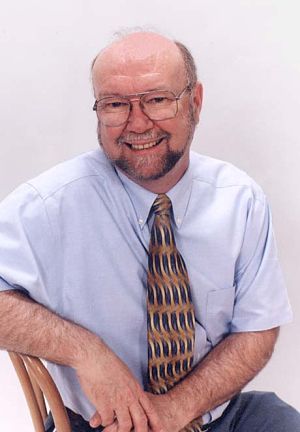
The Beat Face of God: The Beat Generation Writers As Spirit Gudes: Stephen D. Edington with forward by David Amram. ( Trafford Publishing http://www.trafford.com/) $18.
I remember picking up a copy of "On the Road," by Jack Kerouac at a bookstore in Downtown Crossing, Boston 30 years ago, and being unable to put it down. At the time, I was in my early 20's and struggling to define who I was. This book spoke to me like no other. After devouring it I was like an addict, I had to read everything by Kerouac and the "Beats." "On the Road," spurred me on to more reading, and eventually to an advanced degree in literature, poetry publishing, etc... When I read "On the Road" now at 50 I don't feel the same way I did then, but I can remember that seminal rush. Stephen D. Edington's,( who I met at a reading at the Squawk Coffee House in Harvard Square,) new book: "Beat Face of God..." writes:
"On the Road," is a classic coming-of-age novel-whether one attends college or not--in that it speaks to the universal experience of having to define oneself both in relation to, as well as counter to, one's upbringing, with all that upbringing contains. While the exterior landscape of "On the Road," is the geography of America in the late 1940's, the interior landscape is the soul of Sal Paradise as he struggles with the question we all encounter in our coming-of-age years: Who am I?"
Edington, a Unitarian minister in Nashua, New Hampshire, has written a book about the spirituality of Beat writers, and theorizes that the Beat movement may have been be a religious one. Edington defines religion as a reaction against that fact that we live with the knowledge of our own death. Religion tries to bring some meaning to life in light of this. Edington's thesis is that the Beats were the embodiment of this quest for meaning.
Edington provides a credible argument for this, even if at times he stretches a little. He examines the spiritual journey of many of the Beat generation writers such as: Jack Kerouac, William Burroughs, Lawrence Ferlinghetti, Diane di Prima, Allen Ginsberg, etc... Kerouac wanted to see the "face of God," hence the title. He was asked why he wrote "On the Road," he replied "Because we are all going to die." And it seems that Beats, whether it was William Burroughs attempting to exorcise his "ugly spirit," Neal Cassady's perpetual manic motion across the country to stay "outside of time," or Diane di Prima's attempts to find transcendence in a 1950's world that confined women to gilded cages, were all in hot pursuit of meaning.
On the subject of "Beat Woman," Edington provides an excellent quote from the poet Gregory Corso. Corso had a keen insight as to why women were marginalized in the movement:
"There were women, they were there, I knew them, their families put them in institutions, they were given electric shock. In the 50's if you were a male you could rebel, but if you were female your families had you locked up..."
There is no paucity of books about the Beats, but Edington brings a fresh and fascinating perspective into view with this fine collection of essays.
Doug Holder/ Ibbetson Update/ March 2006/Somerville, Mass.
Sunday, February 26, 2006

Robert Pinsky Reaches New Operatic Heights
Some years ago a letter I wrote about the poet Robert Lowell, and his poem “Waking In The Blue,” was published in the first edition of “America’s Favorite Poems,” that the former poet-laureate of the United States Robert Pinsky edited. So my friend poet Harris Gardner and I jumped at the chance to attend a lecture and private reception at the “MIT Media Lab,” that we were invited to. I have always admired Pinsky for his “Favorite Poem Project,” that has produced anthologies of selected poetry and letters from ordinary, and for the most part non-poet Americans. Pinsky was going to talk about his ambitious, on-going project; as well as his work with Tod Machover of the Media Lab that involved a collaboration on an opera titled: “Death and the Powers: A Robot Pageant.”
The opera, still in development, has robots as its main characters that are in the midst of an enigmatic transformation. Pinsky said he is not that well-versed in contemporary opera, but he is excited about the project. He feels “liberated” working on the libretto, with both rhyme and language.
Pinsky’s eyes took on a new light when he discussed his “Favorite Poem Project.” Pinsky wanted to collect poems that “real” Americans were willing to read and loved. When he showed a video of Americans reading from their favorite poems, (A DVD is included with the latest anthology) his philosophy of bodies and breath as the essential artistic components of poetry took on new meaning. There were animated readings of favorite poems by children—to a construction worker from Quincy, Mass. reciting “Song of Myself,” by Walt Whitman.
Pinsky feels that often when academics read great poems they don’t really hear the poem. They drone on and on during their reading of the poem and the excitement is lost. The Americans who read their poems made it clear that this genre of expression is still alive and kicking.
MIT English professor and Conrad scholar, David Thorburn, an old friend of Pinsky’s from Stanford University, exchanged anecdotes about the old days with the celebrated poet much to the delight of the audience. Thorburn opined that Pinsky’s poetry has changed over the years from conversational to more visionary work. Pinsky replied that he makes no conscious decision to be more visionary in his work; it is just an organic process in his writing.
Pinsky also talked about his new book: “The Life of David,” an account of the biblical poet-king. Pinsky said he was fascinated by David because he was a walking contradiction. He was in Pinsky’s words, “… a great killer and poet, the quintessential hero, and a consummate politician.”
During the Q and A session Pinsky talked about the inaccessible quality of contemporary poetry. He said often young poets don’t want to appear naïve and the inaccessible style protects them from this. Pinsky told the young poets in the audience that they must risk seeming stupid in their work. They must take risks to be authentic.
After the lecture there was a reception at the MIT Stata Center where Pinsky held court to a flock of admirers. He is an affable, approachable man, not to mention a scholar and poet; the perfect person for bringing poetry back home to the ‘people” where it belongs.
Doug Holder. Feb. 2006.
Saturday, February 25, 2006
Interview with poet Sarah Hannah: A Poet within “Longing Distance”
Sarah Hannah is an educator, a poet with a PhD from Columbia University, and a sometimes rock musician. Her poems have appeared in “Barrow Street,” “Parnassus,” “Gulf Coast,” “Crab Orchard Review,” and others. Her original manuscript which became her first poetry collection “Longing Distance,” was a semi-finalist for the “Yale Younger Poets Prize,” in 2002. Anne Dillard describes her collection as: “…an extremely moving work. I’m struck by her intelligence of emotion and her unmistakable voice…Sarah Hannah is a true original.” She currently resides with her husband in Cambridge and teaches at Emerson College in Boston. She was a guest on my Somerville Community Access TV show “Poet to Poet/Writer to Writer.”
Doug Holder: Can you tell us about the “Yale Younger Poets Prize” which “Longing Distance,” was a semi-finalist for?
Sarah Hannah: That was a sort of near miss. That was in 2002. That was the year Tupelo Press accepted my book. I found out I was a runner up by phoning the editor, (not the judge) who was W.S. Merwin. The editor told me he remembered the book, and it was a semi-finalist, and it was a strong book.
Doug Holder: A lot of folks claim a PhD can ruin a poet. You learn how to write academic papers, but you forget how to write poetry. This does not seem to be the case with you.
Sarah Hannah: It ruined me in the sense that while I was writing my dissertation, I felt that I didn’t have time to write poetry. But I think the PhD made me a better poet. It forced me to really study poetry deeply. You have to grapple with ideas that are foreign to you. You read more than just contemporary poets. You learn to become a better writer.
Some people become sidetracked. They go into a PhD program and they emerge as critics not poets. There are more people around than you think that are poets and scholars.
Doug Holder: How did you come up with the title for your collection “Longing Distance?”
Sarah Hannah: I was writing a series of sonnets about a messed up love affair. You know “absence makes the heart grow fonder,” an all those clichés. So I came up with a line while I was in the country watching my husband scale a rock. I thought of the line: “I keep you at longing distance.” I thought it was just going to be another sonnet in the sequence. I wrote the sonnet, but then wound up expunging it from the book. I kept “Longing Distance,’ as the title.
Doug Holder: From our email exchanges I get the impression you haven’t had an easy life.
Sarah Hannah: I lived a hardscrabble life. I’ve seen life disintegrate . I wanted to put back my experiences in more metaphysical or formal terms.
I grew up in Newton, Mass., in the Waban section. A lot of neurosis going on there. I would say seven out of my eight high school friends were bulimic. I was not. My mother was hospitalized at the same “summer hotel” Anne Sexton visited.
Doug Holder: How does your teaching at Emerson College fit with your poetry?
Sarah Hannah: It’s fitting beautifully because I am teaching poetry, as opposed to composition. I am teaching traditional form to graduate and undergraduate students. I teach a hybrid literature and writing course.
Doug Holder: Why did you move from the bright lights and big city of New York to the more provincial environs of Boston?
Sarah Hannah: I am a lover of the underdog. Boston is the underdog to New York. I felt I had to come back. You know: “My end is my beginning, my beginning my end.” I have always missed Boston. I am a loyal person that way. My husband and I purchased a house in Cambridge. It’s right in the Central Square area. It’s a very diverse city. I often write at the ‘1369” Coffee Shop or ‘Grendel’s Den,” in Harvard Square. I feel rooted here.
Doug Holder: How does the lit scene here compare to the “Big Apple?”
Sarah Hannah: There are a lot of readings here like N.Y. I lived in N.Y. for 17 years. It took me 8 years to get “out” there. It seems much faster out here. I have a book though, that makes a difference. I was worried. It took a long time for me to establish myself in New York City. But I didn’t loose my contacts because I maintained my connection to the journal “Barrow Street,” and now I am an editor there.”
Eclipse
Every so often I am dilated; the pupilsSwallow everything—a catchall soup,Two cauldrons, stubborn in the bald glare
Of bathroom light. They are hunting sleep—The sea grass, the blue cot rocking;In sleep I am a Spanish dancer,
Awaiting my cue at the velvet curtain,Now and then groping for the sash,Or on horseback, abducted, thumping
Through pampas. I sleep too much;I curl in at midday, sheepish,In strange rooms. Clouds are hurrying by—
The walls, a wash of white; still my eyesAre mazing through their dark gardens,The great lamp shut, the crescents duplicating.
It is only a temporary state of affairs.The sun boils behind the moon.
Sarah Hannah will be reading at the Newton Free Library Poetry Series March 14 7PM. 330 Homer St. Newton Centre, Mass.
Sarah Hannah is an educator, a poet with a PhD from Columbia University, and a sometimes rock musician. Her poems have appeared in “Barrow Street,” “Parnassus,” “Gulf Coast,” “Crab Orchard Review,” and others. Her original manuscript which became her first poetry collection “Longing Distance,” was a semi-finalist for the “Yale Younger Poets Prize,” in 2002. Anne Dillard describes her collection as: “…an extremely moving work. I’m struck by her intelligence of emotion and her unmistakable voice…Sarah Hannah is a true original.” She currently resides with her husband in Cambridge and teaches at Emerson College in Boston. She was a guest on my Somerville Community Access TV show “Poet to Poet/Writer to Writer.”
Doug Holder: Can you tell us about the “Yale Younger Poets Prize” which “Longing Distance,” was a semi-finalist for?
Sarah Hannah: That was a sort of near miss. That was in 2002. That was the year Tupelo Press accepted my book. I found out I was a runner up by phoning the editor, (not the judge) who was W.S. Merwin. The editor told me he remembered the book, and it was a semi-finalist, and it was a strong book.
Doug Holder: A lot of folks claim a PhD can ruin a poet. You learn how to write academic papers, but you forget how to write poetry. This does not seem to be the case with you.
Sarah Hannah: It ruined me in the sense that while I was writing my dissertation, I felt that I didn’t have time to write poetry. But I think the PhD made me a better poet. It forced me to really study poetry deeply. You have to grapple with ideas that are foreign to you. You read more than just contemporary poets. You learn to become a better writer.
Some people become sidetracked. They go into a PhD program and they emerge as critics not poets. There are more people around than you think that are poets and scholars.
Doug Holder: How did you come up with the title for your collection “Longing Distance?”
Sarah Hannah: I was writing a series of sonnets about a messed up love affair. You know “absence makes the heart grow fonder,” an all those clichés. So I came up with a line while I was in the country watching my husband scale a rock. I thought of the line: “I keep you at longing distance.” I thought it was just going to be another sonnet in the sequence. I wrote the sonnet, but then wound up expunging it from the book. I kept “Longing Distance,’ as the title.
Doug Holder: From our email exchanges I get the impression you haven’t had an easy life.
Sarah Hannah: I lived a hardscrabble life. I’ve seen life disintegrate . I wanted to put back my experiences in more metaphysical or formal terms.
I grew up in Newton, Mass., in the Waban section. A lot of neurosis going on there. I would say seven out of my eight high school friends were bulimic. I was not. My mother was hospitalized at the same “summer hotel” Anne Sexton visited.
Doug Holder: How does your teaching at Emerson College fit with your poetry?
Sarah Hannah: It’s fitting beautifully because I am teaching poetry, as opposed to composition. I am teaching traditional form to graduate and undergraduate students. I teach a hybrid literature and writing course.
Doug Holder: Why did you move from the bright lights and big city of New York to the more provincial environs of Boston?
Sarah Hannah: I am a lover of the underdog. Boston is the underdog to New York. I felt I had to come back. You know: “My end is my beginning, my beginning my end.” I have always missed Boston. I am a loyal person that way. My husband and I purchased a house in Cambridge. It’s right in the Central Square area. It’s a very diverse city. I often write at the ‘1369” Coffee Shop or ‘Grendel’s Den,” in Harvard Square. I feel rooted here.
Doug Holder: How does the lit scene here compare to the “Big Apple?”
Sarah Hannah: There are a lot of readings here like N.Y. I lived in N.Y. for 17 years. It took me 8 years to get “out” there. It seems much faster out here. I have a book though, that makes a difference. I was worried. It took a long time for me to establish myself in New York City. But I didn’t loose my contacts because I maintained my connection to the journal “Barrow Street,” and now I am an editor there.”
Eclipse
Every so often I am dilated; the pupilsSwallow everything—a catchall soup,Two cauldrons, stubborn in the bald glare
Of bathroom light. They are hunting sleep—The sea grass, the blue cot rocking;In sleep I am a Spanish dancer,
Awaiting my cue at the velvet curtain,Now and then groping for the sash,Or on horseback, abducted, thumping
Through pampas. I sleep too much;I curl in at midday, sheepish,In strange rooms. Clouds are hurrying by—
The walls, a wash of white; still my eyesAre mazing through their dark gardens,The great lamp shut, the crescents duplicating.
It is only a temporary state of affairs.The sun boils behind the moon.
Sarah Hannah will be reading at the Newton Free Library Poetry Series March 14 7PM. 330 Homer St. Newton Centre, Mass.
Friday, February 24, 2006

I have had the pleasure to have been published and to have read for Anne Hudson, and her online magazine FACETS. This magazine is based at MIT, and publishes some poetry and fiction. Read more below about FACETS:
CONTENTS
CONTRIBUTORS
SUBMISSION GUIDELINES
NEWS ABOUT FACETS WRITERS
HOW YOU CAN SUPPORT
WRITERS' RESOURCES
LETTERS TO THE EDITOR
ABOUT THE TITLE
SEARCH SITE
PAST ISSUES
Facets
P. O. Box 380915Cambridge, MA 02238facetsmagazine@aol.com http://facets-magazine.com
On October 13, 2005, Facets celebrated five years of publication with its first reading. The event was sponsored by the Massachusetts Institute of Technology’s Artists Behind the Desk and held at MIT’s Stata Center in Cambridge, Massachusetts. The Center is where MIT’s Computer Science and Artificial Intelligence Laboratory is located; somehow the whimsical building that is home to computer science seemed a fitting setting for an internet-based literary magazine’s first public event. Eight past Facets contributors from the Boston area read from their work to a rapt audience (Kitty Beer, Maura Greene, Kevin Harvey, Doug Holder, Paul Hostovsky, Karyn Crispo Jones, David Surette, and Tom Sheehan). The poems and stories were artful and relatable, and audience members proclaimed the evening “exhilarating” and “inspirational to say the least.” Honoring all the superb and original work we published in 2005, Facets made six nominations for the Pushcart Prize/The Best of the Small Press: “Silvia and Alfredo,” short story by Maura Greene (April 2005)“In Kansas:,” short story by Aaron Hellem (October 2005)“Road Work,” memoir of Iraq war by Jack Lewis (October 2005)“’Shut Up,’ He Explained,” prose poem by Susan Rawlins (October 2005)“Mercies Found in Light,” poem by Tom F. Sheehan (October 2005)“Cicadas,” poem by Donna Spector (October 2005) As we launch our sixth year, we publish work by one of the editors for the first time, William Routhier’s haunting story, “The Writing Hand.” From the beginning Facets has included graphics. In this issue, we introduce the layered, provocative images of multimedia artist, Ilene Segalove (see “Contents” for links to her images in this issue). One of our regular features is “Writers’ Resources,” where we provide information about writing books, writing workshops, writing advice, writing prizes, literary links, and other things we run across of interest to writers. The recommendation of a writing book comes this time from Kathleen Olesky, a Boston-area writer and workshop leader who uses the methods described in Writing Alone and With Others by Pat Schneider.
Thank you for reading Facets. We hope you enjoy it, visit the site again, and share the link with friends.
Anne M. HudsonPoetry Editor
William RouthierFiction Editor
February 23, 2006
14,600 Moons Ago Once Upon A Time: Written and Lived By Annmarie L. Boudreau. Doug Holder. annmarieboudreau@hotmail.com No. Price.
Somerville school teacher and poet Annmarie L. Boudreau writes in her introduction to her new poetry collection: “14,600 Moons Ago Once Upon A Time…”: “Let me introduce myself. I am a woman, who at 56 is feeling comfortable finally in her size six Dr. Martens. My lessons have all come from entwining passages as a daughter, woman, wife, mother, grandmother, sister, aunt, cousin, friend, teacher, and soul mate. This collection is a reflection of all that I was before emerging to everything I am.” And indeed the poet’s life, which like ours, is marked by happiness and despair. Boudreau who has so far survived breast and skin cancer writes inspite of her afflictions not because of them.
Before each poem in the book is an essay that introduces the reader to different phases of her life. And since she has worn many hats, the poems are a varied bunch. Here is a poem about the “sounds of silence,” that is a favorite of her elementary school charges titled: “Awkward Silence:” “I don’t like awkward silence/ imminent silent void, / cliff hanging inside limbo, / suffocating anticipation, dwelling/ exaggerated soundless noise/
Piercing through my ears.”
And here is an endearing portrait of her grandmother when the poet was playing the role of a grandchild: “Long row of fresh ravioli dough diligently stretched across her white laced sheets placed on her bed/ Angelic ballets flowing from her soul and passing through her lips as she sings her favorite operatic songs.”
There are poems about divorce, her children, and her emergent feminism, to touch on a few. I think many women, and even us men from Mars, can take much from this first collection of poetry by Annmarie Boudreau.
Doug Holder /Ibbetson Update/ Feb. 2006
Somerville school teacher and poet Annmarie L. Boudreau writes in her introduction to her new poetry collection: “14,600 Moons Ago Once Upon A Time…”: “Let me introduce myself. I am a woman, who at 56 is feeling comfortable finally in her size six Dr. Martens. My lessons have all come from entwining passages as a daughter, woman, wife, mother, grandmother, sister, aunt, cousin, friend, teacher, and soul mate. This collection is a reflection of all that I was before emerging to everything I am.” And indeed the poet’s life, which like ours, is marked by happiness and despair. Boudreau who has so far survived breast and skin cancer writes inspite of her afflictions not because of them.
Before each poem in the book is an essay that introduces the reader to different phases of her life. And since she has worn many hats, the poems are a varied bunch. Here is a poem about the “sounds of silence,” that is a favorite of her elementary school charges titled: “Awkward Silence:” “I don’t like awkward silence/ imminent silent void, / cliff hanging inside limbo, / suffocating anticipation, dwelling/ exaggerated soundless noise/
Piercing through my ears.”
And here is an endearing portrait of her grandmother when the poet was playing the role of a grandchild: “Long row of fresh ravioli dough diligently stretched across her white laced sheets placed on her bed/ Angelic ballets flowing from her soul and passing through her lips as she sings her favorite operatic songs.”
There are poems about divorce, her children, and her emergent feminism, to touch on a few. I think many women, and even us men from Mars, can take much from this first collection of poetry by Annmarie Boudreau.
Doug Holder /Ibbetson Update/ Feb. 2006
Monday, February 20, 2006
Somerville Poet Gloria Mindock: Pressing the Cervena Barva Press
Somerville, Mass. publisher and poet Gloria Mindock and I met in the basement of “Finagle-a-Bagel” in Harvard Square one Saturday morning. We were part of a group of animated “Bagel Bards” that meets there every weekend to break bread, or in this case bagels, and to dish the dirt about poetry and the “scene.” I had the chance to speak privately with Mindock after the meeting. I wanted to find out what makes this Somerville small press figure tick.
Mindock’s experience in small press publishing goes way back to 1984 when she was co-editor of the “Boston Literary Review,” that was founded in Somerville. The magazine was based on Hawthorne St. in West Somerville to be exact. It lasted until 1994. The magazine published such poets as: Catherine Sassanov, Carl Phillips, Marc Fleckenstein and others.
Mindock is an eclectic artist, and was also involved in a theatre company in Somerville, and many other projects over the years. However she describes herself as primarily a poet. Mindock, whose poetry collection “Oh Angel,” was recently released by a small press, told me: “ I am more of a poet. I studied theatre, but I feel I can express myself more clearly as a poet.” Mindock explained that she writes about death, politics and the way: “man destroys man, and the atrocities governments commit for power, greed and money…
Many poets have inspired Mindock. She cites Neruda as the strongest influence on her work.
Mindock was out of the publishing game for awhile, but now has come back full force with the” Cervena Barva Press,” which means the “Red,” press in Czech. Mindock is fascinated by Eastern Europe, and especially Prague, hence the name.
The press, founded in her Somerville home on Highland Ave., with her partner Bill, produces full-length poetry books and chapbooks, and now has a poetry postcard series, that combines poetry and art, and has published such poets as: Ed Cates, Simon Perchick, Barry Casselman, Roberta Swann and others.
Mindock funds her press from her own money. She wants full control, to be her “own woman,” as she describes it. She has learned over the years to be more assertive, and not to take the “crap” the world often throws at you.
Mindock accepts poetry that she likes without regard to poets’ past publishing history, degrees, etc… She is open to submissions, and is dedicated to providing a venue for emerging poets as well as established ones.
Mindock along with “sunny outside,” “Ibbetson Street,” and other presses contribute to the rich literary milieu we have in the “Ville.
Doug Holder/ Ibbetson Update/ Somerville, Mass./ Feb. 2006
Somerville, Mass. publisher and poet Gloria Mindock and I met in the basement of “Finagle-a-Bagel” in Harvard Square one Saturday morning. We were part of a group of animated “Bagel Bards” that meets there every weekend to break bread, or in this case bagels, and to dish the dirt about poetry and the “scene.” I had the chance to speak privately with Mindock after the meeting. I wanted to find out what makes this Somerville small press figure tick.
Mindock’s experience in small press publishing goes way back to 1984 when she was co-editor of the “Boston Literary Review,” that was founded in Somerville. The magazine was based on Hawthorne St. in West Somerville to be exact. It lasted until 1994. The magazine published such poets as: Catherine Sassanov, Carl Phillips, Marc Fleckenstein and others.
Mindock is an eclectic artist, and was also involved in a theatre company in Somerville, and many other projects over the years. However she describes herself as primarily a poet. Mindock, whose poetry collection “Oh Angel,” was recently released by a small press, told me: “ I am more of a poet. I studied theatre, but I feel I can express myself more clearly as a poet.” Mindock explained that she writes about death, politics and the way: “man destroys man, and the atrocities governments commit for power, greed and money…
Many poets have inspired Mindock. She cites Neruda as the strongest influence on her work.
Mindock was out of the publishing game for awhile, but now has come back full force with the” Cervena Barva Press,” which means the “Red,” press in Czech. Mindock is fascinated by Eastern Europe, and especially Prague, hence the name.
The press, founded in her Somerville home on Highland Ave., with her partner Bill, produces full-length poetry books and chapbooks, and now has a poetry postcard series, that combines poetry and art, and has published such poets as: Ed Cates, Simon Perchick, Barry Casselman, Roberta Swann and others.
Mindock funds her press from her own money. She wants full control, to be her “own woman,” as she describes it. She has learned over the years to be more assertive, and not to take the “crap” the world often throws at you.
Mindock accepts poetry that she likes without regard to poets’ past publishing history, degrees, etc… She is open to submissions, and is dedicated to providing a venue for emerging poets as well as established ones.
Mindock along with “sunny outside,” “Ibbetson Street,” and other presses contribute to the rich literary milieu we have in the “Ville.
Doug Holder/ Ibbetson Update/ Somerville, Mass./ Feb. 2006
Sunday, February 19, 2006
Reviews of Ibbetson Street 18, Sanctus! Sanctus! Sanctus! and Poem for the Little Book by The Blindman's Rainbow : A Journal of Poetry and Art.

Ibbetson 18
http://bmrpoetry.com/
Review by Melody Sherosky
"I greatly enjoyed the cover art (both front and back) done by Gene Smith." "The poetry is great. I enjoyed the two-page poem," The Cat Who Could Open Doors ( for Jeremiah)," by Marc Goldfinger, "Self-Portrait"by Gale L. Roby, and "Lingering" by Ann Murphy "Fletcher." "I found that Lyln Clague's discussion of the personal in poetry took center stage in this issue. The essay is titled "Poetry and the Larger Public," and I was intrigued by Clague's views on where the individual is in his own writing." You can purchase an issue of Ibbetson Street for 5 bucks Ibbetson Street 25 School St. Somerville, Mass. http://ibbetsonpress.com/
Poem for the Little Book by Tomas O'Leary "...a very solid...poetry form peeks through..." $2 Ibbetson Street Press
Sanctus! Sanctus! Sanctus! by Ann Carhart "This is a lovely collection of mostly relationship poetry...with only a few exceptions, work well individually." $6 Ibbetson Street Press
Doug Holderhttp://www.ibbetsonpress.com/

Ibbetson 18
http://bmrpoetry.com/
Review by Melody Sherosky
"I greatly enjoyed the cover art (both front and back) done by Gene Smith." "The poetry is great. I enjoyed the two-page poem," The Cat Who Could Open Doors ( for Jeremiah)," by Marc Goldfinger, "Self-Portrait"by Gale L. Roby, and "Lingering" by Ann Murphy "Fletcher." "I found that Lyln Clague's discussion of the personal in poetry took center stage in this issue. The essay is titled "Poetry and the Larger Public," and I was intrigued by Clague's views on where the individual is in his own writing." You can purchase an issue of Ibbetson Street for 5 bucks Ibbetson Street 25 School St. Somerville, Mass. http://ibbetsonpress.com/
Poem for the Little Book by Tomas O'Leary "...a very solid...poetry form peeks through..." $2 Ibbetson Street Press
Sanctus! Sanctus! Sanctus! by Ann Carhart "This is a lovely collection of mostly relationship poetry...with only a few exceptions, work well individually." $6 Ibbetson Street Press
Doug Holderhttp://www.ibbetsonpress.com/
Wednesday, February 15, 2006

OH Angel. Gloria Mindock. ( U SOKU STAMPA, Springfield, VA)
Gloria Mindock, Somerville poet, writer, and founder of the “Cervena Barva Press” http://www.cervenabarvapress.com has a new collection of poetry out titled: “Oh Angel.” Mindock writes: “ Inspiration for these poems come from a friend who lives in Central America. She prays to a different angel for every situation she encounters.” The angel in this collection doesn’t so much protect or even talk with the poet, but acts as a conduit for Mindock to think out loud. Mindock, wrote me in an email that she has an interest in death, and she feels, at least in this country, it is feared and pushed into the background. In her poem “Bridge,” Mindock talks with the angel about our inevitable decline:
“The angels are ripping our
bodies apart, they’re butchering corpses.
Look, we can’t conceal that our flesh is dying.
Insects multiply in our blood.
And if this isn’t enough, we can’t
talk about it.
Hands are shaky. We are afraid of
breaking down, becoming weak, and being
killed by pity.
Silence is better.
A slight wound touches us.
We can nourish ourselves with this.”
In Vacationing Angel” the poet addresses an absent angel that she depends on for “pockets of air so/we can embrace this slaughter.”
Our bones and skin are static--
trashed
In fact, if you haven’t had plenty of dreams, you
will drop off this planet
One can’t survive on knowledge.
Hollow and silent, we are waiting
to die with a few pauses in-between
Nevertheless, we keep going….
Some years ago I published a poetry collection by Hugh Fox “Angel of Death.” Angels, I found, can be an excellent conceit for a poem, as long as they don’t become harp-playing ciphers. Mindock’s angel is a fount for profound ontological inquiry.
Doug Holder/ Ibbetson Update/ Feb. 2006/Somerville, Mass.
Saturday, February 11, 2006
Review by Carolyn Gregory
Doug Holder’s Wrestling With My Father, Yellow Pepper Press, Pittsburgh, Pennsylvania, 2005
In the Boston small press scene, Doug Holder is a major mover and shaker. Founder of the Ibbetson Street Press located in Somerville, Massachusetts, Doug and a rotating group of editors have published the Ibbetson Street journal twice a year for a number of years. Additionally, Doug has organized a number of local poetry venues in Newton, Somerville and Cambridge. He is on the editorial board of the Wilderness Literary Review, edits the poetry page of the Somerville News, and is the Boston editor of the national poetry journal, Poesy. His efforts have helped expand the Boston poetry scene, both locally and nationally, and he has managed to accomplish all of this at the same time as he has worked for many years full-time at a psychiatric hospital.
Doug Holder’s new collection, Wrestling With My Father, is a series of twenty five poems dedicated to the memory of his father, Lawrence J. Holder. The collection holds together cohesively as a unit through its consistent narrative point of view and emotional location. Holder anchors these poems in the place of his childhood, growing up in New York City and Jewish, poignantly suggesting the close and sometimes difficult bond between his father and himself. All the poems consequently are personal and sustained through a rich brocade of landscape. He writes about weekends spent as a family, driving along a bridge to the Bronx or watching matriarchs kvetching amongst themselves in Yiddish:
“Rows/of ancient Jewish mothers/like ancient crustaceans/packed on lawn chairs/claws out/pinch at the peach fuzz/of my flushed cheeks.” (Wallace Avenue, Bronx, 1965)
Stylistically, these poems use short line breaks and are vivid with physical details, helping the reader quickly enter the poet’s emotional territory. It is easy here to visualize the poet’s family with their blue eyes, strong opinions, and hard work ethic, the enjoyment of pleasures like shared knishes:
“And my brother and I/broke through the brittle yellow casing/of a meat knish/as if we were/prospecting gold diggers.” (At Benson’s Deli With Dad)
There is a range of emotions in this collection, varying from the elegiac and meditative (Morning Gulls at Day Break) to the tongue in cheek and somewhat sarcastic tone of Father Knows Best, Mother Does the Rest. Holder successfully invokes physical objects to sharpen his focus, viewing his father’s fedora, coat of arms, navy blazer, wing-tipped shoes. Some of the best writing in this volume occurs when the poet sees the reflection of his father in himself as a middle aged man:
“Do I find myself/praying over/The New York Times/like a scholar/over a sacred text?”
(A Thought On Father’s Day)
As a writer of the same generation as Doug Holder, I admire his ability to re-create growing up in the 1950’s and in New York City. My father, too, was a native New Yorker born in Brooklyn though of an earlier vintage than Doug’s dad, nonetheless making it easy for me as a critical reader to enter poems tracing his father’s workday in Manhattan and his emotional response to World War II and in connecting with the stolid paternal qualities Holder suggests so well in lines like the following (from the poem, Ladies and Gentlemen, Take My Advice, Pull Down Your Pants and Slide on the Ice):
“And even now/I feel the lines on his face –/I hold his hand/and we begin to trace.”
This is a strong collection written by a seasoned writer, very much deserving attention. It comes from a keenly observed world and contains emotional authenticity. I highly recommend it to all readers.
--Carolyn Gregory
Carolyn Gregory lives in Boston and has been working in hospital research for twenty years. her poems and classical music and photography reviews have appeared in the following: American Poetry Review, Seattle Review, Bellowing Ark, Slant, South Florida Poetry Review, Ibbetson Street. she has published two chapbooks and was featured in an award winning anthology (For Lovers and Other Losses). her second book, Open Letters, will be published in 2005. her hobbies include hiking, swimming, travel and collecting antique pins
Doug Holder’s Wrestling With My Father, Yellow Pepper Press, Pittsburgh, Pennsylvania, 2005
In the Boston small press scene, Doug Holder is a major mover and shaker. Founder of the Ibbetson Street Press located in Somerville, Massachusetts, Doug and a rotating group of editors have published the Ibbetson Street journal twice a year for a number of years. Additionally, Doug has organized a number of local poetry venues in Newton, Somerville and Cambridge. He is on the editorial board of the Wilderness Literary Review, edits the poetry page of the Somerville News, and is the Boston editor of the national poetry journal, Poesy. His efforts have helped expand the Boston poetry scene, both locally and nationally, and he has managed to accomplish all of this at the same time as he has worked for many years full-time at a psychiatric hospital.
Doug Holder’s new collection, Wrestling With My Father, is a series of twenty five poems dedicated to the memory of his father, Lawrence J. Holder. The collection holds together cohesively as a unit through its consistent narrative point of view and emotional location. Holder anchors these poems in the place of his childhood, growing up in New York City and Jewish, poignantly suggesting the close and sometimes difficult bond between his father and himself. All the poems consequently are personal and sustained through a rich brocade of landscape. He writes about weekends spent as a family, driving along a bridge to the Bronx or watching matriarchs kvetching amongst themselves in Yiddish:
“Rows/of ancient Jewish mothers/like ancient crustaceans/packed on lawn chairs/claws out/pinch at the peach fuzz/of my flushed cheeks.” (Wallace Avenue, Bronx, 1965)
Stylistically, these poems use short line breaks and are vivid with physical details, helping the reader quickly enter the poet’s emotional territory. It is easy here to visualize the poet’s family with their blue eyes, strong opinions, and hard work ethic, the enjoyment of pleasures like shared knishes:
“And my brother and I/broke through the brittle yellow casing/of a meat knish/as if we were/prospecting gold diggers.” (At Benson’s Deli With Dad)
There is a range of emotions in this collection, varying from the elegiac and meditative (Morning Gulls at Day Break) to the tongue in cheek and somewhat sarcastic tone of Father Knows Best, Mother Does the Rest. Holder successfully invokes physical objects to sharpen his focus, viewing his father’s fedora, coat of arms, navy blazer, wing-tipped shoes. Some of the best writing in this volume occurs when the poet sees the reflection of his father in himself as a middle aged man:
“Do I find myself/praying over/The New York Times/like a scholar/over a sacred text?”
(A Thought On Father’s Day)
As a writer of the same generation as Doug Holder, I admire his ability to re-create growing up in the 1950’s and in New York City. My father, too, was a native New Yorker born in Brooklyn though of an earlier vintage than Doug’s dad, nonetheless making it easy for me as a critical reader to enter poems tracing his father’s workday in Manhattan and his emotional response to World War II and in connecting with the stolid paternal qualities Holder suggests so well in lines like the following (from the poem, Ladies and Gentlemen, Take My Advice, Pull Down Your Pants and Slide on the Ice):
“And even now/I feel the lines on his face –/I hold his hand/and we begin to trace.”
This is a strong collection written by a seasoned writer, very much deserving attention. It comes from a keenly observed world and contains emotional authenticity. I highly recommend it to all readers.
--Carolyn Gregory
Carolyn Gregory lives in Boston and has been working in hospital research for twenty years. her poems and classical music and photography reviews have appeared in the following: American Poetry Review, Seattle Review, Bellowing Ark, Slant, South Florida Poetry Review, Ibbetson Street. she has published two chapbooks and was featured in an award winning anthology (For Lovers and Other Losses). her second book, Open Letters, will be published in 2005. her hobbies include hiking, swimming, travel and collecting antique pins
Review of "Baby Beat Generation & The 2nd San Francisco Revolution"
Find Web Home of Charles P. Ries at http://www.literati.net/Ries/
___________________________________________________________
Baby Beat Generation & The 2nd San Francisco Renaissance
Publisher - La Main Courante // France
Editor and Translator - Mathias de Breyne
272 pages / $20
ISBN: 2-913919-24-3
Order via:
Small Press Distribution
1341 Seventh Street
Berkeley, CA 94710-1409
510-524-1668
www.spdbooks.org
E-mail: http://by106fd.bay106.hotmail.msn.com/cgi-bin/compose?mailto=1&msg=83A52BA8-F673-41CB-88DB-2984B4C9F5D7&start=0&len=1193810&src=&type=x&to=orders@spdbooks.org&cc=&bcc=&subject=&body=&curmbox=00000000-0000-0000-0000-000000000001&a=39d3a4f2d2d881f5af86958493adbf8338cc7cdfc59d714d672a259dadf2c7a6
Review By: Charles P. Ries
Word Count: 1,783 (Word count does not include header, bio or addendum)
If you want to taste the Beat Poets and sample the writers who followed them, Baby Beat Generation & The 2nd San Francisco Renaissance is about as good as it will get. The work in this collection is of high quality. I’m not sure why this surprised me. I have read many anthologies and usually come away with a 50% sense of satisfaction, but not this time so I asked Thomas Rain Crowe whose work is featured in the collection and whose preface helped to established historic context. He told me, “Looking back, now I think the poetry that came out of the 2nd San Francisco renaissance is still some of the best, and most interesting, poetry of the last thirty years. These were talented, dedicated, and extremely literate poets, some of whom were 'well educated', but all of whom were very well read and had been writing for quite a long time, even though many of us were only in our mid-late twenties. This was a very diverse group of poets, who wrote in uniquely different styles from one another and from their beat friends and mentors.” The book includes poems by Lawrence Ferlinghetti, Gary Snyder, Jack Micheline, Jack Hirschman, Harold Norse, Diane Di Prima, Nanos Valaoritis, Michael McClure, Bob Kaufman and David Meltzer on the beat side, and poetry by Thomas Rain Crowe, Ken Wainio, Neeli Cherkovski, David Moe, Janice Blue, Paul Wear, Luck Breit, Kaye McDonough, Philip Daughtry, Kristen Wetterhahn, Jerry Estrin, and Roderick Iverson, as well as pictures and an attached CD which includes readings by Lawrence Ferlinghetti, Diane Di Prima, Bob Kaufman, Jack Hirschman, Jack Micheline, Thomas Rain Crowe, Michael Lorraine, Cole Swenson and Ken Wainio.
I sensed Crowe’s significant presence in this publication and asked if he was the driving force behind it and how the hell did a French Press become the publisher for an anthology focused on American poets? He told me, “While it's true that I was the main contact and the supplier of much of the raw material that made its way into the anthology, this isn't a "Thomas Rain Crowe" production. Mathias de Breyne was the catalyst and initiator of the project. This anthology was his idea. He contacted me and asked for material--which he then chose from and translated into French. He was familiar with the publisher of La Main Courante, Pierre Courtaud, and it was Mathias de Breyne who contacted Monsieur Courtaud and proposed the idea of such an anthology. M. Courtaud's press, La Main Courante is primarily a press that publishes contemporary French poets. It's a relatively small literary press, and so this project was the largest project that he had undertaken to date. I did write a preface for the book, since M.de Breyne wanted something that would allow readers to get a glimpse into the whole scene in San Francisco during the 70s. And I did assist with problem areas of the translations. But this book was generated in France by a French poet and a French publisher--which is ironic in one sense and appropriate in another.”
All the content in this collection appears in English and in French. As I counted up the contributors to the anthology I totaled 29 men and 7 women. So where were the women? It was the 70’s and feminism was coming of age, yet an anthology focused on the 70’s features mainly male poets. I asked Kaye McDonough whose work is featured in this collection to comment on the state of women’s poetry in the 70’s, “I think the North Beach lifestyle itself was hard on women. You had to be able to live poor and like it -- handle yourself in a bar, walk alone on the street at any hour, and rely on no one. You had to take care that you weren't an alcohol or drug casualty -- and that you could keep up with all those poets and what they read, and they read plenty. You had to be able to read your poetry to rooms full of mostly men who were not shy about giving you feedback. The womanizing was a definite minus. Where I came from, women did not go about unescorted at night, let alone into a bar, so North Beach wasn’t exactly a place to settle down and start a family-- I'm not sure I knew what in the heck I was after – alcohol certainly played a role. I think I wanted to live like a man – a man who was a poet.” (An extended quote from Kaye McDonough can be found at the conclusion of this review.) This excerpt from her poem, “Talk To Robert Creely About It” is telling, “Breast are your bonbons / You suck a lemon fondant / spit out a chocolate-covered cherry / You try on vaginas like finger rings / The pearl cluster is too loose perhaps / the gold band too tight / You collect hearts like paintings / They are nailed to your walls / Skulls ring your house / They are the ivory necklace / fallen from the throat of your latest lady // Women lie around you like mirrors / You pick up one, then another / comb your hair, adjust your features in their glass / Do you see, you grow thin / from wanting some love on your bones?” (Beatitude #24, 1975)
I wanted to hear a male’s take on this gender imbalance and asked Thomas Rain Crowe if he would comment. “No one was counting in those days. There were a lot of women writing and involved in the 70s scene. Not all of whom got into the anthology, just as not all of the male writers in the bay area got into the book. It always felt like there was an equal balance of men and women (masculine and feminine energy) involved in everything we did. There certainly was a very strong feminine voice in North Beach and in the issues of Beatitude during those years. As I say, who was counting? If you look at the posters for Beatitude events and at the issues of Beatitude during those years, you'll see that there were always a healthy, if not equal, number of women represented. It didn't feel like anyone was fighting for position, etc. those that were on the scene and who wanted to take part publicly were the ones that ended up on the reading posters and in the many bay area publications during those years.” I am sure the answer lies somewhere between McDonough and Crowe’s perception of the time, but it presented an interesting back story and sent my mind rambling to today’s small press scene where I often sense a lack of female poets and editors, yet realizing women write more poetry. So why aren’t they publishing? Why aren’t they fighting for an audience?
I needed to find out about Beatitude. The small press magazine started in the 1950’s and picked up in the 1970’s which became the glue for these new post-beat poets. Again here is Thomas Rain Crowe, “Beatitude was the glue as you put it, for our group, and also for this anthology. Since Beatitude was at the center, the core, of the 70s renaissance, and a catalyst for the renaissance, the editor and publisher of Baby Beat Generation & The 2nd San Francisco Renaissance decided that this anthology would hinge on the Beatitude poets--since we were in closest proximity to the Beats and were working and playing with them constantly during those years, and since Beatitude was the first beat publication during the 1950s. It was us babies that resurrected the magazine. The publisher and editor wanted to cite and establish a viable tradition, with the passing down of the Beat heritage and the Beat "torch" as it were, to the next generation. This book establishes that tradition and documents the history of this "rite of passage." We published usually 500 copies of each issue of Beatitude. It was done in the mimeograph format of the former 50s Beatitude, and was distributed to bookstores all over the bay area, as well as to select bookstores all over the country--including LA, the Northwest Coast, Chicago, New York, Canada, and England. I was in charge of the distribution during those years, and the emphasis was not to make money, but to get the magazine out and as far-reaching as possible. We usually sold enough copies to pay for the next issue. But mainly is was about the poetry and showing others in the states and in other countries what we were doing. The magazine came out as often as was possible. There was no concrete publication schedule, as there is in most literary journals these days. In other words, it wasn't biannual, quarterly, etc. since we used a rotating editorship policy; it came out as quickly as each different editor could accrue text and get it through production.”
“Finally, I asked Crowe to tell me what he viewed as the key style and content distinctives between the Beats and Baby Beats? “While there would be some inevitable similarities, there are also some very distinct differences between us (the baby beats) and the beats. I think that, in general, our writing is much more imaginative and experimental--reflecting the values and cultural politics of the 1960s. I also think that the general oeuvre of the Baby Beats has a much wider arc. Our major influences tend to be more international--since there were more translations of foreign poets available in the 60s and 70s than there had been in the 40s and 50s. Also, we were more politically active, I think, than the beats. Our generation had a history of taking the issues of the time to the streets. We continued that during the 70s in San Francisco, and afterwards. Much of what we did, publicly, was usually for some cultural or political cause outside of the purely literary. I also think that we tended, and still tend, to be more inclusive. Inclusive of women. Inclusive of foreigners, inclusive of different literary styles and persuasions, inclusive of class and race, etc.”
As a reader of poetry, I can often say, I enjoyed that, but not as often say, I enjoyed that and I learned a lot along the way. This is a great collection for many reasons and on many levels. The poetry is outstanding, the bio’s, photos, preface and CD provide wonderful historic context. It also made me reflect on women’s role in poetry in the 1950-1970’s in a wider framework. $20 plus shipping is not too much to pay for this very good, very enlightening read.
Find Web Home of Charles P. Ries at http://www.literati.net/Ries/
___________________________________________________________
Baby Beat Generation & The 2nd San Francisco Renaissance
Publisher - La Main Courante // France
Editor and Translator - Mathias de Breyne
272 pages / $20
ISBN: 2-913919-24-3
Order via:
Small Press Distribution
1341 Seventh Street
Berkeley, CA 94710-1409
510-524-1668
www.spdbooks.org
E-mail: http://by106fd.bay106.hotmail.msn.com/cgi-bin/compose?mailto=1&msg=83A52BA8-F673-41CB-88DB-2984B4C9F5D7&start=0&len=1193810&src=&type=x&to=orders@spdbooks.org&cc=&bcc=&subject=&body=&curmbox=00000000-0000-0000-0000-000000000001&a=39d3a4f2d2d881f5af86958493adbf8338cc7cdfc59d714d672a259dadf2c7a6
Review By: Charles P. Ries
Word Count: 1,783 (Word count does not include header, bio or addendum)
If you want to taste the Beat Poets and sample the writers who followed them, Baby Beat Generation & The 2nd San Francisco Renaissance is about as good as it will get. The work in this collection is of high quality. I’m not sure why this surprised me. I have read many anthologies and usually come away with a 50% sense of satisfaction, but not this time so I asked Thomas Rain Crowe whose work is featured in the collection and whose preface helped to established historic context. He told me, “Looking back, now I think the poetry that came out of the 2nd San Francisco renaissance is still some of the best, and most interesting, poetry of the last thirty years. These were talented, dedicated, and extremely literate poets, some of whom were 'well educated', but all of whom were very well read and had been writing for quite a long time, even though many of us were only in our mid-late twenties. This was a very diverse group of poets, who wrote in uniquely different styles from one another and from their beat friends and mentors.” The book includes poems by Lawrence Ferlinghetti, Gary Snyder, Jack Micheline, Jack Hirschman, Harold Norse, Diane Di Prima, Nanos Valaoritis, Michael McClure, Bob Kaufman and David Meltzer on the beat side, and poetry by Thomas Rain Crowe, Ken Wainio, Neeli Cherkovski, David Moe, Janice Blue, Paul Wear, Luck Breit, Kaye McDonough, Philip Daughtry, Kristen Wetterhahn, Jerry Estrin, and Roderick Iverson, as well as pictures and an attached CD which includes readings by Lawrence Ferlinghetti, Diane Di Prima, Bob Kaufman, Jack Hirschman, Jack Micheline, Thomas Rain Crowe, Michael Lorraine, Cole Swenson and Ken Wainio.
I sensed Crowe’s significant presence in this publication and asked if he was the driving force behind it and how the hell did a French Press become the publisher for an anthology focused on American poets? He told me, “While it's true that I was the main contact and the supplier of much of the raw material that made its way into the anthology, this isn't a "Thomas Rain Crowe" production. Mathias de Breyne was the catalyst and initiator of the project. This anthology was his idea. He contacted me and asked for material--which he then chose from and translated into French. He was familiar with the publisher of La Main Courante, Pierre Courtaud, and it was Mathias de Breyne who contacted Monsieur Courtaud and proposed the idea of such an anthology. M. Courtaud's press, La Main Courante is primarily a press that publishes contemporary French poets. It's a relatively small literary press, and so this project was the largest project that he had undertaken to date. I did write a preface for the book, since M.de Breyne wanted something that would allow readers to get a glimpse into the whole scene in San Francisco during the 70s. And I did assist with problem areas of the translations. But this book was generated in France by a French poet and a French publisher--which is ironic in one sense and appropriate in another.”
All the content in this collection appears in English and in French. As I counted up the contributors to the anthology I totaled 29 men and 7 women. So where were the women? It was the 70’s and feminism was coming of age, yet an anthology focused on the 70’s features mainly male poets. I asked Kaye McDonough whose work is featured in this collection to comment on the state of women’s poetry in the 70’s, “I think the North Beach lifestyle itself was hard on women. You had to be able to live poor and like it -- handle yourself in a bar, walk alone on the street at any hour, and rely on no one. You had to take care that you weren't an alcohol or drug casualty -- and that you could keep up with all those poets and what they read, and they read plenty. You had to be able to read your poetry to rooms full of mostly men who were not shy about giving you feedback. The womanizing was a definite minus. Where I came from, women did not go about unescorted at night, let alone into a bar, so North Beach wasn’t exactly a place to settle down and start a family-- I'm not sure I knew what in the heck I was after – alcohol certainly played a role. I think I wanted to live like a man – a man who was a poet.” (An extended quote from Kaye McDonough can be found at the conclusion of this review.) This excerpt from her poem, “Talk To Robert Creely About It” is telling, “Breast are your bonbons / You suck a lemon fondant / spit out a chocolate-covered cherry / You try on vaginas like finger rings / The pearl cluster is too loose perhaps / the gold band too tight / You collect hearts like paintings / They are nailed to your walls / Skulls ring your house / They are the ivory necklace / fallen from the throat of your latest lady // Women lie around you like mirrors / You pick up one, then another / comb your hair, adjust your features in their glass / Do you see, you grow thin / from wanting some love on your bones?” (Beatitude #24, 1975)
I wanted to hear a male’s take on this gender imbalance and asked Thomas Rain Crowe if he would comment. “No one was counting in those days. There were a lot of women writing and involved in the 70s scene. Not all of whom got into the anthology, just as not all of the male writers in the bay area got into the book. It always felt like there was an equal balance of men and women (masculine and feminine energy) involved in everything we did. There certainly was a very strong feminine voice in North Beach and in the issues of Beatitude during those years. As I say, who was counting? If you look at the posters for Beatitude events and at the issues of Beatitude during those years, you'll see that there were always a healthy, if not equal, number of women represented. It didn't feel like anyone was fighting for position, etc. those that were on the scene and who wanted to take part publicly were the ones that ended up on the reading posters and in the many bay area publications during those years.” I am sure the answer lies somewhere between McDonough and Crowe’s perception of the time, but it presented an interesting back story and sent my mind rambling to today’s small press scene where I often sense a lack of female poets and editors, yet realizing women write more poetry. So why aren’t they publishing? Why aren’t they fighting for an audience?
I needed to find out about Beatitude. The small press magazine started in the 1950’s and picked up in the 1970’s which became the glue for these new post-beat poets. Again here is Thomas Rain Crowe, “Beatitude was the glue as you put it, for our group, and also for this anthology. Since Beatitude was at the center, the core, of the 70s renaissance, and a catalyst for the renaissance, the editor and publisher of Baby Beat Generation & The 2nd San Francisco Renaissance decided that this anthology would hinge on the Beatitude poets--since we were in closest proximity to the Beats and were working and playing with them constantly during those years, and since Beatitude was the first beat publication during the 1950s. It was us babies that resurrected the magazine. The publisher and editor wanted to cite and establish a viable tradition, with the passing down of the Beat heritage and the Beat "torch" as it were, to the next generation. This book establishes that tradition and documents the history of this "rite of passage." We published usually 500 copies of each issue of Beatitude. It was done in the mimeograph format of the former 50s Beatitude, and was distributed to bookstores all over the bay area, as well as to select bookstores all over the country--including LA, the Northwest Coast, Chicago, New York, Canada, and England. I was in charge of the distribution during those years, and the emphasis was not to make money, but to get the magazine out and as far-reaching as possible. We usually sold enough copies to pay for the next issue. But mainly is was about the poetry and showing others in the states and in other countries what we were doing. The magazine came out as often as was possible. There was no concrete publication schedule, as there is in most literary journals these days. In other words, it wasn't biannual, quarterly, etc. since we used a rotating editorship policy; it came out as quickly as each different editor could accrue text and get it through production.”
“Finally, I asked Crowe to tell me what he viewed as the key style and content distinctives between the Beats and Baby Beats? “While there would be some inevitable similarities, there are also some very distinct differences between us (the baby beats) and the beats. I think that, in general, our writing is much more imaginative and experimental--reflecting the values and cultural politics of the 1960s. I also think that the general oeuvre of the Baby Beats has a much wider arc. Our major influences tend to be more international--since there were more translations of foreign poets available in the 60s and 70s than there had been in the 40s and 50s. Also, we were more politically active, I think, than the beats. Our generation had a history of taking the issues of the time to the streets. We continued that during the 70s in San Francisco, and afterwards. Much of what we did, publicly, was usually for some cultural or political cause outside of the purely literary. I also think that we tended, and still tend, to be more inclusive. Inclusive of women. Inclusive of foreigners, inclusive of different literary styles and persuasions, inclusive of class and race, etc.”
As a reader of poetry, I can often say, I enjoyed that, but not as often say, I enjoyed that and I learned a lot along the way. This is a great collection for many reasons and on many levels. The poetry is outstanding, the bio’s, photos, preface and CD provide wonderful historic context. It also made me reflect on women’s role in poetry in the 1950-1970’s in a wider framework. $20 plus shipping is not too much to pay for this very good, very enlightening read.
Monday, February 06, 2006

“ruined machine”. John Sweet (with photograph by Kimberly Tentor) (sunnyoutside press. Somerville, Massachusetts 02144) www.sunnyoutside.com $2
John Sweet’s “ruined machine” is one of the rarely accurate accounts of what can become of a creation forged in a world of conflict.
The train intended to transport people to a desired destination now carrying people to war, carrying people to their death. While this poem echoes with Holocaust overtones, to say that this is all the poem depicts would do a great injustice to the poem.
Sweet writes, “the train wakes the baby / but not the man / sleeping on the tracks / would you give him a name? / a history?”
To give the man a name would be to forget the other people not seen on the tracks. To give the man a history would neglect the present and future as well as the repetition of history. When is comes to death and warfare, history does repeat itself.
This poem would be relevant during any time in history or in the future. This broadside should be hung on the wall to remind us of our history in the hope that we may change the future in some small way.
Sean M. Teaford / Ibbetson Update
Thursday, February 02, 2006

Ralph Hasselmann,Jr. the founder of http://lucidmoonpoetry.com/ passed away. Ralph's "Lucid Moon Magazine," was one of the first magazines I published my poetry in. If you can belive it, he put out a montly magazine at his own expense that was 330 + pages. Later he went online. About 3 years ago Ralph was in a horrible car accident that left him a quadriplegic. Ralph was a classic small press character. He was constantly writing reviews, poetry, and kibbitzing with all the players in our literary subculture. Many a poet was introduced to the likes of Ed Galing,Joyce Metzger, Lyn Lifshin, Hugh Fox and a host of others through his magazine and website. He had a large network of friends in the small press, and published many a poet for the first time. His spirit, his childlike enthusiasm, will be sorely missed...
Here is a letter from his parents:
It is with sadness that Kathy and I inform you that Ralph Jr. passed away today at age 40. preliminary indications are cardiac arrest. His funeral service is Friday 2/3 from 7 to 9 pm at St.Stephens Orthodox Church, 609 Lane Ave, South Plainfield, NJ 07080. An Orthodox church service will be held Saturday, at the same location at 9:30AM. A burial will follow at Hollywood Memorial Cemetery, Stuyvesant Avenue, Union, NJ at about 11:30 AM.
Wednesday, February 01, 2006
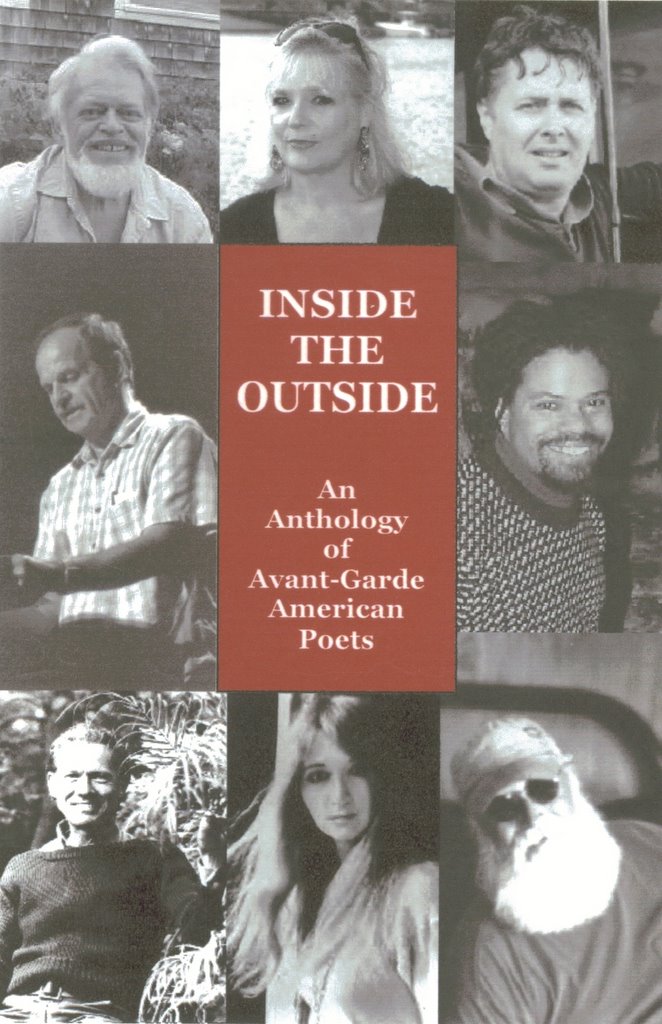
Inside The Outside: An Anthology of Avant-Garde American Poets. ( Presa Press PO BOX 792 Rockford, MI 49341) Editor: Roseanne Ritzema. Contributing Editors: Hugh Fox, Eric Greinke, and Harry Smith. http://presapress.com/ $29.95
I just received my contributor’s copy of “Inside the Outside…” from the folks at the Presa Press. Roseanne Ritzema, the editor of this collection of avant-garde poets writes in her introduction:
“Every years or so, an anthology is produced which marks an epoch. “The New American Poetry,” (ed. Donald Allen) appeared in 1960. The poets gathered in this volume represent the major schools of the American literary avant-garde as it has developed over the past 50 years…
If a poetry reader seeks the avant-garde, he will have difficulty finding it on bookstore shelves, which are filled with the old boys of the upper class New England literary mafia, imitators of their parents’ generation of post-war poets... The establishment turns a cold shoulder toward the children of Whitman, Dickinson, and Poe, but the joke is on them….
This volume brings together 13 major poets of the American small press scene, each representing an important branch of the avant-garde as it has developed over the past 50 years. In most cases, the poems were selected by the poets themselves.”
I am thrilled to be included in this anthology of poets I’ve heard about and read for many years. The book includes many legendary small press poets, many of whom founded their own small presses, and magazines. On these pages you will find the poetry of Richard Morris, Lyn Lifshin, A.D. Winans, Lynne Savitt, Richard Kostelantz, Hugh Fox, and others…
Each poet has a section, and each section has a sort of description of their work. For instance in the Hugh Fox section it reads: “It achieves universality through the representation of personal experiences combined with public/cultural images to present the poet as an everyman…” And in the poem “from Eternity,” this description is very apt:
….the pigeons/sailing off the top of/ the red brick warehouse/ in the oblique almost-winter/ late afternoon sun, white/ ceramic tile, green-painted/ steel copper cornices and/
balustrades, one apartment/ house with the west side/ curved all the way down,/probably living rooms, Margaret 25, Rebecca 3/months, Bernadette 49. Chris/
16, me 66, the nineteenth, twentieth and twenty-first/ centuries closing in/ around me.”
With Harry Smith the description reads: “…He believes that poets have the primary responsibility for the description of history.” And in “Me, the People,” Smith tackles the starving masses yearning to breathe free:
“Me the people had enough. Out of the gorge of city
This glittering Bicentennial I come,
Fat&discontent after my feasty Christmastide,
down to dark, stilled docks trimmed with Yule electric glit
at grayday unseen sundown and watch the steel
dusk deepening across my home harbor
most fabulous and most dreamed—
My lady of liberty
Seen everywhere, beckoning…
And Lynne Savitt: “Uses a stream-of-consciousness approach combined with run-on lines to evoke innerpersonal &interpersonal relationships. And here is a signature Savitt piece, hot and to the point like a red poker:
Writing
my friend Leo says
it’s okay to get
old & fat
to be remembered
as a blonde
dream carrying a rose
a pink velvet
ass bent over
a car fender
a warm mouth
wet as the tropics
all you need
to write, he says,
is the memory
he continues through
the phone wire
as you put yr
fingers under
the elastic of my
mauve lace panties
memory blazes
poems poems poems
Go to http://www.presapress.com/ for this and many other fine books.
Doug Holder/ Ibbetson Update
Monday, January 30, 2006
Re Verse: Essays On Poetry and Poets. David R. Slavitt (Northwestern University Press Evanston, Illinois 60208-4170) $25
I am a sucker for anecdotes. And poet, translator, educator, David Slavitt knows how to tell a story. I met him when he was running for state representative against Tim Toomey. Of course Slavitt was trounced, but I found him a brilliant, charming, and a loquacious character.And since I am an old English major I was glad to get this collection of essays by Slavitt, “Re Verse: Essays on Poetry and Poets.” From looking at the title I was afraid the book would be dry as a spinster on Saturday night, but I was proven wrong. Slavitt offers up a very amusing and colorful memoir of poets he knew during his undergraduate years at Yale (in the 1950’s), and during his long career as a writer. In his essay: “Harold Bloom and the Decline of Civility,” Slavitt recounts the time when as a student at Yale, he met the caustic, young critic Harold Bloom, when Bloom was a mere teaching assistant. Slavitt remembers that Bloom was wearing “a deplorable tie,” and he asked Bloom what he was working on:
“Shelley.” he barked.
Slavitt informs the reader: “I behaved badly, I’m afraid. He was the most un-Shelleyan looking guy I had ever seen in my life. Curly Howard would have been a likelier enthusiast of the “Epipsychidion.” I laughed aloud, I am ashamed to say. Bloom looked hurt—he had the soulful eyes of a basset hound and they still have a baleful look to them.”
Slavitt was also a student of Robert Penn Warren. Even in those days Slavitt had a vast amount of chutzpah. He greatly admired Warren, but he panned his book, “Band of Angels,”
in the Yale student newspaper. He then had the temerity to ask Warren for his inscription in Slavitt’s copy of the book! And by George…he got it!
There are also some delicious accounts of a frosty Robert Frost, especially the time he trashed the poet Stephen Spender who was in the audience during Frost’s reading at Yale.
Slavitt is an engaging writer, and the book will be of interest to scholars and the less- studied of us, like your humble reviewer.
Doug Holder/Ibbetson Update/Jan 2006
Subscribe to:
Posts (Atom)