Wednesday, October 05, 2011

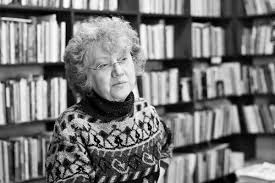
Review of MUD SEASON, by Pamela Annas


Review of MUD SEASON, by Pamela Annas, Cervena Barva Press, PO Box 440357, West Somerville, MA 02144-3222, www.cervenabarvapress.com, 41 pages, $7, 2011

Review by Barbara Bialick, author of TIME LEAVES

MUD SEASON is an elegantly written chapbook that comes out when the author is nearing retirement—and deserves a wider audience in the military, civilian and literary realms. It’s written by a professor and associate dean of UMass-Boston who has previously written about poetry, but in a more academic sense. She is hereby encouraged to take off from this selection from her worldly childhood up through when she became a mother and an academic and began to work for peace and feminism. Just saying traveling with her “Navy” family is not enough. What specifically was she building on, let alone rebelling against, if anything, from that? We don’t know. What we do know is she writes about her experiences from one city to the next in imagistic detail, one word picture after another, until each poem is a succinct block of beautiful language by a world traveler.

One example of her style is the poem “Talking With Trees”. She writes, “For years at a time I forget/the slow liquid language of trees, touch talk of fingers caressed by bark./…This morning…/I stopped to put my hands one on each side/of a weathered spruce and felt its delicate/meditation of sap and water/a language of vowels mostly/though the occasional sharp crack/of a consonant throbbed into my skin/…I..then walked on, hands on fire.”

This was written by a “Navy Brat” who grew up with “saluting in the family car/prefab green housing/trampled dirt of the playground/Armed Forces Day—cotton candy/and climbing on tanks:/It’s a hell of a note/when you’ve spent your life/teaching peace…”

Her memorial poem to her father is well-done, dense with word pictures. Called “After the Fact” (for F.A., 1923-1989), it begins “My father’s eyes were bitter chocolate/my legacy thick Greek hair that Sappho/might have braided with rosemary/and sweet clover, childhood on the slope/of a smoldering volcano. Still the savor--/fava beans in olive oil, dark bread, thick coffee, blackberries and yoghurt on the balcony/of a hotel near the grand bazaar…/Dolphins leap/in the wake of the ferry to Istanbul…”

In her Bio, Annas writes that “She singlehandedly raised a child who’s now in college and is herself a professor and associate dean at University of Massachusetts, Boston.”

She is also a member of the editorial collective of the THE RADICAL TEACHER, author of a DISTURBANCE IN MIRRORS: THE POETRY OF SYLVIA PLATH and co-author of two textbook/anthologies, LITERATURE AND SOCIETY and AGAINST THE CURRENT. She “looks forward to taking up blues harp in her retirement…”

Tuesday, October 04, 2011

Our Daily Words by Bernard Horn


Our Daily Words
Bernard Horn
Old Seventy Creek Press Poetry Series 2010
ISBN 1450526004


It is impossible for me to not love these poems when in the first poem
'The Smell of Time,' emits beauty and turtle shell hard as rock to knock our
heads against, the poems are at once our home and the author's home:


“...time enters the mind on waves of odor:
in chills and songs, in turtle eyes
that are sharp black dots
on warm jade, in the tastes
we remember, we relive
and get recaptured by our old attachments...”

We read each poem in this collection, because,
it considers how far we dig to find a complete sentence, one that holds
the earth, our experience, our dreams, then when the sentence ends, we
feel complete, and only in a poem our daily refreshment:


“the old familiar talk, that
everything passes, that nothing
passes or is certain, that language
itself only yearns, can never inhabit
this earth that recedes from articulation
like a calf forever just eluding
the red hot iron, the insistent
talk, last night, of Chekhov’s words and life
rang true, and yet, snowed in
in Framingham a Tuesday workday,
school day, Hedya and I
tramping, sculpting, repeatedly
sledding a long run in the thick snow
on thin plastic sheets, one red,
one blue, while Gabi and you
prepare the first full lunch
we've all sat down to together in longer
than any of us remembers:
Hebrew National salami on rye,
Campbell's salt-and- wonton soup,
cucumbers, scallions, hot spiced cider, words
knocking against words, and Hedya dancing to
Isn't She Lovely in her long johns,
aching for her seventh birthday, so filled
with pleasure, she calls her pal, Prageeta
and bursts into laughter before she finishes
dialing, while Gabi, darkly gorgeous today,
alternately three years older and younger
than twelve, suddenly, formally,
rises, walks around the table
plants a kiss on your cheek,
walks back to her chair, sits,
shoots a grin at me, and now,
from her bedroom yells
for the spelling of “science” but presses
against my left side at this desk before
I get to the “I,” while Hedya leans in,
hangs around my other side, writing, “aske,”
“dabe,” “eat,” “fed,” on labels for me to read
out loud before she sticks them
to the back of my sweater, while you're
on the phone with Bev, and then,
lunchtime, and now, at my desk, and now, and
now, I'm almost crying, thinking of
Max von Sydow with the juggler's family
in the clearing eating wild strawberries...”

All the words in the world cupped into a book. This is without a doubt
a “must read” book.


Irene Koronas
Poetry Editor:
Wilderness House Literary Review
Reviewer:
Ibbetson street Press

Sunday, October 02, 2011

DEWITT HENRY: PLOUGHSHARES and other ‘Sweet Dreams’


DEWITT HENRY: PLOUGHSHARES and other ‘Sweet Dreams’


Interview with Doug Holder


DeWitt Henry is an acclaimed essayist, and fiction writer. He is the founding editor of Ploughshares literary magazine. Ploughshares is perhaps the most influential literary magazine in the country. Henry has a new memoir out, Sweet Dreams, that covers his youth, his time at Harvard, the formation of Ploughshares, and his coming of age as a writer and a man. I spoke to him on my Somerville Community Access TV show: "Poet to Poet to Writer to Writer."


Doug Holder: You are one of the most educated men I know. You have a PhD from Harvard and completed course requirements for an MFA from the Iowa Writer's Workshop.


DeWitt Henry: I wanted to avoid the draft (Laugh).


DH: You came from a Philadelphia Main Line family, but your childhood was far from idyllic. Your dad was an alcoholic, a racist, and he abused your mom. Some people would retreat into drug abuse, mental illness, etc... in reaction to all this. Do you think literature was the elixir that saved you?


DWH: I was a child when this was going on--so I had an innocent perception of things. My father was a decent man; he tried to make up for what he did. I was the baby of the family; my older siblings experienced the brunt of it. But really--I don't think anyone has a so-called totally "happy" background.

Yes. Literature was a shelter for me. My mother was a writer and artist. During the trauma caused by my father she had her own nervous breakdown. My mother hooked up with a prominent psychiatrist--and later on she became a sort of psychiatrist's assistant. She helped my father and in a way protected me. In retrospect I grew up in a protective environment. My sister and mother promoted reading. My sister was very literate and a good writer. She encouraged me to read stuff over my head. So in eight grade I was reading Crime and Punishment. I probably didn't understand it!

DH: Your father was a successful candy manufacturer. What did he think of your desire to be a writer?

DWH: He wanted me to be a candy maker. I considered it--we all did at one point. He himself was second generation. My grandfather started the company. He sent my father to business school. My father got into chemistry which was sort of the high tech of the day--very in vogue. This was in the 1920's. He worked for DuPont for a year, then briefly for the family business, where, during the depression he attracted the attention of a chemist at Walter Baker Company here in Boston. One thing led to another; he was hired by Baker, and before I was born, he was moving up in the Baker management. But then my grandfather had a heart attack, and begged him to come home and take care of the family business. He essentially sacrificed a corporate career for the sake of family.

DH: You got your PhD at Harvard and you also attended the Iowa Writers Workshop where you studied with Richard Yates, author of Revolutionary Road among other novels. Was Yates' background similar to yours?

DWH: Well, he was born in Yonkers, N.Y. His mother was socially pretentious and ambitious. She appeared in many different guises in his fiction. He was 14 or 15 years older than me--but both our families had the drive to rise in society. The Main Line Philadelphia society where I grew up was very socially stratified. It was worse than the Boston's Brahmins. It was the kind of a place if you went into a dry cleaner or a Woolworth's, within five seconds they tried to place you . So we had that common background of parents dreaming of gentility.

DH : Was there elitism prevalent in the Boston literary scene when you arrived?

DWH: When I arrived there was a literary stratification between the establishment and the young and unknown writers. The big Boston publishing houses, Harvard, were not interested in the newer or younger people. They did not encourage community. They were just the opposite. It was a Brahmin culture.

One thing about starting Ploughshares at the Plough and Stars Pub in Central Square, Cambridge, with the co-owner Peter O'Malley--was that it was Irish. Behind it was tradition of the Irish against the Boston Brahmins, against Harvard, against the established order.

DH: Is a pub a good place to birth a magazine?

DWH: I'm not sure I would recommend it, but there is the Irish tradition of the literary pub. It goes way back to William Butler Yeats and the Irish Renaissance. The literary pub has a tradition of readings and publishing broadsheets. The tradition was inherent in the presence of Peter O'Malley . O'Malley is still around--you will probably find him having a drink at the pub to this day.

DH: The memoirist Malachy McCourt told me that when you write a memoir you should not get bogged down with facts. Memoir is more about impressions.

DWH: The kind of memoir I write is more like fiction--rather than literal fact. You have to look hard for details for your writing. I tell my students to look for artifacts around their homes that are unexplained ... kind of bizarre. In my family we have these bear skin rugs--bear skin rugs--how do you figure that? You really have to use your imagination to make things come alive.


DH: How important was the founding of Ploughshares in your development as a writer?


DWH: As I say on p. 196 of Sweet Dreams, the venture of starting Ploughshares lent me social identity as a writer...I was taken seriously by writers my age who had themselves managed to publish books and land teaching jobs." I needed that because my first novel was such slow going. The magazine also exposed me to contemporary poetry and fiction, and to the emerging writers producing it, like colleagues, and I felt both in my editing and my writing that I was talking back to them in "the cultural conversation." I think of Tim O'Brien, Andre Dubus, Fanny Howe, Thomas Lux, James Tate, Jim McPherson, Sue Miller, Frank Bidart, David Gullette, Joyce Peseroff, the list goes on. The magazine helped to forge my sense of literary enterprise, combining editing, writing, and teaching. It also proved to be the credential--more than my PhD--that helped me find my place at Emerson College and the Creative Writing Program there. Of course, in the long view back, I had been writing and producing magazines since my school days with a toy printing press, and later a basement print shop, and then in college editing the Amherst Literary Magazine. My love of reading, writing, and publishing had been one love for most of my life.