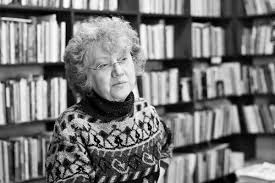
Sonia Meyer: A local writer who throws a light on the secretive Gypsy culture.
By Doug Holder
I admit it. I was among the ilk that bought into the tired stereotype of the Gypsies as jobless vagrants, with a lot of kids, living in a tent camp, with the requisite dancing and fortune teller. I never took the time to think of them as anything more than stick figures. Being a Jew I heard from my relatives about the atrocities my family and the greater Jewish people experienced under the Nazis. But the Gypsies also suffered greatly. Why wasn't this talked about in school and at home? I really needed a serious education. That's when I ran across Sonia Meyer. I interviewed her and she introduced to a world that I was woefully ignorant of. Meyer is a novelist, as well as a scholar of Gypsy culture, who has completed a novel about a Gypsy girl named: "Dosha."
The Gypsies have lived and criss-crossed Europe for 600 years. They were among the first European settlers to enter our own country. Yet most of us, know them only through prejudice.
Sonia Meyer was born in 1938 in Cologne, Germany into a multi-ethnic family, who was very opposed to the Nazi regime. When co-agitators started to be publicly hung on street-corners, Sonia’s family left overnight and made for the German hinterlands and later the dense forests in Poland, where they survived in the company of partisans and some Gypsies the Germans had not managed to capture. Flushed out by the victorious Russian army, who often killed those who had escaped the German massacres, they returned across a devastated land and killer fields to a Cologne that was leveled to the ground. Again she came across and befriended a group of Gypsy children.
Like them she would ultimately leave the memories of war and its aftermath behind, by simply walking into the future. Helped by a wealthy aunt, her travels would take her across the world, through a variety of professions to finally settle in the United States, where she had a family and entered the most noble of Gypsy professions of all, the breeding and dealing of horses.
Having found peace and happiness after a tumultuous journey, she started to long for the one part missing in her life, Gypsies. She decided to look into the history of the people she had found comfort with during the tumultuous years of war and its horrible aftermath.
But some twenty plus years ago, there was close to none research material on the Gypsies available. At Harvard’s Widener library, she discovered a translation of a novel by a Russian Gypsy, by the name of Matteo Maximoff. She contacted him and they became fast friends. She then immersed herself in the life of Gypsies, traveling to Macedonia, and Kosovo and Hungary pursuing her research. And now Meyer has completed a novel, tentatively titled” “Dosha”, that tells the tale of a Gypsy girl Dosha. The novel is bookended by Nikita Khrushchev’s state visit to Helsinki in 1957. The story is of, a Gypsy, and her hardscrabble childhood spent with Russian partisans in Polish forests, to her defection during Khrushchev’s visit….. .
In her research, her travels, when she lived with them, followed them to some sacred Gypsy sites, Sonia was struck how familiar their way of thinking and living was to her. And thinking back at the nomadic life most of her mother’s siblings, she finally asked her mother who was on her death bed, "That grandfather of mine, the dark one, the one who worked in the circus with horses, the one who kept leaving home all the time, was he…a Gypsy? Her mother replied:
“I was not born under a wagon…so I decided long ago to declare myself a Rhinelander…as you by now should know: reality is like a rubber band. You can stretch it anyway you desire.” This always stayed with her.
Meyer, a self-taught scholar of Gypsy culture and history is concerned with a possibly precedent setting case in Florida. For the past 5 years Broward County has been trying to seize the property of the Christian Romany Church, whose 300 Roma members are considered ethnic Gypsies. The County feels it has the right of Eminent Domain, overriding the Religious Freedom Law. Has the disregard for the human rights and equality followed them all the way to this country?
There is a last minute twist, in this long-drawn out fight of the Gypsies for what they consider rightfully theirs. The County did win the suit, and settled with the Roma church for a certain amount of money,not enough however to buy a new church. The Gypsies were given six months to vacate the church. Those six month were expiring at the end of August. Suddenly, several county officials are questioning the decision of depriving the Gypsies of their church. “That’s just it,” Sonia informed me with great excitement. “That’s why I chose this country to live in. No matter how tough things get, here there is always hope.”