
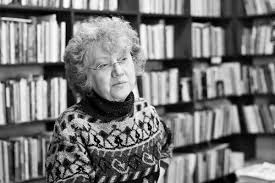
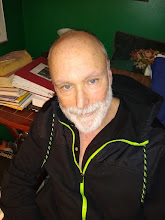
I recently caught up with Somerville professor and poet Beth Rosenberg. Along with her mentor, Chuck Levenstein-- they have written a book of poems about the workers in the nuclear industry......
From their website:
"The setting for this poetry collection is the Secret Cites of the Manhattan Project. It was written by two occupational health professors who were hired by the union to assess the working conditions of those who are trying to clean up and contain the radioactive and chemical detritus of the Cold War and nuclear weapons production. Workers’ words are incorporated into the poems, so readers can see some of the ripple effects of work that is hidden from view."
I have loved living in the vibrant city of Somerville for 30 years. Most of my neighbors are creative and literate. I taught occupational and environmental health in the public health program at Tufts for most of that time, where I emphasized the importance of having a voice at work.. Equally important to me is my work with a variety of unions to improve health and safety conditions. My mentor, Chuck Levenstein, has been writing poems for decades, so 5 years ago, inspired by him and our work with the United Steelworkers on former nuclear weapons production sites, I started to write poems. I don’t quite consider myself a poet. We both wrote poems and edited each other’s work. It was a wonderful collaboration, and it was a collaboration that started when I was a graduate student at the Work Environment Dept at UMass Lowell in 1989.
This is an unusual subject for poems. Why did you pick this genre?
Chuck had already been writing poems about our work, to capture ideas that did not go into reports to the union about working conditions and how to improve their excellent health and safety training program. I thought it was a great way to convey vignettes of people’s lives – lives that most of us don’t get to see. Poetry’s pithiness appeals to me.
I would think it would be difficult to bring 'art' to a subject like this. So often political poetry tends to turn into a polemic. Your take?
Studs Terkel’s book “Working” was a powerful influence on me, as was the poet and activist Muriel Rukeyser, “The universe is made of stories, not of atoms.” I want to capture people’s words about work. I’m a reporter and an advocate. I let their words speak for themselves.
When you were interviewing workers in the nuclear industry around the country, you wrote that you and your co-author were viewed as strange Jewish birds. Did you experience any blatant, angry antisemitism?
That’s not exactly true. We were viewed as strangers, but we were hired by the union so we came to these sites already vetted. We looked different and sounded different. We were 2 swarthy, hirsute Jews. I envied the hairless arms of those Appalachian men of Scots-Irish descent and the tall blond Mormons in Idaho Falls! I don’t know that we were identified as Jews, but we were unquestionably foreign. We have Boston and New York accents, which were exotic in slow talking Carlsbad, New Mexico and Oak Ridge, Tennessee. Even if we were identified as Jewish, there are many Jews in the labor movement - remember the union organizer in “Norma Rae.” Any suspicion due to our differences was quickly overcome by the realization that we on their side, and we truly wanted to bring their ideas back to the union leadership to improve things.
How did interviewing these workers change your perception of them—and yourself?
I knew I’d meet smart people, but I didn’t expect I’d like many of them so much. On the other hand, I learned that just because someone is active in the union, and is working towards better working conditions, doesn’t mean they share all my political beliefs. Some were jerks. That seems obvious to me now, but it wasn’t 20 years ago. Interviewing these workers broadened my circle of caring and gave me a more nuanced view of human behavior.
Why should we read this book?
This book is a weird combination of worker health and travel log. It will give you a glimpse of the people and the secret, Atomic Cities, where we built pieces of the bombs that incinerated Hiroshima and Nagasaki. Eighty years later, these places are contaminated, people have high cancer rates and nuclear energy has been rehabilitated. We didn’t intend it as such, but it really is a quiet expose of contractor behavior. For those who think nuclear energy is clean, this book reveals how things work on the ground. Even if you believe the technology works, until you fix the management, that cuts corners and harms workers and communities, it will be a mess. Now that some these sites have been “cleaned up”, the Dept. of Energy wants to build small nuclear reactors to power data centers. This book gives another view of work in the US.
I have loved living in the vibrant city of Somerville for 30 years. Most of my neighbors are creative and literate. I taught occupational and environmental health in the public health program at Tufts for most of that time, where I emphasized the importance of having a voice at work.. Equally important to me is my work with a variety of unions to improve health and safety conditions. My mentor, Chuck Levenstein, has been writing poems for decades, so 5 years ago, inspired by him and our work with the United Steelworkers on former nuclear weapons production sites, I started to write poems. I don’t quite consider myself a poet. We both wrote poems and edited each other’s work. It was a wonderful collaboration, and it was a collaboration that started when I was a graduate student at the Work Environment Dept at UMass Lowell in 1989.
This is an unusual subject for poems. Why did you pick this genre?
Chuck had already been writing poems about our work, to capture ideas that did not go into reports to the union about working conditions and how to improve their excellent health and safety training program. I thought it was a great way to convey vignettes of people’s lives – lives that most of us don’t get to see. Poetry’s pithiness appeals to me.
I would think it would be difficult to bring 'art' to a subject like this. So often political poetry tends to turn into a polemic. Your take?
Studs Terkel’s book “Working” was a powerful influence on me, as was the poet and activist Muriel Rukeyser, “The universe is made of stories, not of atoms.” I want to capture people’s words about work. I’m a reporter and an advocate. I let their words speak for themselves.
When you were interviewing workers in the nuclear industry around the country, you wrote that you and your co-author were viewed as strange Jewish birds. Did you experience any blatant, angry antisemitism?
That’s not exactly true. We were viewed as strangers, but we were hired by the union so we came to these sites already vetted. We looked different and sounded different. We were 2 swarthy, hirsute Jews. I envied the hairless arms of those Appalachian men of Scots-Irish descent and the tall blond Mormons in Idaho Falls! I don’t know that we were identified as Jews, but we were unquestionably foreign. We have Boston and New York accents, which were exotic in slow talking Carlsbad, New Mexico and Oak Ridge, Tennessee. Even if we were identified as Jewish, there are many Jews in the labor movement - remember the union organizer in “Norma Rae.” Any suspicion due to our differences was quickly overcome by the realization that we on their side, and we truly wanted to bring their ideas back to the union leadership to improve things.
How did interviewing these workers change your perception of them—and yourself?
I knew I’d meet smart people, but I didn’t expect I’d like many of them so much. On the other hand, I learned that just because someone is active in the union, and is working towards better working conditions, doesn’t mean they share all my political beliefs. Some were jerks. That seems obvious to me now, but it wasn’t 20 years ago. Interviewing these workers broadened my circle of caring and gave me a more nuanced view of human behavior.
Why should we read this book?
This book is a weird combination of worker health and travel log. It will give you a glimpse of the people and the secret, Atomic Cities, where we built pieces of the bombs that incinerated Hiroshima and Nagasaki. Eighty years later, these places are contaminated, people have high cancer rates and nuclear energy has been rehabilitated. We didn’t intend it as such, but it really is a quiet expose of contractor behavior. For those who think nuclear energy is clean, this book reveals how things work on the ground. Even if you believe the technology works, until you fix the management, that cuts corners and harms workers and communities, it will be a mess. Now that some these sites have been “cleaned up”, the Dept. of Energy wants to build small nuclear reactors to power data centers. This book gives another view of work in the US.
Paducah 2007 Safety Systems
We met in a crowded, cluttered office. Desks facing walls,
more chairs dragged in.
Lanky, laconic, local union Prez, Cherokee cheekbones.
Pert contractor safety manager. She extolled the benefits of Behavior
Based Safety, where “everyone watches out for each other.” Your
brother’s keeper, etc.
They got trinkets for noting bad behavior.
It was always the worker behavior, never the company behavior,
that was the problem.
Earlier, workers told us they were ordered to leave their radiation
badges “in the truck” when they worked, so high exposure wouldn’t be
documented.
Companies get awards for low injury rates.
Teams of workers are bribed with monthly Lowe’s gift cards
to not report injuries.
If someone does, they’re threatened with days without pay, firing —
no one gets gift cards for the quarter.
In the office, we all listened politely.
Union Prez sat silently, his back to her, facing the wall.






No comments:
Post a Comment