Wednesday, April 06, 2011

Michelle Hoover writes a tale of two women.


Michelle Hoover writes a tale of two women.


Interview with Doug Holder

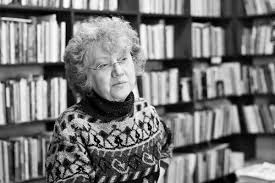
Michelle Hoover is a petite woman but her writing is anything but diminutive. In her critically acclaimed novel “The Quickening” she writes of the friendship of two farm women during the early part of last century. These women and their significant others speak plainly, but the subtext of what they say is loaded. Hoover, who was born in Iowa and from a long line of farmers, captures the hardscrabble life of these straight-no-chaser women. Hoover currently teaches at Boston University and Grub Street in Boston, Mass. I spoke with Hoover on my Somerville Community Access TV: “Poet to Poet: Writer to Writer.”

Doug Holder: Your first novel “The Quickening” was a huge success. You ever worry that your second book might not measure up to your first—you know the sophomore jinx?

Michelle Hoover: I do. You want to do something different. It’s hard. I am excited about my new book—but certain aspects of it will be totally different from the first. I think the next book has a lot of promise though.

DH: What is the next book about?

MH: It is about two of my great aunts who disappeared from the family right after WW II. They were quite young. They were never heard from again.

DH: Like poetry, every word counts in your writing. With an economy of words you write a very evocative novel.

MH: I am a terrible poet. I grew up in a family where simple language was preferred. When I took my GRE to get into grad. school my vocabulary was got the lowest score. So I had to work on that. This stripped down language works with these two ladies in “The Quickening.” I wanted it something like the landscape—very plain and flat. Gertrude Stein wanted her sentences to evoke a certain message and so do I.

DH: “The Quickening” sounds authentic. How much research did you put into this--to get it just right?

MH: My grandmother’s journal that I used was only 15 pages long. In the beginning of the book one of the ladies, Mary, almost kills her husband Frank by feeding him chicken when he was sick. And that really happened. But that was only a few sentences in a long book. For instance, pigs are slaughtered in the novel. Now I never slaughtered a pig, but my uncles told me how it was done. My family gets together every February in Arizona and tells stories and sings songs- all that kind of stuff. They are a bunch of old farmers. That’s how I got the story right, by getting all these oral histories from my family. I wanted to get personal stories which were the basis of my research. I did historical research but I found it went against what I was doing.

DH: In the harsh and unforgiving lives that Enidina and Mary lived there was the church. The church offered a respite, the one place where these women would have the chance to address spiritual concerns, to transcend their day to day grind. However, the minister Borden had a major lapse in his ministry, as he was brought down to earth by the loneliness of his calling. Do you view religion as a front, offering the illusion of an afterlife for people with a very unsatisfying real life here on the material plain?

MH: I don’t think religion is always a bad thing. A lot of my family is religious; I am more of an agnostic. I am suspicious of the self-righteousness that religion can take on. A sort of “I am better than you because I believe in God.” Borden has a lapse. Bordon is human. Mary uses religion to prop herself up. I don’t think it is bad that people have religion if it helps him. I don’t like people who use their religion against other people.

DH: No one could accuse you of writing a Chick Lit. novel. There is nothing glib, or superficial about this work. Do you think you can reach a wide audience with these straight-no-chaser women?

MH: I would hope so. I was hoping to create a new woman heroine with Enidina. She is very different from me—big-boned and awkward. Mary is the more typical character you would find in Chick Lit. She has her own darkness too. But both of these women are very stoic, no navel-gazing—the type that if they have problems they would keep it to themselves. I admire this but I can see how it can be harmful.

DH: You said in an interview that your characters are like the landscape. Don’t we all take on characteristics of the landscape?

MH: I think so. I am part of my characters' landscape. I find the farmland of the Midwest beautiful—other people may not.

Interview with Spoken Word Artist Lauren Whitehead


Interview with Spoken Word Artist Lauren Whitehead

By Doug Holder


Spoken word artist Lauren Whitehead will be a featured guest for Somerville's acclaimed, youth-targeted Books of Hope Project on April 14th 7PM at the Main Branch of the Somerville Public Library (79 Highland Ave.) She will conduct a reading and a workshop that deals with performance poetry and the new generation of poets commanding the stage! This event will include an open mic,refreshments,is free, and open to the public.

Lauren Whitehead is a University of Michigan graduate and multi-time U-M U-Club Poetry Slam Champion. She is a founding member of Ann Arbor Wordworks, has been featured on National Public Radio and in HBO’s Brave New Voices documentary series, has worked as a mentor for young writers at Youthspeaks in San Francisco, and has toured the country as a member of Robert Redford’s Speak Green poetry squad.


I interviewed Ms. Whitehead--and here is what she had to say:


You are a performance poet--Doesn't every poet give a performance of sorts when she or he reads?


You might be right. There is a performance in all of it, right? The reading, the slam, the open mic, right? But I think the main difference between what you're describing -a poetry reading- and what I am (and other performance poets are) doing is that we are working for, banking on and in need of participation from our audience in order for the thing to work. And so, what is perhaps quiet/reserved/tame at a reading is intentionally stirred by the performance poet to create noise/community/excitement in the folks we are performing for. It's much more of a give and take, and it involves the body in a way that a podium, perhaps, doesn't always allow for.


What do you plan to tell the kids are the elements of a good poetry performance?


I will tell them that the best poems are honest poems, are poems where we can tell something is at stake, are the ones that are more confession than fact, the ones that are urgent, are waiting to be written and said and heard. I will tell them that reaching their best performance is really only possible if they reach toward their best and bravest writing.


We know a lot of poetry sounds good on the stage--but how about the page?


I think this is a dichotomy that some poetry god must have a ton of fun stirring up over and over. The truth is I think good performance poets are, at base, good poets and that means on the page, on the stage and everywhere in between. One of my Poet Mentors Jeff Kass says that poetry is about playing with sound. Some poets do that by the sound of the voices that in their heads, others need to say it out loud to really hear it. I fall into the latter category, but we're all poets just the same.


Can you tell us about the Youth Speaks program that you were involved with?


Youth Speaks is a literary arts organization in San Francisco that, in short, seeks to change the perception of youth by offering them the tools they can use to speak their own truth to power. So, we (and I say we because even though I'm not there, I'll never be gone) offer young people writing workshops and performance opportunities so that they might have a chance to say what they feel without being measured against a standard - we believe the standard is yourself and without being told you are wrong - in our workshops there are no wrong answers. I think the goal is a safe space for self expression in whatever form in comes in. And young folks want that. It's clear.

Youth Speaks also programs Brave New Voices, and international youth poetry festival that connects young people from all over the country who are interested in performance, poetry and community. It's really a beautiful place. www.youthspeaks.org see for yourself.


I know from experience that poetry can make changes in the lives of people, especially kids. Any anecdotes?


I have so many moments in my short life of young people -and old people come to think of it- who have found some part of their selves in a poem. On any given day at the YS office. I remember one kid, Dominic, who is now a student at UW Madison. He used to just come to my workshop because his friend was coming, and he would never write and when he did, he certainly wouldn't share. But the group was forgiving and patient and welcoming, really. So he came every Wednesday, or whatever, until one day, before the workshop started he said to me, "I think I wrote something last night off that prompt you gave us before, can I read it." And that initial share, that first sound, really transformed him. He believed he could say it now, he believed he had something to say, and it's really quite beautiful to see as it's happening.

Sunday, April 03, 2011

IMAGINING THE SELF, Poems by Laverne Frith


Review of IMAGINING THE SELF, Poems by Laverne Frith, Cherry Grove Collections, an imprint of WordTech Communications, PO Box 541106, Cincinnati, Ohio 45254-1106, www.cherry-grove.com, $18, available on Amazon.com, 88 pages, 2011

Review by Barbara Bialick

Laverne Frith, of Sacramento, California, is the husband of poet Carol Frith, who has also been reviewed on these pages. He is co-editor of “Ekphrasis”, a journal of ekphrastic poems, each of which focuses on a single work of art. He’s also a monthly poetry columnist for “Senior Magazine”, among other accolades to be mentioned later.

Many of the poems in this book rest on abstract ideas and images of life experiences writing poetry about art and about poetry itself. To read the poems is to define them, such as in the following examples:

In “Why Poetry?” he writes “I rather think we challenge/imagination, capability/that we drive the mind/into fields of metaphorical/horrors and joys/that there is something/redemptive about process,,,”

He even defines his own self this way as in “Exhibit Me in a Well-Lit Window (after ‘The Thinker’ by Rodin)”: “as exotically as I command/in my musings/flaunt my patina/changeable as a chameleon’s/…reveal the unfulfilled/dream/in my hidden eyes.”
And further delving into the mystery of the arts in “The Hotel Window” (after Edward Hopper)”: “pure loneliness…/something she sits and endures each time anew,/relearning the bitter lessons of regret…”

As Judy Halebsky says on the back of the book, “Frith reads our emotional lives through the natural world and captures moments of insight…The poems…are in equal measure brave and gentle, facing up to the imperfections in our lives and finding in them points of illumination….”

Frith has also published chapbooks from Talent House, White Heron Press, and Finishing Line Press and a photography and poetry chapbook from Rattlesnake Press. He is a Grand Prize winner two times in the Artists Embassy International Dancing Poetry competitions. He and his wife wrote “Practical Poetry—A Guide for Poets.”

Saturday, April 02, 2011

Holder to his readers: "Take a walk."


The famed poet, Rock musician and memoirist Patti Smith told a graduating class at Pace University in New York City that if she had to tell students one thing about the creative life it would be to get good dental care. She said in her day ( She is 64), artists were pretty poor and they let their teeth go. She went on to say that you want to pace back and forth in your garret because you are in close contact with your muse, not because you need a root canal.

One thing I would add that is a necessity for a poet or writer is walking. I've written about it before. You know the old slogan " I 'd walk a mile for a Camel." Well, I'd walk 10 miles for the hell of it. In a recent article in the American Poetry Journal poet Ed Hirsch explains very nicely why walking is the right stimulant to get the creative juices flowing:

" Poetry is a vocation. It is not a career but a vocation. I have associated that calling with my life's work, with walking. I love the leisurely pace amplitude, the spaciousness of taking a walk, of heading anywhere, somewhere on foot. You cross a threshold, and you're on your way....Poetry is written from the body and mind, and the rhythm and the pace of a walk gets you going and grounded. It's kind of a light meditation.. Day dreaming is one of the key sources of poetry--a poem often starts as a daydream that finds it way into language--and walking seems to bring a different sort of alertness, an associative kind of thinking, a drifting state of mind."

If you have one book to read I would try Alfred Kazin's "A Walker in the City." Kazin remembered the walks he took as a child, and captures his neighborhood of Brownsville, Brooklyn--the dark and dank tenements where immigrant Jews from Russia and Poland lived lives of cramped desperation in the Depression Era. His walks lead him past the mysterious Irish and Italian neighborhoods, and even the enigmatic horizon of Manhattan, a veritable Emerald City for this provincial boy. By reading this book, and walking Kazin's walk, you will learn what it takes to be a writer--a close observer. You will the read streets like you are reading a text--with a discerning eye for details, and for what's behind the surface of things--a critical reader, indeed.


Walking through Boston and Somerville is like walking through different phases of my life. And with each walk I take I am flooded with images and memories that enter my writing. Walking down Bay State Rd. through Boston University I can recall stumbling home to my Brownstone dorm from some keg party at Shelton Hall across the street. I was told F. Scott Fitzgerald had a room in Shelton when it was a hotel. I could imagine the great writer sleeping off yet another bender in a room that was now occupied by some kid pulling an all-nighter. Walking further down into the campus and hitting the Nickerson Field football stadium I suddenly remember the streakers who traversed the field in their birthday suits on a chilly fall day. I never had the body for that.

I might find myself walking on the streets of Chinatown, looking for the drooping, fat-sweating ducks in the window of my favorite long defunct haunt the "Ying-Ying. All those pungent smells, the chattering Cantonese of the customers, the mass produced wisdom of the fortune cookie--all those ghosts that walk by me on my walk.

And if I find myself in Somerville, and I am walking up Ibbetson Street;I might come across that orange colored Victorian that first housed my independent press Ibbetson Street. This was the first apartment my wife and I lived in when we were married. I remember the day we took a photograph of 30 poets sitting on our front porch, old hippies, Hip-Hoppers, graybearded leftists from the New York City East Village scene , young women with peasent skirts and long flowing hair blowing in the fragrant spring breeze. I remember the bemused gaze of the neighbors when we posed for that shot.

So if you have writer's block, grab your coat, grab your hat, leave your troubles at the doorstep, just relax your feet on the sunnyside or even the darkside of the street, and that pensive pen will hit the blank sheet yet again.